

IMAGE: 1950s interior featuring classic mid-century furniture, a soft color palette, low-profile seating, and vintage lighting.
What Made 1950s Interiors So Practical and Cool?
Learn what made 1950s interiors work: smart layouts, durable materials, clean lines. Real advice, no filler.
1950s interiors nailed practicality and style.
Below: what worked — layouts, materials, the small stuff — so you can get that vintage look without overdoing it.
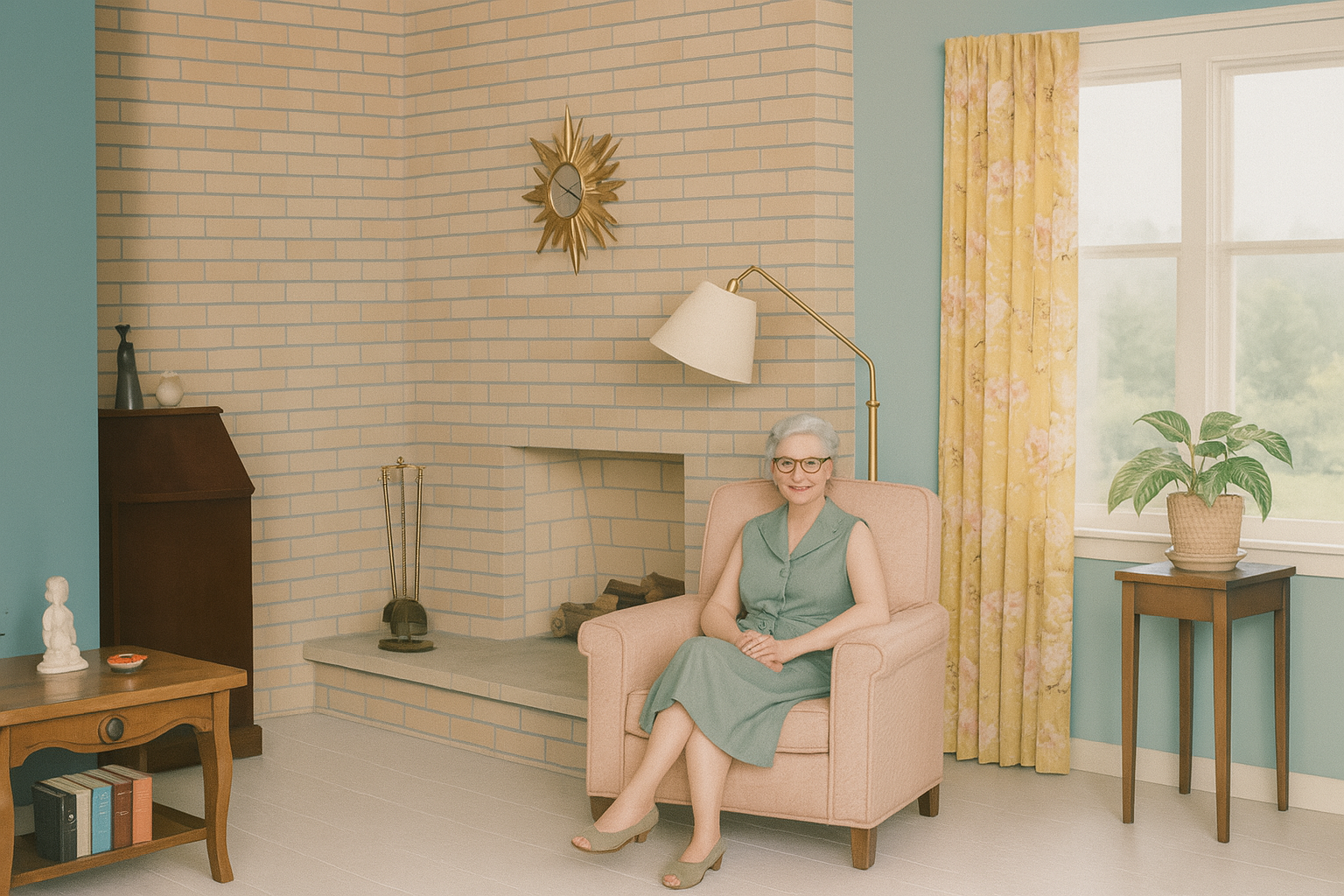
IMAGE: 1950s mid-century living room showcasing retro furnishings, soft vintage tones, and a woman in period attire, reflecting classic interior design heritage.
5-POINT CHECKLIST
5 Key Features of Authentic 1950s Home Design
What 1950s Midcentury Homes Looked Like

IMAGE: Infographic highlighting five essential 1950s home design elements, including wood tones, Formica counters, patterned fabrics, and layered lighting.
Small Home, Big Impact: What to Actually Look For
The 1950s were all about efficient, stylish homes built for real families—not mansions. These houses packed smart design into modest square footage. Here's what made them work—and still does.
5-Point Checklist:
✓ Use warm wood tones with one bold accent
→ Teak, walnut, or birch + one pop color like avocado, mustard, or turquoise.
✓ Pick durable, easy-to-clean materials
→ Think linoleum floors, laminate counters, chrome trim—designed for messy daily life.
MUST READ: Mid-Century Modern Complete
→ Serious value if you want a full-home redesign, not just ideas.
✓ Low-slung, purposeful furniture only
→ Sofas, credenzas, and chairs all sat low and worked hard. No decorative fluff.
✓ Patterned fabrics in small, intentional doses
→ Atomic prints, florals, or geometric patterns—on drapes or cushions, not everywhere.
✓ Layered lighting mattered—overhead, lamps, task lights
→ Ambiance + function. Globe pendants, sconces, and tripod lamps ruled.
Why it still works:
It’s practical. It’s clean. It fits real-life homes where space matters—and it still looks sharp today.
1950s vs. Modern Interior Design

IMAGE: Interior view of a 1950s house showcasing period-specific furniture, layout, and retro decor that define mid-century residential design.
1. Layout and Room Use

IMAGE: Living room example featuring a modern 1950s midcentury house design that blends traditional elements with contemporary style for a balanced, inviting space.
-
1950s: Separate rooms for living, dining, and kitchen
-
Modern: Open-concept layouts dominate
2. Materials
-
1950s: Wood, linoleum, Formica, ceramic tile
-
Modern: Engineered wood, quartz, concrete, glass
3. Furniture
-
1950s: Low-profile, sleek, functional pieces
-
Modern: Mix of minimalism and oversized comfort
4. Color Scheme
-
1950s: Pastels (mint, pink, lemon) and bold accent walls
-
Modern: Neutrals with monochrome or bold contrasts
5. Lighting
-
1950s: Statement ceiling fixtures and shaded lamps
-
Modern: Recessed lighting, smart LEDs, natural light focus
6. Doors and Trim
-
1950s: Hollow-core doors, wood trim, flush panels
-
Modern: Flat or frameless doors, clean-lined trim or none
7. Decor Philosophy
-
1950s: Optimistic, space-age inspired, practical
-
Modern: Clean, curated, tech-integrated
1950s PALETTE
Why 1950s Homes Went Wild With Color

IMAGE: 1950s midcentury living room featuring bold color choices, classic low-profile furniture, and layered vintage decor reflecting the vibrant style of the era.
(And Why You Probably Should Too)
Let’s not sugarcoat it:
1950s homes were loud.
Not in noise—in color.
Bright turquoise kitchens. Bubblegum pink bathrooms. Burnt orange sofas with lime green pillows. It was like every room was trying to one-up the next. And somehow... it worked.
Why the color craze?
People were done with the war. Done with gray.
They wanted life. Energy. Optimism.
Color felt like freedom.
Should You Go Bold Today?
Yeah. But not like your grandma did.
▪ One strong color is enough.
▪ Use it where it counts: a chair, rug, wall, maybe the front door.
▪ Don’t match everything—mid-century was all about contrast.
▪ Mix color with warm wood, matte black, or clean whites.
You want to nod to the ‘50s, not get stuck in them.
Keep It Honest, Not Costume-y
Don't turn your place into a vintage museum. Use the vibe, not the whole script.
Here’s what works:
▪ Real wood (not the fake orange kind)
▪ Simple shapes, no fluff
▪ Color with edge—not Crayola
▪ One weird retro piece—just enough to say “I know what I’m doing.”
Bold color in the 1950s wasn’t just a style.
It was a statement: We’re moving forward.
If you’re designing today? That still holds.
ROCKABILLY VIBE
Living Room: What Made 50s Living Modern
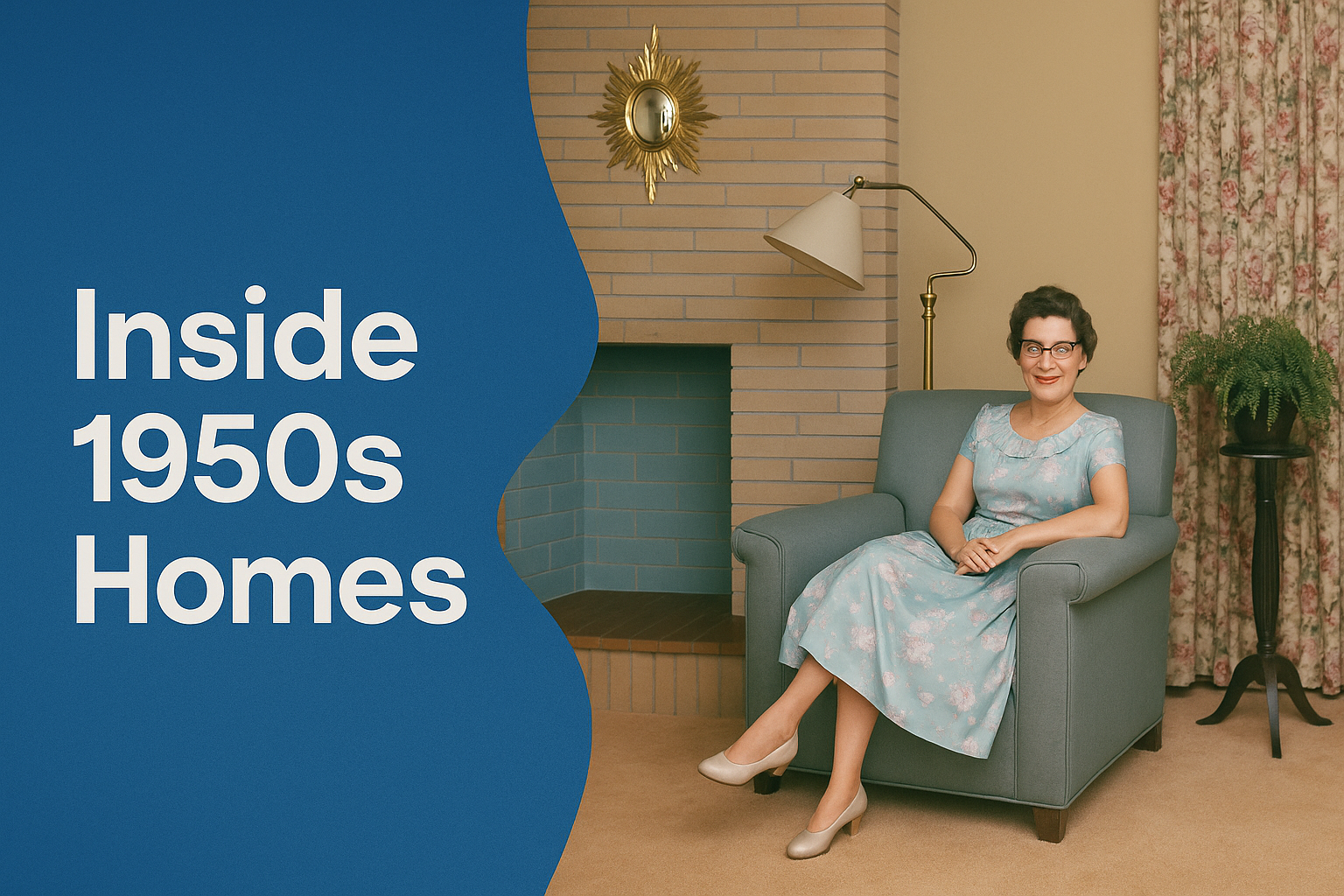
1950 living rooms balanced comfort and function—clean lines, durable materials, and a touch of flair. Think minimal clutter, layered lighting, and practical furniture.
Key Features
-
Low-slung sofa with tapered legs—classic mid-century modern.
-
Statement rug in geometric or bold color to ground the space.
-
Wall-mounted shelving or console—kept floor space clear.
-
Layered lighting—overhead fixture plus side lamp for mood and task light.
Quick Takeaways
-
Go for natural wood tones mixed with metal.
-
Choose linoleum or hardwood floors—easy to clean, built to last.
-
Add a vintage-style floor lamp—stylish and functional.
DINER STYLE!
Kitchen: Practical Doesn’t Mean Boring
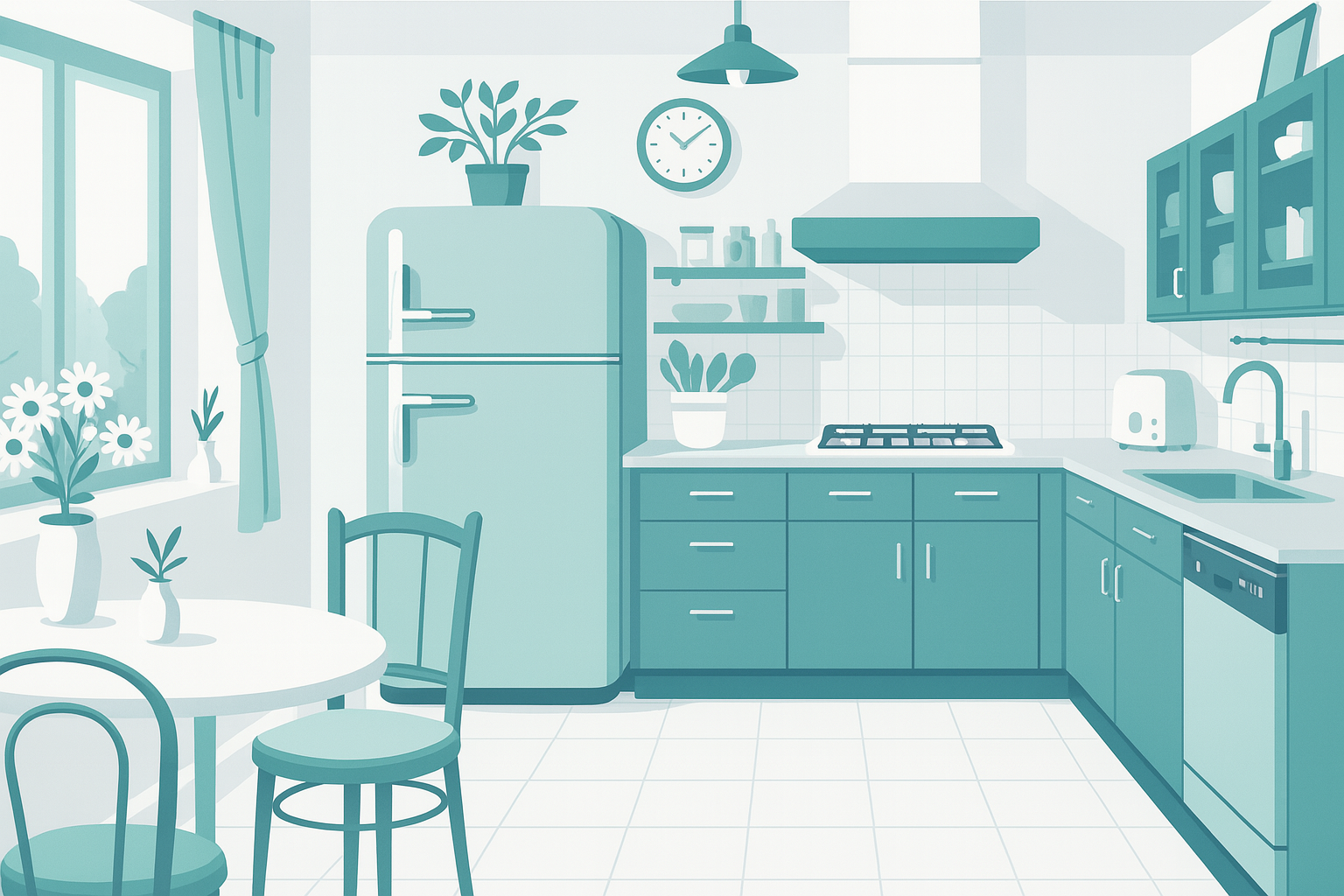
IMAGE: 1950s-style kitchen featuring cabinetry, retro appliances, and a classic checkered floor.
Kitchens in the 1950s focused on efficiency. Built-in cabinets, vinyl flooring, simple splashbacks—that kitchen got the job done, day after day.
Must-Haves
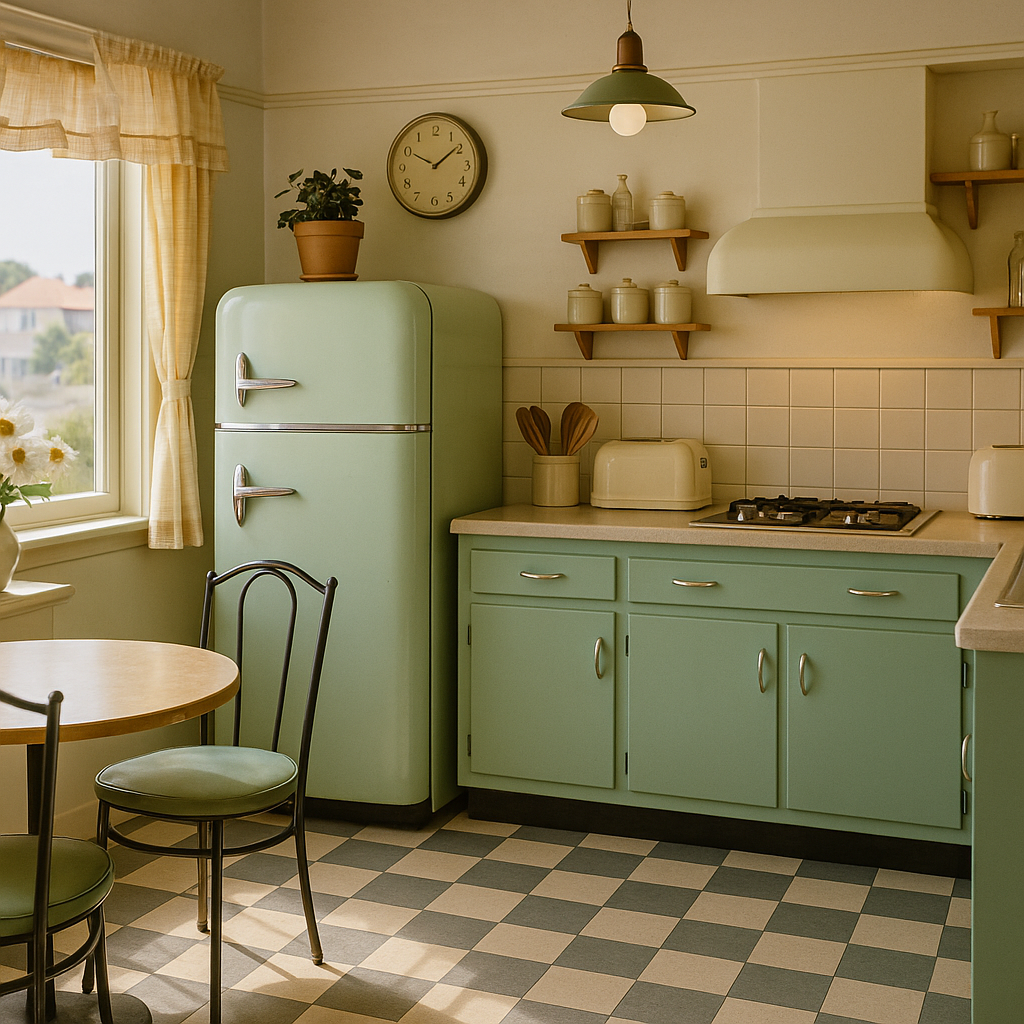
IMAGE: Vintage 1950s kitchen featuring blue tones, period-accurate appliances, checkered flooring, and classic retro decor.
-
Formica countertops—clean, affordable, and bold.
-
Metal cabinets in pastel or neutral tones—durable and easy to clean.
-
Checkerboard or solid vinyl floor—functional, not fancy.
-
Built-in breakfast nook—small table tucked into a corner, often with padded bench seating.
Pro Tip
Use rounded cabinet edges and integrated pulls for that classic look without clutter.
MAD MEN CHIC
Bedroom: Cozy and Clean
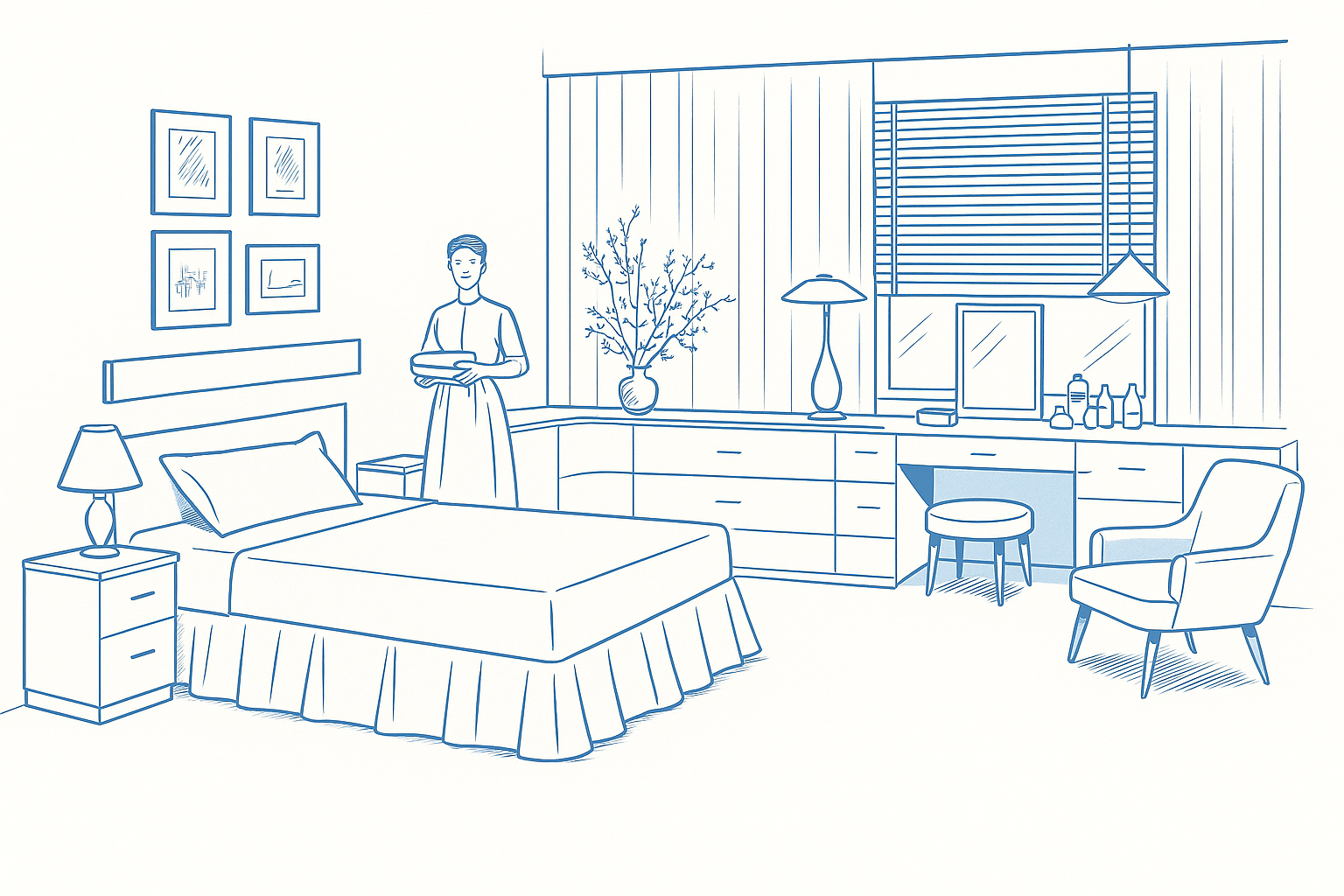
IMAGE: Illustration of a 1950s bedroom featuring a tufted headboard, classic mid-century furniture, and period decor elements.
Bedrooms felt warm and uncluttered—just enough furniture, a hint of pattern, and room to move.
Essential Elements
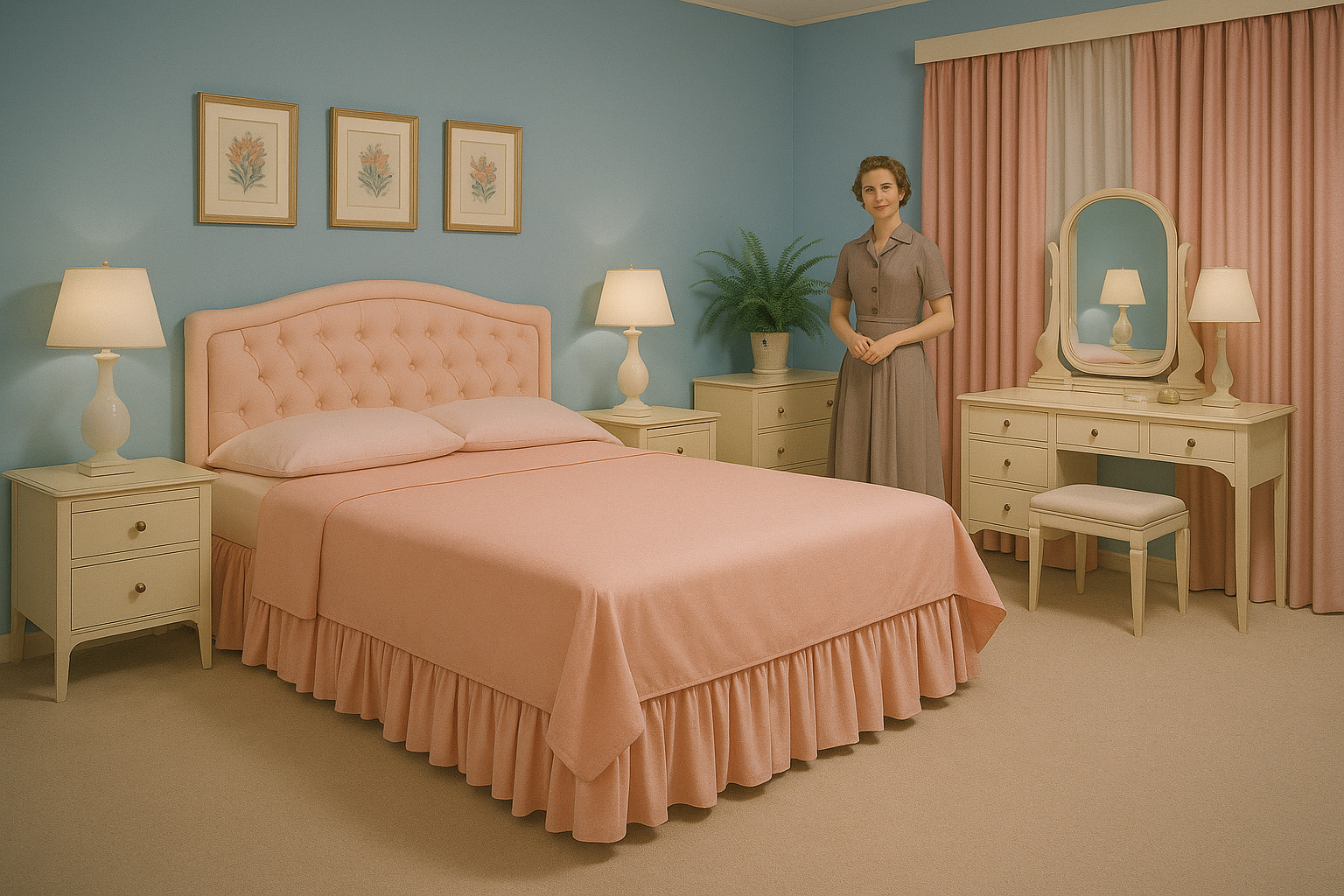
IMAGE: 1950s bedroom illustration highlighting essential elements like a tufted headboard, floral wallpaper, matching nightstands, and low-profile furniture for a cozy, clean look.
-
Platform bed or metal frame—kept things low and simple.
-
Wallpaper accents (floral or atomic pattern) behind the bed.
-
Matching nightstands with bedside lighting—balanced and practical.
-
Drapes with blackout lining—privacy and warmth.
Advice
Stick to solid color linens and let the wallpaper or art be the visual pop.
VINTAGE SPA
Bathroom: Small but Smart
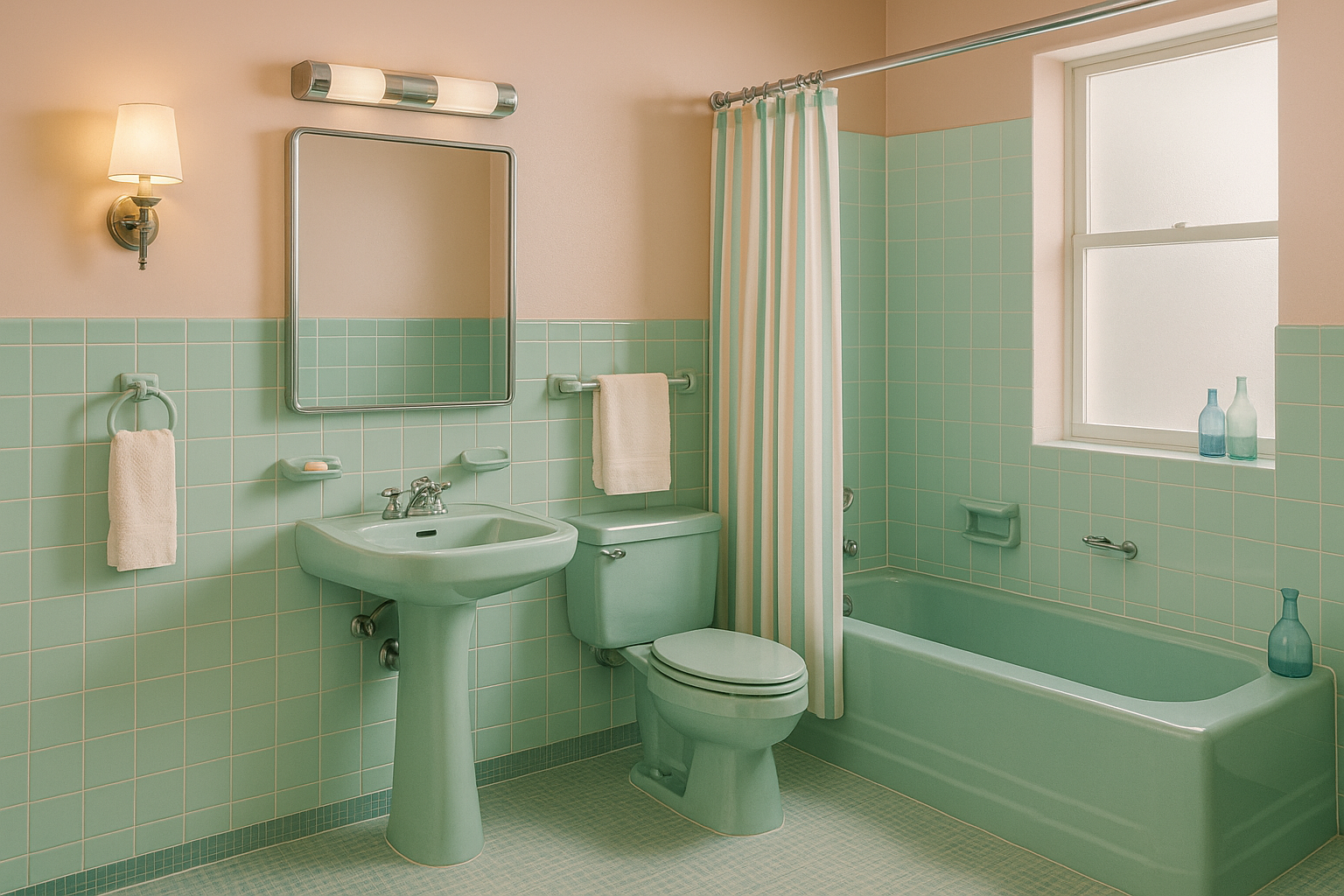
IMAGE: Bathroom showcasing 1950s midcentury style featuring classic fixtures, simple lines, and a blend of vintage and modern elements.
1950s bathrooms squeezed in style and function. Think small footprint, strong color, and smart organization.
Top Features
-
Pedestal sink or compact vanity—easy to clean around.
-
Colored ceramic tile on walls or floors (mint green, pink, black).
-
Chrome fixtures and towel bars—durable and shiny.
-
Built-in medicine cabinet—mirror and storage in one.
Expert Tip
Choose a 24″ vanity to give yourself elbow room but save space.
ENTRY ZONE
Entry Hall / Mudroom: First Impressions
Even small entryways were designed thoughtfully—hook racks, terrazzo or vinyl floors, clean sightlines.
Design Moves
-
Wall hooks or peg rail for coats and bags—functional and retro.
-
Console table or bench—small, key drop spot.
-
Vinyl or terrazzo floor—durable, easy to sweep.
Why It Works
This setup prevented clutter at the front door and gave the home a calm welcome.
Room‑by‑Room Guide to 1950s Home Interiors
Can You Make a 1950s Ranch Feel Modern Today?
Design Elements Across the Home
Here’s what ties it all together:
Materials & Finishes
-
Wood, vinyl, metal, and glossy tile—durable + low maintenance.
-
Pastels, primary colors, wood tones—simple palette with pops of interest.
Patterns & Texture
-
Graphic fabrics—dots, checks, abstract prints—used sparingly.
-
Mixed textures—wood furniture, metal lamps, and fabric upholstery.
Lighting
-
Mix pendants, sconces, and table lamps—functional and layered.
-
Consider primitive dimmers to control mood and save electricity.
Why Mid‑Century Modern Still Works in 2025
What Happens When You Get It Wrong
Avoid these mistakes:
✕ Using bulky furniture in a small space—makes it feel cramped.
✕ Skipping storage—1950s homes were smart about hiding clutter.
✕ Going all pastels—needs grounding elements like wood or metal.
Real‑world tips to recreate 1950s home interios—room by room. No fluff—just practical ideas you can actually use today.
What Real Experts Do
-
Pick smart furniture sizes to suit the space.
-
Combine old and new—match a vintage credenza with modern art.
-
Control light flow—windows + shades balanced with lamps.
IN FOCUS
What 1950s Interiors Got Right About Privacy

IMAGE: Infographic comparing 1950s home layouts with today’s open-plan designs, highlighting separate rooms for privacy and function versus modern openness.
(That We're Losing Today)
Most modern homes prioritize openness—big sightlines, fewer walls, everything on display. But 1950s interiors were quietly smart about privacy.
They weren’t just about aesthetics. They were built for real life:
● Bedrooms weren’t visible from the front door
● Kitchens were work zones—separate, not showpieces
● Front-facing windows were smaller, often with sheer curtains
● Backyards, not open-plan decks, were the real private retreat
➡ While today’s interiors often feel like you're living in a showroom, 1950s homes gave people places to hide, work, relax, or recover without putting it all on display.
In one mid-century ranch remodel I worked on, the homeowners told me straight up:
"We didn’t realize how much we missed closing a door and disappearing.”
In today’s ultra-connected, overexposed world, privacy is luxury.
And the 1950s nailed it—without smart glass, noise-canceling walls, or AI-controlled blinds.
Key takeaway: You don’t need open-concept everything. You need spaces that protect your peace.
MUST HAVES
Best Books, Decor & Furniture to Nail the Look
1950s House Must-Haves:
Want to recreate that true 1950s interior style?
Start with the right resources.
Below, we break down the best-selling books, essential decor pieces, and timeless furniture that actually fit the era—no kitsch, just the real deal.
Best 1950s Interior Design Books Worth Owning
Want to get the look right? Start with books written by pros. These aren't Pinterest fluff—they give you real examples, floorplans, and color palettes that defined the era.
Top Picks:
▪ Atomic Ranch: Midcentury Interiors
→ Pure 1950s homes, shot inside and out. Real homes. Real floorplans.
→ A must if you're redoing a ranch-style or split-level house.
▪ House & Garden 1950s House
→ Period-perfect paint, tile, wood trim, and room layouts.
→ Great for designers and homeowners restoring original details.
▪ Mid-Century Modern Complete
→ Big, beautiful reference—furniture, lighting, interiors, designers.
→ Serious value if you want a full-home redesign, not just ideas.
Best-Selling 1950s Furniture Pieces on Amazon
Mid-century furniture is everywhere now—but most of it’s just cheap knockoffs. These picks actually work for real homes and still sell fast during Prime.
Recommended Pieces:
▪ Modway Render Mid-Century Modern Sideboard
→ Fits in 1950s dining rooms and living rooms.
→ Clean walnut finish, tapered legs—exact 50s profile.
▪ Rivet Aiden Tufted Loveseat Sofa
→ Modern size but totally 1950s in shape.
→ Button tufting, compact, easy to match with period decor.
▪ Christopher Knight Home Armchair, Mid-Century Style
→ Classic accent chair shape, great for corners or reading nooks.
→ Wood legs + sloped armrest = nailed the 50s vibe.
Top 1950s-Inspired Decor & Lighting That Still Sells Today
The right accessories make or break the feel. These pieces are all best-sellers for a reason—they match the era and actually look good in real spaces.
Best Finds:
▪ Globe Electric 3-Light Mid-Century Standing Lamp
→ Brass + matte black with exposed bulbs.
→ Works in living rooms, studios, or offices.
▪ Starburst Wall Clock – George Nelson Style
→ 1950s icon. Every mid-century home had one.
→ Add it above a credenza or kitchen wall—done.
▪ Retro Geometric Curtains – 1950s Print
→ Period colors: mustard, teal, rust.
→ Pulls the whole room together without repainting.
Mistakes to Avoid
✕ Piling on bells & whistles—skip overstuffed accessories
✕ Buying generic “retro” that misses the style’s clean lines and functional roots
✓ Instead: pick a few genuine pieces and let them lead the room
Takeaway: A few well-chosen books, accent pieces, and a signature furniture item can transform your space from flat to authentic 1950s mid‑century. Real insight, minimal clutter, lasting style.
Next steps:
-
Grab one of the books to get grounded in the style
-
Add 2–3 decor accents
-
Pick a solid wood anchor piece for your room
This mix keeps it smart, simple, and true to the era.
FAQ
Q: Can I use bold wallpaper in modern rooms?
A: Yes—use as an accent wall, not all four walls.
Q: Are metal cabinets timeless?
A: Definitely—choose matte finishes and simple pulls for a vintage feel that lasts.
Q: Is open shelving okay in 50s style?
A: In small doses—too much and you lose that clean look.
“Formica countertops and rounded corners defined how kitchens worked—and how they felt.” – mid-century home restorer
Wrap-Up
1950s interior design was about smart choices that lasted.
Simple furniture, durable finishes, clever lighting—that’s what made these homes work.