

Dutch Architects: Why Their Work Still Shapes Cities
Dutch buildings carry a kind of blunt efficiency mixed with experimentation. Some are centuries old. Others look like they landed from the future. Dutch architects do not waste space. They do not hide their logic. And they rarely build just for looks. Walk the streets of Amsterdam or Rotterdam and you see it instantly.
Below is a field guide to the architects who defined Dutch design, the traits that make their work stand apart, and the global footprint they left on cities everywhere.
A Brief Lineage of Dutch Architecture
Early Roots
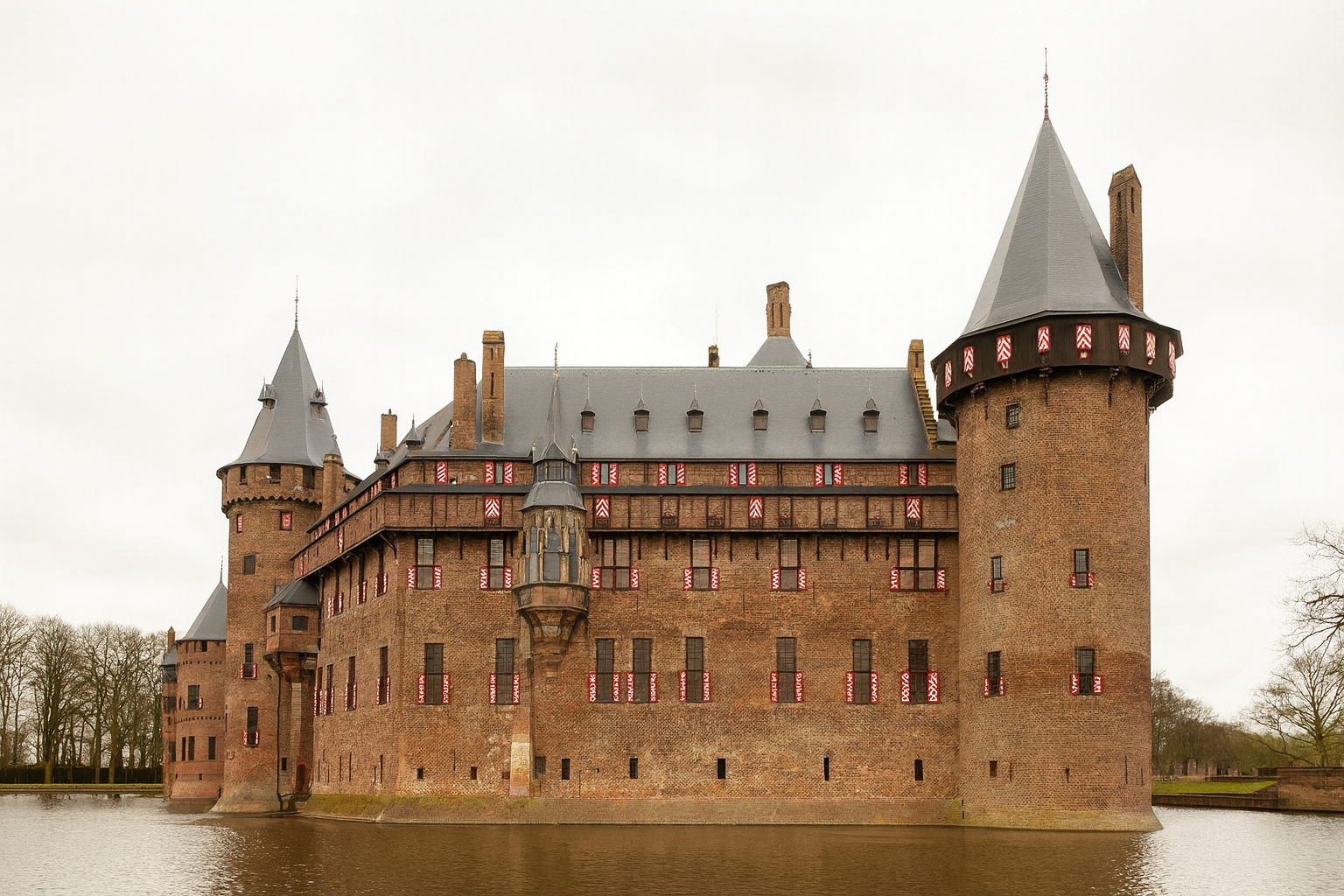
Dutch architecture grew under pressure: tight land, constant water battles, limited resources. That forced practical layouts and compact forms. Canal houses in Amsterdam, narrow but tall, were shaped by tax rules on frontage. Trapgevels, or staircase gables, were not decorative at first. They were a way to hoist goods.
Golden Age (17th century)
Trade wealth fueled a boom. Merchants built houses with fine brick façades and tall windows. Architects like Jacob van Campen gave the country civic buildings that still stand. Efficiency and craft were not separate from pride. They were the same thing.
Industrial 19th century
Rail stations, museums, factories, and housing blocks multiplied. Architects like Pierre Cuypers and Hendrik Petrus Berlage shaped Amsterdam with the Rijksmuseum and Amsterdam Stock Exchange. Brick, symmetry, and rational forms carried the weight.
Modernism and Beyond
The 20th century brought figures like Gerrit Rietveld and Willem Dudok, who redefined modern living with clean lines, new materials, and functional forms. After the war, rebuilding called for housing at speed. Functionalism drove the era, but Dutch architects also kept experimenting.
Today
Dutch firms like OMA, MVRDV, and UNStudio are global names. They push sustainability, density solutions, and bold shapes. At home, Dutch design still blends practicality with experimentation. Abroad, it reshapes skylines.
You might like: A Look at Dutch Architecture: From Classic to Contemporary
Famous Dutch Architects
Key Dutch Architects You Should Know
Dutch Architects: Shaping the World with Design That Works
How They Work With Land and Water
Spend time studying Dutch architecture and one thing stands out: nothing here comes free. The Netherlands has little land, constant water pressure, and tight urban grids. Architects learned to turn those constraints into fuel. They use space, water, density, and light as design tools. That problem-solving instinct shaped not only Amsterdam’s canals and Rotterdam’s skyline but also cities worldwide.
Gerrit Rietveld: Small Spaces That Work Harder
The Rietveld Schröder House in Utrecht looks modest from the street. Inside, it functions like three houses. Sliding partitions turn one room into many. Furniture folds, stacks, and disappears into the walls. Every square meter works.
Rietveld was not chasing theory. Families in crowded cities needed houses that could adapt by the hour. Morning play, afternoon work, evening sleep. The house shifted with its people.
Today, the logic feels even more urgent in cities with shrinking apartments. What to learn from Rietveld is not style. It is the principle that flexibility is the cheapest form of expansion.
Willem Dudok: Civic Pride with Brick
Hilversum Town Hall is Dudok’s statement. Nothing grand in material. Only brick. But the way he stacked and cut it gave a municipal building weight and clarity. A tower that signaled civic pride without extravagance.
The building proved a town could have dignity without marble or gilded domes. Geometry, proportion, and permanence gave it standing. People still work in it, use the square, and recognize the building as part of daily life.
What Dudok showed is that civic architecture can speak with restraint. Brick and order carry meaning when handled with precision.
Aldo van Eyck: Scale That Respects People
Van Eyck’s Amsterdam Orphanage looks like a village stitched together. Courtyards, passages, and low rooms connect in a rhythm. Children could move freely and feel both safe and independent.
His playgrounds across Amsterdam followed the same logic. Simple sand pits, stepping stones, and climbing arches turned leftover plots into neighborhood centers.
The lesson here is about scale. Large blocks alienate. Small, repeatable sequences connect. Van Eyck proved architecture is lived rhythm, not abstract geometry.
Rem Koolhaas: Density as Raw Material
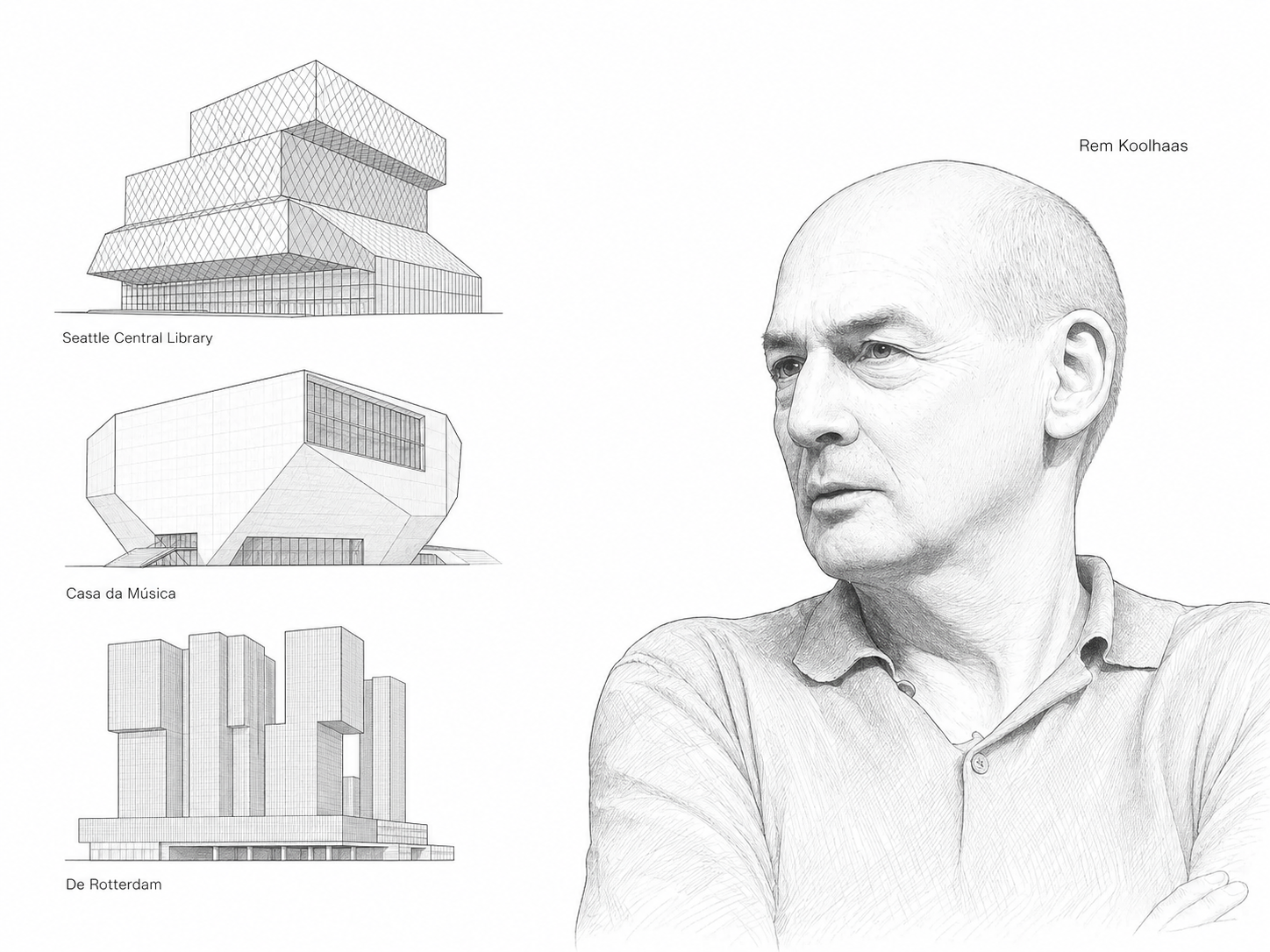
Koolhaas treats congestion as design fuel. In Delirious New York he described Manhattan’s chaos as a test ground. His buildings do the same.
De Rotterdam stacks offices, apartments, and hotels into one dense mass. The CCTV Headquarters in Beijing bends into a loop so departments see each other instead of being isolated.
Koolhaas does not escape density. He frames it, stages it, and often exaggerates it. That makes his work both controversial and influential. Architects can learn here that crowding is not always a problem. Sometimes it is the point.
MVRDV: Public Life Inside Buildings
The Markthal in Rotterdam wraps apartments over a food market. The result is a public square enclosed by housing. Murals on the ceiling are famous, but the real achievement is program overlap.
MVRDV uses this stacking logic in many projects. Housing towers with gardens. Offices that also work as plazas. Libraries that double as gathering space.
Their work is sometimes messy, sometimes brilliant. But it makes a clear argument: if land is scarce, private and public cannot live in separate boxes.
Koen Olthuis: Floating Buildings for Rising Seas
In Amsterdam’s IJburg district, whole neighborhoods float. Koen Olthuis designs them like boats you live in. Anchored, but able to rise with water. He has tested floating schools and clinics abroad as well.
This is not an eccentric project. It is a response to a shrinking land base and rising seas. The Dutch learned centuries ago that water is not a backdrop. It is a design partner.
Olthuis is exporting that idea globally. For flood-prone cities, his work is less about novelty and more about survival.
Piet Blom: Housing That Provokes
Experimental housing → Cube Houses, Silodam, floating homes
The Cube Houses in Rotterdam still divide opinion. The tilted geometry creates awkward corners and difficult layouts. Living inside them is not easy.
Blom was not aiming for comfort alone. He lifted housing up to create new public ground below. The cubes became cultural identity, even if they never solved mass housing at scale.
The point of Blom’s work is that experiments have value even if they do not produce a perfect template. They spark new paths, and Rotterdam owns its cubes as part of its character.
Michel de Klerk: Ornament for the Working Class
De Klerk’s housing in the Spaarndammerbuurt in Amsterdam twisted brick into sculptural waves. For working-class families, he gave apartments pride and identity through ornament and rhythm.
In an era when low-cost housing was expected to be plain, de Klerk insisted that texture and detail mattered. Residents lived in spaces that looked designed, not left over.
What it proves is that architecture for ordinary people deserves as much craft as monuments. That idea still shapes Dutch housing today.
Herman Hertzberger: Offices That Feel Like Streets
Hertzberger’s Centraal Beheer office in Apeldoorn broke the corporate mold. Instead of corridors and identical rooms, he created clusters linked by open passages. Workers could customize their corners, meet in shared voids, and use the building like a small city.
His housing carried the same pattern. Small cells joined by collective paths. The message was that architecture should allow change and improvisation, not freeze people into fixed roles.
What Hertzberger left us is not just buildings, but a reminder that flexibility should be built into every workplace and home.
Francine Houben: Warmth as Civic Equity
Houben, leading Mecanoo, builds libraries and public spaces with light and openness. Delft’s TU Library hides under a sloping lawn with a roof cone that became a campus symbol. The Library of Birmingham feels open and public, not closed and institutional.
Houben’s focus is on comfort and inclusion. She shows that civic architecture is not only about meeting codes. It is about making people feel welcome.
This is a different kind of legacy. It is not technical or formal. It is social.
Ben van Berkel: Flow Turned into Form
At Arnhem Central Station, crowds move through curves, ramps, and continuous surfaces. The design reduces chaos in one of the country’s busiest hubs. The Mercedes-Benz Museum in Stuttgart works the same way. Circulation is the architecture.
Van Berkel and UNStudio use digital modeling to test these flows, but the result is always physical and legible. People move without friction.
The lesson is that infrastructure is not neutral. It can be designed to guide, not just to contain.
Adriaan Geuze: Landscape as Structure
Geuze and West 8 reshape the ground itself. In Rotterdam, his water squares work as playgrounds on dry days and storm basins in rain. On Governors Island in New York, he sculpted hills from landfill to frame harbor views and give the city new topography.
Geuze proves landscape can be architecture. His projects show that terrain, soil, and slope can carry as much meaning as walls and roofs.
What Matters Here
Dutch architecture is not a style. It is a set of responses to pressure. Rietveld made small homes flexible. Dudok showed brick could carry civic weight. Van Eyck stitched courtyards into communities. Koolhaas turned density into spectacle. MVRDV stacked public and private into hybrids. Olthuis floated housing. Blom provoked with tilted cubes. De Klerk gave ornament to workers. Hertzberger cut corridors into streets. Houben added civic warmth. Van Berkel drew form from flow. Geuze built landscapes like buildings.
They did not share a look. They shared an approach. Start with constraint. Turn it into design. That is why Dutch architects continue to shape cities far beyond the Netherlands.
Famous Dutch Architects
Walk through Dutch buildings and you see the same pressures at play. Space is tight. Water is constant. Density is high. Light is scarce. The best Dutch architects respond to those constraints directly. They are not decorating problems. They are solving them.
A Walk Through Dutch Architecture’s Timeline
Brickwork tradition → from Amsterdam School to contemporary façades
Golden Age and Early Modern
Seventeenth-century architects like Jacob van Campen and Pieter Post set the tone. Van Campen’s Royal Palace in Amsterdam gave the Dutch Baroque its anchor—formal, civic, and confident. Post added civic works across the country, blending Italian classicism with Dutch pragmatism. Together, they laid a foundation where grandeur still served the public.
Nineteenth and Early Twentieth Century
By the late 1800s the mood shifted. Hendrik Petrus Berlage stripped buildings down to their bones, letting brick and steel carry the message at the Beurs van Berlage. You see the honesty in the walls—no disguise, no frills. Michel de Klerk took brick the other way with the Amsterdam School, turning it sculptural and expressive in housing blocks. Willem Dudok balanced the two—his Hilversum Town Hall is civic functionalism at its cleanest, a building that still sets the rhythm for its city.
Post-War and Late Twentieth Century
After the war, Aldo van Eyck re-introduced humanity with his Amsterdam Orphanage and the playgrounds scattered across the city. Modular, yes, but designed for people, not grids. Jaap Bakema rebuilt Rotterdam with the Lijnbaan, seeing streets as structural frameworks that carried life as much as commerce. Piet Blom kept pushing—his Cube Houses in Rotterdam still feel experimental today, a challenge to the idea of what “home” looks like.
Contemporary Icons
Now the spotlight is on global players. Rem Koolhaas and OMA stretched Dutch thinking into towers like De Rotterdam and even CCTV in Beijing. MVRDV took Rotterdam’s Markthal and Amsterdam’s Valley into bold, almost surreal territory. UNStudio, under Ben van Berkel, gave the Netherlands its Erasmus Bridge, a modern landmark, while also exporting design with the Mercedes-Benz Museum in Stuttgart. Neutelings Riedijk made the MAS Museum in Antwerp and Naturalis in Leiden reminders that Dutch architects still build institutions that feel civic, local, and international at the same time.
Sustainability Before It Was a Buzzword
Sustainability → solar panels, passive housing, circular building methods
The Netherlands has been forced into efficient design for centuries. Windmills once drained land. Today green roofs, energy-neutral offices, and circular building methods carry that forward.
The Edge in Amsterdam was called the world’s greenest office when it opened. Solar panels, smart lighting, and tight envelopes proved that corporate buildings could perform.
Adaptive reuse is another thread. Old shipyards turned into cultural districts in Amsterdam and Rotterdam show how sustainability is not only tech but reuse of structure and land.
Exporting the Dutch Mindset
Lessons Hidden in Their Details
The Dutch influence travels.
-
New York still shows early Dutch footprints in narrow street grids and gabled farmhouses.
-
Cape Dutch architecture in South Africa adapted whitewashed walls and ornate gables to local climate.
-
In Asia, colonial outposts carried verandas and canal-based layouts.
-
Today, global firms like OMA, MVRDV, and UNStudio export Dutch density logic to Beijing, Seoul, Dubai, and beyond.
The export is not style. It is method: work with constraint, treat water as design, and squeeze value from every square meter.
The Studios Driving Design Right Now
Walk around Rotterdam, Amsterdam, or Utrecht today and you’ll see the fingerprints of a handful of Dutch studios that keep pushing the field forward. Some lean on radical form, others on sustainability or social housing, but all of them are shaping how Dutch design is read worldwide.
OMA (Rem Koolhaas and partners)
Still the country’s most famous export. From De Rotterdam’s stacked towers to CCTV’s loop in Beijing, OMA moves between theory and steel with unusual ease. Younger partners now lead much of the work, but the culture of research and provocation remains. If you want to understand the global image of Dutch architecture, OMA is the starting point.
MVRDV
Known for playful density and fearless experimentation. The Markthal in Rotterdam folds housing over a public food hall, Valley in Amsterdam rises as a jagged green mountain in the Zuidas business district. Their projects often spark debate—too bold for some, visionary for others. But they keep showing how Dutch pragmatism can still surprise.
UNStudio (Ben van Berkel)
Smoother, more engineered elegance. UNStudio treats design like a system, with teams working across architecture, mobility, and product design. The Erasmus Bridge in Rotterdam became a civic symbol. Abroad, they’ve delivered the Mercedes-Benz Museum in Stuttgart and the Singapore University of Technology and Design campus. They frame architecture as infrastructure that connects people and movement.
Neutelings Riedijk Architects
Masters of cultural buildings. MAS Museum in Antwerp, Naturalis in Leiden, and the Netherlands Institute for Sound and Vision in Hilversum—all robust, public-minded projects with heavy material presence and strong facades. They show that Dutch design is not only about lightness and glass but also weight and civic permanence.
NL Architects
Smaller scale, sharper edges. They often work in housing, education, and public projects. Think BasketBar in Utrecht (a café under a basketball court) or De Flat in Amsterdam, a major residential retrofit. Their strength is turning constraints into clever form.
Benthem Crouwel Architects
Transport and infrastructure specialists. Schiphol Airport expansions, Amsterdam’s Central Station upgrades, metro projects. Their design work isn’t about flashy facades but about clarity, legibility, and flow at huge scales. Essential but often overlooked.
Koen van Velsen
Not a corporate studio but a consistent Dutch voice. His buildings, like the rehabilitation center in Haren or the library in Zeewolde, are quiet, contextual, and precise. They remind students and practitioners alike that restraint is a design choice with power.
Mistakes and Trade-Offs
Not every Dutch experiment aged well.
-
Some brutalist housing blocks of the 1960s became cold and alienating.
-
Cube Houses dazzled but proved uncomfortable for everyday family life.
-
At times, the chase for avant-garde images left residents with maintenance headaches.
Even failures matter. They show what happens when form gets ahead of use.
What Makes Dutch Architects Different
Water & landscape integration → dikes, canals, flood-resilient housing
1. Space Efficiency
Land in the Netherlands is scarce. Architects learned to work with small plots. Narrow houses, vertical stacking, and multi-use rooms are not trends. They are tradition.
2. Integration with Water
Flood control is a national habit. From dikes and canals to floating neighborhoods in Amsterdam, water shapes Dutch design more than style guides ever could.
3. Craft with Logic
Brick bonds, timber joinery, and precise proportions give Dutch work a tactile weight. Even in minimalist buildings, detailing is tight.
4. Global Reach
From colonial Cape Dutch forms in South Africa to modern Dutch firms building in Asia and the US, Dutch design travels. Its roots stay visible: practicality, water, efficiency.
5. Sustainability
Floating farms, net-zero offices, and adaptive reuse show how Dutch firms connect design with survival. In a low-lying country, sustainability is not optional.
You might like: Dutch Colonial Architecture: What It Is and Why It Still Works
Dutch Architects in New York: A Walk Worth Taking
Walk Stone Street in Lower Manhattan. The cobbles and angled façades feel closer to Amsterdam than London. Names like Wall Street and Bowling Green trace Dutch origins.
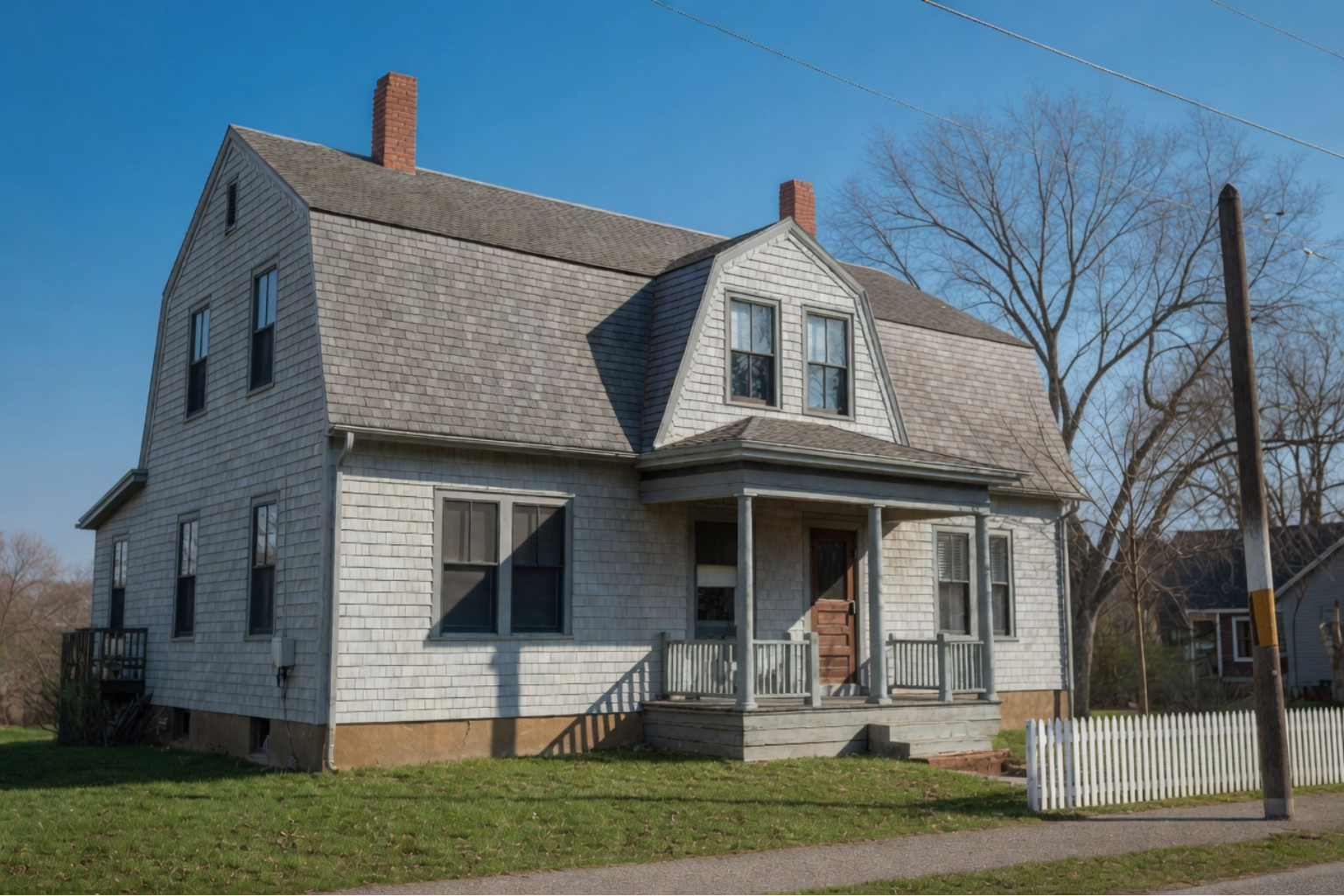
Step into the Dyckman Farmhouse in Inwood, Manhattan’s last Dutch Colonial home. Gambrel roof, thick stone walls, and modest scale. It still reads as Dutch logic transplanted.
On Governors Island, look at The Hills designed by Dutch landscape architect Adriaan Geuze. Earth moved into topography that reshapes public space. Dutch ideas, alive in a New York park.
The Dutch footprint in New York is not nostalgia. It is in the bones of the grid, the street names, and the way public space still blends commerce and community.
You might like: New York Architecture History: From Dutch Roots to Skyscraper Kings
What Students Can Learn From Them
How to Put It Into Practice
The Dutch never start with style. They start with rules that keep buildings alive. Draw the thermal and functional line before you even sketch. Treat water as part of the site. Shape daylight first, then think about fixtures. Use modules and repeatable details instead of ornament. Density is not a problem. It is the brief.
Mistakes I Keep Seeing
Too many students treat Dutch work as a look. It is not. Those canal gables, cube houses, or brick schools had logic behind them. Strip the logic and you are left with gimmicks. Another common trap is thinking Dutch innovation is about strange shapes. The real moves are in systems, adaptability, and precision.
Lessons Worth Copying
The best Dutch work teaches discipline. Always close the thermal line. Continuity of envelope is sacred. Draw sections early. Daylight and ventilation flow through cuts, not just footprints. Let water drive the design, even in small projects with ponds or swales. Keep forms simple if money is tight and let proportion and material do the work. Think modular. Movable walls, repeatable details, and furniture as architecture make small spaces live larger.
What It Really Takes
I have worked alongside Dutch firms and studied their process. Three constants stand out.
First, they spend more hours up front. Energy, daylight, and circulation models are run in concept, not after CDs. That early discipline saves weeks of redesign.
Second, their detailing is ruthless. Brick bonds, rooflines, and drainage are treated as structural logic. Cut corners and the whole design looks off.
Third, budgets are lean. Recycled brick, modular timber, and simple geometries keep projects affordable without stripping character. You lose some flourish, but you gain durability and adaptability.
Dutch Architecture Next: Where the Work Is Heading
The next wave of Dutch architects will not just chase form. They will focus on climate resilience, modular housing, and urban reuse. Expect more floating structures, more hybrid roofs, and more social programs built into housing blocks.
Dutch firms already lead in net-zero design and adaptive reuse. Their lessons are global: build small, plan dense, respect water, detail carefully.
Closing
Dutch architects prove that architecture is problem-solving before it is decoration. They built on wet land, in tight grids, under constant economic pressure. Out of those limits came methods that still guide global design today: flexible plans, modular systems, daylight-first logic, and water as a partner. That is why the Dutch story is not nostalgia. It is a playbook for the present.
FAQ
Q1: What is Dutch architecture known for?
A: Dutch architecture is celebrated for its innovation, sustainability, and functional design. It ranges from the ornate details of Dutch Renaissance Architecture to the sleek, minimalist lines of Modern Architecture in the Netherlands.
Q2: Who are some famous Dutch architects?
A: Some famous Dutch architects include Rem Koolhaas, known for his work with OMA, Gerrit Rietveld, a pioneer of the De Stijl movement, and Piet Blom, famous for the Cube Houses in Rotterdam.
Q3: What is Dutch Structuralism?
A: Dutch Structuralism is an architectural style that emerged in the mid-20th century, focusing on human-centric design and the organization of spaces to encourage interaction and community.
Q4: What are the top architecture firms in the Netherlands?
A: Some leading Dutch architecture firms include OMA, MVRDV, and UNStudio, all of which are known for their innovative and sustainable designs.
Q5: How does modern Dutch architecture differ from traditional styles?
A: Modern Dutch architecture tends to emphasize minimalism, sustainability, and the use of new technologies, while traditional Dutch architecture, such as that from the Renaissance period, is known for its intricate brickwork and gabled facades.
Q6: Where can I see examples of contemporary Dutch architecture?
A: Examples of contemporary Dutch architecture can be found throughout the Netherlands, particularly in cities like Rotterdam, Amsterdam, and The Hague, which are home to many innovative buildings and urban designs.
Q7: How has Dutch architecture influenced global design trends?
A: Dutch architects have significantly influenced global design trends through their emphasis on sustainable design, urban planning, and innovative use of materials, helping to shape modern architecture around the world.
Resources
- Architectuur.nl: A leading Dutch architecture magazine offering insights into contemporary architecture in the Netherlands.
- Rijksdienst voor het Cultureel Erfgoed: The Dutch Cultural Heritage Agency, providing information on the preservation and history of Dutch architecture.
- Het Nieuwe Instituut: The national institute for architecture, design, and digital culture in the Netherlands, offering resources on Dutch architectural practices.
- BNA (Royal Institute of Dutch Architects): The professional association for Dutch architects, offering resources, news, and information about the architecture profession in the Netherlands.
- Rijksoverheid (Dutch Government): The official government site providing information on building, living, and changes to the living environment in the Netherlands.