
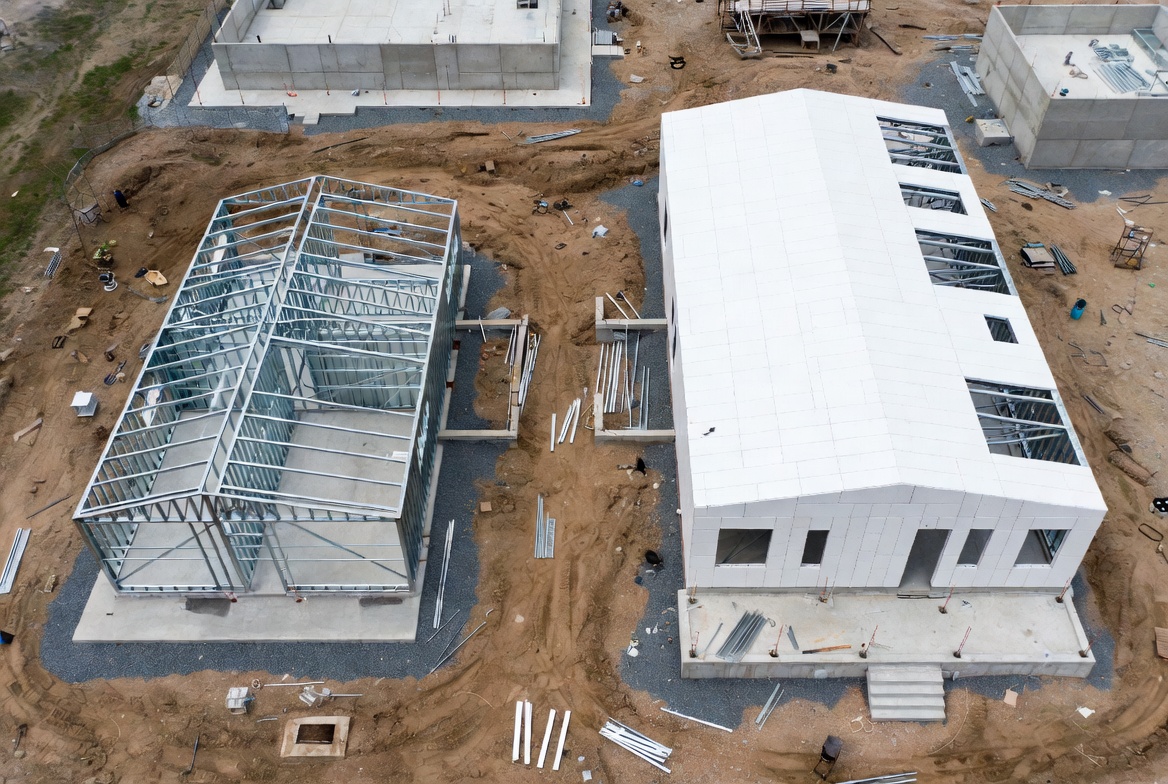
A lot of prefab metal building price pages make the same move: they show one attractive number, then leave you to figure out later whether that number meant a kit, an erected shell, or something close to usable.
That is where people get burned.
In 2026, prefab metal buildings can still be a smart buy. But the cheap-looking number is often just the start. A shell quote is not a project budget, and a project budget is not the same thing as a finished working building.
If you want the broader system view first, read Prefab Metal Buildings: Types, Costs, and Benefits. This page stays on what the numbers usually mean, what pushes them up, and where buyers misread the deal.
Start With The Scope, Not The Sales Number
The first cleanup is simple. When a supplier says “price,” ask price for what exactly?
| Price Type | What It Usually Includes | What It Commonly Leaves Out |
|---|---|---|
| Kit Only | Main steel package, roof and wall panels, basic framing components | Slab, site prep, erection, permits, freight, doors, insulation, electrical, plumbing, interior work |
| Installed Shell | Kit, delivery, and basic erection | Interior fit-out, utilities, HVAC, office build-outs, some foundations, some door packages, finish work |
| Project-Level Budget | Shell plus more of the real build scope | Often still excludes parts of site work, special equipment, utility upgrades, and some finish items |
The common mistake: comparing a shell quote to a usable finished building and thinking one company is just cheaper. Sometimes the cheaper number is just missing half the job.
2026 Budget Ranges That Are More Useful
These are early planning ranges, not promises. Wind zone, snow load, eave height, roof pitch, framed openings, insulation, and region can change them fast.
| Common Size | Shell Kit Budget | Installed Shell Budget | What Usually Pushes It Up |
|---|---|---|---|
| 30x40 1,200 sq. ft. |
$18,000-$30,000 | $28,800-$51,600 | Taller eaves, heavier loads, bigger doors, insulation, slab scope |
| 40x60 2,400 sq. ft. |
About $24,000-$43,200 | Roughly $57,600-$103,200 | Clear-span demands, crane time, openings, framed endwalls, regional labor |
| 50x100 5,000 sq. ft. |
About $33,640-$75,000 | Roughly $120,000-$215,000 | Engineering loads, slab thickness, door package, freight, site work |
That spread is not random. A simpler farm storage shell and a higher-spec clear-span commercial building are not the same thing, even when the footprint looks similar in a listing title.
If your project is more garage, workshop, or light storage than large commercial shell, Small Prefab Metal Building Prices: What You Need to Know is the better side page.
Why Two 40x60 Quotes Can be Far Apart
This is where buyers start thinking someone is either ripping them off or hiding margin. Sometimes that happens. A lot of the time, though, the scopes are just different.
| Cost Driver | Lower-Cost Version | Higher-Cost Version |
|---|---|---|
| Frame Type | Basic storage-oriented shell | Clear-span or heavier-duty structural package |
| Eave Height | Modest clearance | RV, lift, equipment, or mezzanine-ready height |
| Openings | Few standard doors | Large roll-up doors, more framed openings, operators, windows |
| Design Loads | Lighter local requirements | Higher wind, snow, exposure, or code demands |
| Foundation Scope | Basic slab assumptions | Thickened edges, more reinforcement, drainage, heavier load design |
| Project Location | Easy access and ordinary labor market | Remote site, tighter access, freight and erection complexity |
Same width and length do not mean same budget. Not even close.
The Detail People Miss
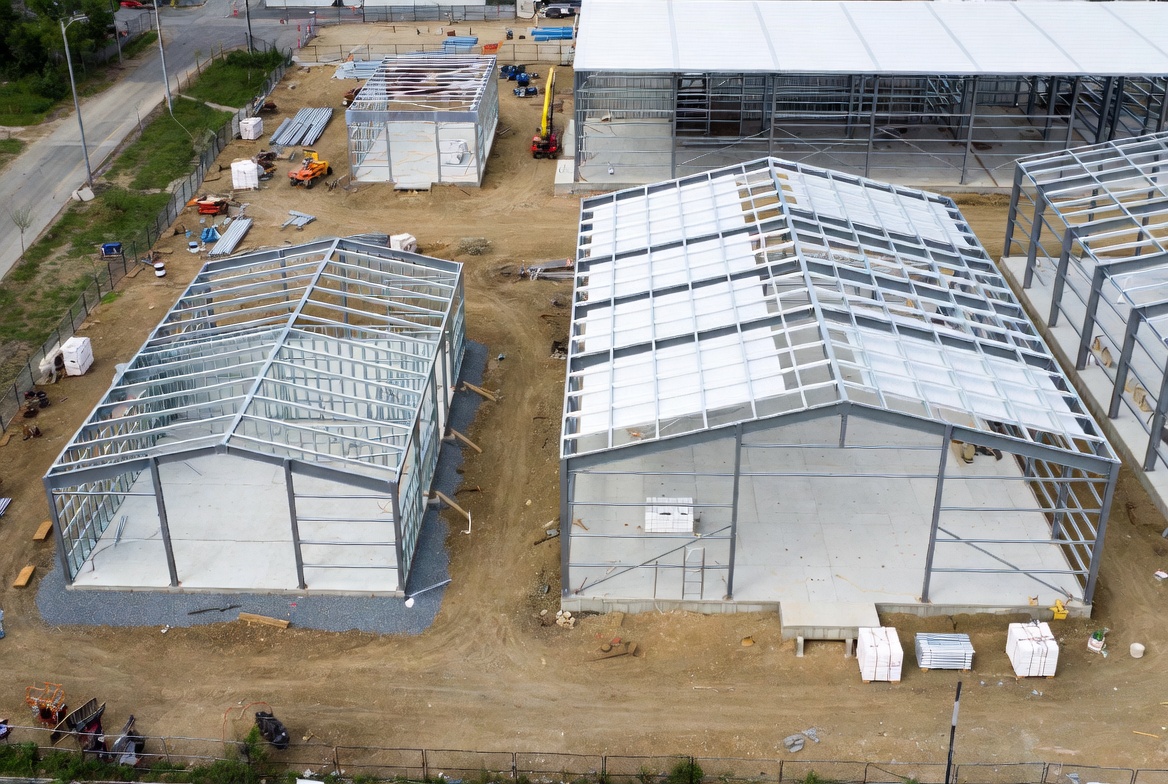
Image by ArchitectureCourses.org. Prefab metal building shells at different stages of construction, useful for showing why kit price, installed shell price, and more complete project scope are not the same number.
Eave height changes more than people expect. A 40x60 meant for basic storage is one thing. A 40x60 meant for lifts, RVs, taller roll-up doors, mezzanine clearance, or equipment movement is another. Same footprint. Different steel package. Different bracing. Different openings. Different cost.
That is why cost per square foot is useful for a first pass, but weak once the building starts doing real work.
What a Cheap Quote Usually Leaves Out
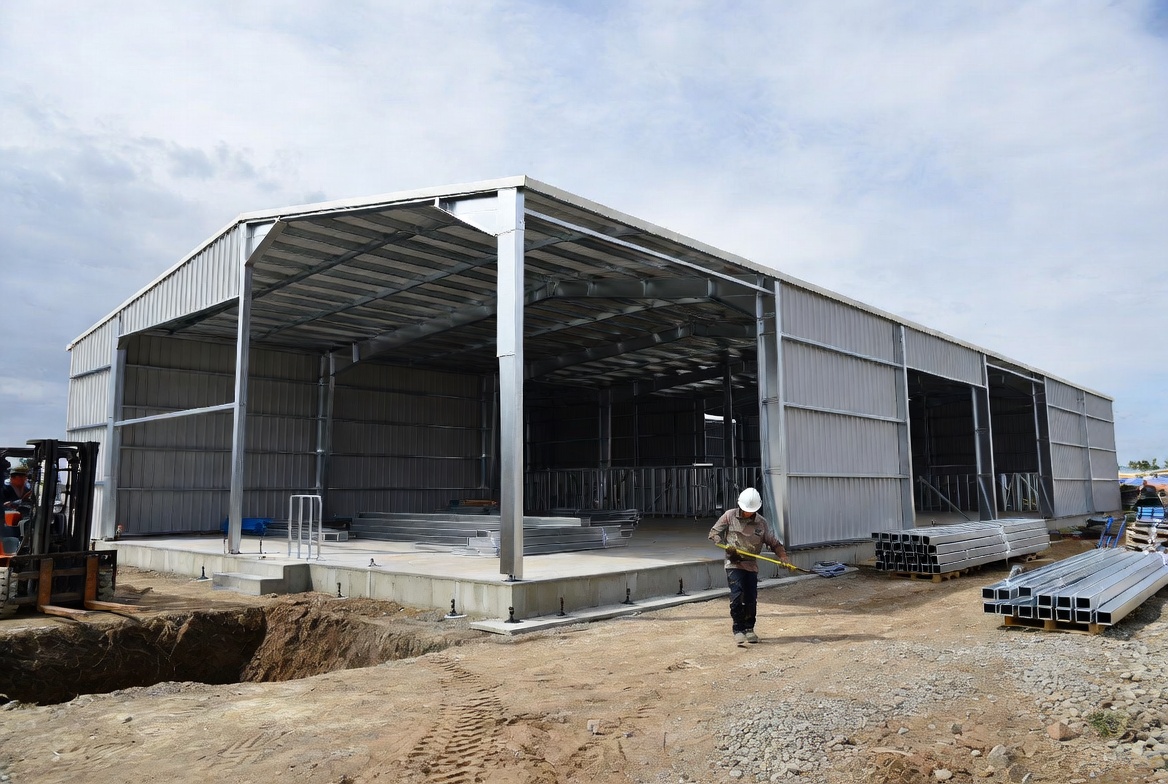
Image by ArchitectureCourses.org. Prefab metal building erection on an active jobsite, showing how slab work, steel delivery, labor, and erection logistics can push project cost higher than the shell number alone.
Slab and Site Work
The slab is not a background number. Excavation, grading, compaction, drainage, rebar, anchor layout, and concrete can change the project fast. On many jobs, the foundation side of the budget is where the “cheap building” story starts to fall apart.
Doors and Openings
Big roll-up doors, operators, man doors, windows, and framed openings are one of the fastest ways to push a shell upward. They also affect the structure around them.
Engineering Loads
A quote built around lighter assumptions is not automatically wrong. It may just not match your county, your exposure, or your permit review. That is why quote comparisons without matching loads are usually fake comparisons.
Utilities and Usability
Power, lighting, plumbing, HVAC, office partitions, liner systems, and insulation are where a storage shell stops being a storage shell and starts becoming a working building.
Freight and Erection
Distance, crane needs, rough access, or schedule constraints add cost without making the building look any different in the final photo. Buyers miss this all the time.
A Better Way to Budget a 30x40
A 30x40 is where a lot of buyers start because it looks manageable. It usually is. It is also the size where people most often get fooled by the shell number.
Here is the cleaner way to think about it:
| Budget Layer | What To Ask | Why It Matters |
|---|---|---|
| Shell | Kit only or installed shell? | This changes the comparison immediately |
| Foundation | Is the slab included, engineered, and sized for the actual use? | A workshop slab is not always a light-storage slab |
| Access | How many doors, what size, and what operators? | Openings can move the budget hard |
| Services | Do you need power only, or plumbing and HVAC too? | This is where a shell becomes a real building |
| Envelope Upgrades | Will it stay unconditioned or be used daily? | Insulation and climate control change the whole cost logic |
A 30x40 that looks cheap online can still end up tens of thousands higher once slab, erection, doors, power, and insulation are handled properly. That is not bait-and-switch every time. Sometimes it is just the first quote being incomplete.
What Actually Works vs What Commonly Goes Wrong
| Do This | Not This | Why It Matters |
|---|---|---|
| Compare shell quotes to shell quotes | Compare a bare kit to a more complete installed package | You stop fake savings from driving the decision |
| Match wind, snow, and code assumptions | Assume same size means same engineering | You avoid underpricing the real building |
| Budget the slab early | Treat the foundation like a later detail | You catch one of the biggest cost traps up front |
| Define every opening clearly | Say “shop” or “garage” and hope the quote matches your use | You keep the package from drifting after the first revision |
| Ask what is excluded in writing | Read only the headline number | You catch freight, permits, erection, and utility gaps early |
How to Spend Smarter Without Buying the Wrong Building
- Keep the geometry clean. Standard sizes and simpler shapes usually price better.
- Do not overspec the height. Buy the clearance you need, not the clearance that sounds impressive.
- Decide the door package early. Late changes here are a classic budget leak.
- Separate storage from conditioned workspace. Those are not the same building budget.
- Get multiple quotes on the same scope. Same loads. Same openings. Same roof style. Same slab assumptions.
- Push for exclusions in writing. This matters more than polished sales language.
What to Do Next
Also Useful: Metal Buildings: Everything You Need to Know if you want the broader system view before comparing suppliers or frame types.
Worth Knowing: Prefab Metal Buildings: Types, Costs, and Benefits if you are still deciding whether prefab is the right route at all.
This Part Matters: Small Prefab Metal Building Prices if your project is closer to a garage or workshop than a larger commercial shell.
FAQ
Are prefab metal buildings still cheaper than conventional construction in 2026?
Often, yes, especially on the shell side. But that is only a fair statement when you compare equal scope to equal scope. Once utilities, slab complexity, and interior fit-out show up, the gap can narrow fast.
What is a realistic 30x40 prefab metal building budget in 2026?
A realistic answer starts with use, not size. A light-storage 30x40 and a daily-use insulated workshop 30x40 are different budgets. The shell may look manageable, but the project number changes once slab, openings, erection, and services are added.
Does the quote usually include the slab?
Not automatically. Some buyers assume it does because the total sounds too complete not to. That assumption is one of the easiest ways to underbudget the job.
Why do same-size quotes vary so much?
Frame type, eave height, wind and snow loads, door package, insulation, freight, erection scope, and site conditions all matter. Same footprint does not mean same engineering or same building use.
When does a cheap shell stop being cheap?
Usually when the building has to do more than sit there. The moment you need taller doors, conditioned space, power, plumbing, office space, or heavier slab performance, the shell number stops telling the full story.
Should insulation be planned now or later?
If the building will be occupied regularly, used as a shop, or expected to hold temperature better than a basic storage shell, it is usually smarter to plan insulation and envelope details from the start. Retrofitting those decisions later is rarely the cleanest or cheapest move.