
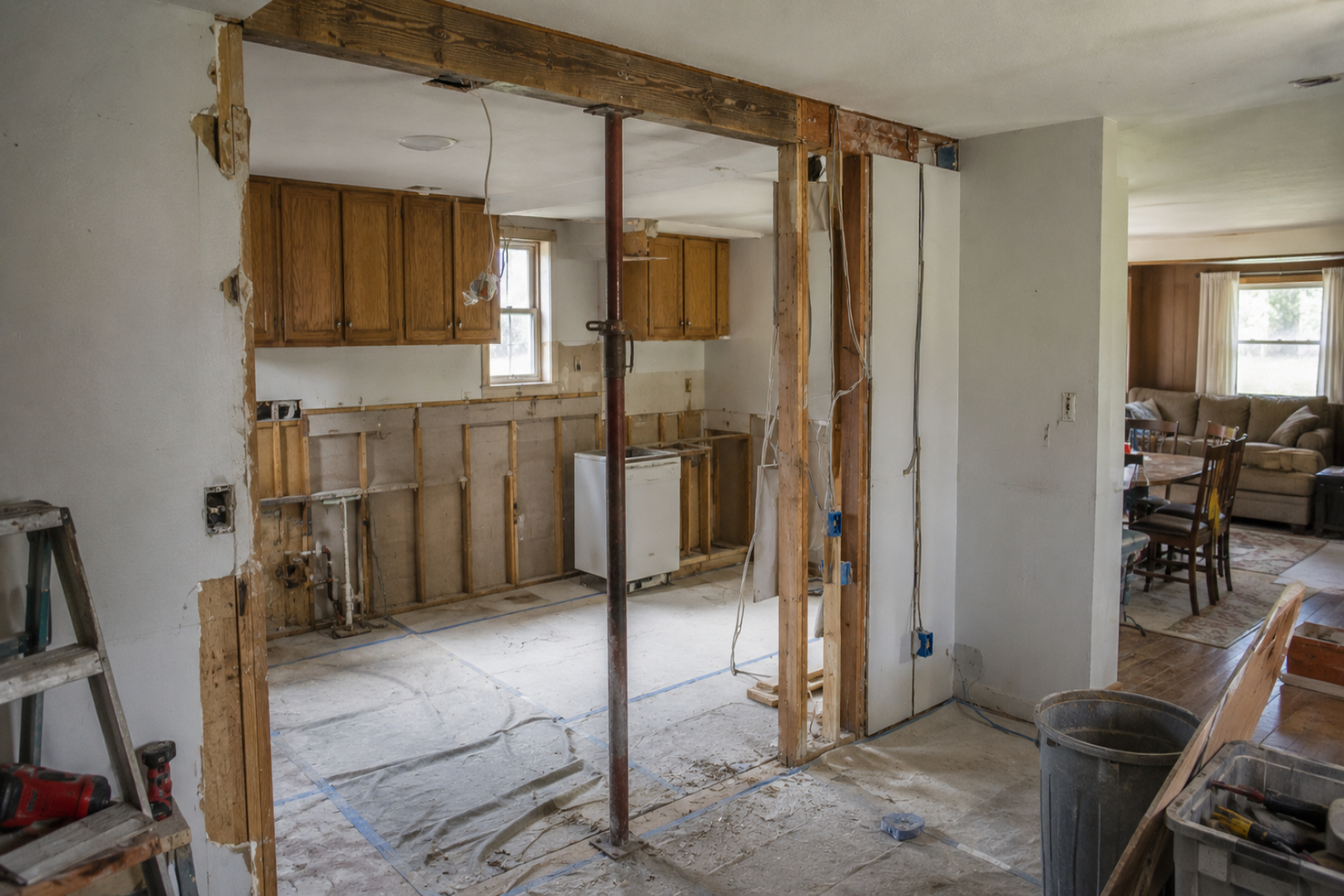

Removing a ranch kitchen wall can make the room better fast.
It can also turn a small kitchen job into a whole-house repair.
The wall may be carrying ceiling load. It may hide a return duct, switches, outlets, old wiring, or plumbing. Once it comes out, the floor stops short, the ceiling texture does not match, and the beam still has to land somewhere.
The demolition is not the expensive part. The cost is usually in the beam, posts, patching, permits, rerouted systems, and layout changes that follow.
The mistake is treating wall removal like a design choice. It is structure, systems, storage, and finish repair first. The opening comes later.
Start Above the Wall
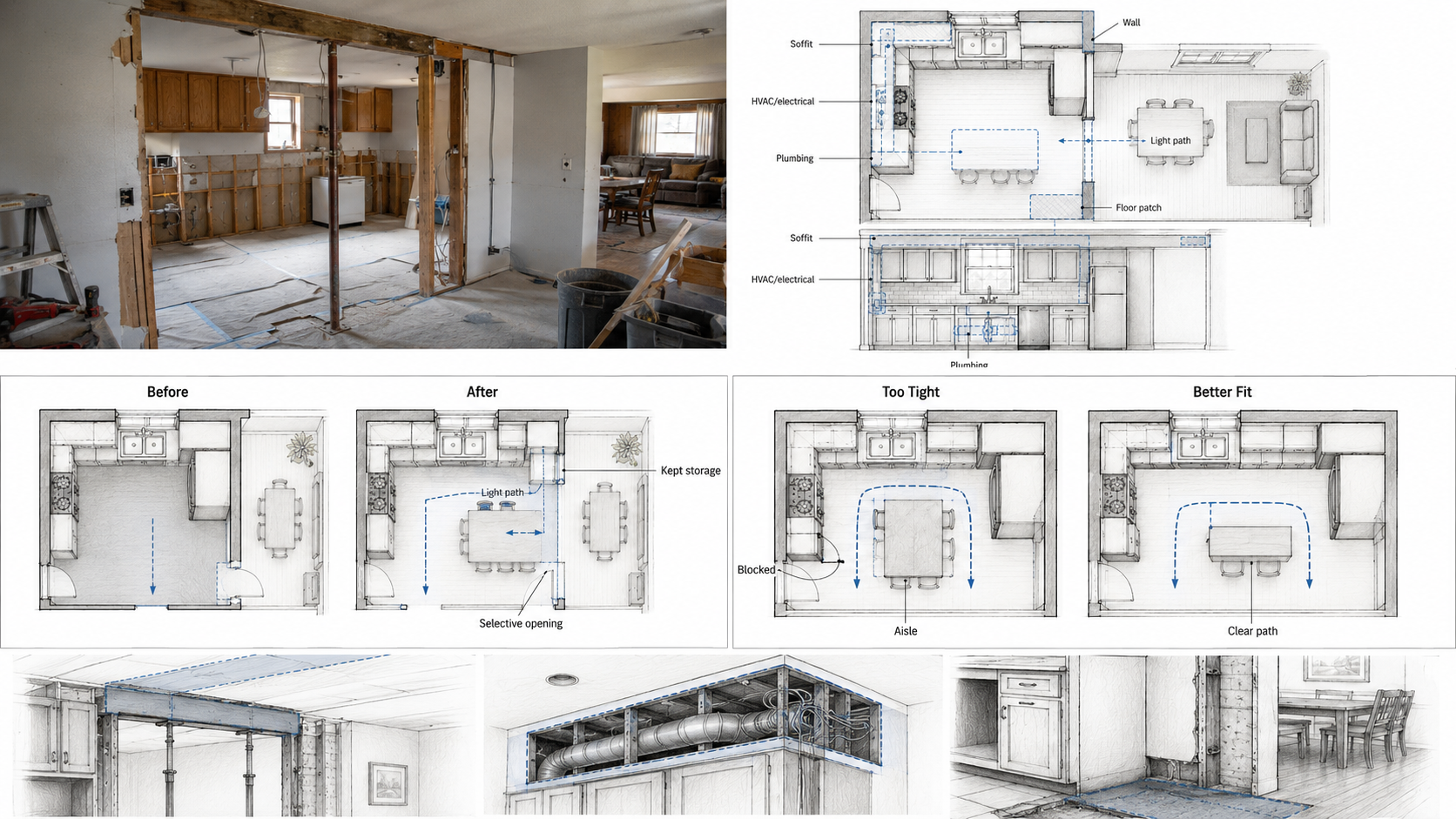
The ceiling usually tells you more than the kitchen does.
Before anyone prices an opening, check the framing above the wall. Look at joist direction. Look at roof framing if the house has a low attic. Look at whether the wall lines up with other bearing points. In a single-story ranch, a wall running under ceiling joists or roof loads deserves suspicion until someone qualified proves otherwise.
Suspicion is not proof. A wall can look important and be only a partition. Another wall can look harmless and still be carrying load. Guessing is where the project starts getting expensive.
If the wall is bearing, the load still needs a path after the studs are gone. That can mean a beam, posts, bearing points at each end, and sometimes work below the floor if the load does not land cleanly. A clean kitchen sketch can become structural work, permit review, ceiling repair, and a different cabinet plan.
Read how to tell if a wall is load-bearing in a single-story house before pricing the opening. For the broader structural difference, see load-bearing vs non-load-bearing walls.
The Wall May Be Carrying Services Too
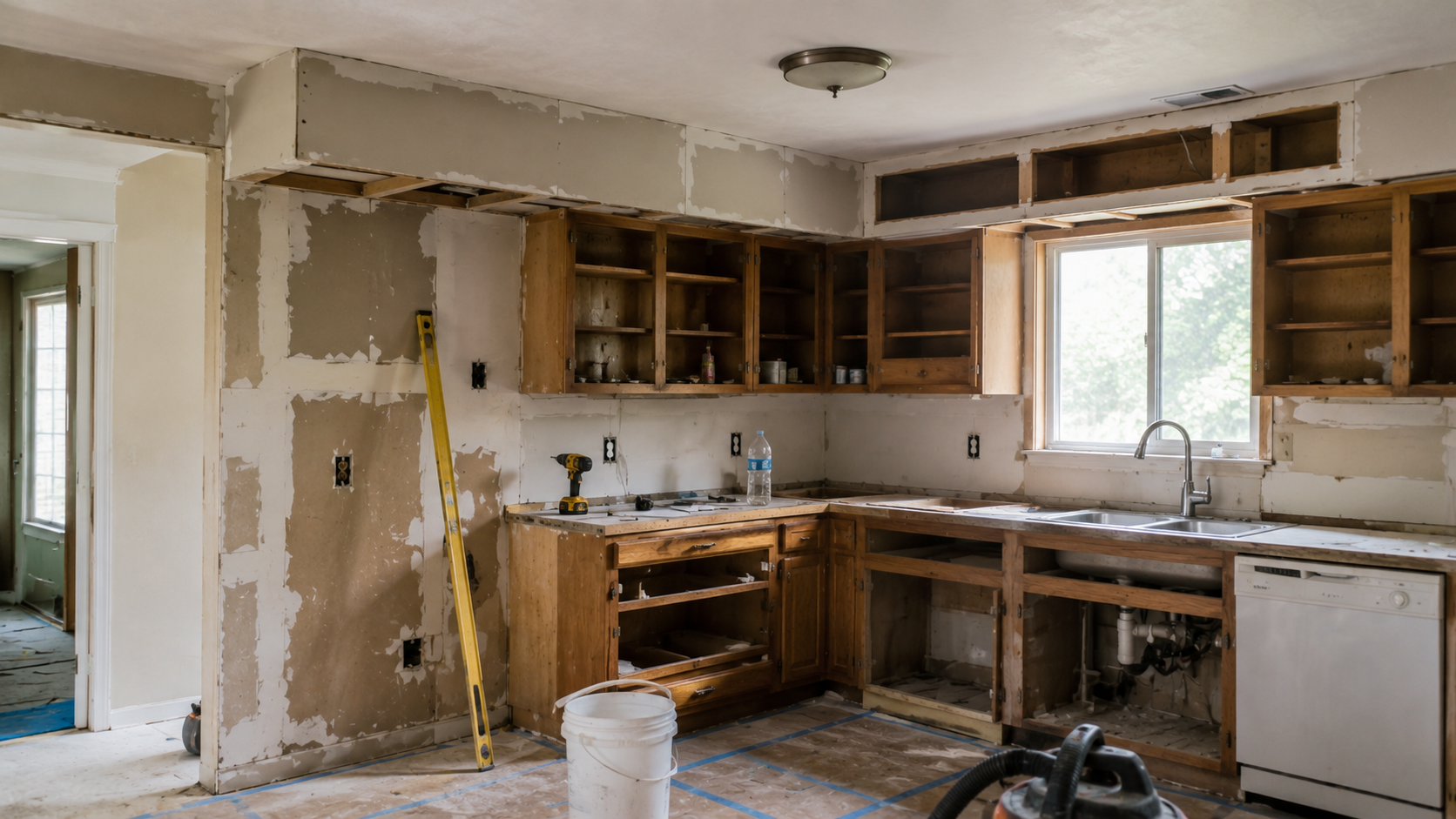
Structure is only one part of the problem.
Kitchen walls in ranch houses often hide the work nobody priced carefully enough. Return-air paths. Switch legs. Small-appliance circuits. Range or microwave wiring. A plumbing vent. Old repairs that do not match current drawings because there are no drawings. Sometimes the duct is not in the wall but in the soffit above it, which only moves the problem up a foot.
This matters because every hidden system creates a second job. The wall comes down. Then the air needs another route. The wires need protection and a new path. The switch bank needs a home. The vent stack does not care that the rendering looked better without the wall.
If the opening only works after four other systems are pushed into awkward routes, the opening was never simple. It was underpriced.
Full Removal Is Not Always the Better Move
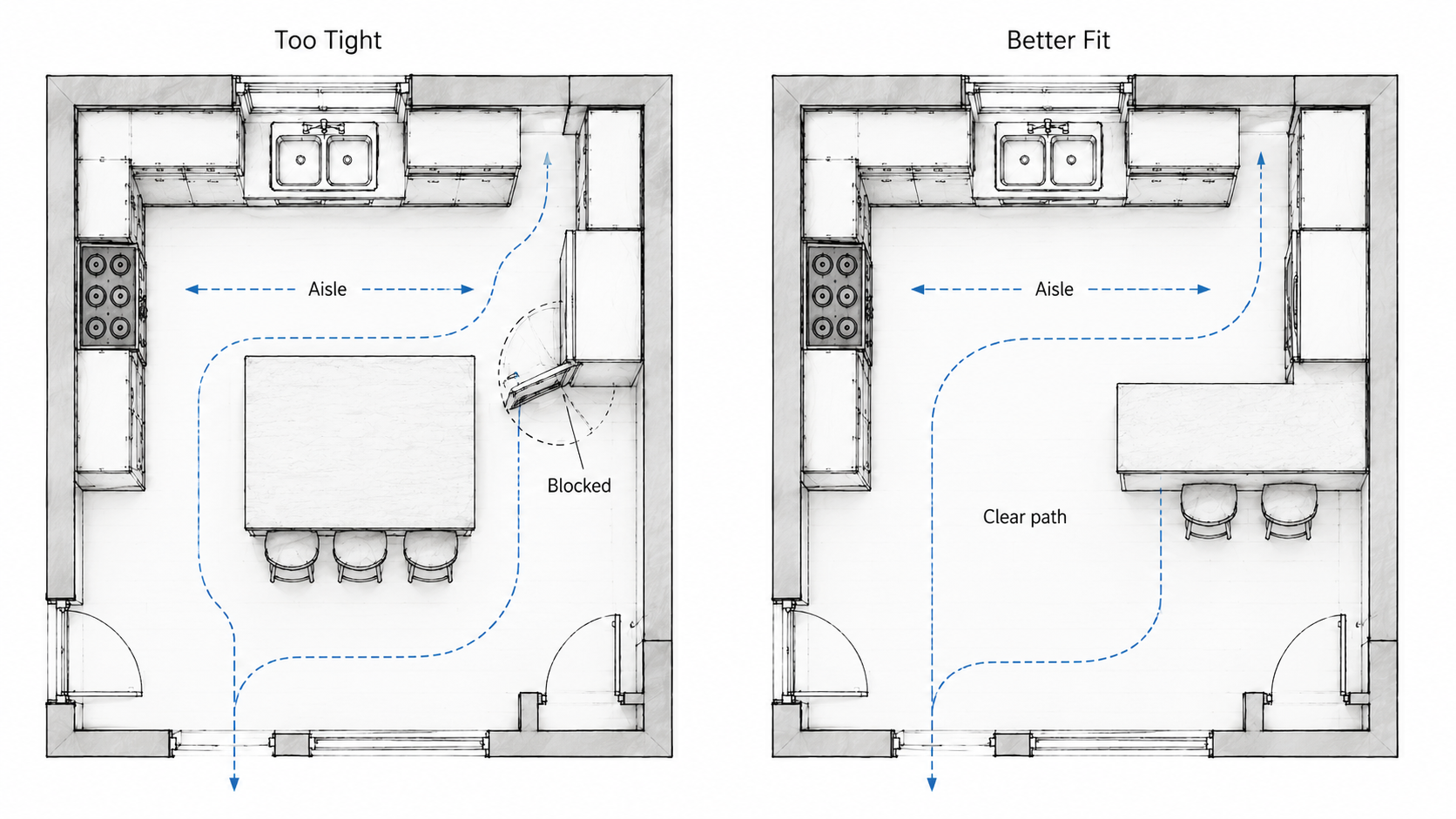
Usually, the whole wall does not need to disappear.
The worst ranch kitchen wall removals improve the photograph and damage the room. The kitchen gets brighter, but the storage vanishes. The living room gets more daylight, but loses the only useful furniture wall. The refrigerator sits in full view from the sofa. The beam hangs below the ceiling. The house is open and still irritating.
A smaller opening can do more useful work. A controlled opening can improve light, sightlines, and movement without turning the entire main floor into one room. A pass-through can help supervision and daylight while preserving cabinet space. A wider doorway may solve the real circulation problem without forcing the kitchen into the living room.
Full removal can make sense when the wall is confirmed non-bearing, the ducts and wiring have clean routes, storage is replaced without crowding the room, and the adjacent living or dining area can absorb the change. That last part matters. A wall opening has to improve both rooms, not only the kitchen photo.
If the plan only works as a clean diagram, it does not work.
For the broader layout side, see ranch house kitchen layout problems and better fixes and open floor plan ranch house.
What the Opening Changes After Demo
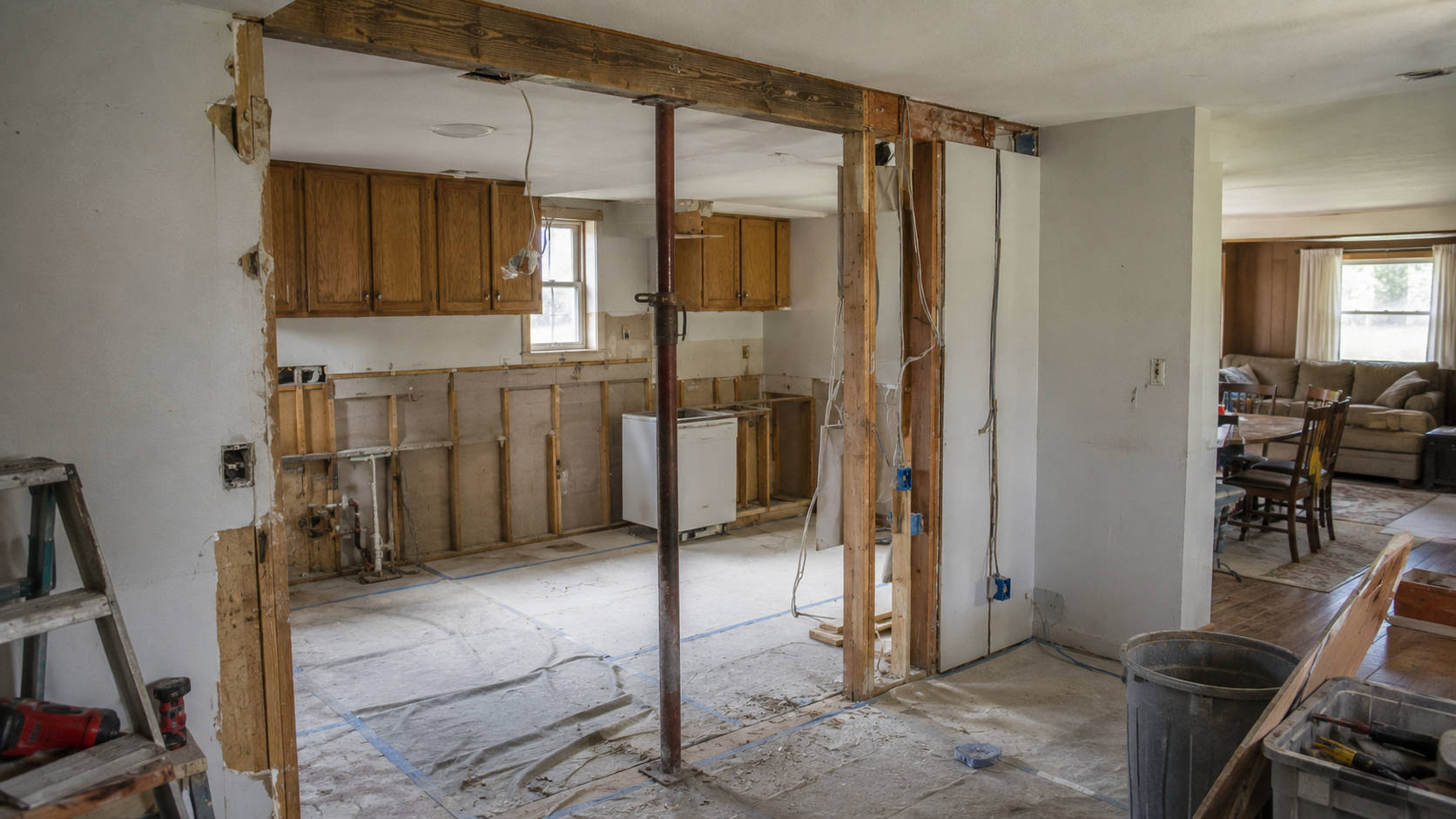
The wall removal is only the visible part.
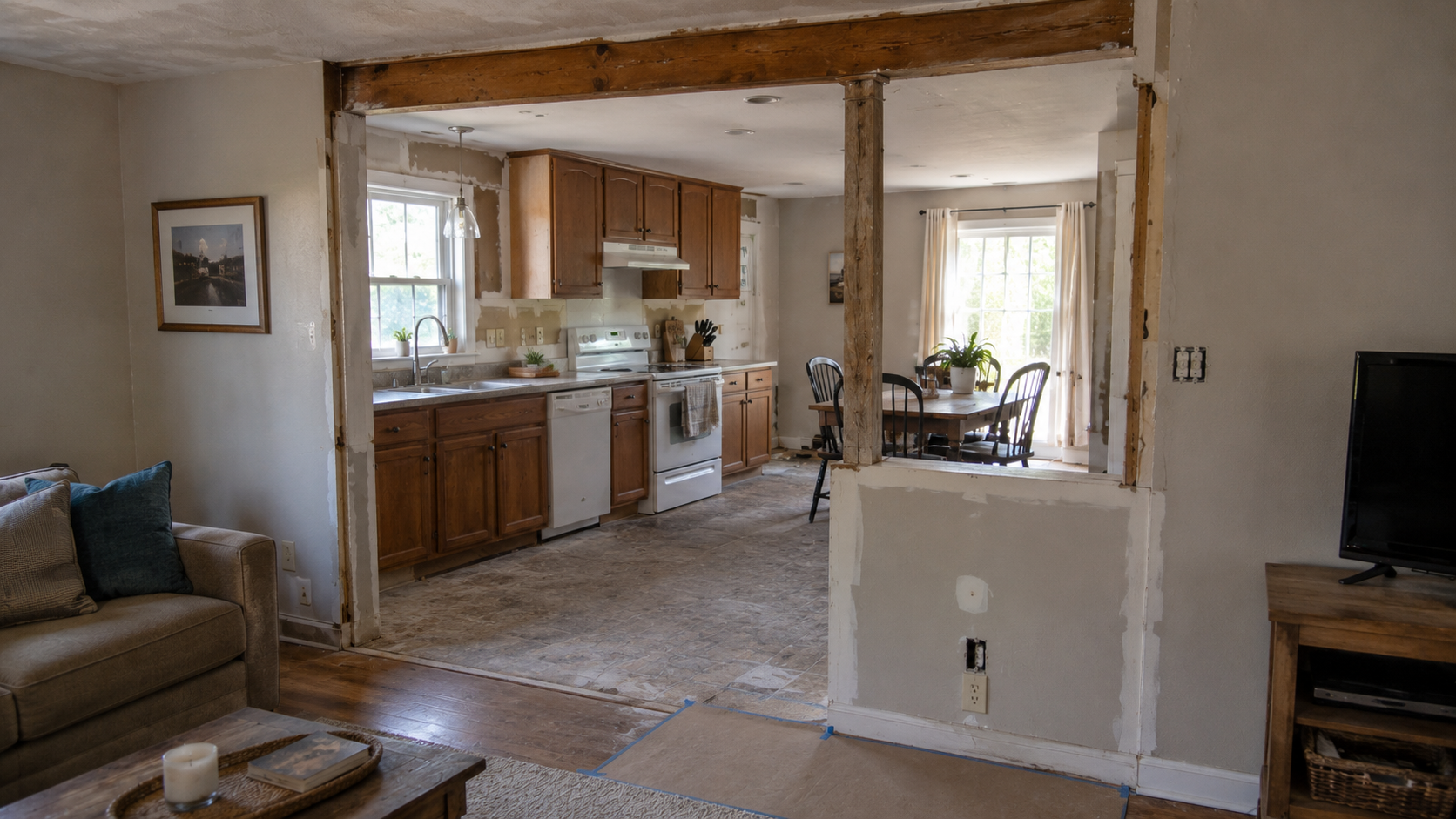
Once the wall is gone, the house still has to be put back together as one room. Ceiling drywall gets rebuilt. Old texture may not match. Flooring may stop where the wall used to be. Baseboards disappear. Cabinet edges move. Lighting that made sense in two separate rooms may now look stranded in the wrong places.
A ranch kitchen opening often exposes the exact line where the house changed over time. Vinyl in the kitchen. Hardwood in the living room. A soffit that ends over one side only. A ceiling patch from an older remodel. A cabinet footprint that was never meant to be seen. Each item is small. Together, they make the finished opening look like a scar unless the repair is planned.
That patch work should be priced before the wall comes down.
The Beam Still Shapes the Room
People talk about removing the wall as if the wall disappears and the room becomes free.
That is not how bearing walls work.
If the wall carries load, the replacement beam may sit flush inside the ceiling or drop below it. On a ranch with a low ceiling, that difference is not minor. A dropped beam can divide the room visually even after the wall is gone. It can complicate recessed lighting, hood placement, cabinet height, ceiling patching, and the whole reason the wall was removed in the first place.
I would ask about the beam before approving the opening width. A smaller opening with a cleaner beam condition can outperform a full-span opening that leaves a heavy line across the ceiling. The structural idea and the architectural result have to agree.
Storage Is Usually the First Casualty
That wall may be doing boring work.
It may carry upper cabinets, pantry depth, a refrigerator wall, a landing counter, or the one place where tall storage can exist without crowding the aisle. Remove it and the kitchen can get brighter while becoming less useful.
The usual bad trade is easy to miss. The wall comes out. The room looks larger. Then the replacement storage costs more than the wall removal. Bigger island. More base cabinets. Pantry cabinet shoved into a corner. Appliance shuffle. Counters fill up because the wall that held the clutter is gone.
Open kitchens fail quietly when storage starts spreading onto every surface.
Where Each Opening Type Makes Sense
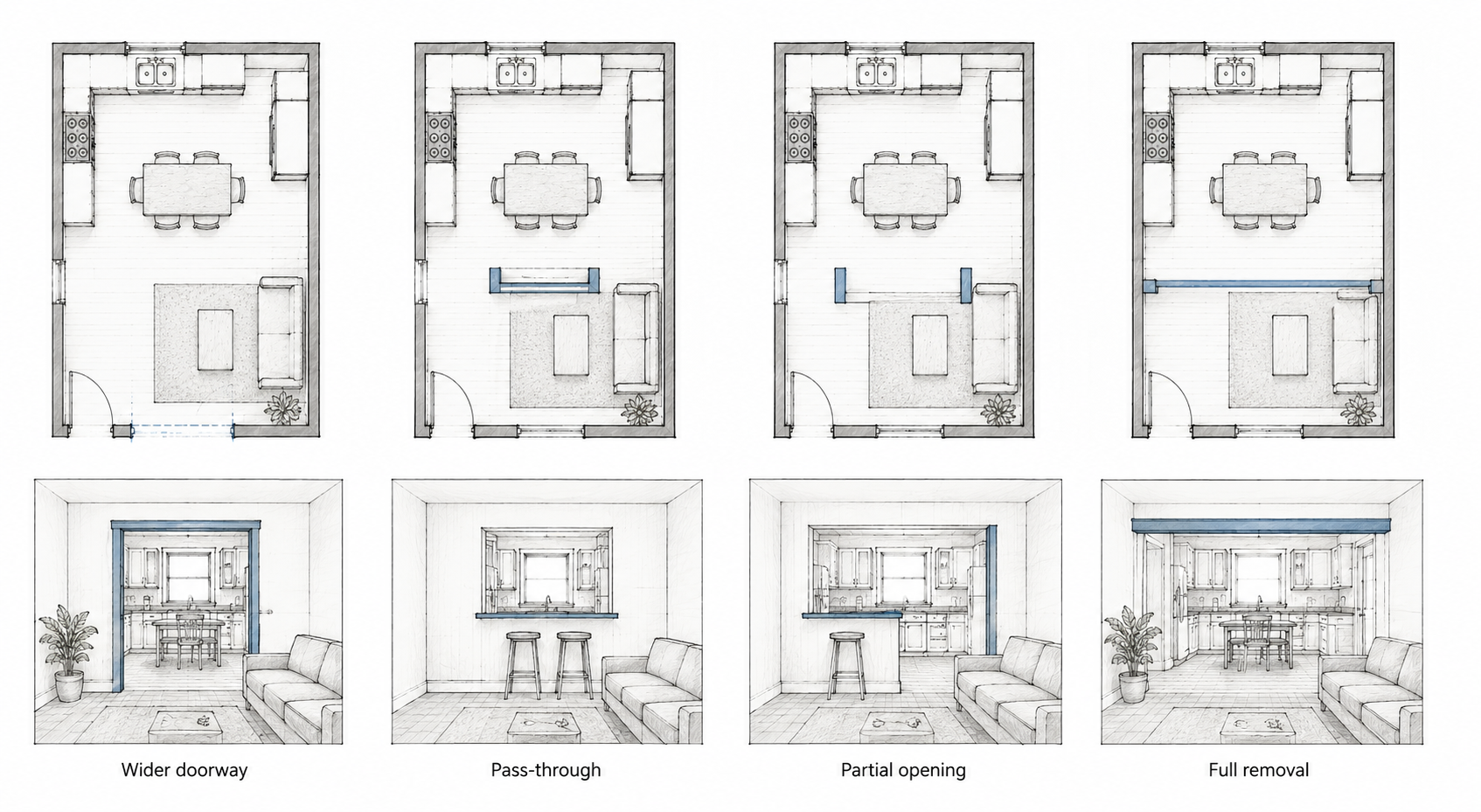
| Opening Type | Use It When | Main Risk | Hidden Cost |
|---|---|---|---|
| Wider doorway | The main problem is traffic, not darkness | May not improve light enough | Trim, drywall, minor floor patch |
| Pass-through | You want sightlines without losing the whole wall | Can feel dated if sized badly | Counter edge, trim, electrical rerouting |
| Partial opening | The kitchen needs connection but still needs storage nearby | Can underperform if the wrong section opens | Beam, cabinet changes, ceiling and floor repair |
| Full wall removal | The wall is truly the main barrier and the adjacent rooms can absorb the change | Storage loss, beam drop, noise spread, layout drift | Structure, floor patch, ceiling repair, HVAC and electrical rerouting |
The Quote May Not Include the Hard Part
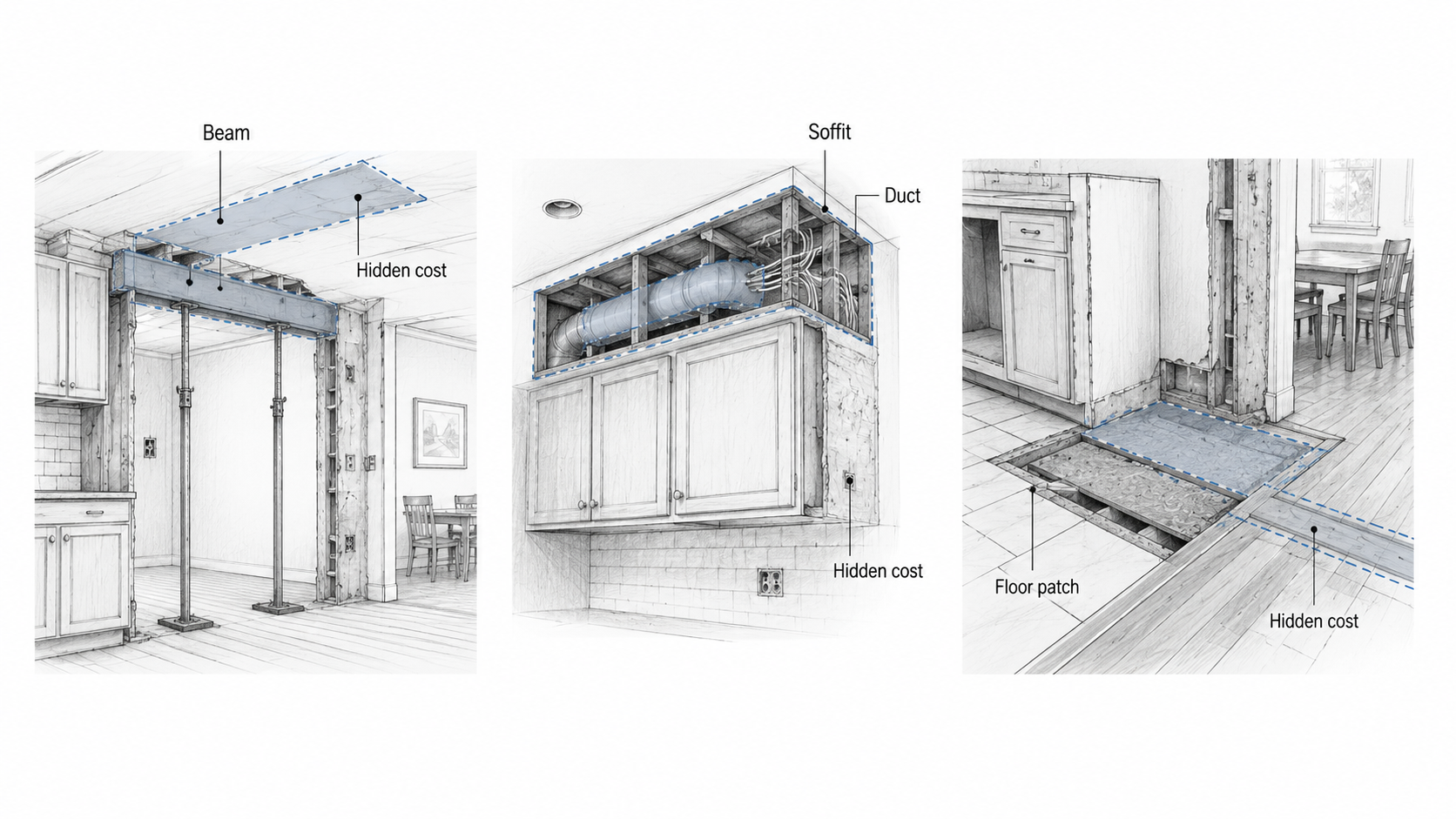
This is the part people find out after signing.
A contractor may price the opening, demolition, and visible finish repair. The quote may not include engineering, permit drawings, structural posts hidden in nearby walls, panel work if circuits need to move, duct relocation, floor feathering beyond the kitchen, repainting adjacent ceilings, or the cabinet redesign caused by the opening.
That is not always dishonesty. A finished wall hides too much. The problem is that homeowners compare quotes as if every number includes the same unknowns. One number includes a clean assumption. Another includes some contingency. A third leaves the messy part for change orders.
Ask what happens if the wall contains a return, a vent, older wiring, or a dropped beam condition that was not obvious during the walk-through. If the answer stays vague, the opening is still being sold as a simple demolition job.
What Shows Up Three Weeks Later
The wall is gone. The room looks promising. Then the side effects show up.
The beam is lower than expected. The floor patch reaches farther into the living room than the plan suggested. The new refrigerator location crowds the aisle. The dining table sits in the traffic path. The return-air grille had to move and ended up in a stranger place. The painter has to keep going because the ceiling patch does not stop neatly at the kitchen line.
None of this feels dramatic on paper. It adds cost and time anyway.
That is the delayed consequence behind many ranch kitchen openings. Removing a wall often creates a longer list of finishing and coordination work than the wall itself. A small opening becomes a room-wide project because the house has to be made whole again.
Ask the contractor to walk through the opening as a chain reaction, not as a demo item. What changes in structure, ceiling, floor, lighting, storage, HVAC, paint, and inspection once the wall is gone? If that conversation never happens, the budget is still fictional.
Permits Can Change the Job
A ranch kitchen wall removal can cross the permit line fast.
Once structure, electrical, plumbing, or mechanical systems are touched, the job may move out of cosmetic territory. Inspectors do not care that the opening looks beautiful. They care about load transfer, beam support, wiring protection, duct routing, fire blocking, and whether the work matches what was approved.
Permit review can also expose work outside the opening itself. An undersized support condition, old wiring, or a bad patch in an adjacent area can force correction before the project closes. That is not bureaucracy being difficult. That is the house being asked to prove it still stands, vents, and wires safely after the wall is gone.
Ask who pulls permits and whose responsibility it is if the opened condition triggers more required work. That question belongs before demo, not after the beam is already ordered.
When Keeping the Wall Is the Smarter Move
Sometimes the right answer is to leave it alone.
If the wall carries too much structure, the storage loss hurts the kitchen, the floor patch runs across half the main room, or the beam drop makes a low ceiling feel worse, the better remodel may be a smaller opening or a different fix.
That can feel disappointing because wall removal is easy to picture and easy to sell. But a ranch kitchen does not need a dramatic move to improve. Better lighting, a clearer cabinet layout, a wider doorway, or a carefully placed partial opening may solve the real problem with less structural risk and less wasted money.
For the budget side of that choice, see ranch kitchen remodel cost: what changes the price.
Before You Approve Demolition
Check the wall before you check the calendar. The opening is not ready if the load path, beam condition, hidden services, storage loss, and patch line are still guesses.
At minimum, confirm the joist direction, where the load goes after the wall is removed, whether the beam will be flush or dropped, what ducts or wires are in the wall or soffit, how much storage disappears, and where the floor patch will show.
If those answers are still fuzzy, the wall is not ready to come down.
Read Next
Ranch house kitchen layout problems and better fixes. Start here if the wall is only one part of a larger kitchen problem.
Ranch kitchen remodel cost: what changes the price. Useful if the opening is starting to change the budget.
Open floor plan ranch house. Good for deciding whether a bigger opening really improves the house.
How to tell if a wall is load-bearing in a single-story house. Important before you assume the wall is cheap to remove.