
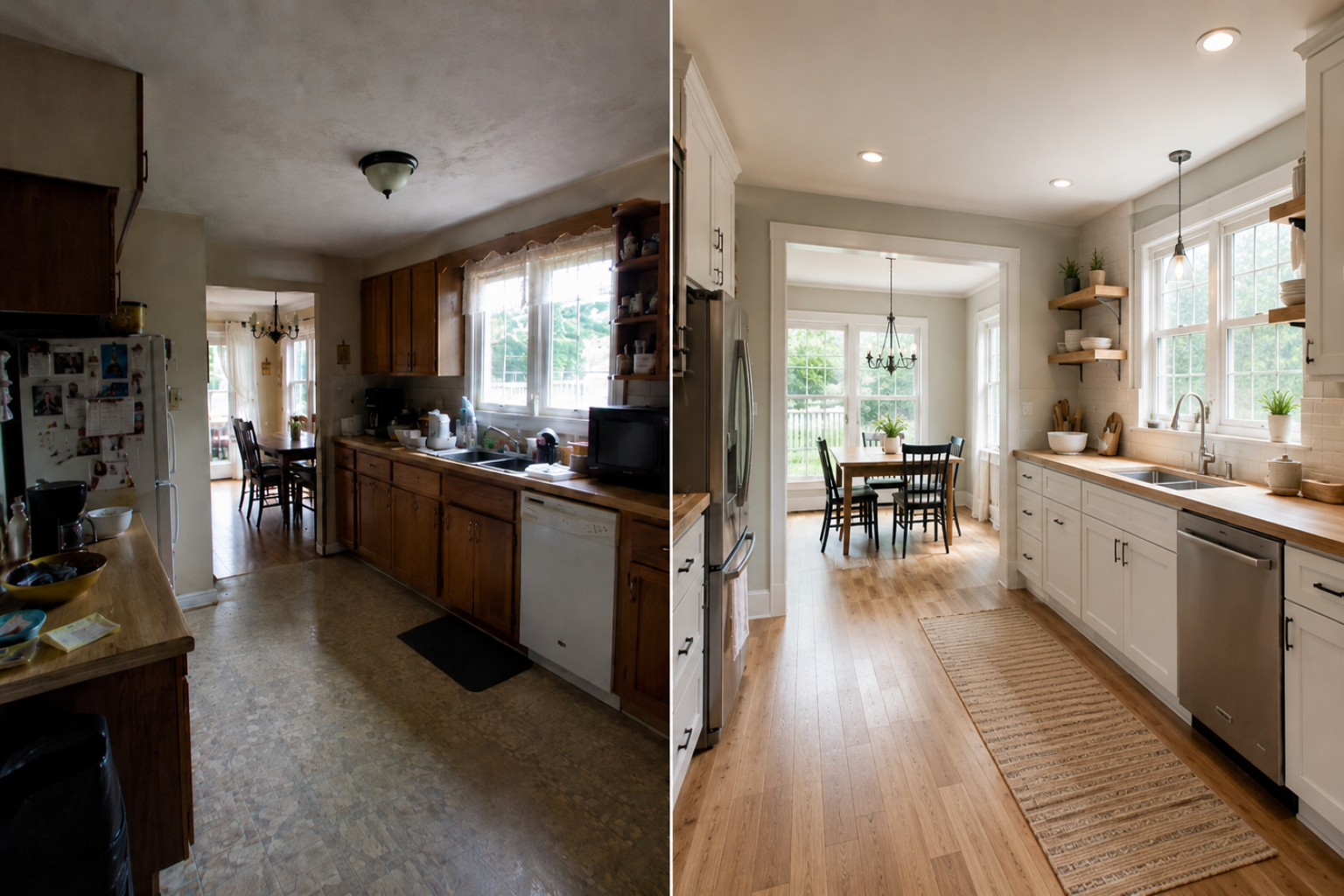

A ranch kitchen before-and-after can look like progress and still be running the same bad layout underneath.
The cabinets are newer. The floor is cleaner. The lighting is brighter. The photo looks better. But the refrigerator may still block the aisle, the dishwasher may still open into the only path, the wall opening may have erased storage, and the dining connection may still feel awkward.
The best ranch kitchen before-and-after does more than change finishes. It makes the kitchen easier to move through, easier to light, easier to store things in, and easier to live with after the camera leaves.
Before and After Should Prove Something
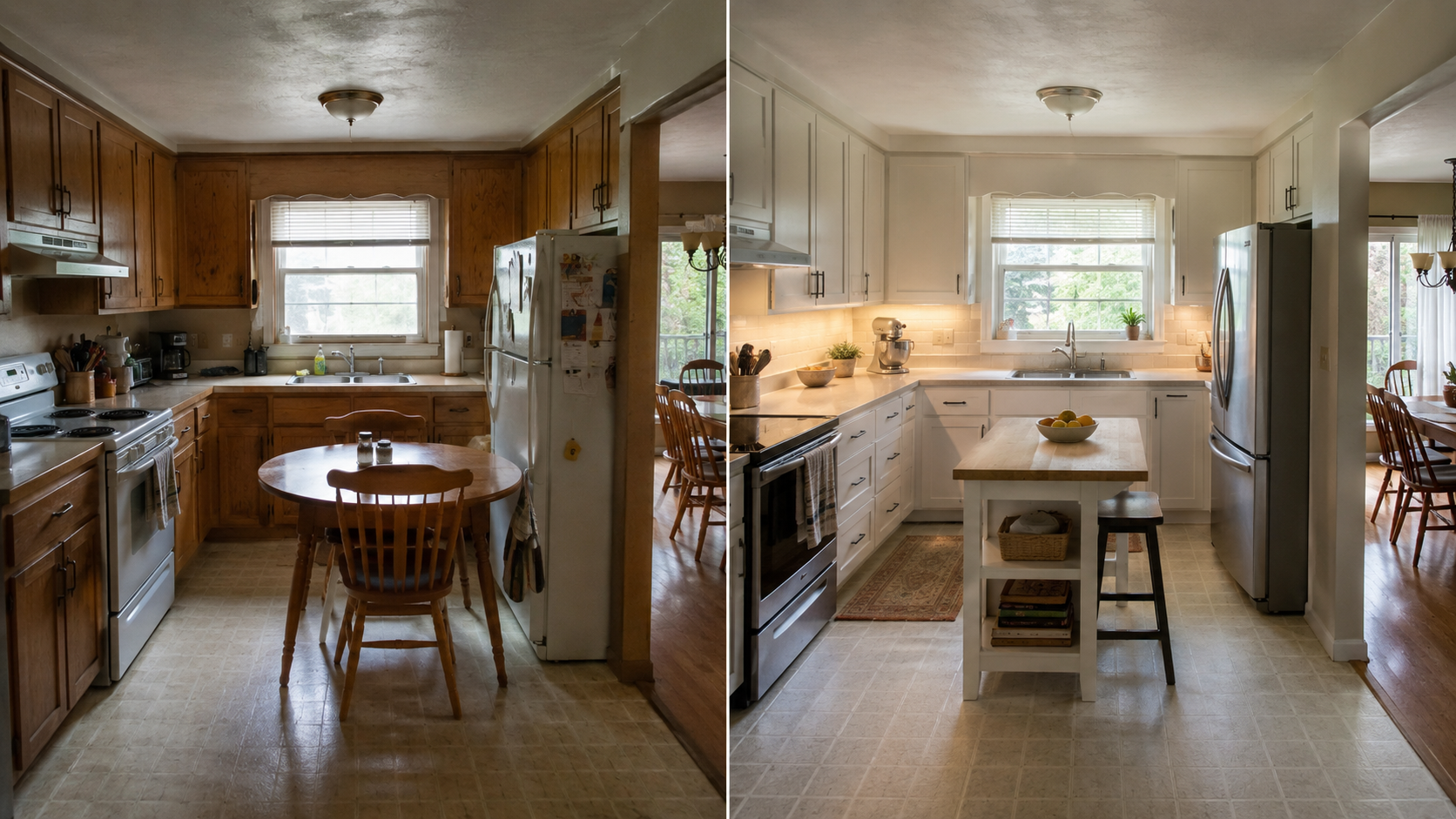
Image by ArchitectureCourses.org. A useful before-and-after proves what changed in daily use: the crowded table is gone, the work zone is clearer, and the dining-room path is easier to move through.
A strong before-and-after should answer one question: what became easier to use?
The kitchen may look brighter because the cabinets changed from dark wood to white. That is fine, but it is not enough. Did the refrigerator move out of the main walkway? Did the sink gain better counter space? Did the dining room become easier to reach? Did the room get a better light path? Did a wall opening improve the house without removing storage?
In many ranch houses, the kitchen sits between the public rooms and the service paths. One side may connect to dining. One side may face the backyard. One side may catch traffic from a garage, hall, basement stair, or side door. The before photo often looks ugly because the finishes are old. The real problem is usually underneath that: tight clearances, bad appliance placement, chopped-up light, and walls doing too many jobs at once.
Start there. A good remodel makes daily movement easier before it makes the photo cleaner.
For the larger layout problem, see ranch house kitchen layout problems and better fixes.
Dark Kitchen, Better Light Path
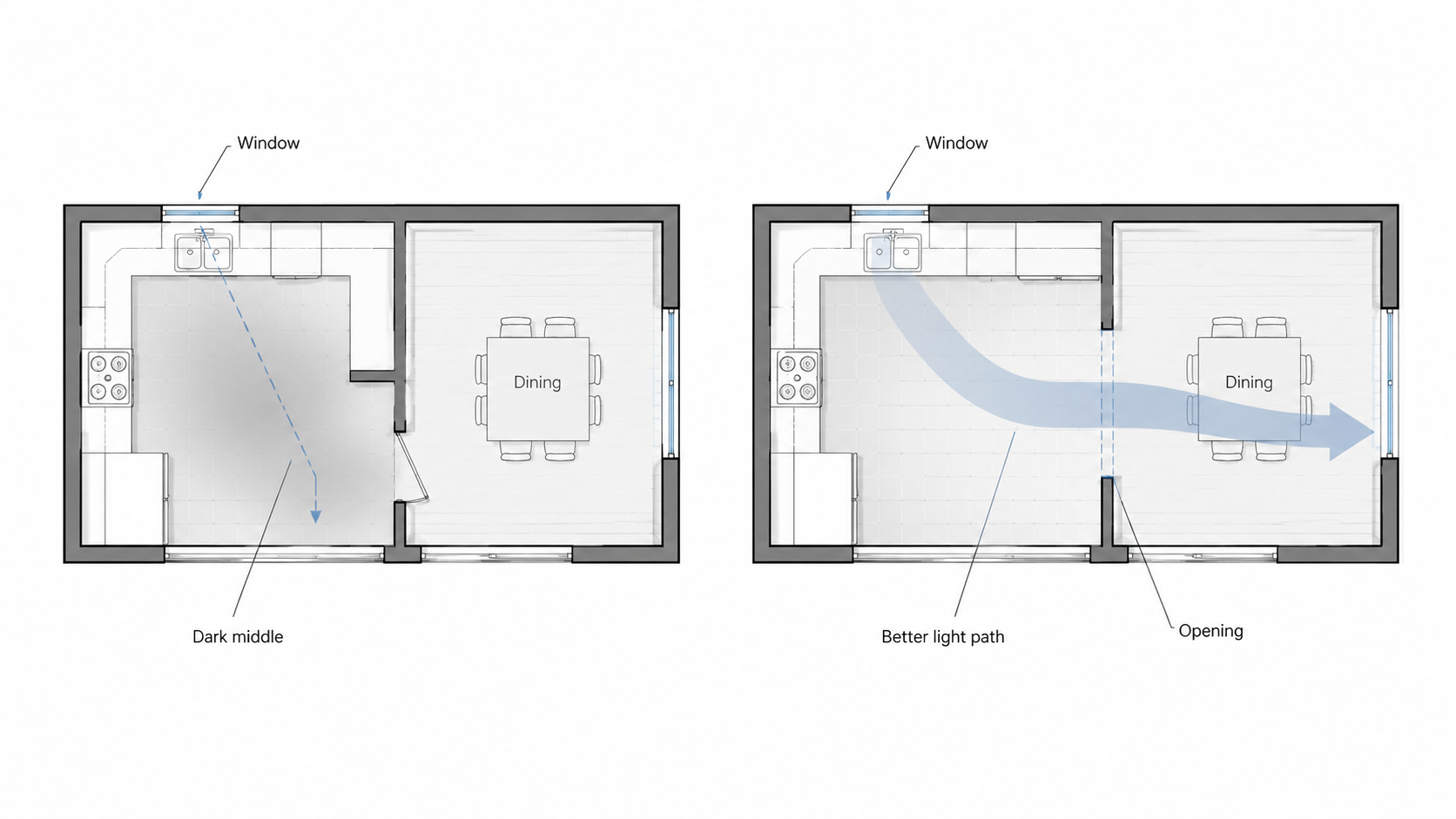
Many ranch kitchens are not small because of square footage. They feel small because light stops at the edges.
The sink window may bring daylight to one wall, while the middle of the kitchen stays dull. The dining room may have good light, but a narrow doorway keeps that light from helping the kitchen. The living room may be brighter, but the wall between the rooms blocks the visual connection.
A good before-and-after fixes that without pretending the house needs to become a loft.
Sometimes the best move is a wider opening between kitchen and dining. Sometimes it is a partial opening that lets light pass while keeping enough wall for cabinets. Sometimes the fix is better ceiling lighting, under-cabinet lighting, and a cleaner window wall. The point is not to flood the house with openness. The point is to move light where the kitchen failed.
If the after photo is bright only because the photographer turned on every light, the layout may not be fixed.
A Wall Opening Can Go Too Far
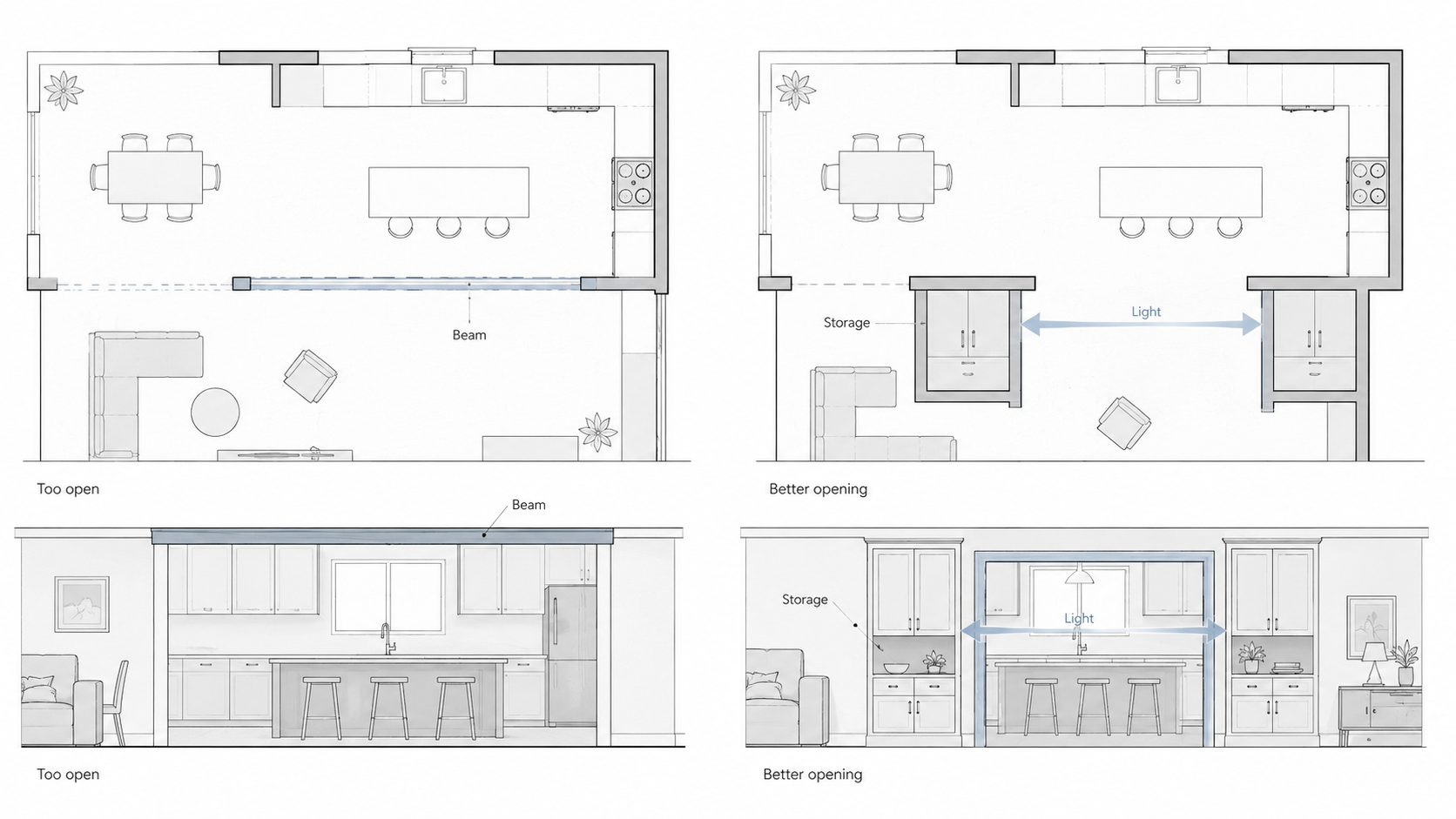
Wall removal is one of the easiest ranch kitchen changes to oversell.
The before photo shows a closed kitchen. The after photo shows a wide open room. That looks like progress. It may be progress. It may also be the moment the kitchen loses storage, the living room loses its best furniture wall, the ceiling gets a dropped beam, and the whole main floor becomes louder.
A ranch kitchen usually benefits from a better connection, not always a full wall removal. A partial opening can improve light and supervision while keeping cabinet walls. A wider doorway can fix circulation without pulling the whole house into the kitchen. A cased opening can keep the room feeling connected but still controlled.
The bad opening makes the plan look bigger while making the kitchen less useful.
The better opening has a job. It brings in light, improves movement, frames the dining room, or helps the cook stay connected without sacrificing every useful surface.
Before assuming the wall is easy to remove, read removing a wall in a ranch kitchen.
The Island Can Ruin the After
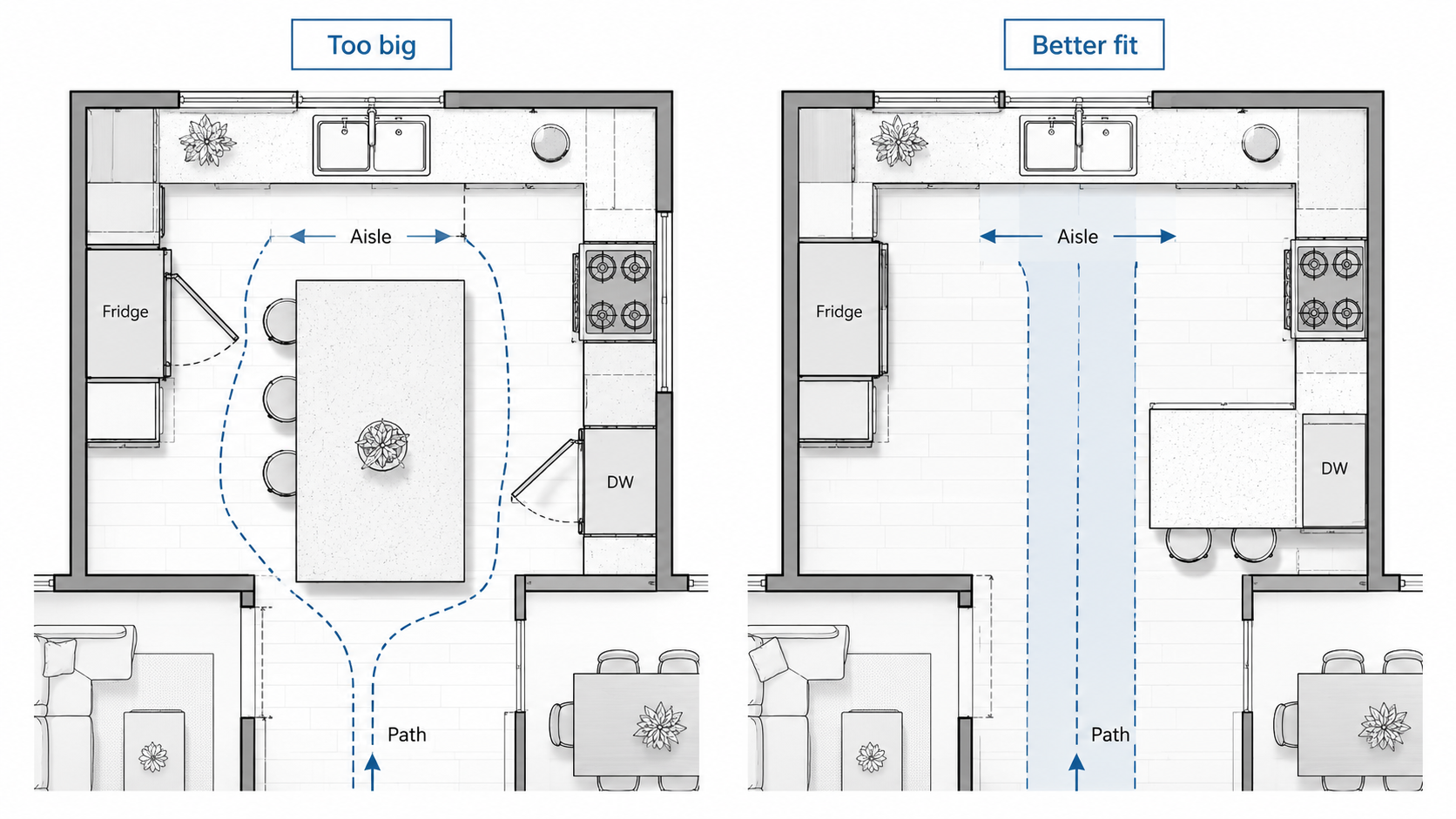
An island is not proof of a better kitchen.
In a tight ranch kitchen, an island can make the after photo look expensive while making the room worse to use. The refrigerator door needs space. The dishwasher door needs space. The range needs working clearance. Stools need room behind them. Someone still has to walk from the garage or back door to the dining room without squeezing past the cook.
A too-large island creates a new problem and hides it under a popular feature.
A peninsula, smaller worktable, or no island can be the smarter after. That may feel less exciting in a photo, but it can protect the aisle, add storage, and keep the kitchen connected without forcing circulation on all four sides.
The question is not whether an island fits in the photo. The question is whether the kitchen still works when the refrigerator, dishwasher, drawers, chairs, and people are all moving at the same time.
For tighter rooms, see small ranch kitchen layouts that work without moving everything.
The After Photo Can Hide the New Problem
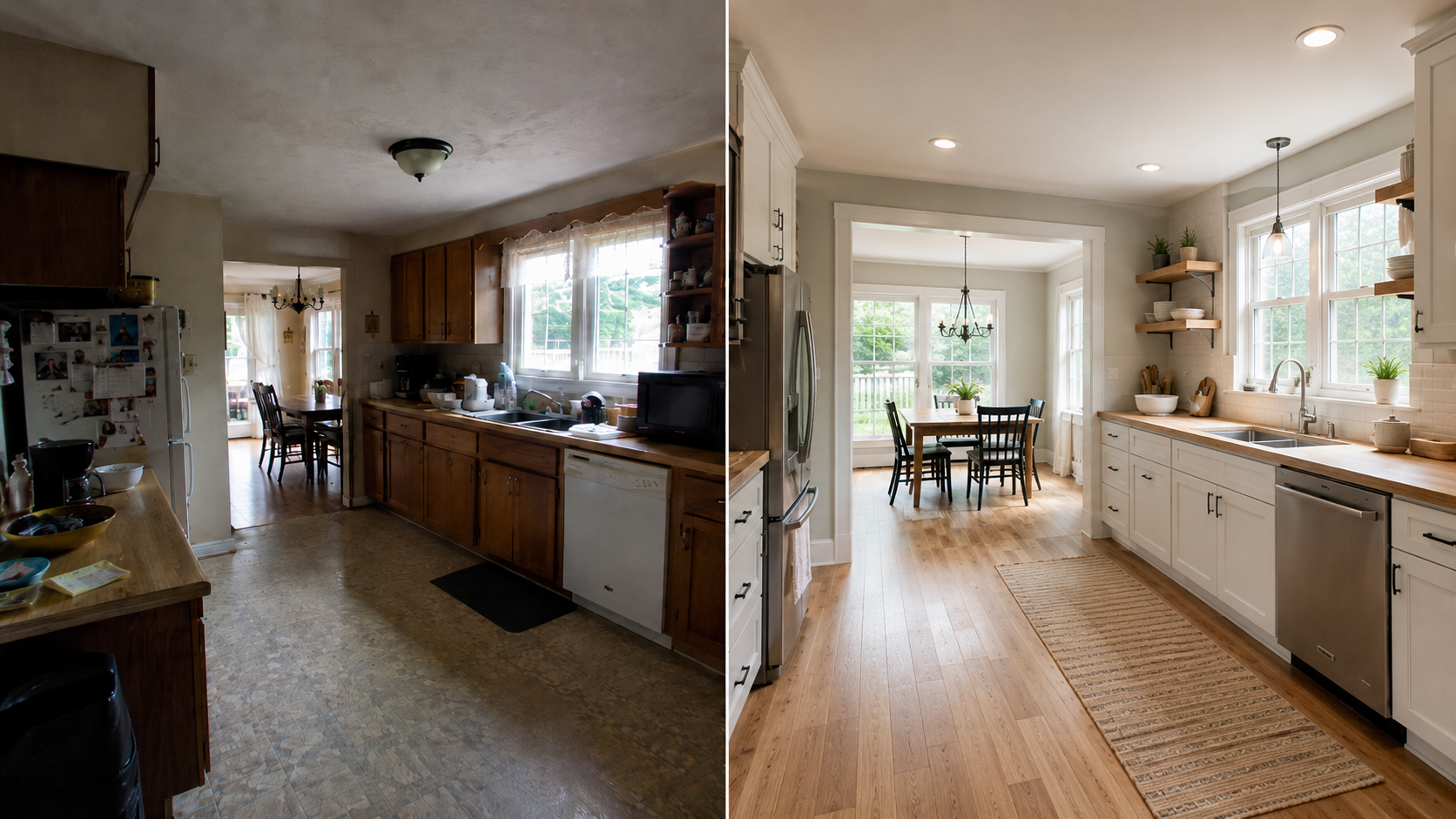
This is the part most before-and-after pages skip.
A kitchen can photograph well and still have a bad layout. The cabinets look clean. The counters are clear. The lighting is warm. The floor is new. Then people move back in and the new problems show up.
The trash pullout blocks the dishwasher. The refrigerator opens into the main path. The island stools stop traffic. The beam line cuts the ceiling. The floor patch is visible from the living room. The open shelves looked light in the photo but do not hold daily storage. The old wall cabinet storage is gone, so the counters start collecting everything the remodel erased.
That is why before-and-after photos need suspicion. They show the room at its cleanest, emptiest, and most controlled. They do not always show breakfast traffic, grocery bags, kids, pets, dirty dishes, appliance doors, mail piles, or the person trying to cook while someone else unloads the dishwasher.
A good ranch kitchen remodel survives normal use after the camera leaves.
Before judging the after, ask what the photo does not show: storage, traffic, appliance clearance, floor patches, ceiling repair, lighting at night, and whether two people can use the room without negotiating every step.
What Changed After Demolition
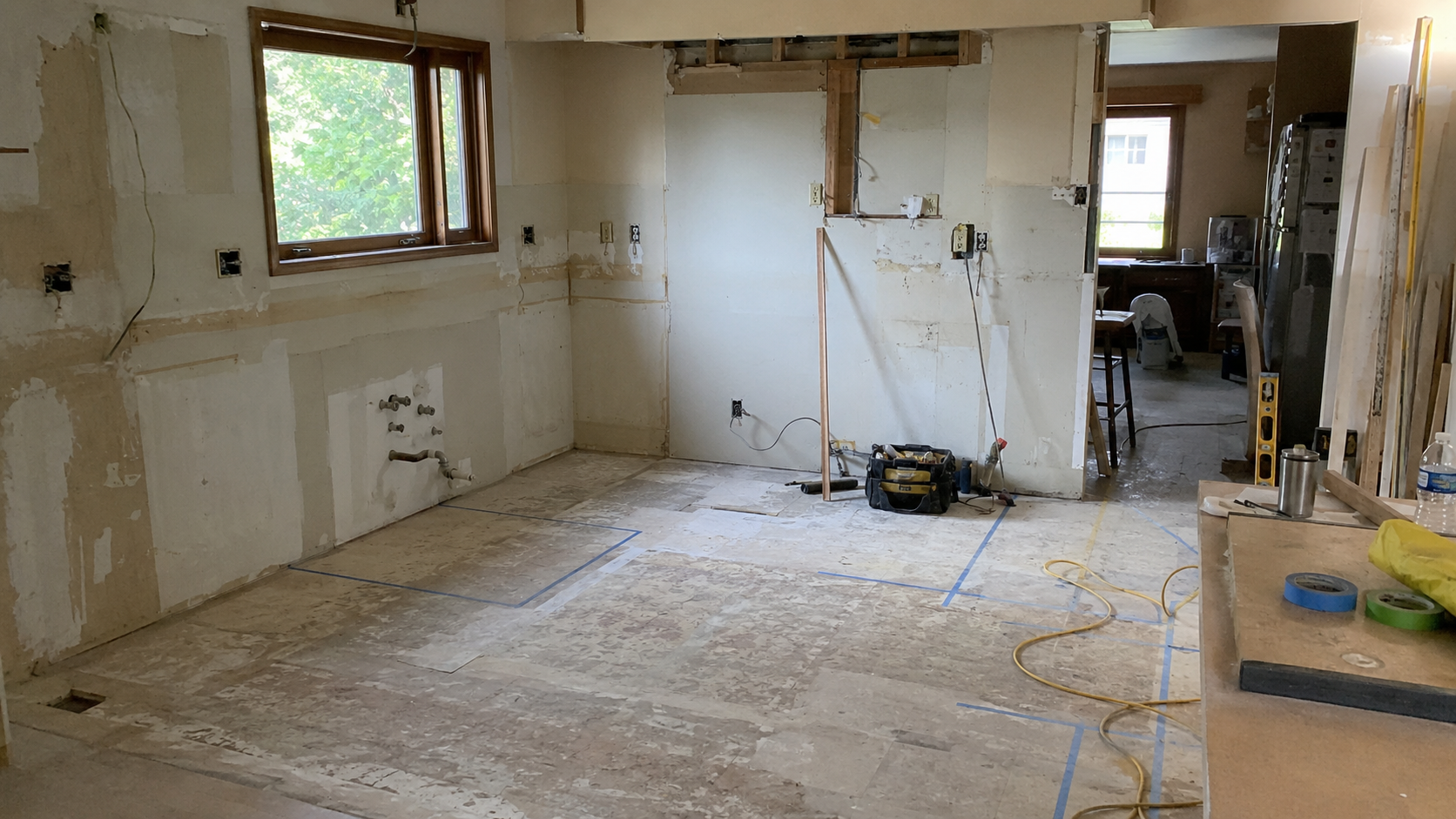
The real before photo is often the demolition photo.
That is where the old kitchen stops hiding. Cabinet lines appear on the wall. Flooring stops where cabinets used to sit. Old plumbing rough-ins show why the sink was where it was. Electrical boxes explain why switches and outlets were awkward. Soffits, wall patches, and rough openings reveal the cost that was not visible in the listing photo.
This stage matters because it decides whether the after photo is honest.
If the floor patch is ignored, the new kitchen may carry a scar. If the plumbing move is forced, the budget may grow without improving the plan. If the cabinet layout is ordered before the rough conditions are checked, the finished kitchen may inherit mistakes from the old one.
The clean after should come from what the house revealed, not from pretending the revealed conditions did not matter.
Same Footprint, Better Use
A ranch kitchen can improve without getting larger.
The sink may stay under the window. The range may stay near the same wall. The refrigerator may move only enough to stop blocking the work zone. The wall opening may get wider, not disappear. The cabinet layout may gain drawers, landing space, and better tall storage without changing the entire room.
That kind of before-and-after may look less dramatic than a full gut. It can still be the better remodel.
| Before Problem | Better After Fix | Why It Matters |
|---|---|---|
| Dark middle of the kitchen | Partial opening, better window use, layered lighting | The room feels connected without losing every wall |
| Traffic through the cook zone | Refrigerator edge location, clearer path, shorter peninsula | People can pass without interrupting cooking |
| Too much wall removed | Controlled opening with storage kept nearby | The kitchen gains light without losing function |
| Oversized island | Smaller island, peninsula, or no island | Aisles and appliance doors work better |
| Old cabinets replaced in the same bad layout | Better drawers, landing space, and appliance clearances | The remodel fixes use, not only appearance |
Traffic Is Part of the Before and After
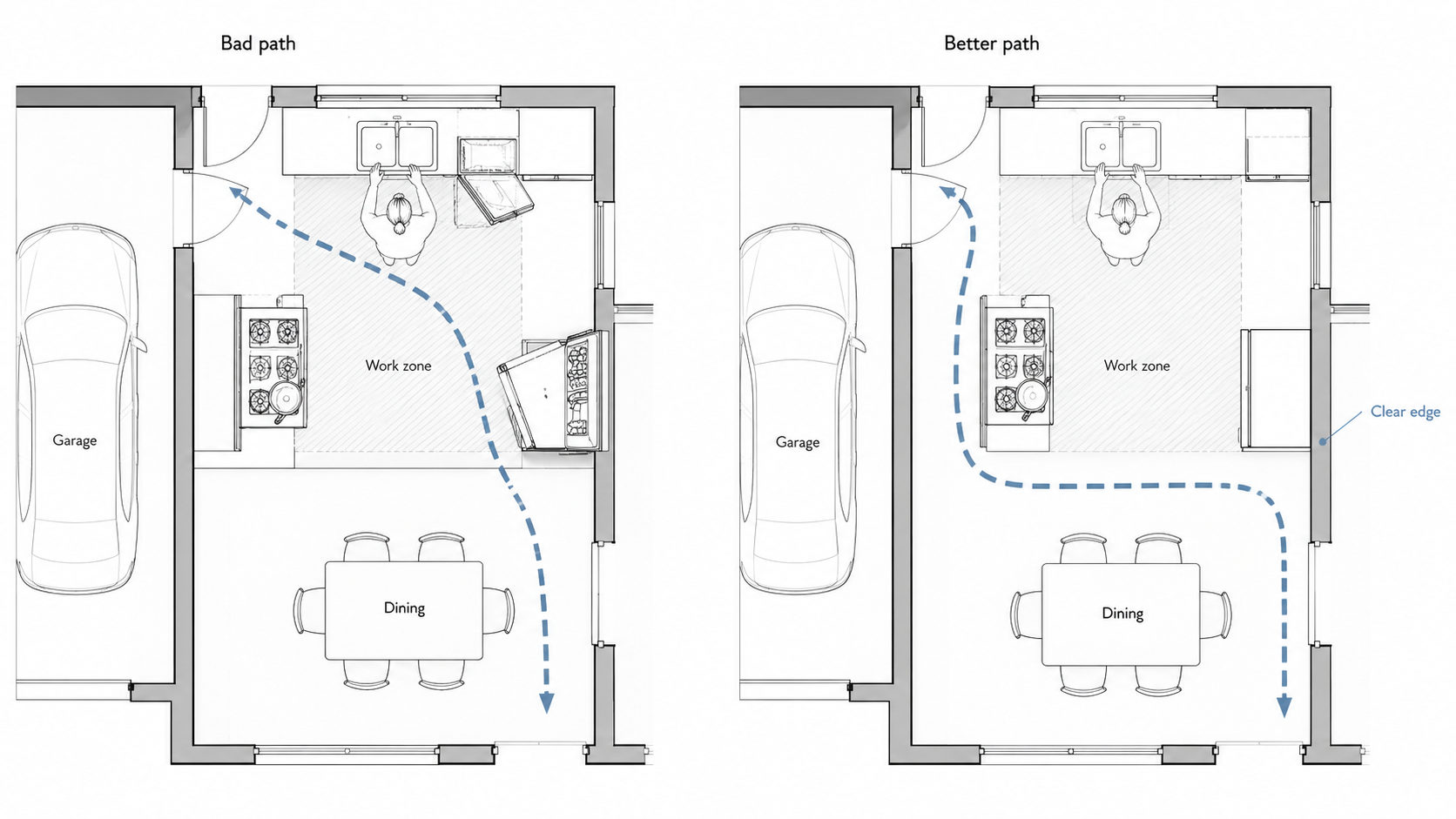
Ranch kitchens often handle more traffic than they were designed for.
Someone enters from the garage. Someone else goes to the refrigerator. Another person walks to the dining room. The dishwasher is open. The cook is at the range. The before photo does not show that pressure, but the layout feels it every day.
A better after photo should show a clearer path. The refrigerator should be reachable without crossing the cook. The dishwasher should not drop into the only walkway. The dining connection should not force people through the sink zone. If the kitchen opens to the backyard, that path should not cut through every work surface.
Traffic is not a small detail. It is often the difference between a kitchen that looks finished and a kitchen that feels finished.
Storage Has to Be Replaced, Not Just Removed
Many ranch kitchen after photos look better because storage was deleted.
Upper cabinets come down. A wall opens. A pantry cabinet disappears. The room looks lighter. The photograph improves. Then daily life returns and the lost storage shows up on the counters.
A better after replaces storage with something more useful. Drawers instead of dead base cabinets. A tall pantry where it does not block light. A shorter peninsula with usable storage. A landing zone near the refrigerator. A better cabinet run that does not choke the window.
Open space is not automatically better space. If the remodel removes storage without giving the kitchen a better storage plan, the after photo is borrowing from the future.
Floors Tell the Truth
Floors often expose whether the before-and-after was planned or patched.
Remove a wall and the flooring may stop at the old wall line. Remove cabinets and the old floor may be missing underneath. Move an island and the patch may sit exactly where the eye lands from the living room. Open the kitchen to dining and the floor may need to continue farther than expected.
This is why layout decisions should be made before finish decisions. A beautiful cabinet package cannot hide a bad floor transition forever.
The cleanest after photos usually come from planning the patch early: where the old wall stood, where cabinets moved, where the dining room begins, and whether the floor needs to be feathered, refinished, replaced, or intentionally separated with a clean threshold.
What Good Before-and-After Photos Should Show
Good before-and-after photos show the trade-off, not just the polish. Look for the work path, the storage plan, the opening size, the floor patch, the refrigerator location, and whether the dining connection became easier to use.
| What the Photo Shows | What to Check Before Trusting It |
|---|---|
| Bright open kitchen | Was storage lost, and where did it go? |
| Large island | Do appliance doors and people still have room? |
| Wall removed | Is there a dropped beam, post, or floor patch? |
| White cabinets and new counters | Did the work path improve, or is the same bad layout underneath? |
| Open shelves | Did useful closed storage disappear? |
When the Before Should Stay Partly Intact
Not every old ranch kitchen feature is the enemy.
The sink under the window may still be right. The dining doorway may need widening, not removal. The cabinet wall may be useful if rebuilt better. The low ceiling may need cleaner lighting, not a fake dramatic ceiling move. The existing plumbing wall may be the budget anchor that lets money go toward lighting, storage, flooring, and better appliances.
A smart before-and-after keeps what still works and changes what causes the failure.
That is harder than wiping everything clean. It also tends to age better because the remodel fits the house instead of fighting it.
What to Decide Before Chasing the After Photo
Decide the layout before the finishes.
Check the main path through the kitchen, the sink wall, refrigerator landing space, dishwasher door, range clearance, wall opening, storage replacement, floor patch, ceiling repair, and lighting plan. If those parts are weak, the after photo is being asked to do too much.
A basic measuring tape, painter’s tape, and a simple kitchen planning reference can save a lot of argument before cabinets are ordered. If you are still laying out appliance doors and aisle clearances, a practical kitchen remodel planning book is more useful than another folder of inspiration photos.
The strongest ranch kitchen remodels are not always the biggest ones. They are the ones where the room becomes easier to use, easier to light, easier to move through, and easier to live with after the renovation noise is gone.
For budget planning, see ranch kitchen remodel cost.
Read Next
Ranch house kitchen layout problems and better fixes. Start here if the before photo is part of a larger ranch layout problem.
Ranch kitchen remodel cost. Useful before deciding whether the after photo is worth the scope.
Removing a wall in a ranch kitchen. Read this before assuming an open after photo means simple demolition.
Small ranch kitchen layouts that work without moving everything. Good if the kitchen needs a tighter fix, not a full gut.