
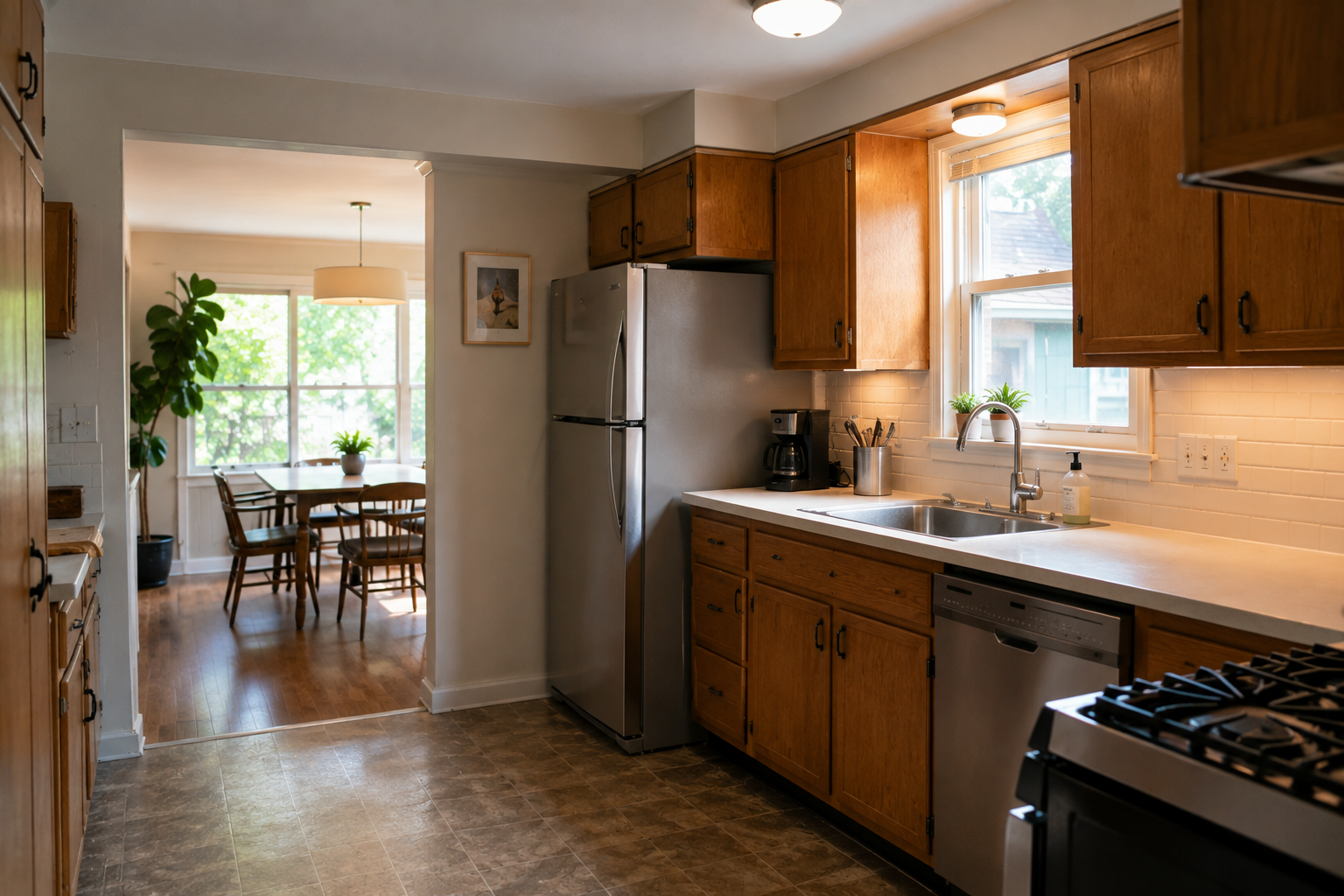


A small ranch kitchen does not always need a bigger footprint.
It usually needs fewer bad moves.
The room is tight. The ceiling is low. The window is often in the only useful sink location. One side may connect to dining. Another side may catch traffic from the garage, hall, basement stair, or back door. The kitchen may look simple, but every inch is already working.
That is why small ranch kitchen remodels go wrong when the plan starts with the biggest change first.
Move the sink. Remove the wall. Force an island. Delete the upper cabinets. Shift the refrigerator. Open the kitchen to the living room. Each move can help in the right house. In a small ranch kitchen, each move can also steal storage, tighten aisles, expose floor patches, move plumbing, and make the room harder to use than before.
The better question is not “How do we make this kitchen dramatic?” The better question is: what can stay, what must move, and what small change fixes the daily problem without turning the whole house into a jobsite?
Keep the Room Honest
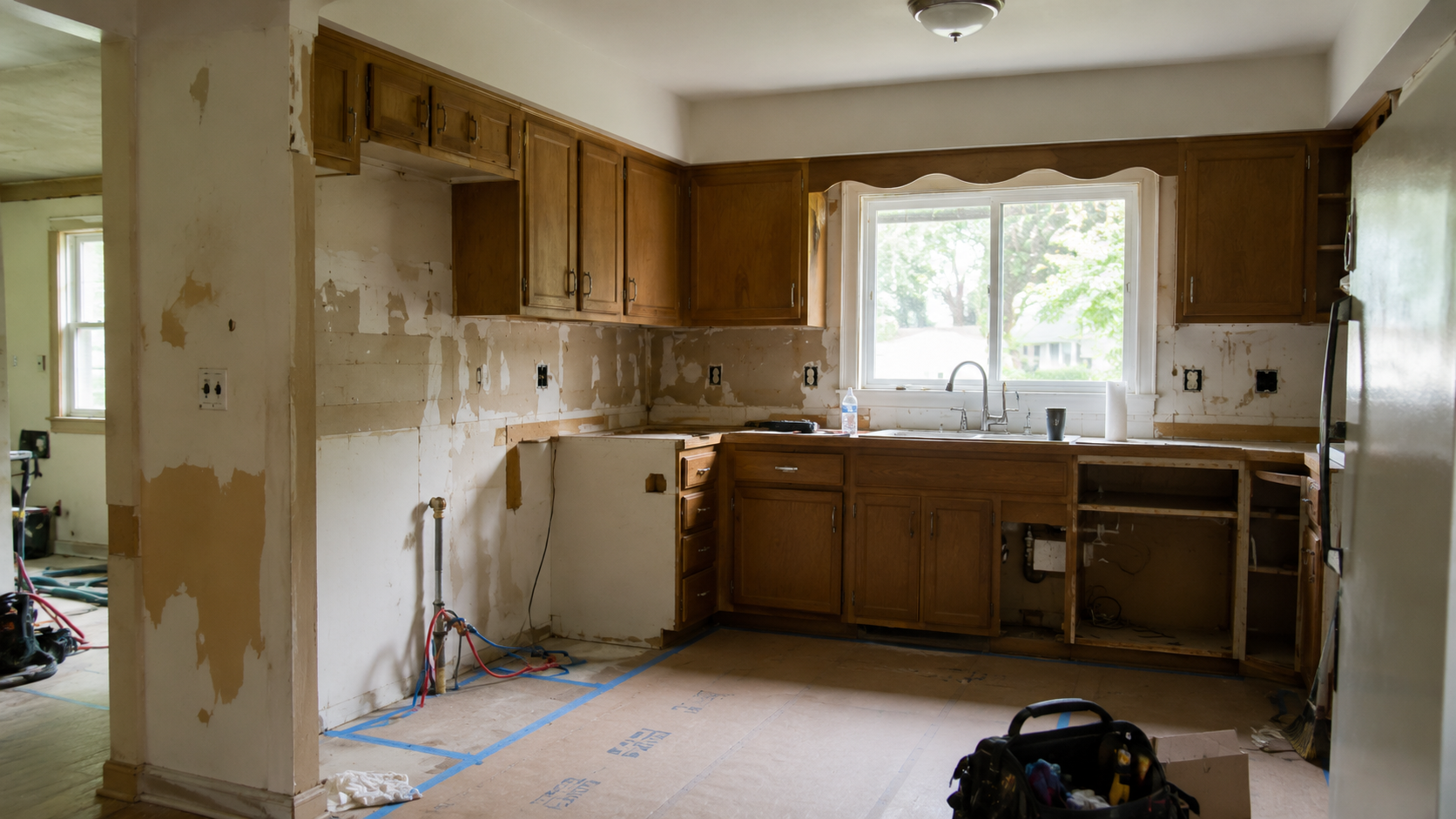
A small ranch kitchen has less room for fantasy.
That is not a weakness. It is the starting point. The existing sink wall, window, appliance line, doorway, and dining connection already tell you what the room can afford. If the layout fights all of those at once, the remodel stops being a kitchen update and becomes plumbing, electrical, flooring, wall repair, and maybe structural work.
A good small ranch kitchen layout usually protects one or two fixed points. The sink stays under the window. The range stays on the same wall. The refrigerator moves only if the new location improves landing space and traffic. The wall opening gets sized to the room, not to a social media photo.
The cheap-looking plan is not always the cheap plan. Moving one fixture can drag five trades behind it. Keeping one useful wall can save the budget and make the room work better.
For the broader problem page, see ranch house kitchen layout problems and better fixes. This page is the smaller, more practical version: what to do when the room mostly has to stay where it is.
The Island Is Usually the First Bad Idea
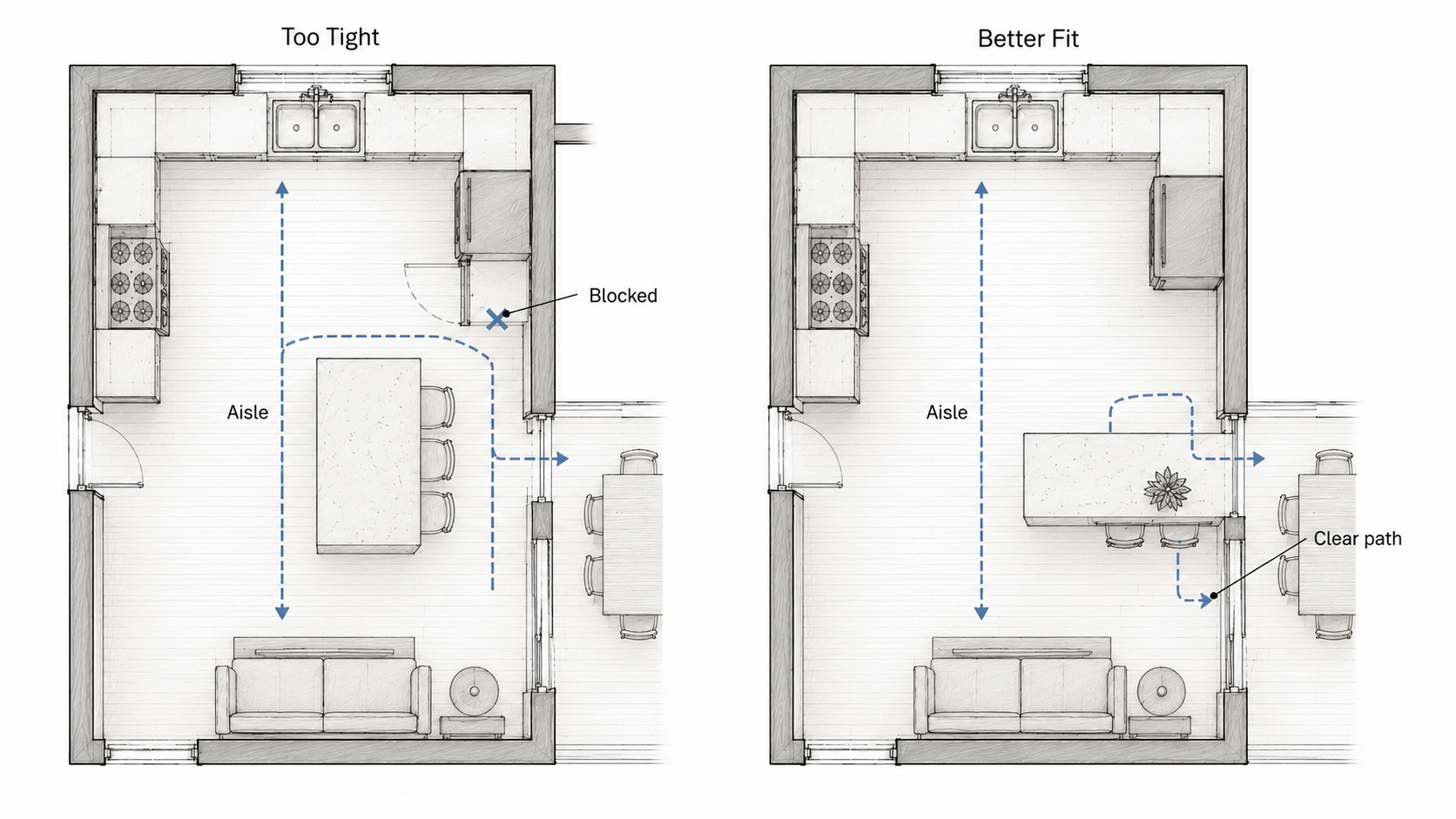
An island can ruin a small ranch kitchen quietly.
It may fit on the drawing. That does not mean it fits in life. The refrigerator door needs space. The dishwasher door drops into the sink zone. The range needs working clearance. Someone has to walk from the garage to the dining table without cutting through the cook’s back. Stools need overhang and room behind them. Aisles that look acceptable in plan can feel mean once bodies, cabinet handles, and appliance doors show up.
The island also changes cost. It may need electrical. It may require floor patching where cabinets or walls used to be. It may push the cabinet package larger. It may force storage to move because the wall cabinets were removed to make the kitchen look open.
A peninsula often works better in a small ranch kitchen because it gives counter space, storage, and a partial room division without needing walking space on every side. But even a peninsula can become a fence if it runs too long or blocks the dining path.
The test is simple: open every appliance door on the plan. Then draw the path from entry to sink, sink to range, range to table, and garage or back door to the rest of the house. If the island interrupts those paths, it is not an island. It is expensive furniture in the wrong place.
When a Peninsula Works Better
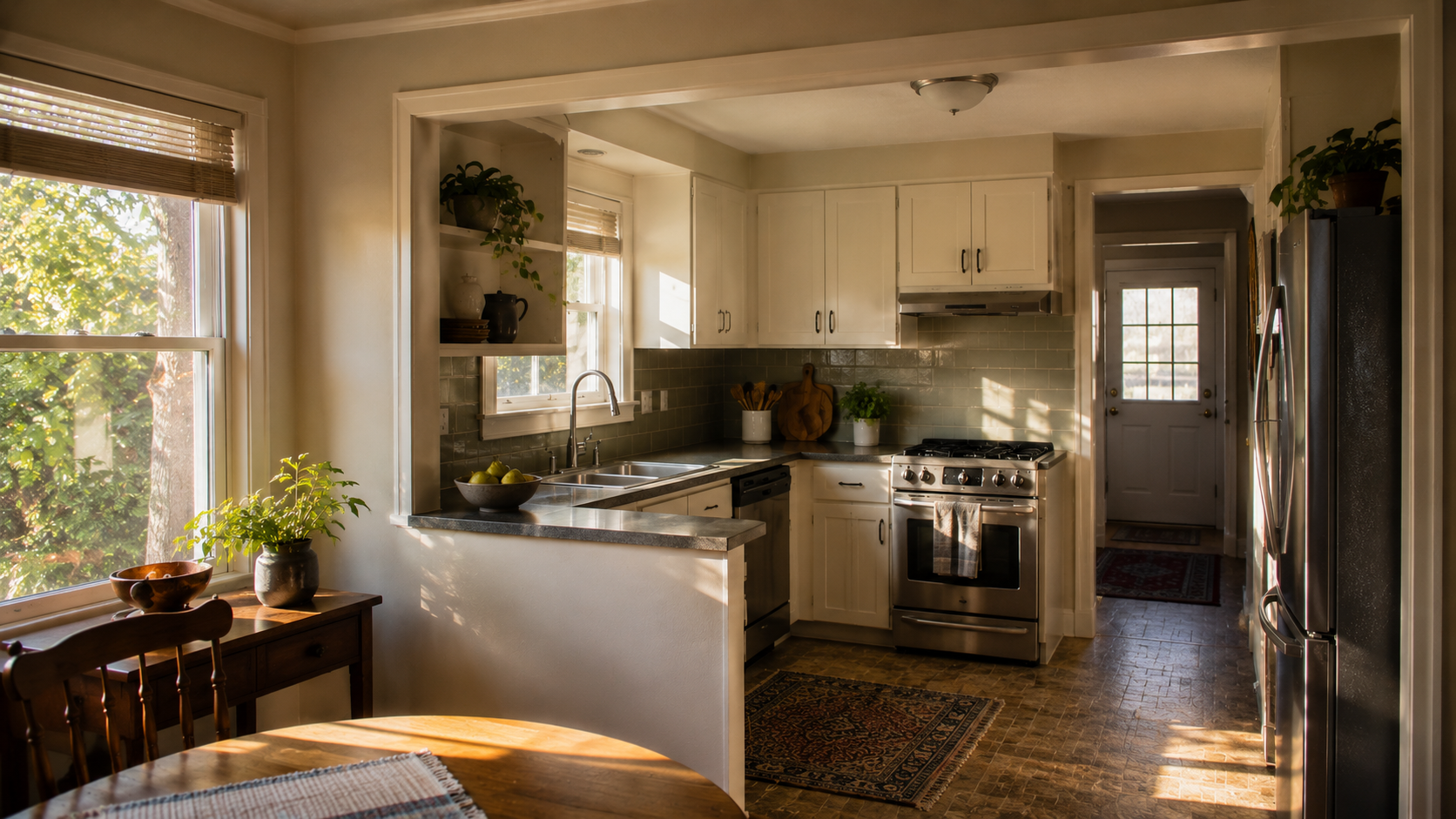
A peninsula is not a compromise when the room is narrow.
It can be the right move because it uses one fixed edge instead of demanding circulation on all four sides. In a small ranch kitchen, that matters. The kitchen may only have one clean open side toward dining or living space. A peninsula can shape that edge, add drawers, create a landing counter, and keep the kitchen connected without making every wall disappear.
The bad peninsula is too long. It traps the cook. It makes guests squeeze around a corner. It turns the dining connection into a checkpoint. The good peninsula stops early enough that the room still breathes.
| Choice | Use It When | What Can Go Wrong |
|---|---|---|
| Island | The room has true clearance on all sides | Appliance doors, stools, and traffic fight the same aisle |
| Peninsula | The room is narrow but needs counter and storage | It can block the dining path if it runs too far |
| No island or peninsula | The work zone is already tight | The kitchen may photograph less dramatically but work better |
| Small movable table | The kitchen needs flexibility more than built-ins | Less storage, but fewer electrical and floor complications |
Keep the Plumbing Wall Until It Indicts Itself
Moving plumbing feels like progress because the drawing changes.
That does not make it wise.
In many small ranch kitchens, the sink wall is the least bad anchor in the room. It may have the window, drain route, dishwasher location, and exterior wall already working together. If that wall gives you decent light and a usable cleanup zone, keep it unless it is truly causing the problem.
Moving the sink can mean new supply lines, drain slope, venting, floor or wall patching, cabinet changes, dishwasher relocation, and electrical adjustments near the sink. If the move does not fix circulation, landing space, or light, the money is often better spent on cabinets, lighting, storage, and a better opening to dining.
The plumbing wall has to earn its removal. Do not move it just because the remodel needs to feel bigger.
Open Only the Wall That Helps
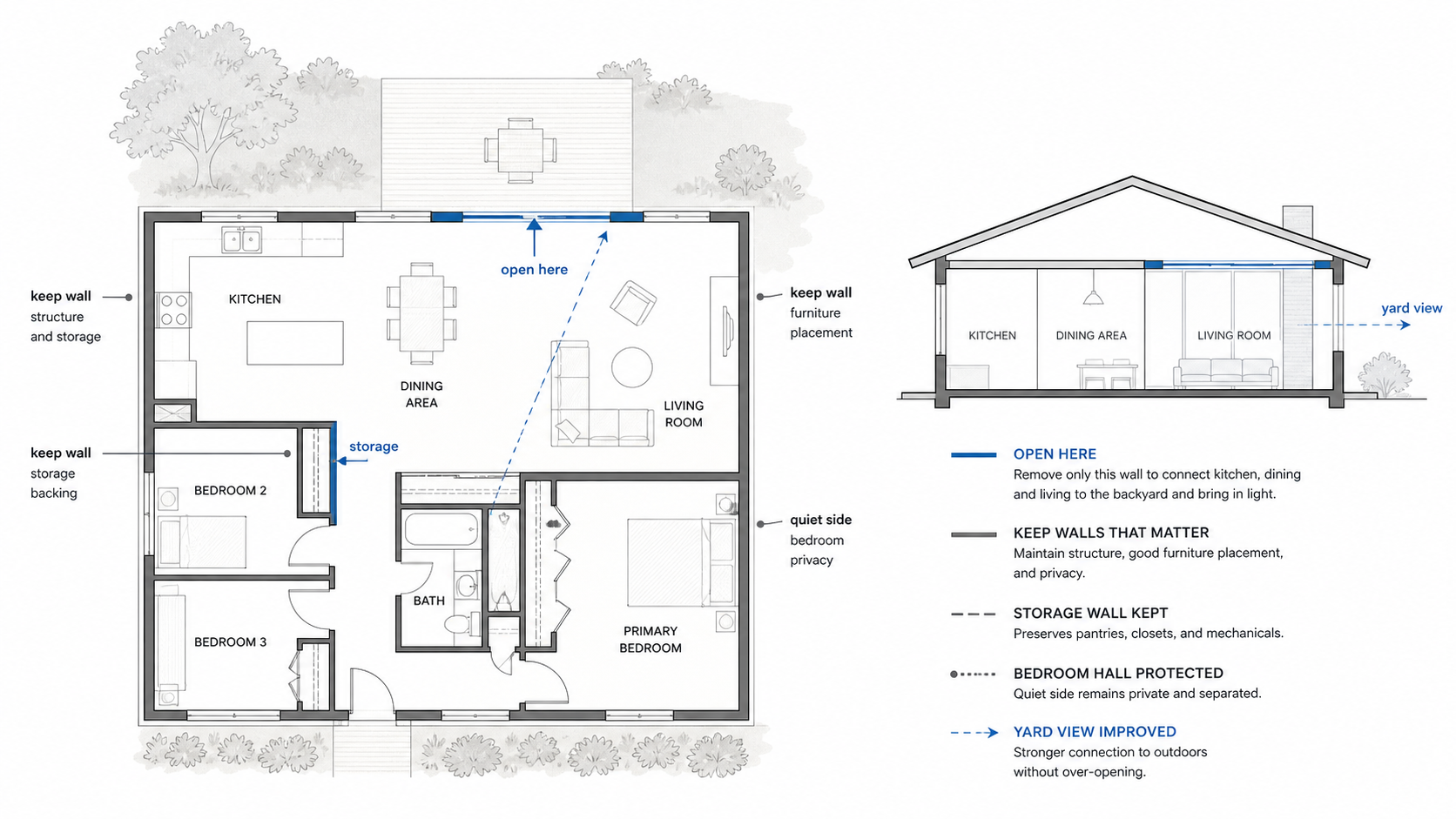
A small ranch kitchen often needs one better opening, not a full gut.
The useful opening may be between kitchen and dining. It may be a wider doorway to the living room. It may be a partial opening that lets light pass without removing all cabinet space. It may be a better rear-door connection so the kitchen relates to the yard instead of feeling trapped in the middle of the house.
The wrong opening removes the wall that was carrying storage, furniture placement, or structure. The room gets brighter and less useful at the same time. The kitchen noise spreads. The living room loses its best wall. The refrigerator becomes the first thing seen from the sofa. A low ceiling gets divided by a dropped beam.
The opening has to solve a real problem: dark middle, bad traffic, isolated cooking, or poor dining connection. If it only makes the plan look more modern, leave it alone or make it smaller.
For structural risk, use removing a wall in a ranch kitchen before assuming the wall is cheap to open.
Four Layouts That Can Work
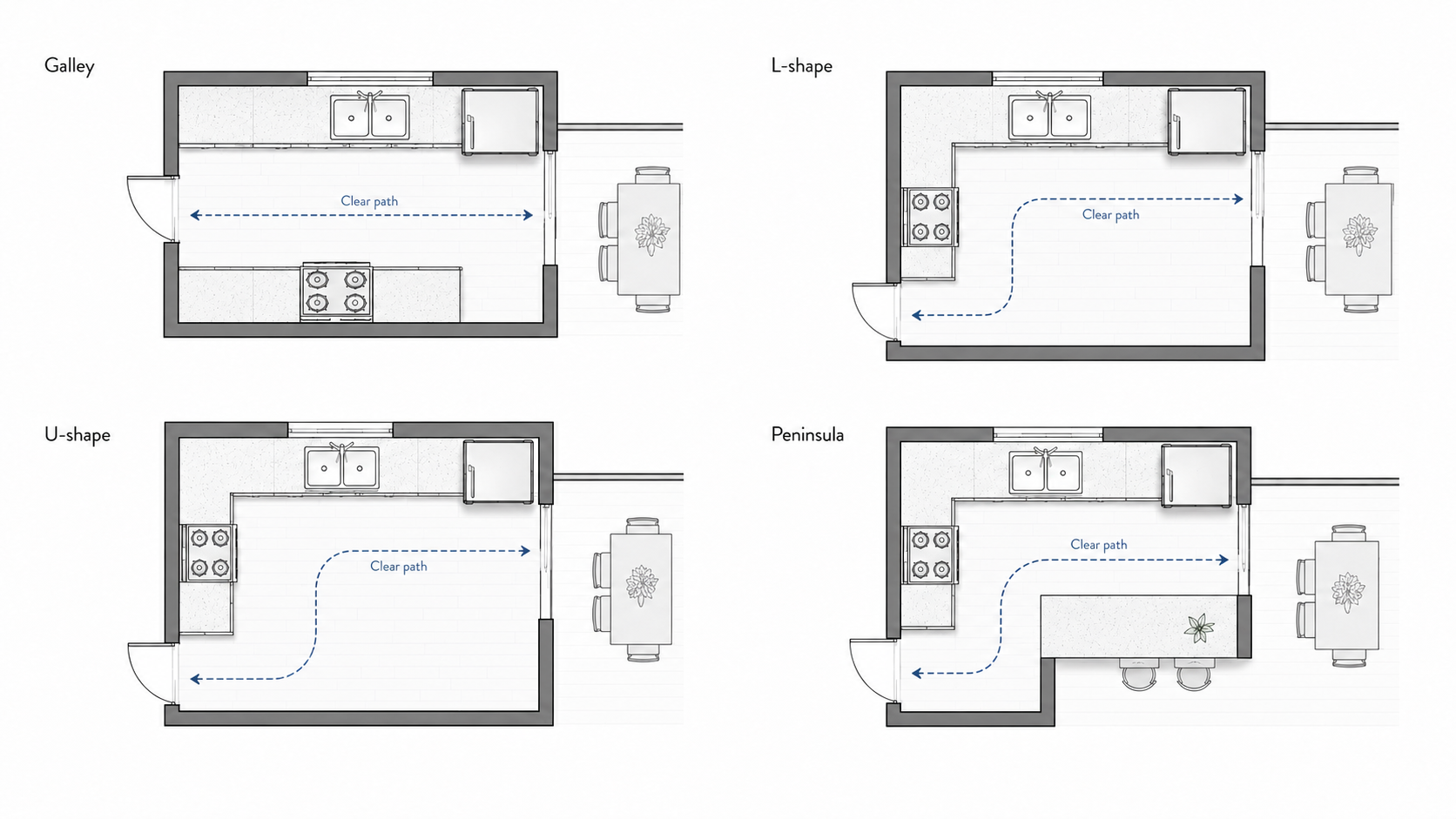
The best layout depends on what the room already gives you.
| Layout | Works Best When | Watch For |
|---|---|---|
| Galley | The kitchen is narrow and has two strong parallel walls | Too many doorways can break the work run |
| L-shaped | The sink and range can sit on connected walls with a clear dining edge | The refrigerator can drift too far from the work zone |
| U-shaped | The room has enough width for turning and appliance doors | It can feel boxed in if the opening is too small |
| Peninsula | The kitchen needs storage and counter space but cannot carry an island | It can block circulation if it runs too long |
The common mistake is choosing the layout name before checking the clearances. A galley can work beautifully if the runs are clean. An L-shape can fail if the refrigerator lands in the wrong corner. A U-shape can feel efficient or trapped. A peninsula can be the best move in the house or the thing everyone walks around forever.
The shape is not the answer. The clearance is the answer.
The Traffic Path Can Break the Kitchen
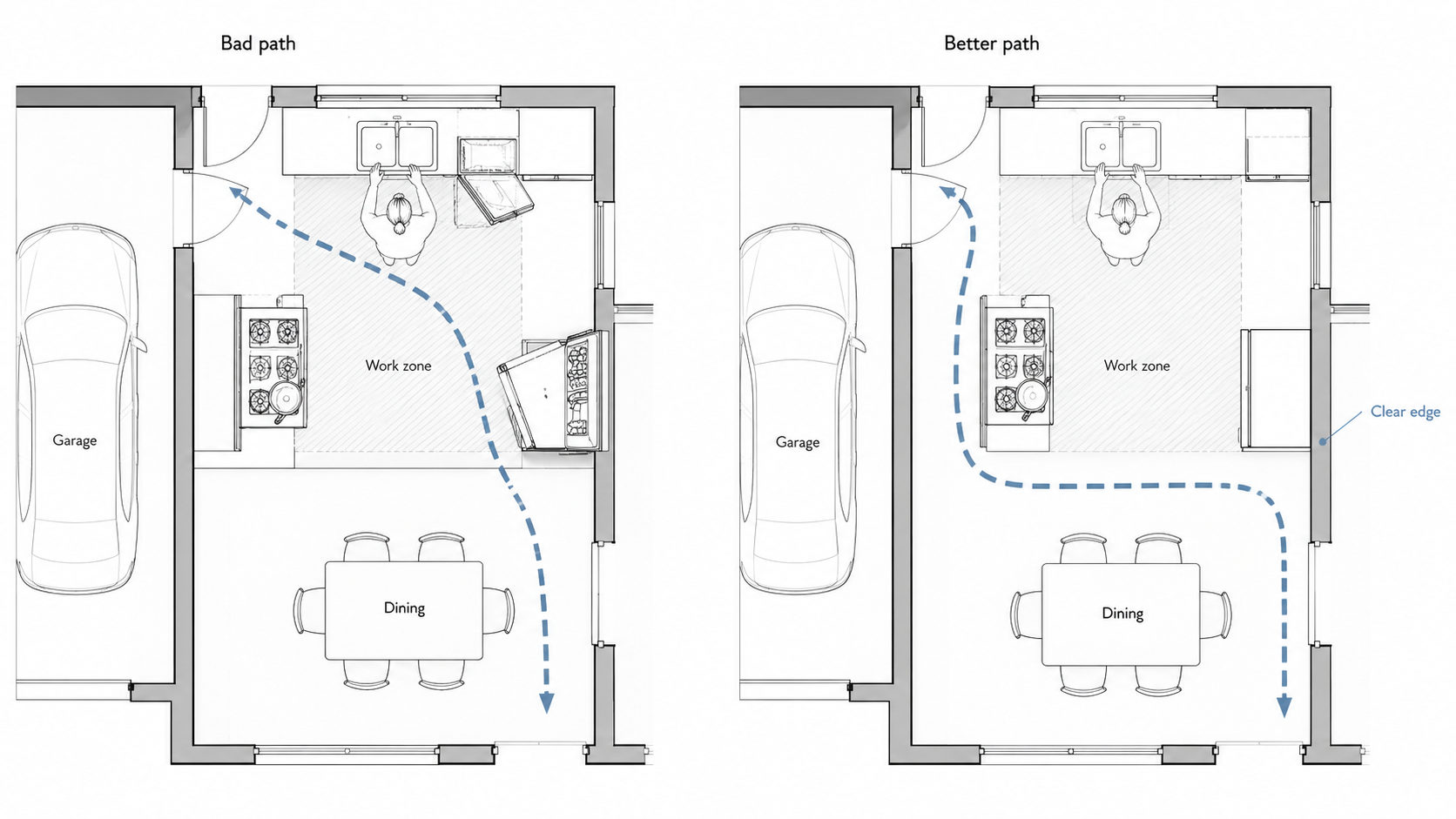
Small ranch kitchens often fail because the main path cuts through the work zone.
Someone enters from the garage and walks behind the cook. The dining table sits past the dishwasher. The back door crosses the sink zone. The refrigerator is on the wrong side of the room, so everyone enters the kitchen for drinks and snacks even when nobody is cooking.
That traffic pattern matters more than the cabinet door style. If the path from garage to kitchen to dining crosses the sink, range, and refrigerator triangle, the kitchen will feel crowded even after new cabinets go in.
The fix may be small. Move the refrigerator to the edge of the kitchen. Shorten a peninsula. Widen one doorway. Keep the sink wall but improve the dining opening. Add landing space near the refrigerator so people do not stop in the aisle.
Do not design the kitchen only for the cook. Design it for the person carrying groceries, the person unloading the dishwasher, the person trying to get outside, and the person opening the refrigerator while dinner is being made.
Cabinet Layout Matters More Than Cabinet Style
The cabinet style can wait.
The cabinet layout decides whether the small kitchen works. Base drawers may matter more than new uppers. A tall pantry cabinet may solve more than a decorative open shelf. A landing counter beside the refrigerator may fix more daily irritation than a premium backsplash.
Small ranch kitchens often lose storage when homeowners chase openness. Upper cabinets come down. Walls open. The room photographs better. Then the toaster, mail, cereal, coffee supplies, pans, and cleaning products live on the counters because the storage plan was never replaced.
That is not clutter. That is a layout failure.
Before deleting a wall of cabinets, decide where those things go. If the new plan cannot answer that, the wall is doing more work than it appears.
The Cabinet Order Freezes the Mistake
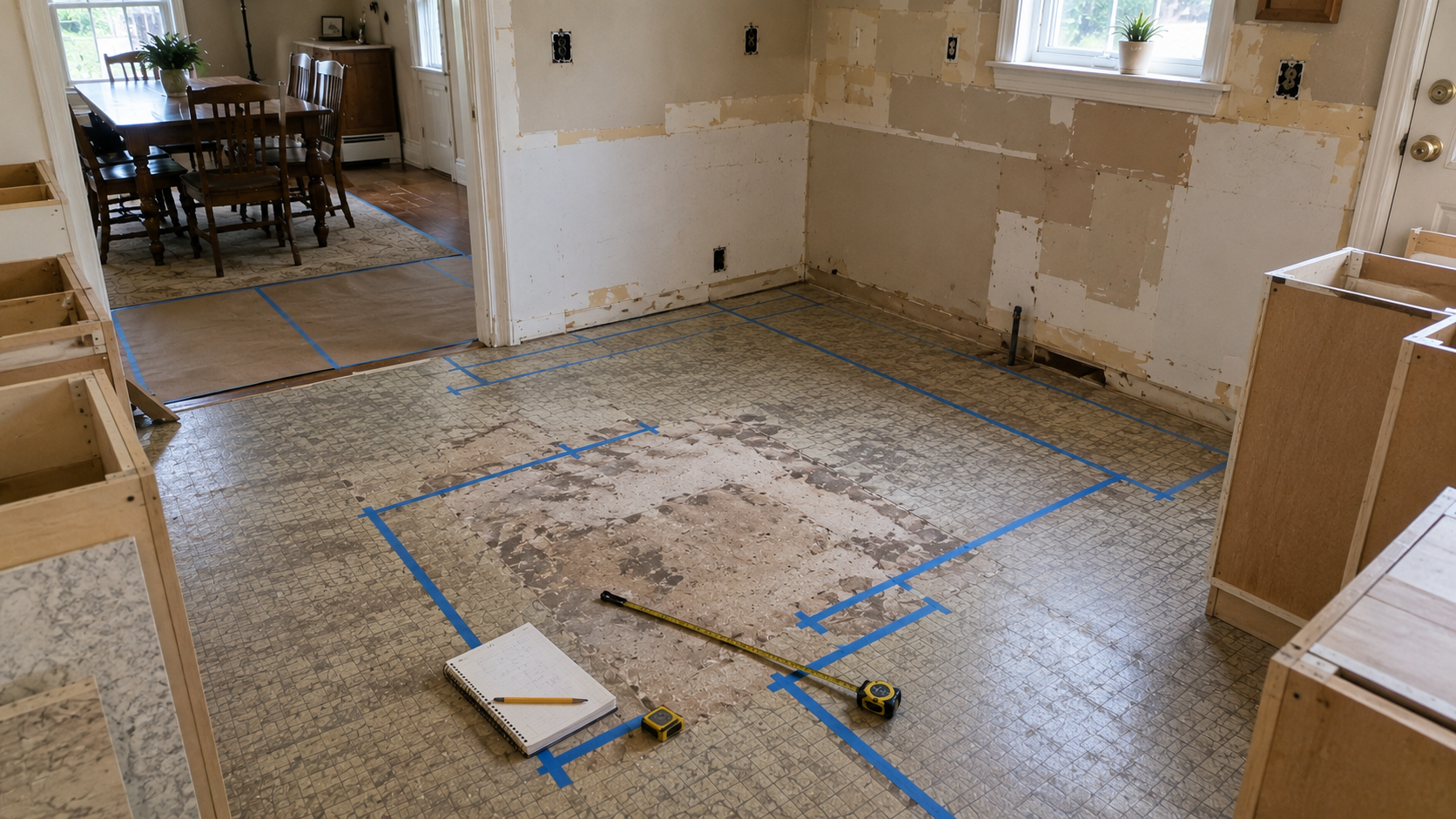
This is where a small ranch kitchen stops being flexible.
Before the cabinet order, the layout can still be corrected. The refrigerator can move a few inches. The peninsula can shorten. The sink base can stay where the plumbing already works. The dishwasher door can be checked against the aisle. The floor patch can be priced before it lands in the middle of the room.
After the cabinet order, those same corrections become delays, fillers, restocking fees, awkward panels, changed appliance specs, and arguments about who measured what. A small kitchen has no forgiveness. One wrong cabinet width can make the refrigerator door hit trim, block a drawer, tighten the aisle, or leave a filler strip where a useful drawer should have been.
That is the part many homeowners find out too late. The expensive mistake is not always the cabinet brand. It is ordering cabinets before the room has been tested with appliance doors, walking paths, plumbing limits, floor patches, and storage loss.
Before the order is final, tape the layout on the floor. Open every appliance door in the plan. Stand where the refrigerator opens. Walk the garage path. Pull a chair out at the dining table. Open the dishwasher in the taped plan. Check whether two people can pass without turning sideways.
A taped floor looks low-tech. It can save the remodel.
The Window Usually Controls More Than Light
In many ranch kitchens, the window decides the sink location, upper cabinet run, backsplash height, wall symmetry, and how the room connects to the yard.
That is why moving the sink window or replacing the window during a kitchen remodel should not be treated as a separate purchase. A shorter window can change the cabinet line. A wider window can affect structure, siding, trim, and backsplash edges. A lower sill can improve the room or create a cabinet problem.
If the kitchen window is staying, design around it honestly. If it is changing, settle the window before cabinets and backsplash lock the wall. Otherwise the kitchen layout and exterior opening start fighting each other. See ranch house window replacement before treating the kitchen window as a separate purchase.
The best small ranch kitchens usually use the window as an anchor, not as decoration.
Where the Money Is Better Spent
| Money Often Goes To | Usually Better Spent On |
|---|---|
| Forcing an island | Clear aisles, better drawers, and landing space |
| Moving plumbing for a new look | Keeping the sink wall and improving storage, light, and counters |
| Full wall removal | One useful opening sized to the room |
| Open shelves replacing uppers | Storage that actually absorbs daily clutter |
| Premium finishes first | Electrical, lighting, floor repair, and cabinet layout |
This does not mean finishes do not matter. It means finishes should not be asked to rescue a bad plan. A small ranch kitchen with plain cabinets and good clearances will age better than a trendy kitchen with tight aisles and nowhere to put anything.
For the budget side, see ranch kitchen remodel cost.
When Not Moving Everything Is the Better Remodel
A restrained remodel can look less exciting during planning and work better every day after it is built.
Keep the plumbing wall. Use a peninsula instead of an island. Open one useful section of wall. Keep the window if it still gives the right sink location and daylight. Replace weak storage with better drawers and tall cabinets. Fix lighting before chasing expensive tile. Protect the path from garage or back door to dining.
That kind of remodel may not produce the most dramatic before-and-after photo. It can still cook better, clean better, store better, and cost less.
The point is not to keep everything old. The point is to stop moving things that are not causing the failure.
Before You Approve the Layout
Check the room in this order:
- main traffic path from garage, hall, back door, and dining area
- sink wall and whether moving plumbing solves enough to be worth it
- refrigerator landing space and door swing
- dishwasher door, range clearance, and drawer conflicts
- storage lost when walls or uppers are removed
- floor patching where cabinets, walls, or islands move
If the layout cannot survive those checks, the cabinet style does not matter yet.