

An open concept kitchen can look finished the day the wall comes down and start failing the week everyone moves back in.
The room is brighter. The before-and-after photo looks cleaner. The kitchen finally connects to the living or dining room. Then normal life walks back through the door.
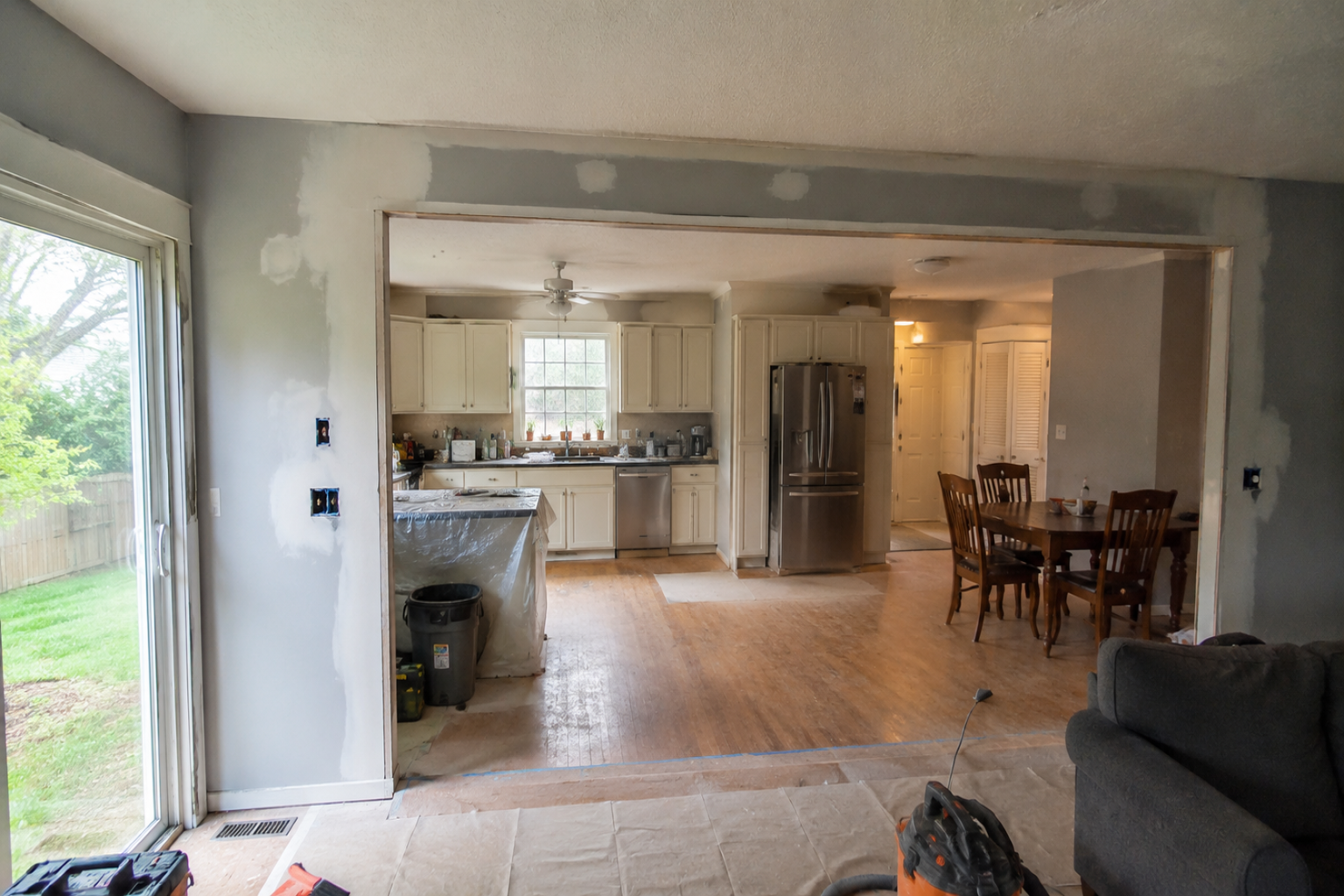
The dishwasher is louder from the sofa now. Cooking smell travels farther. The refrigerator opens into the walkway. There is a floor patch showing where the wall used to be, and a beam line cutting across the ceiling. The old cabinets that held everything are gone, so the counters start collecting whatever the remodel erased.
Taking the wall out is not the end of the job. It is the point where structure, storage, lighting, flooring, HVAC, furniture, sound, smell, and everyday mess all have to be solved at once — and most of them were being quietly handled by the wall you just removed.
The Wall Comes Down, Then the Real Job Starts
A wall removal looks simple from the room side. It is rarely simple from the house side.
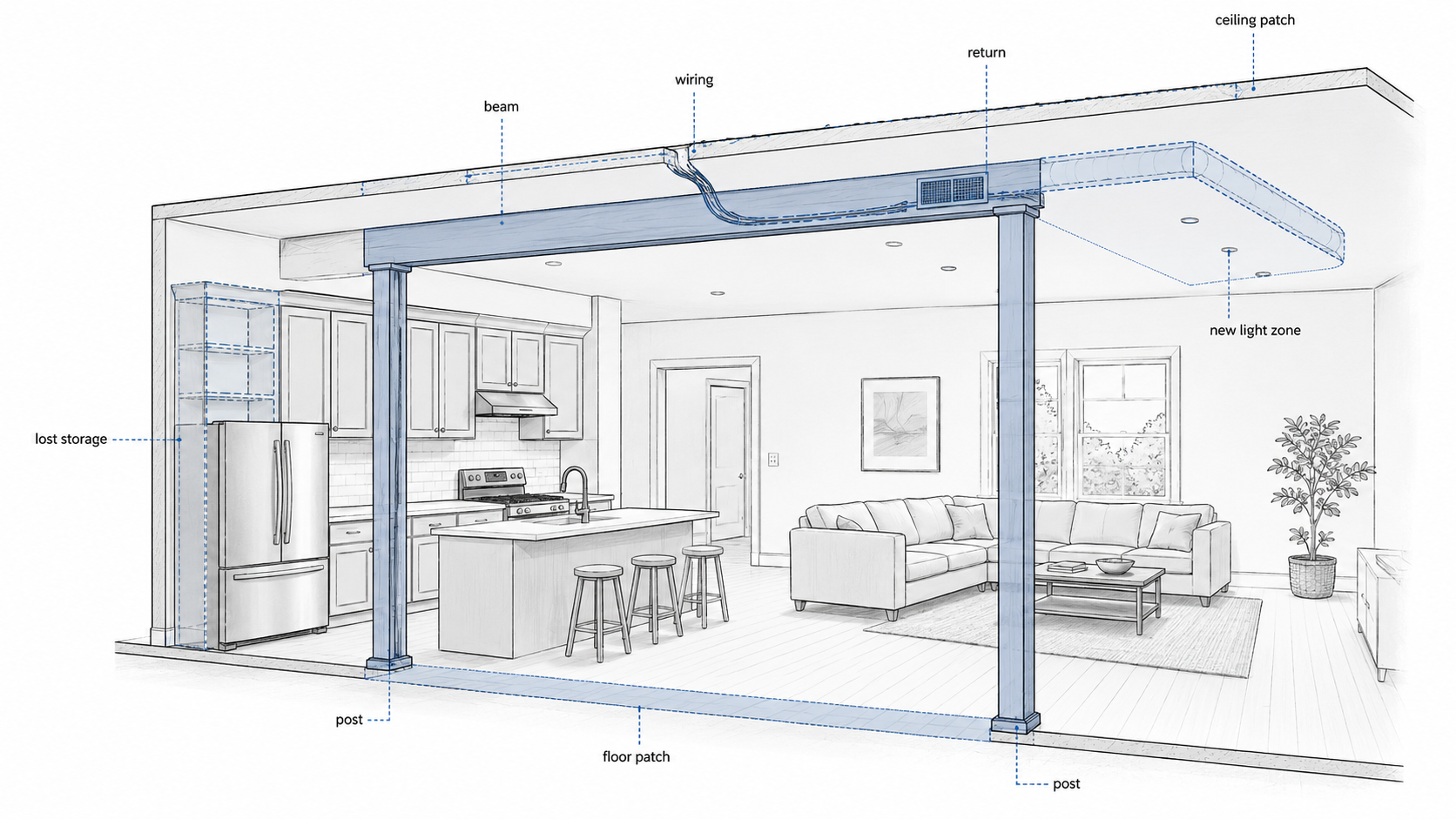
That wall might be carrying load. It might hold switches, outlets, plumbing, ductwork, a return grille, or old wiring. It might be the seam between two floor materials, two ceiling textures, two lighting plans, and two furniture layouts. Pull the studs and every one of those unfinished edges becomes part of the remodel, whether you budgeted for it or not.
Before you assume the wall is easy to take out, read removing a wall in a ranch kitchen and load-bearing vs. non-load-bearing walls.
The real question is not whether the wall can come down. It is what the house needs once it is gone.
A Bigger Opening Is Not Always Better
Open concept gets sold as more space, and sometimes it really is. A dark kitchen finally connects to the dining room. A pinched doorway becomes a useful opening. The cook can see into the living room instead of working behind a wall. Light gets to travel deeper into the house.
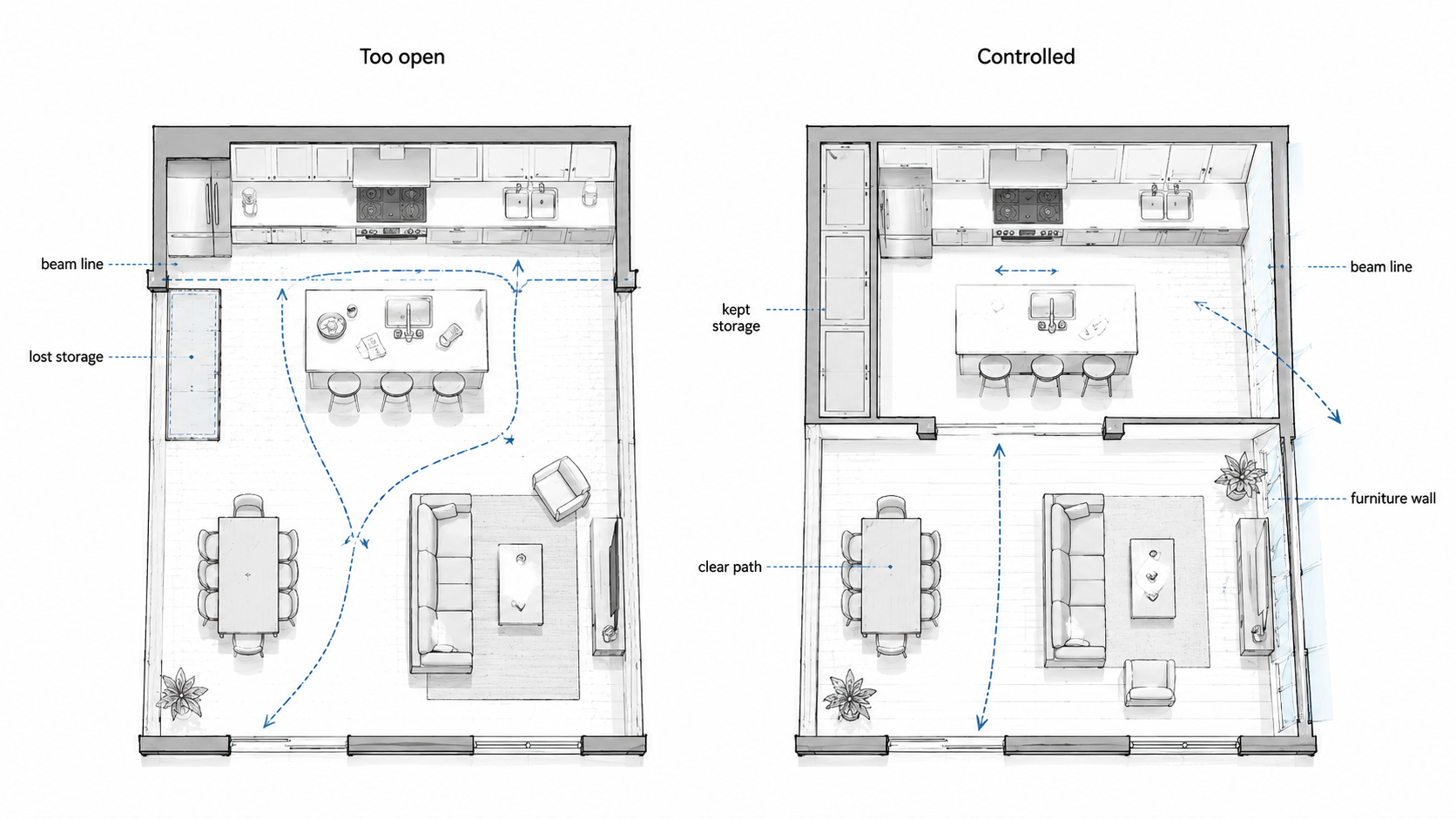
But bigger is not automatically better. A full opening can take out the only wall that held your storage. It can leave the refrigerator on display from the living room, make the kitchen louder, and strip the living room of the one wall it needed for furniture. And it can still leave a beam line dividing the room visually — except now the room has less to work with.
This is where I push back on most clients, because a controlled opening usually beats a total teardown. It brings in the light and the connection while keeping enough wall for cabinets, furniture, outlets, switches, and a little visual order. The question worth asking is not "can this wall come down?" It is "how much of it actually has to open for the house to work better?"
Three Openings That Often Work Better Than Full Removal
A good opening has a job — light, connection, sightline, seating, or circulation. If it cannot name its job, it is usually just demolition with nicer language.
| Opening Type | What It Fixes | What It Protects |
|---|---|---|
| Wider cased opening | Improves light and movement between kitchen and dining | Keeps some wall for cabinets, switches, trim, and room definition |
| Partial wall or pony wall | Lets the kitchen feel connected without exposing every counter | Protects outlets, furniture placement, backing, and visual separation |
| Large pass-through | Improves conversation and borrowed light | Keeps more structure, storage, and sound control than full removal |
| Selective wall removal | Opens the part of the wall that is actually blocking flow | Avoids destroying every useful edge in both rooms |
The best open concept remodels usually leave more wall than the homeowner first expected. That is not the plan falling short. That leftover wall is often the only thing keeping the new room from turning into one bright, loud, hard-to-furnish box.
The Room Gets Louder After It Gets Brighter
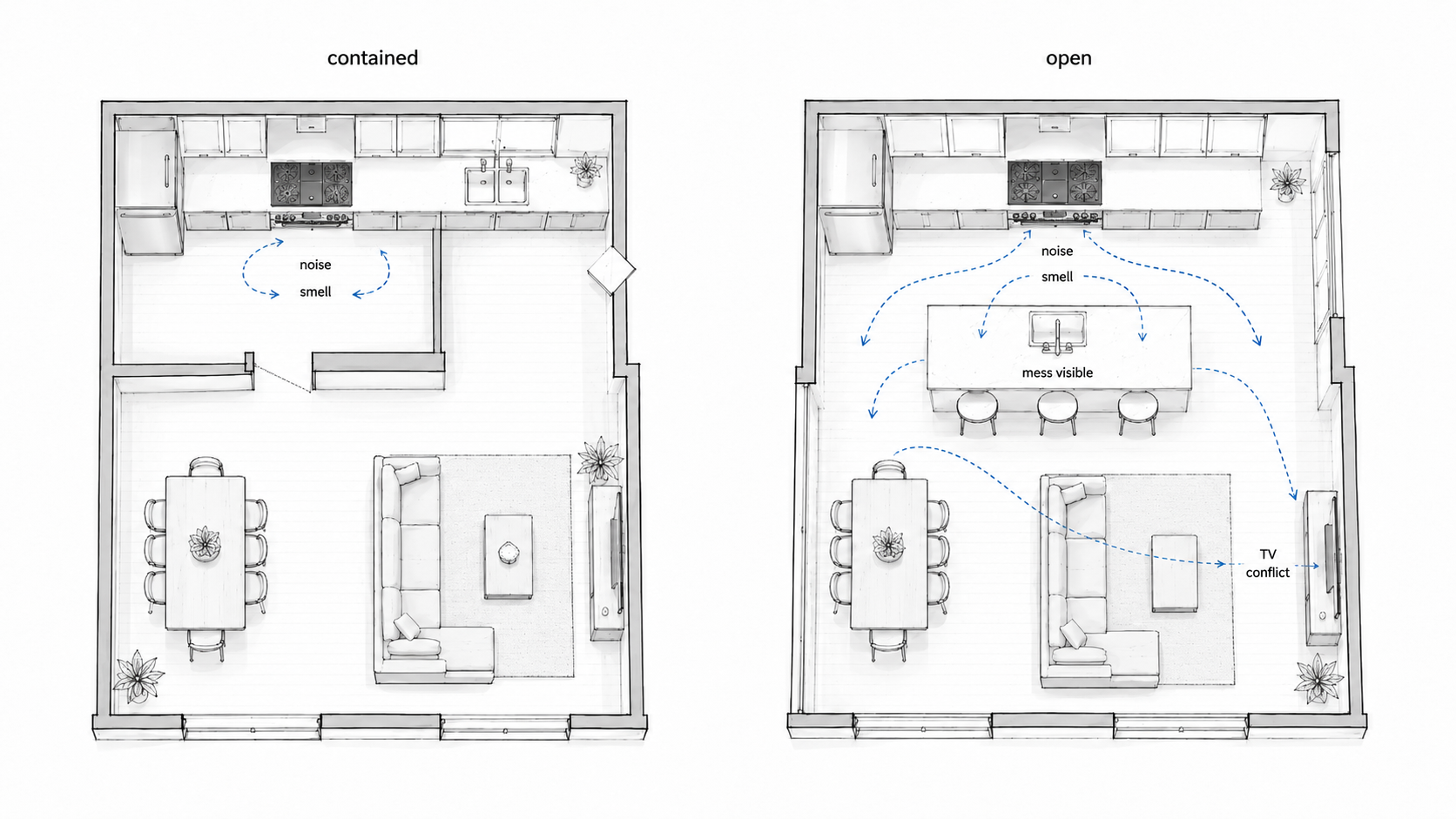
This is the part most open concept advice skips. A closed kitchen hides more than bad light. It also holds sound, smell, steam, dishes, appliance noise, and clutter. Take the wall down and none of that disappears — it just spreads into the rest of the house.
The dishwasher is louder from the sofa. The range hood becomes part of the living room. The blender talks over the television. Cooking smell drifts into the seating area. Dirty pans are visible from the front door, and a cereal box left on the counter suddenly reads as living-room clutter.
None of that means open concept is a mistake. It means the remodel has to design for an ordinary Tuesday night, not just for the bright after photo. The answer might be a quieter appliance package, a real vent hood instead of a recirculating one, better storage at the kitchen edge, a partial wall, a pantry cabinet, or a layout that keeps the sink and the dirty-dish zone a little less exposed. Brightness is not the only way to measure whether the room worked.
The Beam Still Counts as a Wall
A bearing wall does not vanish just because the studs are gone. If it was carrying load, that load still needs somewhere to go: a beam, posts, point loads, bearing walls below, and sometimes engineering or a permit. And the beam either sits flush with the ceiling or drops below it — a difference that shapes the whole room.
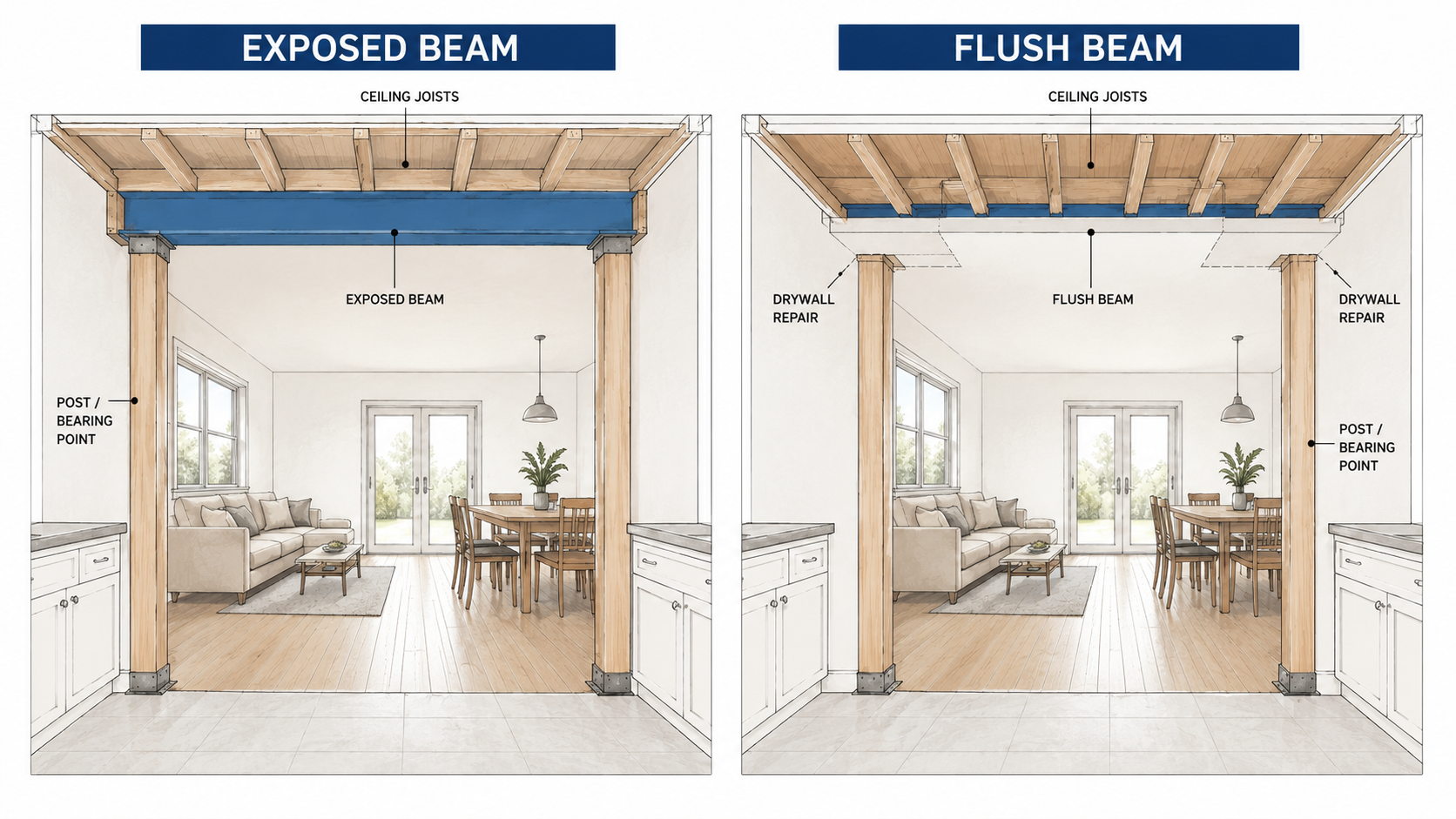
A dropped beam can still split the room visually, interrupt the recessed lighting, limit cabinet height, and make a low ranch or older-home ceiling feel even lower. It also marks the exact line where the old wall stood — which is not quite the seamless open feeling people had in their heads.
There is nothing wrong with a visible beam. The mistake is pretending it will not shape the room. It has to be part of the design from the start, not a surprise line discovered across the finished ceiling.
Storage Disappears Faster Than People Expect
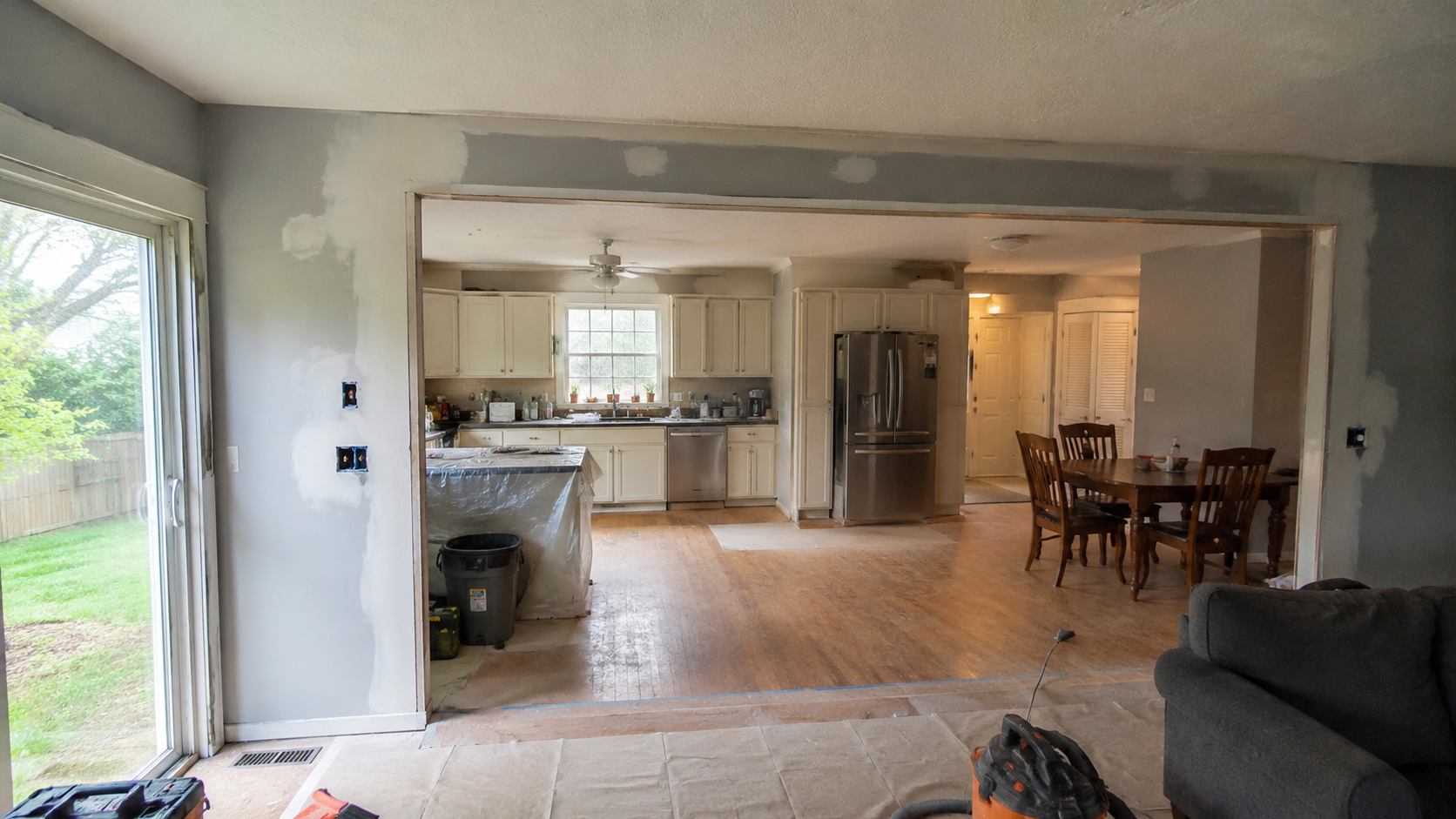
A lot of open concept kitchens look better in photos partly because the storage is gone. Upper cabinets come down. A pantry wall disappears. A short wall with a landing counter gets erased. The refrigerator wall moves. The kitchen reads as cleaner because the things that used to live there are not back in the room yet.
Then life returns. Mail lands on the island. Small appliances stay out on the counter. Pots get crammed into awkward base cabinets. Food spreads into the dining room. Cleaning supplies pile under the sink because the tall cabinet is gone. The kitchen is open, and the clutter has nowhere to go.
Open shelves do not fix this on their own — most of the time they just make it more visible. The better move is to replace the storage you lost: drawers, a pantry cabinet, a smarter base-cabinet plan, a cleaner refrigerator zone, a storage wall that survives the opening. Open space and useful space are not the same thing.
The Refrigerator and Dishwasher Need Real Clearance
Open kitchens often fail right at the appliance edge. The refrigerator door opens into the walkway. The dishwasher blocks the path to the sink. The oven door swings across the island aisle. A stool lands exactly where the cook needs to stand. The room looks bigger, but the working clearances got worse.
It happens most when the wall comes down and the island becomes the answer to everything — asked to replace lost counter, lost storage, lost seating, and lost separation all at once. That is too much for one slab of cabinetry, especially if the clearances were never checked.
So before the wall comes out, mark the full swing of the refrigerator, dishwasher, oven, trash pullout, pantry doors, and island seating. On the plan, not in your head. A kitchen can be wide open and still feel jammed if every moving part opens into the same path. The layouts that work keep the busy appliance zone a little protected — connected to the room, without putting every door swing and dirty-dish moment on display.
The Living Room Can Get Worse
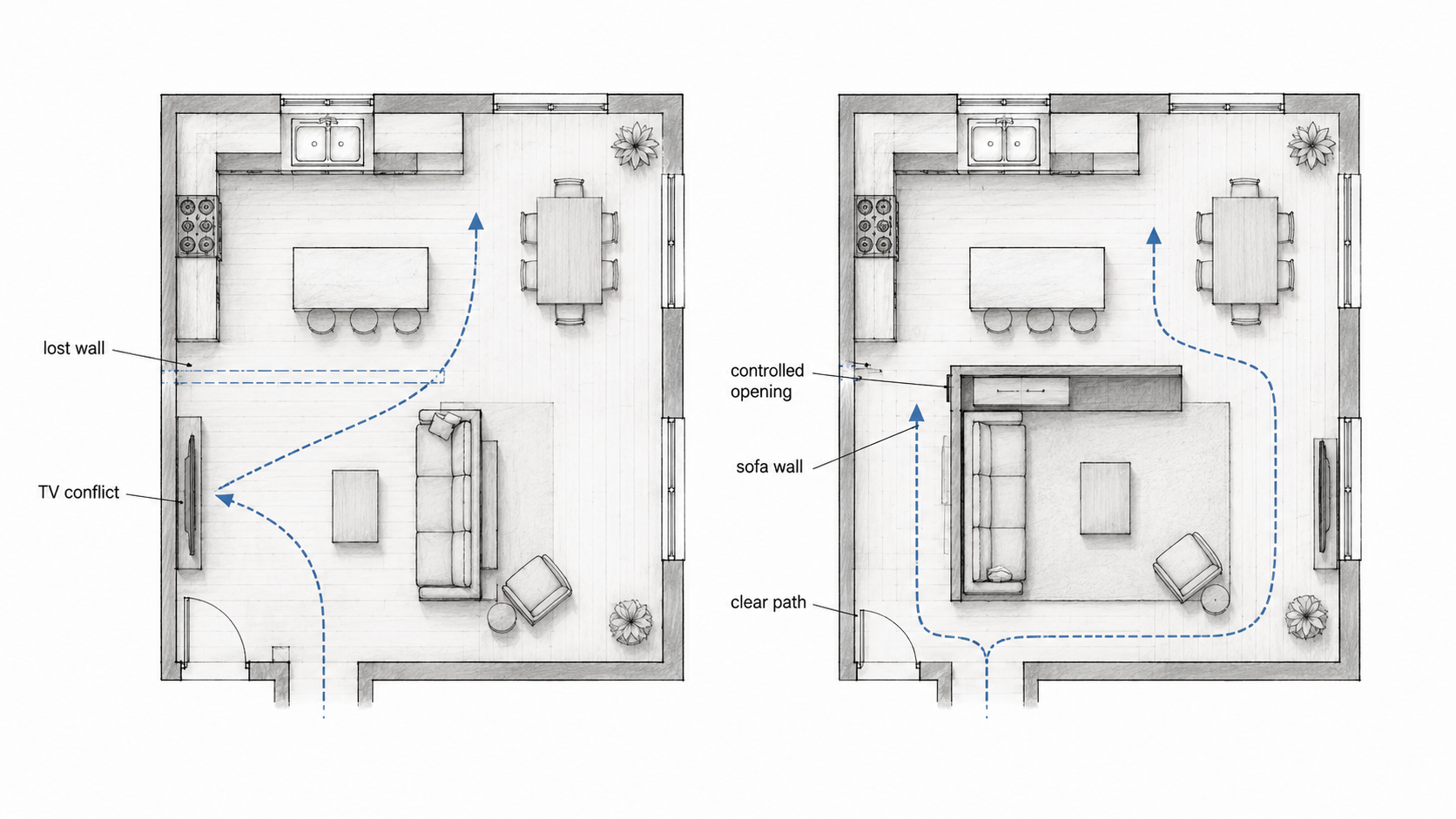
A kitchen wall is often a living room wall too. That sounds obvious right up until it is gone. Then the sofa loses its back, the television has no good wall to face, traffic cuts straight through the seating area, and the kitchen becomes the main view from every chair. The living room ends up brighter and less settled.
This is one of the most common open concept mistakes I see: fixing the kitchen while quietly wrecking the room beside it. Before the wall comes out, put the living room furniture on the plan — sofa, television, chairs, walkway, window, entry path. If the opening helps the kitchen but leaves the living room with no calm wall to build around, the plan is not done. The opening that works improves both rooms. It does not make one room pay for the other.
The Floor and Ceiling Tell on the Remodel
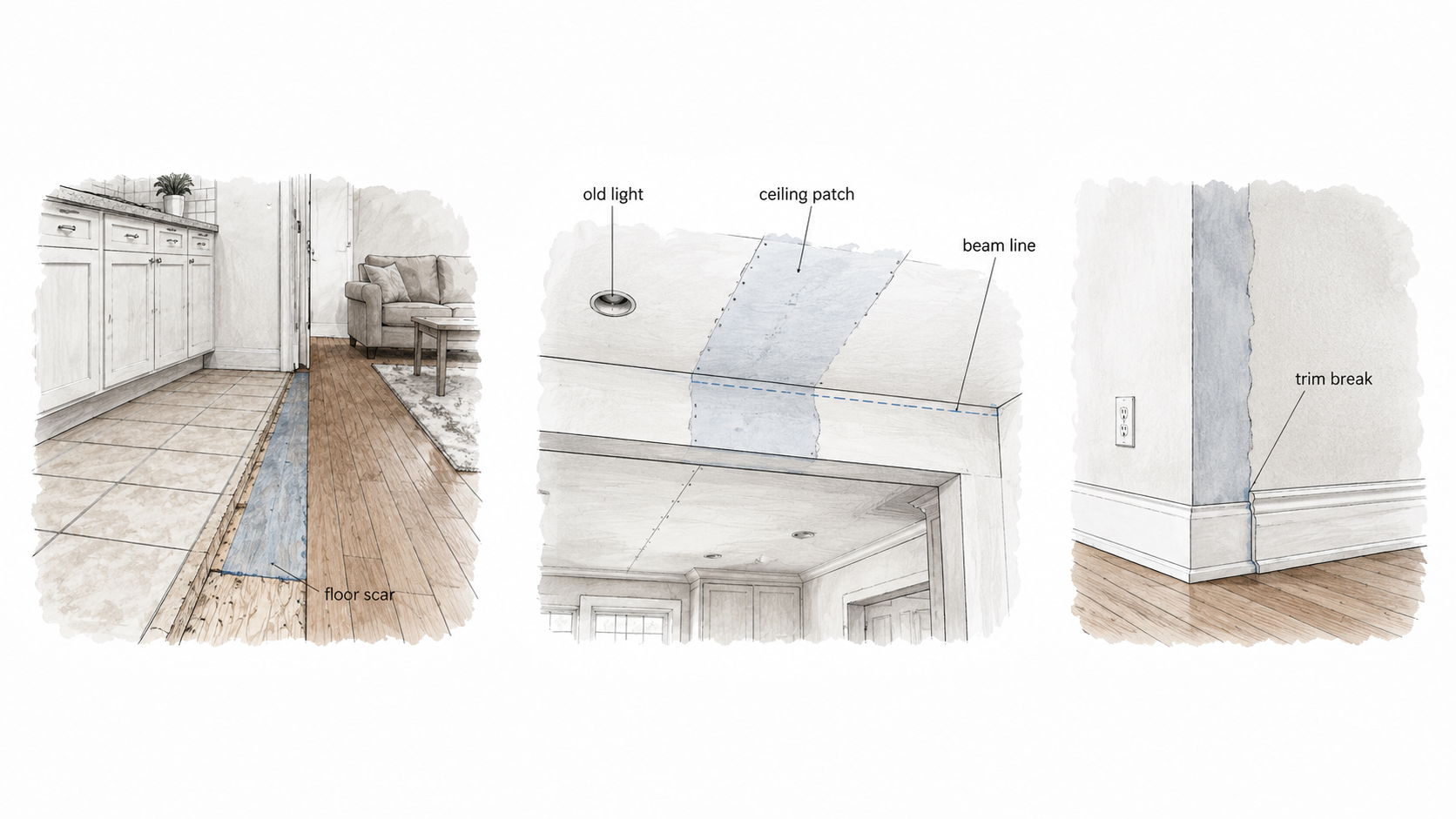
Floors and ceilings tend to show exactly where the old wall was. Pull the wall and the flooring may stop short. The kitchen has tile, the living room has hardwood. Old vinyl turns up under the cabinets. A subfloor patch runs through the middle of the new opening. The transition strip lands right where the room was supposed to feel seamless.
The ceiling is just as unforgiving. A removed wall leaves drywall repairs, mismatched texture, paint differences, old light locations, soffit scars, and sometimes a beam. Even a small mismatch shows, because the ceiling in a newly opened room catches light from both sides.
A clean opening can mean feathering the hardwood, refinishing the living room, replacing more flooring than expected, repainting a bigger ceiling, moving lights, or choosing a deliberate threshold instead of hoping the repair line disappears on its own. Do not price the wall removal without pricing the floor and the ceiling line — that is where the "simple" job quietly grows.
Lighting Has to Be Replanned, Not Just Added
Two rooms do not become one good room just because the wall is gone. The old kitchen lighting was built for a closed work zone. The old living room lighting was built for seating. Open the space and those two separate plans start to feel random — task lights glaring toward the sofa, pendants hanging on the wrong line, recessed cans stopping dead at the old room boundary.
An open kitchen needs layered light that knows its zones: task light where food gets prepped, softer light near the seating, something useful at the dining edge, and switches that make sense from the doors people actually walk through. Adding more fixtures without deciding what each zone is for is how you end up with a bright room that still feels wrong at night.
HVAC and Returns Do Not Care About the Rendering
Walls move air, and that is easy to forget until the wall is gone. A return grille may be sitting in the wall you want to remove. A duct may run through the soffit above it. The supply was balanced for two smaller rooms, not one larger connected space. And now that cooking air travels farther, the kitchen may need real exhaust it never had.
This is the least glamorous part of an open concept remodel and one of the parts that decides whether the finished room actually feels right. Pull a return without a good replacement path and the house heats and cools worse. Run a weak or recirculating range hood and the open living area starts collecting cooking smell. If the old soffit was carrying ductwork, removing it is not a tidy ceiling cleanup. A beautiful open kitchen drawing is not a mechanical plan.
What the Quote May Not Include
The first quote usually covers demolition, framing, drywall, cabinets, counters, and finish work.
What it may not fully cover: engineering, permit drawings, beam sizing, temporary support, posts buried in the side walls, floor feathering, ceiling texture blending, duct relocation, electrical rerouting, panel work, recessed-light changes, repainting the larger connected ceiling, or replacing the storage the wall used to carry. That is not always someone being dishonest — a finished wall hides too much to price perfectly. The trouble starts when you compare quotes as if every number includes the same unknowns.
| Open Concept Promise | What May Actually Need Pricing |
|---|---|
| Remove the wall | Beam, posts, temporary support, engineering, permits |
| Make one big room | Floor patch, ceiling patch, lighting zones, paint continuation |
| Improve flow | Furniture layout, appliance clearances, traffic path |
| Make it brighter | Window use, lighting plan, glare control, task lighting |
| Modernize storage | Lost uppers, pantry replacement, drawer plan, appliance landing zones |
Ask what falls out of scope if the wall turns out to contain structure, wiring, ductwork, plumbing, or a floor transition nobody could see during the walk-through. If that answer is vague, the quote is not ready.
The Quote Changes After Demolition
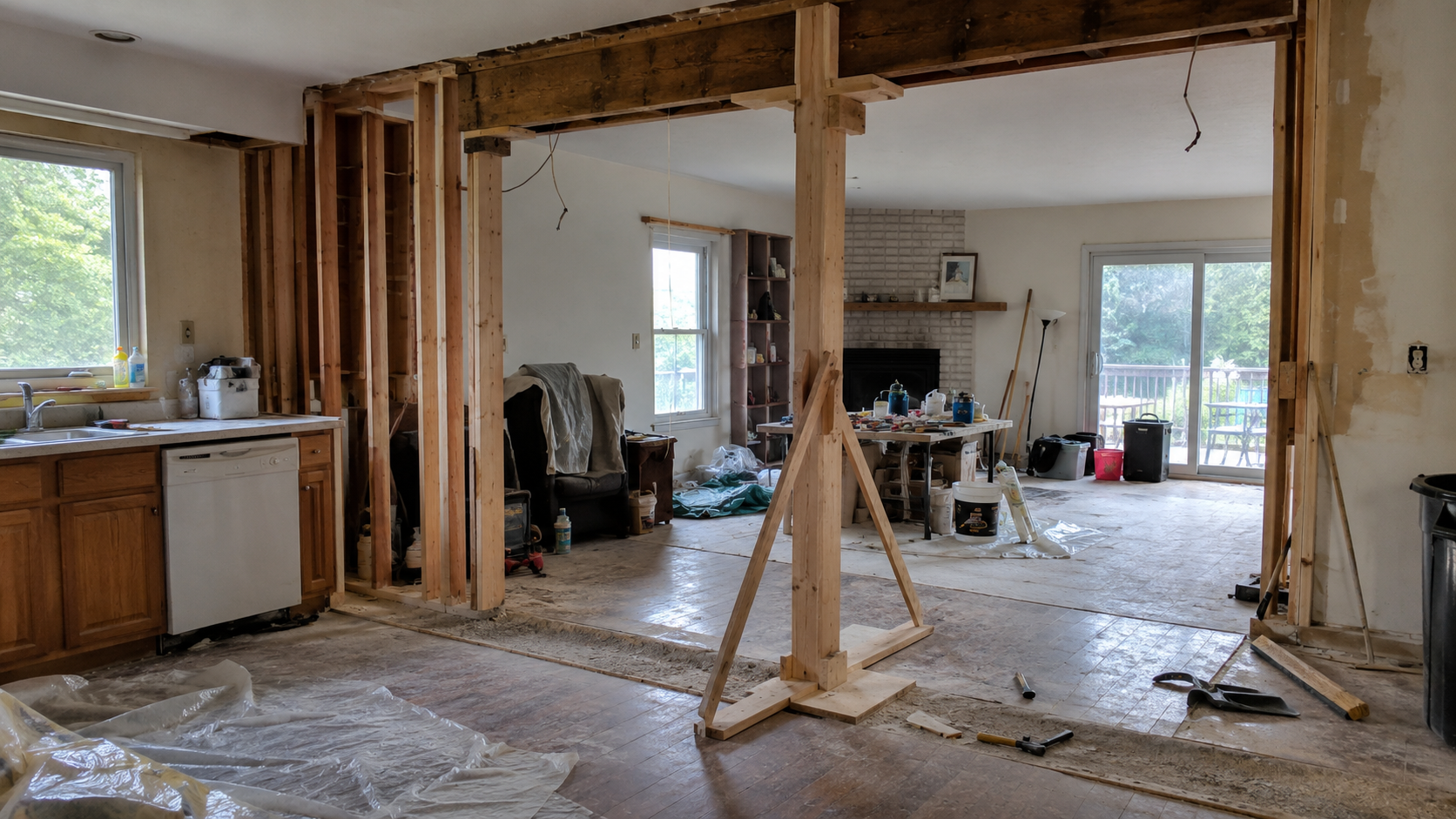
This is where open concept projects stop being simple. The wall comes down in a day. The decisions it exposes can run for weeks. A hidden duct needs a new route. The beam needs a cleaner landing point. The floor patch reaches farther into the living room than anyone expected. The old soffit was hiding wires. The ceiling repair refuses to disappear under one coat of paint.
None of those are freak events. They are the normal consequences of turning two finished rooms into one. The protective move is to ask for the chain reaction before demolition starts. What happens if the floor does not match? What happens if the ceiling texture will not blend? What happens if the wall is carrying a return, wiring, or a plumbing vent? Who prices that, and at what point does it become a change order?
When Open Concept Still Makes Sense
None of this makes open concept the enemy. It is the right move when the old kitchen is dark, cut off, and barely connected to the dining or family space. It can make a small house feel less chopped up, make it easier to keep an eye on kids, pull in daylight, and take the boxed-in feeling out of a ranch or older postwar house without adding a square foot.
The remodels that land do not remove walls for drama. They remove or reshape the one wall that is actually causing the failure. A good plan keeps storage where it is needed, protects a furniture wall, controls the beam line, solves the floor and ceiling patches, and leaves the kitchen a clear work zone. The room ends up more connected without turning every activity into one shared mess.
For ranch-specific layout issues, see ranch house kitchen layout problems and better fixes and open floor plan ranch house.
Before You Take the Wall Down
Look at the opening as a chain reaction, not a demolition line item. What carries the load once the wall is gone? Where do the wires go? What happens to the return air? How does the floor get patched? Does the ceiling need more than a small repair? Which storage disappears? Where does the sofa end up? Can the kitchen still hide dishes, sound, and cooking mess on the nights it needs to?
If those answers are still guesses, the wall is not ready to come down. The goal was never the biggest opening. It is the opening that makes the house work better after the dust settles.
FAQ
What is the biggest open concept kitchen mistake?
Treating wall removal as the whole project. The opening also changes structure, storage, flooring, ceiling repair, lighting, HVAC, sound, smell, appliance clearance, and furniture placement.
Does every kitchen wall need to come all the way down?
No. A partial opening, cased opening, wider doorway, or controlled wall removal can often improve light and flow while keeping storage, outlets, furniture placement, and room definition.
Why does open concept make the kitchen louder?
The wall that used to contain appliance noise, dishwashing, range-hood sound, and cooking activity is gone. Without better appliance choices, layout control, and ventilation, those sounds move into the living space.
Will the floor show where the wall used to be?
Often, yes. Flooring may stop at the old wall line, change material, or need patching and refinishing. The ceiling can show the line too, through drywall repairs, texture differences, paint changes, or a beam.
Why does the quote change after demolition?
Finished walls hide structure, wiring, ducts, plumbing vents, old floor layers, soffits, and uneven framing. Once the wall opens, the contractor may find work that could not be priced accurately from the surface.
When is open concept still worth it?
When the opening solves a real layout failure without creating bigger problems nearby. The best projects improve light and connection while protecting storage, furniture walls, traffic paths, ventilation, and the kitchen work zone.