
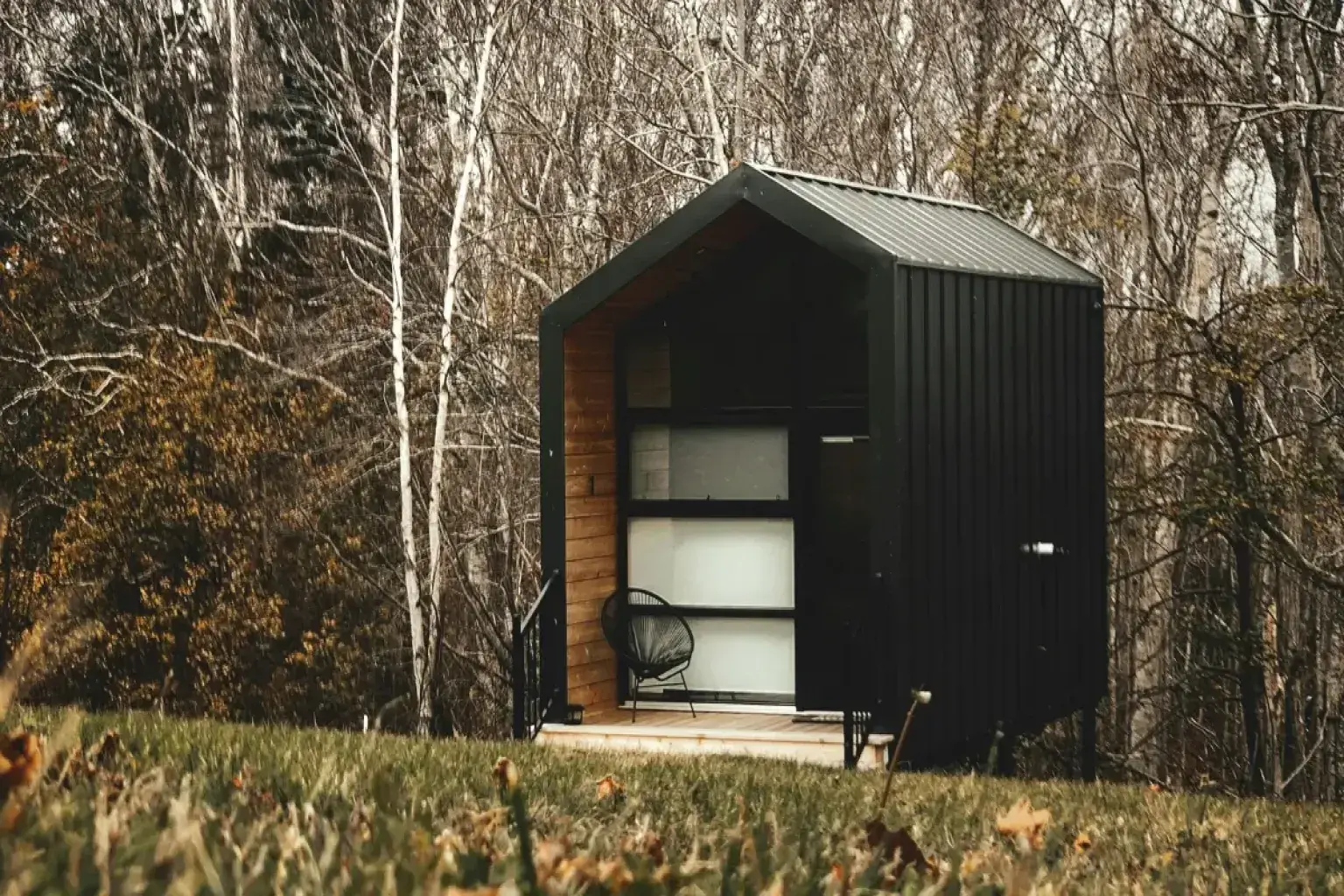
A tiny home can meet a building code and still be illegal to live in on your lot.
That is the part buyers miss. They ask whether the house is “built to code” before asking the harder question: what legal category is this thing? A backyard ADU, a permanent dwelling, a park model, an RV, a manufactured home, and a tiny house on wheels are not treated the same way.
The seller can call it a tiny home. The county may call it an RV. The building department may want a foundation. The health department may care more about sewage than square footage. The zoning office may reject the site before anyone looks at the floor plan.
If you are still sorting out the basic category, start with What Is a Tiny House?. If the home is towable, read Regulations for Tiny Houses on Wheels before you buy plans, a trailer, or a finished unit.
The Label Decides the Path
“Tiny home” is not one legal category in the United States. It is a loose description. The approval path depends on what the unit is, where it sits, and how it will be used.
| Common label | How it may be treated | What to check first |
|---|---|---|
| Tiny home on a foundation | Small permanent dwelling, ADU, cottage, or detached accessory unit | Zoning, building permit, foundation, utilities, inspections |
| Tiny house on wheels | RV, trailer, movable tiny house, temporary structure, or special local category | Parking, registration, long-term occupancy, utility hookup rules |
| Park model | Recreational park trailer or seasonal unit in many places | Where it can be placed and whether full-time living is allowed |
| HUD manufactured home | Federally regulated manufactured housing if it meets HUD standards | HUD label, state installation rules, local zoning, foundation or setup requirements |
| Backyard tiny home | Often an ADU if permanent and locally allowed | ADU rules, setbacks, owner-occupancy rules, utility connections, permits |
The wrong category can kill the project after the money is already spent. A beautiful tiny house on wheels does not help if the only legal path on your property is a detached ADU on a foundation.
Code and Zoning Are Different Problems
Building code is about safety: structure, fire separation, stairs, lofts, plumbing, wiring, ventilation, energy performance, and exits. Zoning is about land use: what can sit on the lot, how many dwellings are allowed, setbacks, parking, occupancy, height, and whether a second unit is allowed at all.
You need both.
A tiny home can be well built and still fail zoning. A zoning district can allow ADUs, but the building still needs plans, inspections, utility approval, and a certificate of occupancy. Treat code and zoning as two separate doors. Opening one does not open the other.
Appendix Q Is Not a Free Pass
Many tiny-house code conversations mention IRC Appendix Q. It matters because it gave jurisdictions a model-code path for tiny houses at 400 square feet or less, excluding lofts, with special provisions for ceiling heights, loft access, stairs, ladders, and emergency escape.
That does not make it automatic law on your lot. Your state or local jurisdiction has to adopt it, amend it, or accept similar tiny-house provisions through its own code process. Some places use it. Some do not. Some use a different code cycle. Some add local restrictions that matter more than the tiny-house appendix itself.
Do not rely on a seller’s Appendix Q claim. Ask the building department which residential code cycle applies, whether tiny-house provisions have been adopted, and what inspections are required before occupancy.
A Trailer Is Not a Dwelling Permit
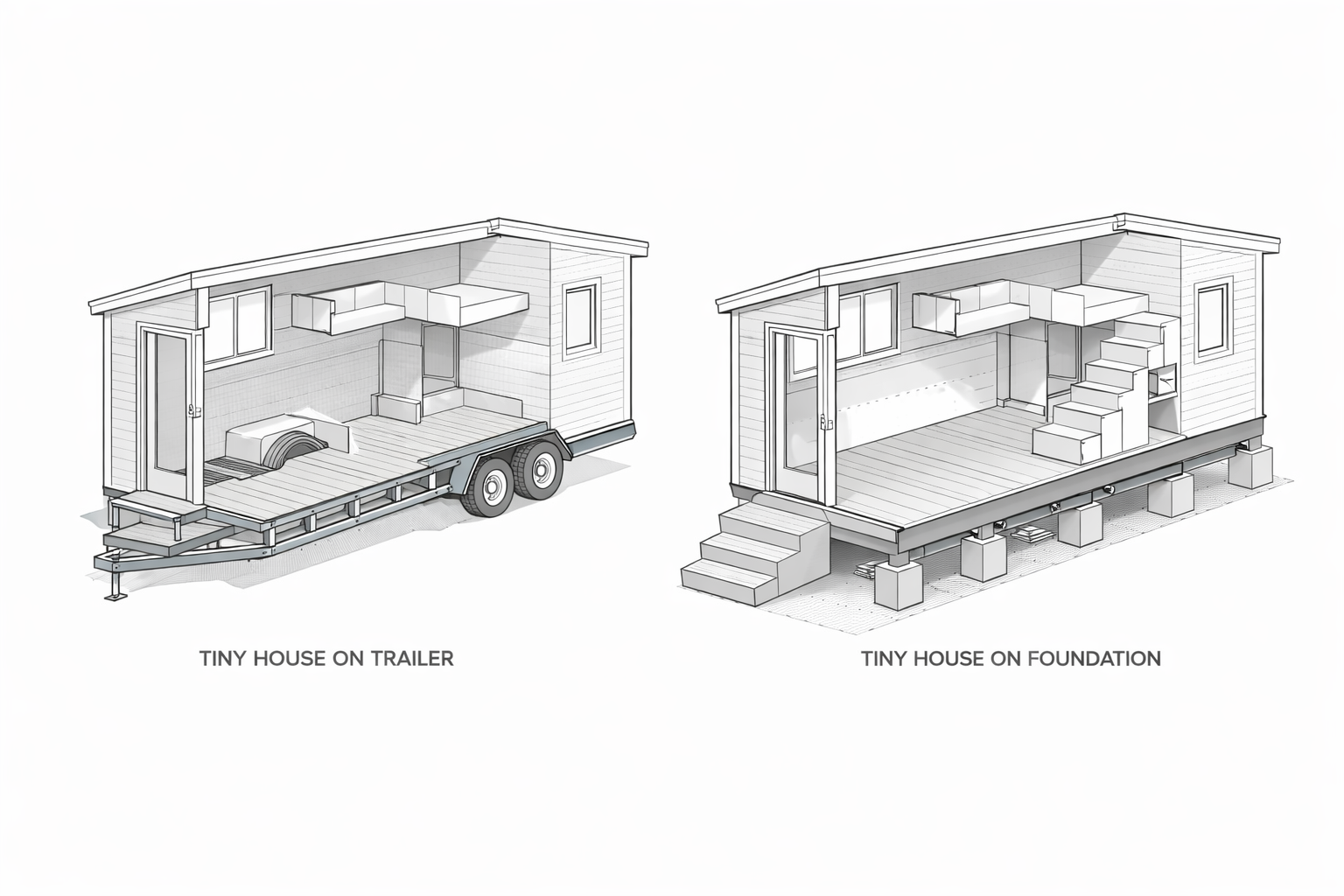
Wheels solve one problem and create four more.
A towable tiny house may need a trailer title, VIN, registration, lights, brakes, tires, weight rating, and safe towing setup. That still does not mean you can live in it full time on private land. Local zoning may treat it as an RV. An RV park may accept it. A residential lot may not.
This is where the internet gets sloppy. The road rules, trailer rules, RV rules, and dwelling rules get blended into one fake answer. They are separate. A unit can be towable and still not be legal as a permanent residence. It can be registered and still not allowed in your backyard.
For a deeper THOW-specific path, use Regulations for Tiny Houses on Wheels.
The Listing Label Is Not the Legal Category
This is where buyers get trapped.
A listing says “tiny home,” “park model,” “ADU-ready,” “RVIA-style,” “off-grid cabin,” or “move-in ready.” Those words may help sell the unit. They do not tell you how your city, county, lender, insurer, utility provider, or health department will classify it.
The delayed problem usually shows up after the deposit. The buyer calls the county and finds out the unit needs a permanent foundation. Or the zoning office says a second dwelling is not allowed. Or the utility company will not connect power without a permitted structure. Or the lender will not finance it because it is on wheels. Or the insurance quote changes because it is not a conventional dwelling.
Before buying, ask the seller for the legal paperwork, not the sales language: certification, trailer title, HUD label if applicable, inspection records, engineered drawings, installation instructions, and the exact standard the unit was built under. Then ask your local office whether that category is allowed on your site.
The Offices to Call First
Do not start with a builder. Start with the offices that can stop the project.
| Office | What to ask | Why it matters |
|---|---|---|
| Planning or zoning | Is this use allowed on this parcel? | This decides placement before construction details matter. |
| Building department | What code path and inspections apply? | This decides plans, foundation, egress, stairs, electrical, plumbing, and occupancy. |
| Health department | How must sewage, septic, graywater, or well water be handled? | Off-grid ideas often fail here first. |
| State DMV or trailer office | How is the trailer titled, registered, and inspected? | A road-legal trailer is still a separate question from legal occupancy. |
| HOA or private community | Are there minimum size, appearance, rental, or accessory-structure rules? | Private restrictions can be stricter than the city. |
Get names, dates, and written references when possible. A friendly phone answer is useful. A written code citation is safer.
Backyard Tiny Homes Usually Need the ADU Path
In many U.S. cities, the cleanest legal route for a backyard tiny home is not “tiny house.” It is ADU.
An accessory dwelling unit is a secondary dwelling on the same lot as a primary home. That path usually requires a real kitchen, bathroom, sleeping area, utility plan, setbacks, and building permits. Some states have pushed cities to allow more ADUs, but the details still change by jurisdiction.
California is the obvious example because state ADU law has made backyard units more common. That does not mean every prefab tiny home can be dropped in a California backyard. It still has to fit the local ADU process, the building code, utility requirements, and the site.
If the goal is a guest house, rental unit, aging-parent suite, or backyard office with plumbing, ask the city whether the project is an ADU before asking whether it is a tiny home.
HUD Homes Are Their Own Category
A HUD manufactured home is not the same thing as a tiny house on wheels built in a small shop.
HUD-regulated manufactured homes are built under federal manufactured housing standards. They have specific certification labels, factory oversight, installation rules, and homeowner complaint paths. That legal structure can help, but it also means the unit must actually meet that category. A seller saying “manufactured-style” or “built like a mobile home” is not enough.
If a unit is being sold as a manufactured home, ask for the HUD label information and verify the paperwork. If it does not have the label, do not assume HUD rules protect you.
Off-Grid Does Not Mean Outside the Rules
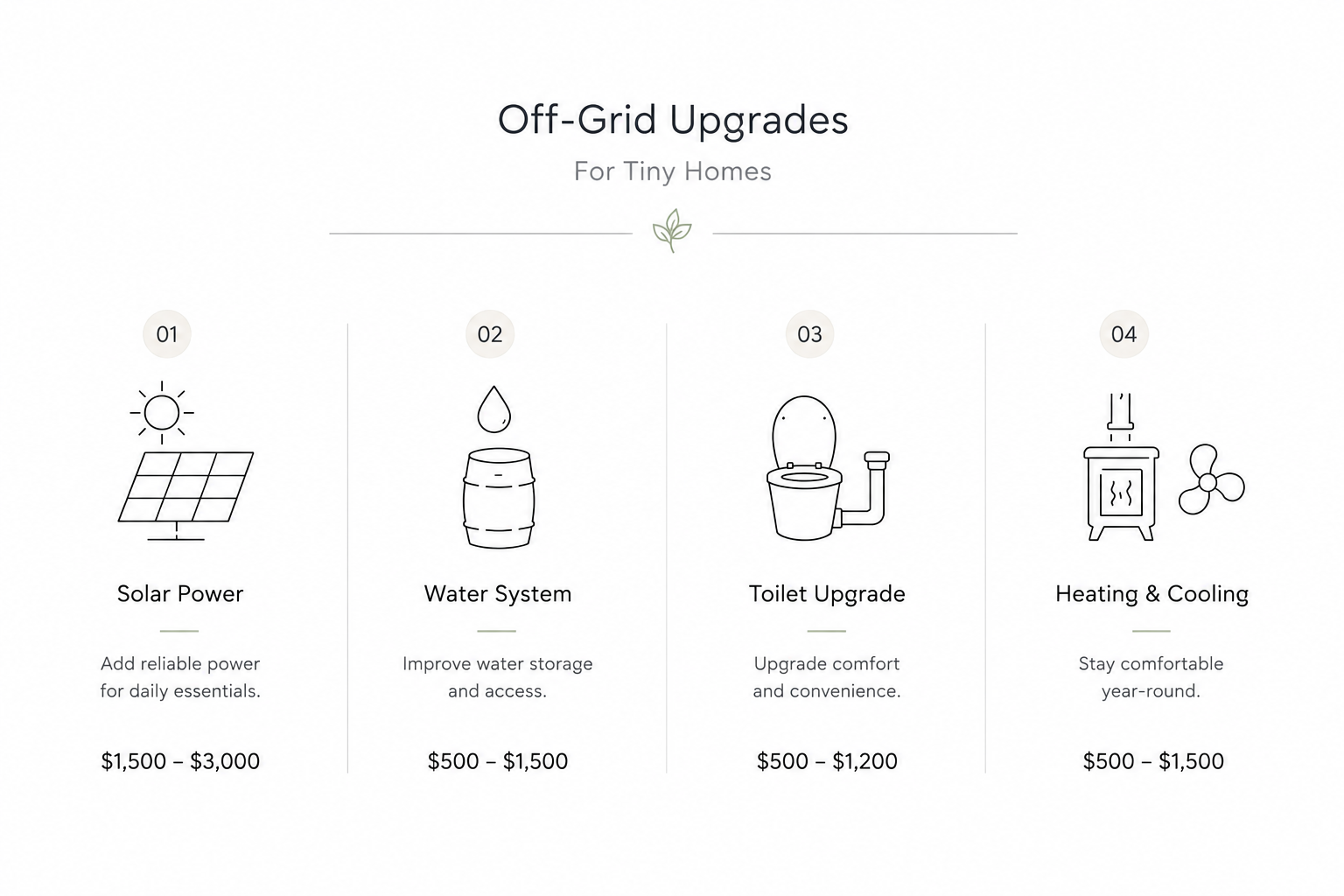
Off-grid systems sound flexible until the health department enters the conversation.
Solar power is usually the easy part. Sewage, graywater, drinking water, and winter plumbing are harder. A composting toilet may be acceptable in one area and rejected in another. Graywater may need a permitted disposal method. Septic approval may depend on soil, slope, groundwater, setbacks, and local health rules. A well may need testing and permits.
A tiny home with no approved wastewater plan can become unusable even if the shell is beautiful. That is not a design problem. It is a public-health problem.
The same goes for ventilation. Tight small homes still need planned exhaust and fresh air. Cooking, showering, sleeping lofts, propane appliances, and wet clothes can load a small space with moisture fast. If the bath fan, range hood, or whole-house ventilation is treated as optional, condensation and mold usually get the last word.
What Inspectors Usually Want to See
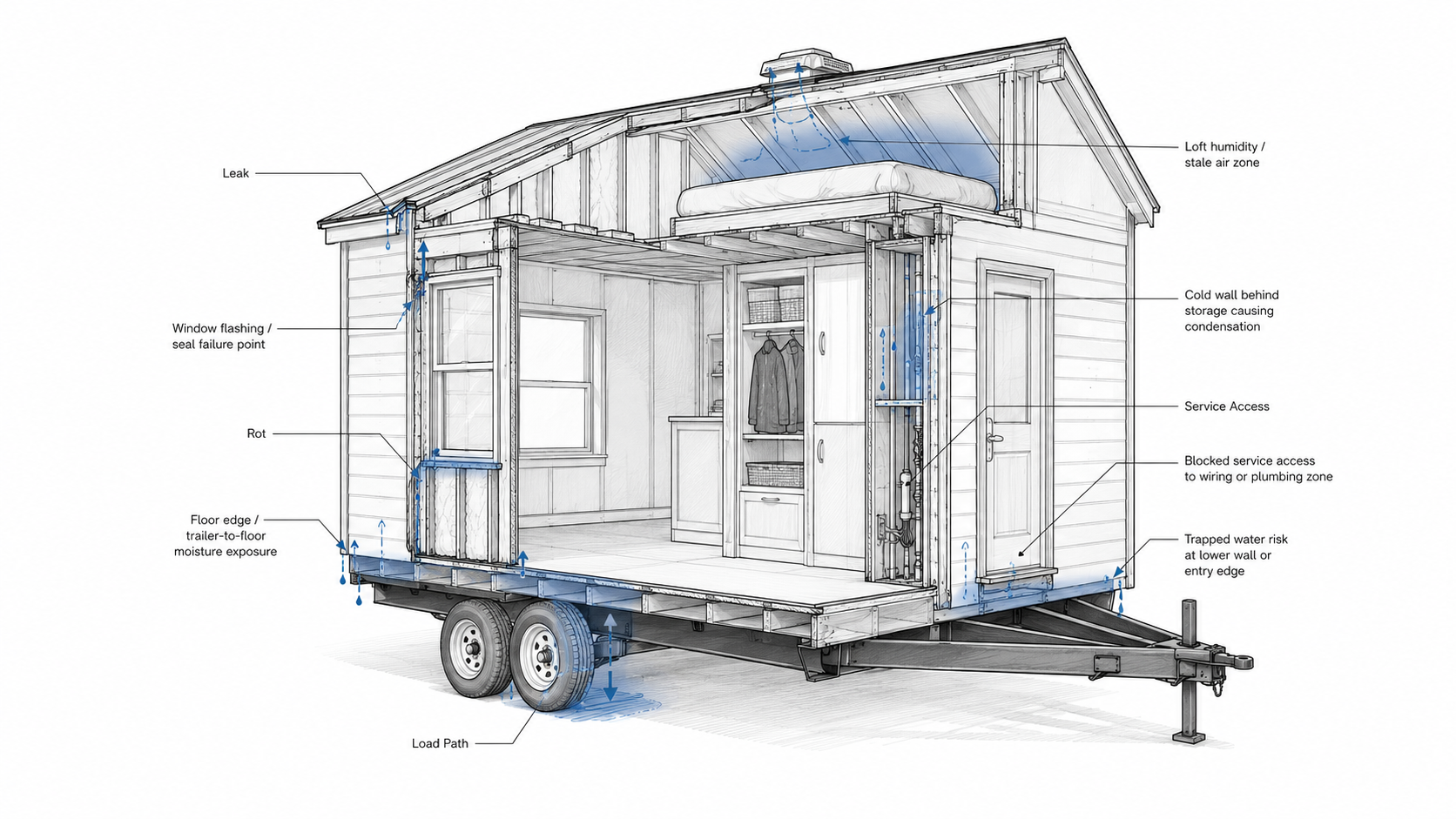
Inspectors are not judging whether the tiny home looks clever. They are looking for safe construction and maintainable systems.
Common trouble areas include loft access, emergency escape, handrails, smoke and carbon monoxide alarms, wet-area waterproofing, electrical panels, water-heater access, bathroom exhaust, trailer anchorage, foundation support, and whether hidden systems can be inspected without tearing the interior apart.
The cleanest tiny homes are not always the fanciest. They are the ones that leave officials fewer unanswered questions.
State Examples Are Useful, Not Universal
Some states and cities are much more active on tiny homes than others. Washington created a state-level tiny-house framework. California has strong ADU resources. Some cities allow tiny-home communities, cottage courts, park models, or small homes in specific zones.
That helps, but it does not give you a national answer. U.S. tiny-home rules are still local enough that the parcel matters. The same unit can be legal as a backyard ADU in one city, limited to an RV park in another, and impossible to place as full-time housing in a third.
Use state examples to understand the options. Use your local code office to make the decision.
Outside the U.S.
Canada, Australia, New Zealand, and the U.K. all have tiny-home activity, but the legal paths are different enough that U.S. advice should not be copied across borders.
In Canada, cold weather, provincial building codes, local bylaws, snow load, winter plumbing, and municipal service rules often decide the answer.
For non-U.S. readers, the same sequence still works: classification first, land-use approval second, building or vehicle standard third, utilities and health approval before purchase.
Official Resources to Check
Use these as starting points, then confirm your local version with the city, county, or state office that controls your parcel.
- ICC Appendix Q Tiny Houses for model-code tiny-house provisions many people still reference.
- HUD Manufactured Housing Homeowner Resources if the unit is being sold as a manufactured home.
- HUD Manufactured Housing Labels if you need to verify a HUD tag or certification label.
- California HCD ADU resources for one of the strongest state ADU frameworks in the U.S.
- Washington SB 5383 for an example of state legislation addressing tiny houses and tiny houses with wheels.
- EPA septic and decentralized wastewater resources for sewage and onsite-system background.
- U.S. Department of Energy whole-house ventilation for why tight small dwellings still need planned ventilation.
Questions to Ask Before You Buy
Do this before the deposit, not after the delivery date is on the calendar.
- What legal category will this unit fall under on this exact parcel?
- Is full-time occupancy allowed, or only temporary/seasonal use?
- Does the jurisdiction allow tiny homes on wheels as dwellings?
- If this is an ADU, what setbacks, size limits, utility rules, and parking rules apply?
- If this is on wheels, who handles title, registration, brakes, lights, weight, and transport permits?
- What sewage, graywater, water, and power approvals are required?
- Which inspections are required before anyone can live in it?
If the seller cannot answer those questions, assume the risk is still yours.
FAQ
Are tiny homes legal in the United States?
Sometimes. There is no single U.S. answer. The result depends on the home’s category, the parcel zoning, the local building code, and whether the home is on wheels or on a permanent foundation.
Does IRC Appendix Q make tiny homes legal everywhere?
No. It is a model-code path for tiny houses where adopted or accepted. Your local jurisdiction still controls the code cycle, amendments, zoning, permits, inspections, and occupancy approval.
Can I live full-time in a tiny house on wheels?
Only where local rules allow it. A THOW may be treated as an RV or trailer, and many places restrict long-term residential occupancy outside approved parks, communities, or special local programs.
Can I put a tiny home in my backyard?
The cleanest path is usually an ADU, if your city or county allows one. That means permits, setbacks, utilities, inspections, and a legal dwelling standard. A towable tiny house in the backyard is a different question.
Is a HUD manufactured home the same as a tiny home?
No. A HUD manufactured home is a specific federally regulated housing category with required certification labels and standards. A small towable tiny home does not become HUD-certified because it has wheels.
What usually stops tiny-home approval?
Zoning and utilities. The unit may be well built, but the site may not allow another dwelling, long-term RV occupancy, septic connection, sewer hookup, or off-grid waste system.
Read This Next
If your unit is towable, read Regulations for Tiny Houses on Wheels before assuming registration equals permission to live in it.
For cost planning, Tiny Home Cost Breakdown shows how site work, systems, delivery, and hidden setup costs change the budget.
If you are comparing factory-built options, Prefab Tiny Homes is the better next step than shopping random listings.