
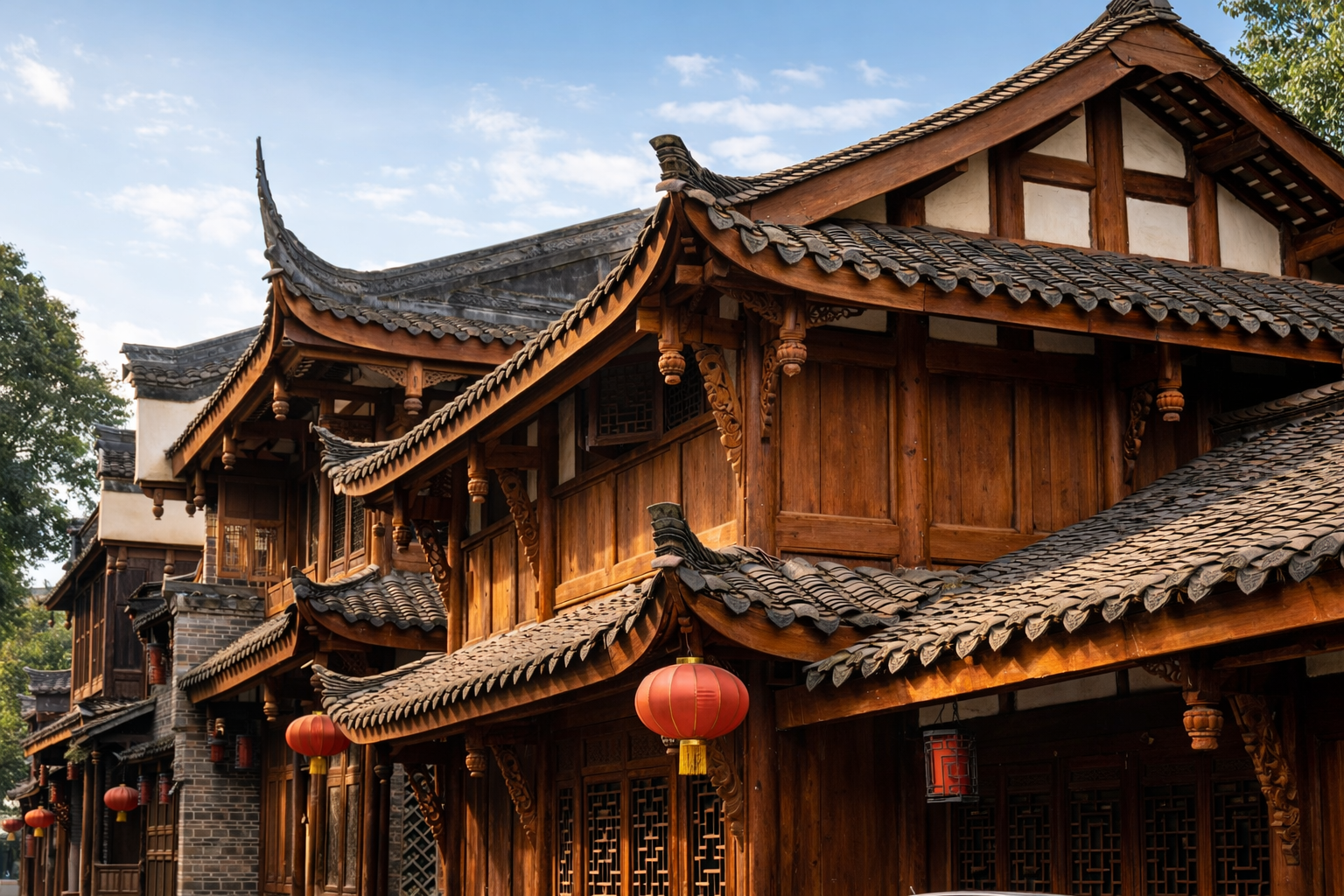
Most treat Chinese architecture like a pile of symbols. Curved roof. Red paint. Dragon. Done.
That is not how the tradition works. Traditional Chinese architecture is a building system first. Planning order, timber framing, courtyards, enclosure, roof form, and controlled decoration all work together. Pull those apart, and the explanation gets vague fast.
- The planning rules that shape the building before ornament appears
- Why timber framing matters so much
- How courtyards, walls, and gates organize daily life
- Where roofs, color, and ornament fit into the larger system
Order Comes Before Ornament
The clearest traditional element is not the roof curve. It is order.
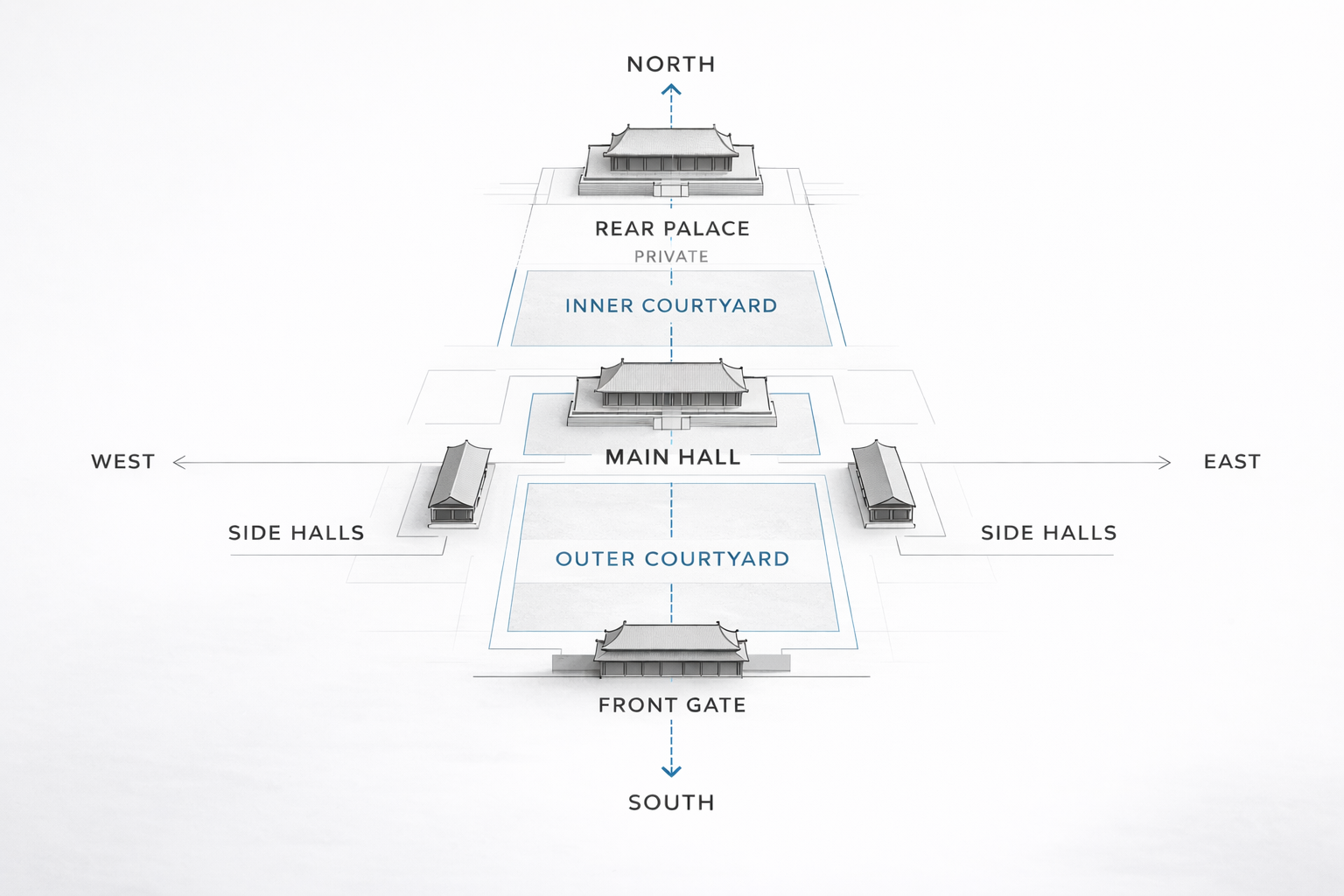
In major compounds, buildings are usually organized along a main axis, with secondary spaces arranged to either side. Symmetry matters, but not because it looks tidy in a photo. It helps express hierarchy. The most important building takes the key position. Lesser buildings step down around it. That planning logic is one reason traditional Chinese compounds feel composed instead of accidental.
You can still see that larger pattern in the historic planning of Beijing and in the long development of its central axis. For the wider historical frame, see our guide to Chinese architecture history.

This is where weak summaries drift into soft language about “balance” and stop there. Better to say it plainly: placement tells you rank. Position tells you use. The plan is already doing cultural work before color or carving enters the picture.
Timber Framing Is the Backbone
Traditional Chinese architecture is fundamentally a timber architecture. That matters because it changes how the building carries load, how walls behave, and where decoration concentrates.
In the classic system, the structural frame is made from posts, beams, and roof members set on a raised platform. Walls often act more as enclosure than as the main load-bearing system. That is one reason the building can feel open, layered, and rhythmically framed instead of heavy and massed.
It also explains why the bracket zone matters. Brackets are not random ornament tucked under the eaves. They belong to the structural transition between column and roof. On simpler buildings that expression can stay restrained. On higher-status work it becomes much more elaborate. Either way, the logic starts with support, not decoration.
In a lot of traditions, finish hides structure. Here, parts of the structure remain legible. That is one of the reasons these buildings read so clearly once you know what to look for.
Courtyards Shape the Compound
The courtyard is not leftover open space. It is one of the main organizing elements.
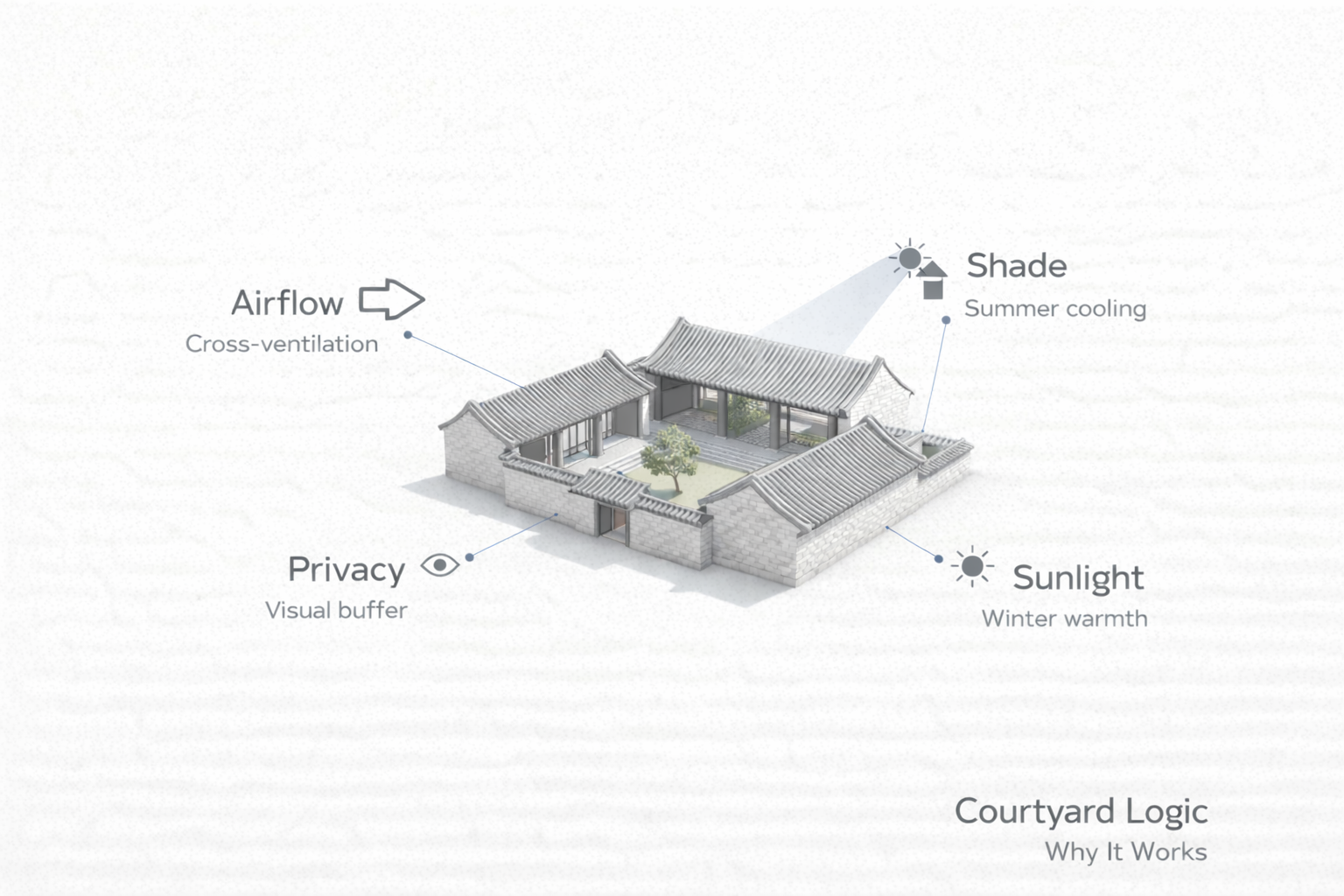
In a traditional northern courtyard house, or siheyuan, buildings enclose the court on four sides. Rooms face inward. Family life, light, ventilation, circulation, and privacy all run through that open center. The result is not just a house with a yard. It is a compound built around an interior world.
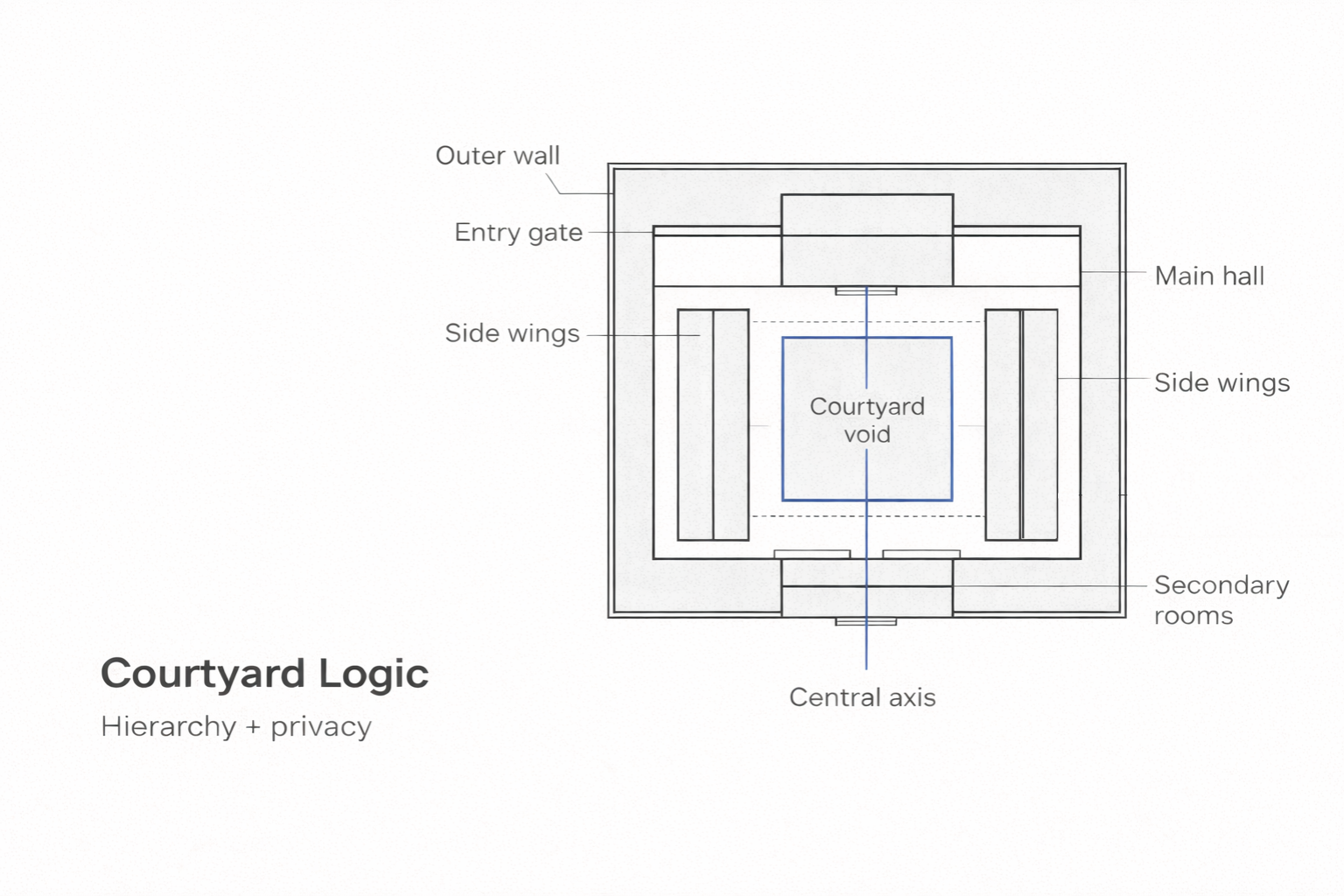
That inward-facing layout does two things at once. It protects privacy from the street, and it turns the courtyard into shared space. Daily life happens around it. Meals, movement, seasonal changes, family gatherings, quiet work. The court is functional, climatic, and social at the same time.
For the residential version of this planning type, read our page on Chinese courtyard houses.
Walls, Gates, and Thresholds Matter
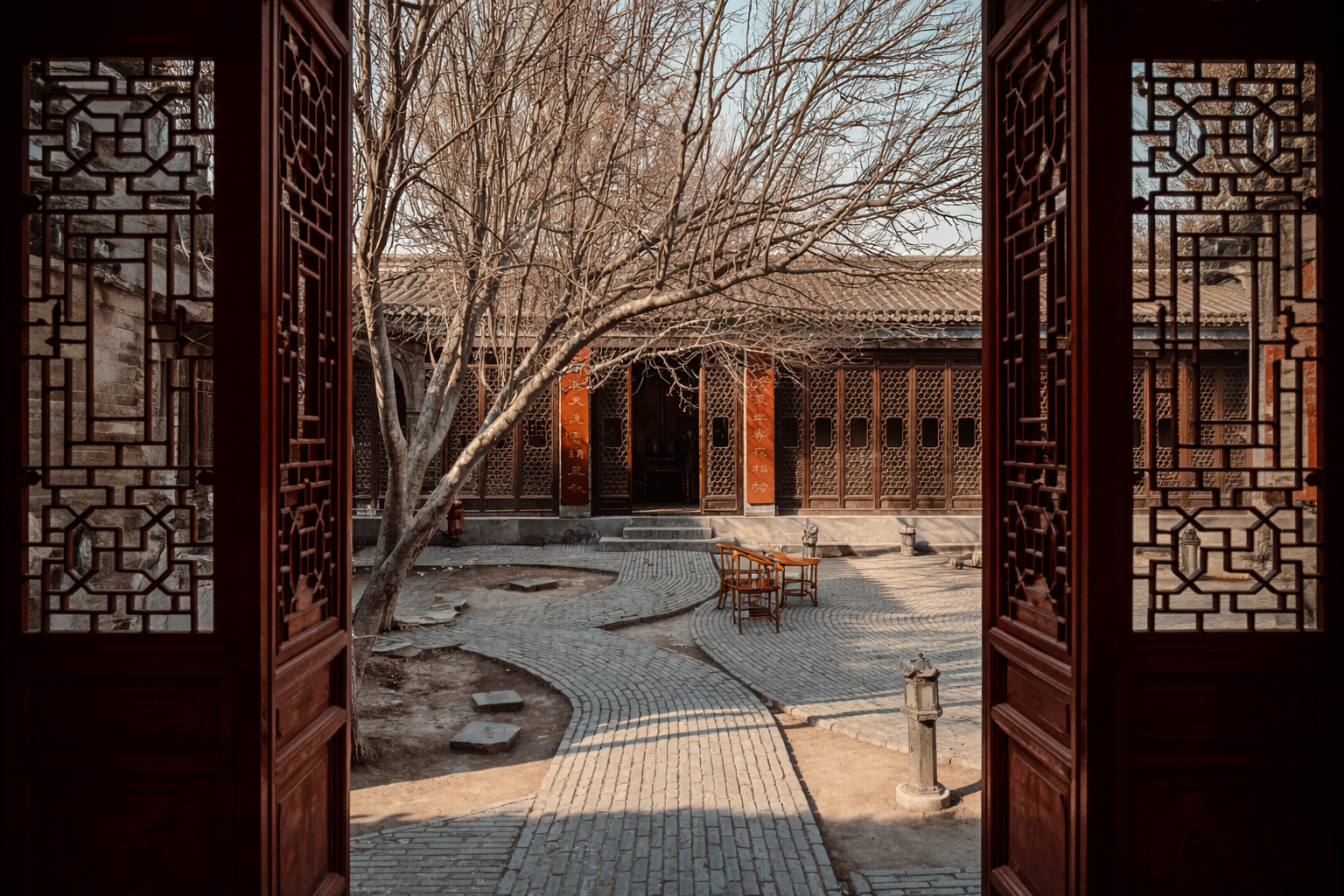
Another element people skip is enclosure.
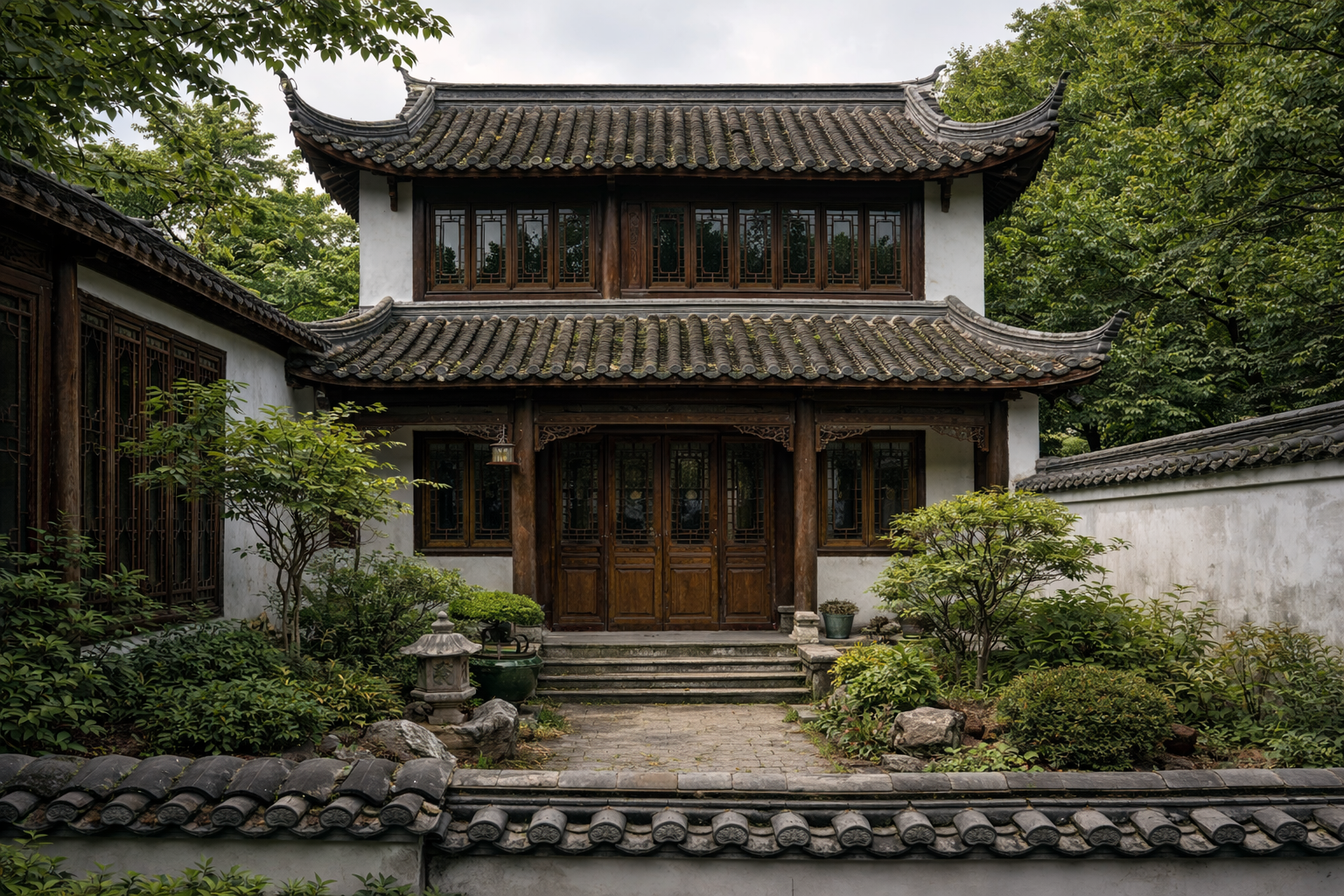
Traditional Chinese buildings are often read from the street as walls first, building second. That is not a flaw in the composition. It is part of the composition. Boundary walls create separation between public and private space, and the gate controls how entry happens.
The sequence is often more important than one decorative object:
- outer wall
- gate
- turning movement or screened entry
- courtyard
- main hall
That sequence slows the approach and gives the compound a controlled reveal. You do not get the whole building at once. It is one of the clearest differences between Chinese compound planning and facade-first traditions.
Roofs Belong to the Whole System
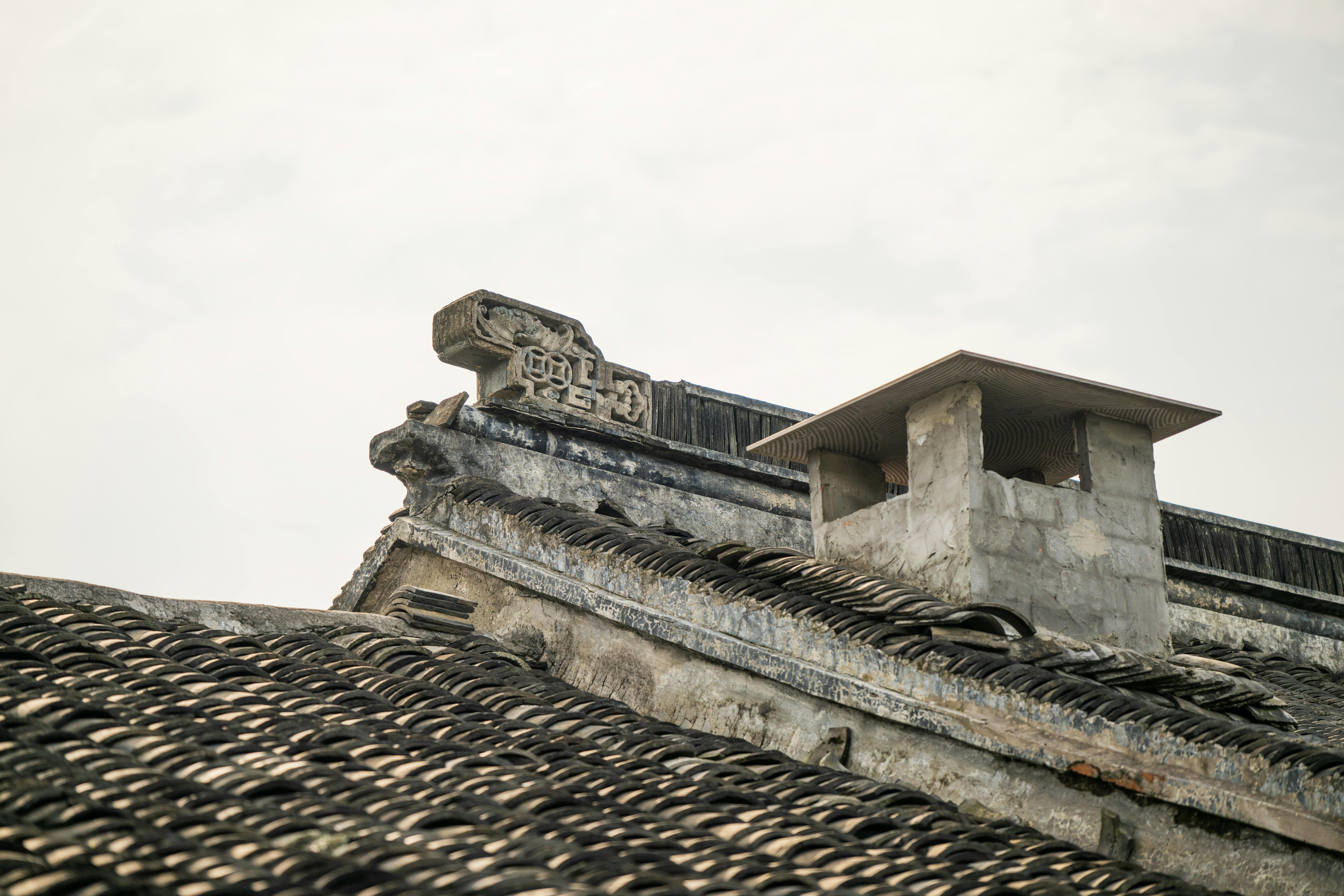
Yes, the roof is important. Deep eaves, tiled surfaces, lifted corners, and strong ridge lines all help define the silhouette. But the roof should not be read in isolation.
Roof form is tied to the timber frame below it, the bracket system under the eaves, and the status of the building itself. A high-ranking hall, a courtyard house, and a garden structure may all belong to the same tradition while using very different levels of roof complexity.
This is also where online summaries go wrong by mixing terms. Dougong is a bracket system, not a ridge ornament. Ridge creatures, glazed tiles, painted members, and bracket clusters are different things and should not be flattened into one decorative blur.
For the tighter close-up read on ornament, roof edges, brackets, screens, and color, go to Chinese decorative architectural details.
Color Follows Rank and Building Type
Color in traditional Chinese architecture is easy to oversimplify.
Imperial architecture made strong use of yellow glazed roof tiles, red walls or columns, and highly controlled painted timber systems. But that does not mean every traditional Chinese building looked like a palace. Domestic buildings, regional compounds, and vernacular work often use quieter materials and a narrower palette.
The useful rule is simple: the more important the building, the more deliberate the finish system usually becomes. Color is not just symbolic. It also separates ceremonial architecture from ordinary construction and turns exposed timber into a more ordered visual system.
Gardens Are Designed Space, Not Leftover Space
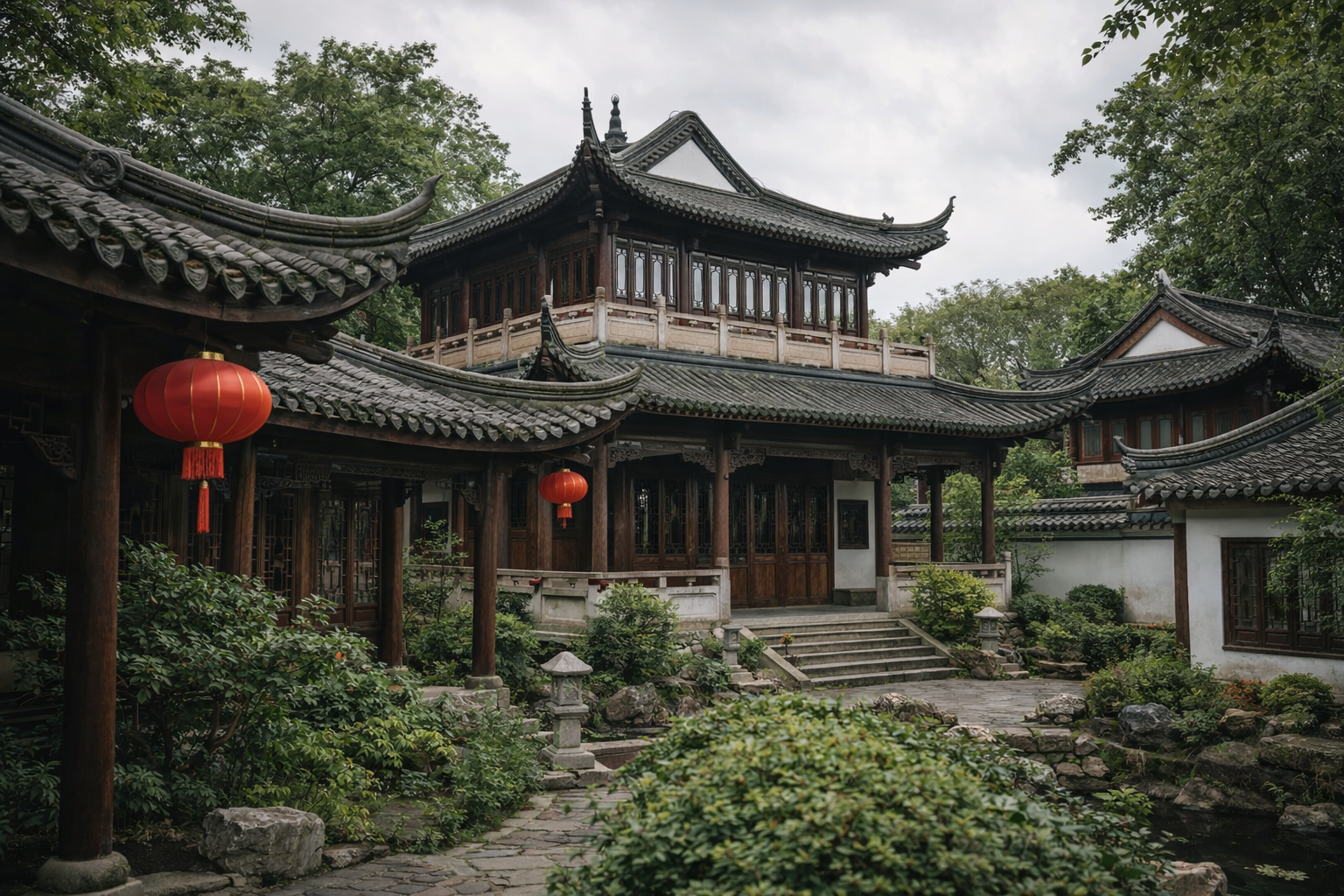
In Chinese architecture, gardens are not just landscape around buildings. They are composed environments.
Paths, rockwork, water, framed views, pavilions, and planting are arranged to slow movement and control what the visitor sees next. That is why classical gardens feel edited rather than simply planted. They work as spatial sequences, not as decorative filler around the edge of a site.
This is one place where the tradition moves from strict axial order into a more irregular and scenic kind of composition. Both approaches belong to the larger architectural language. For that side of the tradition, read more about classical Chinese gardens.
Materials Change, but the Logic Holds
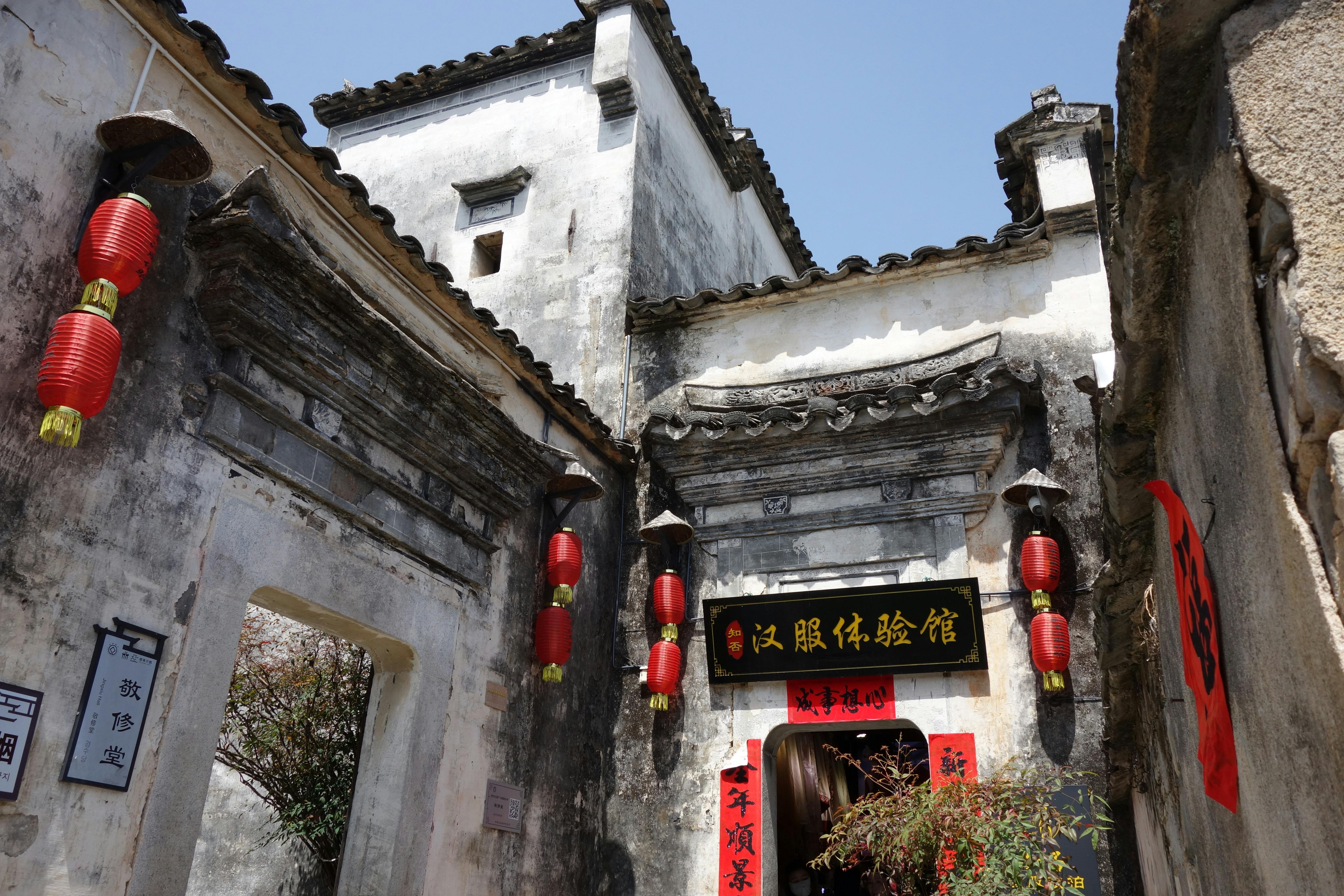
Wood is the key material in the traditional system, but it is not the only one. Brick, stone, fired roof tile, plastered surfaces, and carved decorative elements all play a role depending on region, building type, and budget.
A palace complex, a merchant courtyard house, a village residence, and a garden pavilion do not use the same finish level or the same degree of ornament. That is why broad statements like “Chinese architecture looks like this” fall apart quickly. The underlying planning and structural logic often remain recognizable, even when the building type changes.
If you want to sort the tradition by use rather than by visual detail, our guide to Chinese building types is the better place to start.
The Detail People Usually Miss
This comes up constantly: people try to identify traditional Chinese architecture from one visible feature instead of from the system.
What they usually do wrong is lock onto the roof curve and stop there. The better move is to check five things together: site order, structural frame, courtyard logic, threshold sequence, and finish hierarchy.
That prevents the most common failure, which is mistaking a themed surface imitation for the real tradition. The mistake usually shows up fast in modern copies. The eaves may lift, but the planning order is gone, the framing logic is hidden, and the thresholds do not work.
How to Read the Whole System
This page works best when read as a broad guide to how traditional Chinese architecture is organized. Start with planning, then move to timber construction, courtyards, enclosure, roofs, gardens, and finish hierarchy. That sequence gives you the larger system before you zoom in on any one feature.
For the long historical view, use the Chinese architecture timeline. For present-day continuation and reinterpretation, see modern Chinese architecture.
FAQ
What Are the Main Elements of Traditional Chinese Architecture?
The main elements are axial planning, timber framing, courtyards, enclosure walls and gates, deep tiled roofs, hierarchy in placement, and a controlled decorative system tied to building type and rank.
Why Are Courtyards So Common in Chinese Architecture?
Because they do several jobs at once. They bring light and air into the compound, create private shared space, organize circulation, and help structure family life around an inward-facing plan.
Is Feng Shui the Main Rule in Chinese Architecture?
It is part of the story, especially in siting and orientation, but it should not be used as a shortcut for the whole tradition. Planning order, structure, hierarchy, climate response, and building type matter just as much.
What Materials Were Used in Traditional Chinese Architecture?
Timber is the key structural material in much of the tradition, with brick, stone, tile, plaster, and carved finishes used for platforms, walls, roofing, paving, and decorative work.
Why Is Symmetry So Important?
Because it helps express hierarchy and order. In larger compounds, symmetry is not just visual discipline. It helps show which spaces matter most and how the whole site should be read.
Are These Elements Still Used Today?
Yes, though often in translated form. Contemporary projects may borrow courtyard logic, screened thresholds, roof proportion, or material hierarchy without directly copying historical ornament.
Final Notes
Traditional Chinese architecture gets much easier to understand once you stop reading it as surface style. Start with order. Then frame. Then courtyard. Then threshold. Then roof and finish. That sequence gives you a cleaner read of the buildings and keeps the subject from collapsing into generic symbolism.