
Dutch Architecture: What Makes It Stand Out
Spend time in the Netherlands and you see the same threads running through every era of building here: practicality, water management, daylight, and an obsession with efficiency. From Gothic to glass-wrapped towers in Rotterdam, Dutch design has always been less about showing off and more about solving problems. That problem-solving instinct is what makes the work here so influential, and why Dutch architects are still shaping global practice today.
A Walk Through Dutch Building History
Medieval roots
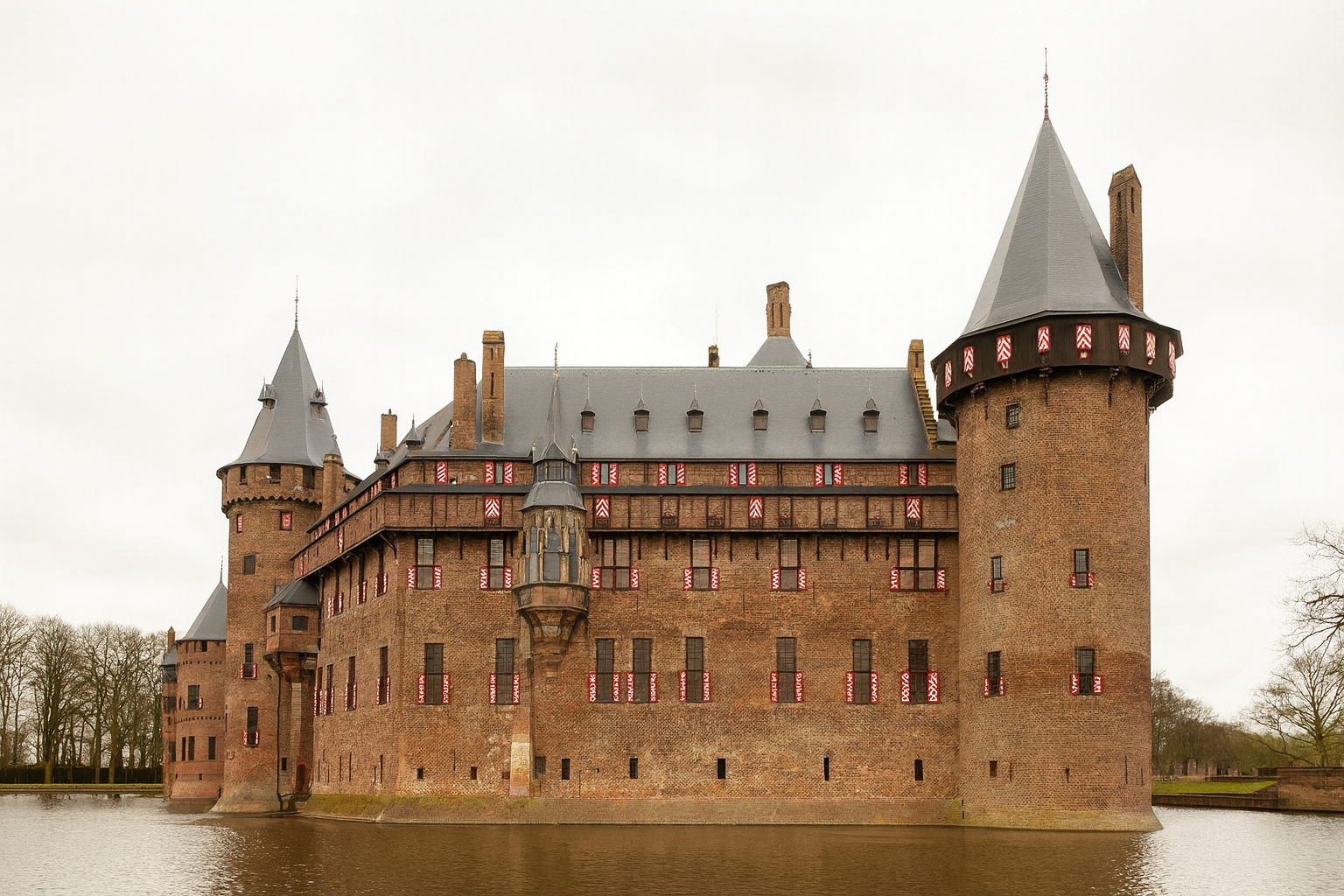
Dutch building started heavy. Romanesque buildings thick stone walls, Gothic spires piercing damp skies, castles like Muiderslot built for defense as much as display. Utrecht’s Dom Tower still dominates its city, a vertical anchor visible from miles away across the flat landscape. These were not frivolous forms. They were the safest answers to a country that was always at risk from water, war, and weather.
Dutch Renaissance
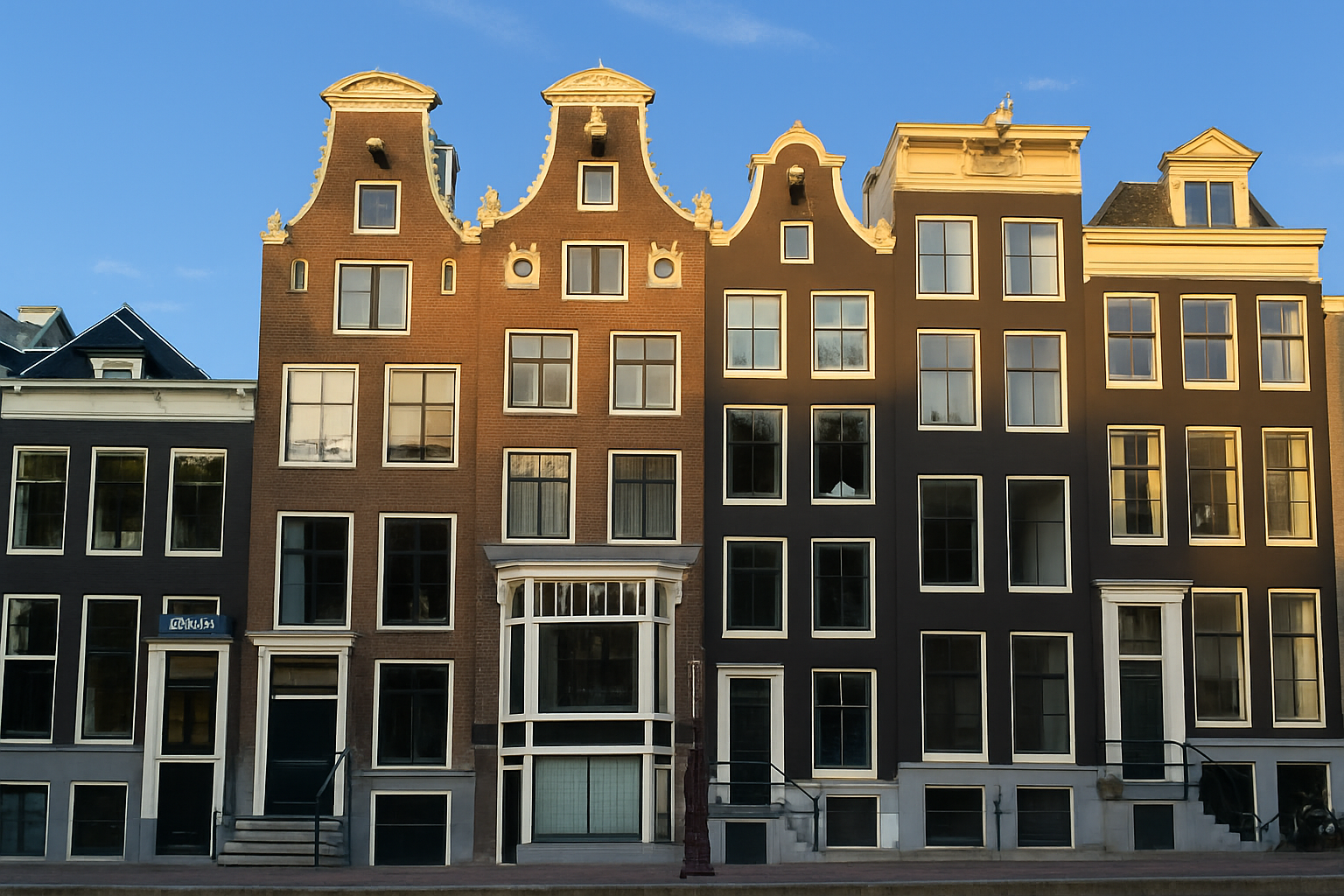
By the late 1500s, ideas from Italy and France filtered north. The Dutch bent them to their own logic. Out came brick façades with ornate gables, often perched on canal townhouses that were narrow but tall. The tax code shaped the streets: you paid on frontage, not depth, so homes stretched upward like accordions. Stand on Herengracht today and you can read the old economic rules in section. The Royal Palace in Amsterdam, with its classical form but pragmatic layout, still stands as the grand example.
Golden Age
The 1600s brought wealth. Ships filled the harbors, and merchants wanted houses that matched their ambition. The result: the intricate canal houses that define Amsterdam. Narrow fronts, long plots, steep stairs, and hoists on the roof beams so goods could be hauled directly upstairs. Architects like Jacob van Campen and Pieter Post elevated civic pride with theaters, town halls, and stock exchanges. Every gable you see from the waterline was a negotiation between constraint and display.
Colonial reach
Dutch builders exported their toolkit to South Africa, Indonesia, and the Caribbean. The Cape Dutch farmhouses in South Africa—whitewashed walls, ornate gables, deep verandas—are still some of the clearest exports of this design DNA. In Indonesia, wide verandas and pitched roofs adapted Dutch layouts to humid climates. Architecture traveled with trade, and it adapted in smart, localized ways.
You might like: Dutch Colonial Architecture: What It Is and Why It Still Works
Industrial 1800s
Factories, worker housing, rail stations. Cities densified and the materials shifted. Architects like Pierre Cuypers gave the Rijksmuseum and Amsterdam Central Station their weight and detail. Hendrik Petrus Berlage pushed rationalism: brick walls and honest spans that set the stage for modernism. Urbanization pressed harder here than most of Europe because space was already scarce. The Dutch responded with order, infrastructure, and new planning rules.
20th-century modernism
Gerrit Rietveld stripped design to its bones with the Schröder House in Utrecht—sliding panels, primary colors, and pure geometry. Willem Dudok rethought civic buildings with a mix of functionality and dignity. After WWII, with Rotterdam bombed flat, the city became a laboratory for functionalism. Efficiency first, aesthetics second. The clean lines of the post-war years weren’t about fashion. They were about getting housing and infrastructure back online at speed.
Contemporary practice
Today, Dutch firms sit at the front of sustainability and reuse. Rotterdam’s skyline shows it. Green roofs, floating buildings, and glass towers that manage sun and water as much as structure. Amsterdam’s Edge building is energy-neutral, Schoonschip floats an entire neighborhood, and cultural hubs rise out of reworked shipyards. This generation of Dutch architecture does not see sustainability as add-on. It is the main design driver.
What You Notice After a Week in Dutch Cities
Practical layouts
Space is always tight. Rooms work harder, storage hides under stairs, and circulation doubles as display. Look at a canal house retrofit: the same narrow frame still functions today because every inch is working. The trapgevel, or stair gable, once solved the problem of moving goods upstairs. Today, it’s an icon, but its origin is pure practicality.
Light first
Cloud cover is the Dutch reality. Big windows, clerestories, and skylights aren’t style—they’re survival. Tall canal house windows pull daylight deep into rooms. Modern offices like The Edge in Amsterdam use automated blinds and glass walls to treat daylight as a measurable energy input, not just ambience.
Integration with water
In Amsterdam, every façade along the canal grew from tax rules and barge deliveries. In Rotterdam, water squares like Benthemplein double as playgrounds in dry weather and flood basins during storms. In Amsterdam North, Schoonschip’s floating houses rise with the waterline. The Dutch never separate water from building. It is part of the design equation.
Sustainability baked in
Rotterdam’s DakAkker rooftop farm is not a gimmick—it feeds the city and holds water. The Edge, often called the greenest office in the world, cut loads so tightly it produces more energy than it uses. Old shipyards like NDSM Wharf now host cultural spaces, keeping embodied carbon in place while adding new life. Sustainability is not a trend here. It’s a continuation of centuries of resource constraint.
Minimal but detailed
From the street, a Dutch townhouse may look plain. Step closer and you see the brick bond, the precision of the joints, the exact rhythm of windows. That’s the craft. Rietveld’s De Stijl work looks like a child’s toy box in photos, but in person every line is exact. Simple geometry hides extreme precision.
Adaptability
Dutch apartments shift. Movable walls, flexible plans, furniture that folds. It’s not just trendy “tiny home” thinking. It is a response to high land costs and dense cities. Almere’s tiny homes show the same philosophy scaled into a movement: do more with less, keep it functional.
Dutch Architecture Characteristics: Key Features and Unique Styles
Materials That Shaped Dutch Buildings
Brick with rhythm
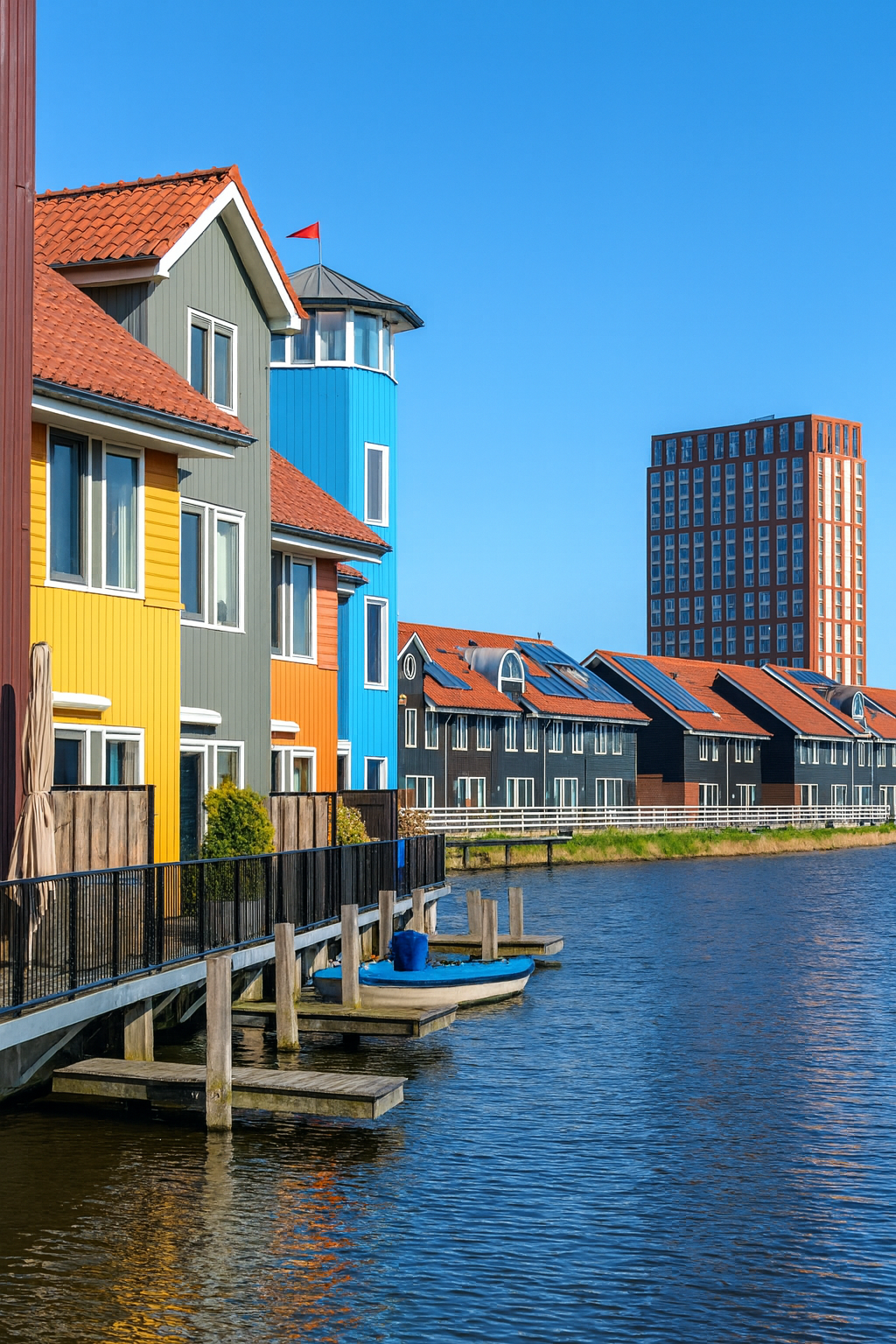
Red and yellow IJssel bricks have colored Dutch towns for centuries. Bonds like the “Dutch bond” give texture and rhythm to walls. Recycled brick is common today, linking modern projects back to that same earthy palette. Walk through Delft or Utrecht and you’ll see brick patterns like weaving in cloth.
Stone for weight
Used sparingly, stone gives civic buildings their authority. Limestone imported from Belgium frames arches, granite strengthens plinths. The Dom Tower’s stone base is as much structure as symbolism.
Timber’s return
Early rural houses exposed their wooden beams. Fire risk and scarcity pushed cities toward brick, but timber is back now in cross-laminated projects. Almere’s new housing shows wood as both structural and sustainable.
Clay tiles
Terracotta rooftops tie Dutch towns together. Curved S-tiles shed water, add rhythm, and glow warm in low sunlight. Modern versions still crown both old townhouses and new builds.
Metal
Steel and copper brought Dutch architecture into the modern age. Copper’s patina is a familiar green accent in older civic buildings. Steel frames made Rotterdam’s post-war rebuild possible. Today, metal clads facades and frames bridges, balancing history with sharp modern lines.
Glass
No material defines Dutch design more now. Floor-to-ceiling windows, glazed canal houses, and entire glass towers mark the landscape. But it is always controlled—low SHGC specs, operable blinds, tuned daylight strategies.
Concrete
Mid-20th century Dutch architecture leaned into concrete for housing and infrastructure. Brutalism left its mark in Amsterdam’s Bijlmermeer. Today, concrete is refined, polished, and often mixed with recycled aggregates. It is less about weight and more about flexibility of form.
Cape Dutch Spin-Off
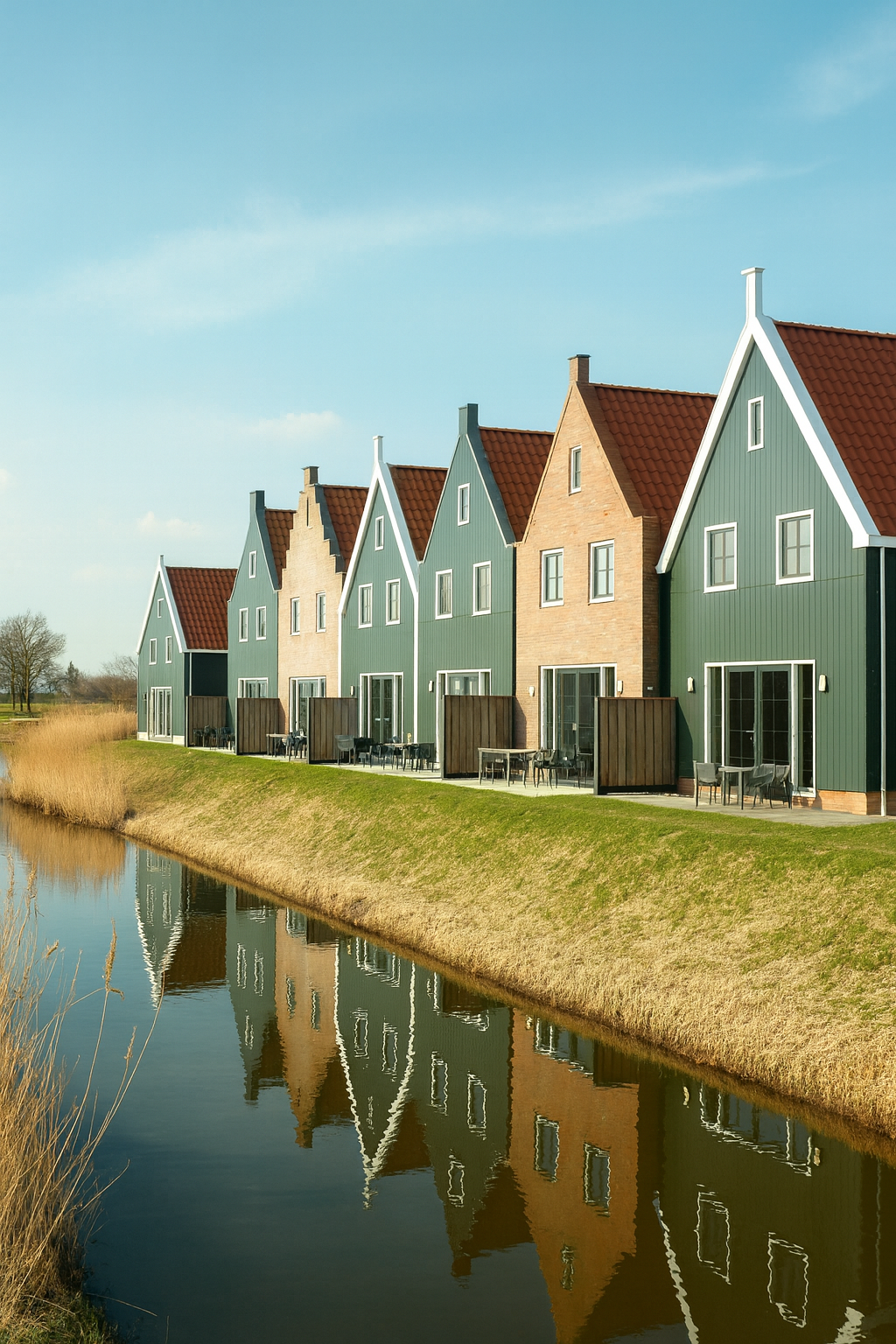
When Dutch settlers reached South Africa, they bent their design language to a new climate. Gabled roofs pitched steeply to shed heavy rain. Thick whitewashed walls kept interiors cool in summer and warm in winter. Verandas—stoep spaces—blended indoor and outdoor life. Split Dutch doors let air in while keeping animals out. The gables became ornate, with scrolls and finials, marking the wealth of landowners. It’s one of the clearest examples of Dutch architectural DNA exported and adapted.
Designing a Modern Dutch House Today
Keep it minimal
Straightforward plans, clean façades, and little ornament. The lines do the work.
Use natural light
Oversized windows, sliding glass doors, clerestories. Even tiny plots feel open when light is maximized.
Choose sustainable
Reclaimed brick, FSC-certified timber, PV-ready rooflines. Sustainability is not an afterthought—it is the design brief.
Blend in and out
Patios, terraces, sliding walls. Dutch houses always negotiate between indoor warmth and outdoor openness.
Stay functional
Every room serves more than one purpose. Work from home, cook, sleep, host—spaces flex with use.
Respect heritage
A brick façade, a gable line, or clay tiles can nod to history without freezing in time.
Plan energy first
Envelope, glazing, and roofline shape the energy budget. The rest follows.
Hidden Dutch Gems
De Stijl in small towns
Beyond Rietveld’s Schröder House, Amersfoort and The Hague hide smaller homes and studios touched by the De Stijl movement. The colors and grids show up in unexpected corners.
Rotterdam rooftops
DakAkker is a working farm on top of offices. It grows vegetables, absorbs rainwater, and teaches how roofs can serve the city.
Quiet castles
Kasteel de Haar near Utrecht, or the less-known Kasteel Doornenburg in Gelderland, give the medieval side of Dutch building more weight than the canals alone suggest.
Hofjes in Haarlem
Push a side door and step into a hofje—enclosed courtyards built for social housing centuries ago. They are still lived in, still offering quiet order inside city blocks.
Almere tiny homes
A new town east of Amsterdam, Almere has become a testing ground for small, off-grid homes. Different builders, different ideas, all proving that compact can still be livable.
Canals as Design Drivers
Dutch canals are not just postcards. They were infrastructure first—shipping lanes, flood defenses, and tax tools. Houses grew narrow and tall because land was scarce and taxes were pegged to street frontage. Goods came in by water and were hauled straight up by roof hoists.
Today, canals shape design in new ways. Rotterdam’s water squares act as civic space until rain turns them into basins. Floating houses in Amsterdam North rise with the waterline, a direct response to climate change. The canal system that once defended cities now teaches them how to adapt.
Dutch Roots in New York: A Walk with an Architect
I walk these blocks as an architect, not a tourist. Dutch work is still visible if you know where to look. It shows up in street lines, roof shapes, and old materials.
The Oldest Structures
Staten Island has the Voorlezer’s House. Timber frame, pitched roof, stone base. Built in 1695. The front room was once a schoolroom. Simple. Durable.
Inwood has the Dyckman House. Gambrel roof. Fieldstone walls. A porch added later. The basement kitchen shows how heat was managed in winter. Dutch practicality in a Manhattan farmhouse.
Brooklyn Examples
The Jans Martense Schenck House, reconstructed inside the Brooklyn Museum, dates back to 1675. Heavy beams, gable roof, central chimney. Same methods you would have seen in Utrecht. Built to last with what was available.
Streets with Dutch Layouts
Stone Street in the Financial District still carries its angled façades and cobbles. It looks more like a Dutch lane than an English grid.
Bowling Green was a pasture set aside by Dutch settlers. The name has stayed.
Wall Street follows the path of New Amsterdam’s wall. The Dutch origin is in the name.
Interiors
At the Met, the Dutch Room shows oak panels, low windows, and tight layouts from 1751. The design was about conserving heat and light. Function first.
A Modern Tribute
Peter Minuit Plaza has the New Amsterdam Pavilion. Steel, glass, and wood in a pinwheel layout. Built as a gift from the Netherlands. Contemporary, but grounded in Dutch ideas of openness and public use.
Dutch Design Today in New York
On the West Side, condos designed with Dutch input use recycled brick and open communal layouts. Practical decisions shaped by sustainability.
On Governors Island, Adriaan Geuze designed The Hills. Engineered mounds built for new views, new circulation, and public use. Not decoration, but design shaped by land and water.
Quick Notes
-
Voorlezer’s and Dyckman Houses. Surviving Dutch farmhouses. Timber, stone, and roof forms still visible.
-
Schenck House at Brooklyn Museum. Timber-frame Dutch method preserved.
-
Stone Street, Bowling Green, Wall Street. Street forms and names directly tied to Dutch New Amsterdam.
-
Dutch Room at The Met. Interiors showing proportion and efficiency.
-
Peter Minuit Pavilion. A modern structure with Dutch origins.
-
West Side and Governors Island. Dutch influence in sustainability and public landscape design.
New York still carries Dutch building DNA. Narrow houses, angled streets, brickwork, and water-focused planning. Look closely and you see methods carried from the Netherlands into the city’s oldest structures and into today’s sustainable projects.
You might like: New York City Architecture: From Iconic Skyscrapers to Forgotten Treasures
Famous Dutch Architects: Shaping the World with Design That Works
Walk through Dutch buildings and you see the same pressures at play. Space is tight. Water is constant. Density is high. Light is scarce. The best Dutch architects respond to those constraints directly. They are not decorating problems. They are solving them.
Early Masters
Jacob van Campen: Classical Order in the Golden Age
Van Campen designed the Royal Palace in Amsterdam in 1648. The building was civic theater as much as government seat. It used symmetry and classical rhythm to signal stability in a time of mercantile wealth. You still see his influence in how Dutch civic buildings use proportion and clarity instead of ornament.
Pieter Post: Baroque With Restraint
Post shaped the Dutch Baroque with country houses and civic works. He took the theatrical language of the Baroque and stripped it down for Dutch taste. His buildings are sober, yet still expressive. The Hofwijck estate shows how geometry and water shaped elite homes in the 17th century.
Transition to Modern
Hendrik Petrus Berlage: The Father of Modern Dutch Architecture
Berlage’s Amsterdam Stock Exchange (Beurs van Berlage) set a new tone around 1900. Brick walls, exposed steel, and clear structural honesty replaced ornament. He treated material as the architecture itself. Dutch modernism started here.
Michel de Klerk: Expression for the Working Class
De Klerk, leading the Amsterdam School, turned housing blocks into sculpture. His Spaarndammerbuurt apartments gave texture and identity to working-class families. He proved social housing could carry pride.
Space is Never Free
Gerrit Rietveld
The Schröder House in Utrecht looks modest from outside. Inside, sliding partitions and folding furniture make it expand and contract through the day. Rietveld was part of De Stijl, but his house was not art theory. It was carpentry logic applied to cramped city sites.
Why it matters: He showed flexibility can be built cheap and still change how families live.
Willem Dudok
Hilversum Town Hall was Dudok’s masterpiece. Brick stacked with precision, wings and tower balanced by proportion, and a civic presence without extravagance.
Why it matters: Dudok proved dignity can be built from common materials if handled with discipline.
Aldo van Eyck
Van Eyck’s Amsterdam Orphanage was designed like a small town for children. Courtyards, passages, and rooms stitched together so kids could move freely. His playgrounds scattered across the city worked the same way.
Why it matters: Scale shapes behavior. Van Eyck designed for people at eye level, not for abstract diagrams.
Density as a Tool
Rem Koolhaas
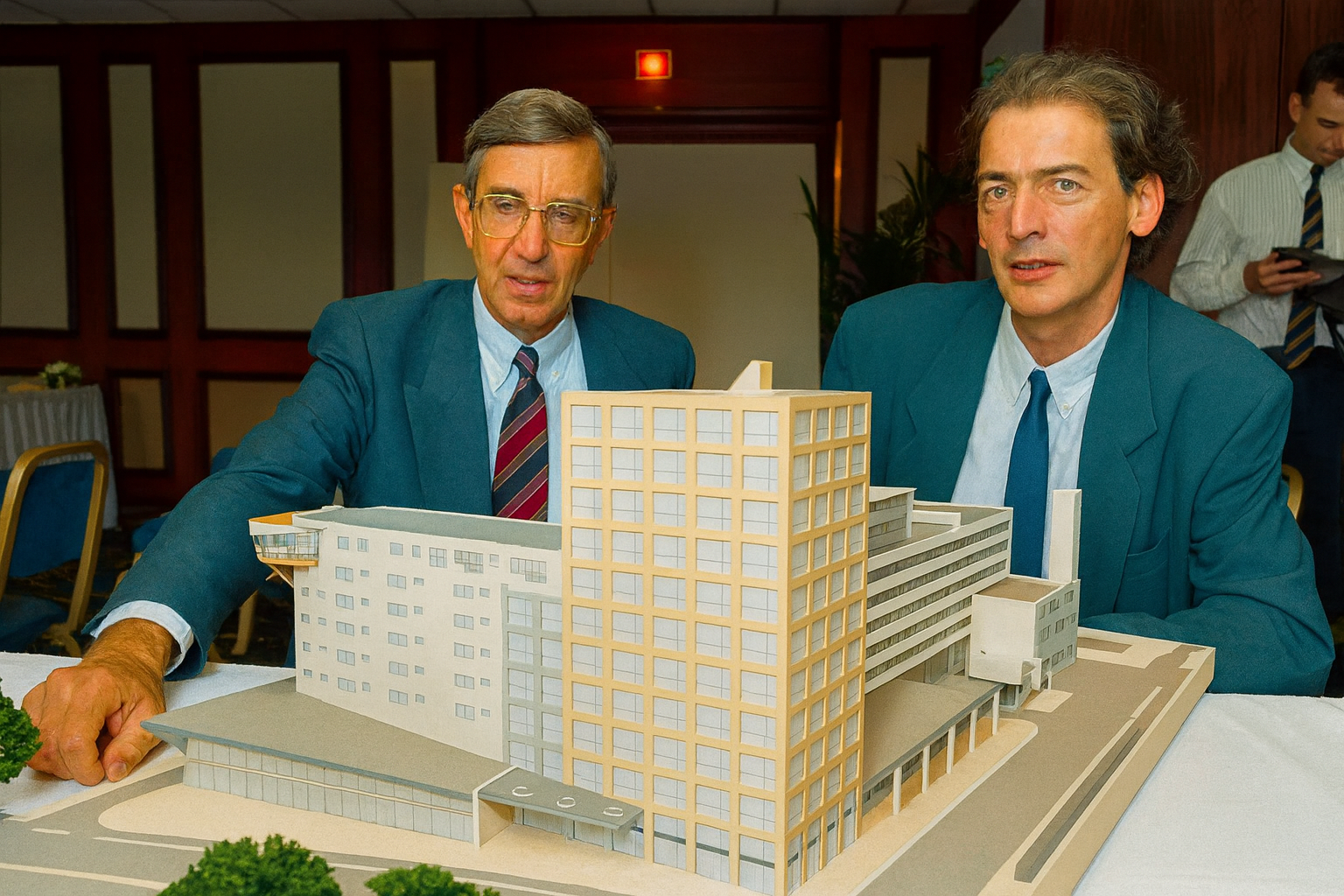
Koolhaas called Manhattan a test lab in his book Delirious New York. His firm OMA used the same logic worldwide. De Rotterdam stacks three towers into one dense block. Beijing’s CCTV folds millions of square feet into a continuous loop.
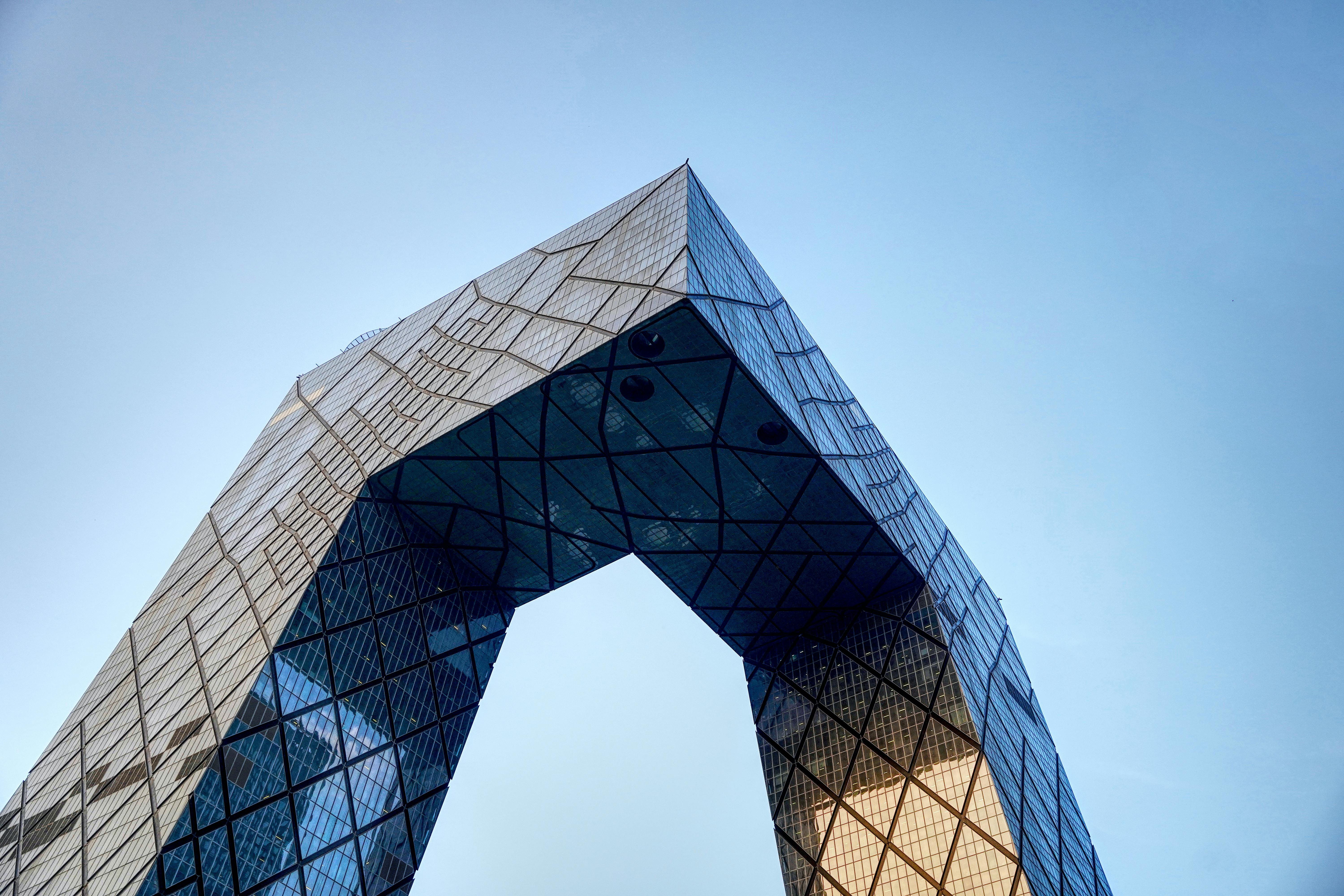
Perspective: Koolhaas treats congestion as fuel. His buildings expose the politics and economics of density instead of hiding them.
MVRDV
The Markthal in Rotterdam puts a food market under an arch wrapped with apartments. One structure performs three roles. Other projects stack housing, gardens, and offices in new hybrids.
Perspective: For MVRDV, density is an opportunity to overlap programs. That overlap creates the civic life many cities lack.
UNStudio and Ben van Berkel
Arnhem Central Station and the Erasmus Bridge show how circulation becomes form. Van Berkel turns traffic and movement into architecture itself.
Perspective: He shows that infrastructure deserves as much design focus as buildings.
Building With Water
Koen Olthuis
Olthuis designs floating homes in IJburg and proposes floating schools in flood zones abroad. His firm Waterstudio NL treats water as a platform for expansion.
Perspective: In a warming world, this is not style. It is survival strategy exported from the Netherlands.
Adriaan Geuze
Geuze and West 8 shape land like architecture. Rotterdam’s water squares double as basins during rain and playgrounds when dry. On Governors Island in New York, he built The Hills out of landfill, changing the city’s topography.
Perspective: He shows landscape can carry program and identity, not just scenery.
Housing Experiments
Piet Blom
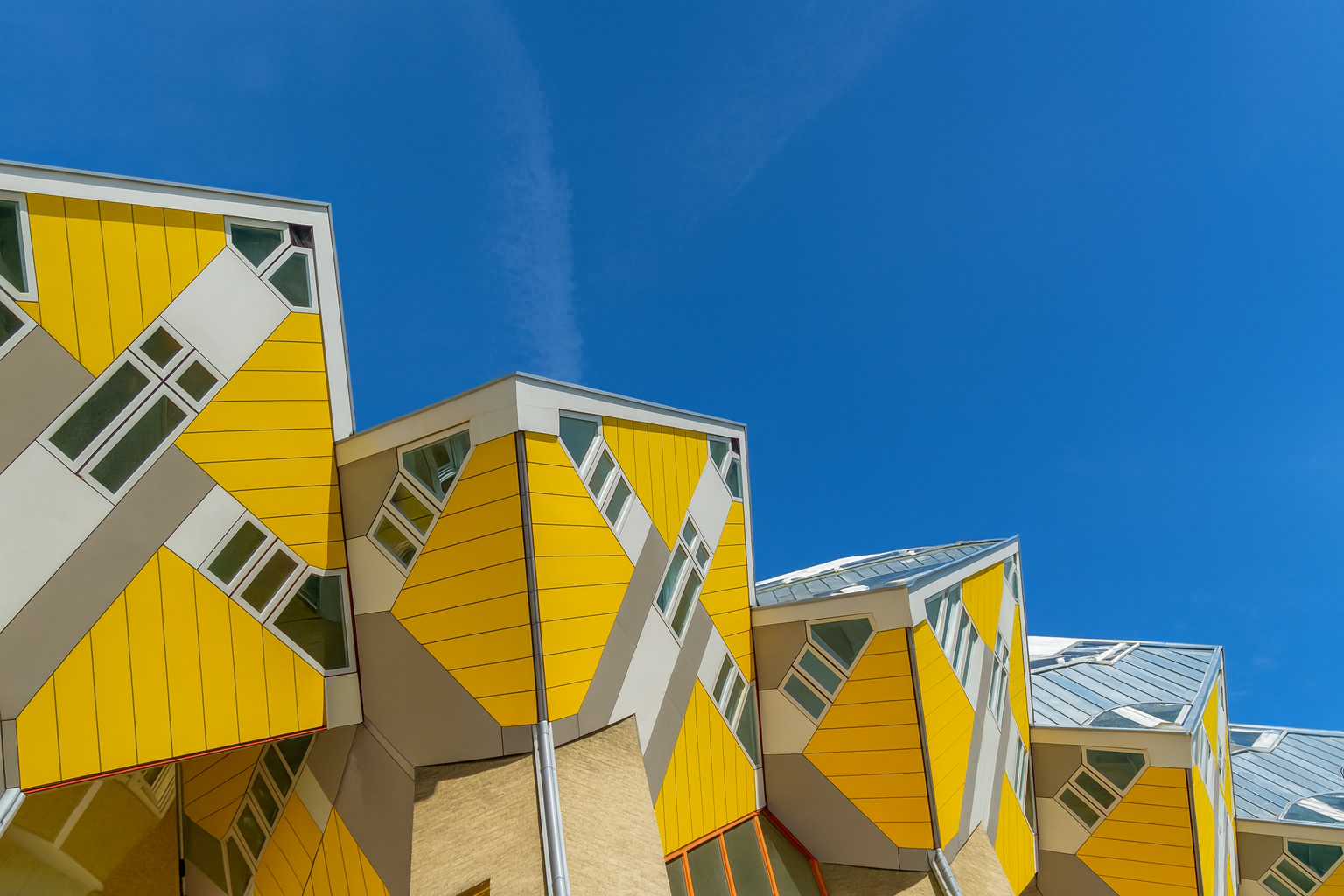
Blom’s Cube Houses tilt 45 degrees. Living inside is awkward, but the elevated walkway and shared space below reimagined urban housing.
Perspective: Not every experiment is practical, but it can still shift how a city sees itself. Rotterdam owns the cubes as part of its identity.
Almere and Modular Experiments
In Almere, new towns test modular housing and tiny homes. The logic is affordability and adaptability. Families build in stages. Streets feel experimental but grounded.
Perspective: The Dutch keep housing as a field of testing, not just repetition.
Civic Warmth and Flexibility
Herman Hertzberger
Centraal Beheer in Apeldoorn was an office that felt like a small town. Workers shaped their own corners. Communal passages gave chance meetings. Housing blocks used the same strategy.
Perspective: Hertzberger argued that architecture must allow adaptation and improvisation by its users.
Francine Houben
Houben and her firm Mecanoo gave Delft a library hidden under a sloped lawn and Birmingham a library that feels open instead of monumental. Her touch is public access, light, and comfort.
Perspective: She shows that civic architecture can deliver equity, not just space.
From Van Campen’s palaces to Houben’s libraries, Dutch architects share one approach. They start with constraints and turn them into solutions. Space is tight, so Rietveld made it flexible. Money was scarce, so Dudok made brick carry pride. Children needed scale, so Van Eyck stitched courtyards. Density was rising, so Koolhaas stacked programs. Water was rising, so Olthuis made homes float.
This is why Dutch architecture travels so well. It is not about exporting a style. It is about exporting a method: face the limits, then build with them.
You might like: Dutch Architects Who Changed Global Design
FAQ
Why are Dutch houses narrow and tall?
City taxes once charged by frontage. Builders went vertical. Roof hoists made narrow stairs irrelevant.
What materials define Dutch buildings?
Brick, clay tiles, timber, and stone historically. Glass and concrete dominate modern work.
What is modern Dutch architecture known for?
Sustainability and reuse. From floating farms in Rotterdam to The Edge office in Amsterdam, Dutch work sets global benchmarks.
Do Dutch houses really use big windows because of “transparency culture”?
Partly. But mostly it is about daylight. Cloudy skies demand glass. The openness became cultural, but the driver was climate.
What global influence does Dutch colonial architecture have?
South Africa’s Cape Dutch gables, Indonesia’s verandas, and Suriname’s timber houses all trace back to Dutch solutions adapted to new climates.
What should you include in a modern Dutch-inspired home?
Clean lines, brick or wood, oversized windows, sustainable systems, and flexible layouts.
Who are key Dutch architects?
Gerrit Rietveld, Rem Koolhaas, Piet Blom, Willem Dudok. Each shifted design practice in their era.
What role does water management play?
It is central. Dikes, canals, floating neighborhoods, and water squares all prove that in the Netherlands water is always a design partner.
Why so much brick?
Local clay, durable, and easy to lay in precise bonds. Brick became both structure and ornament.
What defines Dutch sustainability today?
Adaptive reuse, energy-neutral offices, green roofs, and resilient urban planning. Rotterdam and Amsterdam are global labs for sustainable design.
Closing
Dutch architecture is not about style for style’s sake. It is about solving constraints—water, space, daylight, climate—and turning them into form. That is why canal houses still work. That is why Rietveld’s Schröder House still feels radical. And that is why Dutch firms continue to lead in sustainable design.
Spend time in the Netherlands and you see it clearly. The lessons are practical, the craft is sharp, and the ideas still travel well.