
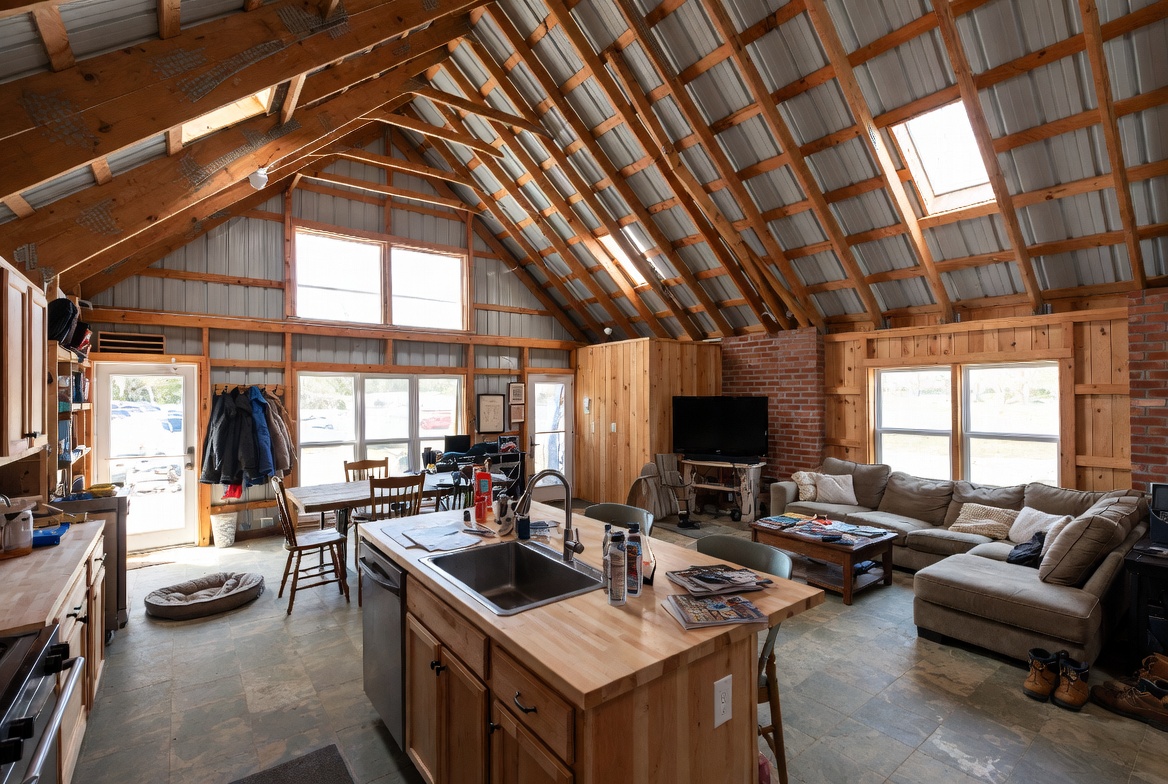
Barndominiums get sold like an easy win. More space. More flexibility. Lower cost. Room for a shop, storage, hobbies, or a business under the same roof.
Sometimes that is true. Sometimes it is a big metal shell on a slab with a nice kitchen dropped into it, and the owner figures out too late that echo, heat loss, noise transfer, and layout compromises do not care how good the listing photos looked.
A barndominium can live well when the shell performs, the plan is disciplined, and the site is not fighting the build. It can also feel cold, noisy, and awkward when the project chases square footage first and comfort second.
This page stays with the part that matters most once the excitement wears off: what daily life feels like, where barndominiums work well, what usually goes wrong, and who should think twice before building one.
What a Barndominium Usually Is

In most current use, a barndominium is a home built inside or alongside a barn-like shell, often with a large open-span structure, taller ceilings, and some mix of living space, garage space, workshop space, storage, or covered equipment area.
Some are steel building shells finished as houses. Some lean closer to post-frame construction. Some are designed from the start as homes. Others are trying to split the difference between house, shop, and utility building.
That difference matters. The way the shell is built changes insulation depth, window detailing, sound control, mechanical layout, and how comfortable the place feels in January, July, and every windy night in between.
Why Some Owners Love Them
The draw is obvious.
- Open space. Barndominiums are good at creating large uninterrupted interior volume.
- Flexible use. A shop, garage, studio, storage zone, or small business area can live close to the house side.
- Simpler exterior form. A straightforward shell can make planning and construction feel cleaner than a chopped-up custom house.
- Big-room living. High ceilings and wide common areas can feel generous without a complicated footprint.
- Rural fit. On the right site, a barndominium can sit more naturally than a suburban-style house trying to act rural.
That is the appeal. Room to move. Room to store things. Room to work. Less fussy exterior massing. For the right owner, that is enough to make the whole idea work.
What Gets Old Fast
The weak points usually show up in daily use, not in the concept sketch.
- Noise. Big open rooms, hard finishes, and tall ceilings can make a space sound hollow or busy.
- Temperature swings. Poor insulation or weak air sealing turns a large shell into an expensive comfort problem.
- Shop-to-house conflict. Smells, dust, noise, and traffic from the work side do not stay politely in their lane.
- Too much open plan. Open space sounds good until you want quiet bedrooms, separate work areas, or a place to hide clutter.
- Cheap-shell thinking. A low shell cost does not mean a low finished-home cost.
- Resale fit. In some markets, the buyer pool is smaller and the layout is harder to compare against conventional homes.
This is where barndominiums split into two camps. The good ones were designed like houses inside a larger-purpose shell. The weak ones were designed like shells first and asked to become comfortable houses later.

The Part That Decides Whether You Like It
It is not the exterior look. It is the envelope.
If the insulation, air sealing, window placement, slab detailing, and HVAC design are weak, barndominium life starts feeling rough in ordinary ways. Cold floors. Hot upper air. Drafts. Condensation. Loud rain. Mechanical systems working harder than they should.
A barndominium can be comfortable. It just does not get there by accident. Large volume needs a plan. Tall rooms need a plan. Metal shells need a plan. Oversized doors and shop connections need a plan.
This matters even more on slab builds. Many barndominiums sit on slab-on-grade foundations, which means insulation, vapor control, and utility planning need to be right before the floor is down. Some projects lean closer to post-frame foundations, which changes the structural system but does not remove the comfort problem. The shell still has to perform.
Daily Life Inside One
Space Feels Different
The open volume is the first thing most owners notice. It can feel calm and generous, especially if the light is good. It can also feel exposed if there are too few smaller rooms, too little acoustic control, or no separation between busy and quiet parts of the house.
Storage Is Better
This is one of the practical wins. Equipment, tools, seasonal gear, hobby space, and oversized items are easier to live with when the building was shaped to accept them from the start.
Work and Home Blur Together
Sometimes that is the point. Sometimes it is the headache. A shop under the same roof is convenient until early tools, late noise, parked equipment, or dust start pushing into house life.
Cleaning and Finishing Feel Different
Large simple interiors can be easy to maintain. They can also feel bare if finishes are too hard, too echo-prone, or too dependent on the room volume doing all the visual work.
Where a Barndominium Fits Best
| Good Fit | Harder Fit | Why |
|---|---|---|
| Rural or semi-rural site with room to spread out | Tight suburban lot | The form, access, and mixed-use appeal make more sense when the site is not fighting the building. |
| Owner needs workshop, storage, or equipment space | Owner wants a quiet, compartmentalized traditional house | Barndominiums reward mixed-use living more than formal room hierarchy. |
| Simple massing and practical layout matter more than neighborhood conformity | Strong HOA or appearance controls | Some communities do not welcome the type, even when the building is finished well. |
| Project can afford a well-detailed shell and interior buildout | Budget depends on cutting insulation, windows, or mechanical quality | Cheap envelope decisions get paid for later in comfort and operating cost. |
Barndominiums tend to work best when the owner wants useful space as much as polished residential presentation. They work less well when the goal is to imitate a conventional suburban house but with a barn outline.

The Cost Story Most Drafts Get Wrong
The shell price is not the house price.
That is the part that keeps tripping up first-time owners. A barndominium can pencil out well on the right site, especially with a straightforward footprint and controlled finishes. But once you add slab work, utility runs, insulation, windows, doors, partitions, plumbing, mechanical systems, cabinetry, bathrooms, lighting, and site work, the “cheap barn home” story can thin out fast.
A simple shell can save money. A finished, comfortable house inside that shell still has to pay for house things.
This is one reason cost comparisons go sideways. One number is talking about the shell. Another is talking about a move-in-ready house. Those are not the same number.
Before You Build One
A short list of questions does more work here than a pile of inspiration photos.
- Do you want a house with some utility space, or a utility building with some house space?
- Will the shop, garage, or storage zone be quiet and clean enough to live beside?
- Is the site suited to a simple slab-based build, or will grading, utilities, drainage, and access eat the savings?
- Will the ceiling height and open plan still feel good in daily life, not just in renderings?
- Can the budget support proper insulation, windows, air sealing, and mechanical design?
- Does local zoning, financing, appraisal, or insurance make this type harder than a conventional house in your area?
Plain questions. Expensive answers if you skip them.
Who Should Think Twice
Barndominium living is usually a weaker fit for buyers who want highly separated rooms, urban or subdivision-style siting, quiet formal interiors, or a house that reads conventionally from day one to resale day.
It is also a weaker fit when the budget only works if comfort details are downgraded. Large-volume living does not hide weak building decisions. It magnifies them.
FAQ
Is living in a barndominium comfortable year-round?
It can be, but that depends heavily on insulation, air sealing, slab detailing, window quality, and HVAC design. A barndominium with a weak shell is hard to love in hot, cold, or windy weather.
Are barndominiums cheaper than normal houses?
Sometimes. The shell can be efficient, but site work, finishes, mechanical systems, and interior buildout still cost what they cost. A cheaper shell does not guarantee a cheaper finished home.
Do barndominiums work well for families?
They can, especially when the plan includes enough private rooms, storage, and acoustic separation. The weak family layouts are the ones that overdo open space and underdo quiet space.
Is a barndominium good if I want a shop too?
That is one of the strongest reasons to build one. The catch is controlling sound, dust, smell, and traffic so the house side still feels like a house.
What gets missed most often?
Comfort. The conversation usually starts with shell cost and square footage, when it should start with envelope performance, layout discipline, and how the building will feel on an ordinary weekday.
Bottom Line
A good barndominium is not just a barn-shaped house. It is a well-resolved mixed-use building that knows what is house, what is work space, and what needs to stay separate.
When the shell performs and the plan matches the way you live, barndominium life can be spacious, practical, and hard to beat. When the build leans too hard on cheap-shell logic, the daily annoyances start showing up where comfort was supposed to live.