
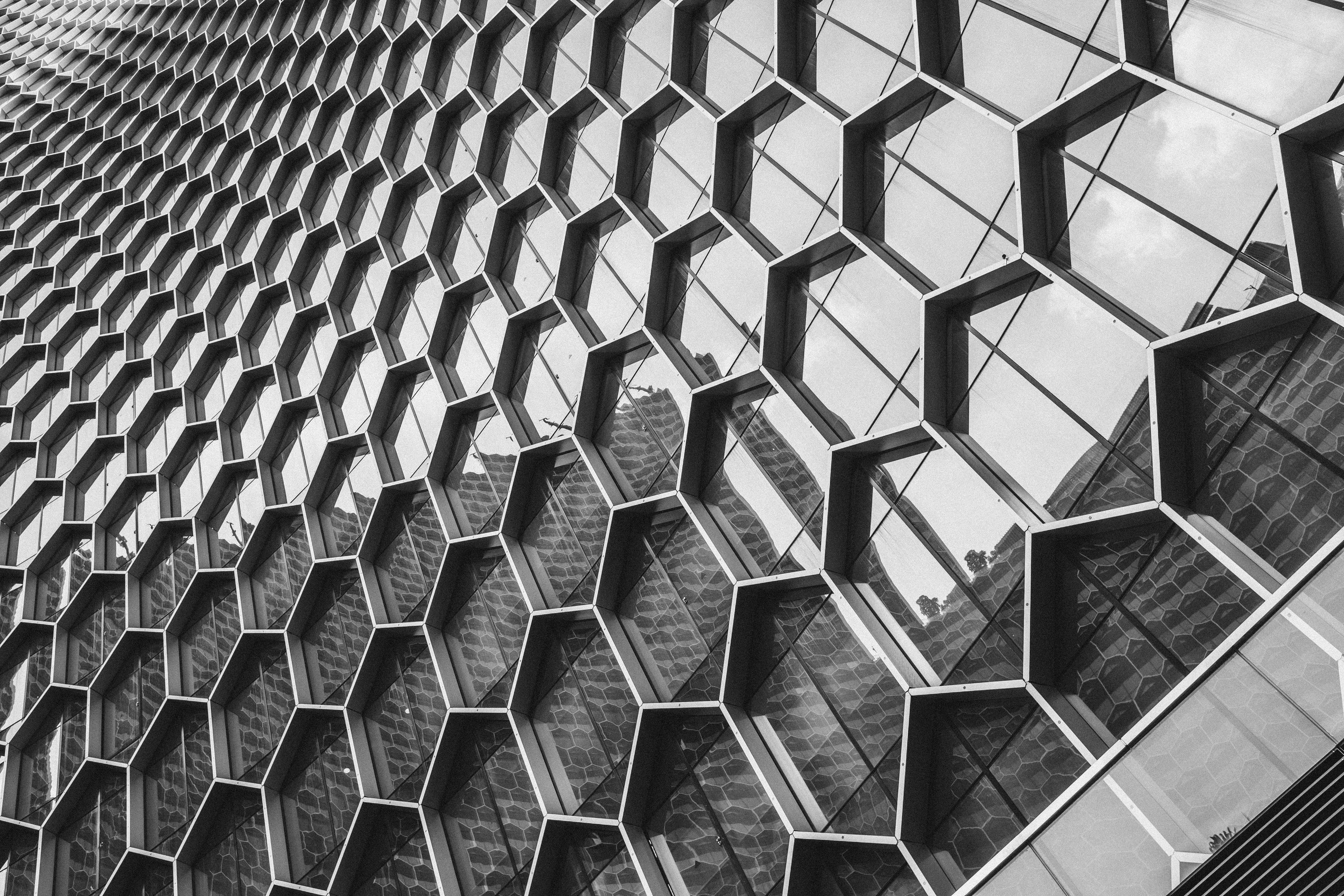
What Is Architectural Photography? A Complete Beginner-to-Pro Guide
Architectural Photography: How to Shoot Stunning Buildings & Interiors
Learn the fundamentals of architectural photography—from composition to gear—and discover how professionals capture design at its best.
Architectural Photography: 2025 Beginner-to-Pro Guide
If you’re an architect, student, designer, or content creator, mastering this skill gives your work a lasting visual voice. This updated guide breaks down the tools, skills, and purpose behind great shots—from real buildings to 3D renders.
Architectural photography is all about how we see, share, and showcase design.
What Is Architectural Photography?
It’s the craft of capturing buildings, interiors, and designed spaces with precision and intent. Good photos do more than document—they reveal design thinking, atmosphere, and spatial experience.
Main Types of Architectural Photography:
-
Exterior: Facades, context, and cityscapes
-
Interior: Layout, lighting, materials
-
Details & Abstracts: Texture, form, surfaces
-
Architect Portraits: Pairing creator with creation
-
Fine Art & Conceptual: Creative takes, visual narratives
Why It Matters
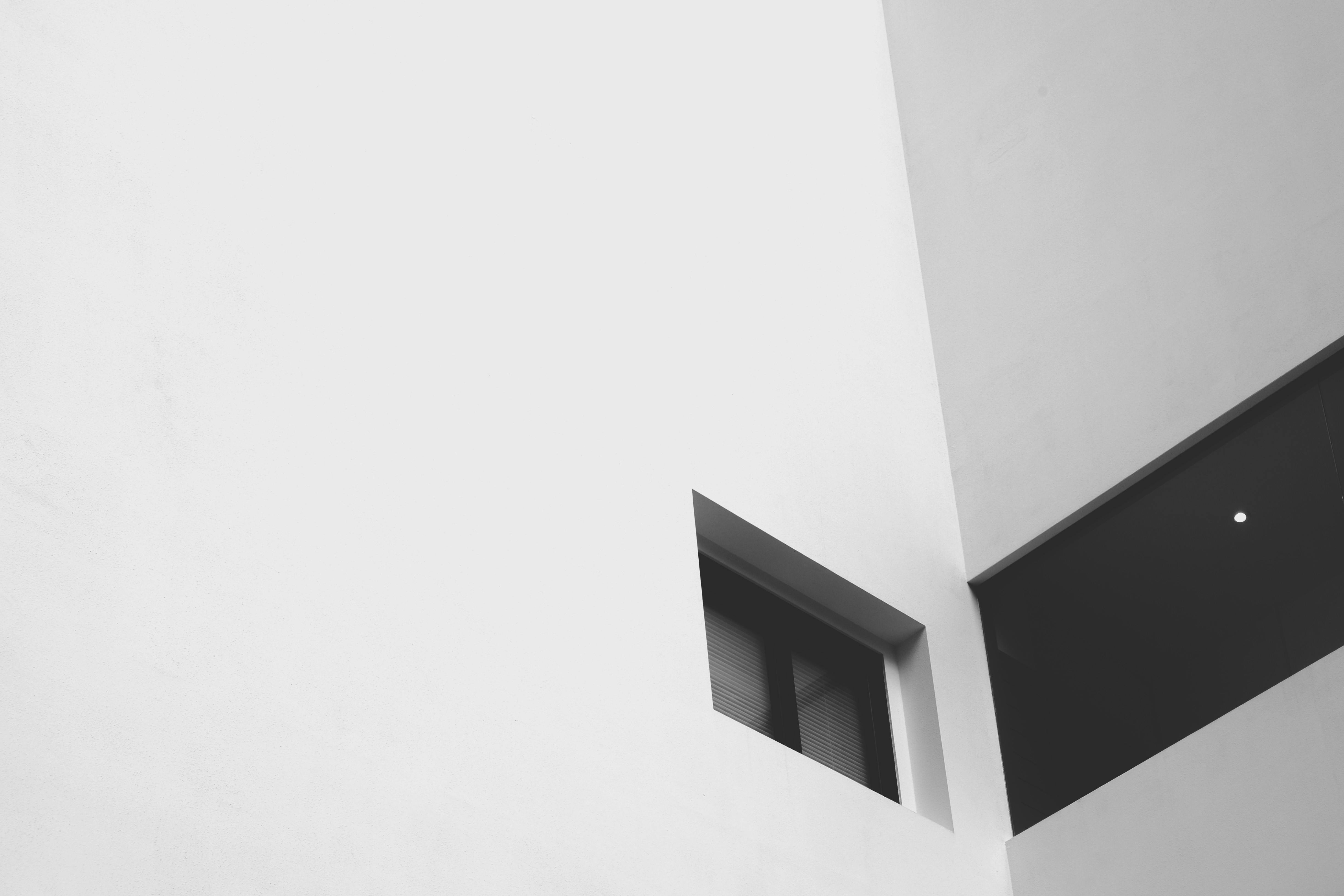
IMAGE: Architectural shot showing a window on a white concrete building facade with clean lines and minimalistic design.
Architectural photography is how design lives beyond the site.
-
For Architects: Captures intent, builds reputation, supports awards and pitches
-
For Interior Designers: Shows mood, flow, and materiality
-
For Developers/Marketers: Sells the space
-
For Publications: Tells the story of place through imagery
Its Role in Design and History
-
Documentation: Some buildings survive only in images
-
Branding: Shapes how firms are seen
-
Education: Teaches design ideas across borders
-
Preservation: Supports analysis and archival use
A building might take five years to build—but one photo decides how the world remembers it.
How to Photograph Architecture: The Complete Guide
Beginner & Advanced Guide to Architectural Photography
Key Types of Architectural Photography
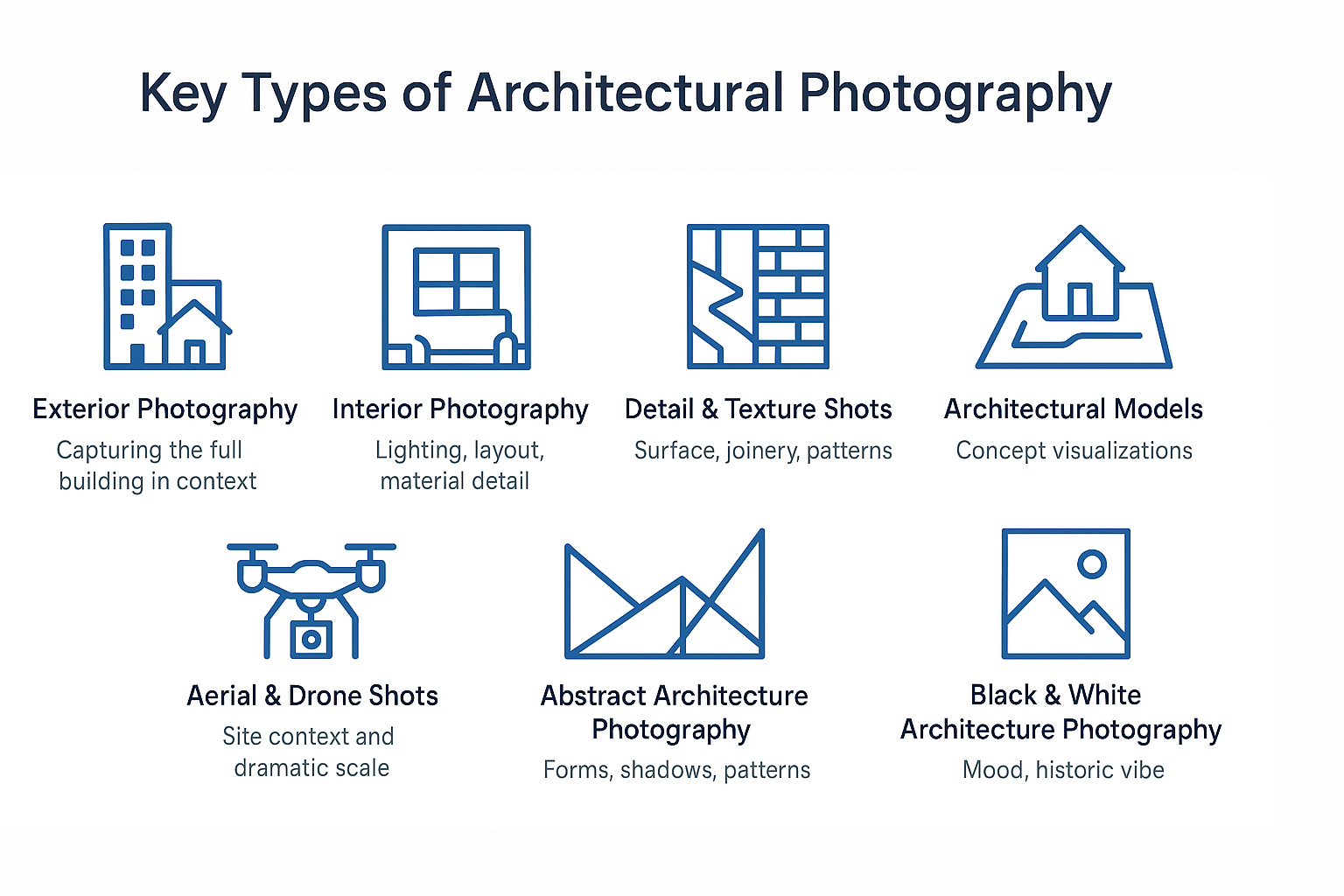
IMAGE: Infographic outlining the main categories of architectural photography: exterior shots, interior lighting and layout, detail and texture, model visualizations, aerial perspectives, abstract forms, and black & white imagery.
Foundations of Architectural Photography
What to shoot, what to show, and what really matters.
Each style serves a specific purpose—from storytelling to technical clarity.
Exterior Photography
Goal: Capture the entire building in context—its scale, setting, and design intent.
Focus on:
-
Massing and symmetry
-
Relationship to environment (urban or natural)
-
Façade materials and detailing
-
Time of day (golden hour = softer light & shadows)
Pro tip: Back up. A tight crop loses meaning. Use a wide-angle or tilt-shift lens to minimize distortion.
Interior Photography
Goal: Show how the space feels—light, volume, mood, and material.
Focus on:
-
Natural vs artificial lighting (balance is key)
-
Clean compositions: avoid clutter, distractions
-
Lines, flow, and how people might move through the space
-
Reflections: control them, or use them creatively
Pro tip: Scout during different times of day. One window’s glare can ruin the whole feel.
Detail & Texture Shots
Goal: Highlight the craftsmanship, tactile materials, or small moments most miss.
Focus on:
-
Joinery, seams, grain of materials
-
Geometry and design logic in close-up
-
Repetitions and patterns—especially in modern or brutalist designs
Pro tip: These shots are ideal for architectural portfolios and publications. They show you notice the “why,” not just the “wow.”
Architectural Models
Goal: Capture design intent before construction starts. Great for student portfolios, firm pitches, and competitions.
Focus on:
-
Light and shadow play on massing
-
Clean backgrounds, minimal distractions
-
Scale figures or entourage if needed
Pro tip: Use side lighting (softbox or window) to bring out form. Don’t shoot models head-on—angle adds depth.
Aerial & Drone Shots
Goal: Show full site relationships, context, or scale. Especially useful for urban planning, campuses, or landscape architecture.
Focus on:
-
How the building connects to roads, nature, or neighbors
-
Shadow play and roof geometry
-
Composition with leading lines or symmetry
Pro tip: Fly during morning or late afternoon for longer shadows and less harsh light. Always check for local drone laws.
Abstract Architecture Photography
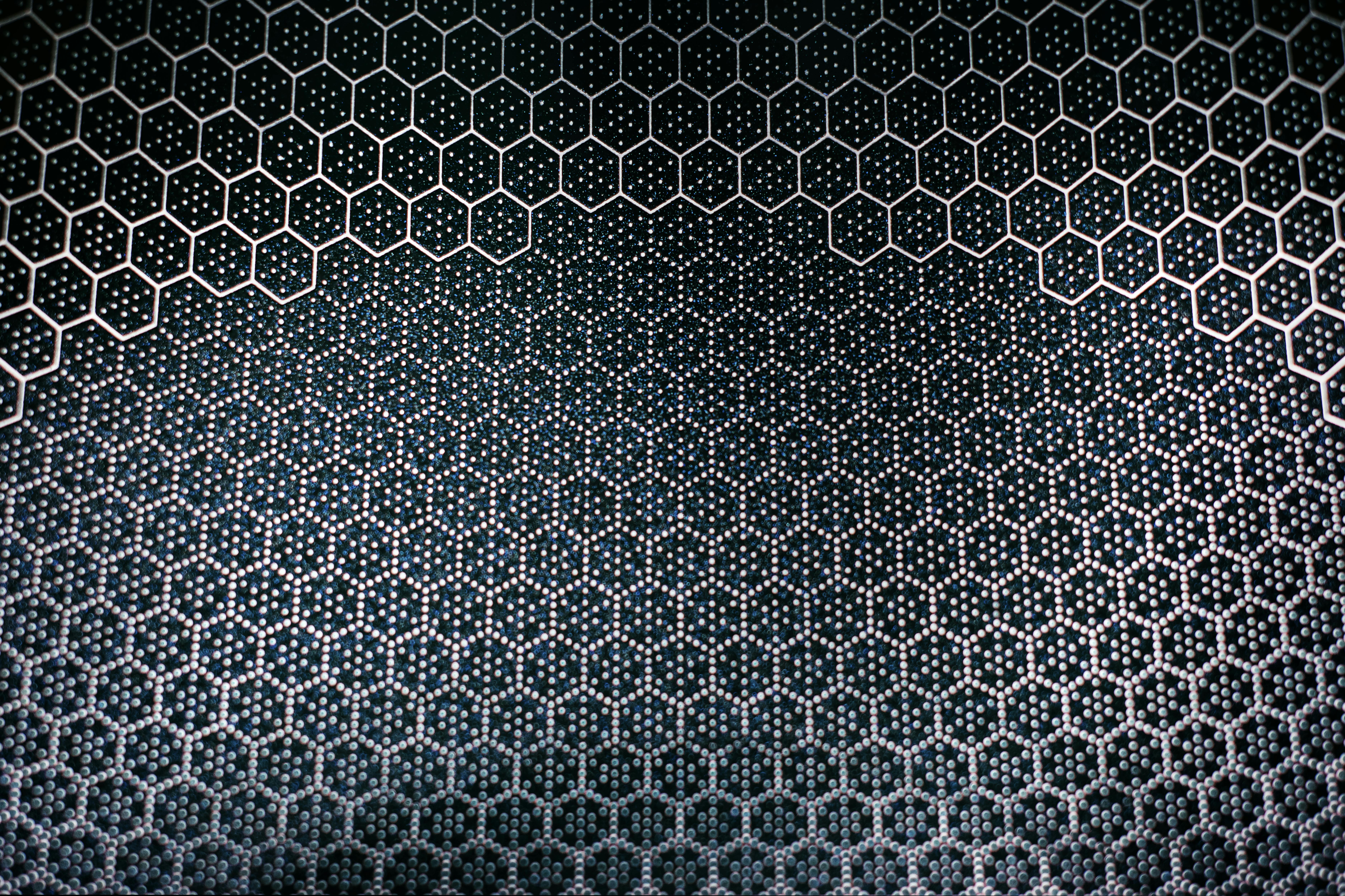
IMAGE: Focusing on abstract black and white textile facade, emphasizing pattern, mood, and modern architectural form
Goal: Focus on form, mood, repetition, and emotion—not literal documentation.
Focus on:
-
Patterns in structure or materials
-
Light and shadow interplay
-
Angles that disorient or reveal new shapes
Pro tip: Look up. Staircases, canopies, and skylights offer unexpected abstract compositions.
Black & White Architecture Photography
Goal: Strip away distraction. Emphasize contrast, form, and timeless mood.
Focus on:
-
Texture, lines, and negative space
-
Dramatic light (ideal in overcast or strong shadow)
-
High contrast scenes: brutalist concrete, steel-and-glass structures, old ruins
Pro tip: Shoot in RAW, then convert to black & white during post. That gives full control over tonal range.
Architectural photography isn't about the gear—it’s about what you notice.
Train your eye, understand the design, and shoot with intention. A building is more than walls—it’s space, light, rhythm, and use. The best architectural photos make that visible.
Mastering Composition in Architecture Shots
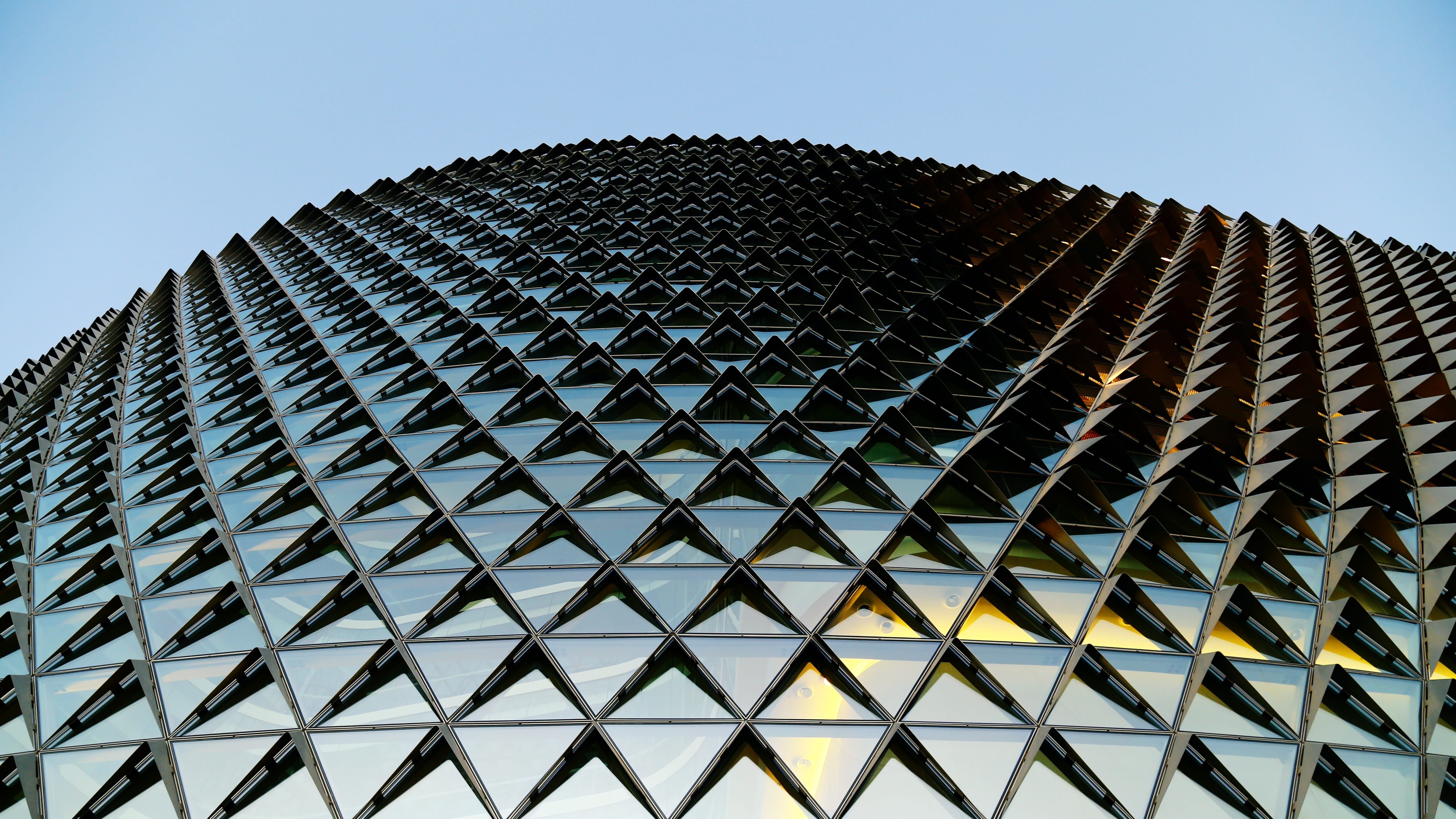
Good architectural photos don’t just show buildings.
They tell the story of space, light, form, and design intent.
If your composition is weak, no lens or camera can fix it.
If it’s strong, even a basic camera can produce gallery-level work.
What Composition Really Means
Composition is how you organize elements in the frame.
It controls where the eye goes, what the viewer feels, and how clearly the design is understood.
You’re not just showing a building—you’re shaping how it’s read.
Core Techniques You Need to Know
Leading Lines
✔ Use lines in the building—edges, paths, beams, railings
✔ They pull the eye through space
✔ Good for dynamic movement or drawing focus to a detail
Symmetry
✔ Works well with formal or classical architecture
✔ Gives balance, stillness, authority
⚠ But: off-by-just-a-little symmetry looks like a mistake
Framing
✔ Use arches, windows, columns, or trees to frame the subject
✔ Adds depth and focus
✔ Works great for transitions (like doorways between rooms)
Rule of Thirds vs. Central Composition
✔ Rule of thirds = dynamic, modern feel
✔ Centered = formal, iconic, stable
✔ Use what matches the building’s personality
Tip: Symmetrical buildings love centered shots. Asymmetrical ones prefer thirds.
Light Is Everything
You can’t “fix” bad lighting in post—not fully. You have to plan for it.
Natural Light
✔ Shoot early morning or late afternoon = soft side light
✔ Overcast? Great for interiors—no harsh shadows
✔ Avoid midday sun unless you want hard shadows
Artificial Light
✔ Use tripods + long exposures
✔ Mix of ambient + added lights works best
✔ Control highlights (especially windows and LEDs)
Know Your Times:
-
Golden Hour = warm, textured, forgiving
-
Blue Hour = dramatic, great for lit interiors
Handling Reflections, Shadows, Glare
Reflections
✔ Useful in glass buildings, polished floors, water
✔ Always check what’s reflecting (tripod? You?)
✔ Use a polarizer when you want to reduce unwanted glare
Shadows
✔ Shadows = depth, rhythm, mood
✔ Shoot when shadows are long for drama
✔ Try side angles for more texture
Glare
✔ Big problem with glossy interiors
✔ Use soft diffused light (indirect windows, bounce panels)
✔ Don’t overdo HDR—use it only if natural balance is impossible
What You Should Actually Pay Attention To
Know the structure.
Don’t fight the building’s lines—use them. Angles matter.
Keep verticals vertical.
Use a tilt-shift lens or correct in post. Unless you want distortion, don’t let walls lean.
Scout before you shoot.
Walk around first. The best shot usually isn’t the first one.
Shoot wide + tight.
Capture the context and the details. Clients love both.
Edit with restraint.
Let your framing and light do the work. Don’t hide flaws behind filters.
Pro Notes You Won’t Find in Most Articles
-
For exteriors: wait for people or cars to leave (or blend multiple shots).
-
For interiors: turn off some lights. Mixed color temps ruin shots.
-
Learn to shoot handheld quietly when tripods aren’t allowed (like museums or offices).
-
Backup gear always. Batteries die. Cards fail. Be ready.
-
Composition isn’t a rulebook—it’s a conversation with space.
Understand Architecture or Miss the Shot Entirely
Why Every Great Architectural Photographer Studies Architects
You don’t need an architecture degree. But if you want your photos to do more than just “look good,” you need to understand what architects actually do.
Why This Matters
Architectural photography isn’t just documenting space—it’s interpreting intent.
If you don’t understand how a building works, you won’t know where to stand, what to include, or what to emphasize.
What You Should Learn
Don’t aim to be an architect. Just aim to think like one.
🔹 Form follows function – Know why something is shaped a certain way. Architects don’t make curves or cutouts for fun.
🔹 Circulation and flow – How people move through a space often reveals the building’s core logic. Shoot with that in mind.
🔹 Hierarchy of spaces – Public vs private. Grand vs modest. These relationships matter when choosing lenses, framing, or light.
🔹 Material honesty – Can you show how stone feels, or how concrete ages? Know what materials are doing and why they were chosen.
🔹 Design language – Minimalism, brutalism, deconstructivism—learn the basics. Your images should speak the same language as the architecture.
What Architects Look For in Your Photos
Geometry and line control
Light use that matches their design vision
No distortion—verticals should be vertical unless intentionally broken
Photos that reveal flow, not just surface
How to Practice This
-
Visit buildings and walk them like a user, not a tourist
-
Study floorplans before you shoot. Seriously.
-
Read architectural books (start with Ching, Zumthor, or Juhani Pallasmaa)
-
Follow architects online—not just photographers
-
Ask designers what they want their building to say
-
Pair your shots with renderings to show evolution or fidelity to concept
Bottom line:
If you don’t understand why a building is the way it is, your photos won’t either.
This isn’t about rules—it’s about respect for the craft you’re trying to document.
Case Studies & Image Breakdowns
-
Analyze famous photos (e.g. Fallingwater, Salk Institute, Zaha Hadid)
-
What makes them work: light, space, human scale
Case Study: Revealing the Machine – A High-Tech Façade
What You're Looking At
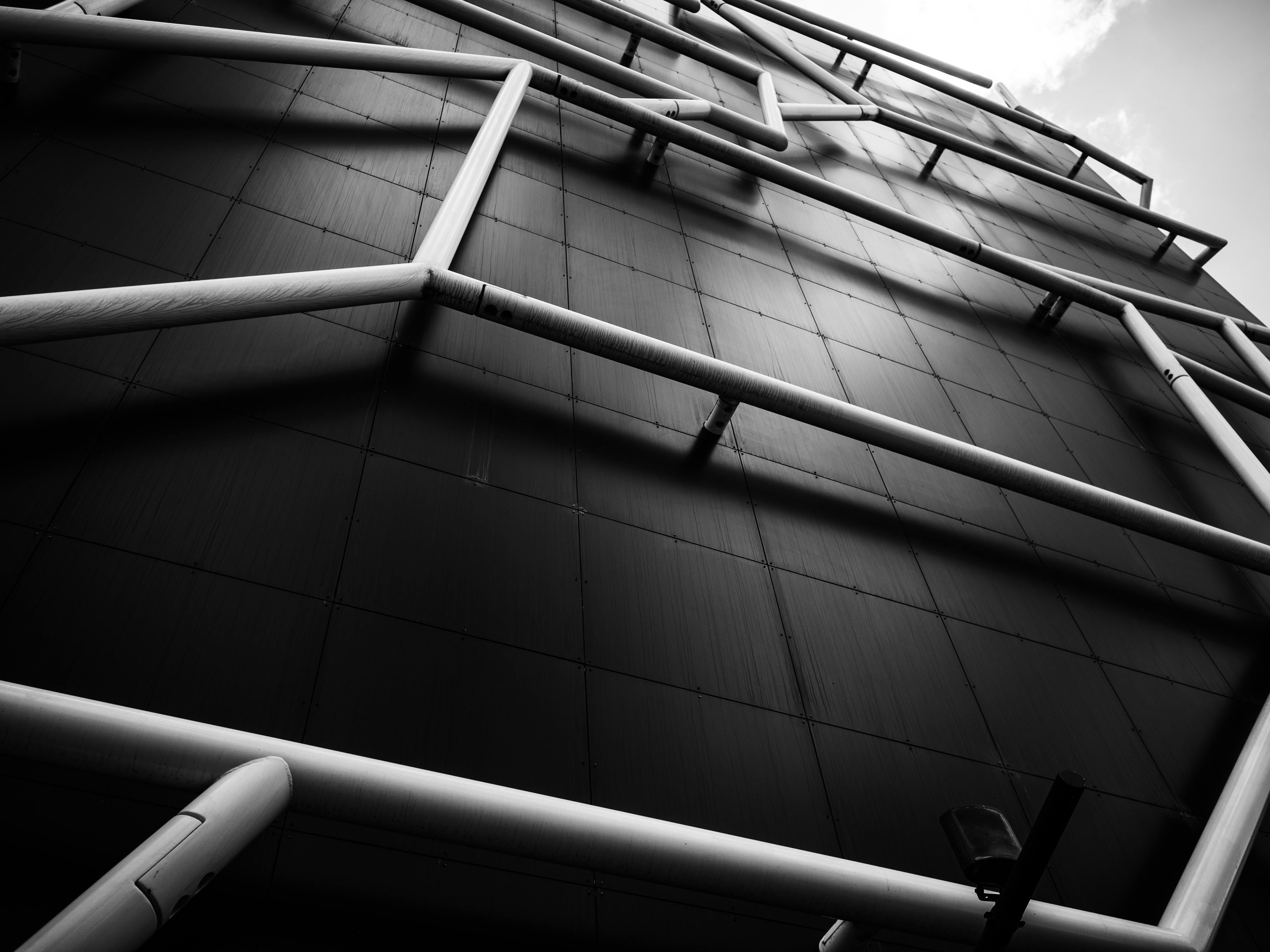
IMAGE: Shows industrial-style architectural photography of exposed pipes mounted on a building wall, emphasizing structure and utility in design.
This image captures the side elevation of a contemporary building defined by exposed mechanical systems—pipes, conduits, and structural grids—mounted against a flat, matte façade. Shot in black and white, it strips away distractions and zeroes in on form, rhythm, and shadow.
Why This Image Works
1. High-Tech Architecture in Action
This isn’t just a stylistic choice—it’s a philosophy. Inspired by buildings like the Centre Pompidou, high-tech architecture makes the guts visible. Pipes, ducts, and supports are treated as aesthetic elements.
2. Minimalist Brutalism
While technically a high-tech image, the starkness of the composition aligns with brutalist values: honest materials, repetition, no ornamentation, and geometric dominance.
3. Composition and Light
The photographer uses a low-angle shot to amplify scale and hierarchy. The vertical lines of the panel cladding contrast with the diagonals of the pipes, creating tension. Shadows fall hard and clean—an ideal use of natural light for architectural drama.
What to Learn from This Image
🔹 Architectural Exposure: When photographing high-tech buildings, don’t hide the mechanics—highlight them.
🔹 Black & White Strategy: Use monochrome to focus attention on form and contrast, especially with metal or concrete.
🔹 Angle Matters: This shot works because it’s not flat-on. Perspective creates power in architecture photography.
🔹 Purposeful Cropping: Tight framing reinforces minimalism—but leave breathing space to convey structure.
🔹 Functional Beauty: The image communicates utility as design—a growing theme in sustainable and modular architecture.
When to Use a Shot Like This in Your Portfolio
-
When showcasing modernist, brutalist, or tech-forward architecture
-
In a series focused on industrial aesthetics or abstracted design logic
-
As part of a narrative about systems thinking in architecture
Image Info for Caption Use
Title: "Elevated Systems"
Type: Architectural Study — High-Tech Façade
Focus: Exposed utilities, geometry, light and shadow
Format: Black & White, Low-Angle Perspective
Visual Pairing Strategy: Exterior Meets Interior
Exterior vs. Interior: Building Contrast Into the Story
Project Context
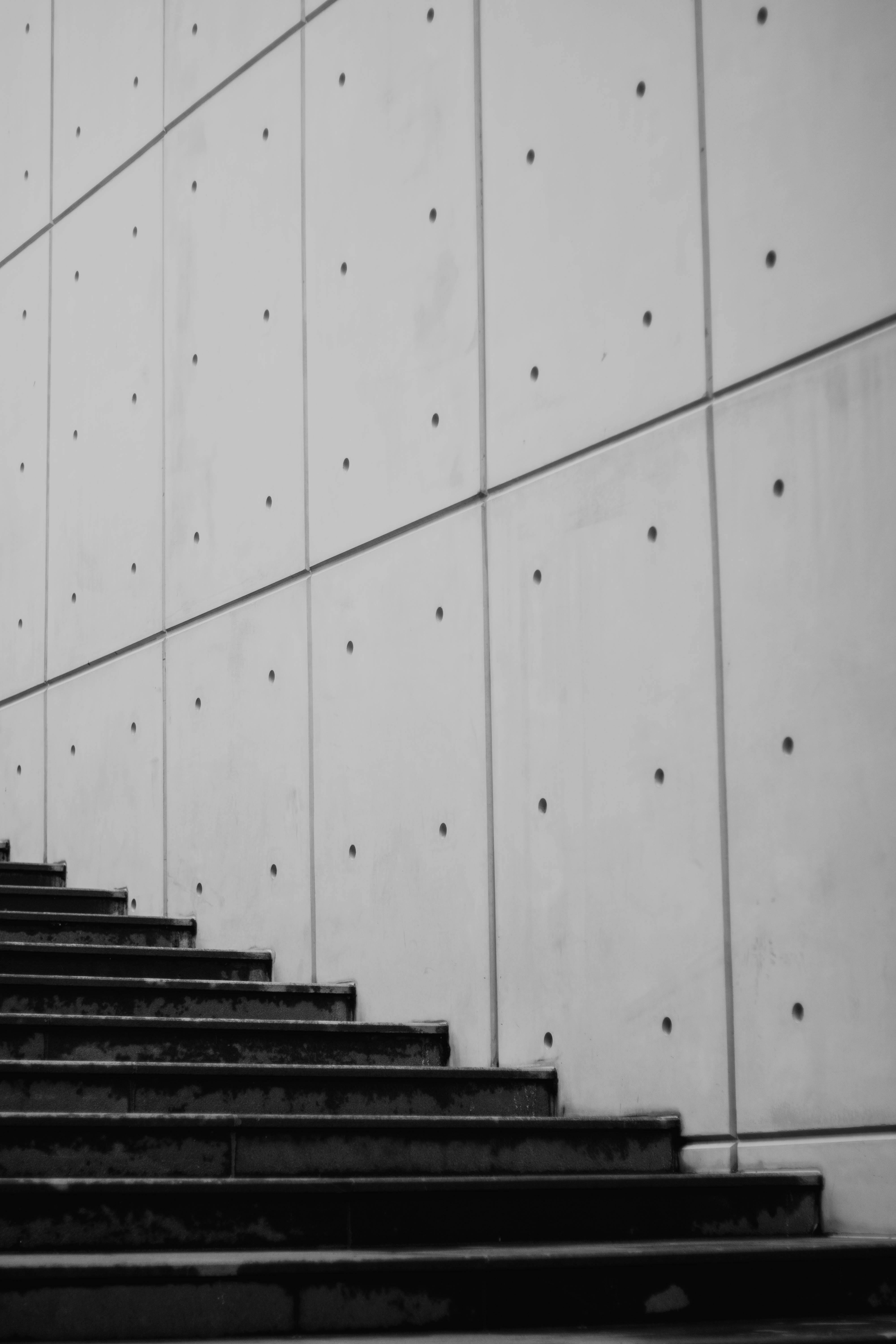
This image ("Elevated Systems") showcases the external mechanics of a building. But to truly capture the architectural intent, you need the interior perspective too—where human interaction, material warmth, and spatial logic unfold.
Suggested Pair: Clean, Minimal Interior Rendering
Why it works:
Pairing the mechanical, industrial exterior with a clean, well-lit interior space shows balance. It says: "This building is raw and structured on the outside, but refined and lived-in inside."
What to include in the interior/render shot:
-
Warm wood, concrete, or steel finishes
-
Natural light falling through large openings
-
Minimal furniture or human scale for warmth
-
A clear visual line or volume connecting exterior structure to interior layout
Design Message: From System to Space
Exterior:
Raw mechanics. Structure exposed. Geometry leads the eye.
Interior:
Refined finishes. Light-filled volumes. Spatial calm.
This shows your understanding of design tension: utility vs. experience, structure vs. intimacy.
Pro-Tip: What to Look for When Pairing Shots
-
Use matching angles (e.g., shoot or render from below if your exterior is a low-angle shot)
-
Keep consistent lighting style—both natural or both staged
-
Let one photo emphasize function, the other feel
Use Case: How to Deploy the Combo
| Use It For... | Why It Works |
|---|---|
| Portfolio Project | Shows full design logic—not just surfaces |
| Client Proposal | Communicates value: both engineering + emotion |
| Magazine Feature | Offers contrast that editors love |
Rendering & Hybrid Photography
-
SketchUp + rendering basics for visualization
-
Photorealistic compositing: merging 3D and real photography
-
Entourage elements: people, vegetation, context overlays
Must-Have Gear for Architectural Photography (Cameras, Lenses, Drones)
Master the art of architectural photography with this complete guide: composition, lighting, editing, gear, and real-world examples
Essential Equipment & Tools
The gear you choose shapes the story your photos tell. Pick right—or you’re just taking pretty pictures with no clarity.
Best Cameras for Architecture
Rule 1: Don’t chase megapixels. You need control, dynamic range, and lens compatibility. That’s why most pros go with either DSLR or mirrorless.
What to Use:
-
Canon R5 / Sony A7R IV / Nikon Z7 II – These mirrorless beasts give you high resolution and clean low-light performance. Ideal for architectural jobs where shadow and highlight detail matter.
-
Canon 5DS R / Nikon D850 – Still gold-standard DSLRs for image quality and durability. If you don’t care about size, they won’t let you down.
Avoid:
-
Entry-level bodies (like Canon Rebel or Nikon D3500) — fine for learning, but not for professional results or large-scale prints.
-
Any camera under 24MP if you plan to crop or print big.
If you're just starting: Get a full-frame mirrorless like the Canon RP or Nikon Z5. You’ll grow into it.
Best Lenses for Architecture
Your lens matters more than your body. One bad lens = soft edges, warped lines, and wasted time.
Must-Have Options:
-
Tilt-Shift Lens (TS-E 24mm / TS-E 17mm) – Non-negotiable for professionals. Corrects vertical distortion and lets you keep lines straight, especially for tall buildings or interiors. Pricey—but worth it.
-
Wide-Angle Prime (16–24mm range) – For capturing entire rooms or façades. Go for the sharpest you can afford.
-
35mm or 50mm Prime – Perfect for detail shots, abstract forms, or tighter spaces. Clean lines, no distortion.
Quick Tips:
-
Avoid ultra-wide zooms unless you know how to correct distortion properly.
-
Don’t over-rely on wide angle. It can make everything feel soulless. Use it when you need to show space—not when you need to show intention.
Drones for Architects
Aerial shots make your set complete. But not all drones are created equal.
Best Models (2025-2025)
-
DJI Air 3 – Best value: dual cameras, amazing flight stability, 4K60 resolution.
-
DJI Mavic 3 Pro – Pro-level with larger sensor and adjustable aperture.
-
Autel EVO Lite+ – Great low-light performance and no-fly zone flexibility.
Use it if:
-
You shoot exteriors, large sites, or want to show design in context.
-
You understand basic airspace laws and drone licensing in your country.
Avoid: Toy drones or ones without gimbal stabilization—they’re useless for pro imagery.
Tripods, Sliders & Lighting
Tripods:
-
Use one. Always. Shaky hands ruin sharp lines.
-
Go for carbon fiber (light, strong) if you’re on the move, or aluminum (cheaper) for studio work.
-
Manfrotto, Peak Design, or Gitzo make top models.
Sliders:
-
Rarely essential, but useful if you’re doing hybrid photo + video work or showcasing motion through space.
Lighting Kits:
-
For interiors, use portable LED panels (like Aputure Amaran or Godox).
-
Avoid on-camera flash. It flattens space and ruins mood.
Editing Software
Your raw files are only 70% of the story. Post-production makes the image sing—or sink.
Industry Standards:
-
Adobe Lightroom – Best for quick batch edits, exposure correction, and color grading.
-
Adobe Photoshop – Retouching, composite work, sky replacements, and anything precise.
-
Capture One Pro – Superior color grading. Tighter control than Lightroom, but steeper learning curve.
Bonus Tools:
-
Luminar Neo – Great for quick cleanup, AI sky swaps, and mood tuning.
-
Topaz Denoise/Sharpen – For low-light shots or tricky high-ISO files.
What Not to Waste Money On:
-
Kit lenses. They’re soft and slow. Upgrade fast.
-
Ring lights. They’re for beauty vloggers, not buildings.
-
Cheap tripods. They wobble, and your shots will too.
Good gear helps, but it doesn’t guarantee vision.
Use your tools to tell the building’s story—not just to show its shell. Think like a designer. Shoot like a documentarian. Finish like a perfectionist.
A 2025 guide to architectural photography: tools, styles, famous photographers, and techniques for both exteriors and interiors.
Beginner Kit (Under $1,000)
For students, hobbyists, or entry-level freelancers. Prioritizes clarity, not gadgets.
Camera
-
Canon EOS RP (Full-Frame Mirrorless) – ~$700
Compact, reliable, solid dynamic range.
Lens
-
Canon RF 16mm f/2.8 – ~$300
Affordable wide-angle with decent sharpness.
Alternative: Nikon Z5 + 28mm f/2.8 if you're Nikon-curious.
Tripod
-
Manfrotto Compact Action – ~$90
Lightweight, steady enough for learning.
Bonus Tools
-
Adobe Lightroom (Student Plan) – ~$10/mo
-
Mini LED Light Panel (Godox Litemons or similar) – ~$40
-
Cheap Remote Trigger or Self-Timer
Total: ~$1,000
Use this if: You’re learning, shooting practice buildings, or building a portfolio. Upgrade lenses before camera body.
Pro-Level Kit (Under $5,000)
Built for working professionals: crisp detail, distortion control, real deliverables.
Camera
-
Canon EOS R5 / Sony A7R IV / Nikon Z7 II – ~$2,800–$3,000
Full-frame with 45+ MP = killer detail and crop flexibility.
Lenses
-
Tilt-Shift: Canon TS-E 24mm f/3.5L II – ~$1,000–$1,400 (used)
-
Wide Prime: Sigma 24mm f/1.4 Art or Sony 20mm G – ~$700
-
Standard Prime: 50mm f/1.8 (nifty fifty) – ~$200
Tripod
-
Manfrotto 190XPRO or Peak Design Travel Tripod – ~$300–$500
Stable, pro-tested. You’ll thank yourself later.
Software
-
Adobe Lightroom + Photoshop (Full Plan) – ~$20/mo
-
Capture One Pro (Optional) – ~$300
Bonus (Optional)
-
DJI Air 3 Drone – ~$1,100
For aerials with minimal learning curve.
Total: ~$4,800 (w/ drone)
~$3,700 without drone
Use this if: You shoot commercial architecture, interiors, editorial, or real estate with serious output needs.
Upgrade Priorities (No Matter Your Budget):
-
Lens > Camera Body (Glass makes the shot)
-
Tripod = Non-Negotiable
-
Lightroom Mastery > Expensive Plugins
-
Tilt-Shift = Power Move
Lighting Kit for Architectural Photography
For controlling indoor ambiance, dealing with bad light, and showcasing materials the way they should look.
Basic Lighting Gear:
▪ Godox SL60W LED Light – ~$140
Silent, daylight-balanced, solid CRI. Great for interiors.
▪ Softbox (Godox 80cm or Aputure Light Dome Mini) – ~$60–$100
Softens shadows. Essential for polished interiors.
▪ Yongnuo YN360 III RGB Light Wand – ~$130
Flexible, handheld fill light or color accent.
▪ Light Stands (Neewer or Impact brand) – ~$25–$40 each
Always get two.
▪ Reflector (5-in-1) – ~$25
Great for bouncing natural light onto darker areas.
Add If Needed:
▪ Flash: Godox V1 (Canon/Sony/Nikon) – ~$260
Round-head = smoother, natural bounce indoors.
▪ Wireless Trigger (XPro or X2T) – ~$70
For syncing lights off-camera.
Total Cost: ~$400–$600
Use if: You're shooting professionally indoors, especially for interior designers, Airbnb spaces, or real estate.
Pro Mobile Rig (Shoot on Your Phone)
Max out your smartphone’s potential for clean, stable, sellable architecture photos.
Essential Tools:
▪ Beastgrip or Moment Mobile Cage – ~$90
Mount lenses, mics, or lights. Total control.
▪ Moment 18mm Wide Lens – ~$120
Gives that tilt-shift vibe. Must-have for iPhone/Pixel users.
▪ Ulanzi PT-15 LED Panel – ~$50
Rechargeable, adjustable. Perfect for small spaces.
▪ Manfrotto PIXI EVO Tripod – ~$60
Stable but small. Big difference in image sharpness.
▪ Pro Camera Apps:
– Halide (iOS), ProCamera, or Filmic Pro – $15–$25
Manual controls for shutter, ISO, white balance = real photos.
Optional:
▪ DJI Osmo Mobile 6 Gimbal – ~$150
If you want buttery video or live walkthroughs.
Total: ~$300–$500
Use if: You’re on the go, documenting small projects, or building content for socials. Surprisingly capable with the right tools.
Hybrid Photo + Video Setup (For Real Client Work)
For architects, marketers, or content creators delivering both stills and promo videos.
Core Camera:
▪ Panasonic Lumix GH6 – ~$1,900
Killer video specs + solid stills + no overheating.
Alternatives: Sony A7 IV or Canon R6 II
Lenses:
▪ Panasonic 12–35mm f/2.8 – ~$800
Great for interiors and b-roll. Sharp, stabilized.
▪ Laowa 15mm Zero-D (Zero Distortion) – ~$550
Perfect for tight interiors + ultra-wide shots without weird warping.
Video Gear:
▪ Rode VideoMic NTG or Deity D3 Pro – ~$250
Pro-quality directional mic.
▪ Aputure Amaran 100d – ~$200
Powerful LED for video lighting (can double for photo)
▪ Variable ND Filter (Tiffen or PolarPro) – ~$120
Controls exposure while filming outdoors.
Essential Extras:
▪ Sturdy Tripod (Manfrotto or Peak Design) – ~$300
▪ Video Monitor (Feelworld or Atomos Shinobi) – ~$250
▪ Fast SD Cards (V90 rated) – $60+
Total: ~$3,500–$4,200
Use if: You’re creating portfolio films, site walkthroughs, YouTube reviews, or branded content with tight image control.
Pro Tip:
Don’t chase gear until your work demands it. Let your problems define your purchases.
Post-Production Workflow
-
Lightroom basics for architectural color grading
-
Perspective correction and lens distortion
-
Removing distractions (power lines, signs, etc.)
Pricing & Professional Services
-
Architectural photography pricing guide
-
Residential vs commercial vs editorial
-
Deliverables, licensing, travel costs
-
-
Hiring a photographer: what to look for
-
Finding architectural photographers near you
Top Architectural Photographers and How They Capture Design
Interior Design & Architectural Photography: What Makes a Great Shot?
Architectural Photography by the Masters
-
Julius Shulman – LA modernism, Stahl House
-
Ezra Stoller – Mid-century modern icon
-
Hélène Binet – Contemporary + abstract
-
Iwan Baan – People + place in architecture
-
Fernando Guerra – Portuguese warmth + light
-
Benny Chan, Filip Dujardin, Lucien Hervé, etc.
How to photograph buildings, interiors, and urban spaces like a pro. Includes gear tips, photo styles, and expert advice.
Architectural Photography & Interior Design
-
How interior designers collaborate with photographers
-
Creating portfolio shots
-
Top interior design photo studios and freelancers
Exploring Visual Styles
-
Brutalist photography
-
Black-and-white vs color
-
Long exposure
-
Minimalist and fine art approaches
Legal & Licensing Basics
-
Licensing types (editorial, commercial, personal)
-
Rights of use for architects vs photographers
-
Copyright tips and model/property releases
Best Books, Tools, and Courses to Master Architectural Photography
Best Books on Architectural Photography (Amazon Picks)
-
"Photographing Architecture and Interiors" by Julius Shulman
-
"Composing Space: The Photographs of Hélène Binet"
-
"Shooting Space: Architecture in Contemporary Photography"
-
"Ezra Stoller: Photographer"
-
"A Constructed View" – Shulman retrospective
Recommended Gear from Amazon
-
Canon R5, Sony A7R V (high-res, pro-grade)
-
Nikon PC-E 24mm tilt-shift lens (for perfect perspective)
-
DJI Mini 4 Pro (for drone work)
-
Benro carbon tripod
-
Elinchrom lighting kit
-
X-Rite color checker (accurate post edits)
Tips for Aspiring Architectural Photographers
-
Always scout locations early
-
Learn to shoot at dawn and dusk
-
Don’t just shoot buildings—shoot atmosphere
-
Backup everything. Twice.
FAQ
What is architectural photography?
- Introduction: Architectural photography is a specialized genre within photography that focuses on capturing images of buildings, structures, and spaces. It aims to showcase the design, form, and details of architectural subjects while conveying the intended aesthetic and functional aspects.
- Answer: Architectural photography is not merely about capturing buildings; it's about telling a story through visuals. It involves carefully composing shots to highlight the unique characteristics of a structure, whether it's the play of light and shadow, the symmetry of lines, or the texture of materials. Architectural photographers often collaborate closely with architects and designers to understand the design intent and capture it effectively in their photographs.
What are the two types of architectural photography?
- Introduction: Architectural photography encompasses various types of shots, but two primary categories are interior and exterior photography, each with its own challenges and techniques.
- Answer:
- Exterior Photography: Exterior architectural photography involves capturing the exterior facades and surroundings of buildings. It focuses on showcasing the overall design, scale, and context of the architecture. Photographers often consider factors such as lighting conditions, weather, and time of day to capture the building in the best possible light. Wide-angle lenses are commonly used to capture the entirety of the structure, while telephoto lenses can be employed to highlight specific details or perspectives.
- Interior Photography: Interior architectural photography involves capturing the interior spaces of buildings, including rooms, corridors, and other areas. It aims to showcase the design, layout, and ambiance of the interiors, often focusing on elements such as lighting, composition, and spatial flow. Photographers may use techniques like HDR (High Dynamic Range) photography or exposure blending to capture the full range of lighting conditions within a space. They also pay attention to staging and styling to enhance the visual appeal of interiors.
How do I become an architectural photographer?
- Introduction: Becoming an architectural photographer requires a combination of technical skills, artistic vision, and industry knowledge. Here's a comprehensive guide on how to pursue a career in architectural photography.
- Answer:
- Develop Photography Skills: Start by learning the fundamentals of photography, including camera operation, exposure, composition, and lighting. Take photography classes, workshops, or online courses to hone your skills and gain practical experience.
- Understand Architecture: Familiarize yourself with architectural styles, design principles, and terminology. Study architectural history, visit iconic buildings, and observe how architects use space, form, and materials to create visually compelling structures.
- Build a Portfolio: Start building a portfolio of your architectural photography work. Capture images of buildings, structures, and spaces, showcasing your ability to compose shots, manipulate light, and capture architectural details effectively. Consider collaborating with architects, designers, or real estate agents to gain access to interesting projects.
- Invest in Equipment: Invest in high-quality camera equipment, including a DSLR or mirrorless camera, a selection of lenses (wide-angle, tilt-shift, etc.), a sturdy tripod, and lighting equipment (if necessary). Choose gear that suits your shooting style and the demands of architectural photography.
- Network and Market Yourself: Network with professionals in the architecture and design industry, including architects, interior designers, and developers. Attend industry events, join photography clubs or associations, and showcase your work on online platforms such as social media, portfolio websites, and photography forums. Develop a strong online presence and market your services to potential clients.
- Continuous Learning and Improvement: Stay updated on the latest trends, techniques, and technologies in architectural photography. Experiment with new approaches, push your creative boundaries, and seek feedback from peers and mentors. Continuously refine your skills and strive for excellence in your craft.
What is considered architectural photos?
- Introduction: Architectural photos encompass a wide range of images capturing various aspects of buildings, structures, and spaces. Understanding what constitutes architectural photography can help guide your approach to capturing compelling architectural images.
- Answer: Architectural photos typically include images that showcase the design, form, and function of architectural subjects. This can include:
- Exterior Views: Images that capture the exterior facades of buildings, highlighting their architectural features, materials, and surroundings.
- Interior Spaces: Photographs showcasing the interior architecture of buildings, including rooms, corridors, staircases, and other areas. These images often emphasize spatial layout, lighting, and design details.
- Detail Shots: Close-up shots focusing on specific architectural elements such as windows, doors, columns, textures, and ornamentation. Detail shots highlight the craftsmanship and intricacies of architectural design.
- Contextual Shots: Images that place architectural subjects within their broader context, including their urban or natural surroundings. These shots provide perspective on the relationship between buildings and their environment.
- Lifestyle Shots: Photographs featuring people interacting with architectural spaces, such as residents, visitors, or users of buildings. Lifestyle shots add a human element to architectural photography, showing how spaces are experienced and used in real life.
- Overall, architectural photos aim to capture the essence of buildings and spaces, conveying their beauty, functionality, and significance through visual storytelling.
Explore Further: Related Subjects
- How To Capture Great Architecture Photography?
- Overcoming Challenges In Architecture Photography
- Architectural Photography for Home Designers
Expand your knowledge with these related subjects and get deeper into the world of architectural photography.
- Architectural Design Principles: Explore the fundamental principles of architectural design and its impact on photography.
- Urban Photography Techniques: Learn how to capture the essence of urban landscapes and cityscapes through photography.
- Interior Design Inspiration: Discover innovative interior design concepts and gather inspiration for your architectural photography.
- Lighting Mastery in Photography: Master the art of lighting techniques to enhance your architectural photography skills.
- Post-Processing for Photographers: Dive into the world of post-processing and editing techniques to elevate your architectural images.
Additional Resources:
- Online Tutorials and Demonstrations: Supplemental learning materials.
- Sample Projects and Assets: Hands-on practice resources.
- Guest Lectures and Workshops: Industry insights and expertise-sharing.