
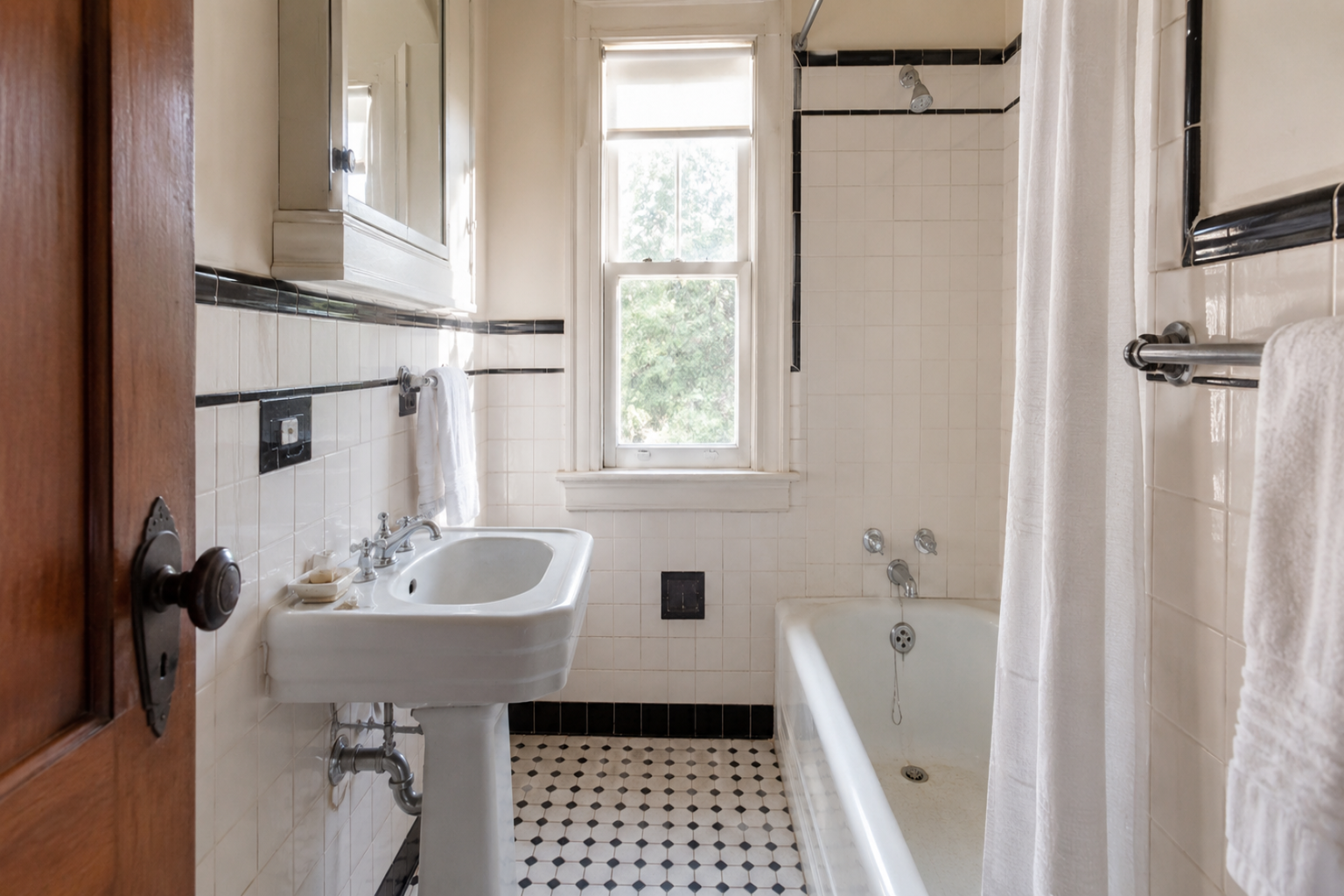
A lot of 1930s bathrooms are small, simple, and better than they have any right to be. The tile is good, the proportions are decent, and the fixtures still make sense. The room is rarely flashy, but it usually knows what it is doing.
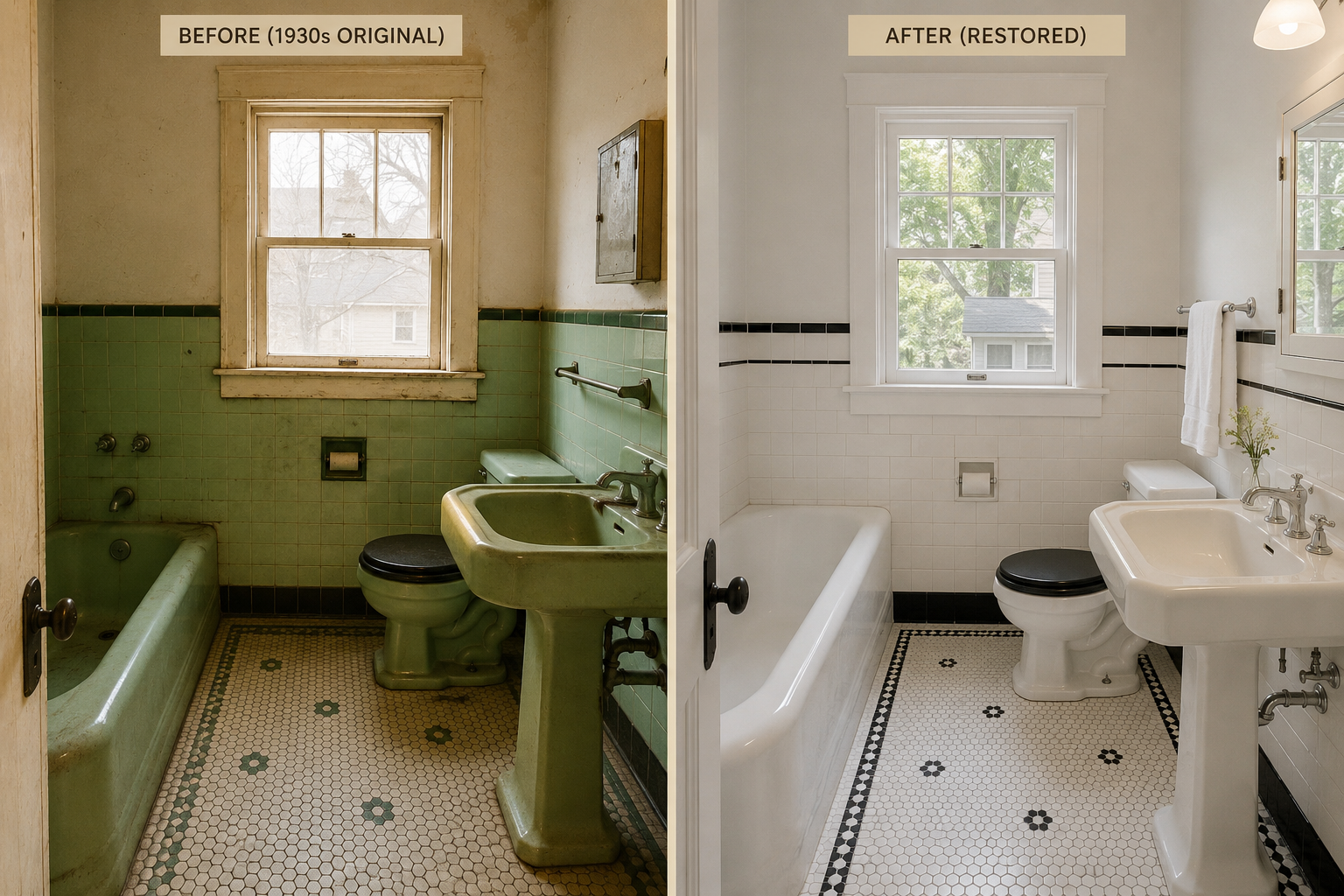
That is why these bathrooms still work. They do not need much to feel finished — a pedestal sink, a solid tub, wall tile with a clean border, and chrome that has not been overthought is often enough.
The trouble starts when the renovation tries too hard. A giant vanity goes in, the tile gets swapped for something trendy and loud, black fittings show up everywhere, and the room manages to get more expensive and less convincing at the same time.
The better approach is simpler. Keep the things that give the room its shape, replace the parts that are failing, and let the period character stay quiet.
What a 1930s Bathroom Usually Had
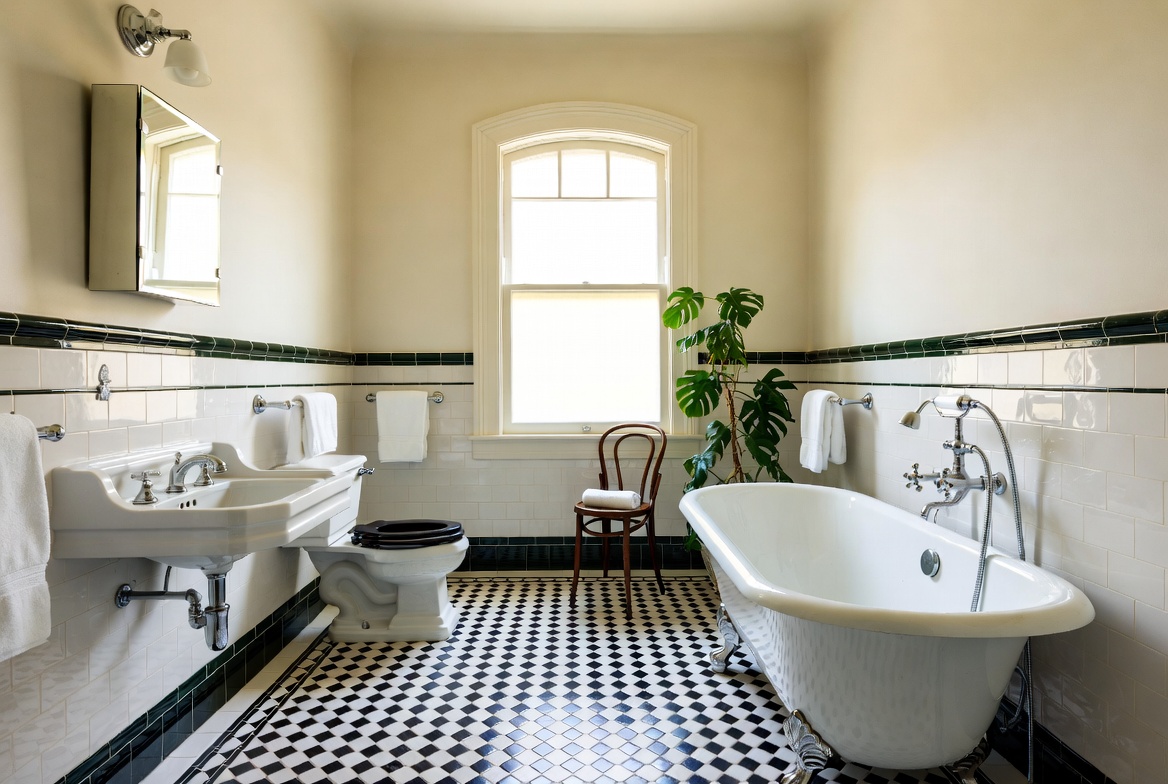
The details varied, but the core language stayed fairly consistent.
- Pedestal or wall-hung sinks with a lighter footprint than most modern vanities
- Built-in medicine cabinets recessed into the wall instead of added on top of it
- White, cream, pale green, pale blue, or pink tile used with more confidence than people use now
- Chrome fittings that looked clean without trying to look luxurious
- Compact tubs with simple lines
- Border tile or black accent lines in bathrooms that wanted a little contrast without a lot of fuss
That last part matters. These rooms were finished, but not overloaded, and even the more decorative ones knew where to stop.
Fixtures Worth Keeping
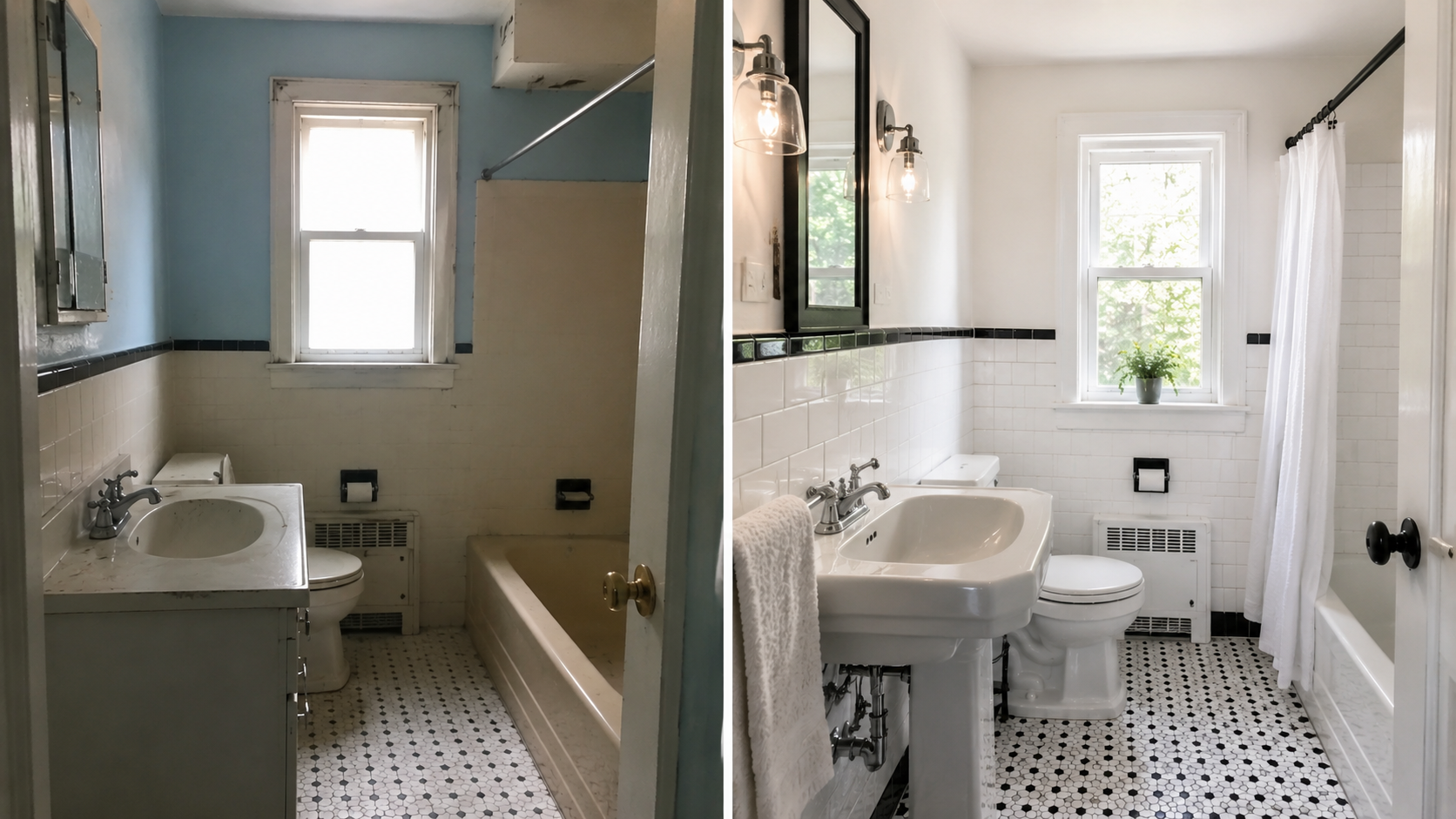
Not every original fixture deserves saving, but some clearly do.
Pedestal Sinks
A good old pedestal sink still does exactly what a small bathroom needs. It keeps the floor visible, it suits the scale of the room, and it does not turn the sink wall into a block of cabinetry pretending to be furniture. I would keep a sound one over a new vanity nearly every time.
Tubs
If the tub body is sound, think hard before replacing it. Reglazing a cast-iron tub runs a few hundred dollars against a few thousand for a replacement, and the original usually sits better in the room than a new tub with the wrong proportions. The cost math and the look both point the same way.
Medicine Cabinets
Recessed medicine cabinets are one of those details people remove too quickly. They add storage without bulk, which is exactly the right instinct in a room this size.
Wall Tile
If most of the tile is intact, keeping it is usually the better move. Small repairs and selective replacement preserve more character than a full rip-out — and as the next section gets into, the tile is the one thing in the room you cannot really buy back.
Worth Knowing: If the bathroom is only one part of a larger project, How 1930s Houses Fall Apart Over Time helps with the less visible part of the job — damp, movement, old services, and the things that usually cost more than tile.
The Tile Is the Part You Can't Get Back
Of everything in a 1930s bathroom, the tile is the hardest thing to ever replace, which is exactly what makes it the last thing you should rip out.
The original colors — calamine pink, mint or arsenic green, butter yellow, the soft pales — came from glazes that modern tile does not reproduce. The edges sit flat instead of the slightly pillowed profile of new tile, and the coved bases, pencil liners, and bullnose caps were made in sizes most suppliers no longer stock. A few specialty makers do period reproductions, and they are worth knowing about, but they cost a premium and the match is rarely exact. I have watched someone pull out a wall of sound original tile to deal with a tired grout line and a couple of chips, then spend months hunting for anything close. It never quite lands.
So before a rip-out, ask whether the tile is actually failing or just tired. Most of the time it is only tired, and the cheapest high-impact move is to refresh what is there: recolor or replace the grout, fill or swap the few cracked tiles, and repaint the wall above the tile line in a color chosen to work with it. That last step is what most convincing "updated" vintage bathrooms quietly have in common — the tile stayed, and the room around it changed.
A full retile is the right call when the substrate behind the tile has failed, when water has been getting in for years, or when so little original tile survives that matching is moot. Short of that, the tile is usually the whole reason the room still reads as a 1930s bathroom. Lose it and you are not updating the room — you are starting a new one.
What to Replace Without Regret
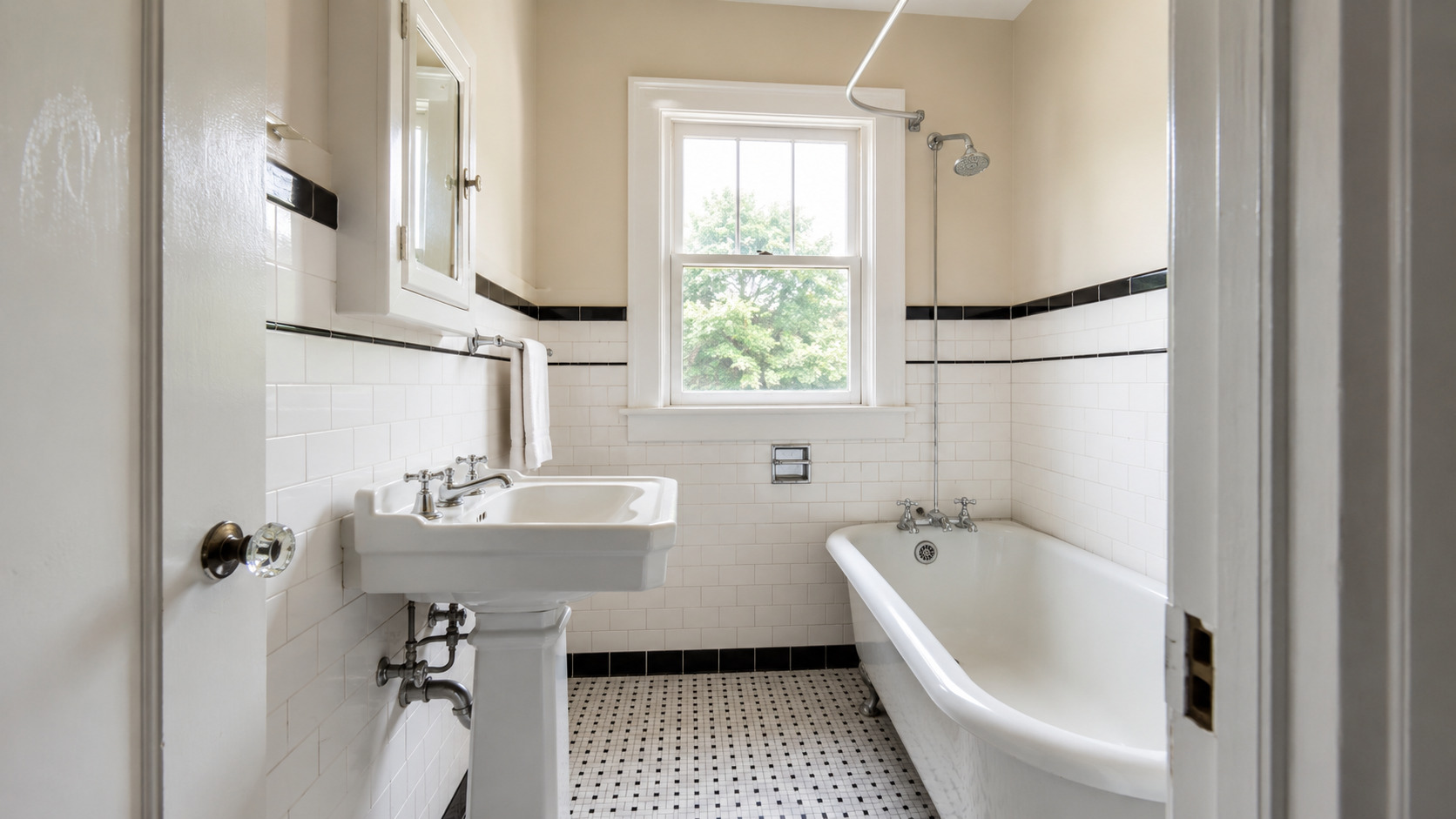
Some upgrades are not aesthetic decisions at all. They are just sensible.
- Old plumbing lines that are restricted, leaking, or near failure
- Unsafe wiring or messy later electrical work
- Weak ventilation in a room that traps moisture
- Failed substrates where the tile is not really the problem anymore
- Cheap later additions that already pulled the room off course
The rule underneath all of it is steady: keep what still helps the room, and replace what is making the room harder to live with.
Tile and Color That Still Read Right
This is where a lot of 1930s bathrooms either stay convincing or start drifting into costume.
Tile
Small-format wall tile, a coved base, simple borders, and restrained floor patterns are usually the safest direction. The best rooms do not need six different tile moments fighting each other.
Color
White works, and so do cream, pale green, powder blue, soft pink, and black-and-white combinations that stay controlled. The palette does not need to be timid; it does need to be coherent.
Metal
Chrome usually sits best in these rooms. It has the right visual weight, and it keeps the bathroom from drifting into another decade. Brass can work in some houses, but it is easier to get wrong.
What Usually Looks Wrong
The failures here are predictable, and they tend to repeat.
- Huge vanities that eat half the room
- Gray wood-look tile that has nothing to do with the house
- Overdone "vintage" fittings that feel theatrical instead of period-aware
- Black matte hardware everywhere in a room that really wants chrome
- Overscaled walk-in showers that force the room into a different scale
- Too many competing finishes instead of one clear tile and fixture strategy
The problem is not that the room was updated. The problem is that it stopped listening to the house.
Storage Without a Giant Vanity
Storage is usually the practical pressure point, because these bathrooms were not built for today's product count. Still, a bulky vanity is not the only answer, and usually not the best one.
- Keep or add a recessed medicine cabinet
- Use one wall shelf if it earns its place
- Choose a small vanity only if the sink truly needs replacing
- Use a built-in niche carefully where it does not wreck the tile layout
- Let one storage move do the work instead of scattering cabinets around the room
In a bathroom this size, one oversized decision can do more damage than three smaller good ones can undo.
Lighting and Mirrors
Bathroom lighting from this period was usually simpler than people remember, and that is still the better direction now.
- Use wall lights or one modest overhead fixture
- Choose warm light, not harsh blue-white glare
- Keep mirrors straightforward instead of making them the main decorative event
- Let tile, chrome, and glass do some of the reflecting instead of adding more visual clutter
A small bathroom does not need drama. It needs clear light and a fixture that does not feel borrowed from a hotel renovation.
What to Fix Before You Start Choosing Finishes
A lot of bathroom remodels get sequenced backward. People start with tile samples and faucets, then find out the venting is poor, the floor is soft, or the plumbing is half-patched and near the end of its life.
- Check ventilation first
- Check subfloor condition around the tub and toilet
- Check plumbing lines before closing walls
- Check electrical safety before adding new lighting
And in a house this age, assume lead paint and the possibility of asbestos in old flooring, adhesives, or pipe insulation until a test says otherwise — test before sanding, demolishing, or pulling up old floor layers.
Also Useful: If the larger goal is upgrading the whole house without flattening it, How to Modernize a 1930s Home the Right Way is the better whole-house companion to this page.
What It Usually Costs
Bathroom budgets move fast because the room combines plumbing, tile, waterproofing, labor, fixtures, and finish choices in one small footprint. The cost depends less on size than people think, and more on how much hidden work the room triggers.
- Light refresh: paint, minor repairs, lighting, hardware
- Mid-range update: partial tile work, fixture replacement, ventilation, lighting, selective plumbing
- Full renovation: tub or shower work, rewiring, plumbing changes, full tile replacement, new floor, full finish work
The smarter budget move is usually selective retention. Keep the tub if it is sound, keep the sink if it still fits, and keep the tile if most of it is doing its job, then spend on the parts that improve how the room works. As a rough anchor, a full bathroom remodel averages somewhere around $12,000 nationally but ranges widely, while reglazing a sound tub instead of replacing it is one of the few moves that reliably saves real money.
FAQ
What colors fit a 1930s bathroom?
White, cream, pale green, soft blue, pink, and restrained black-and-white combinations all fit the period well.
Should I keep an old pedestal sink?
If it is sound and still works for the room, usually yes. It often suits the scale better than a bulky vanity.
Can I add a modern shower?
Yes, but keep the enclosure, tile, and fittings restrained so the room does not lose its scale.
Is chrome better than brass here?
Usually yes. Chrome tends to sit more naturally in this period, especially in simpler tile-heavy rooms.
Do I need to replace original tile?
Not always, and usually not. Original vintage tile is effectively irreplaceable — the colors and edge profiles are hard to match — so if most of it is intact, refreshing the grout and spot-repairing chips beats a full rip-out.
Read This Next
- 1930s House Style: From Art Moderne to Cottage Revival
- How 1930s Houses Fall Apart Over Time
- 1930s Kitchen Layouts and Materials
References
Sources used for this article
- National Park Service: Preservation Briefs
- National Park Service Preservation Brief 18: Rehabilitating Interiors in Historic Buildings
- EPA: Protect Your Family from Sources of Lead
- EPA: Protect Your Family from Exposures to Asbestos
- Angi: Bathroom Remodel Cost (2026 data)
- Angi: Bathtub Refinishing Cost (2026 data)