
How to Fake Color Drenching Without Wrecking the Room

Full color drenching can go wrong fast in a normal house.
Fake color drenching is the safer version. You get the same wrapped feeling with fabric, light, sheen, and one or two painted surfaces instead of committing the whole room at once.
It works better in dark rooms, small bedrooms, awkward living rooms, rentals, and anywhere you like the look but do not want a repaint problem later.
For the color side first, read Color Psychology.
Why Fake It First
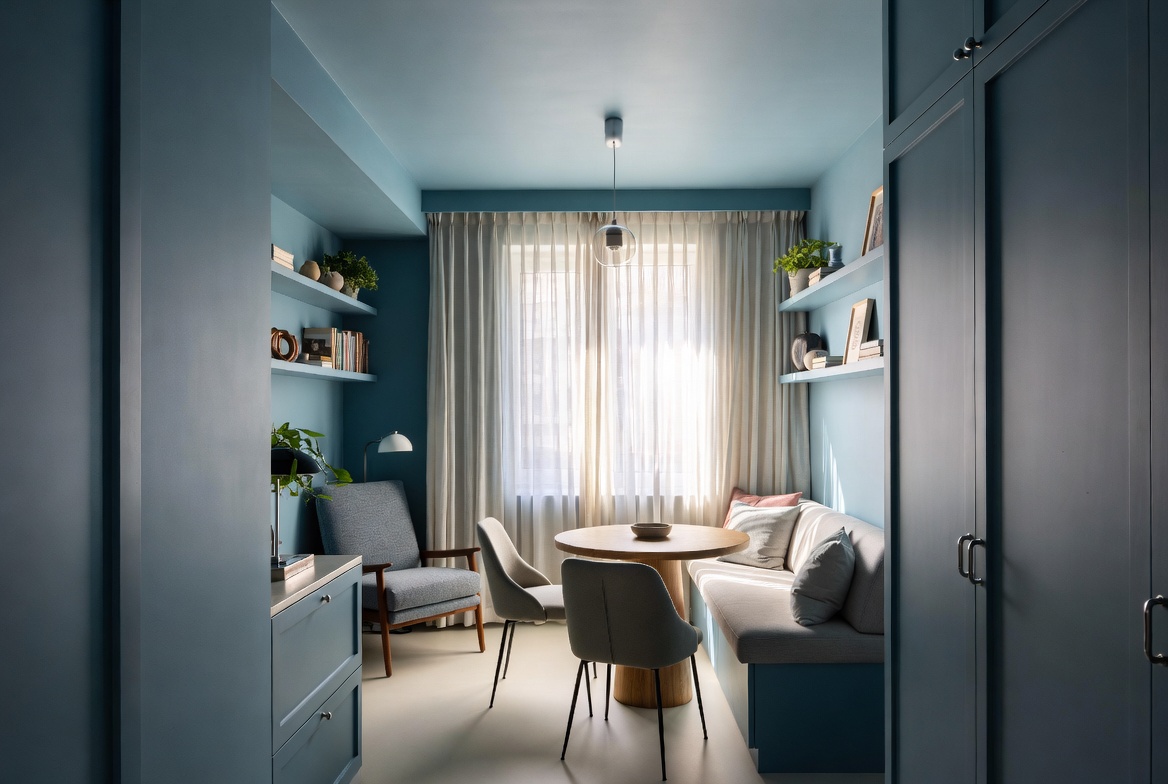
A full drench asks a lot from one room.
The light has to cooperate. The furniture has to cooperate. The flooring has to cooperate. The trim profile, ceiling height, window size, and bulb warmth all start mattering more once one color is carrying the whole room.
A softer version lets you test the feeling before you lock the room in.
That is the original angle here: fake color drenching is not the cheap version. It is the testing version. It lets you find out whether the room wants a full drench or whether one strong layer is enough.
| Approach | What You Change | Risk Level | Best For |
|---|---|---|---|
| Full color drenching | Walls, trim, doors, ceiling, sometimes built-ins | High | Confident rooms with good light and a tight palette |
| Fake color drenching | Textiles, one painted zone, lighting, small finish changes | Low to medium | Most homes, especially rooms that are still being figured out |
| One-wall version | Single focal wall plus related furnishings | Low | Small bedrooms, offices, rentals, and nervous first tries |
Start With The Biggest Removable Surfaces
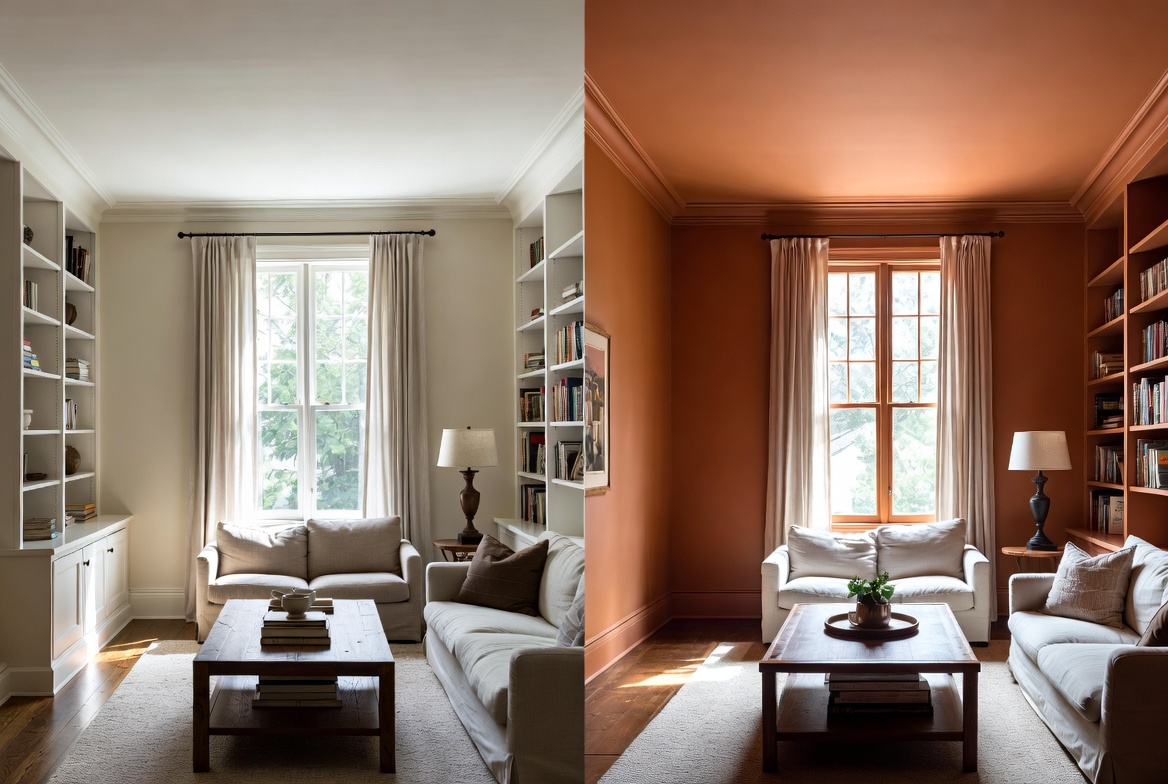
The fastest way to fake the look is to build the room from large soft surfaces first.
That means:
- full-height curtains in the main room color
- a rug that sits in the same tone family
- bedding, headboard, throws, or cushions that keep repeating the same color range
- lampshades, artwork, or accent pieces that stay inside that same band
This is where the room starts to feel wrapped. Not because every hard surface matches, but because the eye keeps landing in the same color family from one side of the room to the other.
In living rooms, this works best when the sofa, rug, curtains, and one larger object all agree. In bedrooms, bedding and curtains do most of the work. In dining rooms, upholstery, drapery, and a large wall color move can carry the whole thing.
Related reading: if the room already feels noisy, Minimalist Living Room Decor and Small Minimalist Living Rooms both help you strip the setup down before adding color pressure.
Use One Painted Zone Instead Of Painting Everything
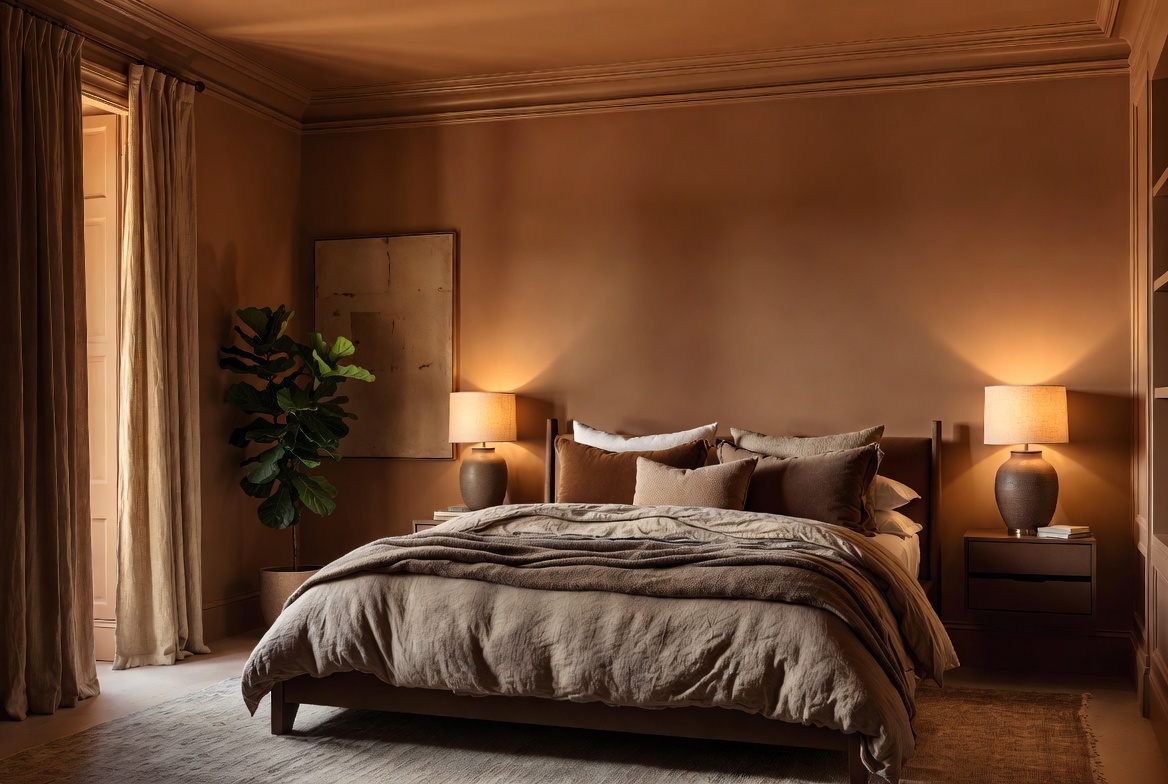
This is where most people should start.
Pick one area that can carry the color without dragging the whole room down. That could be:
- one wall behind the bed
- the wall behind a sofa
- a small office nook
- a fireplace wall
- the lower half of the room below a rail line
- built-ins only
Then repeat that color in fabric and objects around the room.
This gives you much of the same punch as full drenching, but the room still has air in it. It also lets the ceiling stay light, which matters more than people think in low rooms.
One painted zone also gives you a clean way out. If the color starts to feel heavy, you are repainting one part of the room, not the whole envelope.
Half-Height Paint Works Better Than People Expect
This is one of the best tricks in the whole category.
Paint the lower half of the room in the strong color. Leave the upper half and the ceiling light. The room still gets depth, but the top stays open. It is easier on low ceilings, safer in dim rooms, and better in homes where you do not want the entire room to feel sealed up.
It also solves a practical problem. Lower walls take more abuse. Deeper paint down low hides scuffs better than pale paint, especially in hallways, kids’ rooms, and busy bedrooms.
This move works especially well when the room has a natural break already, like paneling, wainscot, a picture rail, or a clean horizontal line you can justify.
Let Sheen Do Some Of The Work
One reason full drenching can look rich is that the room still has subtle shifts, even when the color stays almost the same.
You can fake that by changing sheen instead of color.
Try matte or flat on the walls, then eggshell or satin on trim, a door, or built-ins. The eye reads the change because light hits the surfaces differently. That gives the room shape without breaking the palette.
This matters a lot in neutral rooms. If you are leaning toward taupe, mushroom, olive-gray, brown, or soft clay, the finish difference may do more than a second paint color would.
For broader palette direction, Neutral Color Palettes is a smarter match for this page than some generic “paint ideas” round-up.
Use Lighting To Push The Mood
Paint is only one part of color drenching. Light can fake the rest.
Warm bulbs, low lamps, shaded sconces, and softer evening pools of light can make a room feel deeper even when the walls are still neutral. That is a big reason some rooms feel dull in daylight and good at night, or the other way around.
A few useful moves:
- swap cold bulbs for warmer ones
- use lamps instead of relying on one bright ceiling fixture
- put light near curtains, bookshelves, or textured surfaces
- avoid blasting every corner evenly
Fake color drenching works best when the room has light pockets, not one flat wash.
That is also why north-facing rooms need more care. Cool daylight can kill warmth fast. A color that looked deep and soft on a sample card can turn muddy once it lands in the room.
Keep Some Contrast Or The Room Dies
This is where fake drenching often beats the full version.
The room still needs contrast somewhere. If the walls, curtains, rug, bedding, and furniture all sit at the same value, the room loses shape.
Good contrast can come from:
- wood grain
- black or bronze hardware
- a pale lampshade
- stone or marble with movement
- a darker frame
- one lighter chair or bench
You are not trying to make everything match. You are trying to make the room feel close and coherent without turning it into one blob.
That is the line.
One more thing: if your problem is bigger than paint and the room still feels off no matter what color you choose, step back and fix the setup first. How to Decorate Your Home is a better next move at that point.
Use This When, Avoid This When
| Use This When | Avoid This When |
|---|---|
| You like color drenching but do not trust the room yet | You already know you want trim, ceiling, walls, and doors one color no matter what |
| The room is dark, small, or still half-finished | The room has strong natural light, stable furniture, and a very clear palette |
| You rent or may repaint soon | You are in a long-term home and want a strong permanent mood |
| You want a richer feeling without a full renovation | You are already redoing trim, doors, and built-ins anyway |
A Better Way To Test The Room
Most bad paint decisions start with tiny swatches.
Test bigger. Much bigger.
Paint sample boards or large wall sections and look at them:
- in the morning
- in late afternoon
- with lamps on at night
- next to the rug
- next to the curtain fabric
- next to the biggest furniture piece in the room
Then ask one simple question: does the room feel deeper, or does it feel flatter?
That is the whole test.
If it feels deeper, you can push a little more. If it feels flatter, stop. Add texture, change lighting, or scale the painted area back down.
A Common Fix For Small Bedrooms
Small bedrooms are where this strategy earns its keep.
Say the room has weak daylight and you want a deep green or brown. Full drenching may make it feel too dense by evening. The better route is often this:
- paint one wall behind the bed
- use curtains and bedding in the same color family
- keep the ceiling light
- add one warm wood piece
- keep one pale lamp or shade for lift
The room still reads as one mood. It still feels pulled together. But it does not feel sealed shut.
That is the difference between “looks dramatic online” and “still feels good to sleep in.”
Kitchens Need More Restraint
Kitchens are harder because there are already too many competing surfaces: cabinets, counters, hardware, backsplash, flooring, appliances, and light.
In kitchens, fake color drenching often works better through:
- painted cabinets with quieter walls
- window treatments in the same tone family
- stools, runners, and accessories that repeat the color
- one warmer light plan instead of bright flat lighting
A kitchen can carry one strong color. It just needs tighter control. Kitchen Colour is the better supporting page here because that room has different rules than bedrooms and living rooms.
What People Commonly Do Wrong
- They match too much. Same color, same value, same texture, same finish. The room goes flat.
- They paint the ceiling too soon. That is often the step that makes a room feel shorter.
- They ignore night lighting. A room that works at noon can feel dead by 8 p.m.
- They try to fix layout problems with paint. Paint cannot solve bad furniture placement or visual clutter.
- They keep unrelated furniture. One bright cool-gray piece can wreck a warm brown or olive plan.
- They copy a photo without matching the light. The image had different windows, different bulbs, and different floors.
If you are already worried the whole trend may age badly in your house, Why Color Drenching Might Be a Huge Mistake in Your Home is the right companion page.
Quick Checklist Before You Paint More
- Pick one main color family first.
- Test it on removable surfaces before full paint.
- Start with one wall, built-ins, or lower-half paint.
- Repeat the color in curtains, rugs, bedding, or upholstery.
- Keep one or two contrast materials in the room.
- Check the room at night before committing further.
- Paint more only after the room proves it can handle it.
FAQ
Can fake color drenching still work in a small room?
Yes. Small rooms often respond better to the softer version because one wall, matching textiles, and warm light can create depth without making the room feel boxed in.
Do the walls and furniture have to match exactly?
No. They need to sit in the same family, not be identical. Small shifts in value and texture help the room stay alive.
Is this better than full color drenching?
In many homes, yes. It is lower risk, easier to change, and more forgiving when the room has weak light or mixed furniture.
Should I paint the trim too?
Maybe later. Start with the walls or one zone first. Add trim once the room proves it can carry more color.
What colors work best for this?
Browns, clays, olives, dusty blues, warm taupes, and muted greens tend to hold up well because they can feel rich without screaming for attention.
Read This Next
Need the mood side of the decision first? Go to Color Psychology.
Want to keep the room quieter while you test stronger color? Neutral Color Palettes helps.
Working on a living room that already feels busy? Minimalist Living Room Decor and Small Minimalist Living Rooms are the useful next stops.
Still torn between trying it and skipping it? Read Why Color Drenching Might Be a Huge Mistake in Your Home.