
A sunken living room is a step first.
If the edge is hard to see, people trip. If the lighting is weak, the room gets worse at night. If the steps sit in the main path from the kitchen, hall, or entry, the problem shows up every day.
Do not start with carpet, paint, or furniture.
Start with the floor change. Check the edge, step height, lighting, railing, fireplace, flooring, and how people move through the room.
Then decide what to do.
Keep it if the drop is clear and the room works. Change the flooring or lighting if the edge disappears. Fill it in if the level change keeps making the house harder to use.
The room can still feel like a 1970s living room. It just cannot work like a hole in the middle of the house.
Where these rooms usually go wrong
Most bad sunken living room remodels start with the wrong first question.
The homeowner asks what color to paint it. The better first question is whether the floor drop is safe and worth keeping.
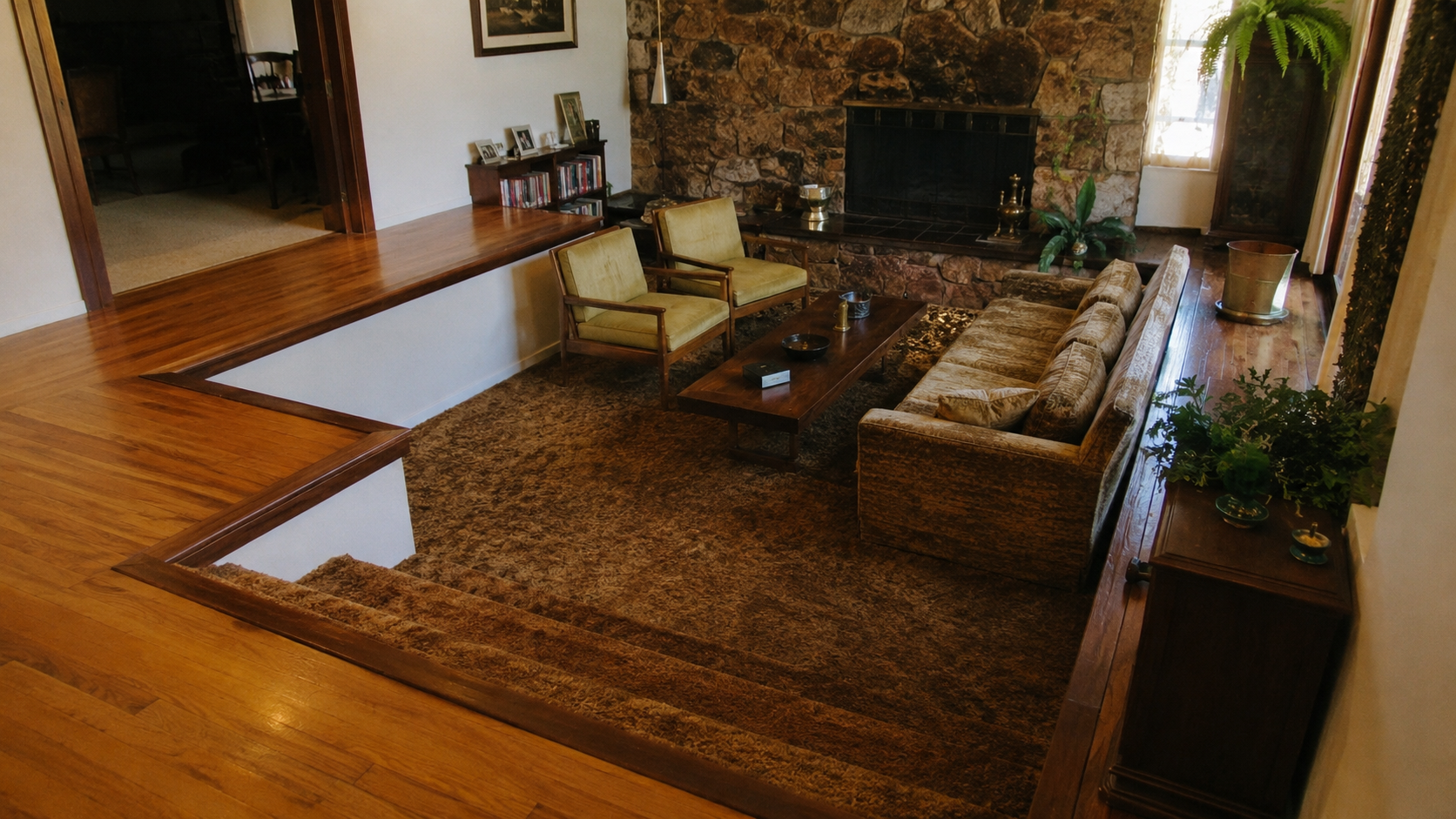
In many 1970s houses, the sunken living room was built one or two steps below the surrounding floor. Some were a modest drop. Others were deeper conversation pits with built-in seating, heavy carpet, low railings, and a fireplace wall at one end.
The trouble starts when the step edge blends into the floor. Dark carpet runs across the upper level and down the steps. The room has one weak ceiling light. The fireplace hearth sticks out into the path. The walkway from the entry or kitchen cuts straight across the drop.
That is not charm. That is a fall waiting to happen.
A good remodel starts by separating the room into three decisions:
- Can the sunken area stay?
- Does the edge need safer steps, lighting, contrast, or a rail?
- Will filling it in disturb flooring, framing, slab work, wiring, HVAC, or old hazardous materials?
Once those questions are answered, the design work gets easier.
What makes a 1970s sunken living room worth keeping
A sunken living room is worth keeping when it gives the house something useful: a clear sitting area, a good fireplace focus, a stronger sense of ceiling height, or a natural separation between rooms without adding walls.
That last part matters in 1970s houses. A lot of them have large living areas that are open but not well organized. The sunken area can give the room a center without closing anything off.
It can also make a normal ceiling feel more generous. Dropping the floor by 6 to 14 inches makes the seating area feel roomier without touching the roof or ceiling framing. In a low-slung ranch or split-level, that is a real advantage.
Keep it when the room has:
- A good fireplace or window wall worth emphasizing.
- Safe circulation around the floor drop.
- Enough space for furniture without blocking the steps.
- A floor structure or slab condition that would make fill-in work expensive.
The room does not need shag carpet and orange upholstery to work. It needs clear edges, better light, and materials that respect the house without freezing it in 1974.
When the pit becomes a safety problem
The warning sign is simple: people miss the step.
If guests pause at the edge, if kids jump across it, if older adults avoid the room, or if the furniture layout forces people to walk diagonally over the drop, the room has a safety problem before it has a style problem.
One or two risers can be more dangerous than a full stair because people do not always read it as a stair. A normal stair announces itself. A sunken living room edge can disappear, especially with low light and same-color flooring on both levels.
Local code decides what is required. The International Residential Code covers stair treads, risers, landings, and handrails, but the final answer depends on your jurisdiction, the number of risers, whether the work is a repair or alteration, and how your inspector treats the floor-level change.
Do not guess here. If the remodel changes the steps, guard, handrail, opening, or walking path, ask the local building department before building around a bad assumption.
Step edges, lighting, and railings come first
The cheapest improvement is usually not the new sofa. It is making the edge readable.
A safer sunken living room needs three things working together:
- Visible step edges.
- Light at the walking path.
- A layout that does not force people to cross the drop blindly.
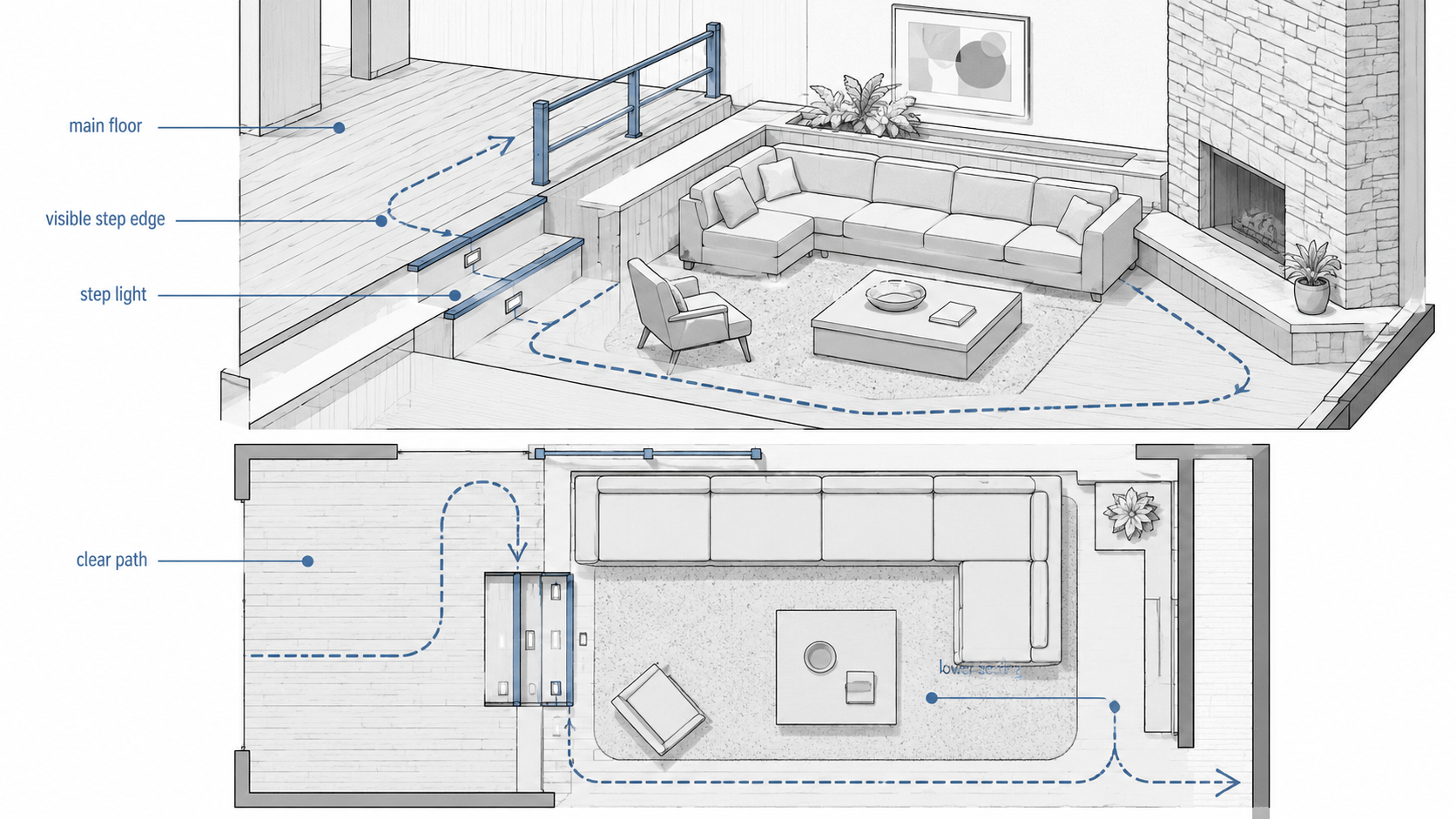
Contrast helps. That can mean a slightly different flooring direction, a nosing detail, a trim line, or a clean transition strip. It should look intentional, not like a warning label stuck to a living room floor.
Lighting matters more than most people expect. A single ceiling fixture rarely solves it. Step lights, wall washers, lamps near the seating edge, or low-glare recessed lighting can make the floor change visible at night without making the room feel like a hotel corridor.
Railings and low guards are conditional. Some rooms need them. Some look worse and function worse with a railing added in the wrong place. The decision depends on drop height, traffic path, local code, children, aging-in-place needs, and how the room connects to the entry, kitchen, or hall.
A good remodel does not hide the level change. It makes the level change clear.
What to check before pulling up carpet or paneling
Old 1970s finishes can hide the expensive part of the job.
Before tearing out carpet, vinyl flooring, paneling, textured ceiling, built-in seating, or fireplace trim, check what might be disturbed. Houses built before 1978 can contain lead-based paint. Some older flooring, mastics, textured coatings, patching compounds, and ceiling materials may contain asbestos. You cannot confirm asbestos by looking at it.
If the material is sound and will not be disturbed, leaving it alone may be safer than tearing into it. If the remodel requires sanding, scraping, demolition, cutting, or floor removal, testing should happen before the work starts.
Pay close attention to:
- Vinyl tile, sheet flooring backing, and black flooring adhesive.
- Textured ceilings and old patching compounds.
- Painted trim, railings, paneling, and fireplace surrounds.
- Old carpet over unknown flooring.
This is the section that changes the budget fast. A weekend carpet removal can turn into containment, abatement, permit delays, and a much larger repair if the wrong material gets disturbed without warning.
How to modernize it without killing the 1970s character
The best update keeps the low lounge feeling and removes the heavy parts.
That means you can keep the floor drop, the fireplace focus, the long seating arrangement, and the warm wood tones without keeping every dark finish. A 1970s room often fails because too many surfaces are heavy at once: dark carpet, dark paneling, bulky drapes, low light, large hearth, oversized furniture. The fix is not replacing all of it with something bright and generic. It is lightening one layer at a time.
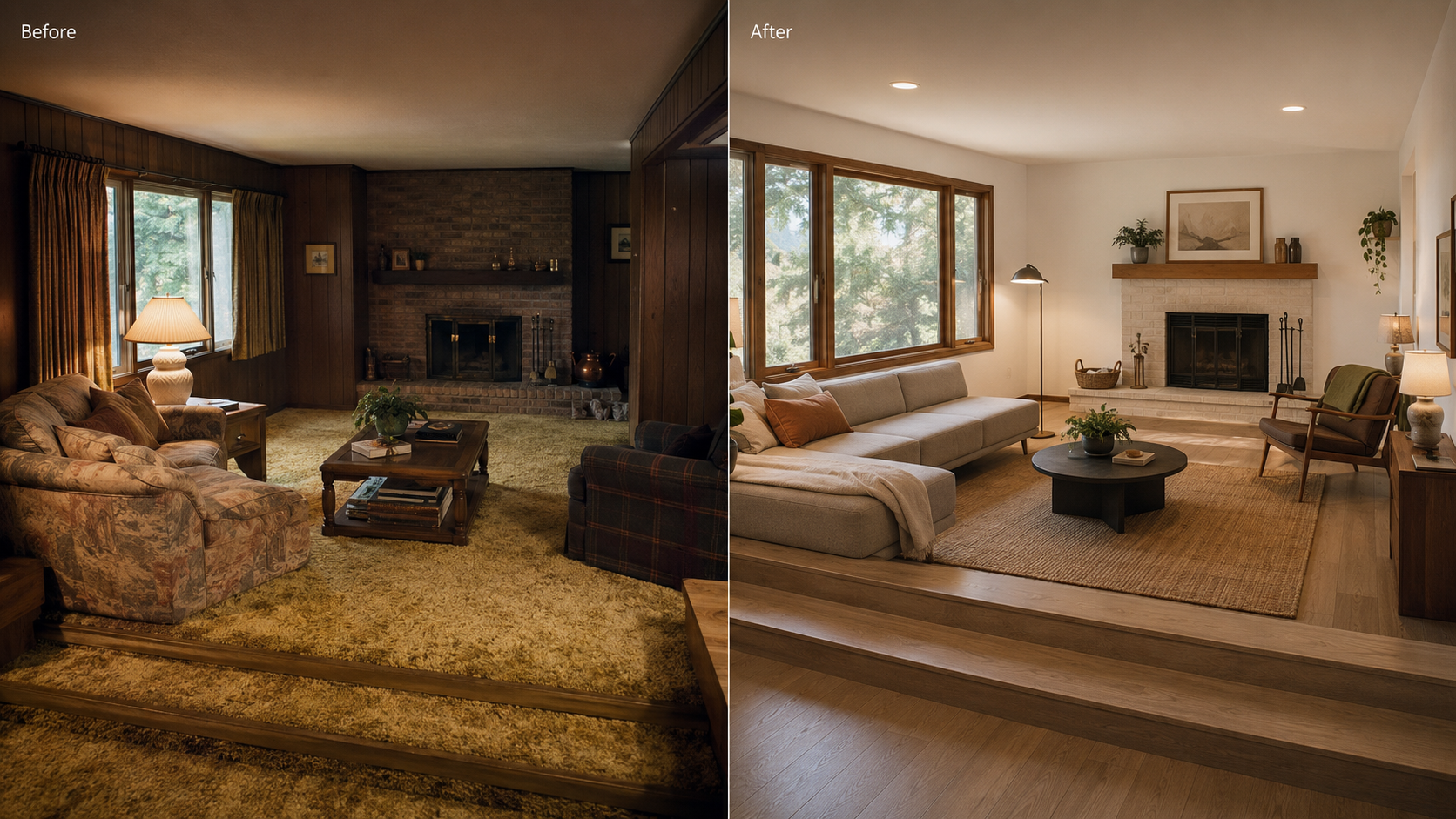
Start with the floor and light. Then handle the fireplace. Then furniture. Paint is not the first fix if the room is still dark and the edge is still invisible at night.
Good updates include:
- Lower-pile carpet, engineered wood, cork, or clean area rugs instead of worn shag.
- Warmer white or soft neutral walls that keep the fireplace from looking too heavy.
- Simple seating that fits the lower level without blocking steps.
- Wall lights, lamps, or step lighting instead of one harsh ceiling fixture.
If there is a good brick, stone, or wood fireplace, do not rush to cover it. Clean it, repair it, simplify the mantel, and improve the lighting around it first. Many 1970s fireplaces look significantly better after those four steps alone, before any paint decision is made.
One note: do not over-theme the room. One or two references to the era are enough. The house already has the decade built into it. Leaning too hard into retro makes the room feel like a set instead of a place to sit.
When filling it in makes more sense
Filling in a sunken living room makes sense when the floor drop creates more trouble than value.
That usually happens when the room is small, the step is in a bad traffic path, the household needs better accessibility, or the sunken area chops up the main floor in a way that cannot be fixed with furniture. A level floor can make daily movement easier, improve safety for aging-in-place, and open up the connection between kitchen, dining, and living spaces.
But filling it in is not always simple.
The work may involve floor framing, slab fill, vapor control, insulation, subfloor height, HVAC registers, electrical outlets, fireplace hearth changes, and finish transitions into nearby rooms. In slab-on-grade houses the work is different from a framed wood floor. In a split-level the sunken room may also be tied into the stair logic of the whole house.
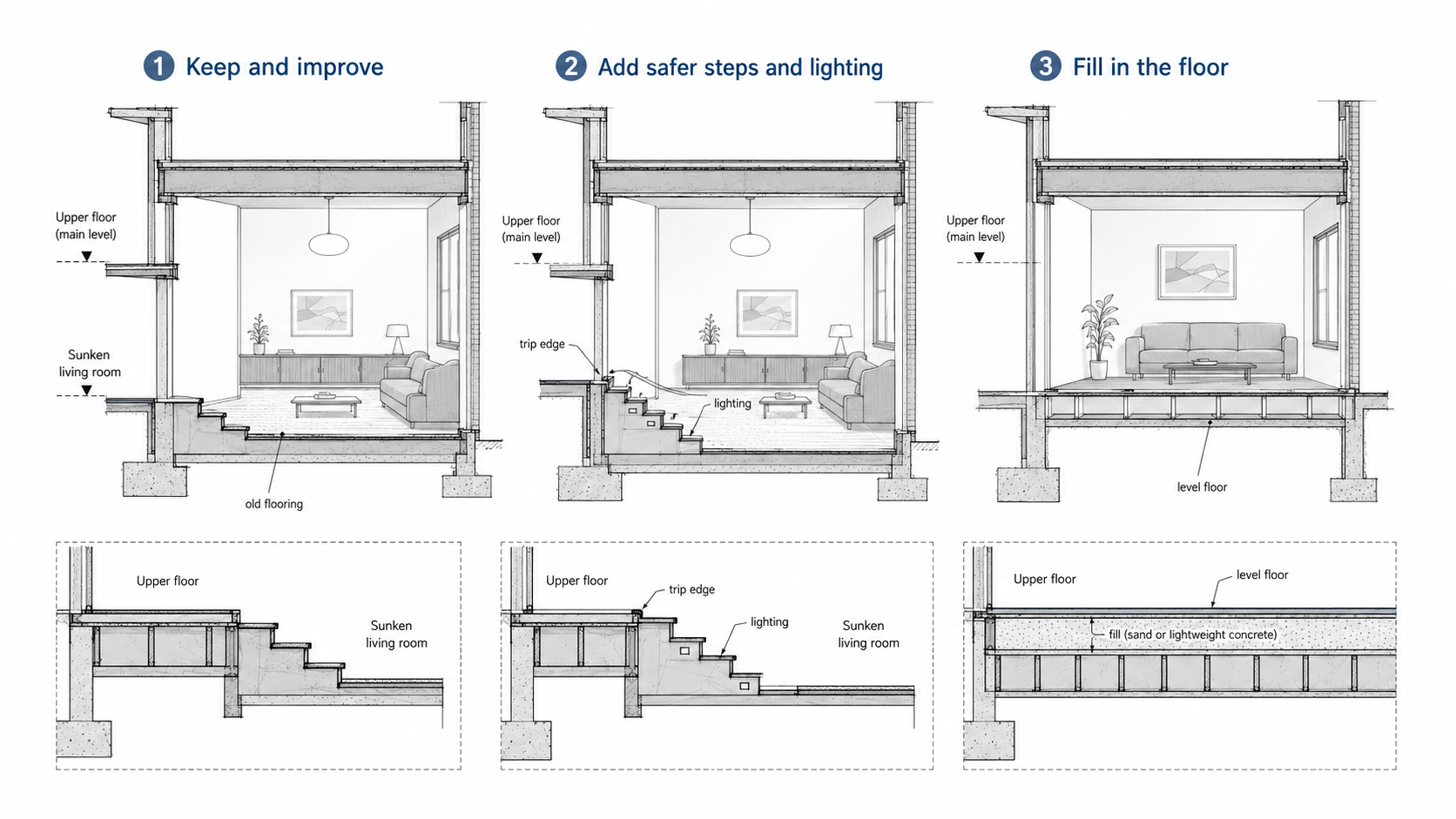
Before filling it, check:
- The depth of the drop from finished floor to finished floor.
- Whether the lower area is slab or framed floor.
- Where vents, outlets, and fireplace details land after the floor rises.
- How the new floor will meet halls, doors, stairs, and adjacent rooms.
If the sunken room is only awkward because of lighting, flooring, or furniture, fix those first. If the floor drop breaks the whole plan regardless, filling it in is the cleaner long-term move.
What the cost depends on
Cost depends less on the decade of the house and more on what you disturb.
A light update can stay mostly cosmetic. A full fill-in can become framing, electrical, flooring, fireplace, and inspection work. Hazardous-material testing or abatement can change the project again before a single finish decision is made.
| Scope | What is usually included | What changes the price |
|---|---|---|
| Light refresh | Paint, carpet or rug, lamps, furniture, simple fireplace cleanup | Room size, floor condition, fireplace condition, whether old materials are disturbed |
| Safety upgrade | Step-edge contrast, better lighting, possible handrail or guard, better circulation | Electrical access, code requirements, number of steps, finish matching |
| Full remodel | Flooring, fireplace update, lighting plan, wall finishes, built-ins, layout changes | Old wiring, asbestos or lead testing, demolition, custom work |
| Fill-in | Raise lower floor, new subfloor or slab work, matching finish floor, adjust vents and outlets | Drop depth, slab vs framed floor, moisture control, fireplace and stair transitions |
Do not price this room from photos alone. A 10-inch floor drop with clean framing is a different job from a deep pit with old vinyl, a masonry hearth, no lighting, and vents in the lower floor.
What to leave alone
Not every old feature needs to be corrected.
A good sunken room can keep its level change, its fireplace, some wood, and the sense that the seating area is separate from the rest of the house. Those things are not problems. They are what makes the room worth having.
What usually needs to go are the parts that make the room dark, unsafe, or hard to furnish: worn carpet, hidden step edges, poor lighting, oversized built-ins, weak circulation, and finishes that trap the room in one heavy color from floor to ceiling.
There is a difference between dated and useful. A sunken living room can be both old and worth keeping. The goal is not to erase the era. It is to make the room work better inside it.
Where it fits in a 1970s house renovation
The sunken living room should not be remodeled in isolation if the kitchen, entry, stairs, or exterior are also being changed.
In many 1970s houses, the living room connects directly to the entry or sits beside a kitchen that also needs work. If the kitchen wall opens, the furniture layout changes. If the entry gets new flooring, the step edge needs a different transition. If the fireplace is updated, the lighting plan should change with it.
This room belongs in the larger renovation sequence:
- Check safety, code, and hazardous-material risk.
- Decide whether to keep the floor drop or fill it in.
- Plan lighting and circulation before finishes.
- Update flooring, fireplace, walls, and furniture after the hard decisions are settled.
That order prevents wasted money and keeps the room from becoming a pretty finish over a bad floor problem.
FAQ
Is a sunken living room dangerous?
It can be. The risk is highest when the step edge is hard to see, the lighting is weak, or the walking path cuts across the drop. One or two risers can be easy to miss because they do not read like a normal stair — and that is what makes them more dangerous than a full staircase.
Should I fill in my sunken living room?
Fill it in if the level change creates a daily safety problem, blocks a better layout, or hurts accessibility. Keep it if the room works and only needs safer edges, better lighting, and updated finishes.
Can I remodel a 1970s sunken living room myself?
Cosmetic work may be manageable, but demolition is where the risk starts. Test suspect materials before disturbing old flooring, textured ceilings, adhesives, or painted surfaces. Electrical work, railings, guards, and fill-in work may require permits.
What flooring works best in a sunken living room?
Use flooring that makes the step edges readable and holds up to foot traffic. Lower-pile carpet, engineered wood, cork, or a hard-surface floor with area rugs can work. Avoid thick flooring changes that create awkward height transitions at the steps.
Can I keep the original fireplace?
Yes, if it is sound. Many 1970s fireplaces look significantly better after cleaning, better lighting, mantel simplification, and updated surrounding finishes — before any paint decision is made. Check cracked masonry, hearth projection, clearance, and any insert or venting work first.
Read This Next
Start with 1970s house style if the sunken room is part of a broader 1970s house update.
Use 1970s front door styles if the room connects directly to a dated entry.
Read how to brighten a dark ranch house without opening every wall before cutting into walls for more light.
References
Sources used for this article
- U.S. Environmental Protection Agency: Lead Renovation, Repair and Painting Program
- U.S. Environmental Protection Agency: Lead-Safe Renovations for DIYers
- U.S. Environmental Protection Agency: Protect Your Family from Exposures to Asbestos
- International Code Council: 2021 International Residential Code, Building Planning