

The 1970s House: What to Keep and What to Change
1970s houses can go bad fast in renovation.
Some have awkward layouts, heavy finishes, dark interiors, and details that date the house immediately. Some also have strong forms, good glass, and useful planning under all that mess. The job is knowing what to keep, what to remove, and how to update the house without flattening all of its character.
This is where 1970s houses still matter. Under the shag carpet, dark paneling, and old fixtures, many of them have solid layout decisions: open living space, bigger windows, attached garages, split-level zoning, and a more relaxed way of living than a lot of earlier suburban houses.
What defines a 1970s house
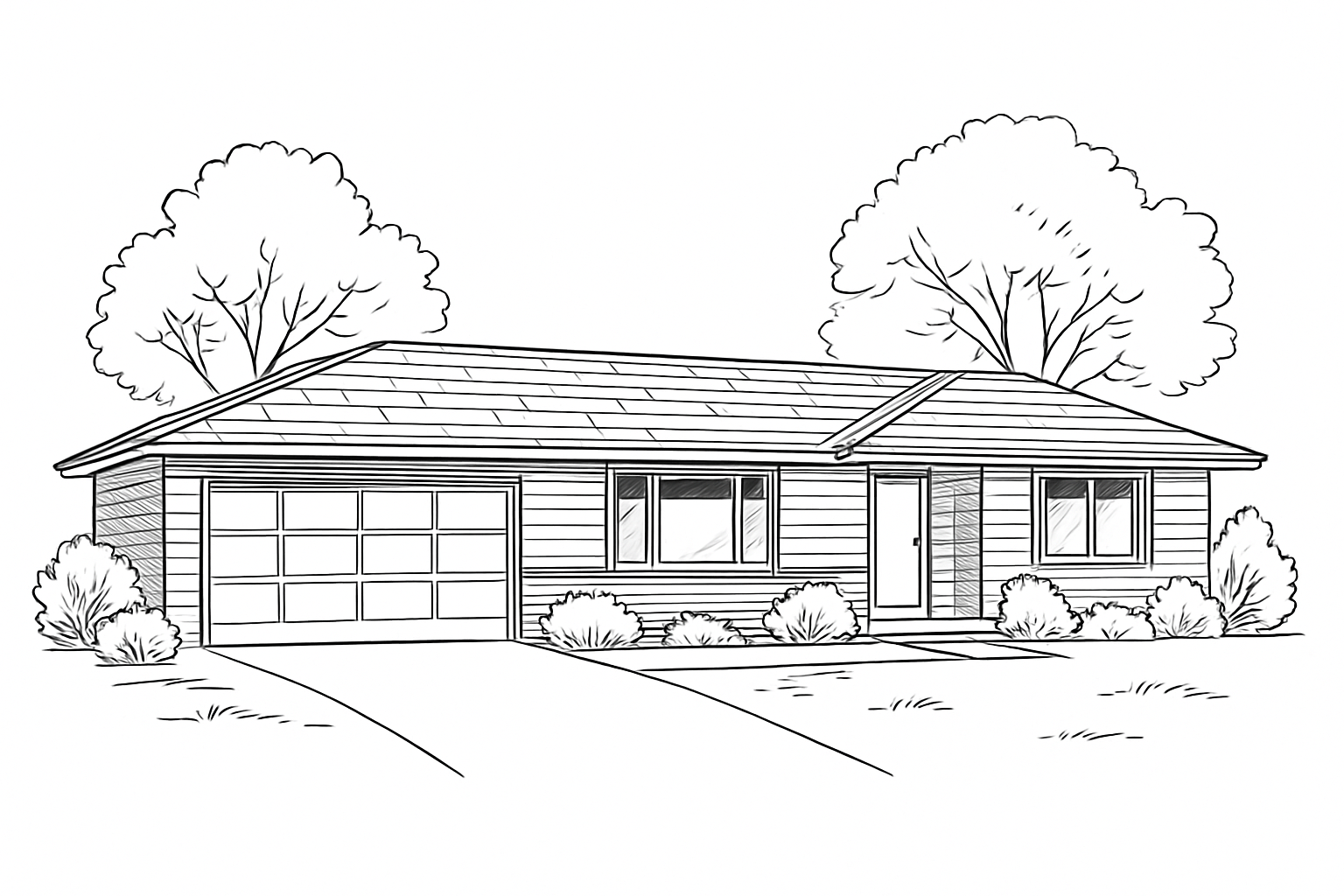
Not every 1970s house looks the same, but the decade leans in a few clear directions.
- Low rooflines: flatter profiles, wider eaves, less formal street presence.
- Natural materials: brick, cedar, stone, rough wood, textured finishes.
- Bigger glass: larger windows, sliders, and more contact with the yard.
- Looser planning: fewer rigid room boxes, more family space, more casual circulation.
- Split-level and ranch logic: practical layouts built for suburban daily life.
- Heavier interiors: paneling, darker cabinets, shag, tile, laminate, bold color.
| Common 1970s Type | What It Looks Like | What Is Worth Keeping | What Dates It Fast |
|---|---|---|---|
| Ranch | Long, low, one-story, attached garage, big rear glass | Horizontal line, yard connection, simple plan | Overbuilt additions, fake trim, tiny replacement windows |
| Split-level | Short level changes, stair core, separated zones | Useful family zoning, generous landings, strong flow | Dark stair halls, heavy rails, blocked light |
| Cedar-and-brick suburban house | Mixed cladding, low roof, broad front, deep overhangs | Material texture, solid massing, strong roof silhouette | Painted-over brick, weak siding swaps, random façade edits |
| Late-1970s playful modern | Bolder shapes, bigger glass, stronger geometry | Clean form, unusual volume, statement windows | Trying to make it look “traditional” afterward |
How the decade changed the house
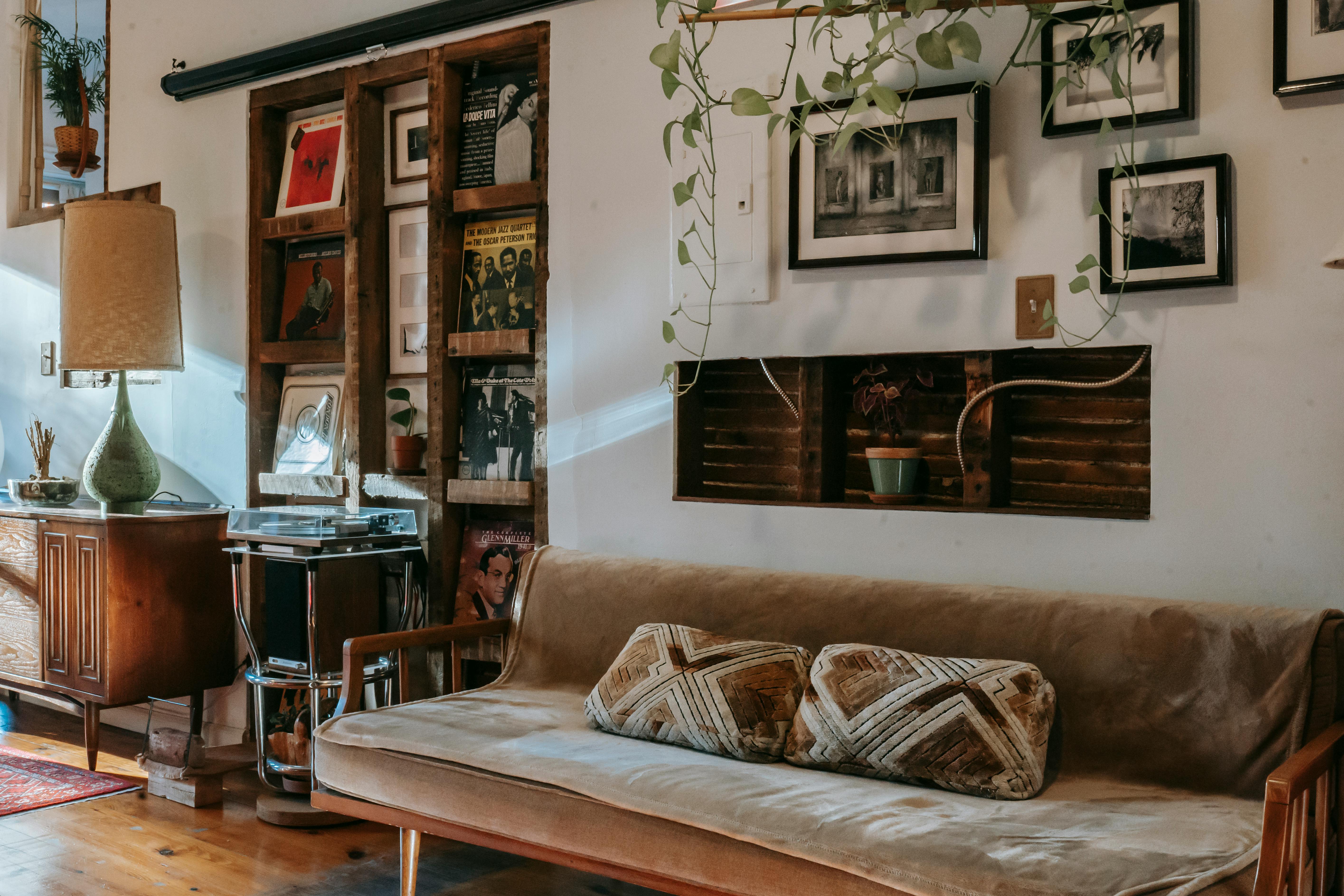
The 1970s did not invent open living, big glass, or suburban ranches. But it pushed those ideas into a more relaxed, more lived-in kind of house.
The 1960s still carried more mid-century discipline. Cleaner lines. Lighter interiors. More restraint. By the 1970s, the house got earthier, heavier, and more informal. Materials got rougher. Color got louder. Plans got more casual.
That is part of why these houses split opinion now. Some feel warm and easy. Some feel dark and tired. Both reactions make sense.
Before You Move On: the decade before this one is covered in 1960s House Style, and the shift after it continues in 1980s House Style.
Why some 1970s houses still work so well
The good ones are easy to live in.
That sounds simple, but it matters. Many 1970s houses have better family flow than older houses with more formal rooms and more dead circulation. Living rooms open up. Kitchens connect better. Sliders lead to patios and yards. Split-levels separate noise from quiet without turning the house into a maze.
The structure is often straightforward too. Brick, wood framing, broad roofs, simple spans. Not precious. Not overworked. That makes these houses easier to understand when you start renovating them.
FIELD PICK: Atomic Ranch: Midcentury Interiors
Still useful for 1970s houses because it shows how to clean things up without draining all the warmth out of them.
What to keep and what to change
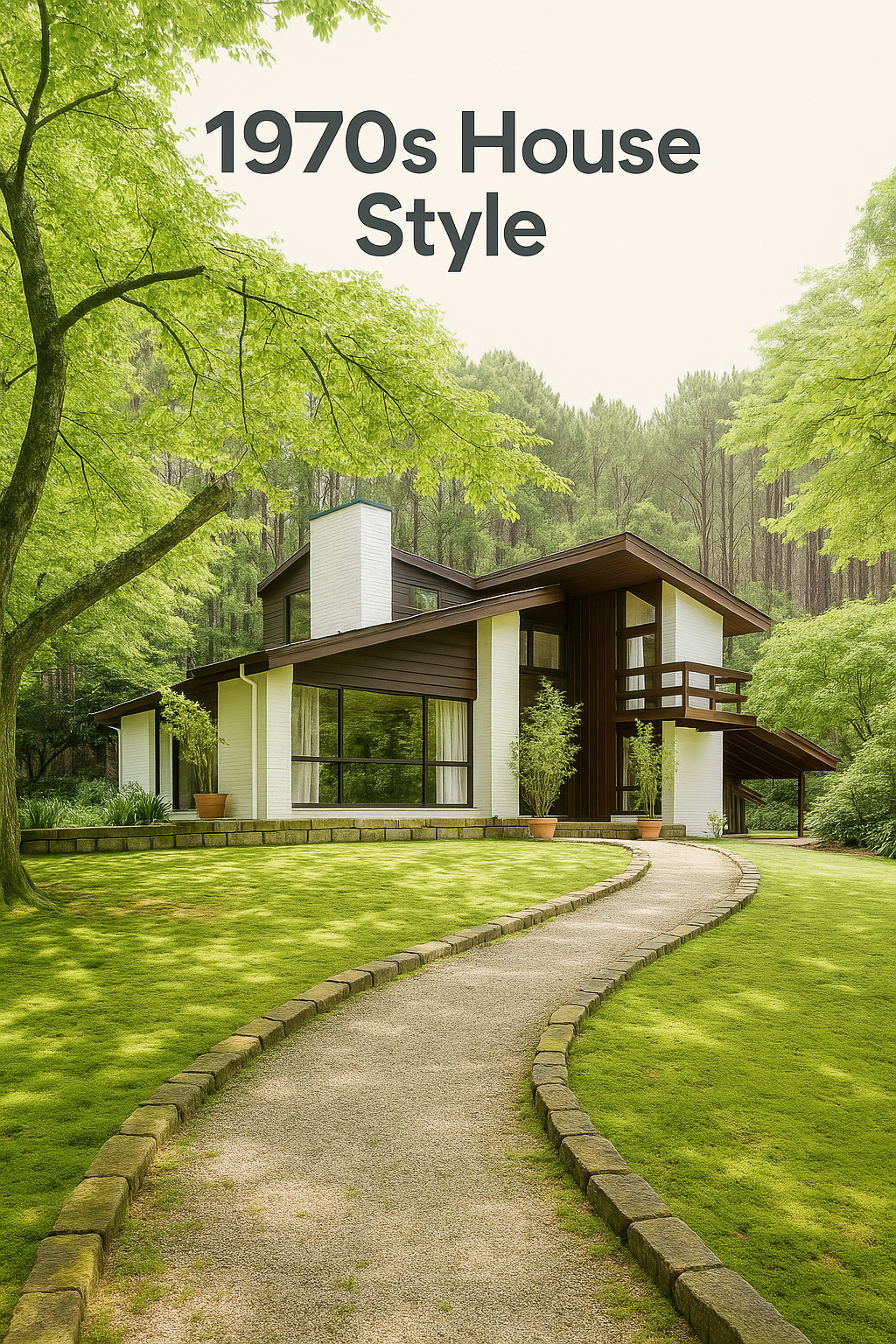
| Keep | Change | Avoid |
|---|---|---|
| Strong roofline and low horizontal massing | Old insulation, bad windows, tired HVAC, outdated wiring | Top-heavy additions that wreck the original profile |
| Brick, cedar, stone, exposed beams, solid fireplaces | Dark stain, failing finishes, weak lighting | Painting or cladding over every textured material at once |
| Split-level zoning and good sightlines | Closed kitchens, awkward railings, dead stair landings | Flattening the whole layout just because it feels dated |
| Large rear glass and yard connection | Drafty sliders and bad seals | Shrinking openings and making the house darker |
| One or two strong era details | Fixtures, flooring, wall finishes, tired hardware | Erasing every trace of the decade and ending up generic |
That is the order too. Fix performance first. Then fix the surfaces. Too many 1970s renovations do the opposite.
Where renovations start going wrong
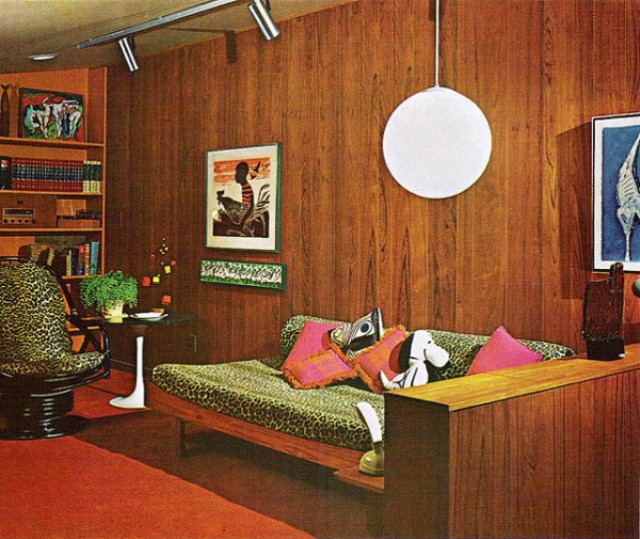
- They strip out all the texture. Brick gets painted. Cedar disappears. Beams get boxed in. The house loses depth fast.
- They over-brighten everything. Some 1970s houses need more light. They do not need to be bleached flat.
- They force farmhouse or fake Craftsman details onto the exterior. Most of these houses do not want that language.
- They open every wall without reading the plan. Some layouts improve with one bigger opening, not a full gut.
- They treat every dated feature as a problem. A good fireplace wall, a strong level change, or even a sunken living room can still work when the rest of the room is handled properly.
Inside the house: what still helps, what drags it down
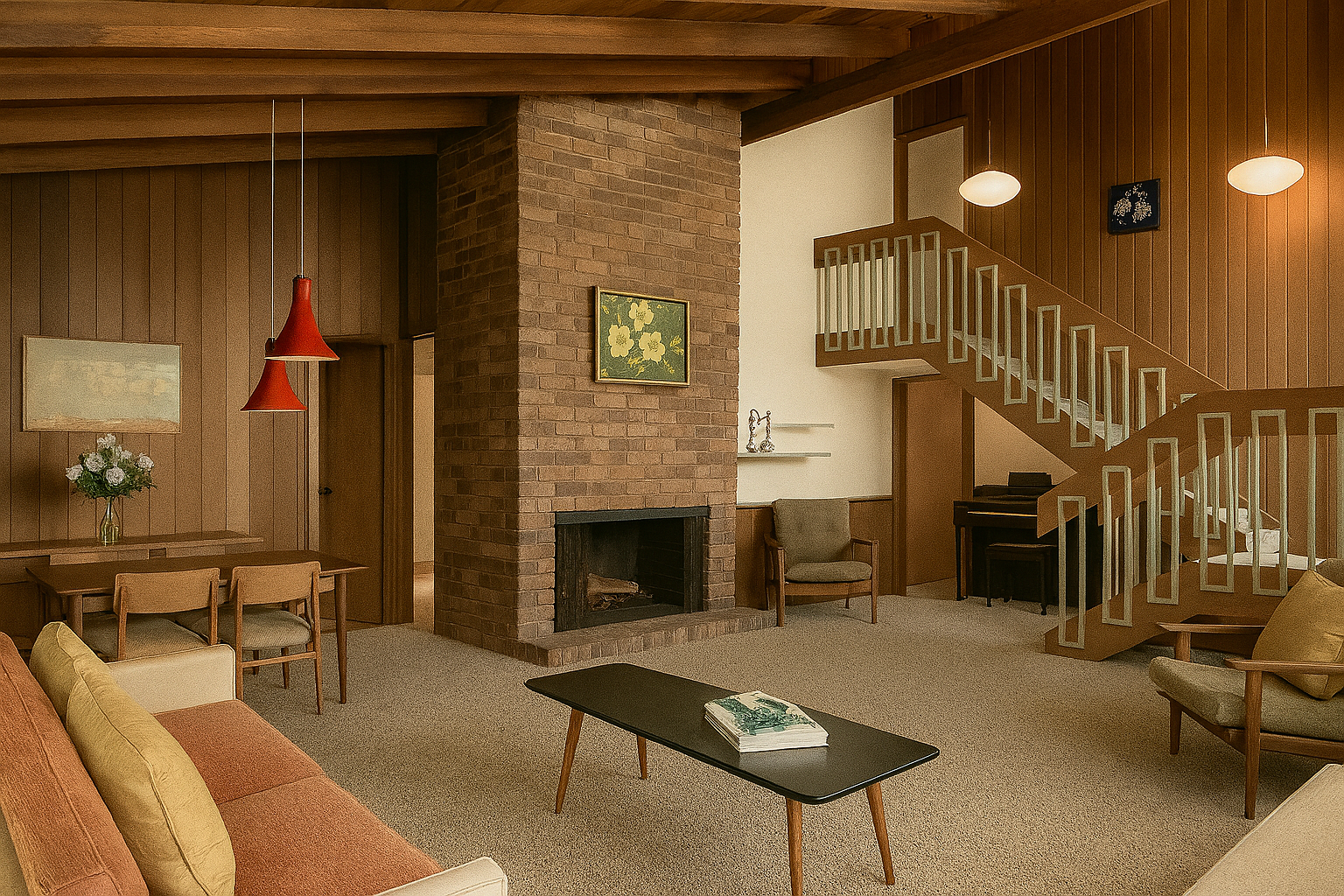
The best interiors from this decade still feel relaxed. Lower seating. Better connection between rooms. More texture. More willingness to be casual.
The problem is not the whole decade. The problem is the pile-up of dark finishes, low light, and tired materials.
- Living rooms: conversation pits and lowered seating zones can still work. The issue is poor lighting, worn carpet, and too much visual weight, not the idea itself.
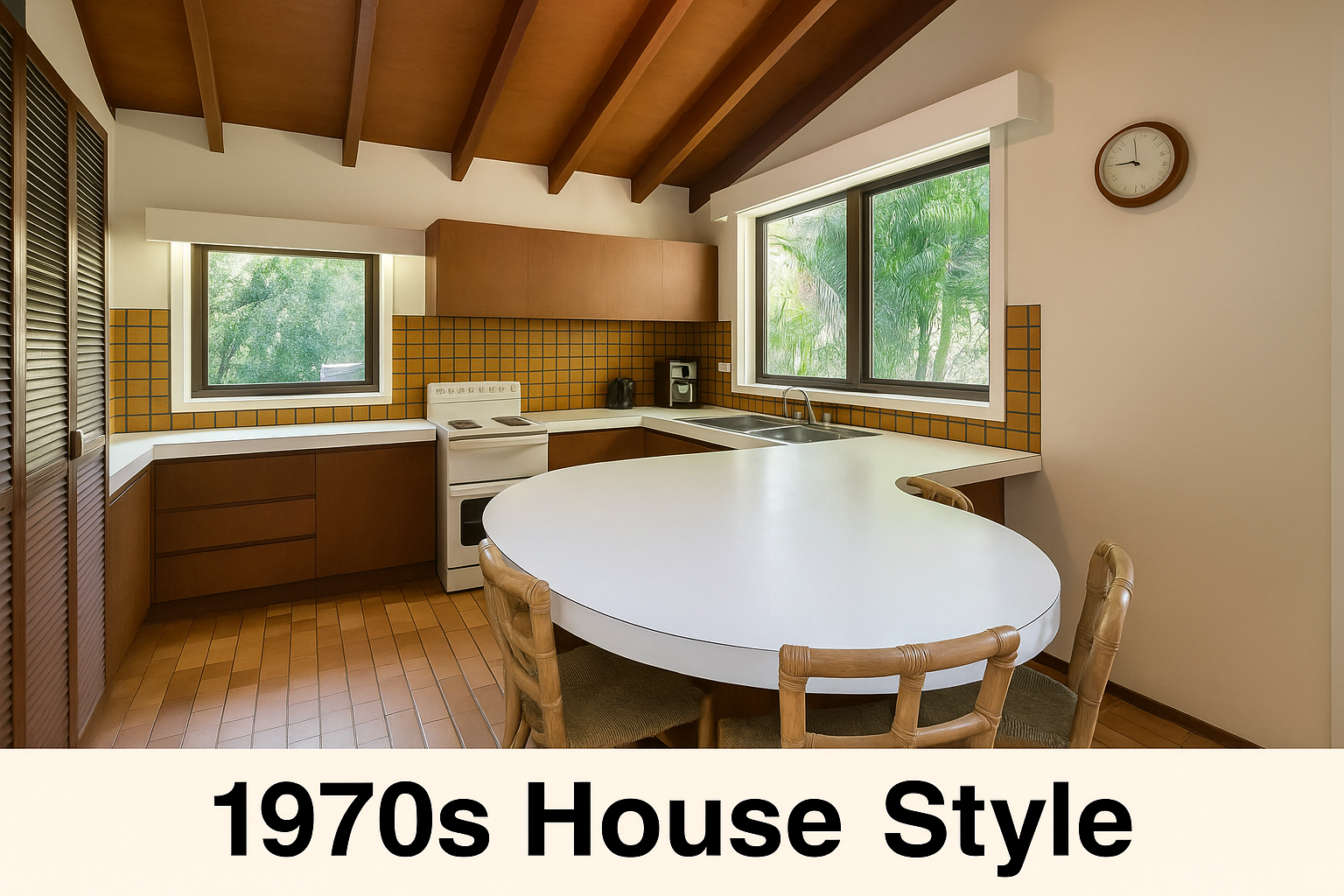
- Kitchens: the layout is often more useful than the finishes. Cabinets, laminate, and appliances may need to go. The room logic may not.
- Bathrooms: bold tile and odd fixtures date the room fast, but the basic footprint is often serviceable.
- Entries: many 1970s houses need a clearer arrival sequence, stronger lighting, and better floor materials right at the door.
Also Useful: if your question is more about the décor than the house itself, go to 1960s Decorating Style: Colors, Furniture, and Materials. It is the closest live interiors sibling in the decade chain right now and still helps explain where some of the 1970s carryover came from.
Exterior changes that help instead of hurt
The outside of a 1970s house improves when you work with the massing instead of trying to disguise it.
- keep the roofline calm
- preserve brick and good wood where they still have life
- upgrade windows without changing the opening proportions
- simplify trim instead of adding more of it
- treat the front door as one strong move, not a style pile-up
If the entry is the weak spot, go next to 1970s Front Door Styles. That is a tighter page for handling the front door without overworking the rest of the façade.
Who these houses fit best now
1970s houses are still a strong fit for buyers who want space, light, and a house that does not feel over-formal.
They also work well for owners who can tell the difference between a bad finish and a bad house. That matters. Plenty of 1970s homes look tired on the surface but improve a lot once the lighting, flooring, insulation, and key openings are handled properly.
The weaker fit is for anyone trying to force the house into another decade entirely. That is where the money disappears and the house stops making sense.
FAQ
Are 1970s houses worth buying?
Yes, when the structure is sound and the layout still works. Many need updates, but a lot of them have strong bones and better flow than buyers expect.
What is the biggest problem in a 1970s remodel?
Trying to erase the decade instead of editing it. That is how houses lose their best features and still end up looking awkward.
Are 1970s houses energy efficient?
Not by current standards. Insulation, glazing, air sealing, and electrical upgrades are common needs.
Should you keep 1970s features like sunken living rooms?
Sometimes, yes. Keep them when they still help the room and can be updated safely. Remove them only when they make the plan harder to use.
What exterior change gives the best return?
Window upgrades, entry cleanup, better lighting, and restrained material repair tend to help more than big cosmetic style swaps.
What to read next
- 1960s House Style to see what the decade before this one was still carrying forward.
- 1970s Sunken Living Room if that one feature is driving the whole remodel decision.
- 1970s Front Door Styles if the façade needs one cleaner move at the entry.
- 1980s House Style to follow the shift into the next decade.
- How to Update an 1980s House Exterior if you are comparing decade-specific exterior fixes.