
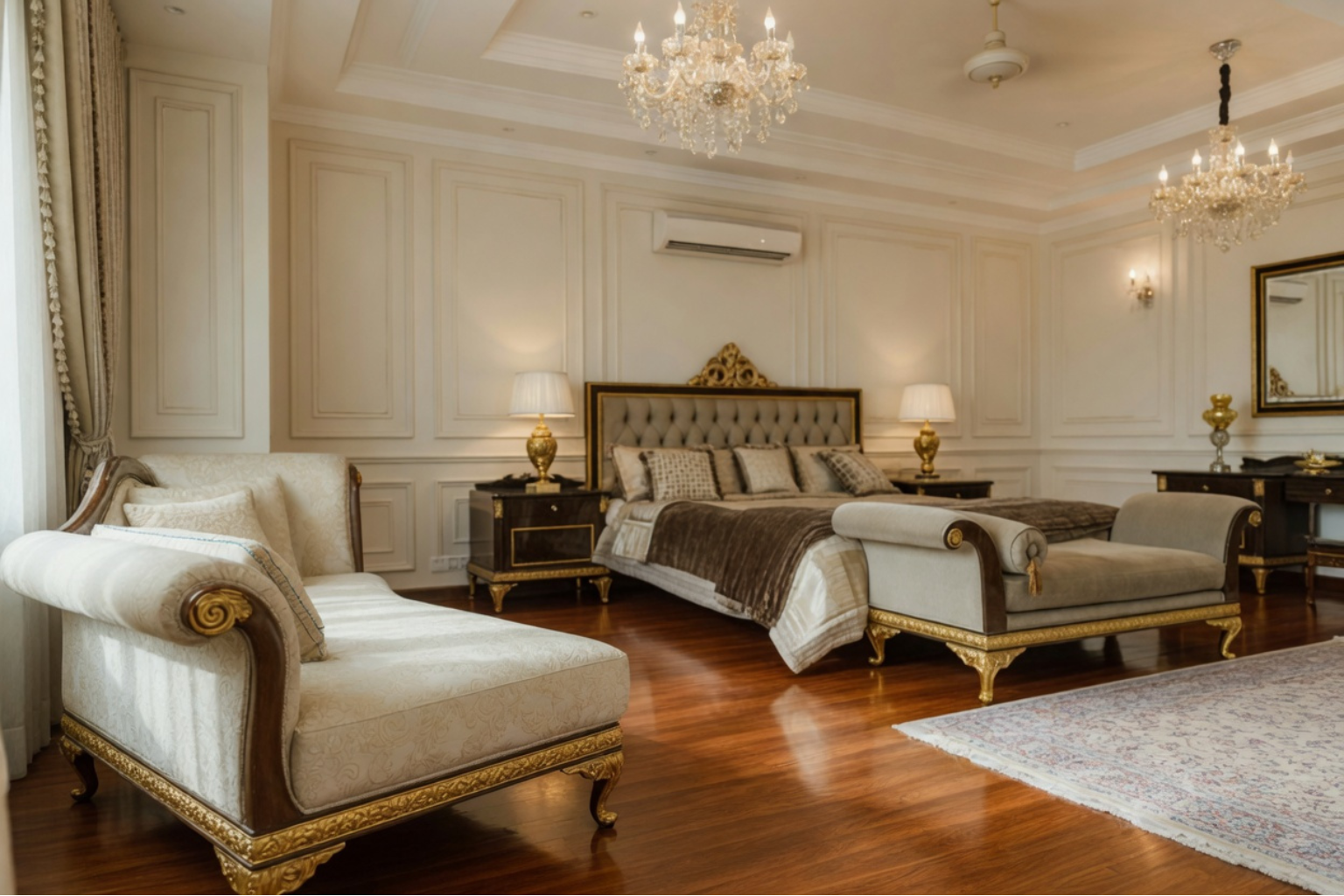
A balanced traditional room does not need much drama. Good scale, steady materials, and a clear center do most of the work.
Traditional American: Why Some Rooms Feel Settled and Others Never Do
A traditional room works when the layout is under control.
The seating has a clear place. The main wall is not fighting the fireplace, window, or doorway. The room has enough furniture to feel used, but not so much that every corner is full.
Traditional American interiors work best when order comes first and decoration comes second.
If you are trying to blend this look with a cleaner present-day layout, start with Modern Traditional Living Room. If your house already leans Southern in its bones, Traditional Southern Interior Design is the better companion page.
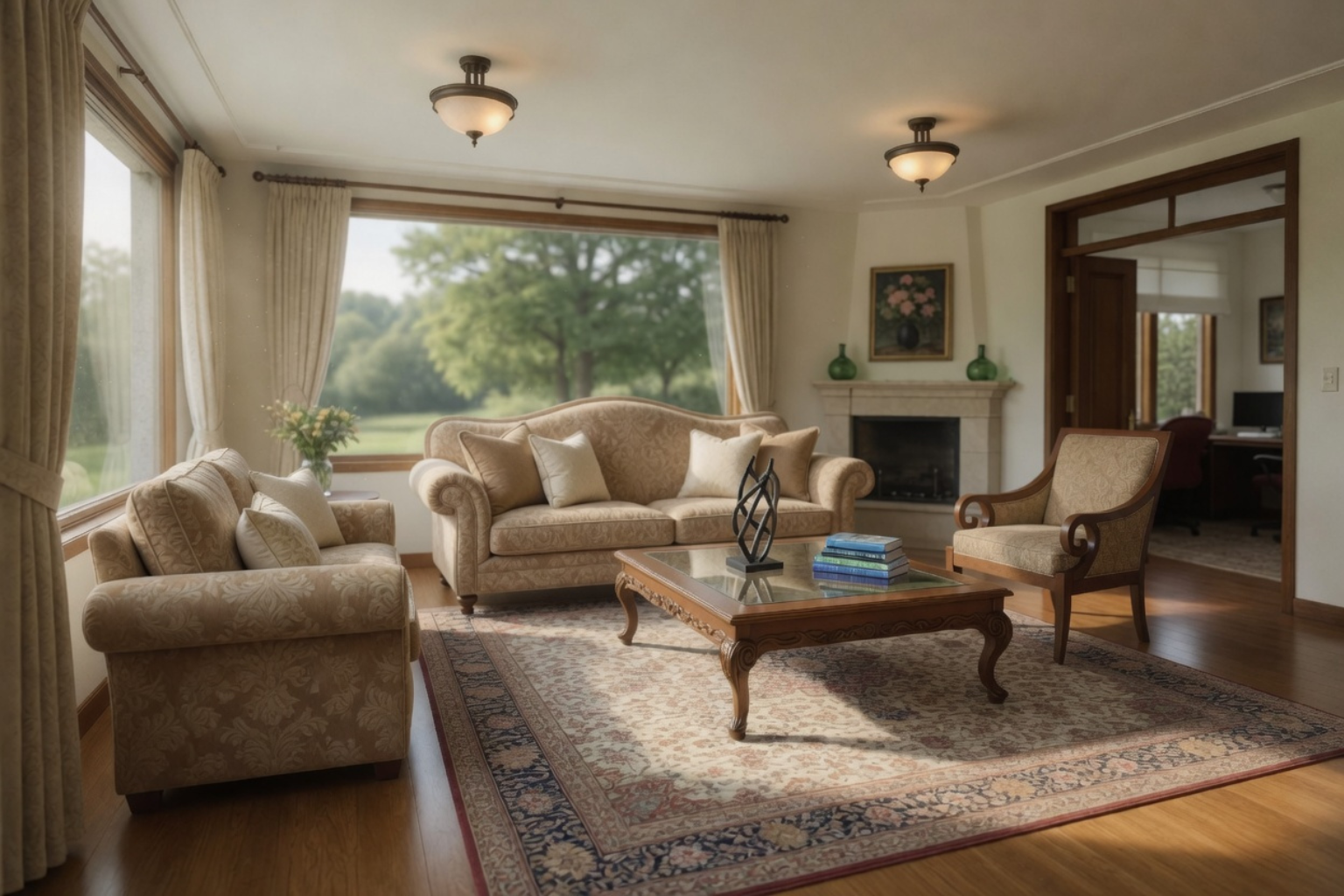
Traditional American interiors feel strongest when they support ordinary life well, not just special occasions.
Why some rooms settle and some never do
A settled room usually gets four things right.
First, it has a center. A fireplace. A bed wall. A dining table. A window wall that deserves the room’s attention. Something the space is clearly organized around.
Second, the scale agrees. A delicate chair beside an oversized deep sofa almost always looks accidental. So does a tiny rug under a large seating group. Pieces do not need to match, but they need to speak the same size language.
Third, the materials have some truth in them. Real wood. Painted millwork. Linen. Wool. Leather. Maybe stone if the house can carry it. Traditional rooms get thin fast when every surface is pretending to be something heavier than it is.
Fourth, the eye gets somewhere to rest.
That usually means quieter walls, steadier upholstery, and fewer loud moves stacked on top of each other. It sounds obvious. It is. But it is also where a lot of rooms fall apart.
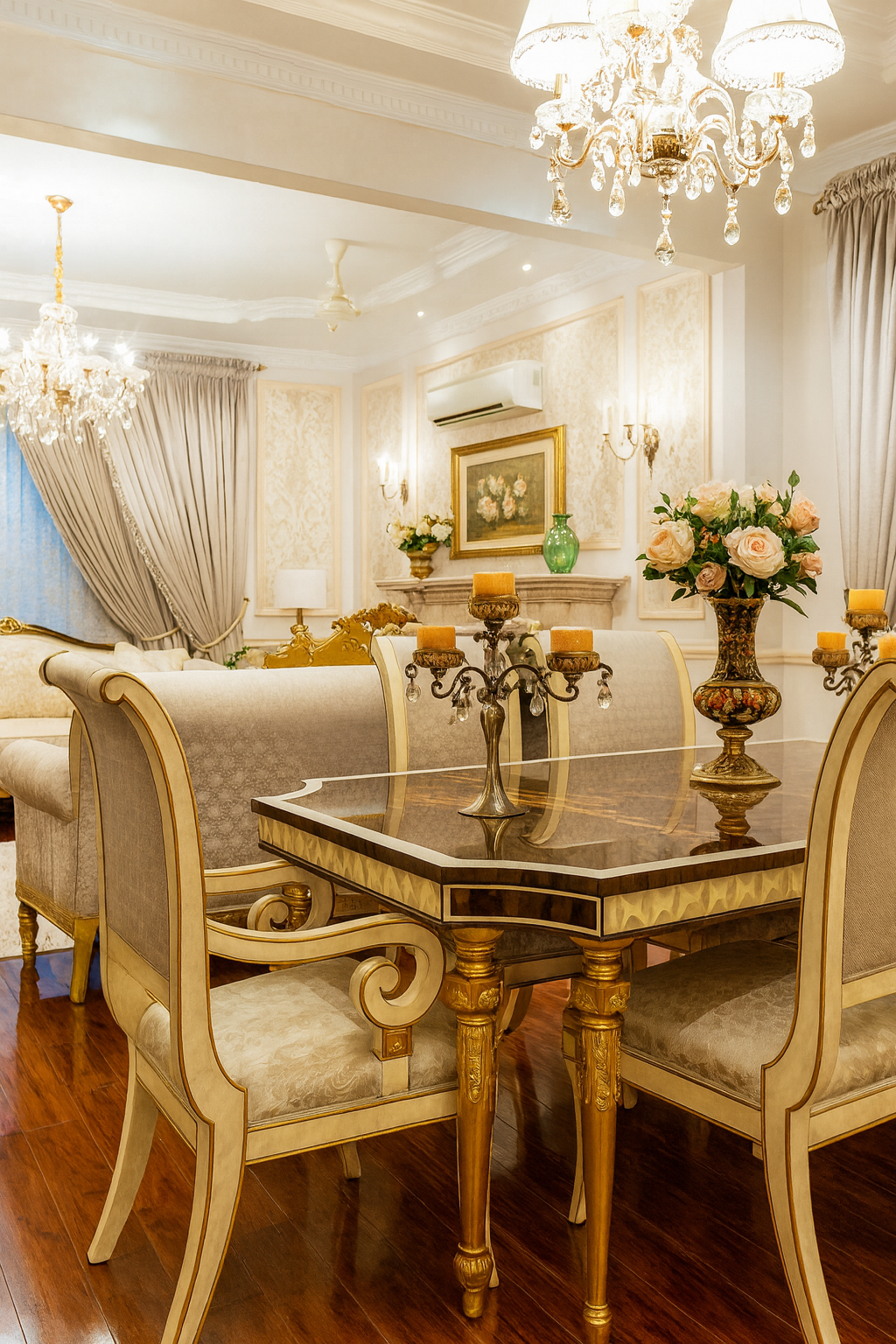
Older American rooms often feel composed because the trim, windows, and basic proportions are already doing part of the design work.
The real problem is visual noise
A lot of people think traditional rooms go wrong because they feel old. Usually they go wrong because they are too busy.
Heavy drapery. Ornate lamps. Dark furniture. Patterned rug. Gallery wall. Bold wallpaper. Carved mirror. Decorative objects on every flat surface. Each piece may be fine by itself. Put them together and the room starts working too hard.
Traditional American interiors need restraint more than they need decoration.
That is one reason old houses can teach this style better than design feeds do. The bones are already doing some of the work. Trim gives rhythm. Windows create order. Floorboards bring texture before you have bought a single throw pillow. The room is halfway there.
Newer houses usually make you create that order yourself. That is harder, and it is why so many “traditional” rooms in newer builds end up looking like styled furniture displays instead of rooms people actually live in.
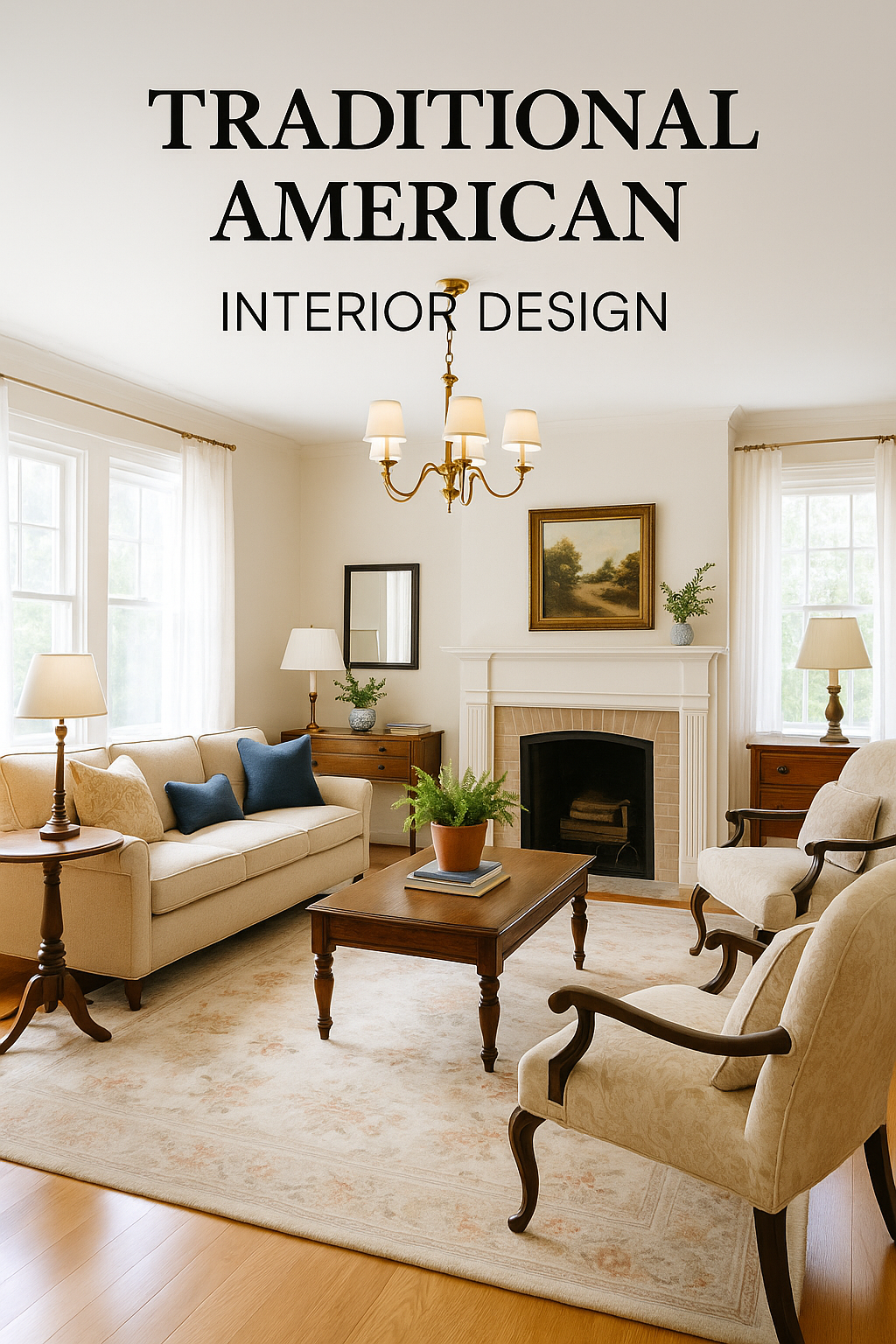
When the architecture is plainer, the room needs stronger discipline in layout, color, and furniture placement to feel settled.
Start with the room center
Before paint. Before pillows. Before the little decorative purchases that always show up too early.
Decide what the room is built around.
In a living room, it is often the fireplace. If there is no fireplace, it may be the best window wall or the rug zone. In a bedroom, it is almost always the bed wall. In a dining room, it is the table. In an entry, it is the place where you arrive and stop.
Once the center is clear, more decisions get easier. The rug centers on it. The main light relates to it. Seating faces it or balances around it. Art supports it instead of competing with it.
I have seen this go wrong in expensive rooms. A good sofa aimed one way, a rug laid on a different line, a chandelier centered to the ceiling box instead of the table, and a pair of chairs floating for no clear reason. Nothing in the room was ugly. The room still felt off because it never agreed about what mattered most.
A room without a center usually feels restless even when the furniture is good.
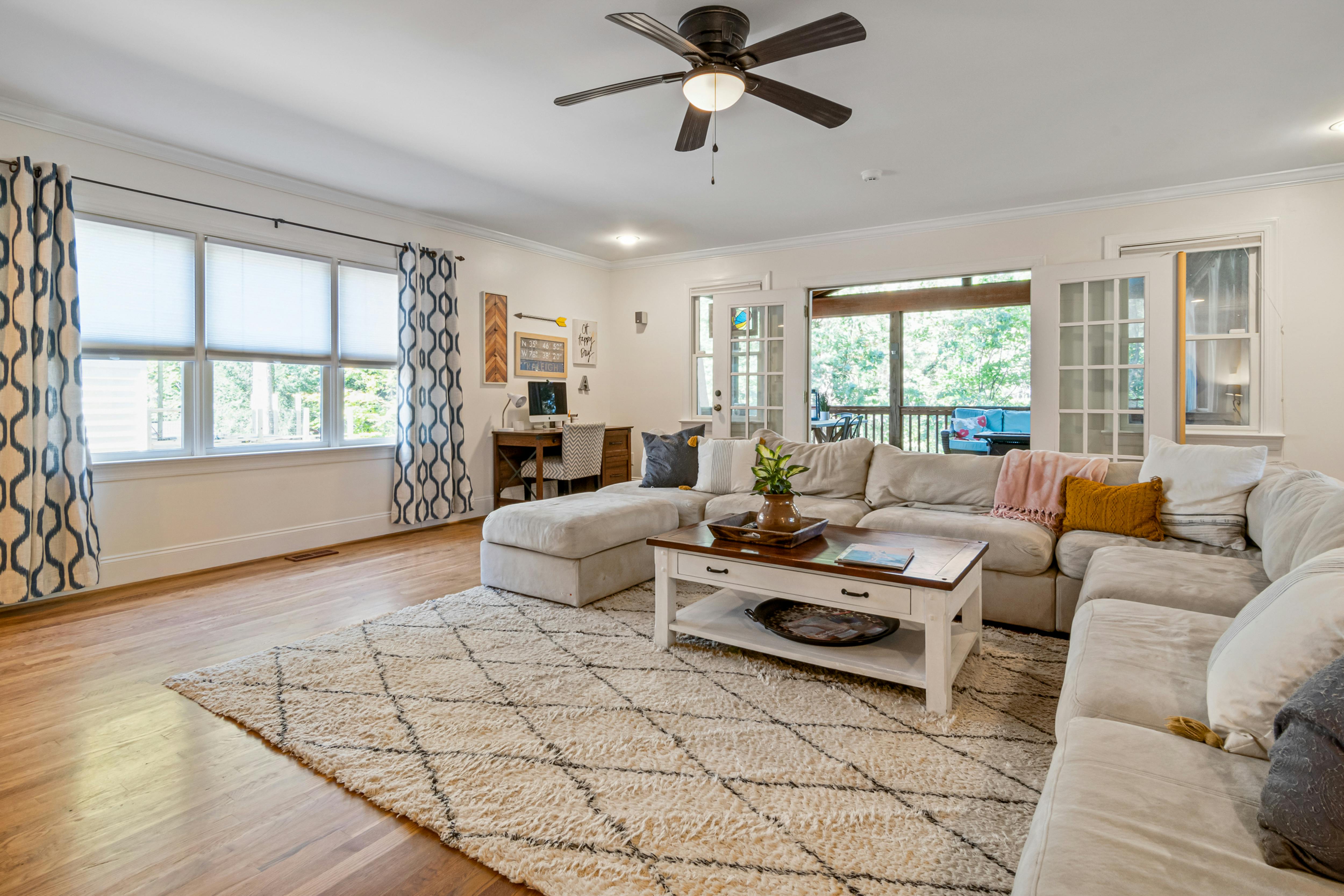
A traditional room gets calmer fast when the rug, seating, lighting, and main view all agree about the center.
Pairs help, but perfect symmetry can get stiff
Traditional rooms like pairs.
Two lamps. Two chairs. Two framed pieces. Shelves flanking a fireplace. A pair of nightstands. That pairing gives the eye rhythm and quiet.
But the room does not need to become a mirror trick.
That is where people start making the style feel stiff, almost theatrical. Good symmetry gives calm. Too much perfect symmetry gives showroom energy.
A better rule is this: use pairs to create order, then break the room slightly with one stronger single piece. A darker table. A vintage chest. A landscape painting. One chair with a little more age to it than the rest. That small break is often what keeps a traditional room from feeling over-composed.
Wood tone matters more than people think
Traditional American rooms usually carry some wood. Floors, tables, chairs, trim, beams, doors, case goods.
The mistake is treating every wood tone as compatible.
They are not.
You do not need everything to match, but the woods should feel like they belong to the same house. A warm walnut table, a slightly red oak floor, and a painted cream cabinet can work together. A yellow-orange floor, gray-brown coffee table, espresso media unit, and bright cherry dining set usually look like four separate projects that met by accident.
One easy cleanup move is to choose the lead wood tone first. Let the floor lead if the floor is staying. Let the dining table lead if that room matters most. Then keep the other woods close enough in warmth and depth that they support rather than fight.
If you want a broader background on order and proportion, Classical Architecture still helps. The room does not need to be formally classical for those ideas to matter.
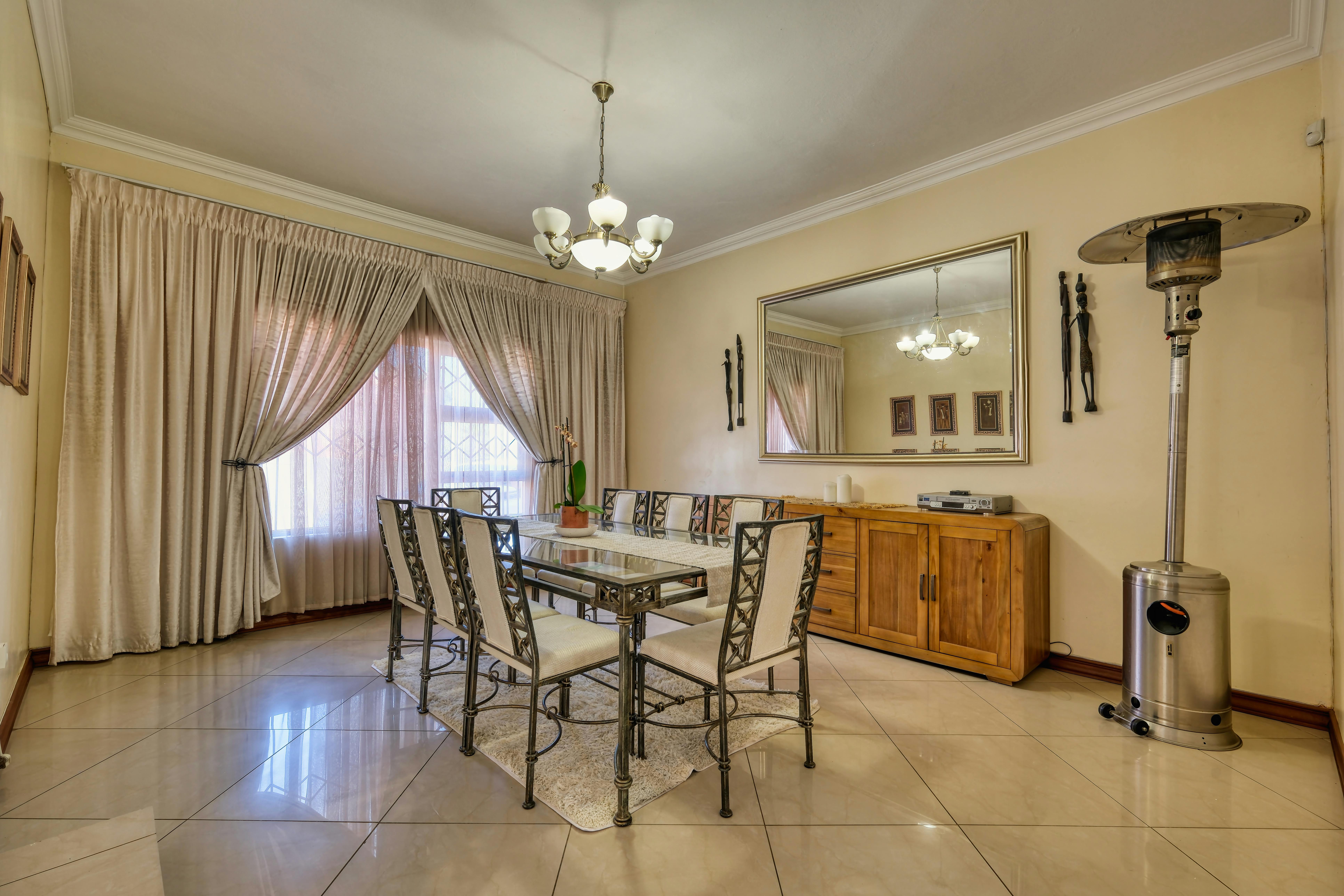
Traditional rooms hold together better when the wood, stone, metal, and paint feel related instead of competing.
The wall color should calm the trim, not fight it
One of the fastest ways to ruin a traditional room is picking a wall color that makes the trim look wrong.
Bright white can work in some houses. It often makes old floors look too yellow and older moldings look harsher than they should. Deep cold gray can flatten warm woods. Harsh beige can make a room feel stale almost immediately.
Traditional rooms usually do better with warmer neutrals that let the trim and wood breathe. Cream. Bone. Oatmeal. Putty. Soft taupe. Some quiet greens. Sometimes a muted blue-gray if the house has enough light and the floor can support it.
The goal is not “historic color” for its own sake. The goal is keeping the room from turning jumpy.
This matters more in halls and entries than people expect. A too-bright wall color in a narrow hall makes every casing line and shadow feel harder. Suddenly the trim is not helping anymore. It is just outlining the problem.
Fabric is where comfort shows up
Traditional American rooms need softness. Without it, the style gets hard and formal in the wrong way.
Linen, cotton, wool, leather, washed velvet in small doses. That is usually enough.
You do not need five patterns layered in one sitting room. One stripe, one small print, and one plain texture often do more than a full decorator stack of florals and checks.
The room should feel like people can sit there, read there, nap there, spill coffee there, and still want to come back.
This is where a lot of “traditional” rooms fail online. They photograph well for two seconds and look exhausting to live with. Too crisp. Too many fragile gestures. Too aware of themselves.
Traditional American design earns trust when it feels forgiving.
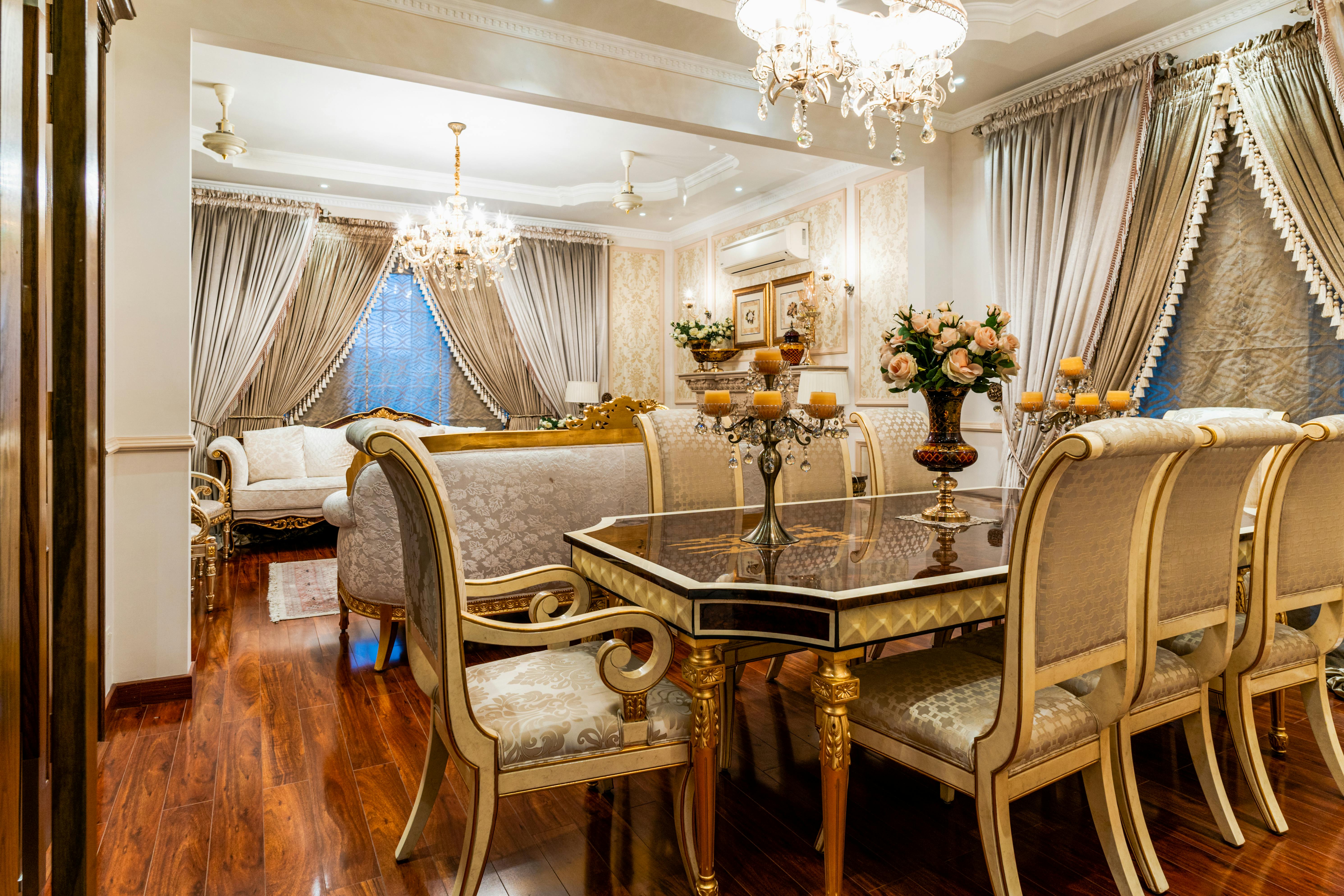
Comfort matters here. Upholstery, leather, and softer fabrics keep a traditional room from turning stiff or overformal.
Rugs do more structural work than most people realize
In a traditional room, the rug is not just decoration. It tells the furniture where the room begins and ends.
Too small and the room floats apart. Too large and it starts crowding door swings or swallowing the floor that gives the room its character.
The usual living-room fix is boring but true: size up.
A lot of living rooms that look awkward are really just one rug size too small. Front legs of the main seating should usually land on the rug. In tighter rooms, all legs may fit. In larger rooms, at least the front legs need to hold together as one group.
This is not a style trick. It is structure for the eye.
What should stay quiet
Traditional American rooms are stronger when these stay restrained:
- walls
- large upholstery
- window treatments
- big case goods
That does not mean boring. It means steady.
Then the room has space for a few louder things to matter. A patterned rug. A good antique chest. A fireplace surround. A bold landscape. A stronger fabric on one chair.
When the background elements are loud too, the whole room starts shouting in different directions.
Room by room
Entry
A traditional entry needs a landing point, not a pile of decorative gestures.
A mirror or art piece. A slim console. One lamp. A tray or bowl. Maybe baskets below. That is usually enough. The point is to make arrival feel clear and calm.
Living room
Start with the rug and the center line. Then the sofa. Then the chairs. Then lighting. Coffee tables and side tables come after the seating is right.
If the room has one good architectural feature, let it lead. Fireplace. Tall window. Built-ins. Stop trying to invent five focal points in a room that already has one.
This is where people burn money. They buy the accent chair first because it looked good online, then the coffee table, then the art, and only later realize the sofa scale is wrong and the rug is too small. By then the room is being assembled around mistakes.
Dining room
Traditional dining rooms do well with simple order. A table with some visual weight. Chairs comfortable enough for an actual meal. One centered light. One grounded storage piece if space allows.
The common mistake here is oversizing the furniture and leaving too little pull-back room. Tight dining rooms look more traditional when they work properly, not when they feel more formal.
Kitchen
Traditional kitchens usually work best when one material leads. Soapstone with painted cabinets. Warm wood island with quieter perimeter cabinets. Marble used with restraint. Open shelving only where you will really maintain it.
Too many “special” materials can make a kitchen look custom in the wrong way — expensive, busy, and strangely temporary.
Bedroom
Keep the bed wall clear. Match the lamps. Let the textiles do most of the warming. Bedrooms carry tradition best when they are quieter than the rest of the house, not more decorated.
Regional accents matter, but the rules stay the same
Traditional American design is not one single accent.
New England rooms often like painted millwork, plank floors, simpler iron hardware, and a cooler kind of restraint. Southern rooms can handle darker woods, taller drapery, and a little more softness. The Southwest brings plaster, earth colors, handwoven textiles, and wood with more sun in it. Mountain rooms can carry stone and leather, but only if they stay edited enough to breathe.
The point is not to copy a region like costume. It is to borrow what makes sense for the house you actually have.
If your home leans Southern in its bones, Traditional Southern Interior Design is the better deep dive. If your house is more mixed or updated, the crossover ideas in Modern Traditional Living Room are more useful.
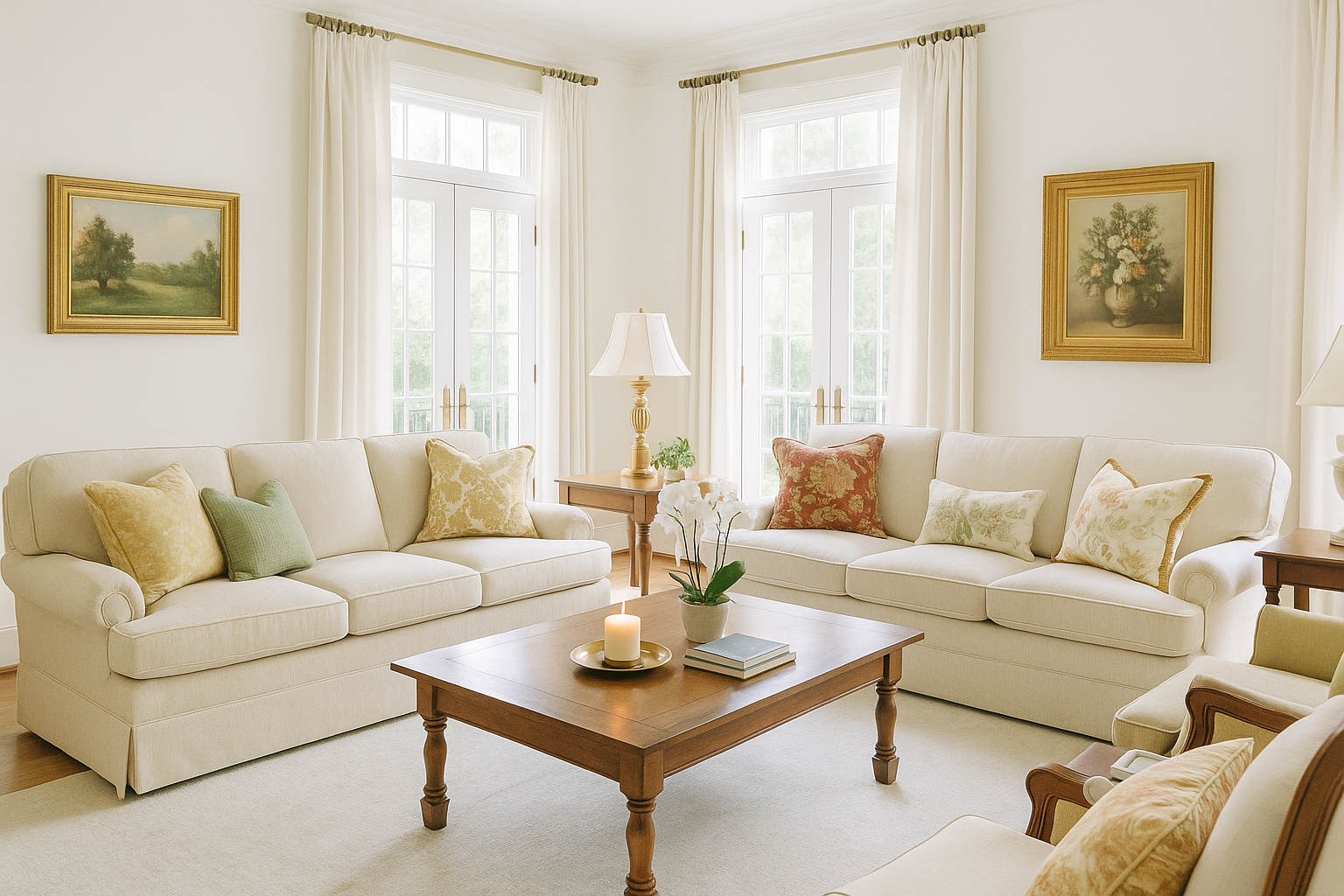
Regional character can shift the materials and mood, but the room still needs the same basic things: order, restraint, and comfort.
What to buy last
This saves money.
Do not buy small decorative pieces early. Not the mirror. Not the baskets. Not the decorative pillows. Not the little accent stool because it looked good online.
Buy in this order instead:
- rug
- main seating or bed
- main table or key storage piece
- lighting
- window treatments
- small finishing pieces last
People get in trouble when they buy charming details before the scale and structure of the room are settled. The details are supposed to finish the room, not rescue it.
What usually goes wrong
Too many antiques. One or two strong older pieces can anchor a room. Six can turn it into a collection instead of a room.
Trim that is fussier than the house. If the architecture is simple, do not force heavy profiles onto it just because they seem “traditional.”
Tiny rugs. Still one of the fastest ways to make a room feel temporary.
Over-patterning. Pattern should help the room breathe, not make it twitch.
Cold lighting. Warm bulbs matter more in traditional rooms because they help wood, fabric, and paint feel alive.
Trying to make every piece special. The best traditional rooms know when to be plain.
A more useful way to think about the style
Traditional American interior design is not old furniture plus neutral paint.
It is a way of reducing room stress.
The center is clear. The scale is believable. The materials do not lie. The color stays under control. The storage hides noise. The light arrives from more than one place. The room feels like it can absorb real life without falling apart.
That is why some traditional rooms still feel right and some “updated” rooms already feel tired.
FAQ
What defines traditional American interior design?
Balanced layouts, honest materials, comfortable furniture, quieter wall colors, and rooms that feel organized instead of restless.
Can I mix traditional and modern pieces?
Yes. That usually works better than trying to make every piece period-correct. Keep the room calm, then add a few cleaner modern shapes where they help.
What colors are safest?
Warm whites, creams, putty tones, soft taupes, some muted greens, and a few deeper accents like navy, bottle green, or tobacco brown.
Do I need antiques?
No. You need a room that feels grounded. Older pieces can help, but they are not the whole style.
What is the fastest fix for a traditional room that feels off?
Usually one of these: a larger rug, calmer wall color, fewer decorative objects, or better lamp placement.
Read this next
If you want the mixed old-and-new version, go to Modern Traditional Living Room.
If you want the warmer regional version, open Traditional Southern Interior Design.
For broader background on proportion and order, Classical Architecture is still useful.
And if you need help reading style language across houses more generally, Traditional Home Styles and Home Styles are the better next stops.