
How Geometry Shaped Arabic and Islamic Art
Start with the circle
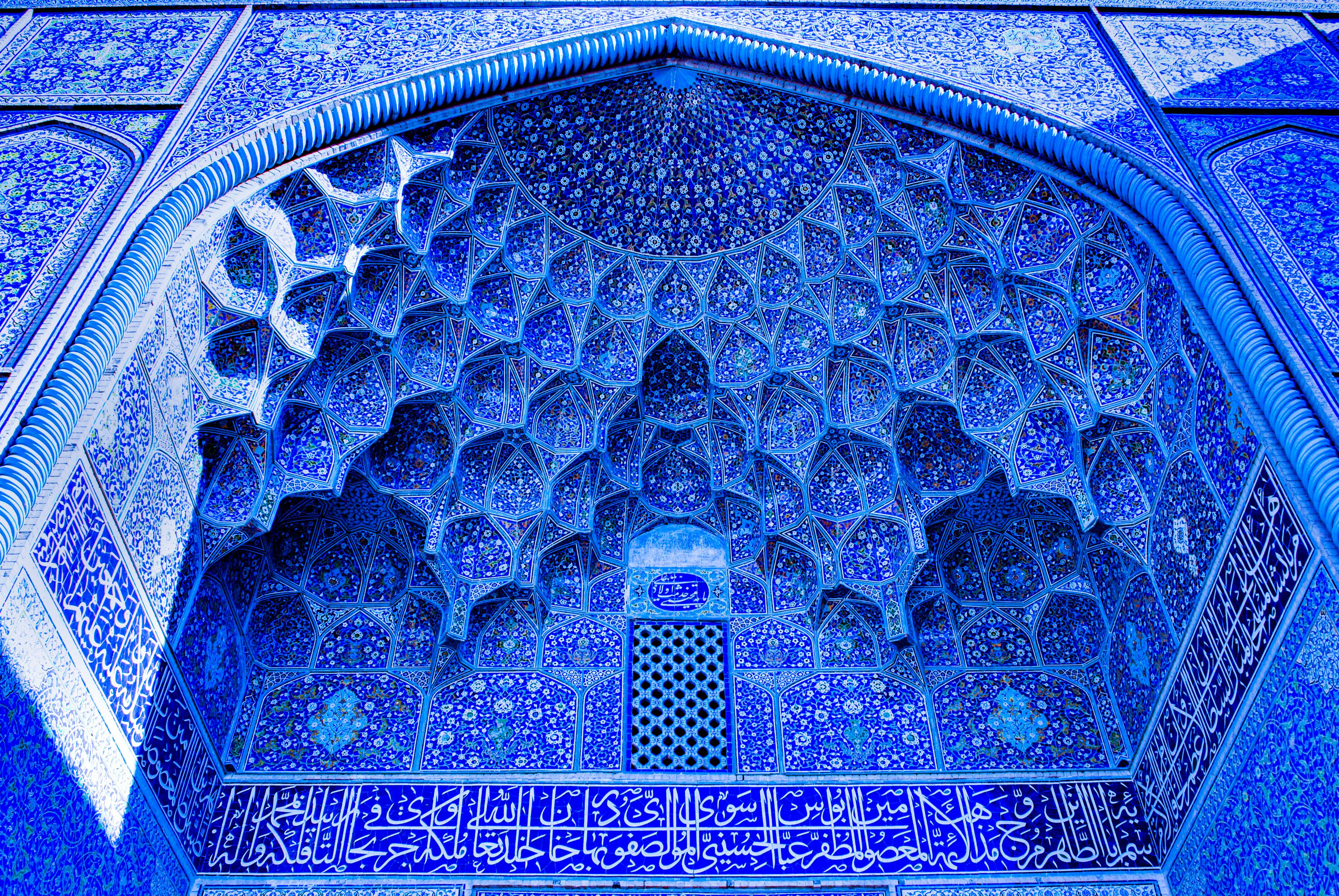
Stand in front of a tiled wall in Isfahan. Trace one star. Keep going. You never find the start or the end. That’s the point. Geometry here isn’t filler. It sets the rhythm for walls, domes, and floors. A full design language made from circles, stars, and polygons. Silent but powerful.
What it actually solved
Two things at once. Spiritual order and architectural control. No faces, no saints, no animals. Just math. Walls stay alive without pictures. Domes carry the sky. Floors push you forward. Geometry became both ornament and structure.
Where the system came from
The translation years
Baghdad, 9th century. Scholars copying Euclid, wrestling with ratios. Persian pattern traditions mix with Greek logic. Indian numbers arrive, easier to work with than Roman numerals. Builders pick it up. One hand on the compass, one on plaster walls. From that stew, a universal visual language spreads.
Workshops, not lone geniuses
This wasn’t art in a gallery. It was shop culture. Masters kept notebooks of grids. Apprentices drew them a hundred times until muscle memory locked in. Chalk on walls. Compass scratches in wet plaster. One bad line and the whole bay slipped. Respect the circle or rebuild it.
Forms that carried the weight
The shapes you actually see on site
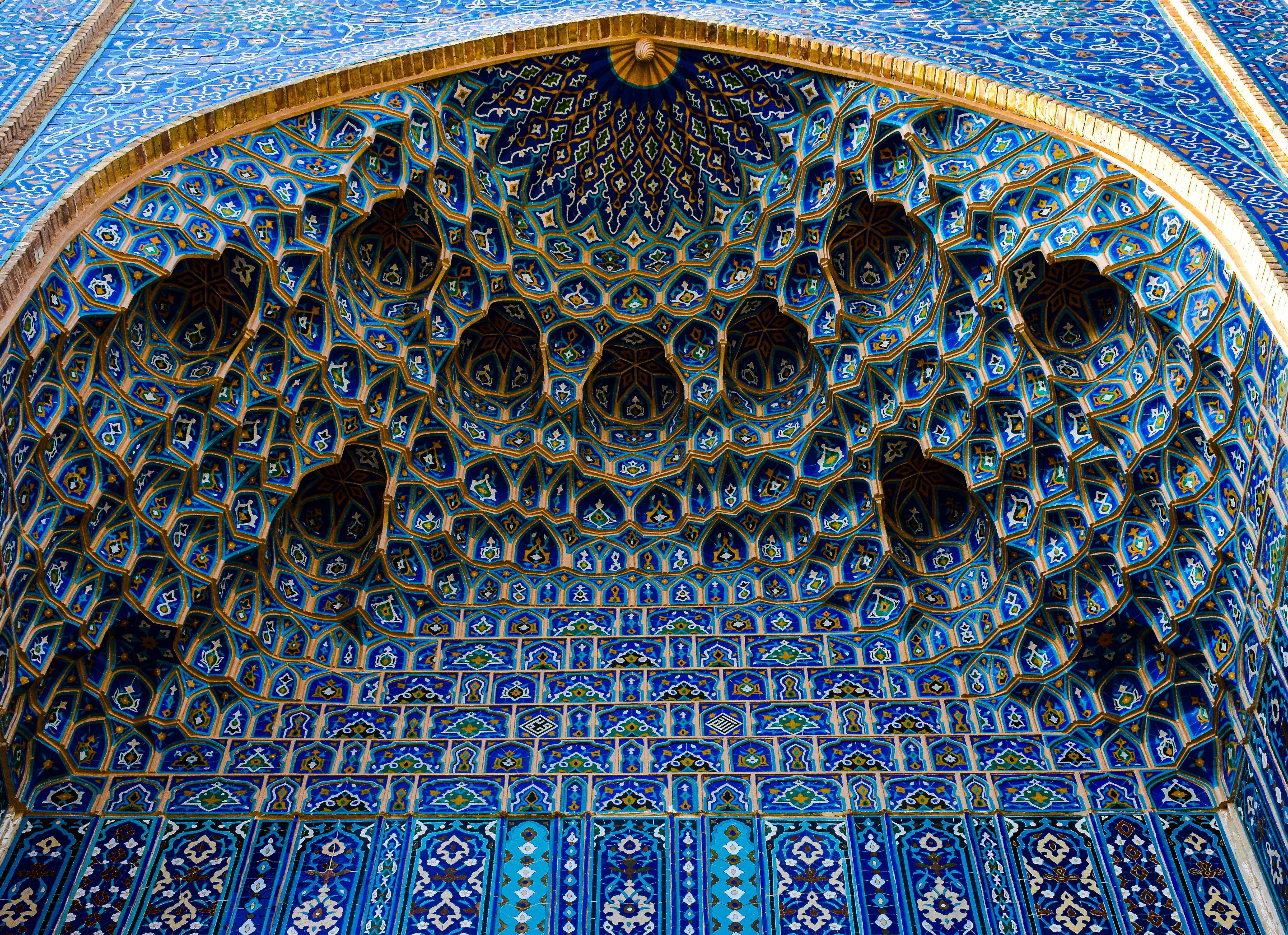
IMAGE: Blue mosaics ripple across the building wall in Uzbekistan, each geometric grid and arabesque shape aligning in careful, rhythmic order.
Geometry that builders leaned on
Circle
Every grid begins here. In the Great Mosque of Kairouan you can see carved circular rosettes on stone panels, each one the seed for lattice grids. Apprentices practiced by spinning circles until petals aligned cleanly. One bad radius and the whole rhythm drifted.
Stars
Walk the Alhambra in Granada and you cannot avoid the eight-point stars. They sit in tile fields across the Court of the Lions. In Persia the Shrine of Imam Reza in Mashhad pushes into ten and twelve-point grids across glazed domes. Stars gave texture and also covered the seams between small ceramic cuts.
Polygons
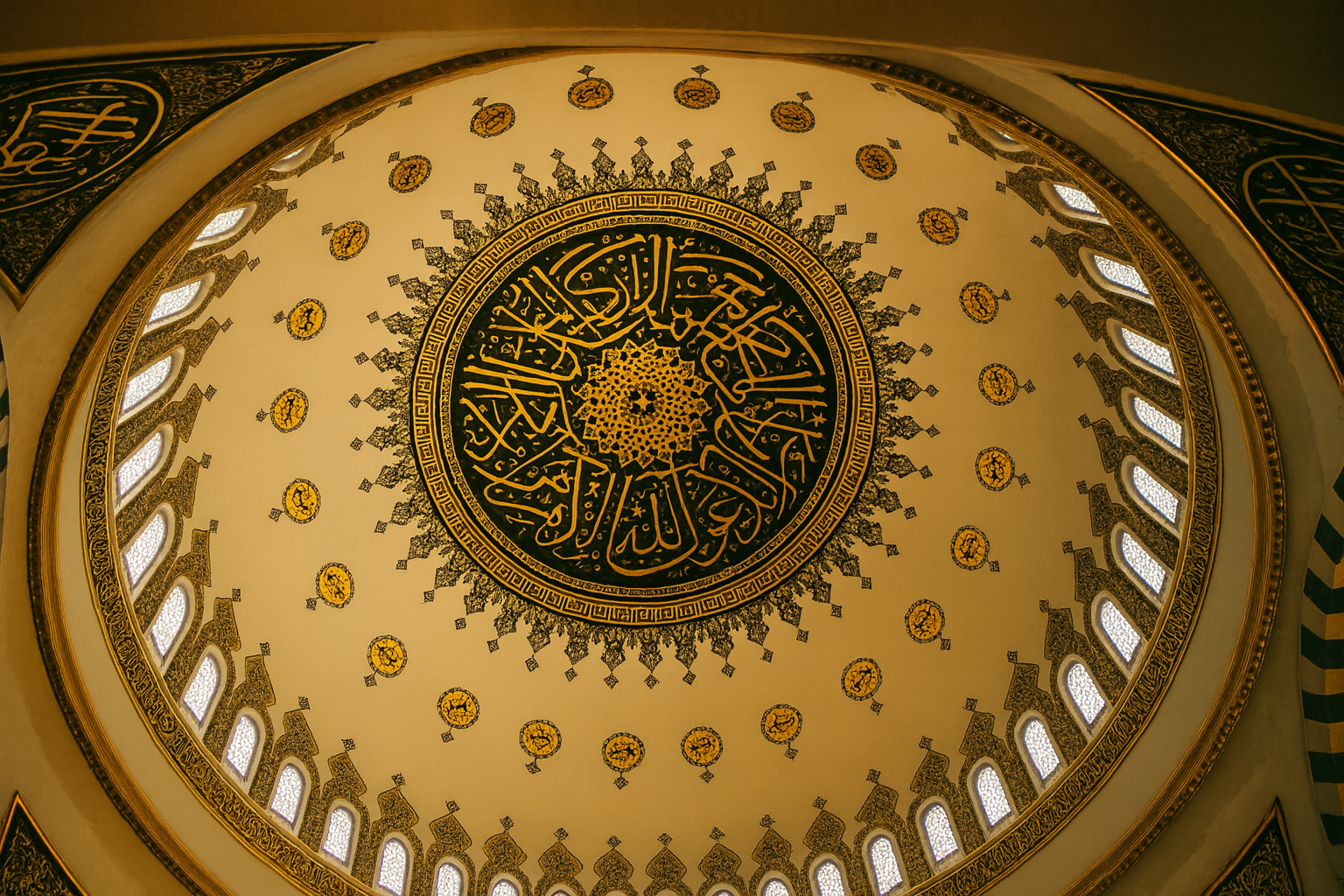
Look at the muqarnas vaults in Isfahan’s Jameh Mosque. Polygons do the work of shifting flat walls into rounded domes. Octagons and decagons make the step, locking fields of stars into curved volumes. Miss one and the vault looks broken.
Squares and rectangles
The Al-Aqsa Mosque in Jerusalem carries its bays on square logic. The prayer hall is divided into rectangular units, each one a framework for smaller geometric ornament. In Cairo’s Sultan Hassan Mosque the marble floor is gridded by squares before rosettes and polygons were set in. Square division is the chassis underneath.
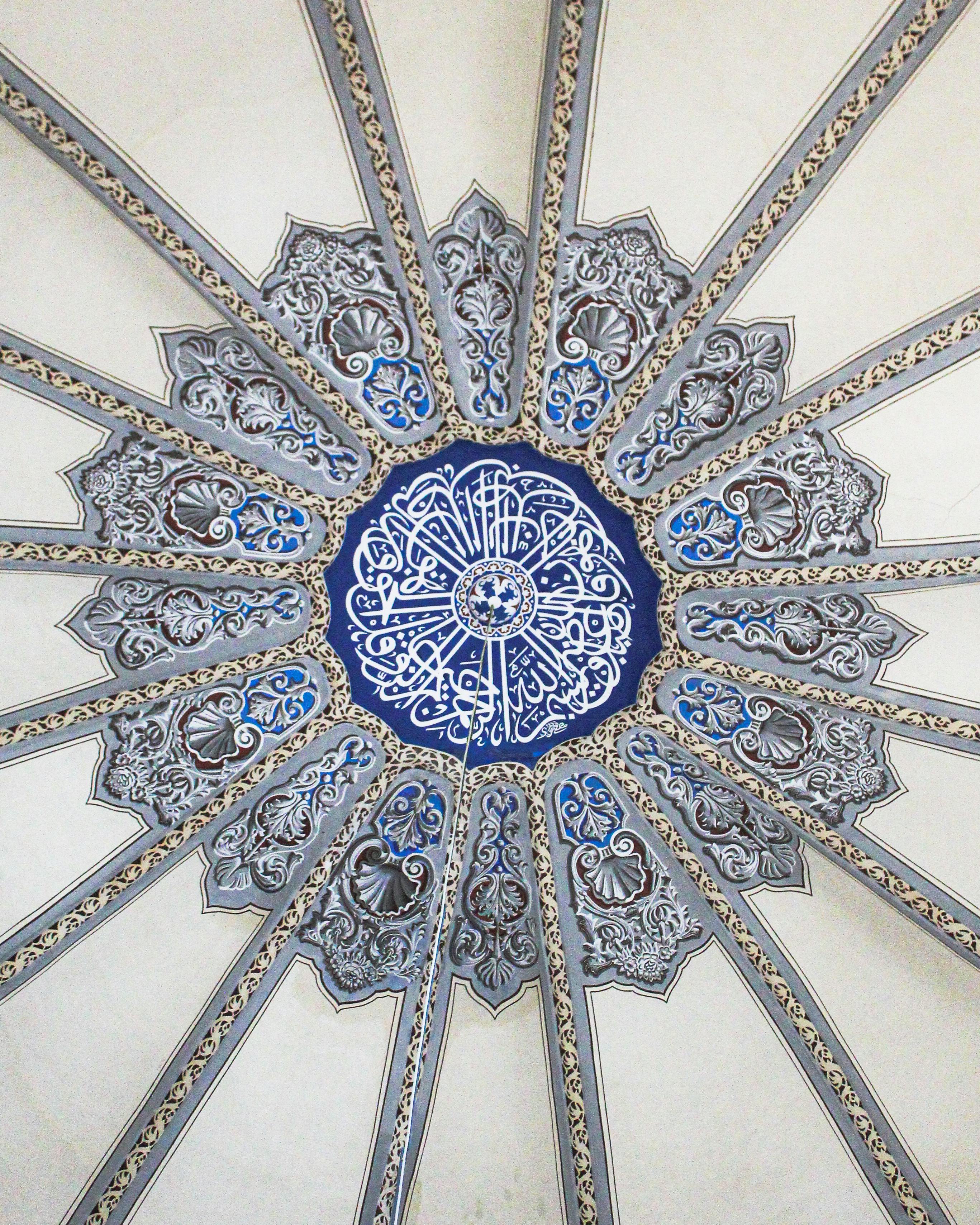
Interlace, or girih
Seljuk Anatolia shows this best. The portal of the Great Mosque of Divriği runs deep with girih bands. Five basic tile families weave under and over, turning stone into a net that seems endless. Once you see the system you cannot unsee it.
What it took on site
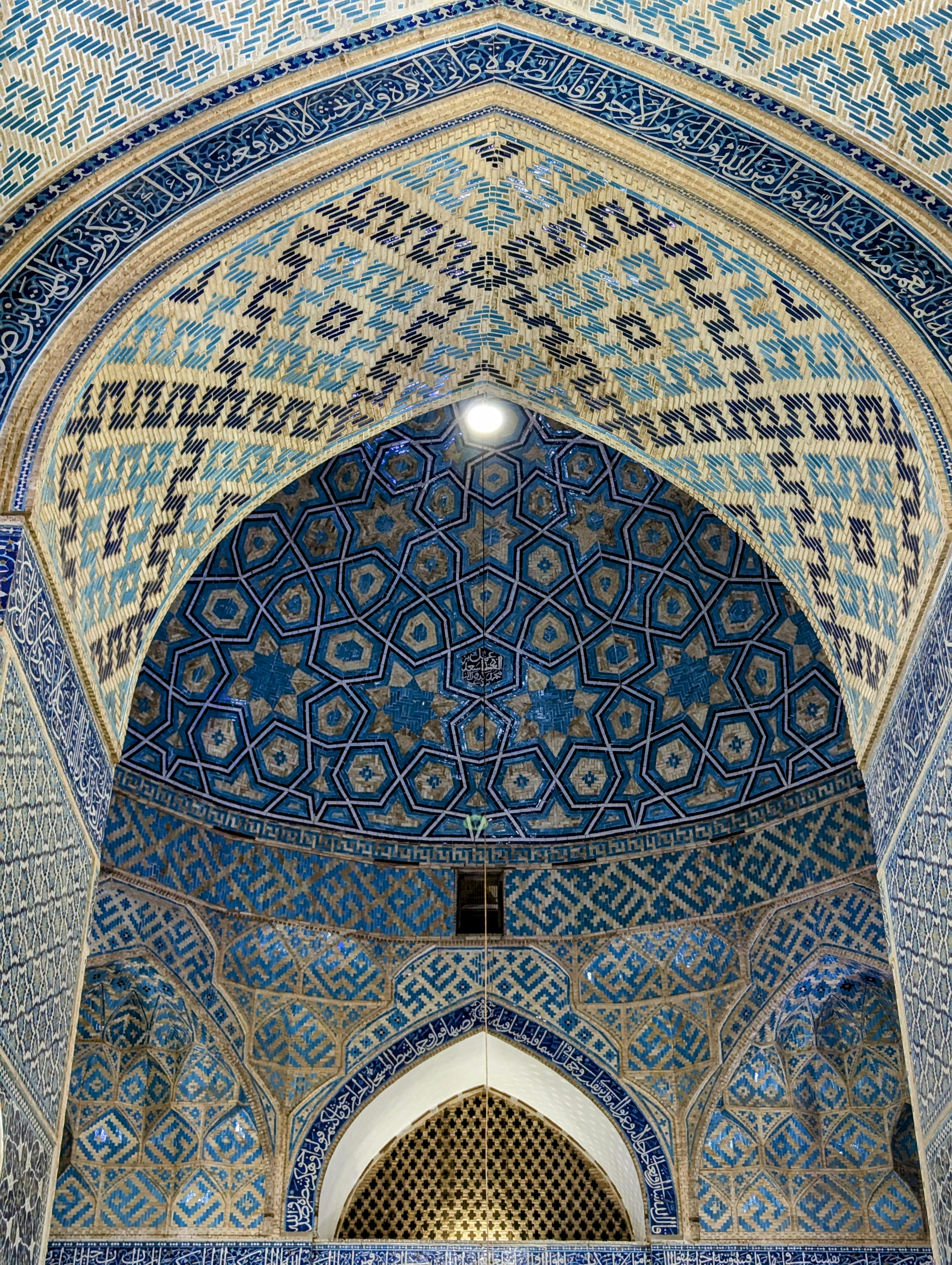
IMAGE: Inside the Yazd Mosque, intricate tiles form rhythmic geometric and floral patterns, their precise grids and vibrant colors defining traditional Persian decoration.
Tools
Compass, straightedge, plumb line, charcoal. Later, brass templates for speed. Nothing exotic, but unforgiving. A blunt compass tip ruins circles. A bad string line throws a dome off axis. Workshops kept spare compasses sharp and plumb bobs wrapped in cloth because one fall on stone could wreck them.
Time
Small panel, three days if the apprentice was steady. A full minbar face, closer to two weeks with carving and inlay. A dome packed with stars? Whole season. Think it’s a six-hour drafting exercise? Try thirty. By the tenth hour your wrist is cramping, chalk dust in your nose. You curse once, then swear never to rush again.
Failure modes
Scaling wrong from sketch to wall. Seen it more than once. The centerline wandering because the plumb snapped loose. Humidity shifting wood joints, leaving hairline cracks. Tile glaze shrinking in the kiln so pieces came back undersized. Every single one of those failures happened on real sites. Sometimes you fix early. Sometimes you rip half a field out. Either way, you learn.
Shop story
Cairo. Restoration of a mosque minbar. Young carpenter thought he could eyeball a missing polygon panel. From a distance it passed. Under raking light the star tips wobbled like bad teeth. The master made him tear it out. Three days gone. Painful lesson but cheaper than living with crooked geometry. After that, he never cut without a jig again.
Materials that carried geometry
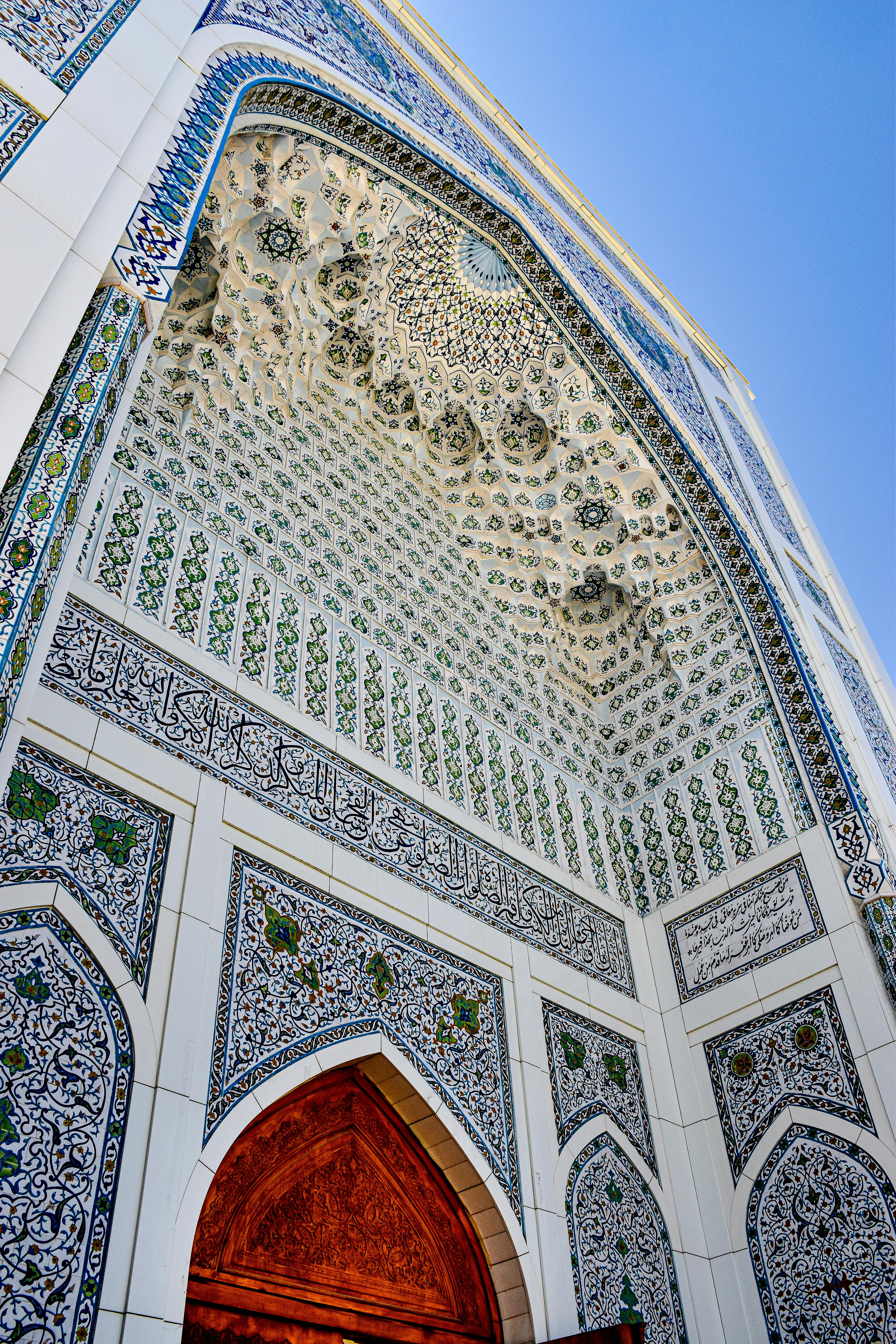
IMAGE: The Minor Mosque in Tashkent features an ornamented facade with intricate Islamic geometric patterns and arabesque motifs, showcasing Uzbek decorative architecture.
Stone and stucco
Stone lasts, but it fights you. Carvers in Cairo cut star fields into marble panels for Sultan Hassan’s mosque. Deep shadows held the pattern even in harsh sun. Stucco was faster. Wet plaster in Isfahan’s Jameh Mosque carried snapped chalk lines, then knives and chisels followed. Stucco lets you carve grids quickly, but it cracks if rushed. I’ve seen crews redo whole bands because the plaster dried too fast and lines bled.
Tile
Persia owned this craft. Shah Mosque in Isfahan is the masterclass. Domes covered in blue and turquoise, white lines sharp as compass marks. Spain pushed tile to puzzle-piece insanity in the Alhambra. Zellij cut by hand, each shard fitted like a jigsaw. One miscut meant a whole corner reset. In Fes I watched tilers soak pieces overnight so they swelled just enough to sit tight in mortar. Miss that step and you hear the rattle underfoot.
Wood
Cairo minbars and Anatolian doors carried polygons you could trace for hours. No nails, just precision joints. Oil finish warmed the grain so shadows caught clean. Problem is wood moves. Humidity shifts joints, tips drift. In one Cairo job, panels that fit snug in December gapped by July. Old masters knew to leave hairline space for expansion. Modern restorers forget and curse when the season changes.
Paper and pigment
Manuscripts trained the hand before builders touched walls. Qurans from Baghdad to Herat framed calligraphy with gold and indigo geometry. Small, exacting, portable. A scribe who could lay out a twelve-point star on paper was halfway trained for a dome grid. In one archive I saw early pages where lines overshot, erased, corrected. Even masters had drafts full of ghosts.
Places to learn from
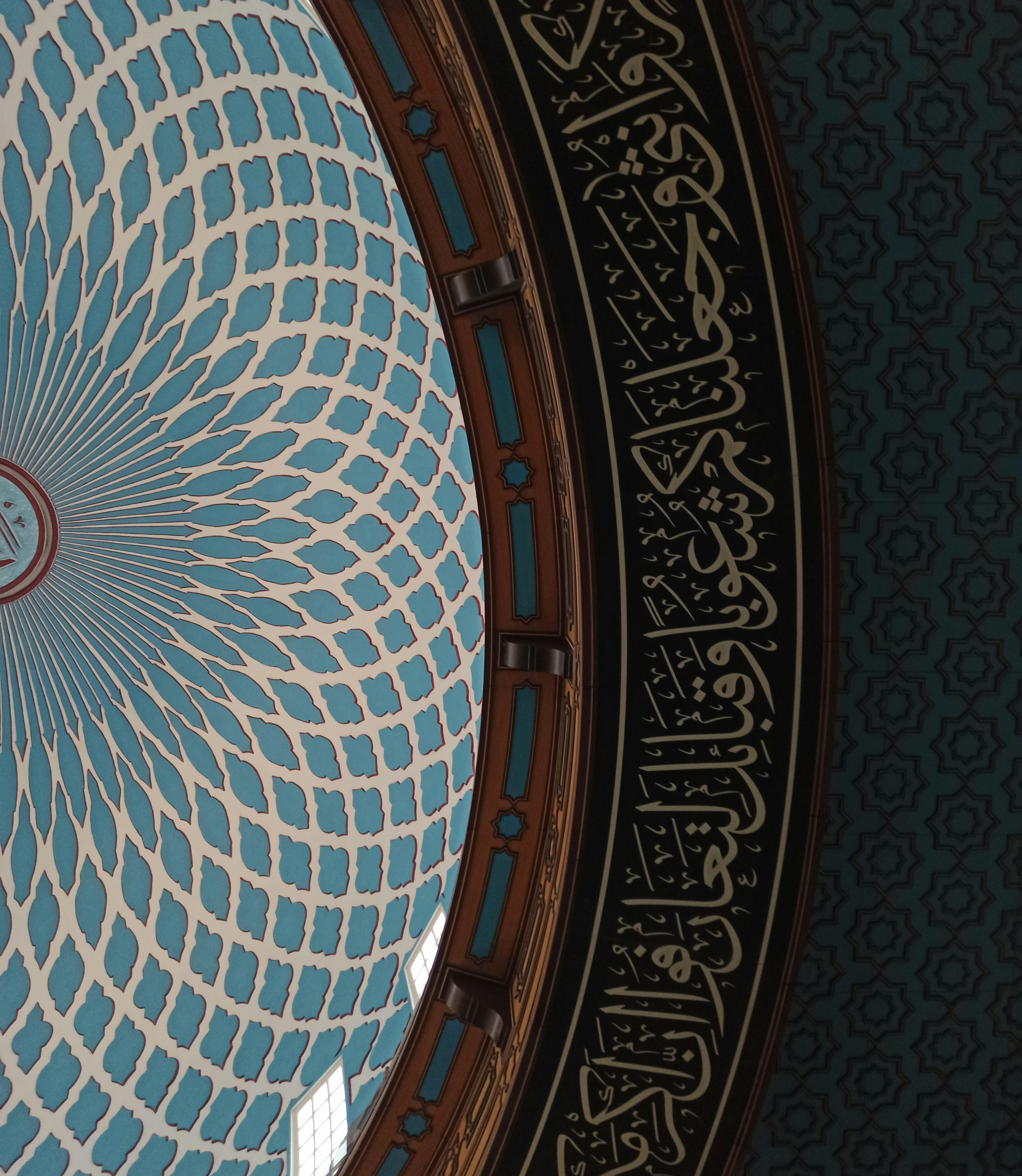
IMAGE: Close-up of Arabic writings framed by geometric grids and arabesque motifs, each line and pattern flowing in careful, rhythmic order typical of Islamic art.
Alhambra, Granada
Walk through the Court of the Myrtles. At eye level, zellij tiles cut sharp, no two corners forgiving. Above, carved stucco panels layer the surface like lace. Higher still, wood lattice. The density increases as you raise your eyes. That was intentional. Builders wanted your gaze to climb. I remember touching one tile edge that had been worn smooth from centuries of cleaning. Even wear tells you these patterns were lived with, not just admired.
Sheikh Lotfollah, Isfahan
Step under the dome at noon and the star field almost breathes. Twelve-point geometry spread across glazed blue. By late afternoon the same surface feels quiet, the shadows deeper, the stars less sharp. Geometry here is not static. It works with the sun. I stood under that dome with a group of architecture students. One whispered that it felt like the ceiling was moving. They weren’t wrong.

IMAGE: The exterior of Sheikh Lotfollah Mosque in Isfahan features an ornate dome and richly patterned tiles, showcasing intricate geometric and arabesque designs characteristic of Persian Islamic architecture.
Mamluk Cairo
Go to Sultan Hassan Mosque. Look down before you look up. Black and white marble rosettes lock the floor into grids. Walk into the prayer hall and your hand brushes wood minbar panels, polygons cut so clean they read like ink on paper. Facades outside carry carved stone stars that look like construction drawings hardened into limestone. Cairo teaches discipline. The geometry is tight because if it slips, the whole space looks broken.
Samarkand
Gur-e-Amir and Registan square. Domes the size of football fields clad in girih belts. Wide star bands wrapping minarets. Step close and you see individual ceramic pieces no bigger than your hand. Step back and it reads like fabric stretched across stone. The courage was scale. The control was math. One Uzbek restorer I spoke with said simply, “If one belt fails, the dome fails.” That is how seriously they took proportion.
Building patterns from scratch
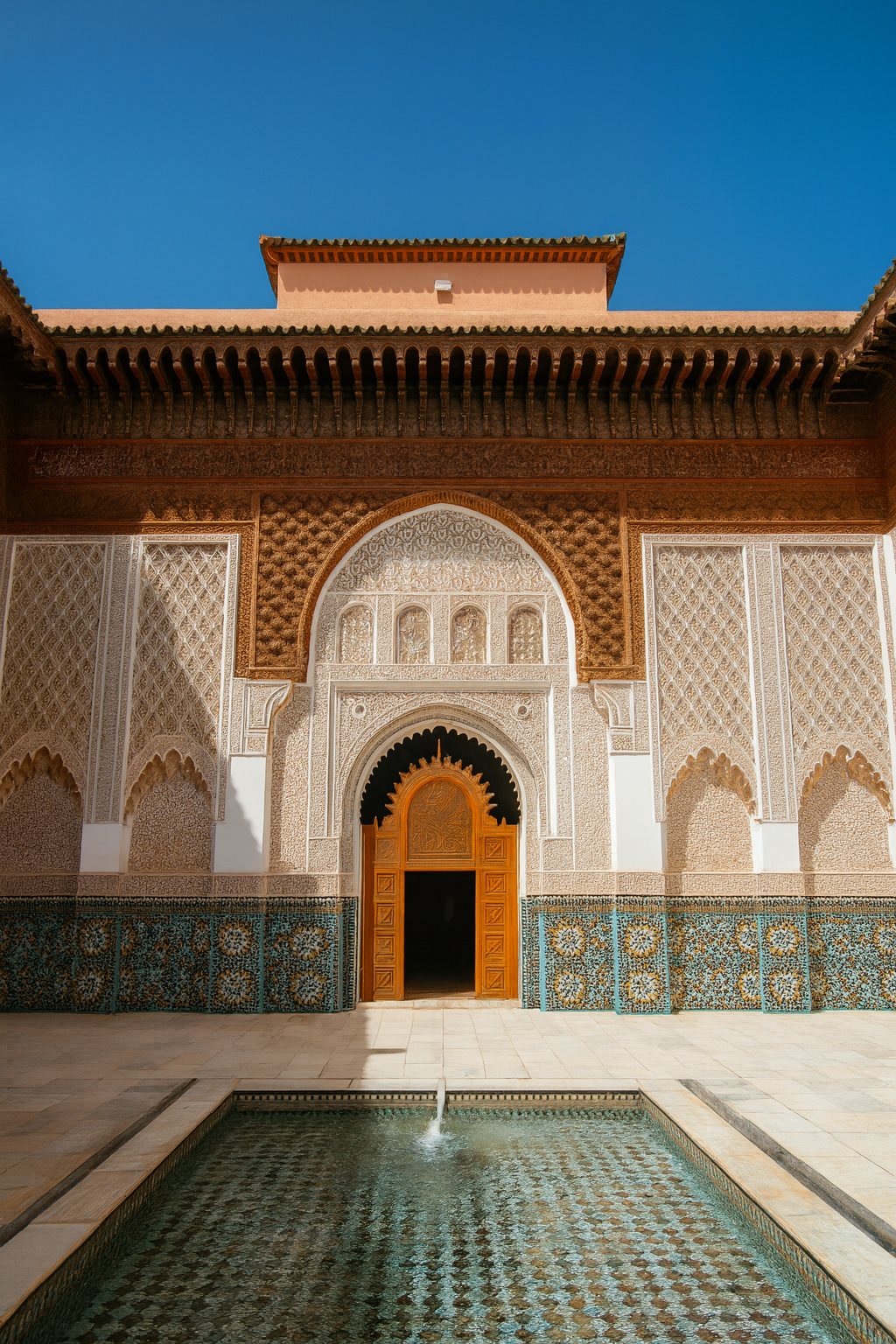
Start small
Everything begins with one circle. Draw it, then divide it into 4, 6, 8, 10, or 12 parts. Connect points and you get your parent star. Sounds simple until you sit with a compass for an hour and realize how easily a line slips. In an old workshop in Fez I watched an apprentice spend half a day redrawing a circle because the radius wandered. His master made him start over until the divisions locked clean.
Grow the field
Once the parent star is solid, tile it across the surface. Gaps appear. That’s where polygons save you. Hexagons, octagons, decagons. Without them the grid collapses. On flat walls it’s mechanical. On domes or arches you fight distortion. One Iranian tile setter told me they always mocked up a corner before touching the dome. If the joints failed there, they knew the whole system would fail higher up.
Scale up
Drafts are easy. Walls are not. Builders projected small sketches onto wet plaster with chalk or charcoal. On wood panels they cut knife lines instead of pencil, so the blade guided the chisel and stopped the fibers from splitting. That single trick saved hours of patching. I tried it myself once on a model panel. First attempt with pencil wandered. Knife cut stayed clean.
Color control
Blue and white dominate for a reason. High contrast, readable in glare or shadow. Green and gold come in as accents, not floods. Too much and the geometry dies. At the Shah Mosque dome in Isfahan, stand at a distance. You’ll see the white lines do the heavy lifting. The turquoise is just background. I’ve seen modern projects overpaint with too many colors. The pattern drowns.
Workshop rule
Never trust your first draft. Always redraw. Old masters kept ghost drawings under fresh chalk because they expected mistakes. The grid that survives to the wall is rarely the first one drawn.
Where students slip
Decoration over structure
Too many treat geometry like wallpaper. They paste patterns on walls without tying them to bays or supports. I saw one student cover a studio wall in a twelve-point star grid that ignored the window openings. The result? Half-stars cut in awkward places, proportions dead. The critique was brutal. Lesson: geometry has to lock into the building, not float over it.
Symmetry without ratio
Mirroring is easy. Proportions are not. A student once mirrored a star grid across a courtyard plan, but the spacing didn’t divide evenly. By the time the grid hit the far wall, stars stretched like rubber. In review we made him redraw using simple ratios. Half, thirds, quarters. The fix was cleaner and faster than the patchwork he’d built.
Copy-paste repetition
Digital grids look safe until they hit real corners. I watched a team slap a repeating eight-point star into a mosque model in Revit. Looked fine on screen. On the dome apex, stars pinched into diamonds. The professor had them rebuild the whole dome grid by hand. Lesson was clear: patterns must evolve. Domes and arches demand adjustments.
Flat light kills pattern
Geometry without contrast dies. One mockup had carved stars on plaster, but the lighting was dead even. At two meters away the pattern blurred into nothing. When we tilted the fixture and threw raking light across, suddenly every groove came alive. The craft was fine. The lighting made it visible. Students rarely think of this, but real builders do.
Scaling mistakes
Sketches scale wrong all the time. One project in Cairo aimed to copy a Mamluk floor rosette. The student scaled the sketch by sight, not ratio. The marble cutters ended up with gaps big enough to trap dust. Master mason stopped the job and made them re-grid the whole thing. Precision at small scale saves days later.
Putting it to work now
Screens with eight-point lattices that cut glare. Ceilings with star fields hiding ducts. Lobby floors with marble rosettes. Even UI grids in software, hidden but felt. Geometry adapts, always.
Lighting? Easy win. Punch light through a star lattice and watch the walls shift through the day. Cheap drama, strong effect
Screens and facades
Star lattices in steel or wood still work. Eight or ten points, cut with CNC or laser. They break glare and cast moving shadows. I saw one in Doha where the pattern wasn’t scaled right—too dense, blocked ventilation, turned into a heat trap. Cheap mistake. On another site in Dubai, the same logic, but with spacing tested at full scale. The pattern filtered sun perfectly and cut cooling loads by ten percent.
Ceilings
One bold star field above the main space is enough. I reviewed a Toronto project where students plastered every ceiling with grids. Looked busy, lost impact. In contrast, a single coffered ceiling with a twelve-point star rhythm in the main hall drew all the attention. Less work, better result.
Floors
Marble rosettes in lobbies or courtyards still land. Keep the joints tight. If you don’t, heels will find the gaps and click like percussion. I once walked across a misaligned floor in Cairo where the stars looked fine, but the sound betrayed the sloppy fit. Clients notice details you never expect.
Digital grids
Not everything is stone or tile. I’ve seen designers use star grids in branding systems and UI spacing. Users never call it out, but the proportions feel right. One firm in Istanbul hid a twelve-point ratio in their logo and interface, and it quietly tied the whole brand together. Nobody names it, but they feel it.
Lighting tricks
Cheap drama. Punch light through a star screen and let the pattern scatter across walls. As the sun shifts, the geometry moves. In one Doha office, a $600 lattice screen made more impact than a $60,000 chandelier. Same principle that worked in mosques centuries ago.
Lessons geometry teaches
Patience. Center lines matter. Rush and you redraw.
Discipline. Ratios tie design to structure.
Teamwork. Tilers, carpenters, masons—patterns cross trades.
One critique I sat in, ductwork cut straight through a star grid on a ceiling. The student had ignored HVAC. He learned fast: coordination isn’t optional.
What geometry teaches beyond pattern
Discipline
Geometry punishes shortcuts. Skip a centerline and the whole field drifts. In one workshop in Cairo, a mason started carving before snapping full chalk grids. By the end of the day, two meters of stars leaned downhill. He spent the next two days chiseling them out. Lesson stuck.
Patience
Tiles, plaster, wood—none of them care about your deadline. A dome grid that looks like a six-hour job turns into thirty. I’ve seen students push through in one sitting and end up with warped stars. Builders know to slow down. Check every radius twice. Redraw until it feels right.
Team thinking
Patterns cross trades. Tilers, carvers, carpenters. If one misses alignment, the whole system shows the crack. In a restoration job in Istanbul, HVAC installers cut a duct right through a ceiling star field. The geometry was perfect until then. After that, everyone in the room learned the value of coordination drawings.
Respect for proportion
Ratios matter. Half, third, quarter. If you ignore them, patterns stretch ugly. A student once mirrored a star grid onto a wall without checking proportions. By the end of the span, stars looked like diamonds. The critique was short: respect the math or redo.
Observation
Step into a mosque in Isfahan or Cairo at noon. Then return at dusk. Geometry moves with light. You learn fast that ornament is never static. Carved stucco needs shadows. Glazed tile depends on glare. The pattern isn’t finished until you see it under real light.
Cost and client talk
Budgets creep. Every time. You plan for 100 square meters of tile, you end up at 110 because cuts and waste eat into the count. Precision burns hours too. That jig you think is a waste of a day? It saves a week later when joints line up and the installer stops swearing.
Glaze schedules are another killer. Firing slips by two weeks and suddenly the whole dome is behind scaffold. Tiles shrink in heat, so what fit in the workshop might not fit on the wall. Plan for it. Or worse—redo it at double cost. I’ve seen both.
Client side is its own dance. Most walk in asking for “everything covered.” Full wall, full dome, full madness. You have to steer them. Sell rhythm, not excess. One bold field for the main space. One quiet field as relief. Let the eye rest. Spend detail where hands and eyes actually linger: doors, corners, the first five meters off the ground.
Don’t waste money in high vaults nobody looks at twice. I once watched a team chase a twelve-point star pattern thirty meters up a minaret. Stunning on paper. On site, invisible. The budget bled and the client asked why the entrance felt bare. Wrong priorities.
Another truth: clients rarely understand geometry until they see it full scale. Show them a mockup. A two-meter panel under real light. Let them touch it. The pattern sells itself. Without it, they’ll argue about cost with no sense of value.
So the line I give is simple: Better one field perfect than five fields you regret. It keeps budgets sane, installers alive, and clients happy enough to pay for what they can actually see.
Field notes
Toronto studio, student lobby wall. Twelve-point star grid looked strong on the sheet. On site it bled right into the door frame. Dead. The fix was stupid simple: add a half-band buffer before the jamb. Ten centimeters saved it. Lesson burned into the whole studio. Always plan the edge.
Another project. Ceiling stars with random can lights. Looked like acne scars. Client hated it. We killed the scatter, aligned each fixture to star centers, and let edge washers fill gaps. Same lights. Smarter placement. Ceiling suddenly read like design, not accident.
Cairo restoration. Apprentice cut a panel without a jig. Fit was loose. Under raking light the misaligned tips screamed. Panel pulled. Recut. Three days lost. Painful but cheaper than living with crooked stars.
Case details to reverse-engineer
Muqarnas
People think those honeycomb vaults are freeform. They are not. They start with a square bay subdivided into regular cells, then lifted into three dimensions. Study one in section. You will see the square stepping into circles without collapse. Once you understand that the system stops looking mystical. It is geometry, not magic.
Ottoman domes
Pencil domes from Istanbul to Edirne run on scale control. Stars near the springing are big, almost heavy. As the dome climbs, units shrink. By the apex the geometry is small enough that your eye reads the surface as smooth and weightless. Try it on a plaster model. Small at the top, big at the base. You will feel the difference.
Samarkand
Gur-e-Amir’s dome reads like fabric draped in stars. The trick is girih belts, not random scatter. Wide bands set order. Smaller patterns fill between. Without the belts the surface collapses into noise.
Andalusia
The Alhambra’s zellij looks infinite. Count it and you see tile units repeating on a scale you can carry. Craftsmen cut each piece by hand and fit them tight like puzzle parts. That density only works because joints are microscopic. Miss by half a millimeter and the whole wall drifts.
Resources
FIELD PICK
Islamic Geometric Patterns by Eric Broug. Short. Hands-on. Shows how to draw stars with just a compass. Good for students, designers, and anyone trying to clean up proportions.
Link on Amazon
Copy historical plates too. Isfahan. Cairo. Do one by hand. Wrist learns what brain forgets.
Questions architects ask
How does this differ from Greek patterns?
Greek meanders are borders. Islamic grids cover full surfaces, shifting scale with ease.
Numbers symbolic?
Sometimes. Eight for paradise gates. Twelve for calendar cycles. Still, buildability comes first. Symbolism doesn’t save bad grids.
How did they scale domes pre-CAD?
Grids on scaffolds. String arcs. Chalk lines. Then pray the apex landed clean.
Can calligraphy mix with geometry?
Yes. Keep it in framed fields. Never let letters fight star arms.
Will it date in modern projects?
Good proportions hold. Bad colors date fast. Let light and shadow do most of the work.
Where does money get wasted?
Over-dense patterns in dead areas. Spend where memory lives.
How do you test before committing?
Build a corner mockup, one-to-one. Put it under real light. If it fails there, it fails everywhere.
Sustainability?
Tiles can be replaced piece by piece. Wood screens rehung. Screens cut cooling loads. Geometry pulls double duty.
Bring it home
Keep the circle honest. Respect ratios. Let light do its work. When geometry is right, rooms hum. People won’t know why. They’ll just stay longer.
Related
Geometric Patterns
Basic grids. Circles, squares, triangles. Simple math turning into rhythm and balance. Used everywhere.
Islamic Geometric Patterns
Tile domes, carved plaster, wood screens. The math is strict, but the result feels alive. Walk into a mosque in Isfahan and you’re standing inside geometry itself.
Arabic Geometric Patterns
Same logic, but wider than religious use. Shows up in textiles, ceramics, manuscripts. A craft language shaped by centuries of trade.
Arabesque Patterns
Vines, leaves, branches looping endlessly. Sometimes paired with geometry, sometimes running free. Geometry sets the order, arabesque gives it movement.