
A lot of pages on this subject stop at “beautiful repeating shapes.” That is not enough.
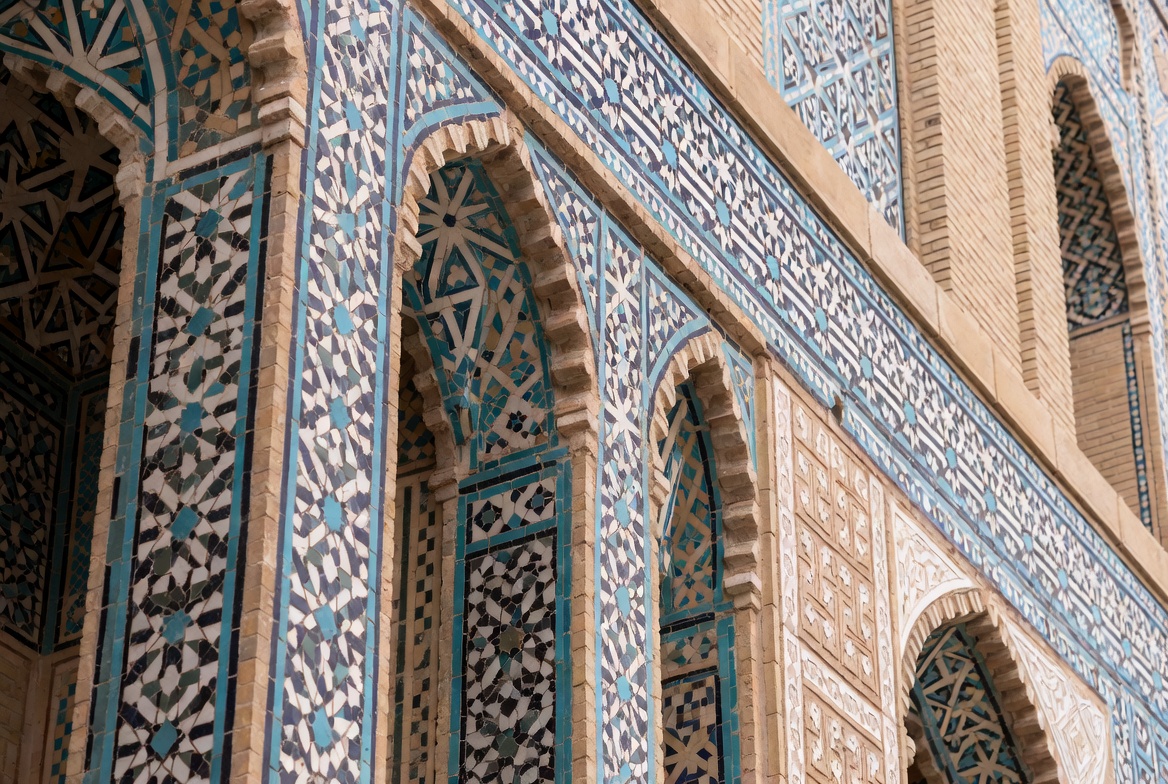
In architecture and interiors, Arabic geometric patterns matter because they do work. They filter light, shape privacy, organize large surfaces, and give tile, wood, plaster, and metal a system instead of just decoration. The strongest spaces do not treat the pattern like something pasted on at the end. It is built into the way the room reads.
If you want the broader design background first, start with Islamic geometric patterns. This page is narrower. It focuses on how geometric patterning gets integrated into buildings and interiors in a way that still feels convincing.
What Makes These Patterns Useful in Design
The geometry often starts with circles, squares, stars, polygons, and interlaced lines. But the value is not the math by itself. The value is what the geometry lets the building do.
A screen can soften glare without closing off a room. A tiled field can hold together a large wall that would otherwise feel flat. A carved wood panel can give joinery, doors, or built-ins a surface language that connects back to the architecture. That is why these patterns last. They can be ornamental, but they also help control rhythm, light, scale, and enclosure.
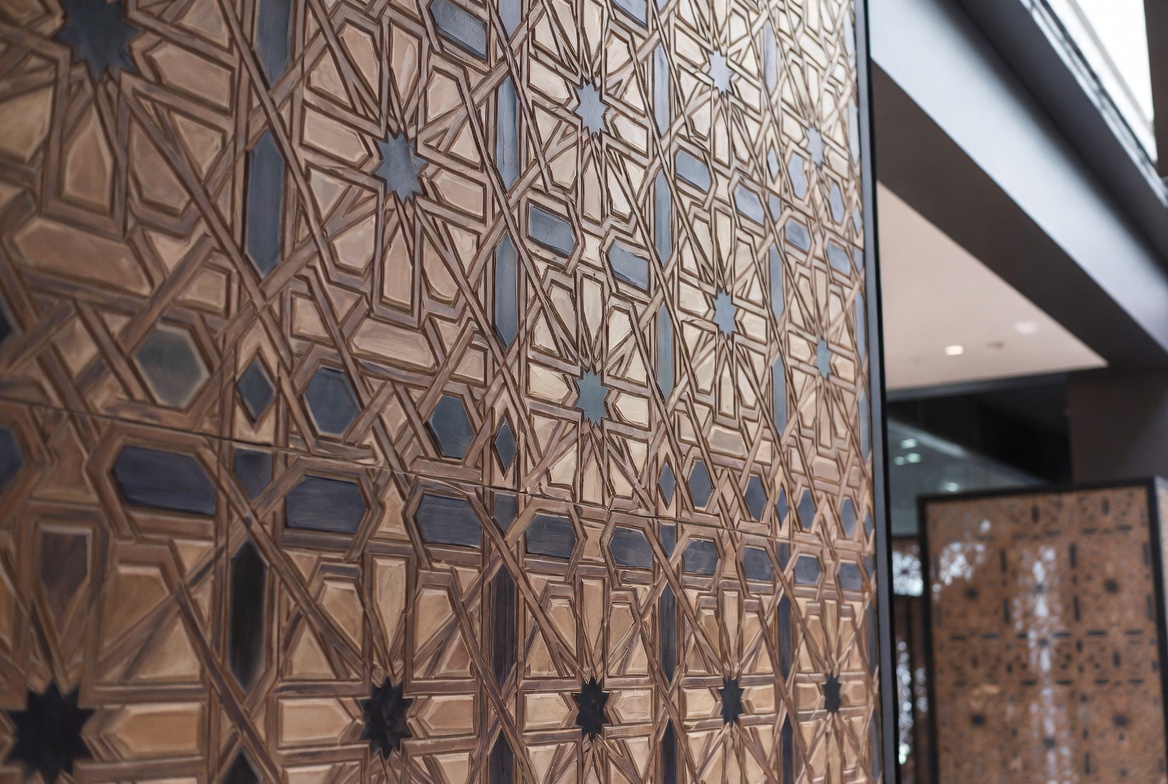
Image by ArchitectureCourses.org. Arabic geometric wood screen showing repeating star and polygon patterns used in architectural surface design.
Where They Work Best on the Exterior
On the outside of a building, geometric pattern usually works best when it is tied to a real architectural element instead of spread across the whole facade for effect.
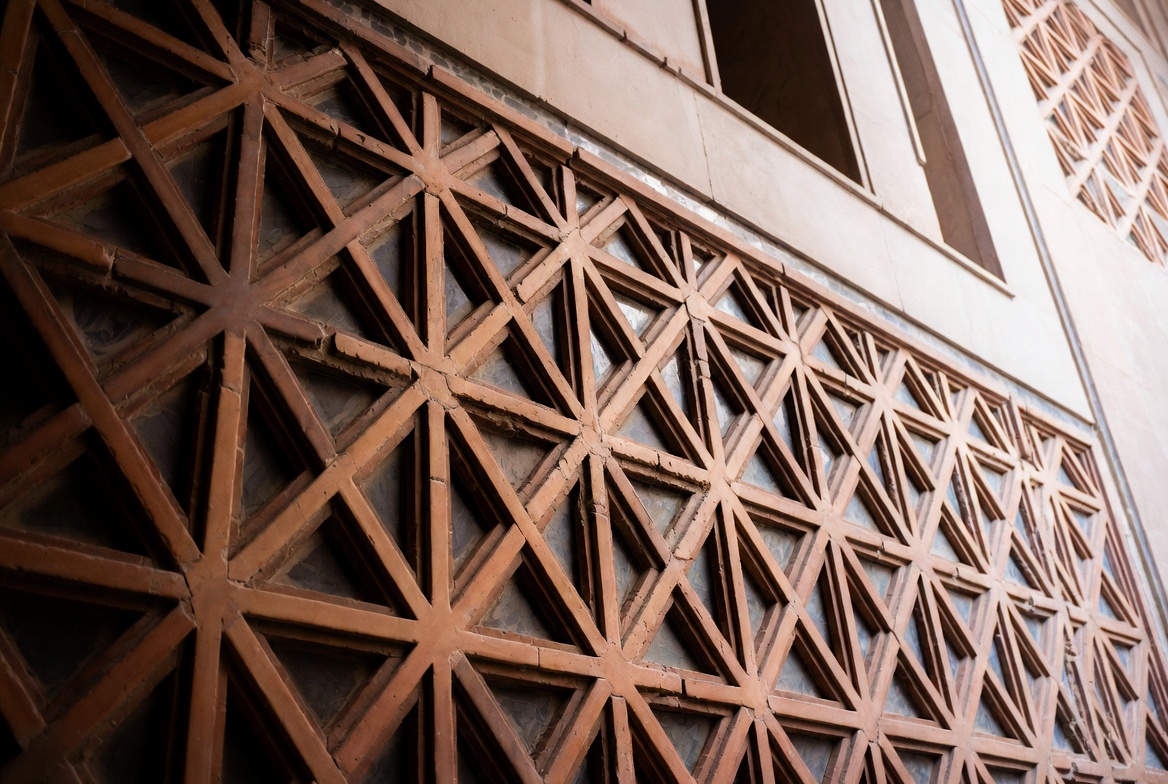
- Screens and latticework: useful for privacy, filtered daylight, and depth.
- Tile or carved surface bands: strongest when they frame entries, openings, courtyards, or parapets.
- Openings and transitions: geometry often reads better around doors, windows, arches, and edges than on blank wall areas.
- Vertical elements: patterned treatment can sharpen towers, domes, and architectural accents. If you are tracing that side of the subject, see minarets.
Where They Work Best on the Interior
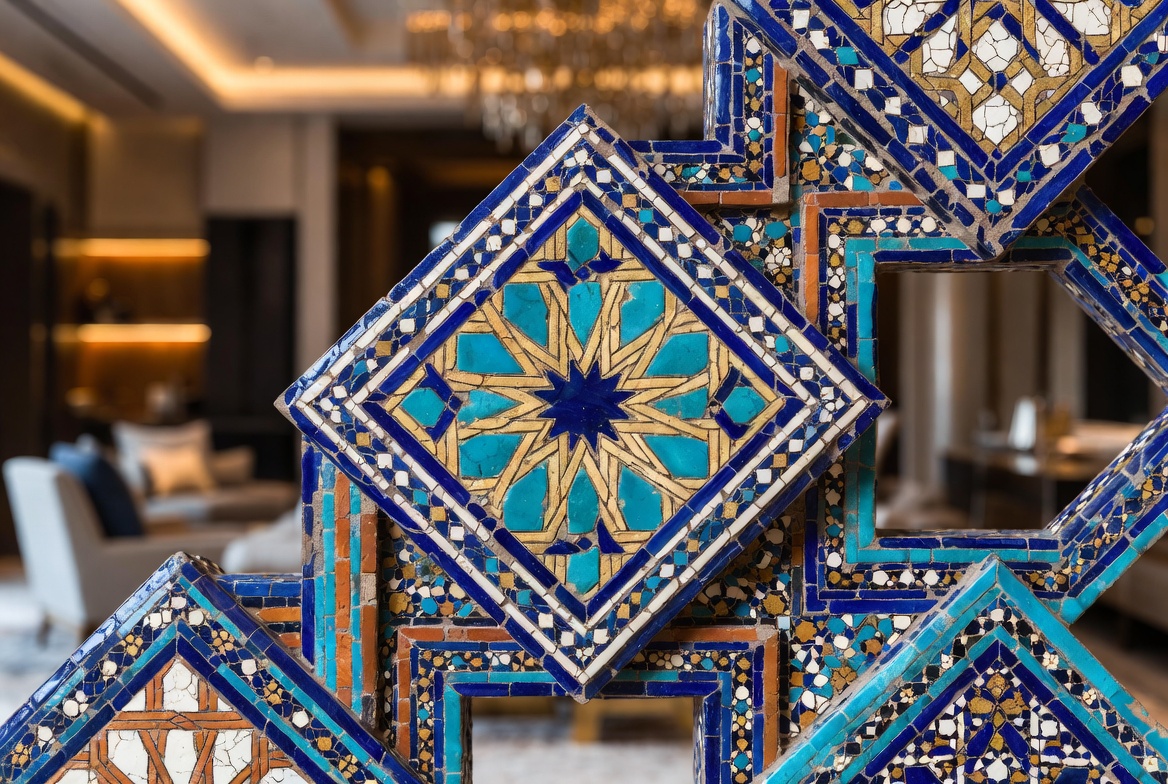
Image by ArchitectureCourses.org. Arabic geometric tile object with layered star motifs and glazed mosaic work in blue, turquoise, and white.
This is where a lot of weaker articles lose the plot. Inside, Arabic geometric patterns are not just “wall decor.” They usually feel strongest when they are built into one of the room’s working layers.
- Light filter: screens, shutters, and room dividers that turn daylight into shadow and texture.
- Surface field: tile, plaster, or paneling used to anchor one wall, niche, fireplace surround, stair wall, or bath enclosure.
- Joinery: cabinet fronts, doors, storage panels, headboards, and built-ins.
- Thresholds and ceilings: soffits, arches, vestibules, and transition zones where pattern can mark movement from one space to another.
That is usually the more convincing move. Let the pattern do one clear job instead of asking it to carry the entire room.
Use This Instead of This
| Use This | Why It Works | Avoid This |
|---|---|---|
| Screen, partition, or shutter | Adds privacy, filtered light, and architectural depth | Random decorative panel with no relationship to the room |
| Tile, plaster, or wood on one focused surface | Creates a clear visual anchor without overloading the space | Wrapping every wall until the room feels busy |
| Cabinet fronts, doors, or built-ins | Integrates the pattern into daily-use elements | Loose decor pieces that feel detached from the architecture |
| Ceiling panel, arch, or threshold zone | Makes transitions feel intentional and spatially rich | Putting all the detail at eye level and ignoring the room structure |
| Courtyard or entry emphasis | Helps the facade read with hierarchy and restraint | Using pattern as wallpaper for the full exterior |
The Part Most People Miss
The pattern has to match the scale of the building element.
Small, intricate geometry can look excellent in tile, carved wood, metal screens, and detailed joinery. The same pattern can look weak and fussy if it is enlarged too much and spread across a blank drywall surface. Good integration is not only about the motif. It is also about scale, depth, shadow, and material.
That is why some spaces feel rich and calm while others feel themed. The better ones let the geometry sit inside the architecture instead of floating on top of it.
Geometry Is Not the Same Thing as Arabesque
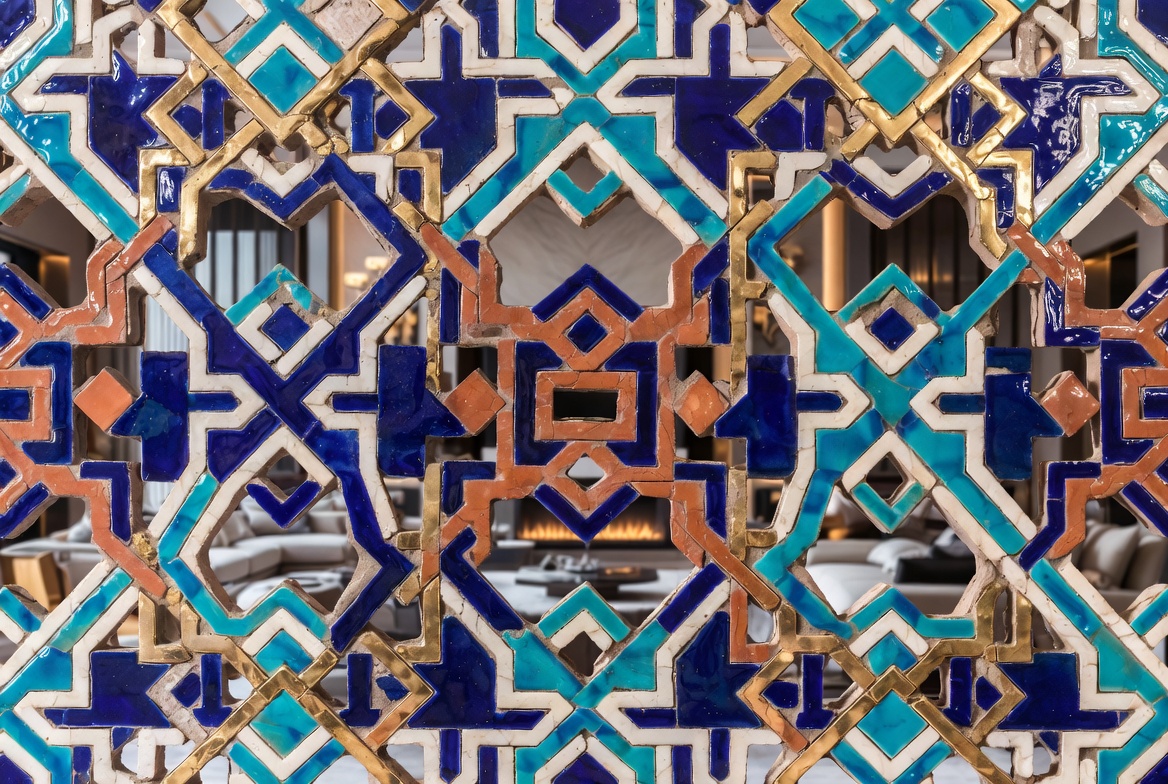
Image by ArchitectureCourses.org. Intricate handcrafted Arabic geometric tile panel featuring traditional Islamic patterns in vibrant cobalt blue and turquoise.
These terms keep getting blurred together, and that is part of why so many pages on the subject feel messy.
Geometric pattern is built from repeated line, polygon, star, and grid logic. Arabesque usually refers to flowing vegetal ornament. They often appear together, but they are not the same design language. If this page is about architecture and interiors, it makes more sense to keep the focus on geometry as a spatial and material system.
Why This Still Feels Current
This is not just a historic ornament topic. Geometric patterning still works in contemporary design because it solves real architectural problems. It can soften glare, create privacy without full closure, add depth to flat surfaces, and give modern interiors a stronger sense of structure and rhythm.
That is the refreshing part of the subject. The pattern is not interesting only because it is old. It is interesting because it still performs.
What To Read Next
For the broader design language, go to Islamic geometric patterns. If you are tracing how patterned surfaces work in religious architecture and vertical elements, minarets is the next logical read.