

House Lifting and Raising Foundations: A Practical Guide
What Is House Lifting?
House lifting is the process of carefully raising a home off its foundation to allow for repairs, flood protection, or added space.
Think of it like using a large-scale jack system—only here, it’s for an entire building, supported by steel beams, hydraulic jacks, and precise coordination.
It’s a complex job that requires planning, experience, and the right crew. When done right, it can solve serious structural issues and open up new opportunities for your home.
Why Lift a House?

Here are the most common reasons homeowners choose to lift:
-
Foundation Repair
Lifting gives direct access to repair or replace a damaged or sinking foundation. -
Flood Protection
Elevating a home above flood level helps reduce long-term water damage risks. -
Adding a Basement
Create new living or storage space underneath your existing home. -
Raising Ceiling Height
Improve cramped interiors and enhance overall comfort. -
Strengthening Structure
Reinforce weak foundations or adapt the home for long-term durability.
House Lifting Methods
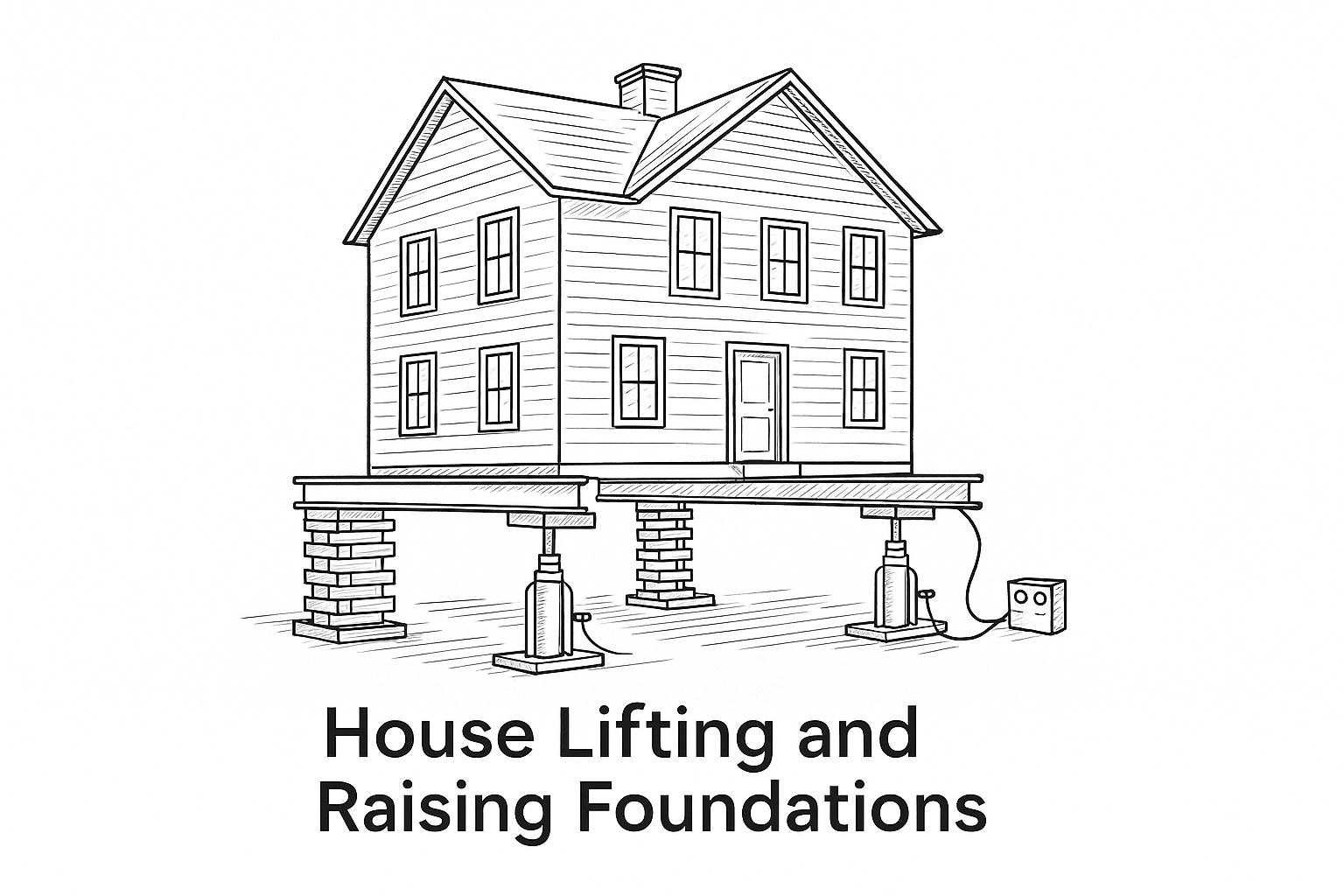
Professionals choose the method based on your home's size, soil type, and goals:
-
Hydraulic Jacking
The most common method—synchronized jacks lift the home slowly and safely. -
Cribbing and Steel Beams
Stacked wood supports (cribbing) and steel beams keep the home level during foundation work. -
Screw Piles & Elevation
Ideal for unstable soil. Steel piles are drilled deep into the ground and used to support the elevated structure.
Is House Lifting Worth It?
Absolutely—when done correctly. It prevents major future damage, adds valuable space, and increases home safety. It’s not a DIY project, but with the right team, house lifting is a smart, long-term investment.
House Lifting Projects: Types and Their Benefits
A Guide to Types of House Lifting Projects for Homeowners
House Lifting: Understanding the Various Project Types
Different Types of House Lifting Projects Explained
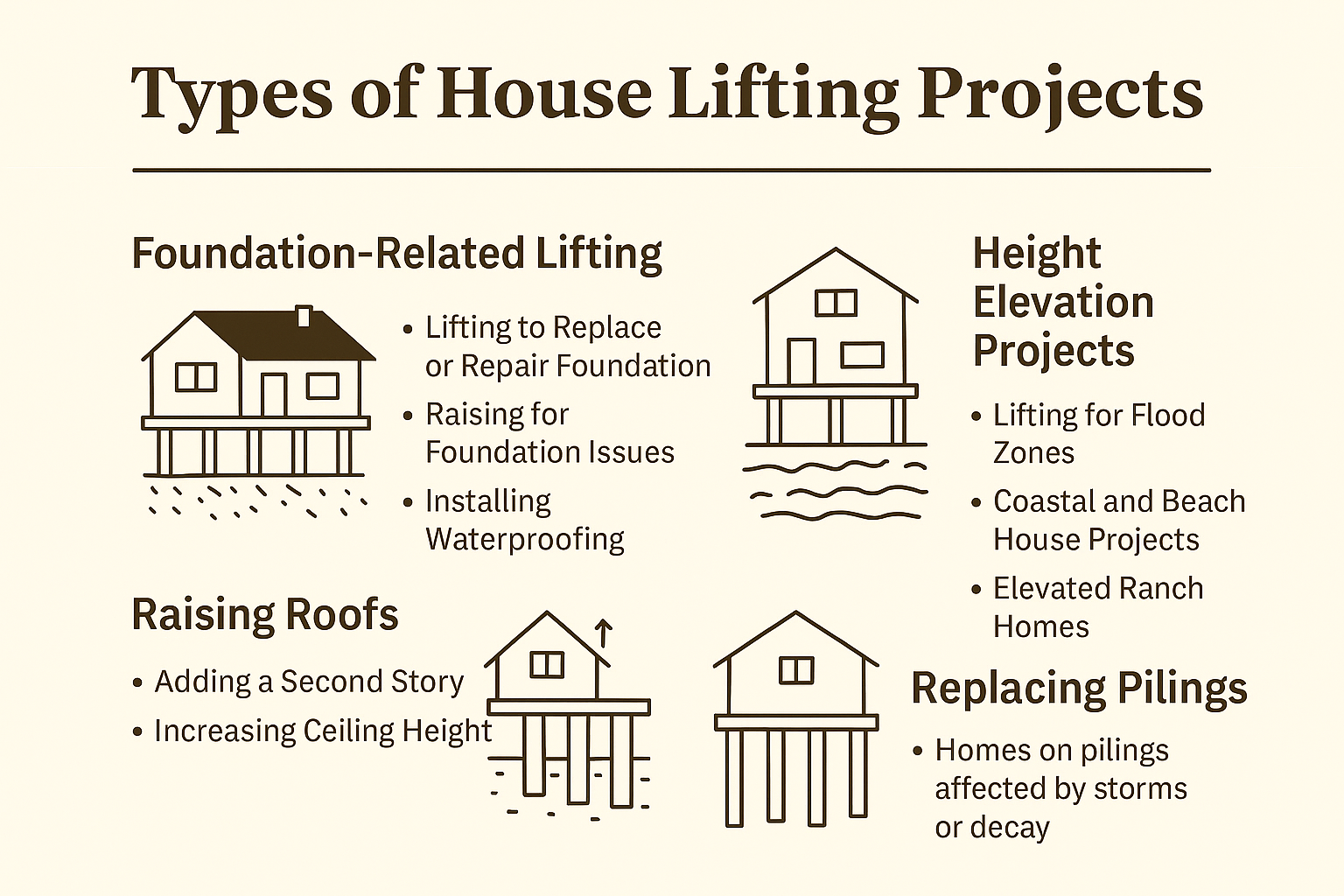
Image: Infographic outlining major types of house lifting projects such as foundation repair, flood zone elevation, roof lifting, and replacing structural pilings.
House lifting is about giving a home a second chance—maybe even a third. Think of it like putting your house on stilts, minus the palm trees and tropical vibes.
Below are the main projects where house lifting shines, each tailored to solve a specific structural headache.
Foundation-Related Lifting

Foundations take a beating over time, and this is where house lifting does its best work. It’s all about fixing or upgrading what holds everything together so you can rest easy knowing your floors won’t turn into a mini skate park.
What Are the Types of House Lifting Projects?
From Flood Protection to Renovations: Types of House Lifting Projects
Lifting to Replace or Repair Foundation
- Pier and Beam Foundation
When the original wooden beams or piers start showing their age, it’s time to raise the house and swap them out with sturdy materials that won’t flinch at a little moisture. - Slab Foundation Lifting
If your concrete slab is cracking or sinking, lifting it is often more budget-friendly than replacing the whole thing. Plus, it means you won’t be tripping over uneven floors at 2 AM. - Replacing Pilings
Homes built on pilings can face serious issues when storms, water damage, or good old-fashioned rot come into play. House lifting makes it possible to remove the bad pilings and slide in new ones without uprooting your life.
Raising for Foundation Issues
- Sinking or Uneven Foundations
Sometimes soil behaves like that friend who never shows up on time—it just can’t be counted on. Lifting the house straightens things out and adds extra support to avoid a future tilt. - Adding Stem Walls
This technique adds a vertical extension between the foundation and your home, perfect if you’re looking to boost insulation or keep floodwaters at bay. - Installing Waterproofing
While the house is suspended, it’s a golden opportunity to reinforce against leaks. If you’re already lifting, you might as well stop water from sneaking in.
Height Elevation Projects
Sometimes the goal isn’t just to fix what’s there, but to create extra room or outsmart rising waters. Whether you want higher ceilings or you’re tired of watching the yard turn into a lake, these projects can help.
Lifting for Flood Zones
- FEMA-Compliant Elevations
If you live in a flood-prone region, you probably know local regulations as well as your grocery list. Elevating the house checks those compliance boxes and often lowers insurance costs. - Coastal and Beach House Projects
Oceanside living is great—until waves and storms start eyeing your front door. Raising the house offers peace of mind, so you can enjoy those sunsets without worrying about high tide on your couch. - Elevated Ranch Homes
Ranch-style houses can feel even cozier when they’re up high. You keep that single-level charm, minus the fear of water sneaking in.
Raising Roofs
- Adding a Second Story
Need more room but don’t want to give up your backyard? Lifting the roof to pop in another floor is often easier (and cheaper) than building out. - Increasing Ceiling Height
Ever had to duck under a ceiling fan? Raising the roof means more headroom—no more accidental encounters with that light fixture. - Roof Lifting Techniques
Whether the roof is taken off and set aside or jacked up in place, there’s a method to the madness. It’s a careful process, but the payoff is big: more space and an updated look, all in one go.
House lifting can be a major project, but the results are worth it. Whether you’re fixing that wobbly foundation or heading off the next big storm, you’ll keep your home standing tall and sturdy for years to come.
And trust me, nothing beats that “all done” moment when you step back and admire your lifted, level home—especially if you used to have to chase your rolling pen across the kitchen floor.
House Lifting Methods: How It’s Done
Raising a house might sound like something out of a cartoon, but it’s a real project with solid engineering behind it.
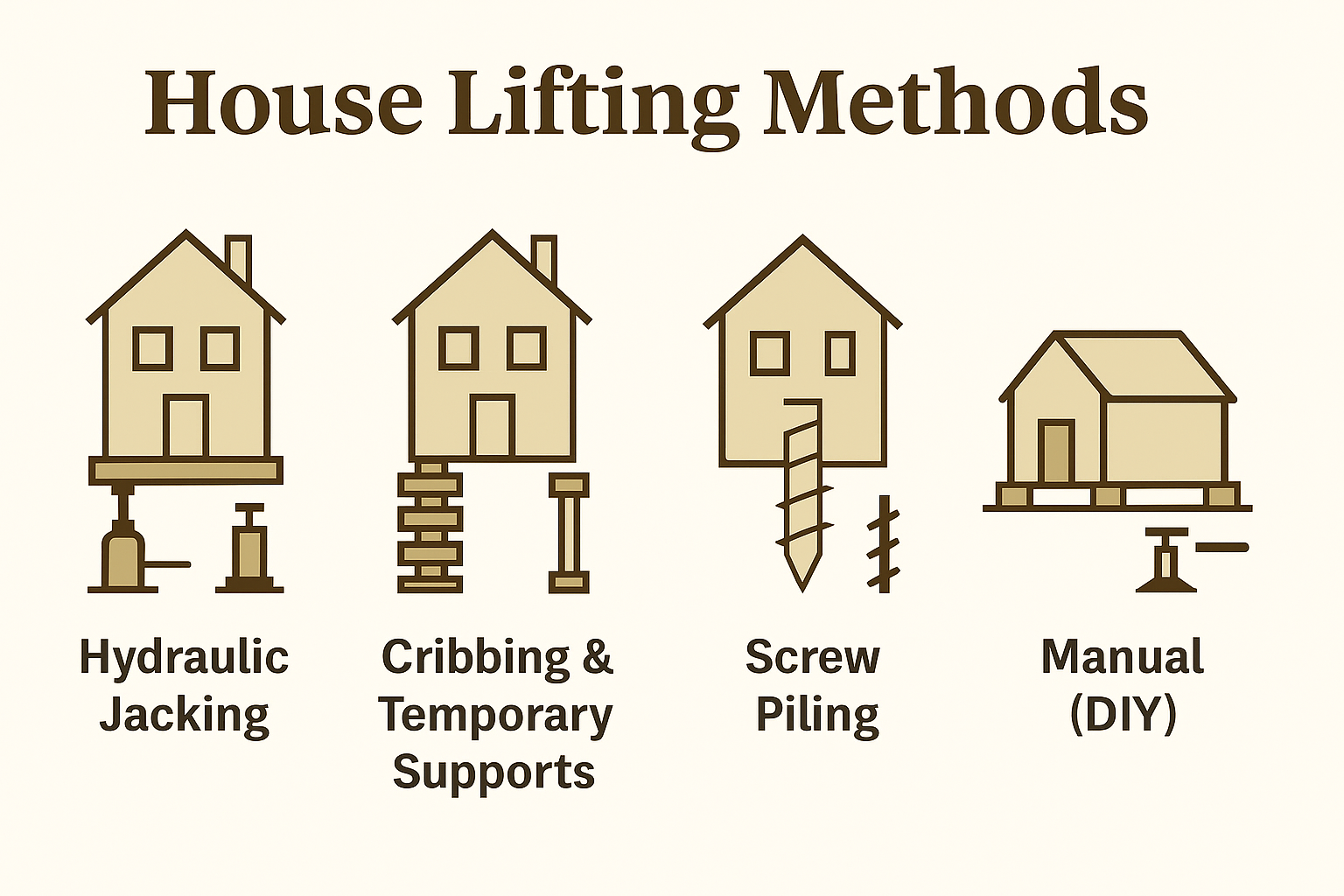
Below are the main methods used to hoist a home so you can fix foundations, add headroom, or keep water at bay.
If you’re thinking of tackling a lifting project, grab a cup of coffee and let’s see how it’s done without turning your house into a Tilt-A-Whirl.

(PRO TIP: If you’re in a high-water area, it’s always smarter to consider future flooding risks before you pick a lifting method. It’s not fun to finish a big project only to realize you need even more height.)
Different Methods for Lifting a House Safely
1. Hydraulic Jacking
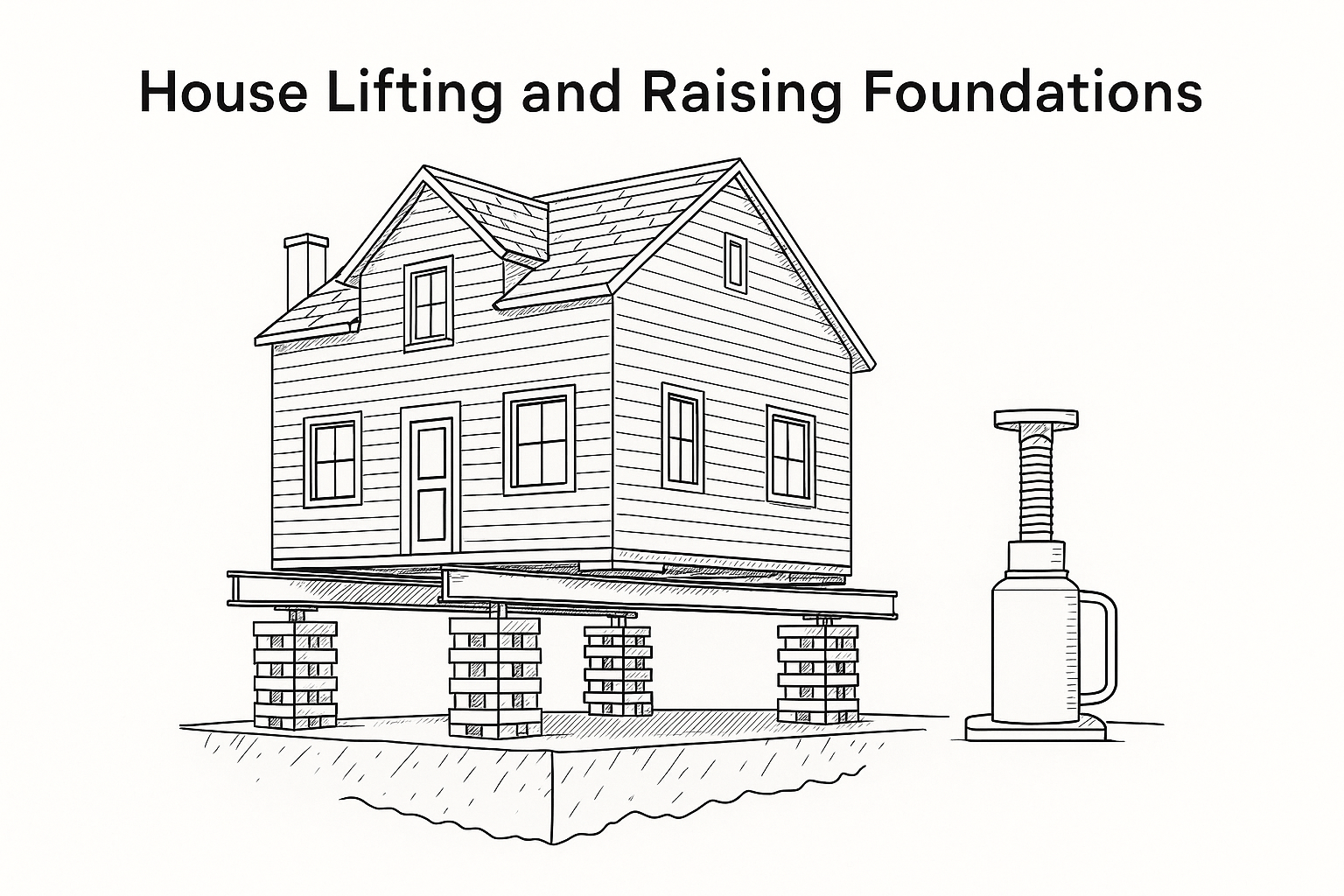
Hydraulic jacking is the go-to method for many pros. It’s precise, relatively quick, and gets the job done without too many surprises (unless you count the looks on neighbors’ faces).
- Step-by-Step Overview
- Prep the Perimeter: Workers clear the area around your house and set up steel beams under the structure.
- Jack Placement: Heavy-duty jacks are arranged at key points to distribute weight evenly.
- Slow and Steady Lift: The house is raised inch by inch to avoid damaging walls or floors.
- Secure and Assess: Once it’s at the desired height, supports and temporary beams lock it into place.
- Equipment Used
Hydraulic jacks, steel beams, and a whole lot of careful measuring. If you’ve seen a car jack, picture a giant version of that with about 10 times the muscle. - Costs and Timeline
Costs vary depending on home size and how much needs fixing underneath. You’re generally looking at a few days to a couple of weeks for the lifting portion. - When to Choose This Method
If your main issue is a sinking foundation or you need the precision of a slow, controlled lift, hydraulic jacking is often your best bet. In my experience, it’s the most predictable method—and predictability is key when dealing with major structural moves. - Lessons Learned on Real Projects
One homeowner I worked with tried to rush the lift to save a day or two on labor costs. Bad move! A sudden jolt can cause cracks in the walls and even warp door frames. Go slow, check levels often, and you’ll save yourself a lot of headaches (and repair bills) later.
2. Cribbing and Temporary Supports
Sometimes known as the “stack-it-high” approach, cribbing involves using wooden blocks to create a sturdy platform for your home to rest on while the foundation is repaired or replaced.
- Materials: Steel Beams and Wooden Cribs
Steel beams slide under the house, and cribbing—essentially big, square blocks of wood—gets stacked in a crisscross pattern. It’s like building a giant, ultra-sturdy Jenga tower that won’t topple if someone sneezes. - How It Works
Crews lift the house gradually, placing each level of wood blocks to support the weight. It’s all about balance—like walking a tightrope, but with wood and steel instead of fancy footwork. - Safety Considerations
Cribbing has to be done methodically. If you rush, you risk uneven support. Nobody wants their living room to become a teeter-totter, so it’s crucial to have pros who’ve done it a hundred times before. - When to Choose This Method
Cribbing is great when you have a straightforward lift and enough space to stack materials. I usually recommend it for mid-sized homes where you need a long window to get underneath and do some serious foundation work. - Common Mistakes to Avoid
- Uneven Stacking: If you don’t line everything up perfectly, the whole structure could shift. Double-check those wood blocks—measure twice, stack once.
- Skimping on Quality: Using old or substandard timber is asking for trouble. Always go for high-grade materials that can handle the load.
- A Memorable Lesson
I once saw a team try to mix different block sizes “because it was cheaper.” Halfway through, the stack started to tilt. Luckily, they caught it in time and fixed the setup before any damage was done. Trust me, you don’t want to gamble with cribbing.
3. Screw Piling
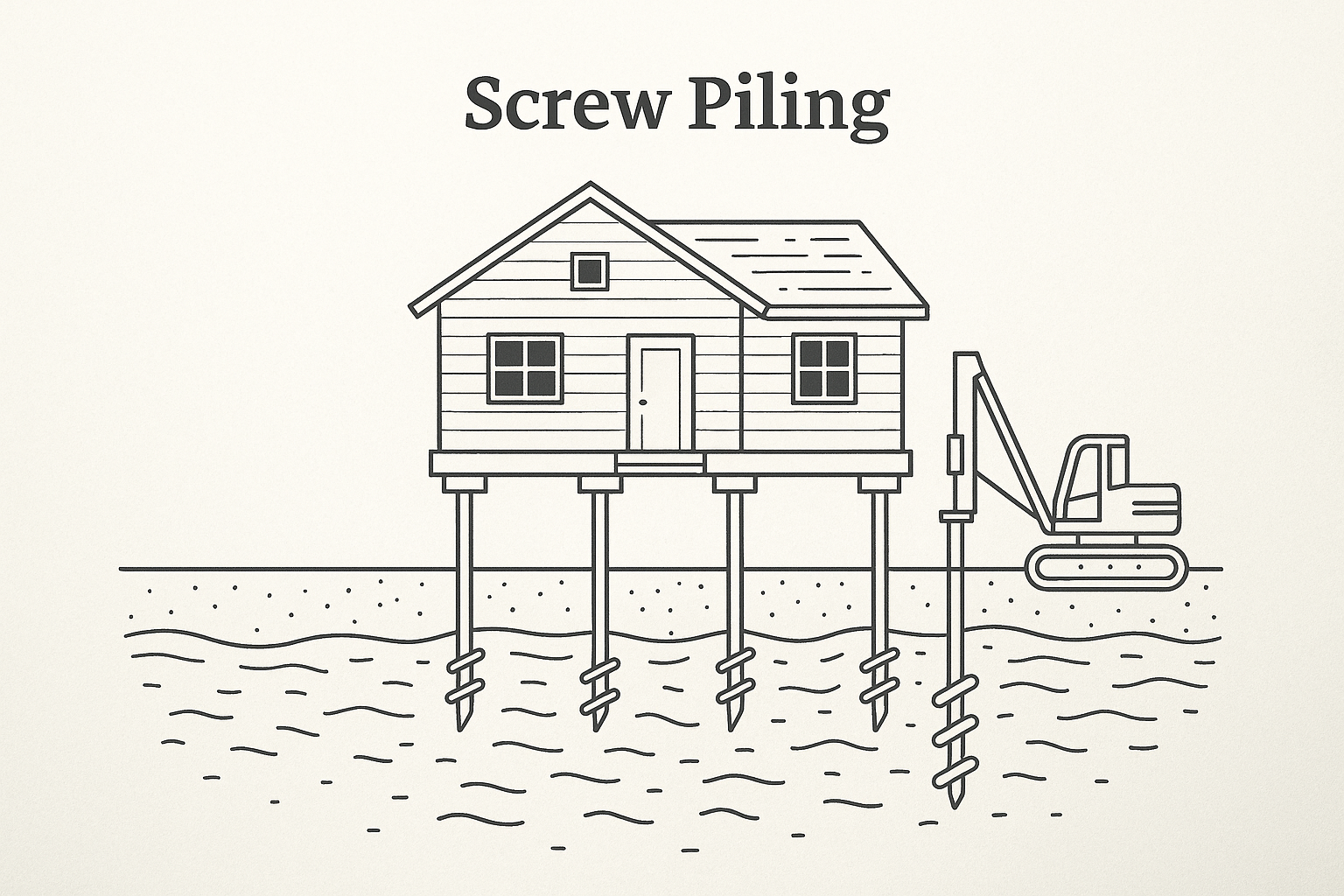
If you’re near the coast or have soil that shifts around like it’s got somewhere else to be, screw piling can keep your house firmly planted—no more sinking floors or tilted doorframes.
- Benefits for Coastal Homes
Screw piles are like big metal corks that twist into the ground. They stand up to shifting sand, storms, and rising water levels better than many traditional foundation methods. - Installation Process
- Survey and Drill: Teams figure out where the piles should go and then drill them into the soil.
- Lift the House: Similar to hydraulic jacking—slow and steady—until the house is at the right height.
- Secure It in Place: Once the piles are set, the home is locked onto these new supports.
- Long-Term Durability
With proper maintenance, screw piles can outlast many standard foundations, especially in areas that get hammered by hurricanes or floods. - When to Choose This Method
If you’ve got sandy or loose soil—and especially if storms make frequent guest appearances—screw piling is a tough solution to beat. I’ve seen houses stand tall through hurricanes thanks to this type of support. - What Could Go Wrong?
If you skip the soil testing phase, you might end up with piles that are either too short or incorrectly placed. Always consult a geotechnical expert first. Guesswork and foundation support don’t mix well. - My Personal Tip
Even though screw piling can be more expensive upfront, it’s an investment that pays off by sparing you future repairs. You sleep better at night knowing your home isn’t dancing every time the tide comes in.
House Lifting Techniques: What You Need to Know
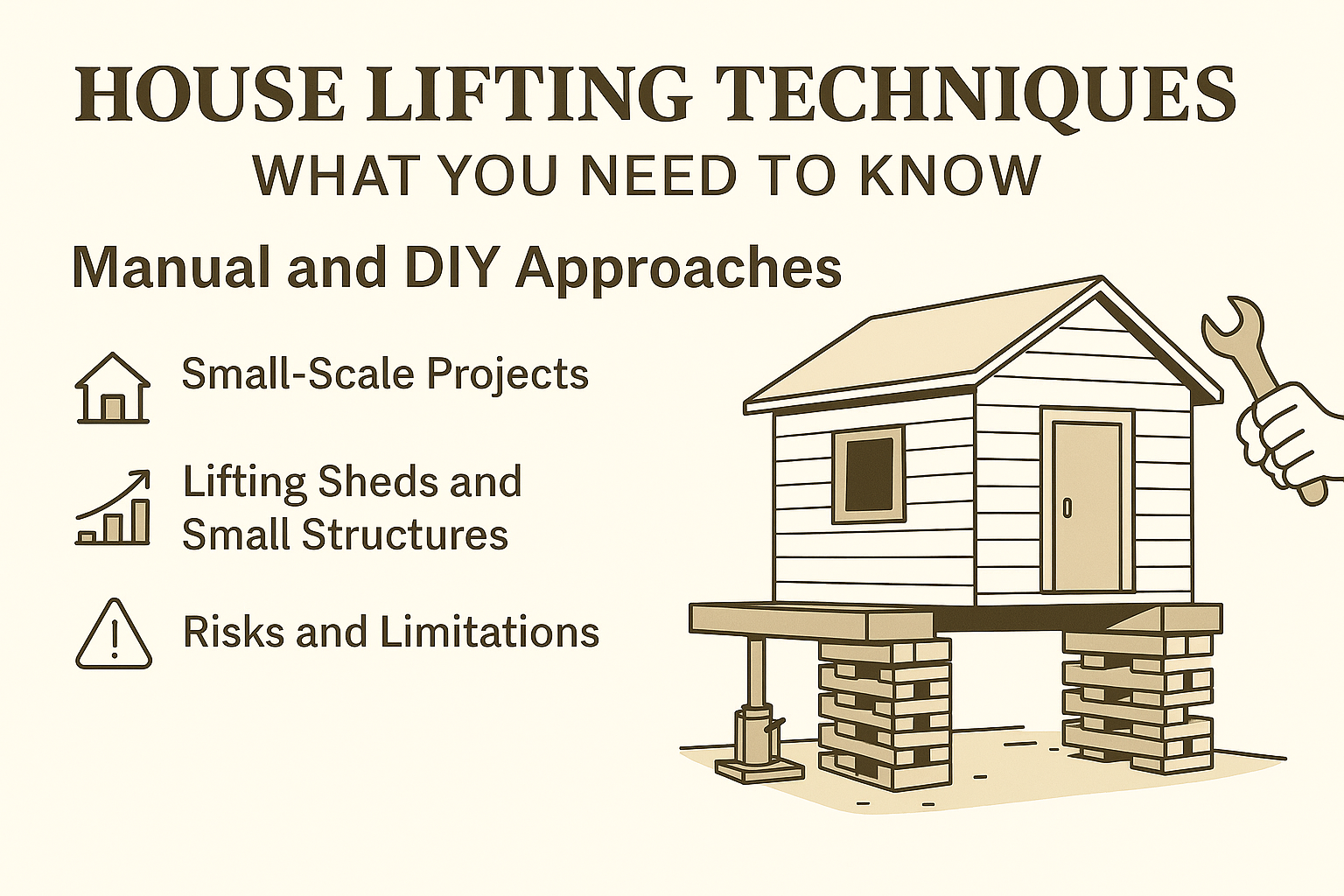
4. Manual and DIY Approaches
Yes, some folks try to lift smaller buildings themselves, but let’s just say it’s not for the faint of heart. This is best reserved for backyard projects where the “structure” is more like a shed than a dream home.
- Small-Scale Projects
If you have a tiny cabin or a simple outbuilding, a bit of elbow grease and some basic gear might do the trick. - Lifting Sheds and Small Structures
Propping up a shed often involves jacks, a few beams, and a watchful eye to ensure nothing shifts. The plus side? You won’t owe contractors a small fortune. - Risks and Limitations
Doing it on your own comes with bigger risks. One uneven lift, and you could damage your structure (or worse, yourself). If you’re not 100% sure, it’s usually better to call a pro. - Lessons from the DIY Front
A friend of mine wanted to level a small garage on his own. Two jacks, a little math, and what he called “common sense” led to a near miss when one jack slipped. Luckily, no one was hurt—but it was a reminder that even small projects can become big accidents in a blink. - When to Actually Go DIY
If you’re a seasoned DIY-er with the right tools and knowledge, lifting a small building might be a fun weekend project. Otherwise, think twice. Medical bills and structural damage usually cost a lot more than a professional crew.
House lifting might look dramatic, but with the right approach, it’s a safe and effective way to solve foundation woes, tackle flooding issues, or create that extra space you’ve been craving.
If you’re leaning toward hydraulic jacking, cribbing, screw piling, or a smaller-scale DIY, make sure you consider safety, cost, and long-term stability.
The only thing worse than a sagging house is having to lift it twice—and I’ve seen people learn that the hard way. Use the right method for your situation, and you’ll keep your home standing tall for years to come.
House Lifting Costs: What You Need to Know
House Lifting Costs Explained: From Planning to Completion
Breaking Down the Costs of House Lifting
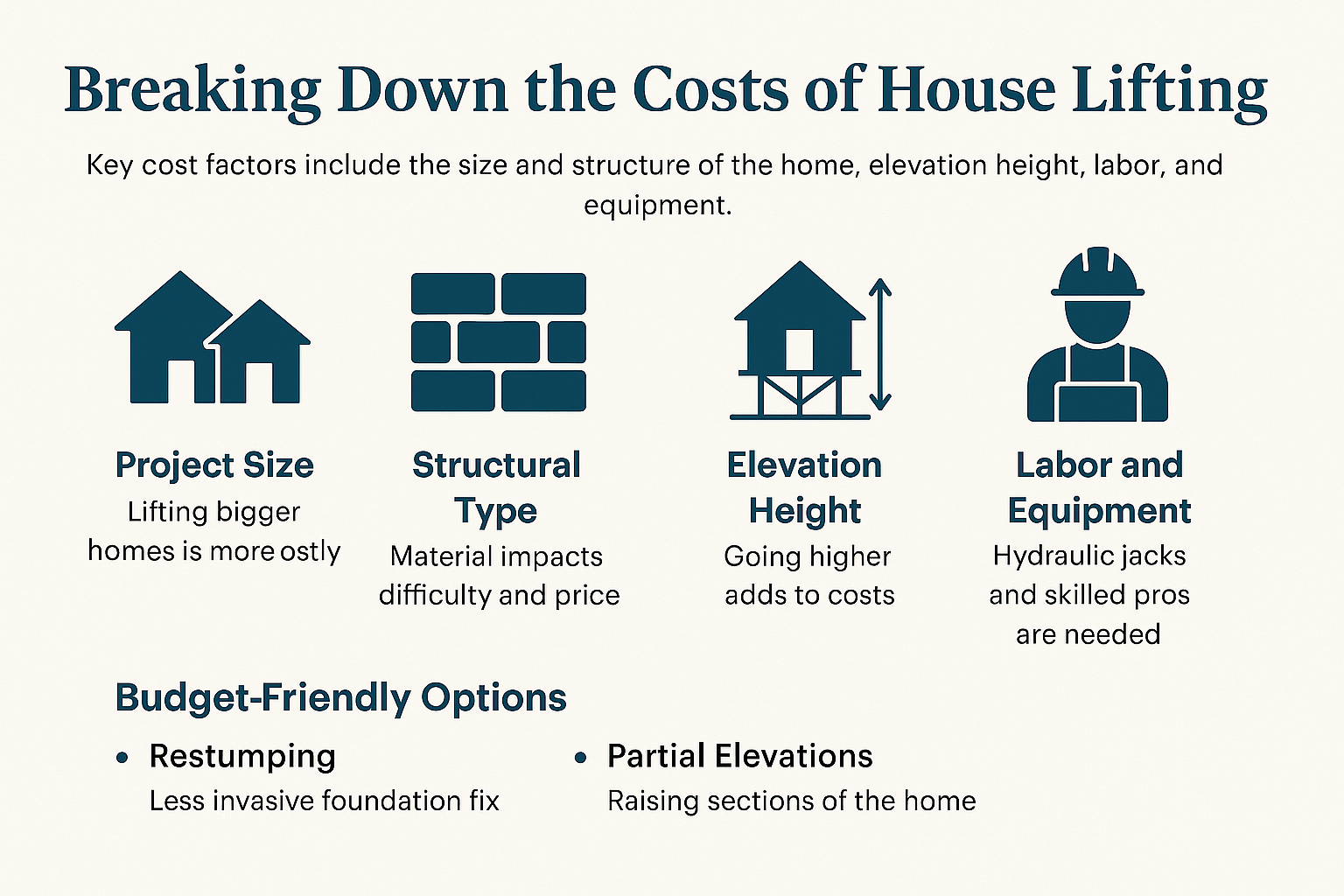
Costs of House Lifting: Factors That Affect Your Budget
Lifting a house isn’t cheap. But it doesn’t have to break the bank, either. I’ve seen homeowners save thousands of dollars just by planning smartly and knowing where to cut corners (the safe kind).
Below are the main factors that drive up—or down—the total cost of a house-lifting project, along with some real-world examples of how people managed to keep their wallets intact.
Cost Factors: How Much Does House Lifting Really Cost?

Project Size
- Bigger House, Bigger Bill
The larger the home, the more materials and labor you’ll need. A sprawling two-story cabin in the woods will naturally cost more to lift than a cozy beach bungalow. - Smart Scheduling
One homeowner I worked with delayed part of the foundation work until the off-season, when contractors were less busy. They saved around $4,000 on labor costs alone because the crew had more flexibility and offered a seasonal discount.
Structural Type (Brick, Wood, Concrete)
- Different Materials, Different Challenges
Wood frames are generally lighter and simpler to lift compared to full brick or concrete homes. However, older wood might need extra TLC if there’s rot or termite damage lurking underneath. - Reusing Materials
Another clever trick: one family reused old bricks where possible. They got creative, saving nearly $1,500 on new brick purchases. Plus, it gave their foundation a nice, rustic look.
Elevation Height
- More Height, More Dollars
Raising a house a few inches to level it out isn’t the same as hoisting it a full story. The higher you go, the more time, equipment, and engineering are required. - Plan for Future Floods
I once saw folks go for a two-foot lift instead of just one. It cost a bit more upfront, but when a major storm hit three years later, they had zero flood damage. In the end, it practically paid for itself.
Labor and Equipment
- Specialized Crews
Hydraulic jacks, cribbing, and screw piling setups aren’t your everyday tool kit. Skilled pros who know how to handle these methods charge accordingly. - Bulk Discounts
If you’re also doing landscaping or driveway work, ask about bundling projects. I’ve had clients save over $2,000 by scheduling excavation for the foundation at the same time as a new driveway install.
Average Costs
Raising a House (2 Feet, 4 Feet, Full Story)
- 2 Feet Up
This typically covers leveling out minor foundation issues or adding a little buffer from water. Costs can vary widely, but I’ve seen projects come in around $15,000–$30,000, depending on local rates and house size. - 4 Feet Up
If you’re really worried about flooding—or want a crawl space—a four-foot elevation might hover around $25,000–$50,000. It’s a more involved process that requires heavier support structures. - Full Story
Going big? Elevating a full story can easily climb into the $60,000+ range. That said, one savvy homeowner built an entirely new living space downstairs, turning the cost into an investment they’ll recoup if they ever sell.
Adding a Basement
- Digging Deeper
Turning that crawl space into a full basement is another beast altogether. You’re looking at excavation, waterproofing, and reinforcing walls. It can range from $40,000 to $100,000 or more. - How One Family Saved
I once worked on a project where the homeowners scheduled basement waterproofing at the same time as adding the basement itself. By bundling those tasks, they got a package deal, trimming roughly $5,000 off the total.
Repairing or Replacing Pilings
- Coastal Concerns
For homes near the water, replacing old or damaged pilings might run $10,000–$30,000 or more. - Preventative Measures
Don’t wait until pilings are fully deteriorated. One client caught early signs of wood rot and acted fast. Quick repairs saved them at least $7,000, versus doing a full replacement six months later.
Regional Cost Variations
- Location, Location, Location
Urban areas with higher labor rates will naturally push costs up. Rural regions might have cheaper labor but also fewer qualified crews. - Get Multiple Quotes
Always compare at least three contractors. I’ve seen quotes differ by as much as $10,000 for the exact same scope of work. It might take a few extra days to get bids, but the savings are well worth it.
Budget-Friendly Options
Restumping
- Under-the-Radar Fix
Restumping (or re-blocking) involves replacing old stumps beneath a house—often found in older wooden homes. It’s less invasive than a full lift and can be done for a fraction of the cost. - A Cost-Saving Tale
I watched a neighbor opt for restumping instead of a complete foundation overhaul. The bill came to around $12,000—less than half the price of a full-scale lift.
Partial Elevations
- Raise Only What’s Necessary
Sometimes you don’t need to lift the entire house—just the part that’s sinking or prone to flooding. - Less Lifting, More Saving
By tackling one section at a time, a client saved over $3,000 on heavy machinery rentals. It took longer, but they spread out the expense and avoided a big upfront hit.
When it comes to house lifting, knowledge is power—and it can save you a small fortune. From waiting for off-season discounts to combining related projects, there are countless ways to trim costs without sacrificing quality.
Sure, it’s a sizable investment, but done right, it can protect your home from floods, foundation problems, and more for decades to come.
And if you play your cards right, you might just pocket enough savings for that dream patio or a well-deserved vacation (once all the dust settles, of course).
Where and Why House Lifting Is Applied

House lifting isn’t just a fancy trick to show off. It’s a real, practical way to solve a range of problems—like protecting your home from floods, fixing crooked foundations, or adding that extra space you’ve been dreaming about.
Over the years, I’ve seen everything from beach bungalows rising to avoid tidal surges to charming old ranch houses hoisted up so their owners could squeeze in a new garage.
Below, we’ll look at the main reasons people lift their homes, and what you can get out of the deal.
House Lifting Applications: Common Uses and Benefits
Whether you’re worried about stormy seas, crumbling foundations, or cramped quarters, house lifting can offer a safe, cost-effective solution. And sometimes the benefits go beyond what you might expect.
One family I worked with raised their house to prevent future water damage—then realized they had room for a cozy new basement lounge. The possibilities can be pretty exciting when you plan things right.
Understanding House Lifting Applications and Their Purpose
Before you jump in, it’s good to know the “why” behind each application. Think of it like choosing the right tool for the job: if you’re concerned about floods, you don’t want to spend money on a full foundation replacement when all you really need is an elevation.
When you match your goals to the right lifting strategy, you’ll end up with fewer headaches, a more stable home, and quite possibly a lower bill.
When to Consider House Lifting: Key Applications
1. Flood Mitigation
Nobody wants a soggy living room every hurricane season. House lifting for flood protection might be the single best way to keep your floors dry and your stress levels in check.
Coastal and Beach House Elevations
- Stilt Living Done Right
Beach houses on stilts aren’t just for the postcard look. Lifting your coastal home can save thousands—or even tens of thousands—in repair costs after a big storm. I’ve watched entire beach communities get hammered by waves, only to find that the elevated homes needed little more than a rinse-down.
FEMA Grants for House Raising
- Finding Financial Help
If you’re in a flood zone, you might qualify for grants or subsidies to help cover the cost of lifting. I’ve seen homeowners snag these grants and end up paying a fraction of the total cost. - Paperwork Matters
Just remember that government help means extra forms and inspections. It’s worth it—especially if it keeps your out-of-pocket expenses down.
Examples of Flood Zone Compliance
- Beach Houses on Stilts
Ever wonder why some shoreline homes look like they’re on tiptoes? It’s to let storm surges pass beneath without destroying the main floor. - Elevated Slab Foundations
Another option is lifting the entire slab. I once worked on a low-lying property that was rebuilt 3 feet higher than its original position. When the next tropical storm rolled in, they had zero water damage.
2. Foundation Repairs
Foundations are like your house’s backbone. When they start to fail, everything above suffers—doors stick, floors slope, and walls crack. Lifting can help fix those issues once and for all.
Replacing Old Foundations
- Long-Term Peace of Mind
If your foundation is beyond simple patch jobs, raising the home might be the only way to fully replace it. I’ve seen folks who tried to keep “Band-Aiding” their old, crumbling foundations, only to pay more in the long run. - One Memorable Project
A century-old brick home I worked on needed complete foundation replacement. Lifting it saved the original floors and walls, preserving that vintage charm while giving it a rock-solid new base.
Lifting to Install New Piers or Pilings
- Extra Stability
Sometimes, you don’t need a whole new foundation—just new supports. Whether you’re dealing with wood rot or shifting soil, lifting the home gives you space to put in piers or pilings that keep it level. - Preventing Future Problems
I’ve seen homeowners spend a little more upfront for stronger pilings, only to be grateful when neighboring houses started sinking. One couple joked that they stayed dry and level while everyone else wondered what happened.
Repairing Slabs or Crawlspaces
- Under-House Makeover
If your slab is cracking or your crawlspace is too musty, lifting the house allows you to fix the damage, add waterproofing, and improve drainage. - Beware the Corners
Corners of a slab are often the first to settle. Lifting helps you address those problem areas without demolishing the entire structure.
3. Space Additions
Sometimes you just need more room—whether for a workshop, a playroom, or that dream home theater. House lifting can help you create new living space without eating up precious yardage.
Adding a Basement
- Double the Storage
Transforming an empty crawlspace into a functional basement can be life-changing if you’re tired of tripping over boxes. One family I worked with gained enough space for a kids’ rec room, a laundry area, and a spare bedroom. - Cost vs. Value
Sure, it’s not cheap to dig out a basement. But the return on investment can be substantial—especially in areas where basements are a coveted feature.
Creating Storage or Garage Space
- Lower-Level Parking
If you live in an urban area, you might be able to tuck a garage or workshop underneath your lifted home. It’s a game-changer if your neighborhood has limited street parking. - Tailored to Your Needs
I’ve even seen someone create a fully decked-out woodworking shop under their lifted ranch house, complete with soundproofing. No more angry neighbors complaining about late-night hammering!
Increasing Basement Ceiling Height
- No More Ducking
Raising a house to boost the ceiling height of a basement is more common than you’d think. Once you get rid of that low, cave-like feeling, your basement can transform into a bright, welcoming space. - Unexpected Perks
In one project, the homeowner decided to add bigger windows after lifting. The new, taller basement got tons of natural light—enough for a home office and a small library nook.
4. Raising Roofs
No, we’re not talking about a rave party. Lifting your roof is a legit way to add living space or improve your home’s energy efficiency.
Expanding Ranch Houses
- A Second Story on Top
Ranch-style homes are usually single-level, but who says they have to stay that way? One client lifted the roof just enough to add a new upper floor with bedrooms and a comfy lounge area. - Keeping the Lot Size
Instead of expanding outward, you go upward. It’s great if your land is tight or you want to preserve a yard for the kids and the dog.
Adding Dormers or Second Stories
- More Light, More Views
Dormers can transform an attic from a cramped storage space into a bright living area. I’ve seen them turn a dusty loft into a beautiful studio apartment, complete with skylights. - When It Pays Off
In some markets, adding a second story can significantly boost your home’s resale value. One family ended up selling their newly expanded home for nearly 30% more than similar houses in the neighborhood.
Energy Efficiency and Insulation Benefits
- Better Temperature Control
Lifting a roof often involves adding new insulation and modern ventilation. It can save you money on heating and cooling bills. - Case in Point
I once worked with homeowners who replaced their ancient attic insulation after raising the roof. Their first utility bill came in noticeably lower, and they joked that the new floor practically paid for itself.
House lifting can be a game-changer if you know what you need and pick the right approach. Whether it’s avoiding floodwater, fixing shaky foundations, or carving out that “man cave” (or “mom cave!”), the possibilities are pretty exciting.
Planning ahead—and maybe chatting with a few pros—can help you avoid pitfalls and make the most of your project. After all, the goal is to lift not just your home, but your peace of mind, too.
In Focus: Soil Testing and Structural Integrity
When it comes to house lifting and raising, soil testing stands out as one of the most critical—and sometimes overlooked—steps. Here’s why it matters:
Why Soil Testing Is Essential
- Load Distribution: The weight of your house needs uniform support. If the soil underneath is unevenly compacted or too soft in some areas, your home could settle again after it’s lifted.
- Prevention of Future Damage: Identifying soil composition (clay, sand, silt, loam, etc.) helps you choose the right foundation method—be it pilings, piers, or reinforced footings.
- Long-Term Savings: A thorough soil test might cost a little upfront, but it can save you thousands by preventing future structural repairs.
How It Works
- Core Sampling: Professionals drill into the ground to collect soil samples at various depths. This reveals layers, moisture content, and load-bearing capacity.
- Lab Analysis: The samples get tested for density, compaction, and other properties. From there, an engineer recommends the best foundation approach.
- Tailored Solutions: Armed with the data, contractors can design a lifting strategy—such as adding more support beams or choosing screw piles—that’s specifically suited to your site.
Real-World Impact
- Case in Point: I once worked with a homeowner who initially planned to use screw piles for a coastal house lift. After a soil test, the engineers discovered rocky layers that made traditional pilings more cost-effective and stable. The final bill dropped significantly because they didn’t fight the natural terrain.
Key Takeaway
Never skip soil testing. It’s the backbone of a stable, long-lasting house lift. Think of it as doing the homework before the big test—without it, you’re just guessing.
Specialized House Lifting Services: What to Look For

Lifting a house isn’t exactly an everyday project—so if you’re ready to tackle it, you’ll want the best team and techniques in your corner. Over the years, I’ve seen how the right crew can save thousands in potential damages (and a whole lot of stress).
Below, we’ll dive into how to find top-notch contractors, pick the best regional strategies, and even explore what it takes to move an entire home to a brand-new spot.
Customized House Lifting Services: What You Need to Know
1. Finding Contractors
House Lifting Services Near You
- Local Expertise
Searching for “house lifting services near me” might yield plenty of hits, but focus on those that truly know your region’s quirks—like local soil types, climate challenges, and zoning rules. - Hidden Gems
Sometimes smaller, family-run businesses have decades of niche experience. One homeowner I worked with found a local outfit that specialized in vintage bungalows. They not only lifted the house safely but also preserved its original wood siding.
Specialized Contractors for Pilings and Beams
- Why Specialization Matters
Pilings and beams are the backbone of any lift. Contractors who work with them every day have the chops to spot potential issues before they turn into expensive headaches. - Real-World Win
I recall a coastal project where the original plan for wooden pilings was swapped for composite materials—long story short, it saved the homeowner at least $5,000 in future repairs, not to mention peace of mind when hurricane season rolled around.
Choosing the Right Professionals
- Check References and Reviews
Ask for examples of previous jobs and talk to past clients. I’ve seen folks avoid big regrets (and big bills) by spending a couple of hours reading up on contractor reputations. - Bids and Estimates
Always get multiple quotes. One homeowner I knew ended up saving nearly $10,000 by choosing a contractor who offered a seasonal discount—just because they had fewer projects in winter.
2. Techniques by Region
Coastal Areas: Pilings and Stilt Homes
- Staying Above the Waves
In storm-prone zones, pilings or stilt systems can protect your home from water damage. I’ve seen entire neighborhoods go untouched by floodwaters, while nearby houses on standard foundations took a beating. - Pro Tip
If you’re dealing with shifting sand, make sure your contractor tests the soil. Overly short pilings can lead to wobbly floors down the line.
Urban Areas: Jacking in Tight Spaces
- Working Around Neighbors
In cities, houses often sit elbow-to-elbow. Crews need specialized equipment that fits narrow lots and tall surroundings. - Unexpected Perk
One urban family I met actually benefited from the tight space—they negotiated a shared crane rental with their neighbor, splitting equipment costs and saving both sides money.
Cold Climates: Frost-Protected Footings
- Battling the Freeze
Freezing ground expands and contracts, which can wreak havoc on foundations. In chilly regions, frost-protected footings ensure your home doesn’t shift every winter. - Success Story
I remember a homeowner in Minnesota who invested in special insulation wraps around the new footings. Not only did it stabilize the house, but it also cut down on heating bills—an unexpected bonus.
3. Moving and Relocating Homes
Costs and Logistics of House Moving
- Beyond the Lift
Shifting your house to a whole new spot involves permits, specialized trucks, and sometimes even temporary road closures. I’ve seen moves that cost anywhere from $20,000 to over $200,000, depending on distance and home size. - Why Bother Moving?
Sometimes it’s cheaper to relocate a beloved heritage home than to build new. One family transported a 1930s Craftsman across two counties and still spent less than constructing a comparable house from scratch.
Case Studies of House Lifting and Relocation
- A Historic Win
I worked on a project involving a 100-year-old farmhouse. The owners wanted to preserve its original charm but needed to get it away from a flood-prone valley. We used hydraulic jacking, placed it on a flatbed, and carefully drove it up the hill. - Lessons Learned
- Overestimate the Timeline: Unexpected delays—like weather or surprise utility lines—can happen.
- Secure the Interiors: Take down pictures and secure furniture. One family discovered the hard way that a china cabinet doesn’t like bumpy roads.
- Think Long-Term: Make sure your new site has good access to utilities, safe roads, and meets local building codes. Skimping on the planning phase can lead to big regrets later.
Final Word: Specialized house lifting services can transform a risky, complex job into a smooth (well, smoother) process.
If you’re on a sandy shore, in the heart of the city, or looking to move your home clear across town, having the right team and the right strategy will make all the difference.
A little research now can save you a mountain of frustration—and money—down the road.
Safety and Regulations
Structural Stability During Lifting
When you’re lifting an entire house, stability is the name of the game. One sudden shift or missed measurement can turn a well-planned project into a pricey fiasco.
In my early days, I saw a team rush through the leveling process, only to crack half the drywall when the house settled unevenly.
Now, I remind every client and crew member: measure twice, lift once. Keep an eye on real-time readings—modern sensors can detect even a fraction of an inch in shift, which might save you from a major headache.
Compliance with Local Building Codes
No matter how good your plan is, if it doesn’t meet local codes, you could be in for fines and do-overs.
Building codes address everything from the depth of footings to the type of fasteners used on joists.
In some regions, you’ll need multiple inspections—before, during, and after the elevation.
I’ve had projects temporarily halted because we forgot to schedule a mid-lift inspection.
Clearing all the red tape early is easier than having to stop mid-hoist because the city inspector can’t squeeze you in until next week.
FEMA and Floodplain Guidelines
If you’re anywhere near a flood zone, chances are you’ll need to follow FEMA guidelines. These rules dictate how high you must raise your home and outline which materials work best under flood conditions.
I’ve seen families apply for FEMA grants to offset the cost of lifting. It can be a game-changer—especially if you live in a hotspot for hurricanes or flash floods.
Just be prepared for a bit of paperwork; it’s worth it when you consider the potential savings and peace of mind.
Insurance Considerations
During Lifting
Insurance during a lifting project can be tricky. Some policies might not cover damages if they see the work as “high risk.” Always inform your insurer before you start—otherwise, you might be on the hook for anything that goes wrong.
One friend found out the hard way that his homeowner’s insurance didn’t apply during “major structural alterations.” He ended up footing a hefty repair bill after a minor mishap.
Post-Elevation Coverage
Once the house is successfully lifted, you may qualify for better rates if you’ve moved out of a high-risk flood zone or if your new foundation is stronger.
Make sure to update your policy. I’ve watched clients save hundreds a year on flood insurance after elevating their homes beyond the local base flood elevation.
It’s one of those hidden perks of house lifting that often gets overlooked.
Case Studies and Examples
Success Stories
Coastal Homes Elevated After Flooding
Coastal storms can be brutal, but an elevated home often weathers the waves much better. One project I recall involved a beachfront cottage that flooded almost yearly.
After lifting it on steel pilings, the owners haven’t had a drop of water inside—despite two hurricanes passing nearby.
They also turned the newly open ground level into a breezy carport, which was an unexpected bonus.
Ranch Homes with New Second Stories
Ranch-style homes are popular for their single-level convenience, but sometimes space runs out. I helped lift a 1970s ranch to add a second story.
The homeowners got two extra bedrooms, an office, and a panoramic view of the nearby lake.
Their biggest revelation? The cost was far less than buying a bigger house elsewhere, and they got to stay in the neighborhood they loved.
Challenges and Solutions
Raising Houses on Slabs
Slab foundations can be stubborn—they’re heavy, and if the slab is cracked, lifting can be riskier. The key is supporting the slab evenly from multiple points. I once saw a job where they tried to lift a large slab from just four corners.
The middle section bowed, causing more cracks. A better approach: use closely spaced jacks or install new beams to distribute the weight.
Repairs for Brick and Stone Structures
Older brick or stone houses come with an extra layer of complexity. Mortar can crumble, stones can shift.
If you don’t brace the walls correctly, you risk losing that classic facade you wanted to preserve. One historic home I worked on needed careful interior bracing before the lift.
It took extra time, but the owners kept their gorgeous stone exterior intact.
DIY Projects and Alternatives
Lifting Small Sheds or Cabins
Not every structure needs a professional crew with giant hydraulic jacks. If you’ve got a small shed or a rustic cabin, a DIY approach can work—so long as you know your limits.
I helped a neighbor raise his tiny workshop on cinder blocks to prevent rot.
We used simple bottle jacks and took it slowly, one corner at a time. The key is patience. Rush it, and you’re begging for trouble.
Cost-Effective Solutions for Foundation Issues
Sometimes you don’t need a full lift. Restumping or re-blocking can address sagging floors in older homes.
In regions where stumps are common, replacing just the failing ones can save thousands compared to jacking the entire house.
I’ve also seen partial lifts where only one side of the house is elevated to correct uneven settling. It’s a surgical fix that costs a fraction of a full lift.
When to Call Professionals
If you’re dealing with a major structural job, navigating permit complexities, or lifting a home with multiple stories, do yourself a favor—call the pros.
I’ve seen well-intentioned DIY-ers end up with cracked foundations, damaged walls, or even personal injuries. It’s not worth the risk. Professionals have the equipment, experience, and insurance to tackle the heavy lifting (literally).
Innovations in House Lifting
Hydraulic Systems
Modern hydraulic jacking systems offer precise control, allowing crews to lift each corner by mere inches at a time. Gone are the days of rough, uneven lifts that left walls cracked.
Today’s sensors and pumps ensure a gradual, stable rise.
I’ve been amazed at how smoothly some of these systems can elevate a multi-story building—sometimes you’d barely notice it’s moving.
Sustainable and Eco-Friendly Lifting Techniques
With green building on the rise, it’s no surprise that house-lifting methods are evolving too. Some contractors now use recycled steel beams, low-impact machinery, and eco-friendly footing materials.
I’ve even seen solar-powered equipment for smaller lifts.
It’s not just about being kind to the planet; often these newer materials last longer, saving homeowners money in the long run.
Smart Monitoring During Lifting
“Smart house lifting” isn’t just a buzzword. Advanced monitoring tools can track a home’s structural integrity in real time, alerting crews to any shifts or stress points.
This technology can cut down on mishaps and help you document the entire process for insurance or resale purposes.
One project I was involved in used digital lasers to monitor each jack—like having a set of extra eyes on the job 24/7.
Conclusion: Benefits of House Lifting
Whether you’re warding off floods, repairing a failing foundation, or craving more living space, house lifting can deliver massive benefits.
You’ll gain peace of mind knowing your home is sturdy and better protected against the elements.
Plus, the improved foundation or additional space often raises property value—an added bonus if you ever decide to sell.
Future Trends in Elevation and Foundation Repair
As technology advances, we’ll see more efficient jacks, smarter monitoring systems, and greener construction materials.
Remote sensors and robotics could become standard in large-scale lifts, minimizing human error and speeding up timelines.
Bottom line: house lifting is getting safer, faster, and more eco-friendly.
Sustainable, Long-Term Solutions
House lifting is an investment in your home’s future. Please, choose sustainable materials, follow best practices, and make use of new technology.
And who knows? Maybe you’ll inspire your neighbors to follow suit, building a stronger, safer community—one lifted house at a time.
Frequently Asked Questions
How Much Does It Cost to Raise a House?
Costs vary widely—from $15,000 to over $100,000—depending on the home’s size, foundation type, and how high you’re lifting.
A modest ranch might be on the lower end; a large two-story or a house requiring major foundation work will push the higher brackets. Pro tip: always get multiple quotes and look for off-season discounts.
Can I Lift a House Myself?
Unless it’s a small outbuilding or you’re experienced with structural work, it’s risky. House lifting requires specialized equipment, permits, and a clear understanding of load distribution. Even a slight error can cause major damage or injuries.
For anything beyond a simple shed, it’s best to call in the experts.
How Long Does the Process Take?
A basic elevation can often be done in a couple of weeks, while more complex lifts—like adding a full basement—may stretch over a month or more.
Delays can happen due to weather, inspections, or unforeseen structural issues.
My rule of thumb: plan for at least a week or two of “surprise buffer” time.
Are There Grants or Financial Aid for House Lifting?
If you’re in a flood-prone area, FEMA and local agencies sometimes offer grants to elevate homes.
Some states also have funding for historic preservation if your house qualifies.
It can be a paperwork marathon, but I’ve seen clients save tens of thousands of dollars. Check with your local municipality or floodplain management office for details.
Related
Best Seller Books on Amazon
Below are a few popular books related to house lifting, foundation repair, and home renovation. Each offers unique insights into structural improvements, DIY tips, and professional guidance:
- “Foundations & Concrete Work” (For Pros By Pros)
- What It’s About: This book dives into all things foundations—footings, slabs, retaining walls, and more. Compiled by professionals, it details both basic and advanced concrete techniques.
- Why Buy It: If you’re planning a foundation repair or want a deeper grasp of concrete work during a house-lifting project, this guide helps you understand the nuts and bolts behind a rock-solid base.
- View on Amazon
- “Renovation, 5th Edition” by Michael Litchfield & L. Brent Hull
- What It’s About: Although it covers a broad range of renovation topics, it devotes key sections to structural work, including lifting floors, reinforcing beams, and dealing with old foundations.
- Why Buy It: Known as a go-to resource for pros and serious DIYers, it breaks down complex renovation tasks into approachable steps, complete with illustrations and real-life examples.
- View on Amazon
- “The Visual Handbook of Building and Remodeling” by Charles Wing
- What It’s About: This book is jam-packed with diagrams and visuals covering everything from framing to foundation fixes. It’s especially helpful if you’re a visual learner.
- Why Buy It: House lifting can involve various trades—carpentry, masonry, plumbing, and more. This handbook shows how all these elements connect, making it easier to communicate with contractors.
- View on Amazon
- “Complete Book of Framing” by Scot Simpson
- What It’s About: While it focuses on framing, this book sheds light on structural principles that come into play when raising a house. You’ll find sections on load-bearing walls, beams, and how to ensure a stable structure.
- Why Buy It: Understanding framing basics is a must if you plan on adding a second story or reinforcing your home after a lift. This resource covers it all in plain language.
- View on Amazon
Official Resources, Plus Government Guides
When tackling a house-lifting project, it’s crucial to rely on expert guidance and credible sources. Below are some official and nonprofit links that offer in-depth information, grants, and guidelines:
- FEMA (Federal Emergency Management Agency)
- Why It’s Helpful: FEMA provides guidelines on elevating homes in flood-prone areas, plus potential grants or financial assistance.
- Link: www.fema.gov
- HUD (U.S. Department of Housing and Urban Development)
- Why It’s Helpful: HUD covers regulations on home construction, grants for community development, and safety standards.
- Link: www.hud.gov
- USACE (U.S. Army Corps of Engineers)
- Why It’s Helpful: Offers research and technical papers on flood control and structural integrity near waterways.
- Link: www.usace.army.mil
- Habitat for Humanity
- Why It’s Helpful: A nonprofit focused on safe housing. While they don’t specialize in house lifting per se, they have resources on affordable home improvement and structural repairs.
- Link: www.habitat.org
- Local Building Departments
- Why It’s Helpful: Requirements vary by region. Your city or county building department website often has local codes, permit applications, and inspection checklists.