
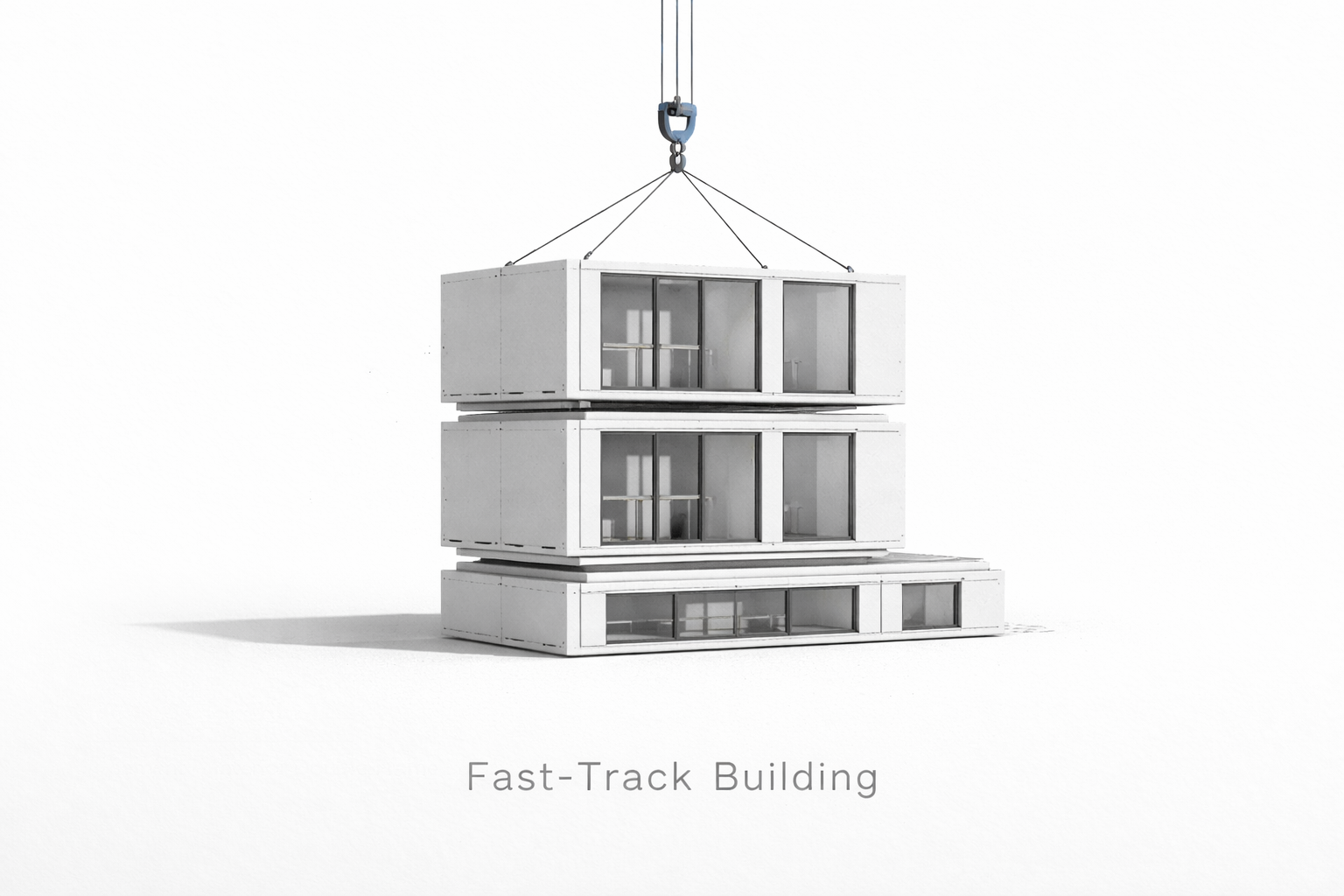
“Fast-track building” is simple in concept: you overlap design and construction instead of finishing drawings, bidding, then building in a clean line. You start foundations while upper floors are still being detailed. You release early packages (demo, sitework, structure) while the rest catches up.
The upside is obvious: time. The downside is also obvious once you’ve lived it: you’re trading time for decision pressure. If the team can’t make decisions early, fast-track turns into rework, change orders, and finger-pointing.
- What this covers: what fast-track really is, where it breaks in real life, and the moves that keep it controlled.
- What this is not: a hype page, or “just work harder.”
What “fast-track” means
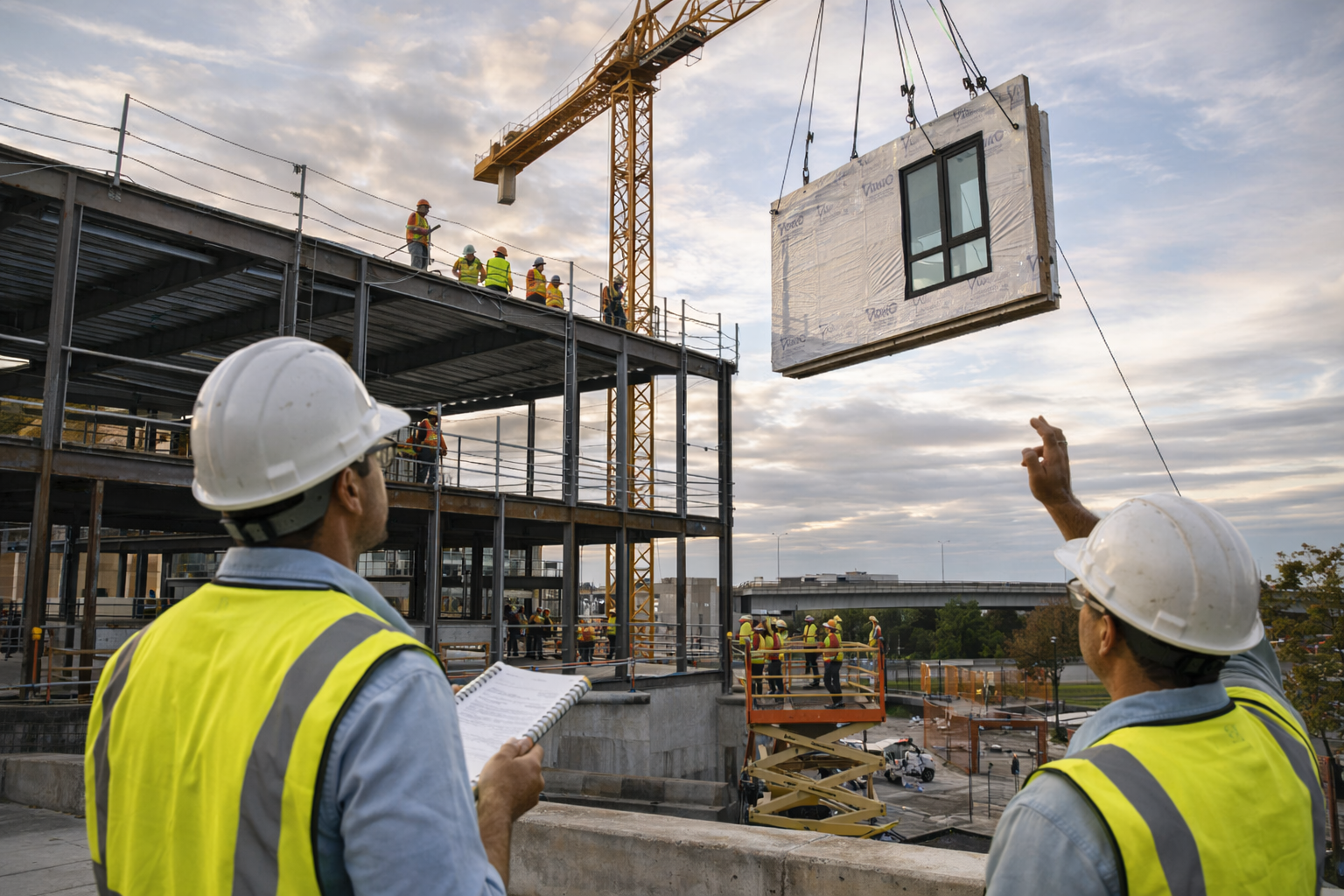
Fast-track is a delivery approach, not one specific contract type. You can fast-track design-bid-build, CM-at-risk, or design-build. The common thread is the same: construction starts before design is fully complete.
If you want the clean definition, these are solid reference points: RAIC glossary: fast-tracking and Procore’s overview.
Fast-Track Building: How to Move Faster Without Paying Twice
When fast-track is a good idea
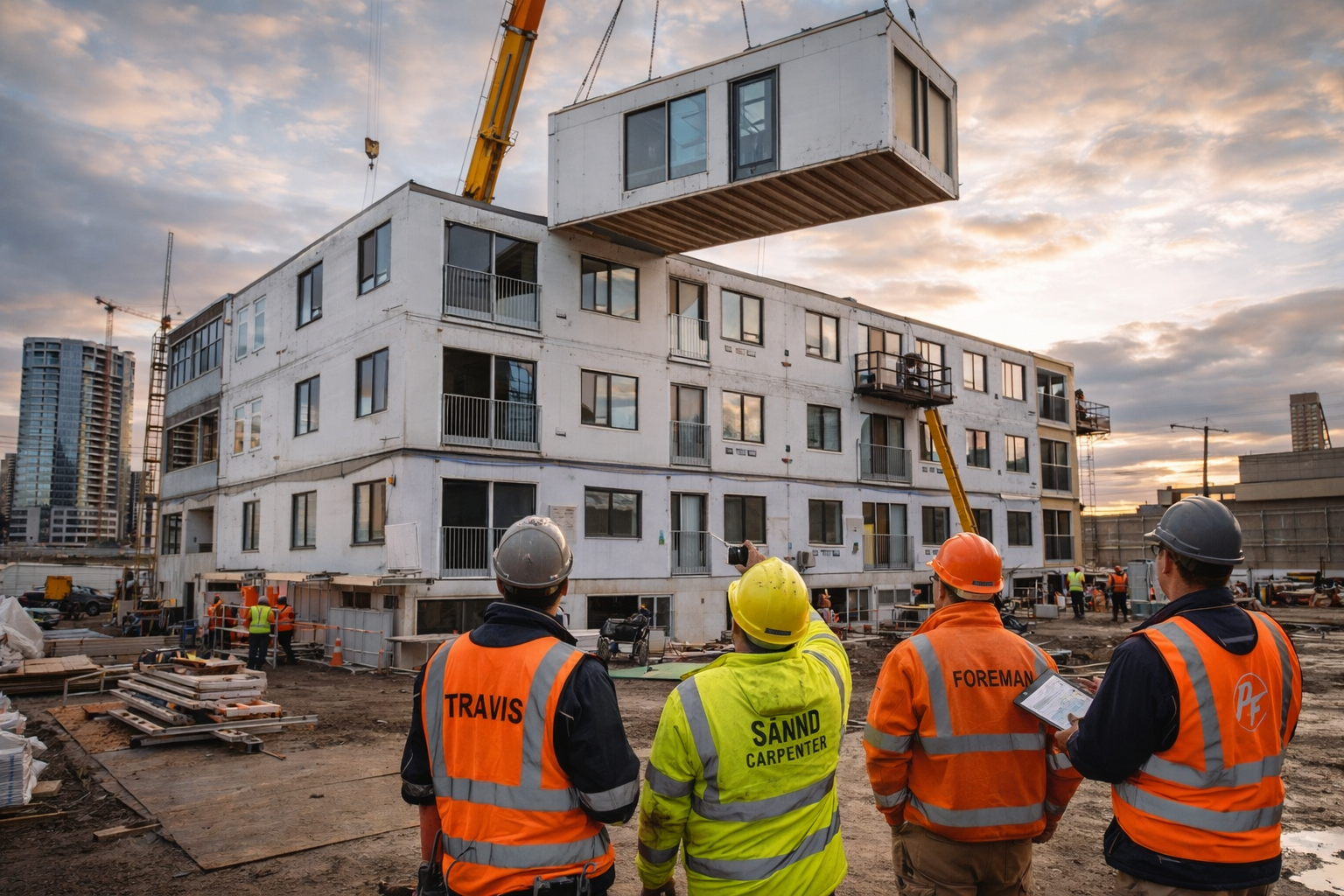
Fast-track works when the “unknowns” are limited. The building type is familiar, the owner can make decisions, and the team is tight. Typical cases:
- Hard deadlines: school schedule, tenant move-in, funding windows, shutdown windows.
- Repeatable scope: warehouses, simple commercial boxes, renovations with clear boundaries.
- Long-lead pain: you need procurement moving early so the job doesn’t stall later.
If you’re still figuring out scope and budget basics, fix that first. Start with pre-construction steps.
When fast-track is a trap
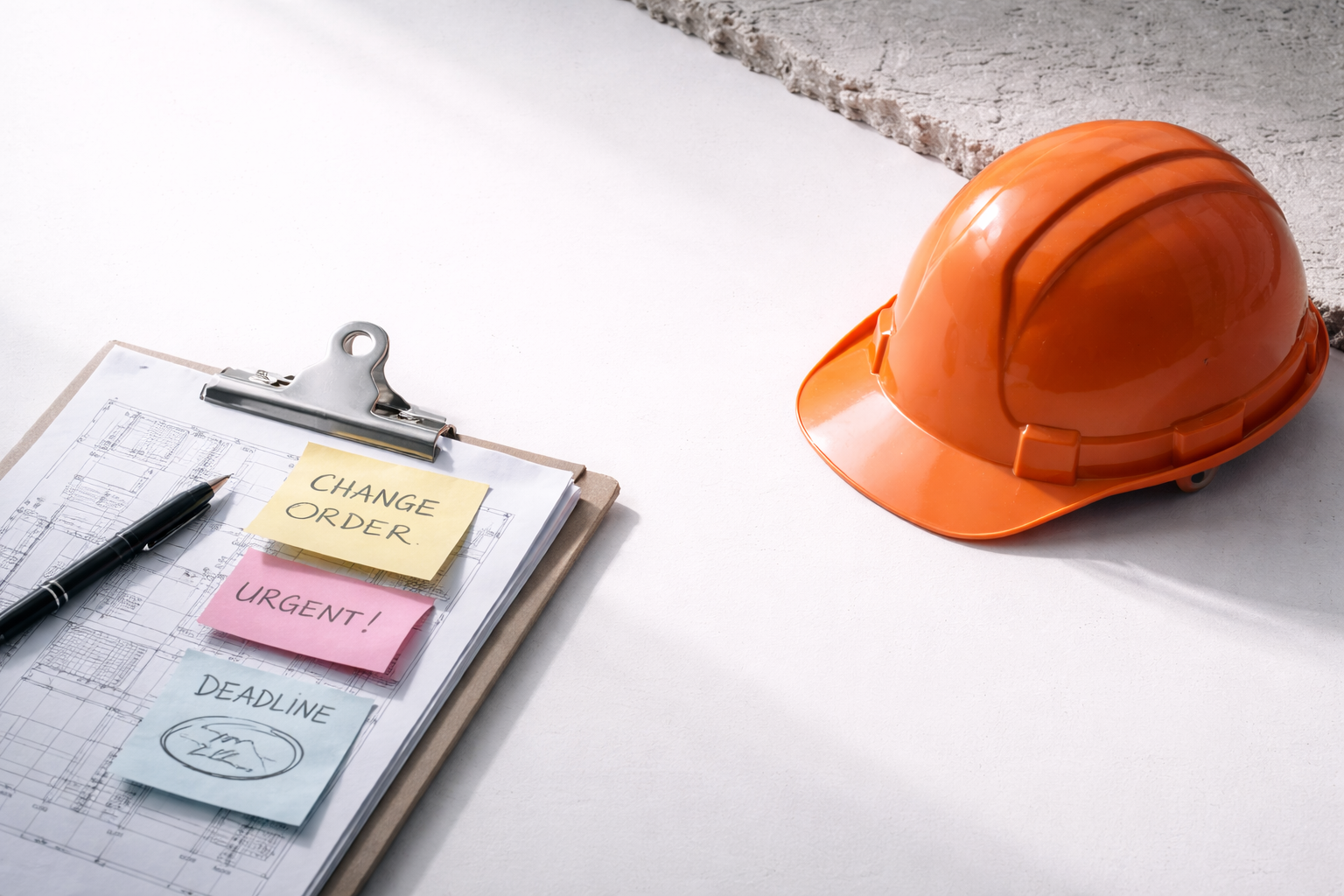
If any of these are true, fast-track can get ugly fast:
- Program is still fuzzy: “we’ll decide later” is poison in a fast-track schedule.
- Lots of interfaces: tricky roofs, multiple claddings, heavy MEP coordination, weird structural transfers.
- New team / new subs: people who haven’t built together will burn time learning each other mid-job.
- Permitting is uncertain: if your AHJ doesn’t like phased permits, you can’t “schedule” your way around it.
What breaks fast-track projects
1) Decisions lag behind work.
The crew keeps moving, so they install “something.” Then the owner changes direction. Now you’re paying twice.
2) Long-lead items aren’t owned.
Windows, switchgear, RTUs, elevators, specialty steel, curtain wall, even storefront hardware. One missed release can stall a whole floor.
3) The job gets built in the wrong order.
Trade stacking without a plan is where quality dies: access gets blocked, details get skipped, and “we’ll seal it later” becomes “we can’t reach it.”
4) Inspections and hold points are treated like admin.
Miss one inspection and the schedule doesn’t “slip,” it breaks. Subs disappear to other jobs. Restart costs money.
5) Water and envelope details get rushed.
Fast-track pressure loves to bury problems. The building doesn’t care. Leaks show up later, right when everyone swears it wasn’t them.
The professional way to run fast-track
Keep design ahead of construction. Not by a day. By enough that decisions are real before crews mobilize. If you can’t maintain a buffer, you’re not fast-tracking—you’re improvising.
Build with work packages. Release the job in chunks that can actually stand on their own: sitework, foundations, structure, enclosure, interiors. Each package needs a clear “done” definition.
Set hold points where you can still fix things clean. “Don’t cover this until it’s reviewed.” Windows/doors. Roof edges. Air barrier continuity. Firestopping. Major MEP penetrations.
Run procurement like a schedule, not a shopping list. Submittals, approvals, fabrication slots, delivery dates, install dates. One owner. Updated weekly.
Track changes like an adult. One log. One numbering system. One place to see cost/time impact. If it’s not logged, it’s not real.
The not-obvious trick that makes fast-track calmer
Do a short “release plan” meeting that feels almost too simple: one page, one table. Package → what’s frozen → by when → who signs.
Then enforce one rule: nothing is “kind of approved.” Either it’s released, or it isn’t. This single move kills a lot of the late chaos, because the team stops building off vibes.
Contracting: what fast-track pairs well with
Fast-track often pairs best with delivery models that can handle overlap and early pricing: design-build or CM-at-risk are common. DBIA’s primer is a decent starting reference: DBIA: Choosing a Project Delivery Method (PDF).
If you want a more owner-side view (how delivery methods behave under schedule pressure), CMAA’s owner guide is useful: CMAA: Owner’s Guide to Project Delivery Methods (PDF).
Permits and phased approvals
Fast-track usually needs phased permitting (early packages approved while later packages are still in design). Some jurisdictions are fine with it. Some aren’t. Ask early, in writing, how they want it handled.
Codes differ by region, but the clean “start here” source in the U.S. is the International Code Council (ICC) and the ICC Digital Codes library.
Fast-track doesn’t mean unsafe
Schedule pressure is where safety shortcuts creep in (especially trenches, ladders, roof edges, and lifts). If you need a reality anchor for what gets people hurt (and what gets sites shut down), use OSHA: OSHA.
Bottom line
Fast-track works when you do two things: decide earlier and verify before you cover. If you can’t do that, don’t call it fast-track. Call it what it is: rushing.
FAQ
Is fast-track always more expensive?
Not always. But uncertainty is expensive. If scope is stable and decisions are fast, you can save time without exploding cost. If scope is moving, you’ll buy rework. That’s where the “fast” premium comes from.
How complete do drawings need to be before starting?
Enough that the first package won’t get torn out. Foundations need real dimensions, real loads, real utility routes, real constraints. If the first package is based on placeholders, you’re basically scheduling a correction.
Is fast-track the same thing as design-build?
No. Design-build is a contract structure. Fast-track is a sequencing strategy. Design-build often makes fast-track easier, but you can fast-track other delivery models too.
What’s the #1 reason fast-track turns into chaos?
No decision owner. If two people “kind of” own a call, nobody owns it. Then the field makes the decision for you.
Where do teams underestimate risk?
Interfaces. Envelope transitions, MEP penetrations, firestopping, inspections, long-leads. The middle of the work is rarely the problem. The edges are.
What’s the simplest way to keep quality from dropping?
Put hold points in writing and enforce them: “don’t cover until reviewed.” Fast-track can be clean if you stop burying the evidence.
Do this, not that
Fast-track building works when you freeze decisions in small chunks, keep design ahead, and don’t pretend you can wing transitions. If you want speed, you need clarity. If you can’t get clarity, slow down. That’s cheaper.
Next up: Structural Design 101: The Fundamentals Behind Safe Buildings
Official + manufacturer links worth bookmarking
- AIA/AGC Primer on Project Delivery (PDF) — practical overview of delivery methods (including fast-track) and where the risk actually shifts.
- PMI: fast-tracking vs crashing — clean definition of what fast-tracking is (sequence overlap) vs “throwing resources at it.”
- OSHA — fast schedules increase safety pressure; this is where the rules get very real (and shutdowns/fines happen).
- ICC code example: foundation/partial permit language — shows how partial permits get handled in adopted code language (useful when you’re trying to start early without guessing).
- ZIP System installation manual (PDF) — good example of why fast-track fails: if you don’t follow boring prep/rolling/temperature rules, “sealed” becomes “leaks.”
- DuPont Tyvek installation guidelines (PDF) — laps, opening details, tape rules. This is the stuff warranties and disputes lean on.