

Ceiling Problems: Cracks, Leaks, Sagging, Stains and When to Worry
Most people land here after a small panic. A crack just showed up. Water is dripping from the ceiling. The bathroom ceiling paint is peeling again. The kitchen ceiling has yellow patches you cannot scrub off.
This page is your quick map for “what is going on above me” and “do I need help now or can this wait?” For the full big-picture guide to ceiling structure, insulation, finishes and design, see our complete ceilings guide.
Understand Your Roof and Ceiling First
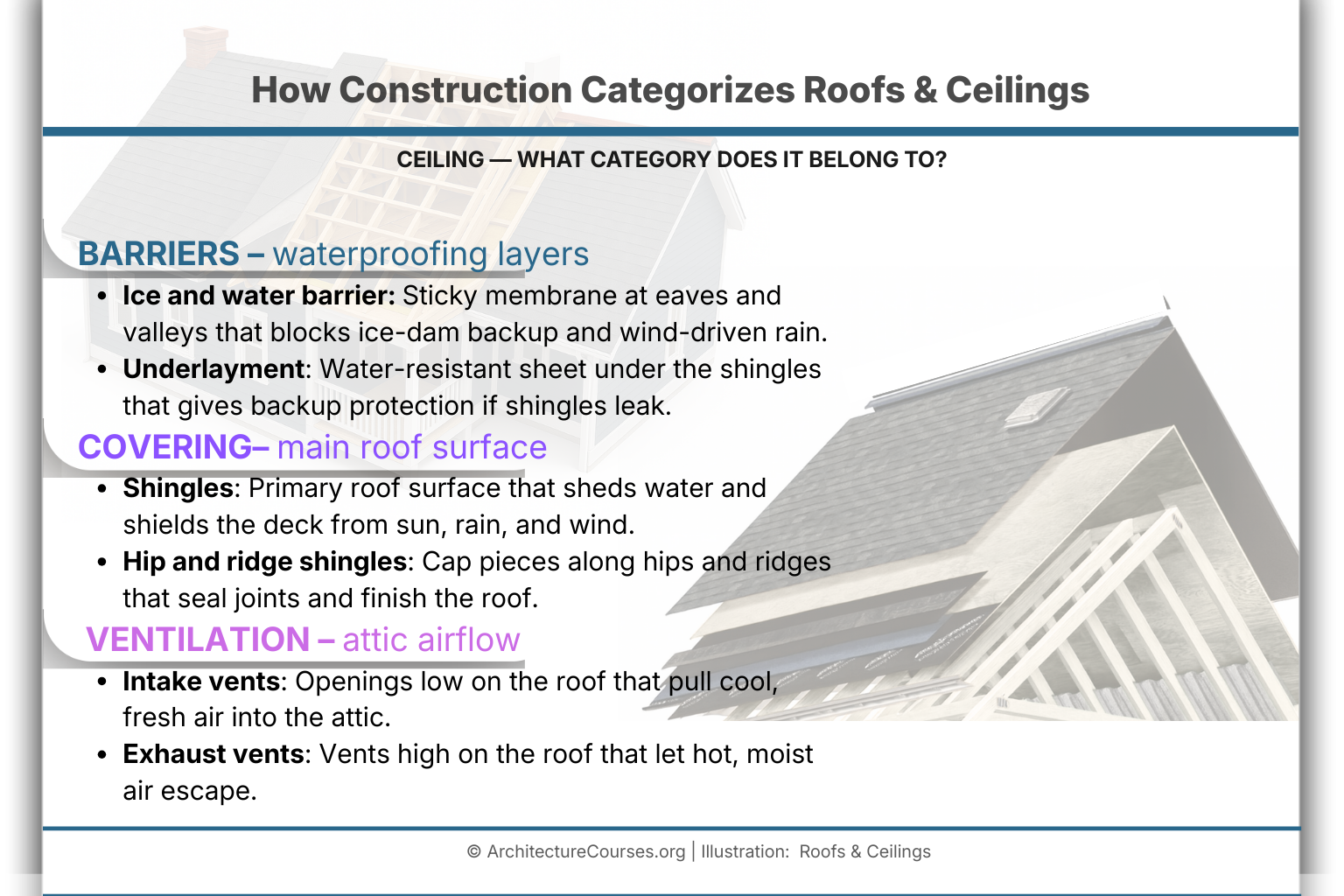
Before you panic about one crack or stain, it helps to know what is stacked above your head. A ceiling is not just paint. It is the bottom of a whole system of structure, insulation, pipes, ducts and roof layers.
In a typical house, the stack from outside to inside looks something like this:
- Roofing material (shingles, metal, tiles or membrane)
- Roof sheathing or deck (plywood or OSB)
- Rafters or roof trusses and bracing
- Insulation and air or vapor control layers
- Ceiling joists and services (wiring, ducts, pipes)
- Drywall or plaster finished as the visible ceiling
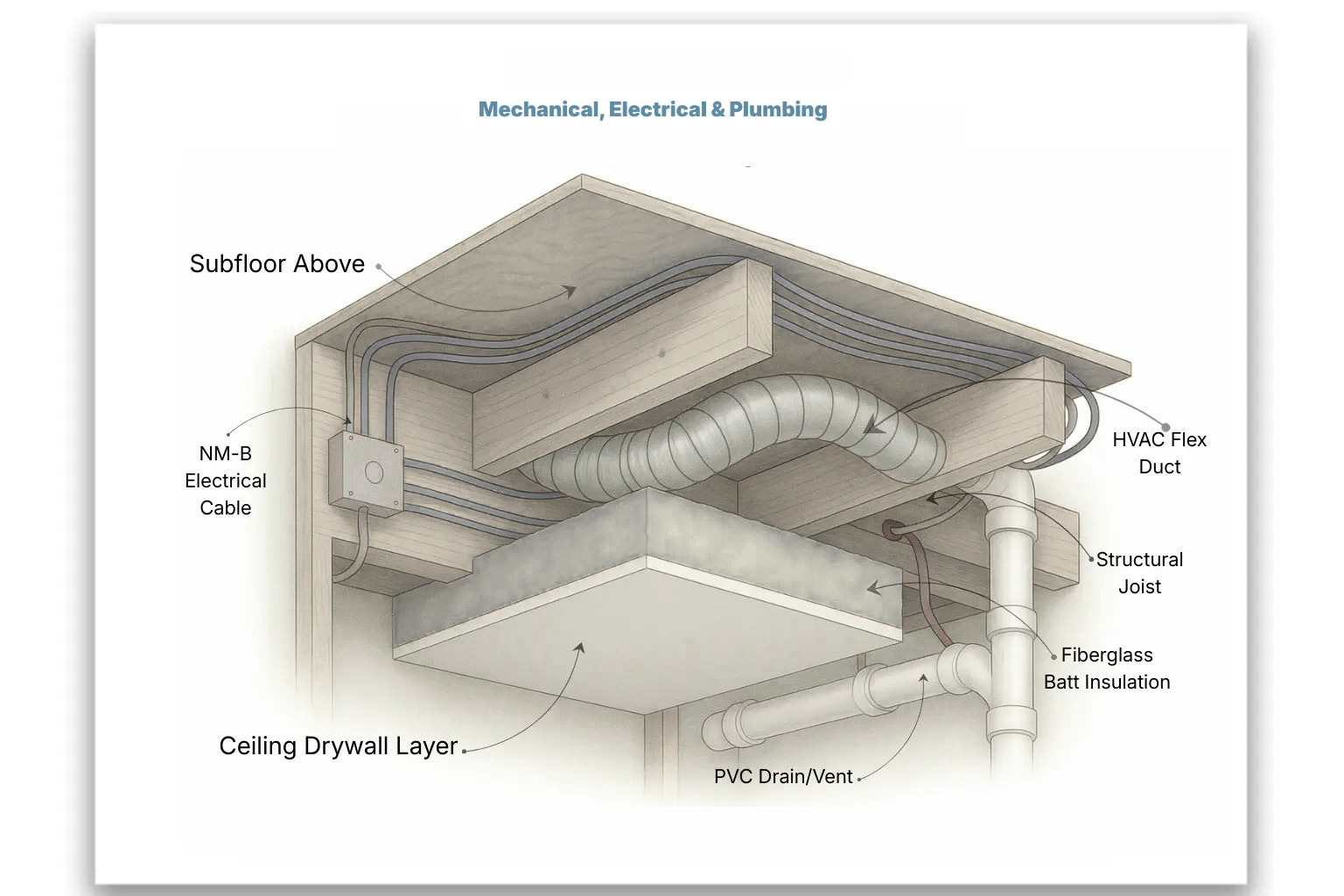
When something goes wrong at the top of that stack, it often shows up first on the finished ceiling. A loose shingle or bad flashing becomes a brown ring after a storm. A poorly insulated attic or missing air barrier turns into condensation on ceilings around lights and vents. An overloaded or cut ceiling joist becomes a slow sag.
If you want a deeper look at how roofs are framed and supported, see our plain-language guide to roof structures and House Framing 101. Both explain how roof loads travel through rafters, trusses and walls before they ever reach your ceiling drywall.
The drywall itself is only the skin. How it ties into framing, foundations and fire layers is covered in How Drywall Works With Framing and Foundations and Residential Building Codes Simplified. These are useful if you are opening ceilings, adding pot lights or rebuilding a damaged area.
For roof surfaces and waterproofing above, our roofing systems overview and roof sheathing replacement guide show the weak points that most often lead to leaks, wet insulation and ceiling damage later.
The short version: ceilings rarely fail on their own. Cracks, stains, mold and sagging are messages from the whole roof and framing system. Use this section to think “what is above this spot” before you jump straight to paint or patching.
Fast Check: Is This an Emergency?

Start with safety. Some ceiling problems are ugly but harmless. Others mean “get out of the room and call someone.”
- Wet spots that grow by the hour or water dripping from the ceiling
- Water leaking from the ceiling light, fan or vent
- Bathtub or upstairs bathroom leaking through the ceiling below
- Large ceiling sag that feels soft when you press it
- Loud new cracking sounds when someone walks above
- Brown stains that appear with every heavy rain
If you see water dripping from a ceiling light, a bathroom ceiling leaking, or a bathtub leaking through the ceiling, kill the power to that circuit if you can safely reach the panel, put a bucket under the leak and call a plumber or roofer fast. Do not stand under a wet, sagging area to “see better.”
Ceiling Leaks, Brown Stains and Water Damage

“Why is my ceiling leaking?” is one of the most common questions. The source is usually one of three things:
- Roof leak above the ceiling
- Plumbing leak from a bathroom, kitchen or laundry
- Condensation from warm, moist air hitting a cold surface
Roof leaks often show as water staining on ceilings after heavy rain or snow melt. You may see a wet spot on the ceiling that dries, then comes back with the next storm. Flat roof leaking through ceiling and water dripping from ceiling near exterior walls are classic signs.
Plumbing leaks tend to line up with tubs, showers, toilets and kitchen plumbing. Bathtub leaking into the ceiling, upstairs shower leaking through the ceiling, leak in the bathroom ceiling, or a toilet overflow leak through the ceiling usually show up right under the fixture or its drain line. Sometimes you see a ceiling leak under the bathroom or in the garage ceiling below a bath.
Condensation can look like a leak but comes from inside air. Condensation on the ceiling, moisture spots on the ceiling around recessed lights and water dripping from a ceiling vent can show up in winter or in very humid houses. Warm air hits a cold surface, water forms and then you see the stain.
Any time you see water damage to a ceiling, you need two steps: stop the source and then repair. Fixing a leaking ceiling without dealing with the roof, pipe or condensation first is wasted money. A simple tool like a moisture meter helps you find wet areas and confirm they are dry before you close up.
Ceiling Cracks, Nail Pops and When to Worry

Not every crack means the ceiling is about to fall. Houses move and materials shrink. The trick is knowing which cracks to watch and which need a pro.
Common “normal” issues:
- Hairline crack in ceiling drywall along a taped joint
- Small ceiling nail pop where a screw head shows through paint
- Fine crack where the wall meets the ceiling in one corner
Cracks in ceiling drywall that stay thin and do not change much over time are often from normal movement or minor taping issues. Plaster ceiling cracking in old houses can also be mostly cosmetic if the keys are still holding.
More serious signs:
- Cracks in walls and ceilings that line up across rooms
- Cracks in the ceiling with one side higher than the other
- Long structural ceiling cracks that follow beams or joists
- Cracks in sheetrock ceiling plus doors sticking and floors sloping
When you see cracks in walls and ceilings and you are asking “when to worry,” it usually means it is time to look at the whole house. Movement, bad soil and poor support can show up as ceiling problems first. For that bigger picture, see Foundations, Soil Analysis, and Site Investigation.
Code rules also set minimum thickness and fire layers for many ceilings. If you are opening a ceiling or planning a rebuild, Residential Building Codes Simplified: What You Need to Know is a useful plain language check.
Bowing, Sagging and Soft Spots
A flat ceiling that suddenly looks like a shallow bowl deserves attention. Bowing or sagging can come from water, weight or missing structure.
Common reasons:
- Wet insulation or soaked drywall from a long slow leak
- Ceiling joists over-spanned or cut for ducts and pipes
- Too much weight from blown-in insulation or storage above
- Old plaster pulling away from lath
A sagging drywall repair is not just a patch. You need to know if the framing above is sound. If the ceiling feels soft, if you see new sagging along with wet spots, or if you have a leak in the bathroom ceiling plus a low area, treat it as urgent.
When in doubt, step away from directly under the sag and have a contractor or engineer open a small area to see the structure and moisture level.
Mold, Black Spots and Damp Ceilings
Black mold on ceilings, mould on ceiling in a bedroom and mold in my ceiling searches all point to the same worry. Is this just surface mildew or something more serious?
Things to look at:
- Pattern. Small scattered spots often mean surface mildew from humidity.
- Location. Corners, around vents and over showers point to condensation.
- Smell. Musty odor plus visible growth usually means long-term moisture.
Mold on bedroom ceilings often ties back to poor ventilation, cold surfaces and high indoor humidity. Mould on walls and ceiling in cold corners is common in older houses with weak insulation.
Before you clean anything, deal with moisture. Fix leaks, improve ventilation, lower indoor humidity and find any hidden damp drywall. For the health and comfort side of this, Green Architecture Principles Every Architect Should Know is a good background read.
For serious growth, strong smells, or if anyone in the house has health issues, bring in a qualified mold or remediation contractor. Do not sand or scrape dry mold without proper protection.
For a simple step-by-step cleanup plan, see our 7-step musty-odor cleanup guide for the whole house.
Bathroom Ceiling Peeling and Flaking Paint
Bathroom ceiling paint peeling and flaking ceiling paint in bathrooms are almost always a mix of moisture and the wrong paint or prep.
Typical pattern:
- Paint peeling from bathroom ceiling right over the shower
- Flaking paint on bathroom ceiling in patches that match steam zones
- Painting a peeling ceiling without proper scraping and priming
Steam rises, hits the ceiling and stays there if the fan is weak or not used long enough. Over time, cheap or old paint lets go. In bad cases, you see blistering or bubbling paint on the ceiling along with cracks.
The fix is usually:
- Scrape all loose paint back to solid edges
- Wash and dry the surface well
- Prime with a good stain and moisture-resistant primer
- Repaint with a quality ceiling paint rated for baths
- Upgrade and properly duct the exhaust fan and use a timer
If you also have flaking ceiling paint in other rooms, heavy condensation on ceilings or mold nearby, treat it as a whole house humidity issue, not just a paint problem.
Yellowing and Grease on Kitchen Ceilings
Yellowing kitchen ceilings are mostly about grease, smoke and time. Open pan frying, weak range hoods and candles all load the ceiling with a thin film that grabs dust.
Common signs:
- Grease film near the stove that keeps coming back
- Yellow bands on ceiling where old lights or soffits used to be
- Sticky ceiling that will not clean with mild soap
Often you need a strong degreaser wash, then a stain-blocking primer, then fresh paint. In heavy-use kitchens, plan on regular cleaning. Good ventilation and a proper hood that vents outside make the biggest difference.
Using This Guide with the Full Ceilings Hub
This guide is for quick triage. Cracks, leaks, stains, mold, peeling and yellowing. Once you know what kind of problem you have, you can drop into more detailed guides.
- For the big picture on structure, framing and sagging, start with our full ceilings hub and the framing and structure sections.
- For movement, settlement and “is this a structure issue,” keep Foundations, Soil Analysis, and Site Investigation in mind.
- For code basics on ceiling layers, fire rating and safety around lights and penetrations, Residential Building Codes Simplified: What You Need to Know is a useful companion.
- For moisture, indoor air and long term comfort, Green Architecture Principles Every Architect Should Know ties ceilings back to the rest of the house.
Use this page to name what you see. Then use the linked guides to plan the fix, decide when to call a pro and avoid doing the same ceiling repair twice.
If the stain is small but the smell is big, or you still cannot tell where it’s coming from, use our room-by-room musty house checklist...
FAQ
Ceiling Problems, Leaks, Cracks and Stains
1. My ceiling has a new crack. When should I worry?
Hairline cracks that follow drywall joints or corners, and that do not change over time, are usually movement and shrinkage. Worry more when a crack is wider than a coin edge, runs across the room, changes over weeks, or lines up with cracks in walls or floors. That is when you call a contractor or structural engineer, not just a painter.
2. There is a brown ring on my ceiling. Is it always a roof leak?
No. Brown rings can come from roof leaks, plumbing leaks or condensation. Stains under bathrooms, laundry rooms and kitchens often trace back to pipes, drains or overflows. Stains near exterior walls or under roof valleys often point to roof or flashing issues. Stains around fans, vents and recessed lights are often moisture and air leaks, not a hole in the roof.
3. Water is dripping from a ceiling light or fan. What do I do first?
Turn off power to that circuit at the panel. Stay clear of the fixture if water is still dripping. Put a bucket under the drip and, if it is safe, relieve pooled water above by carefully poking a small hole in the lowest point of the bulge. Then call a plumber or roofer to find the source. The ceiling repair comes after the leak is fixed and the area is dry.
4. My bathroom ceiling paint is peeling and flaking. Can I just repaint?
You can repaint, but if you do not fix the moisture, it will fail again. Scrape all loose paint, sand the edges, wash the surface and let it dry. Use a stain blocking or moisture resistant primer and a good quality paint. At the same time, check that the bath fan is sized correctly, ducted outdoors, insulated where it passes cold spaces and run long enough after showers.
5. There is black or dark mold on my bedroom ceiling. Is that from a roof leak?
Sometimes. But in many rooms it is from cold surfaces and high humidity. Warm moist air hits a cold corner or a poorly insulated area and condenses. Over time mold grows on the paint film. You need to find out if the area is damp from an active leak or just cold. A simple moisture meter helps. Ventilation, better insulation and air sealing are the long term fixes.
6. My plaster ceiling has many small cracks. Do I have to tear it out?
Not always. Plaster that is still tight to the lath can often be saved with plaster washers, patching and a skim coat. If large areas sound hollow, move when tapped or have dropped away from the lath, removal and new drywall may be safer. In older homes always consider lead and asbestos in paints and compounds before demolition.
7. When is a sagging ceiling an emergency?
A ceiling that suddenly sags, feels soft when pressed, or shows fresh cracks and stains together is a red flag. This can mean soaked insulation, failed fasteners or even overloaded framing. Stay out of the room if the sag is sharp or growing. Call a contractor or engineer to shore it up and find the cause. Do not wait for it to fall.
8. Why is there mold only on the ceiling above my shower?
That spot sees the most steam and usually has the coolest surface. If the fan is weak, the door is closed and the shower runs hot, moisture stays trapped at the ceiling. Over time the paint film feeds mold. Better fan use, a short open door period after showers and sometimes more insulation above that spot make a big difference.
9. Can I fix a ceiling leak from inside the room?
You can patch drywall and paint from below, but the actual leak rarely lives there. You need to find and fix the roof, pipe, fitting or fan duct first. Only then do you open, dry and repair the ceiling. Patching from below without fixing the source just hides the problem and can trap moisture.
10. Do hairline cracks where the wall meets the ceiling matter?
Small cracks at the wall and ceiling joint are very common. They come from normal movement and from using rigid tape at that corner. Many are cosmetic. If the crack stays thin and does not show steps or displacement, it is usually a paint and caulk job. If it widens or lines up with other cracks, look deeper.
11. How long can I wait to fix a small ceiling stain?
A single light stain that does not grow may be from an old event. But any active leak, repeated wetting or stain that grows should be checked right away. Slow leaks often do more damage than one big event because they keep wood damp and let mold grow unseen.
12. Should I call a roofer, plumber or general contractor first?
Start with where the problem lives. Under a bathroom, laundry or kitchen, call a plumber first. Near a chimney, valley or exterior wall, start with a roofer. For wide sagging, major cracks or repeated issues across rooms, a general contractor or engineer can coordinate trades and check structure.
References
This page is based on field practice, but it also leans on public building, safety and health guidance. Use these sources to check local rules and best practice for leaks, mold, asbestos and repairs.
Building Codes and Structure
- International Code Council – Model International Building Code and Residential Code
- National Building Code of Canada – Official access and summaries
- National Fire Protection Association – Codes and standards index
- NFPA 101 Life Safety Code – Official NFPA 101 page
Energy, Moisture and Condensation
- U.S. Department of Energy – Insulation and air sealing basics
- DOE Climate Zones – Climate zones and suggested R values
- Building Science Corporation – Articles on leaks, condensation and roof assemblies
- ASHRAE – Standards for ventilation and comfort
Mold, Health and Indoor Air Quality
- U.S. Environmental Protection Agency – Mold and moisture in homes
- Health Canada – Mold in indoor environments FAQ
- U.S. Centers for Disease Control and Prevention – Mold basics and health effects
Asbestos, Lead and Hazardous Materials
- U.S. EPA – Asbestos in Homes – Homeowner guidance
- Health Canada – Asbestos – Health risks and renovation advice
- U.S. EPA – Lead in Paint, Dust and Soil – Renovation, Repair and Painting Program
HVAC, Ventilation and Bathroom or Kitchen Exhaust
- Home Ventilating Institute – Ratings and guidance for fans
- U.S. Department of Energy – Residential ventilation basics
- ASHRAE 62.2 – Ventilation and acceptable indoor air quality in homes
Housing, Moisture and General Guidance
- CMHC (Canada Mortgage and Housing Corporation) – Guides on housing, moisture and repairs
- HUD Healthy Homes – Healthy homes and housing quality
Always check your local building code, permit office and health authority before major repair work. National guides set the floor, but cities and provinces or states can add stricter rules for fire ratings, suites, bathrooms and basements.