
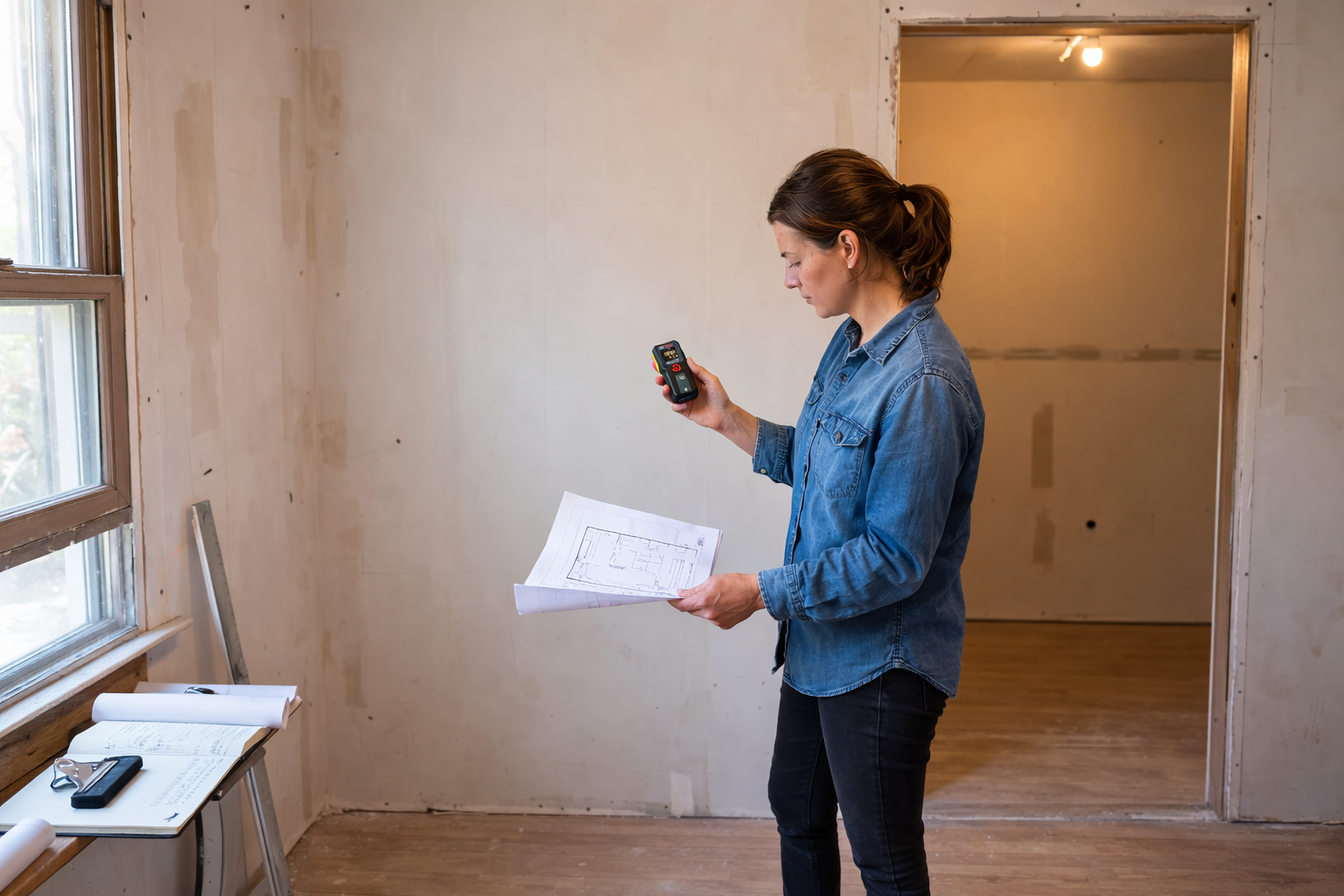
What actually matters on real surveys, renovation walks, and site visits.
Most people buy laser measures backwards. They shop range first, then wonder why the dot disappears in sun, the app slows them down, or the tool is awkward in tight corners because the reference setting was never right. The real pattern is simple: indoors, even cheap units feel good. Outside, bright light separates the decent ones from the junk. And a steel tape still earns its keep.
For architects, the decision is not complicated. You are usually choosing between an indoor survey tool, a mixed indoor/outdoor site tool, or a serious as-built capture tool. Outside, camera targeting and a digital pointfinder matter more than another fifty feet on the box. Bluetooth matters only if your field workflow actually uses it well. And no laser replaces a quick tape check at jambs, sills, casing edges, or crooked old-plaster openings.
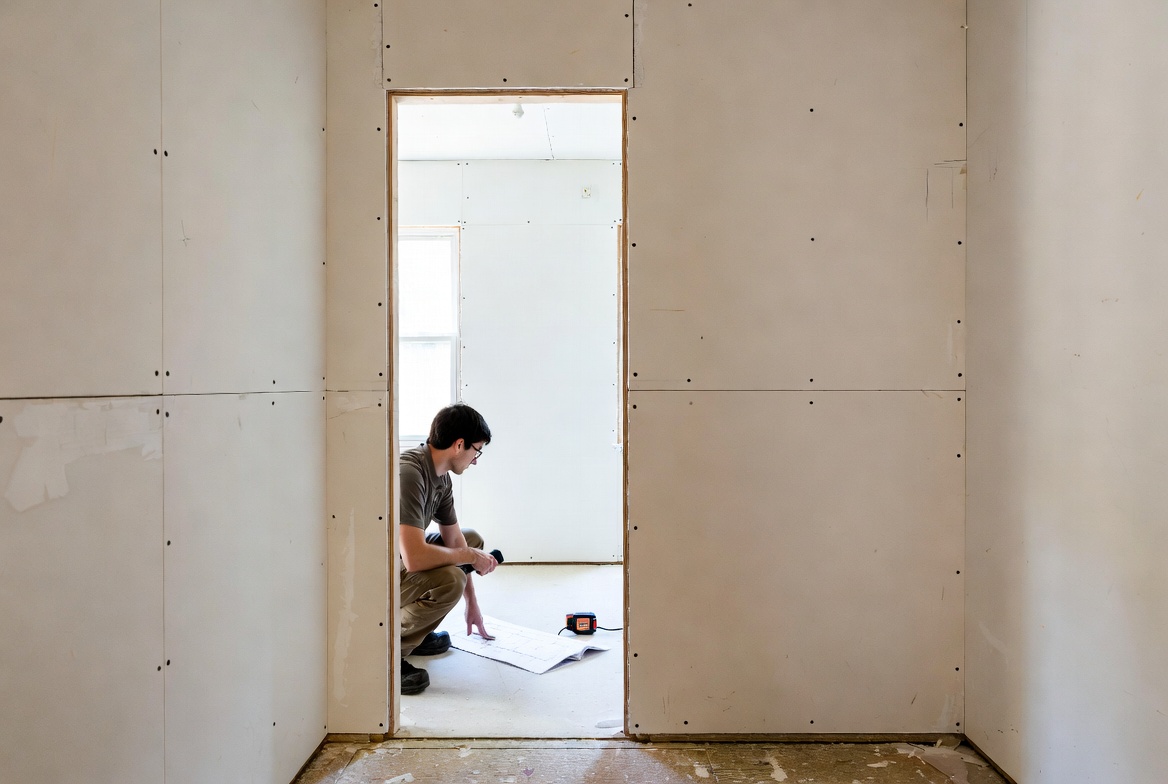
The Short List That Actually Makes Sense
| Model | Best For | Main Weakness | Who Should Buy It |
|---|---|---|---|
| Bosch GLM100-23 | Fast indoor room work | Not the one for sunny exterior work | Students, interns, apartment surveys, punch-list use |
| Bosch GLM165-40 | Best value everyday interior tool | Outdoor visibility is still limited | Architects doing frequent room-by-room field notes |
| Leica DISTO D2 | Tight corners, reveals, cleaner interior surveying | Costs more than basic Bosch units | People who care about reliable interior measurement workflow |
| Bosch GLM165-27CG | Mixed indoor/outdoor work | Green helps, but full sun can still be annoying | Renovation architects, site walks, exterior spot checks |
| Bosch GLM400CL | Serious outdoor targeting | Bigger, pricier, more tool than many people need | Site-heavy users measuring facades, setbacks, or long exterior runs |
| PREXISO 2-in-1 | Cabinet and install work | Not a primary survey tool | Millwork, kitchen, interior fit-out, backup bag |
| Leica DISTO S910 | Advanced as-builts and point-to-point capture | Expensive overkill for ordinary measuring | Firms doing heavy documentation or CAD-driven field capture |
That is the useful lineup. Not fifty models. Not every brand under the sun. Just the ones that map to real work.
What People Usually Get Wrong
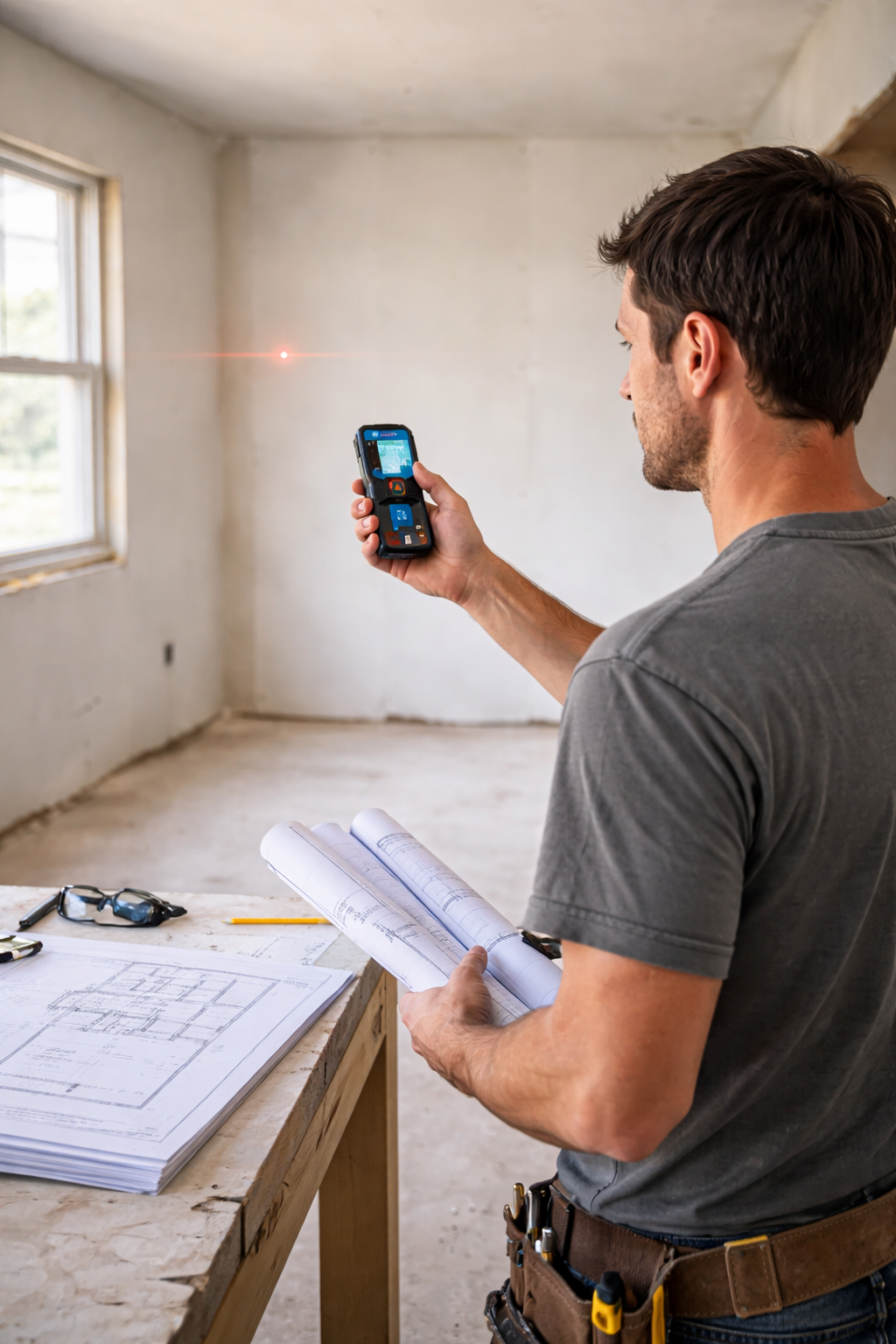
They buy for advertised range, not working conditions.
A 165-foot or 330-foot claim is not the same as “easy in bright midday sun.” Recent users keep saying the same thing: indoors, no drama; outdoors, even decent units can turn into guesswork unless you have shade, a target plate, or a camera/viewfinder. Green beam helps visibility. It does not repeal sunlight.
They overvalue Bluetooth.
App sync sounds perfect in the store. In the field, it depends. Some people love it when their sketch app and measuring workflow are already dialed in. Others find it slower than writing dimensions on a photo, especially when the app forces too much tapping between shots. Buy Bluetooth for an existing workflow, not for fantasy productivity.
They stop carrying a tape.
Bad move. A laser is faster for clear spans, ceiling heights, and room diagonals. A steel tape is still better for verifying rough openings, casing offsets, window stool depth, stair parts, or any place where the exact start and stop point needs to be physically hooked. The grown-up kit is laser plus tape, not laser instead of tape.
They ignore the reference edge.
Front edge, rear edge, tripod thread, fold-out end piece. One wrong setting and the reading is wrong before you even hit the button. This is the quiet error that ruins otherwise neat field notes.
The Picks Worth Buying
Bosch GLM100-23 — Best Simple Indoor Tool
This is the one for people who mostly measure rooms, ceiling heights, wall runs, and quick renovation conditions inside. Bosch positions it as a 100-foot class tool with a brighter graphic display, a simple two-button layout, and easy rounding. The manual also makes the limit clear: it is intended for indoor use. That honesty is why it makes sense. Don’t ask it to be a site-layout hero. Do ask it to make apartment surveys and punch walks faster.
It is a strong first buy for students, junior staff, or anyone tired of stretching a tape across every room alone. What it is not: a sunlight tool.
Bosch GLM165-40 — Best Value for Everyday Interior Work
This is where the value curve gets good. Bosch gives you a 165-foot class pocket unit, backlit display, real-time measurement, multiple measuring modes, and 10-measurement storage without dragging you into premium pricing. Recent users keep recommending this general size of tool when most work is indoors and the feature list matters more than bragging-rights range.
For architects doing measured drawings in houses, tenant spaces, offices, and interior renovations, this is the point where the tool stops feeling like a gadget and starts feeling normal.
Leica DISTO D2 — Best for Tight Interior Surveying
Leica still earns its reputation on feel, interface, and measurement logic. The D2 sits in the sweet spot for interior work: around a 330-foot class range, ±1.5 mm accuracy, area and volume functions, Bluetooth, and the foldable end piece that makes corner and reveal measurements cleaner than the cheap units. That end piece sounds minor until you are measuring built-ins, jamb returns, old window pockets, or alcoves all day. Then it stops being minor.
The trade-off is simple: you pay more. But people who live in old buildings, renovation work, or detail-heavy interior surveying tend to stay loyal to Leica for a reason.
Bosch GLM165-27CG Green Beam — Best Mixed Indoor/Outdoor Step-Up
This is the Bosch model that makes sense once you leave all-interior work behind. It gives you a 165-foot range class, green beam visibility, ±1/16 inch accuracy, Bluetooth, inclinometer, and IP65 protection. Bosch says the green dot is up to four times brighter than standard red. That matters. It just does not solve everything. In direct sun, recent users still say target plates, shade, or camera-assisted models make the real difference.
This is a good renovation-architect tool. It handles interiors well, survives rougher site handling, and gives you a fighting chance outside without jumping all the way to a viewfinder camera model.
Bosch GLM400CL — Best Outdoor Site Tool for Most People
This is where outdoor work starts getting sane again. Bosch rates the GLM400CL at up to 400 feet, ±1.5 mm typical accuracy, and pairs it with a built-in camera, zoom targeting, photo storage, Bluetooth, and a rechargeable Li-ion battery. The important part is not the range number. It is the camera. Outside, when the dot vanishes, the camera is what keeps the tool usable.
One nuance people miss: this model is still a red beam. That sounds like a downgrade until you remember the camera is doing the hard work in bright conditions. For long facade checks, site dimensions, parking offsets, and outdoor renovation work, that matters more than the beam color.
PREXISO 2-in-1 Digital Laser Tape Measure — Best Hybrid for Install and Fit-Out Work
This is not the architect’s main survey tool. It is the second tool that earns its place in cabinet, kitchen, interior fit-out, and quick install work. PREXISO’s hybrid format combines a laser distance measure with a 16-foot manual tape. That is useful when you keep bouncing between room dimensions and short physical checks on fillers, panels, fronts, appliances, and trim.
For millwork shops and field installers, that hybrid logic is smart. For full measured surveys, it is still a backup, not the main act.
Leica DISTO S910 — Only if You Truly Need Advanced As-Builts
This is not a casual upgrade from a D2. It is a different category. Leica gives the S910 up to 300 m range, ±1.0 mm accuracy, point-to-point measurement, CAD data capture, touchscreen, Wi-Fi, and Bluetooth. If you are doing serious as-built work, complex facade documentation, or field-to-CAD capture where point data matters, then yes, this tool is real. If you are mostly measuring rooms and ceiling heights, it is expensive overkill.
Hilti PD-E — Harsh-Site Alternative
Hilti’s PD-E is a 656-foot outdoor laser meter with integrated viewfinder and 1.0 mm accuracy. This is a site tool. Tough, long-range, made for bright conditions and hard use. It makes sense if your measuring life leans more toward field layout, shell work, and outdoor construction than interior design or room-by-room as-builts.
What I Would Buy at Three Different Levels
Keep it simple: Bosch GLM100-23
Best for mostly indoor rooms, apartments, and quick field checks where speed matters more than advanced functions.
Best everyday architect pick: Leica DISTO D2 or Bosch GLM165-27CG
Choose Leica if your life is mostly interior renovation and tight corners. Choose Bosch if you need more mixed indoor/outdoor tolerance and tougher site manners.
Site-heavy outdoor work: Bosch GLM400CL
This is the point where the viewfinder camera starts saving real time instead of just sounding impressive.
How to Use One Without Fooling Yourself
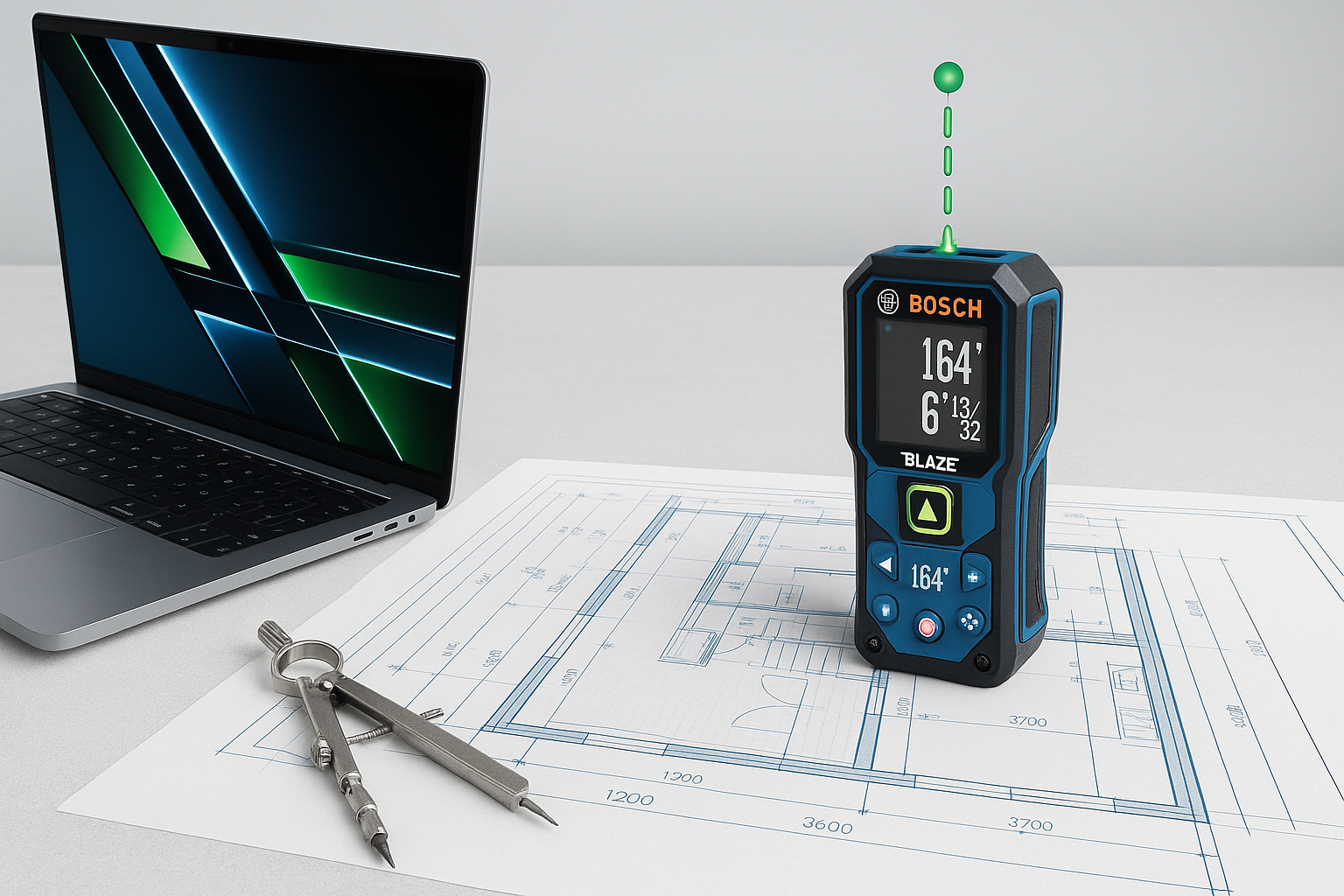
1. Set the correct reference edge first.
Rear edge for most room dimensions. Front edge or end piece when you are tucked into a reveal, jamb, or corner. Get this wrong once and you can poison a whole sketch set.
2. Measure the same way every time.
Same direction. Same reference. Same sequence around the room. The tool is fast enough that bad field habits become repeatable errors.
3. Outdoors, assume sunlight will fight you.
Start with shade. Then a target plate. Then a tripod if the shot matters. If outdoor work is regular, stop pretending a cheap indoor unit will be enough. Recent users say this in one form or another every single year.
4. Cross-check critical openings with a tape.
Door rough openings, old window pockets, cabinet fillers, trim offsets, and anything hidden by casing or surface irregularity still deserves a steel tape check.
5. Do not assume the app is your notebook.
If the sync is clean, use it. If not, a room photo plus hand notes is still faster than fighting a bad app in the yard or on a ladder.
6. Keep the lens clean.
Dust, fingerprints, and drywall grit make a good tool act cheap.
The Detail People Miss
The smartest feature on some of these tools is not Bluetooth, not camera zoom, not Pythagoras mode. It is the humble corner/end piece.
On interior survey work, that little fold-out reference is what keeps you from “close enough” measurements at window returns, shelf recesses, built-in millwork, and awkward corners. This is one reason the Leica DISTO D2 keeps getting recommended even when cheaper tools exist. The spec sheet reads boring. The field use is not boring.
FAQ
What Is the Best Laser Tape Measure for Architects?
For most architects, the best all-around choice is not the most expensive model. It is the one that matches the work. If you mostly do interiors, the Leica DISTO D2 or Bosch GLM165-40 makes more sense than an outdoor monster.
Are Laser Measures Actually Better Than Steel Tapes?
For clear spans, room dimensions, ceiling heights, and diagonals, yes. They are faster and usually more consistent. For rough openings, trim offsets, or anything physical and fussy, the steel tape still wins.
Is Green Beam Worth Paying For?
Usually, yes, if you work in mixed light. Bosch rates its green beam models as up to four times brighter than red. But green is a visibility upgrade, not a miracle. In strong sun, camera/viewfinder models still have the edge.
Do I Need Bluetooth?
Only if your field workflow already has a clean place for the data to go. If you are not exporting to a sketch or report system that actually saves time, Bluetooth can become one more thing to babysit.
What Is the Best Tool for Outdoor Measuring?
For most people, the answer is a tool with a camera or digital pointfinder. That is why the Bosch GLM400CL, Hilti PD-E, and higher Leica outdoor models make sense for site-heavy work.
Is the Leica S910 Worth It?
Only when the work justifies point-to-point measurement, CAD capture, or advanced as-built documentation. For ordinary renovation measuring, it is more tool than most people need.
What Is the Best Cheap Laser Measure for Indoor Work?
The Bosch GLM100-23 is the cleanest low-drama answer. If you want more flexibility without jumping too high in price, move to the Bosch GLM165-40.
The blunt version: buy the tool for the environment, not the ad. Indoors, keep it simple. Outside, pay for targeting. On old buildings, trust the laser for spans and the tape for tricky physical edges. That is the combination that keeps drawings cleaner and re-measures lower.
For a broader gear roundup, see 15 must-have gadgets for architects and designers. If you want a Bosch-only breakdown, Bosch laser tape measures goes deeper.