
History of Qutub Minar: A Tower Built on Power, Faith, and Legacy
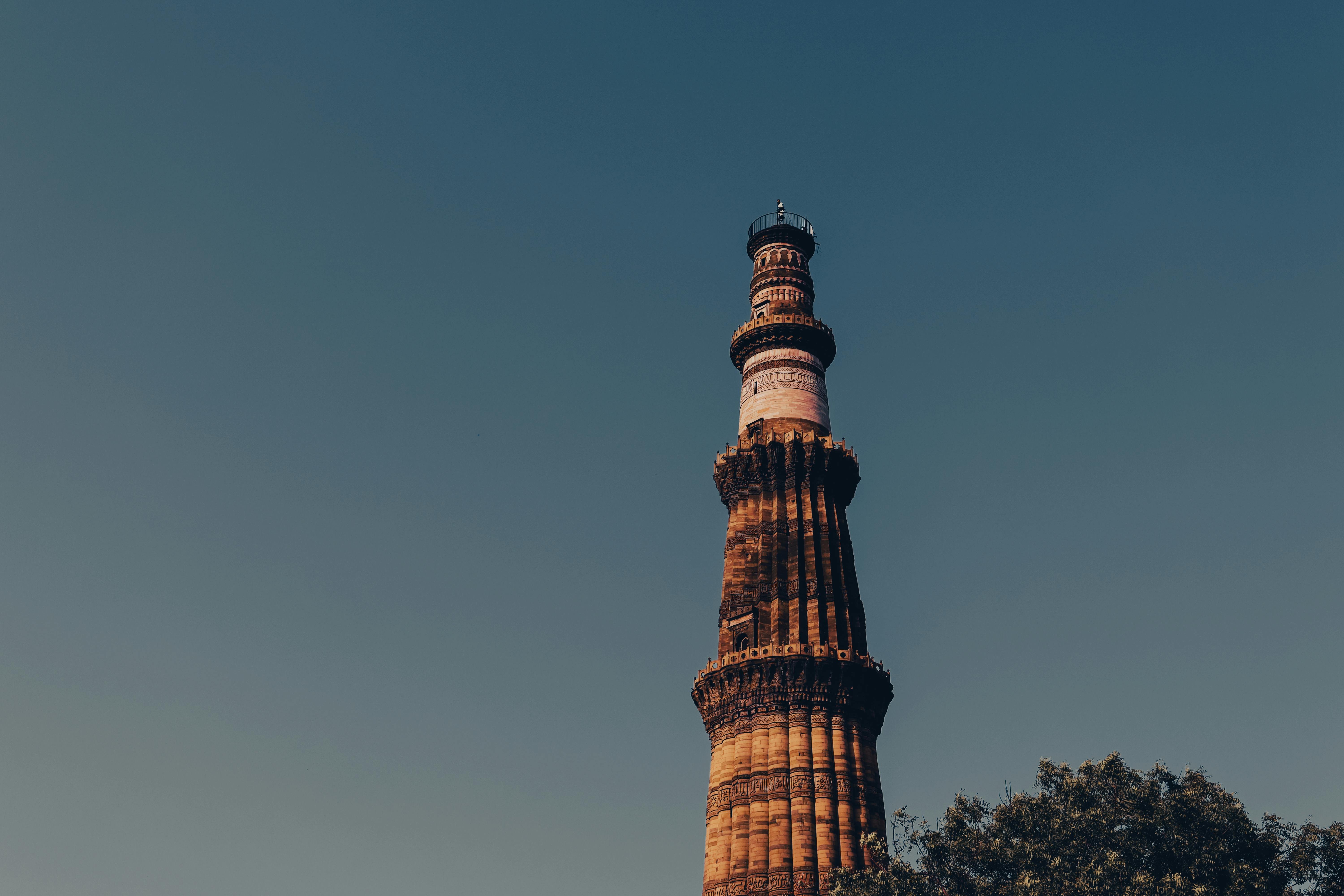
The Qutub Minar is Delhi’s most iconic landmark. Rising 73 meters above the city, it marks the start of Islamic rule in northern India, symbolizing both victory and vision.
But the tower you see today is the result of centuries of construction, repairs, additions, and symbolism.
Understanding its history means understanding how Delhi—and India itself—transformed across dynasties, cultures, and beliefs.
The Story Behind Qutub Minar’s Construction
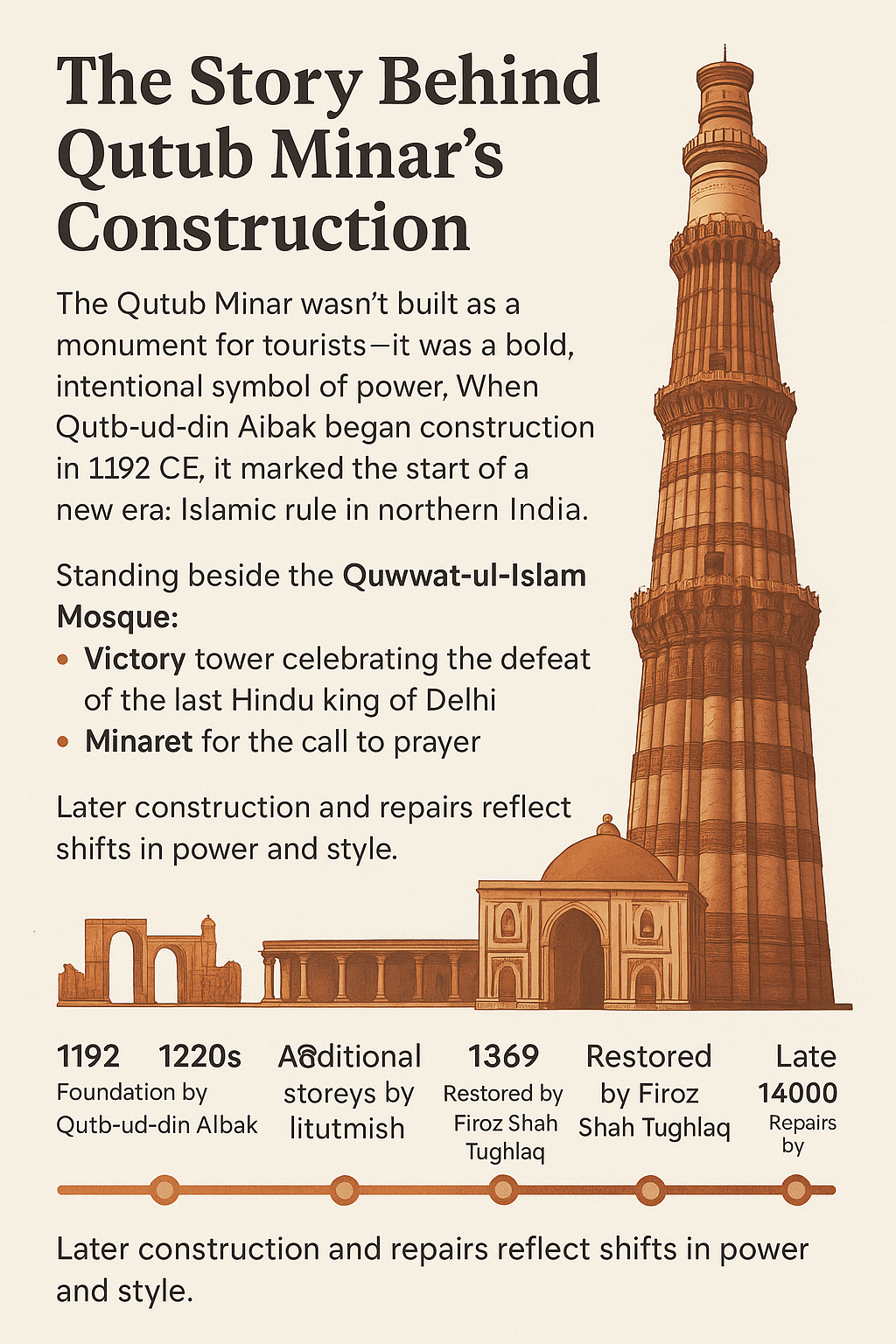
IMAGE: Visual timeline of Qutub Minar’s history from Aibak’s original foundation to later additions, showcasing architectural changes over centuries.
Who Built Qutub Minar and Why It Matters
The Foundation: Qutb-ud-din Aibak (1192–1210)
The story begins in 1192 CE, when Qutb-ud-din Aibak, a former slave-turned-general under Muhammad Ghori, defeated Prithviraj Chauhan and laid the foundation of the Delhi Sultanate.
As a symbol of Islamic dominance in newly conquered territory, Aibak ordered the construction of the Qutub Minar beside the Quwwat-ul-Islam Mosque—the first mosque in North India.
How Qutub Minar reflects Delhi’s Islamic rule, cultural shifts, and historic layers.
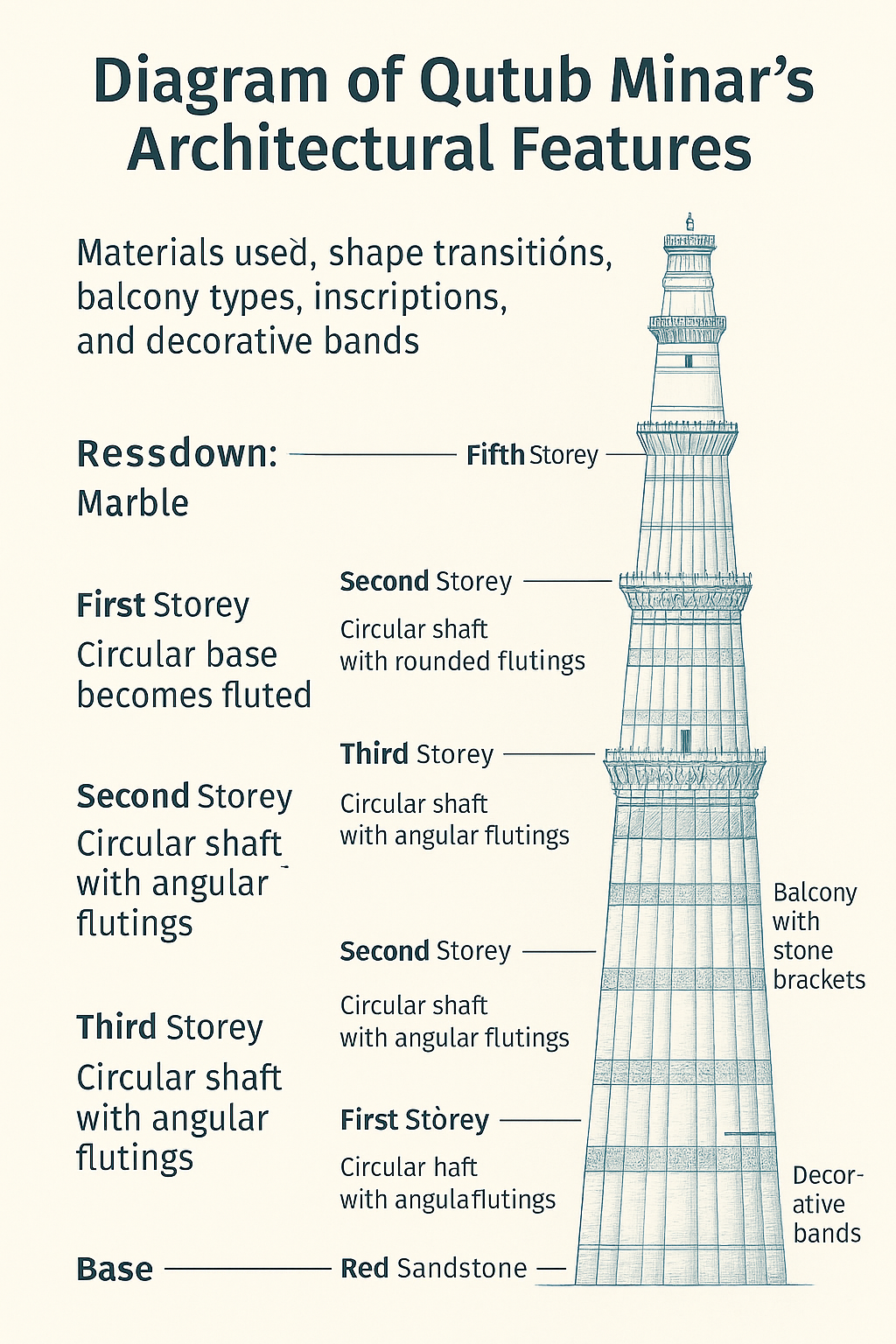
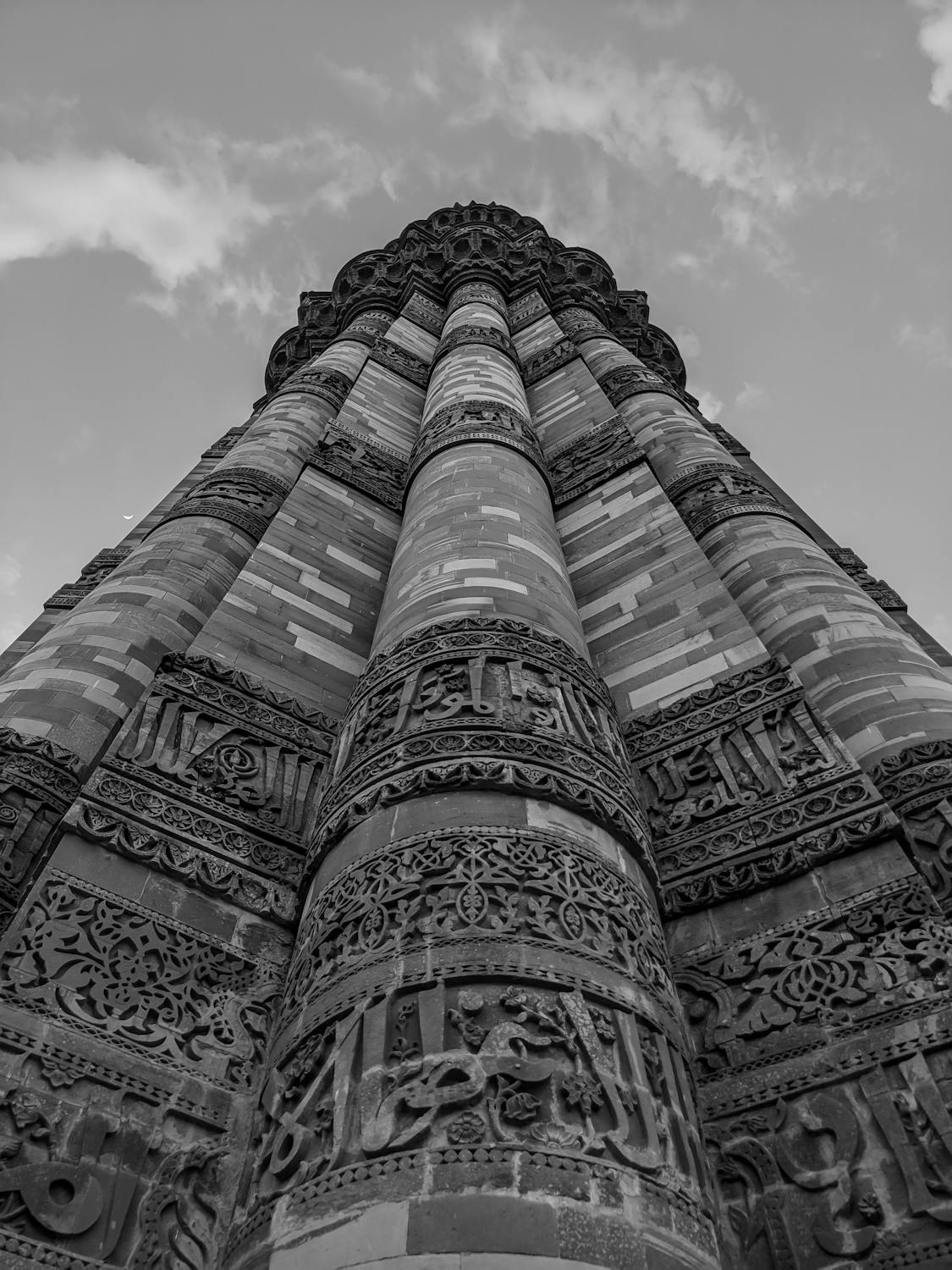
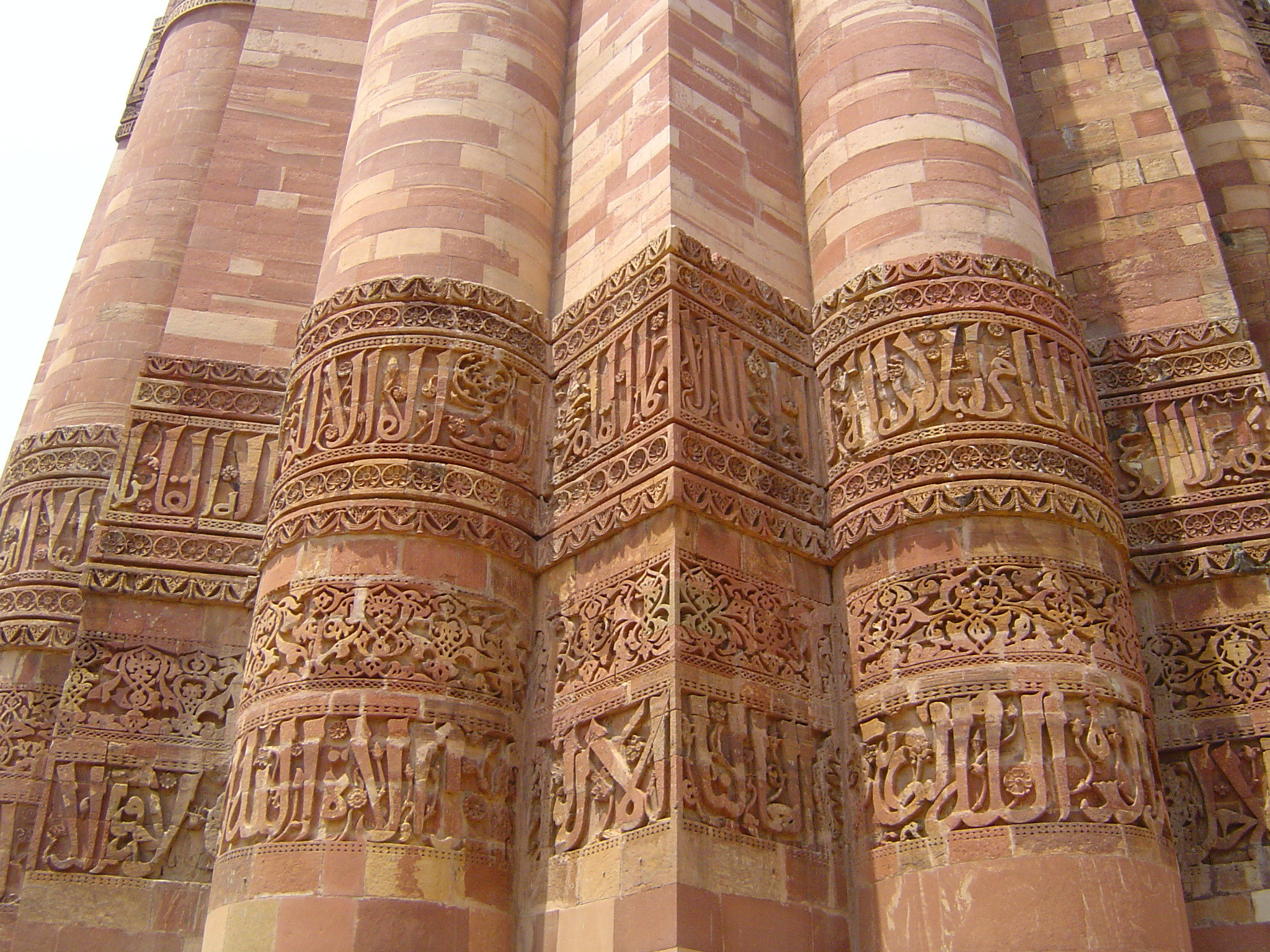
Aibak only lived to see the first storey completed. But even this first phase established its core identity: red sandstone, Arabic calligraphy, and a base diameter over 14 meters wide.
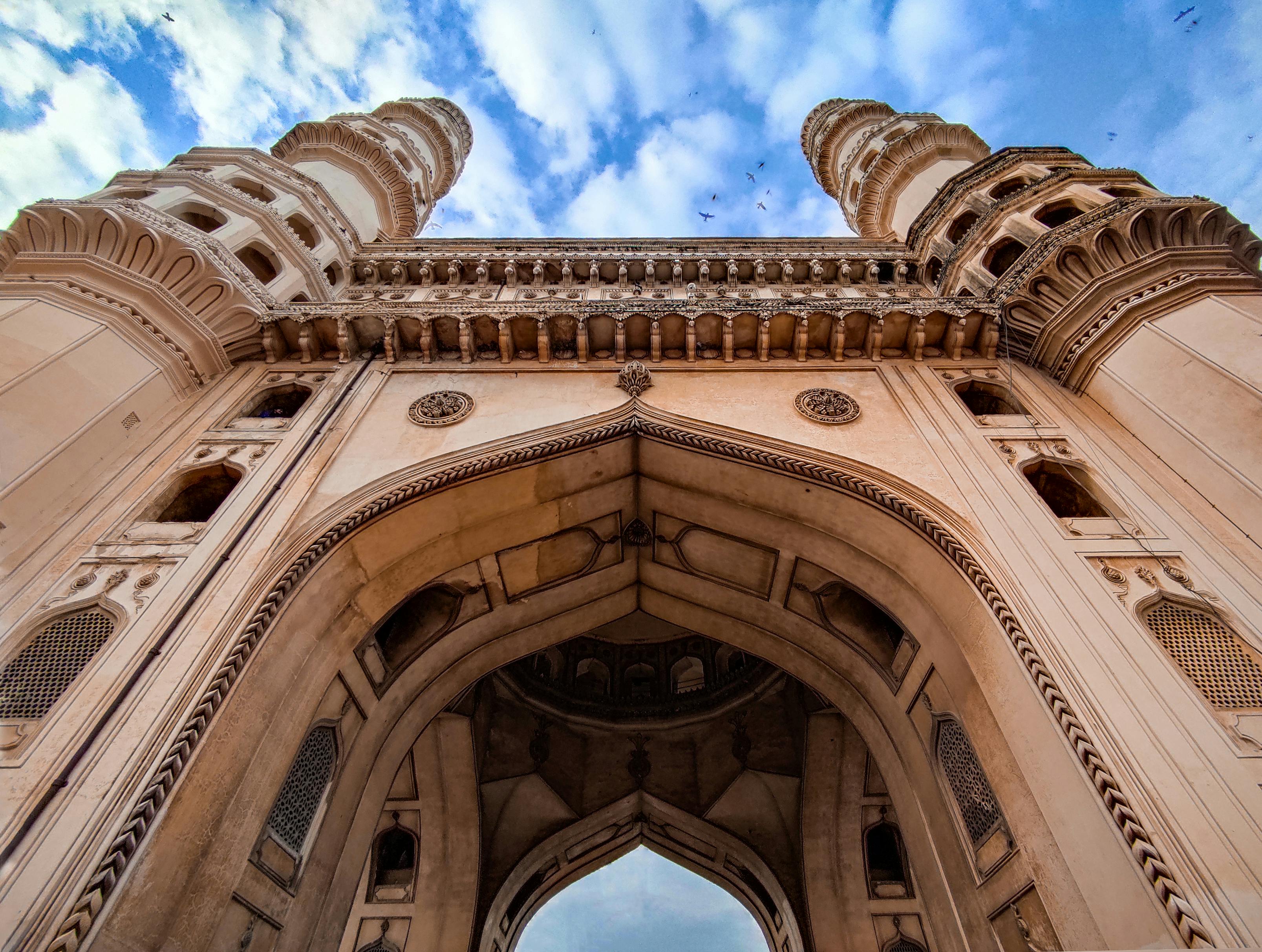
Unlike the Charminar or other later Mughal towers, Qutub Minar’s intent was clear—it was a minaret of victory, inspired by Afghanistan’s Minaret of Jam.
Expansion Under Iltutmish (1211–1236)
After Aibak’s death, Shams-ud-din Iltutmish—his son-in-law and successor—added three more storeys between 1211 and 1236. This phase brought a more intricate design with alternating angular and circular flutings, projecting balconies, and detailed Quranic inscriptions.
Iltutmish wasn’t just continuing Aibak’s plan—he was consolidating power, using architecture to legitimize his rule. Under his reign, Delhi became a true capital, and Qutub Minar stood as a visible declaration of stability and faith.
Restoration by Firoz Shah Tughlaq (1351–1388)
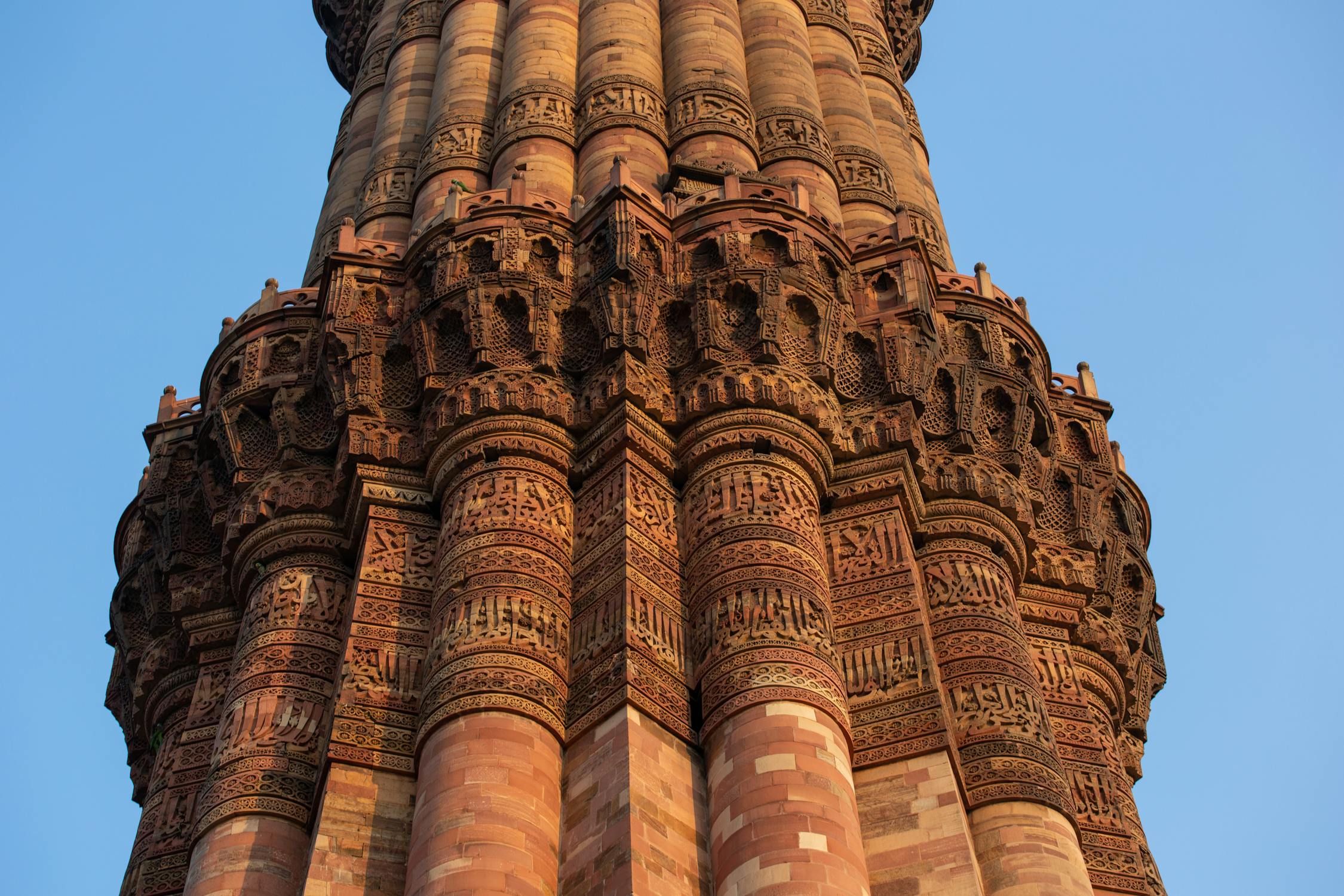
By the mid-14th century, the minar suffered damage due to lightning and earthquakes. Firoz Shah Tughlaq, known for restoring and building infrastructure across his empire, repaired the structure and added the fifth and final storey in 1368 CE.
This topmost section is visibly different in tone and design—using light marble, simpler carvings, and a plainer balcony—signaling both a change in style and a shift in imperial priorities.
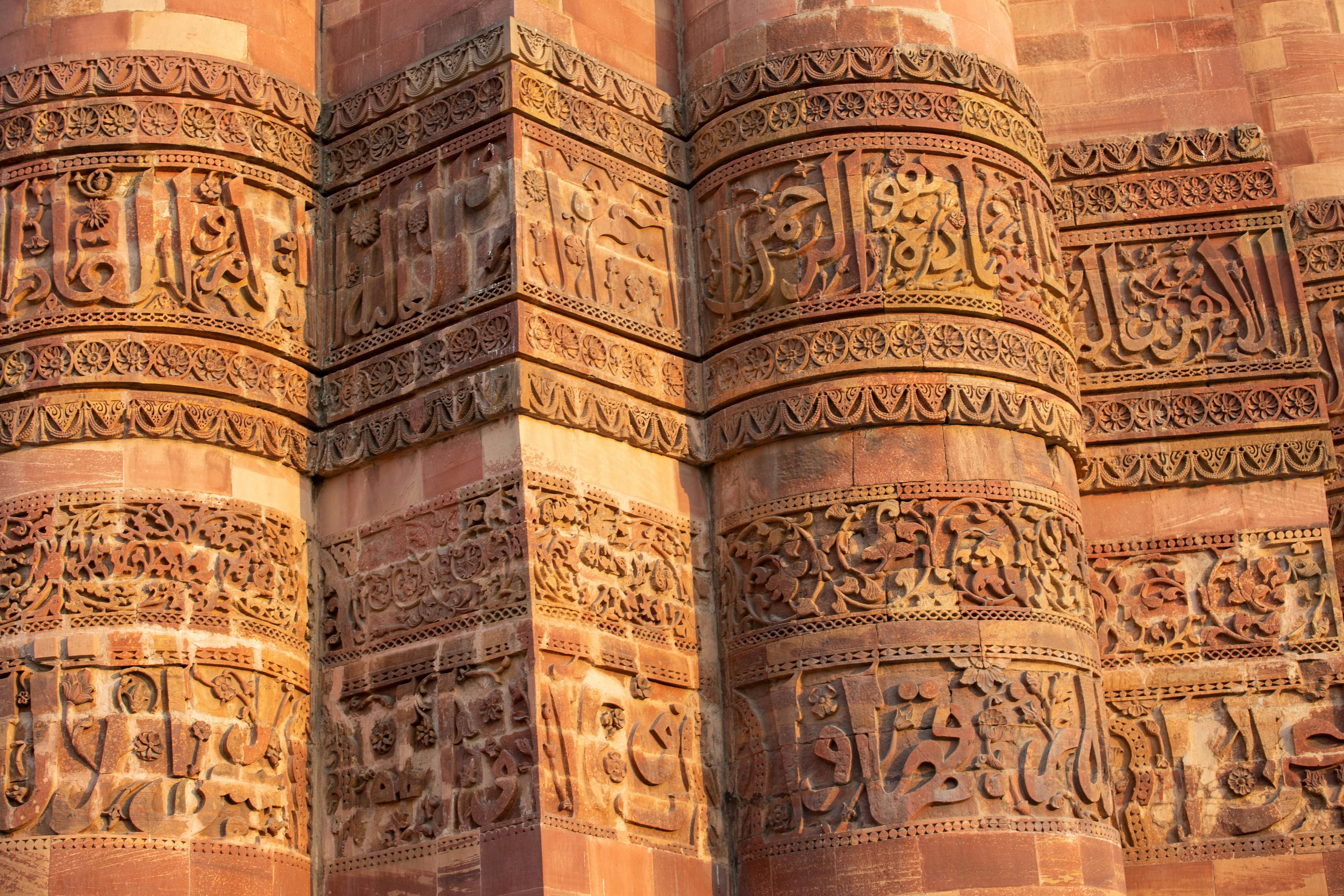
Firoz Shah also added inscriptions documenting his restoration, an early form of architectural credit that became common in Islamic India.
Natural Disasters and British Interventions (1500s–1800s)
Qutub Minar didn’t escape nature’s wrath. A major earthquake in 1505 damaged parts of the upper levels, prompting repairs by Sikandar Lodi, another Delhi ruler. Later, during British colonial rule, another powerful earthquake in 1803 cracked the upper storeys.
The British East India Company attempted to repair the damage. Major Robert Smith added a cupola—an awkward dome structure—on top of the minar in 1828. It was widely criticized for ruining the tower’s aesthetic, and by 1848, Lord Hardinge had it removed. The cupola was placed nearby, where it still sits today, known as “Smith’s Folly.”
Modern Recognition and Preservation (1900s–Present)
The early 20th century saw Qutub Minar enter a new phase—as a protected heritage site rather than a religious symbol or political statement. Under the Archaeological Survey of India (ASI), the monument was stabilized, cleaned, and promoted as a national treasure.
In 1993, Qutub Minar and its complex were designated a UNESCO World Heritage Site, recognizing it as a monument of “outstanding universal value.” Since then, conservation efforts have focused on preventing further deterioration, improving visitor access, and preserving historical integrity.
Timeline of Qutub Minar: Key Facts and Events
Qutub Minar Through the Ages: A Historical Look
Historical Timeline of Qutub Minar
| Year | Event |
|---|---|
| 1192 | Qutb-ud-din Aibak begins construction of Qutub Minar (1st storey) |
| 1211–1236 | Iltutmish adds three upper storeys and completes most of the tower |
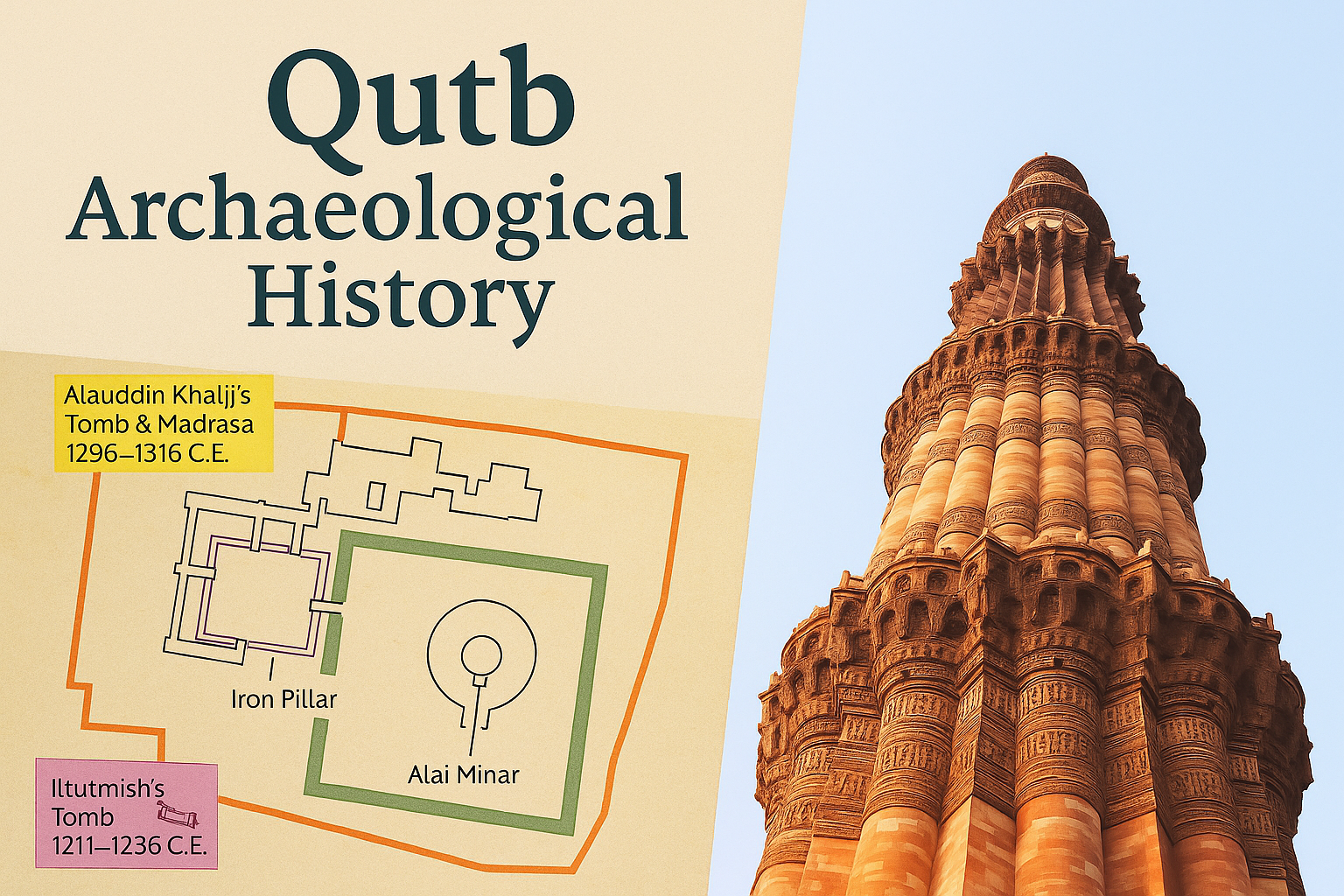
| 1296–1316 | Alauddin Khilji starts but never completes the Alai Minar nearby |
| 1368 | Firoz Shah Tughlaq repairs Qutub Minar and adds 5th storey |
| 1505 | Earthquake damages the tower; Sikandar Lodi orders repairs |
| 1803 | Major earthquake during British rule damages upper levels |
| 1828 | British officer Major Smith adds a cupola on top |
| 1848 | Cupola removed by Lord Hardinge; placed nearby as “Smith’s Folly” |
| 1993 | Qutub Minar declared a UNESCO World Heritage Site |
Qutub Minar’s Past: Rulers, Religion, and Architecture
A look at the rulers, events, and design that shaped Qutub Minar over centuries.
Historical Significance Beyond the Tower
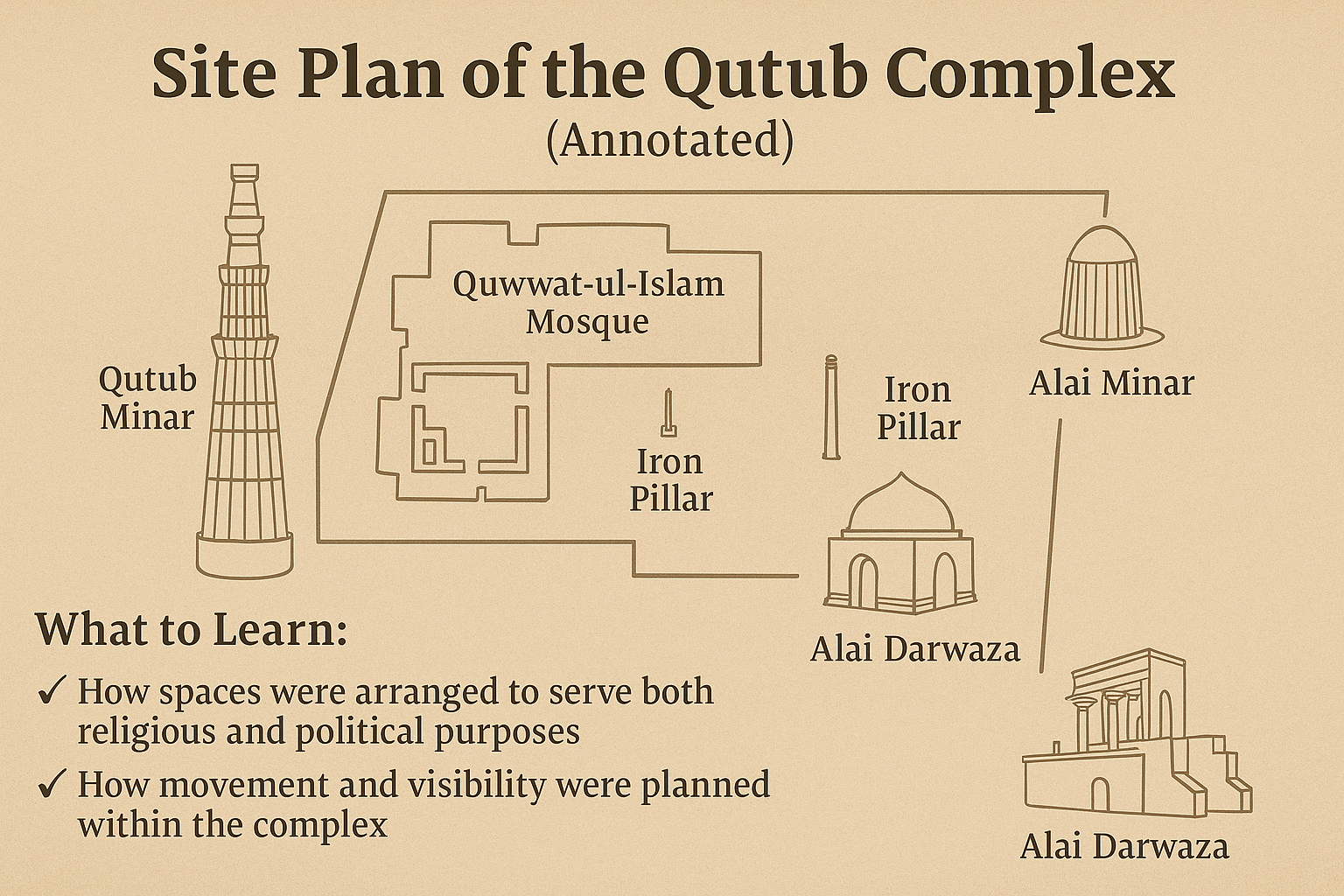
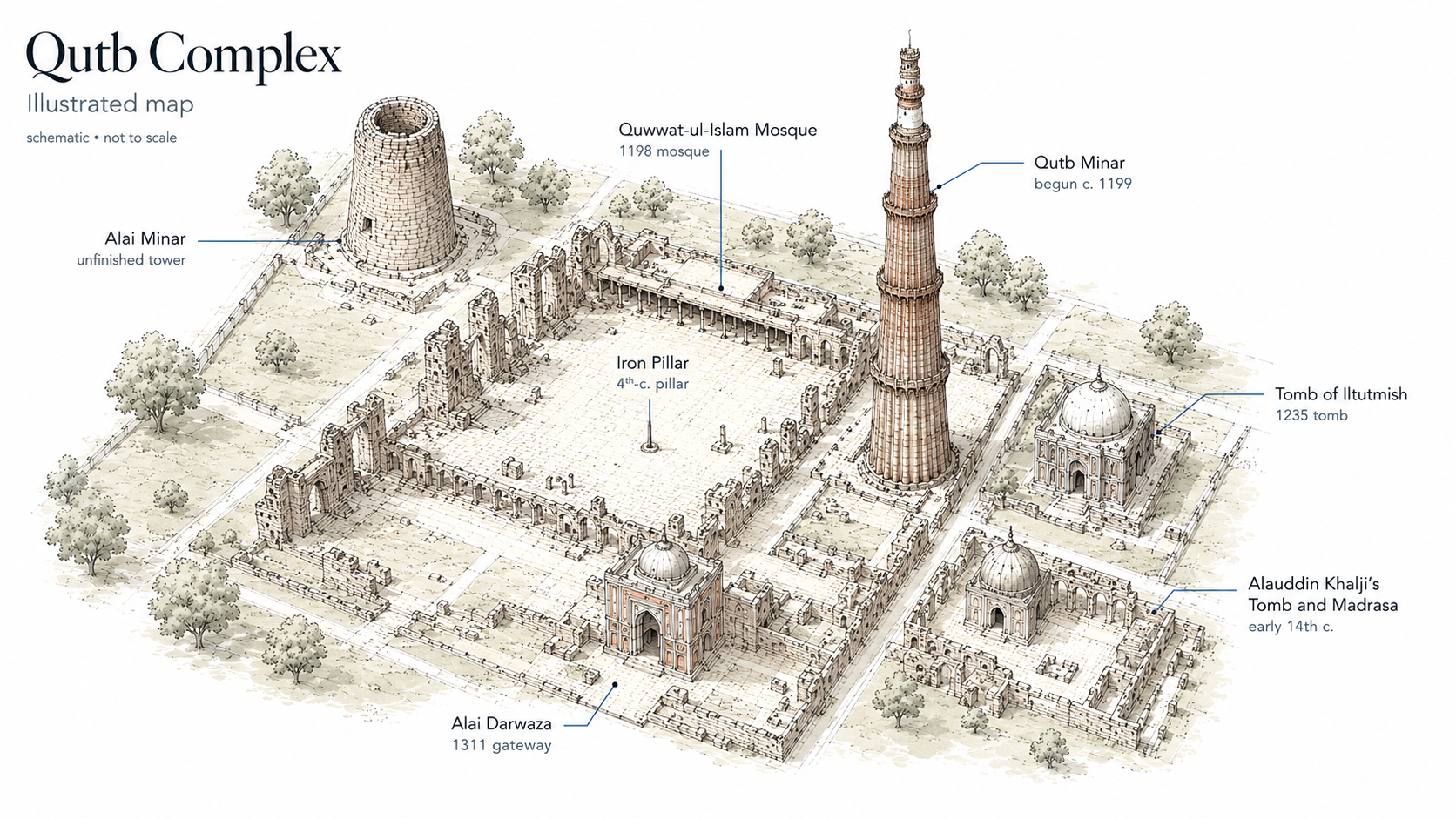
Qutub Minar isn’t isolated. It's part of a larger complex—a layered architectural site that includes:
-
Quwwat-ul-Islam Mosque – Built using temple debris, it represents religious transition
-
Alai Minar – A failed attempt to outdo the Qutub by Alauddin Khilji
-
Tombs of Iltutmish and Imam Zamin – Show shifts in funerary architecture
-
Alai Darwaza – A perfect example of early Indo-Islamic gateway design
-
Iron Pillar – A pre-Islamic relic, showing Delhi’s Hindu past
These structures tell the story of dynasties competing not just through war, but through stone, space, and visibility.
All About Qutub Minar: From Inscriptions to Iron Pillars
The Majestic Qutub Minar (Qutb Minar) : A Guide to Delhi's Iconic Tower
What the Tower Represents Today
-
A political landmark: It marks the rise of the Delhi Sultanate
-
A religious marker: Built next to the first mosque in North India
-
A technological feat: Brick and stone blended to withstand centuries
-
A design inspiration: Referenced in later minarets across India and the Islamic world
-
A symbol of survival: Having endured quakes, colonial tampering, and pollution
Qutub Minar is now one of India’s top architectural symbols. It began as a sign of conquest but now shows India’s rich and complex history.
There’s a lot to learn from it—so check it out!
Qutub Minar: India's Tallest Brick Minaret
Did you know that Qutub Minar is not only the tallest brick minaret in the world but also a UNESCO World Heritage Site
FAQ
Who built Qutub Minar and when?
Qutb-ud-din Aibak started construction in 1192 CE after the defeat of Delhi’s last Hindu king. He was the founder of the Delhi Sultanate and built it as a symbol of Islamic victory. His successor, Iltutmish, completed the tower.
Was Qutub Minar built all at once?
No. Aibak built only the first storey. Iltutmish added three more. The fifth storey was added much later by Firoz Shah Tughlaq in 1368, after parts were damaged by lightning.
Has Qutub Minar ever been damaged?
Yes—several times. Major earthquakes in 1505 and 1803 caused significant damage. It was repaired by Sikandar Lodi and later the British, who even added (and then removed) a dome.
What was the original purpose of Qutub Minar?
It served as a minaret—a tower to call Muslims to prayer at the Quwwat-ul-Islam Mosque. It also acted as a victory tower, showcasing Islamic power in newly conquered Delhi.
Is Qutub Minar part of a larger historical complex?
Yes. It sits inside the Qutub Complex, which includes the first mosque in Delhi, tombs, gateways, the Iron Pillar, and the unfinished Alai Minar. These structures reflect multiple dynasties and layers of history.