
How Landscape Design Evolved: Real Timeline with Key Names
Landscape Architecture Through the Ages: What Changed and Why
See how landscape architecture evolved from ancient gardens to modern parks—full timeline, big names, and real lessons.
Landscape architecture didn’t start with lawns and patios. It started with power, water, and empire.
This guide breaks it down: key moments, major styles, and the architects who defined them.
A blunt, visual guide to the full history of landscape architecture, with key shifts, timeline, and expert resources.
People still shape land to shape how they feel.
That’s it. That’s the constant.
From ancient Persian gardens to suburban front lawns, landscape design has always been about control, comfort, and meaning. You move dirt, plant trees, build walls, and add water—not just for looks, but to shape time, space, temperature, privacy, and mood.
● Ancient Egyptians planted palm-lined processional paths for shade and ceremony.
● Romans built courtyards for light, water, and escape from city chaos.
● Chinese gardens layered paths and rocks to slow you down and reflect.
● Olmsted’s parks were built to lower stress, boost health, and create social balance.
● Today’s rain gardens and bioswales still do the same—manage experience while managing water.
⟶ Smart designers know this:
You're not just designing a space. You're designing how people move, pause, breathe, and feel in it.
That hasn’t changed in 4,000 years—and it won’t.
FIELD PICK
📘 The Landscape Imagination by James Corner
A deep dive into how landscape shapes culture, politics, and perception—not just pretty parks. One of the most important books in the modern era.
Check it on Amazon
History of Landscape Architecture: From Gardens to Green Cities
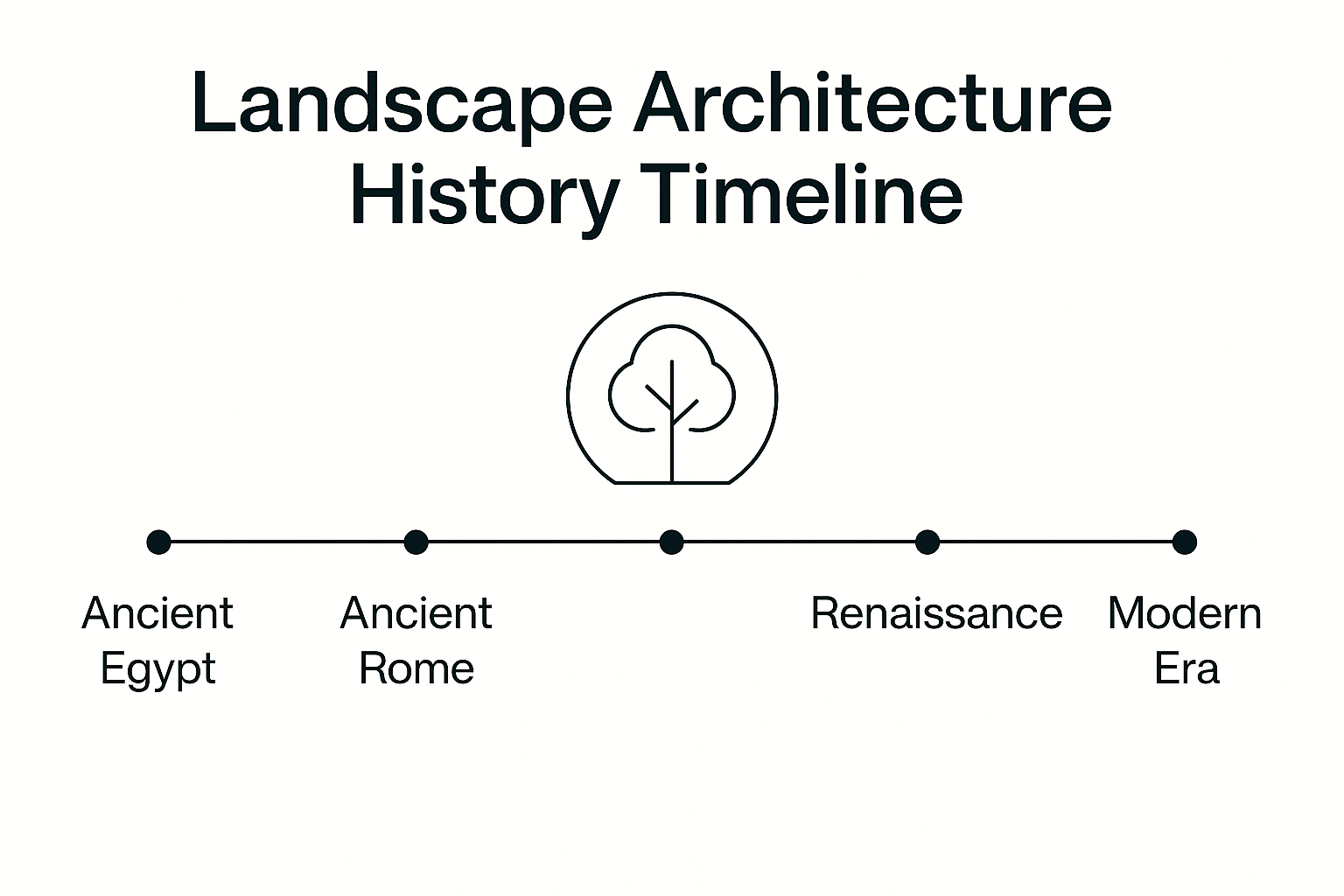
Timeline of Landscape Architecture: Every Era in One Guide
Ancient Origins: Gardens Were Power
Landscape architecture started as control. Ancient rulers used gardens to show wealth, control water, and create religious symbols.
-
Egypt (c. 2000 BCE): Palm-lined pools, geometric layouts, and desert walls. Gardens were for nobles.
-
Persia: Paradise gardens (chahar bagh) used water, walls, and symmetry to represent order in a chaotic world.
-
China: Landscapes mimicked mountains, water, and balance. Daoist ideas shaped layout—nature as harmony.
● Don’t assume ancient = simple. These were engineered. With irrigation, retaining walls, sacred geometry.
Must Read:
Gardens of the Ancient World – Photo-rich and blunt breakdown of early sacred and royal gardens.
Greece and Rome: Order and Leisure
The Greeks built gymnasiums and sacred groves—public space with cultural purpose. But it was Rome that exploded landscape architecture.
-
Roman villas (1st c. BCE–4th c.): Terraces, pools, topiary, colonnades. Garden as stage.
-
Aqueducts + tech: Let them place lush gardens almost anywhere.
-
Public parks emerged: Not for elites only—design entered civic space.
● Watch out: Many Roman “inspired” designs today are inaccurate. True Roman gardens were about contrast, shade, and processions.
FIELD PICK:
Field Reference – Roman Gardens – Great for real layout sketches, not fantasy reconstructions.
Medieval: Walls, Monasteries, and Survival
Landscape design shrank behind monastery walls. Nature was sin and danger—gardens became practical.
-
Walled cloisters: Healing herbs, prayer spaces, geometric layouts.
-
Islamic gardens (Moorish Spain, 800s+): Highly symbolic, fourfold water-centered paradise gardens thrived in arid climates.
● Design was mostly enclosed, small-scale, symbolic. No large parks. Focus was inward.
Must Read
The Medieval Garden – Real diagrams and planting types from monastic Europe to Alhambra.
Renaissance to Baroque: Control the Land
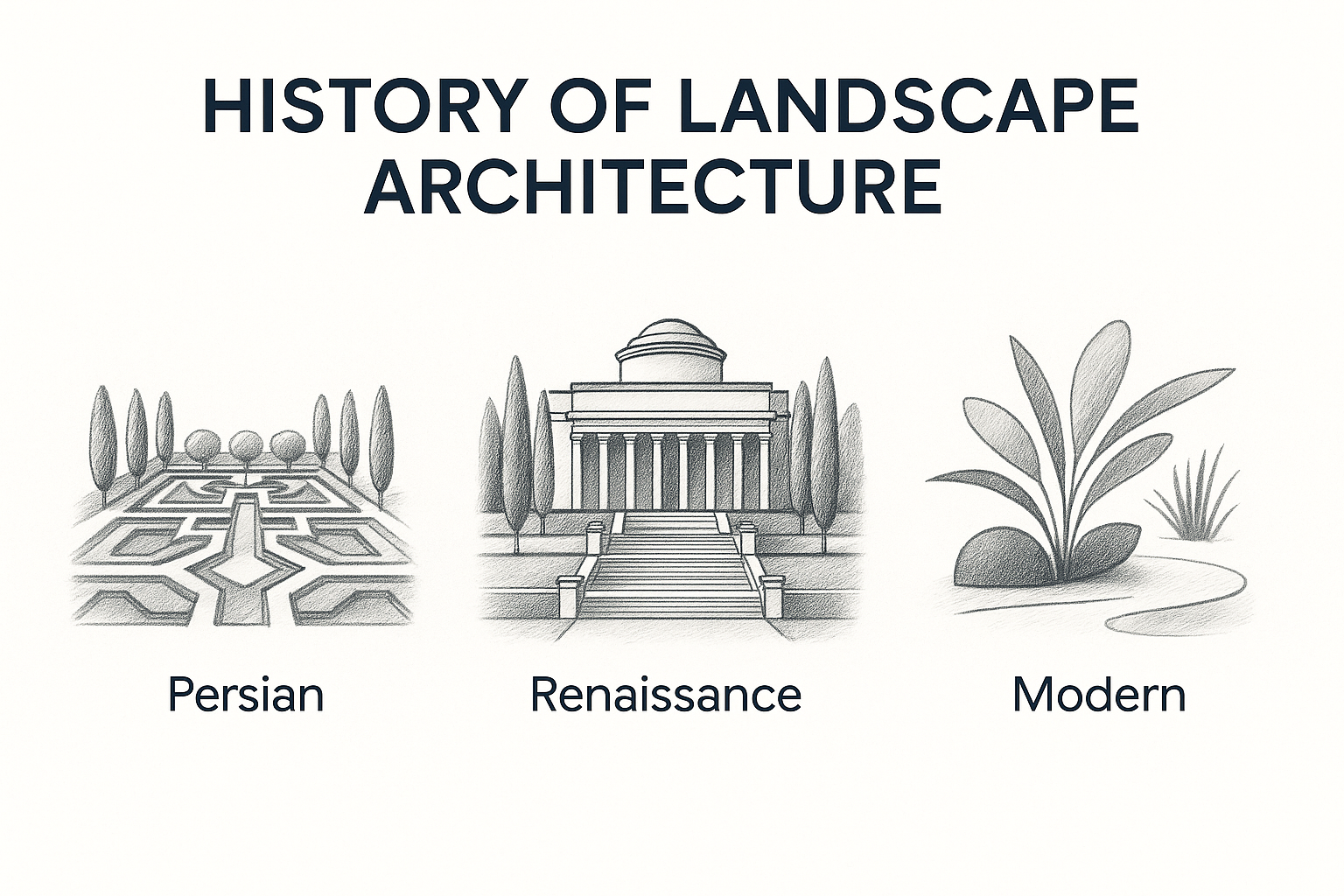
Italy led the next leap. Think villas on hillsides, long axes, fountains, and hierarchy.
-
Renaissance (1400s–1600s): Design aligned with math, humanism, and geometry. Waterworks were the flex.
-
France (Versailles): Control. Andre Le Nôtre flattened 15,000 acres with paths, parterres, and axes of power.
-
England copied it, then rebelled.
● Mistake to avoid: These gardens weren’t soft. They were about hierarchy and perspective. Stand in one spot—own the whole view.
FIELD PICK:
Visual Study – The Italian Renaissance Garden – Best book for hardscape, proportion, and technical design.
The English Landscape Garden: Fake Nature, Real Influence
By the 1700s, designers in England (like Capability Brown) threw out symmetry and faked “natural” scenes.
-
Big lawns, meandering paths, fake ruins, “spontaneous” tree groupings.
-
Rebellious: Aesthetic freedom vs rigid control.
-
Spread fast through Europe and early America.
● Warning: These were not wild. Everything was planned to look unplanned—dug lakes, framed views, hidden ha-has.
FIELD PICK:
Historic Pick – The Arcadian Friends – Deep dive into the shift toward romanticized naturalism.
1800s: Parks, Cities, and Reform
Landscape architecture entered cities. Pollution, crowding, and urbanization sparked public demand for green space.
-
Frederick Law Olmsted (U.S.): Central Park, Prospect Park. Invented the term “landscape architect.”
-
Paris + London: Boulevards, squares, park systems.
-
Cemeteries as parks: Before parks were legal, they were built under the guise of burial grounds.
● Key shift: Landscape design became public health, not luxury. Air, trees, space mattered.
MUST READ:
Genius of Place: The Life of Frederick Law Olmsted – You’ll understand how one man invented the U.S. park system.
1900–1950: Modernism, Planning, and New Schools
New technology, cars, and suburbs transformed the field.
-
Modernist design (Bauhaus, Le Corbusier): Minimalism, grids, and function.
-
City planning and zoning: Landscape architects became part of civic systems.
-
Designers like Fletcher Steele and Dan Kiley: Mixed modern forms with bold planting.
● Common mistake: Thinking modernism was anti-green. It wasn’t. It just stripped away ornament.
FIELD PICK:
The Midcentury Modern Landscape – Serious look at early 20th-century evolution in style and structure.
1960–1990: Ecology Enters the Room
Landscape architects started thinking about ecosystems, not just looks.
-
Ian McHarg’s “Design with Nature” (1969): Brought GIS, watershed logic, environmental layers into design.
-
Stormwater, slope, habitat = design inputs
-
Parks became systems: Linked greenways, bikeways, and city edges.
● Reality check: Most cities ignored this at first. But by the ‘80s, it became standard in university programs.
MUST READ:
Design with Nature by Ian McHarg – Foundational text for any ecologically conscious design practice.
1990s–Today: Climate, Equity, and Urban Space
Landscape architecture today is about more than plants.
-
Climate resilience: Wetland restoration, wildfire buffers, permeable surfaces.
-
Equity + access: Parks in underserved neighborhoods. Inclusive design.
-
Landscape Urbanism: Fuses city systems with nature (James Corner, Kongjian Yu, Kate Orff).
● Don’t fall into greenwashing. Real design solves problems—drainage, equity, food access, community safety.
Timeline Recap: From Ritual to Resilience
| Period | Focus | Signature Element |
|---|---|---|
| Ancient (2000 BCE) | Ritual, power | Walled gardens, water |
| Classical | Leisure, civic pride | Courtyards, pools |
| Medieval | Survival, religion | Cloisters, herbs |
| Renaissance | Order, math | Fountains, parterres |
| English Garden | Fake nature | Lakes, ruins, lawns |
| Industrial | Parks as health reform | Urban greens, cemeteries |
| Modern | Grid + flow | Minimalism, bold lines |
| Ecological | System-based design | GIS, habitat, water paths |
| Contemporary | Resilience + justice | Multifunctional parks |
How Outdoor Spaces Shaped Culture, Control, and Design for Over 3,000 Years
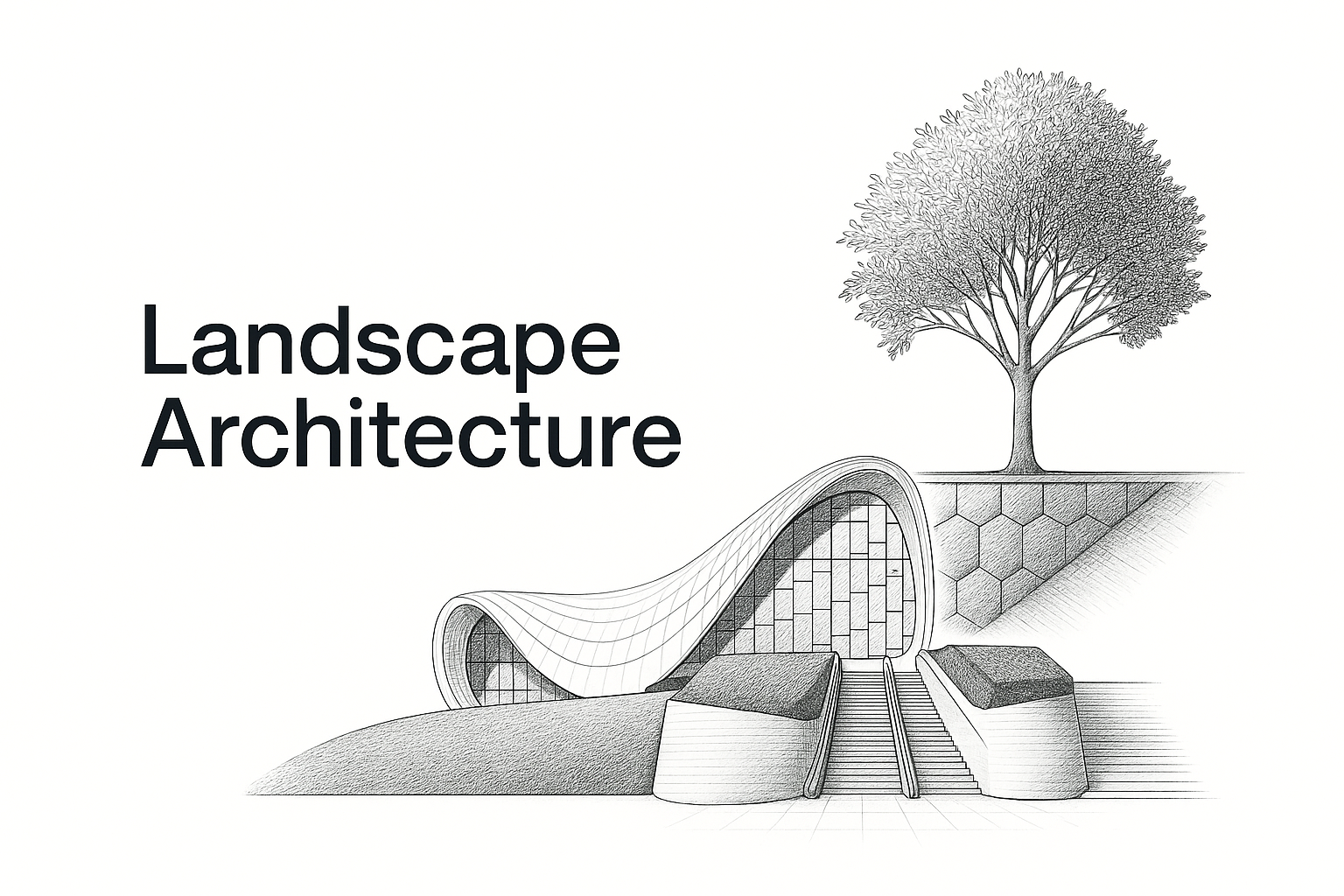
Landscape design isn’t decoration. It’s control.
For over three millennia, outdoor spaces have been used to shape how people live, move, rest, and interact. The best designs weren’t just pretty—they structured power, access, and daily life.
Here’s what’s stayed constant across centuries:
● Power was always visible
Kings, emperors, and elites used massive gardens, long sightlines, and stone terraces to show dominance over land—and people.
● Paths meant purpose
Where you could walk, pause, or gather was always planned. Garden layouts were used to shape behavior and access.
● Shade and water weren’t luxuries—they were strategy
From Persia to Rome to Japan, designers used trees, canals, and fountains to cool courtyards and shape climate zones.
● Walls and edges created control
Enclosures weren’t just for privacy—they defined ownership, framed views, and managed who saw what.
● Design was always cultural
In every era, outdoor spaces reflected deeper values—order vs wildness, symmetry vs freedom, control vs nature.
Bottom line:
For 3,000+ years, smart outdoor design has always been about more than looks. It shaped how societies worked—and who had the power to enjoy them. If you want to design better today, start by understanding that.
Why We Need to Study Elizabeth Barlow Rogers and the Roots of Landscape Planning
Because she changed the game—and showed what long-term thinking in public space actually looks like.
● She didn’t just preserve Central Park—she saved it
Rogers led one of the most successful landscape restorations in American history. Without her, Central Park might’ve been lost to decay and mismanagement.
● She proved landscape planning needs a vision
Rogers brought planning, ecology, design, and public use together. She didn’t just fix paths—she asked what the park should mean to a city.
● She made “landscape planning” a real discipline
Before her, most parks were treated like maintenance zones. She turned them into long-term civic investments—with structure, budget, and design intent.
● She showed that beauty + ecology + access = good design
It’s not enough to plant trees. Rogers made it clear: if a space isn’t sustainable and enjoyable, it’s broken.
Bottom line:
Studying Rogers means learning how to plan, not just design. It’s how you stop a park from failing in 10 years—and make it thrive for 100.
📘 MUST READ
Book: Landscape Design: A Cultural and Architectural History by Elizabeth Barlow Rogers
Why it’s useful: Written by Rogers herself, this book gives you the full picture of how landscape design evolved from ancient times to now. It’s packed with real examples, cultural insight, and the thinking behind some of the world’s most influential outdoor spaces.
Buy on Amazon
FAQ
Landscape Architecture History, Design, and Evolution
Who is considered the father of landscape architecture?
Frederick Law Olmsted. He co-designed Central Park in the 1850s and later led major U.S. park projects like Prospect Park and Boston’s Emerald Necklace. He also coined the term “landscape architect,” combining design with public health and civic reform.
What is the oldest known form of landscape architecture?
Persian paradise gardens, dating back to around 500 BCE, are among the oldest documented examples. These gardens used formal layouts, irrigation channels, and walled enclosures to create symbolic “heavens” on earth. Egyptian temple gardens may be older but less structurally defined.
How did landscape architecture begin as a profession?
In the 19th century, rapid urbanization and industrial pollution made public green space a social necessity. Olmsted and others formalized the field by designing parks that blended nature, health, and civic access. The American Society of Landscape Architects (ASLA) formed in 1899.
What’s the biggest change in landscape architecture over time?
The focus shifted from visual beauty to performance. Today’s landscape architects tackle climate adaptation, flood mitigation, wildfire buffers, and social equity—not just planting trees. Design now solves real urban and ecological problems.
How is landscape architecture different from gardening?
Gardening focuses on plants and upkeep. Landscape architecture is about planning outdoor environments—topography, water systems, hardscape, planting, access, and experience—at multiple scales. It’s strategic design, not just horticulture.
What role does landscape architecture play in urban planning?
A major one. Landscape architects help shape flood zones, stormwater systems, transportation corridors, and park networks. They’re also key to green infrastructure planning—permeable paving, bioswales, and livable urban edges.
Who are other major figures in landscape architecture?
-
André Le Nôtre (France) – Versailles’ designer, master of geometric control
-
Capability Brown (England) – Naturalistic “English garden” landscapes
-
Ian McHarg (U.S.) – Pioneered ecological design methods
-
James Corner (U.S.) – Landscape Urbanism leader; co-designed NYC’s High Line
-
Kongjian Yu (China) – Sponge cities and water-sensitive urbanism
-
Elizabeth Barlow Rogers – Saved and restored Central Park in the 1980s
What are the most influential books in landscape architecture history?
-
Genius of Place (Olmsted biography)
-
The Arcadian Friends (English garden evolution)
-
Gardens of the Ancient World
Each book shaped how designers think about land, climate, and the human experience.
How does climate change affect landscape architecture today?
It’s now central to the field. Landscape architects design for heat, water scarcity, sea-level rise, wildfire risk, and resilient infrastructure. Green roofs, urban forests, and stormwater systems aren’t trends—they’re necessities.
What’s the difference between traditional and modern landscape design?
Traditional design often focused on symmetry, ornament, and symbolism. Modern design emphasizes clean lines, function, ecological response, and flexible use. But the best work often blends both.
Are there different types of landscape architecture?
Yes. Some key categories include:
-
Residential (gardens, private yards)
-
Urban (plazas, waterfronts, public space)
-
Ecological (wetlands, parks, conservation)
-
Campus & Institutional (schools, museums, hospitals)
-
Infrastructure (highways, transit systems, levees)
Each demands a different design lens and technical skill set.
What software do landscape architects use?
-
AutoCAD, Rhino, SketchUp – Design + 3D modeling
-
ArcGIS, QGIS – Geographic and environmental mapping
-
Adobe Suite – Graphics and diagrams
-
Lumion, Twinmotion – Renders + animations
-
Revit + Civil3D – BIM and civil coordination
Modern practice is highly digital and collaborative.
Do landscape architects work with architects or separately?
Both. They often collaborate on site plans, stormwater systems, courtyards, and access. On large projects, the landscape architect may lead environmental strategy while architects lead the structure.
Where can I study landscape architecture for free?
-
ArchitectureCourses.org – Free structured courses on architecture and landscape basics.
Can you become a landscape architect without a degree?
Not officially in most regions. Licensing (especially in the U.S., Canada, and parts of Europe) requires a degree, experience, and passing the LARE. But you can design gardens, landscapes, and even urban spaces as a designer, contractor, or consultant depending on local laws.
Why is Elizabeth Barlow Rogers important?
She saved Central Park. In the 1980s, the park was in decline. Rogers founded the Central Park Conservancy, led its restoration, and proved how landscape stewardship can rebuild public space. She helped redefine urban park management in the U.S.
Where did the term “landscape architecture” come from?
The phrase was first used in 1828 in a book by Gilbert Laing Meason, but Olmsted and Calvert Vaux popularized it in the U.S. in the 1860s. It became an official professional title when the ASLA formed in 1899.
Closing Thought
How Landscape Design Evolved Over 3,000 Years
A full guide to the history of landscape architecture, from ancient gardens to modern green cities.
Landscape architecture is about power, identity, systems, and public life. From ancient Egypt to rooftop parks, it’s always been about shaping land to shape how people live.
Today, the best landscape designers think like ecologists, planners, and storytellers. They solve real problems in cities and climates—not just plant trees.
Want to understand buildings? Learn landscape. It frames everything.
KEEP LEARNING
Over 100 field-tested titles used in top design schools. See them here:
Amazon Landscape Architecture Book List