
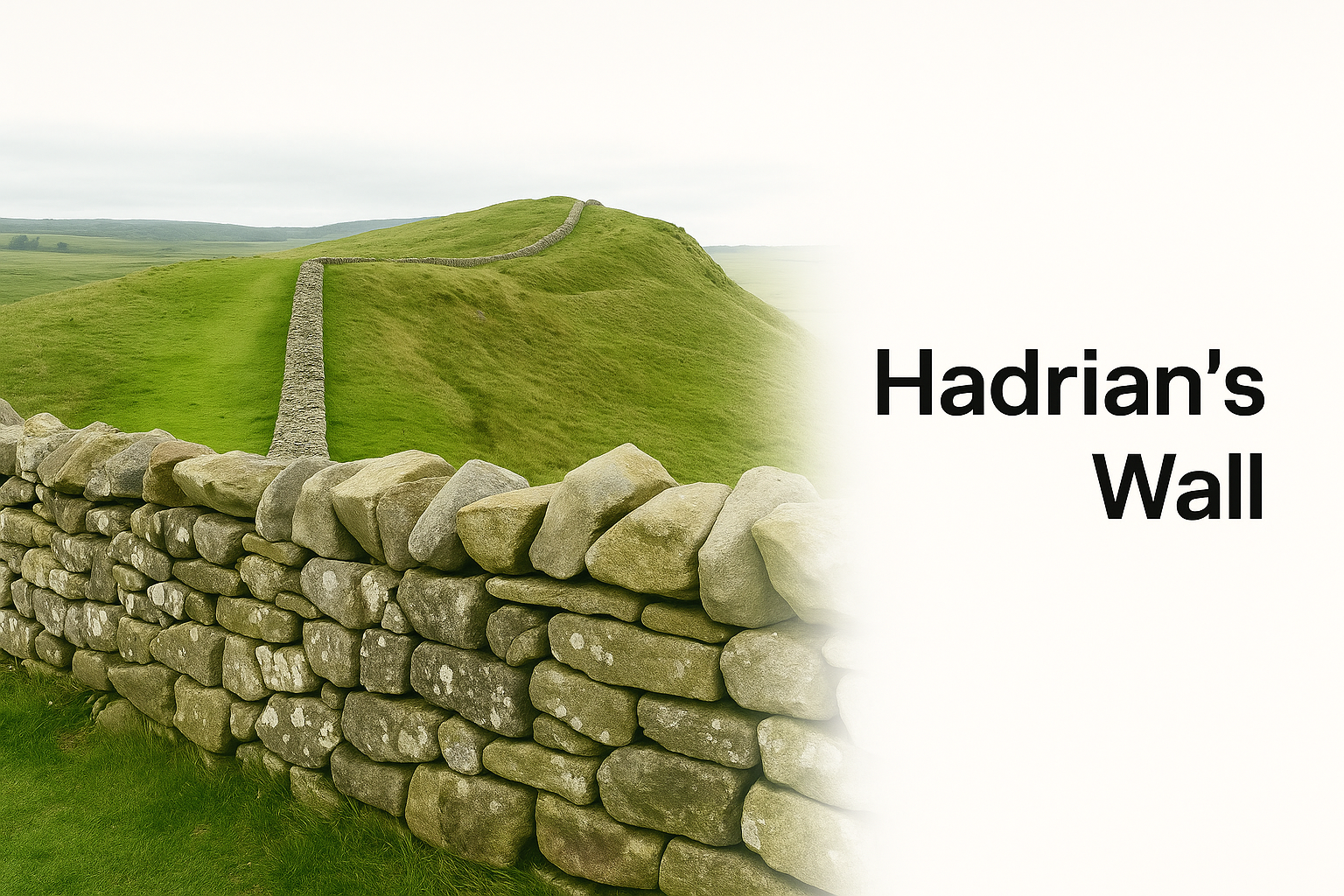
IMAGE: Hadrian’s Wall stretching across the rolling hills of northern England—an iconic Roman frontier defense structure symbolizing ancient engineering and imperial boundaries.
How Hadrian’s Wall Was Really Built (And What It Took)
Hadrian’s Wall: Northumberland’s Raw Defensive Line
Built to hold. Still standing.
Hadrian’s Wall was a border and a warning. A 73-mile scar across Britain. Built in blood, stone, and Roman will.
Here’s what it took to build it, what’s left, and why it still matters.
MUST READ
Hadrian’s Wall: Creating Division by Matthew Symonds
Sharp, visual, and used by real guides — shows how the wall was built, garrisoned, and maintained.
🔗 [Check Price on Amazon]
HARD TRUTH
Why Did Rome Build a Wall in Britain?
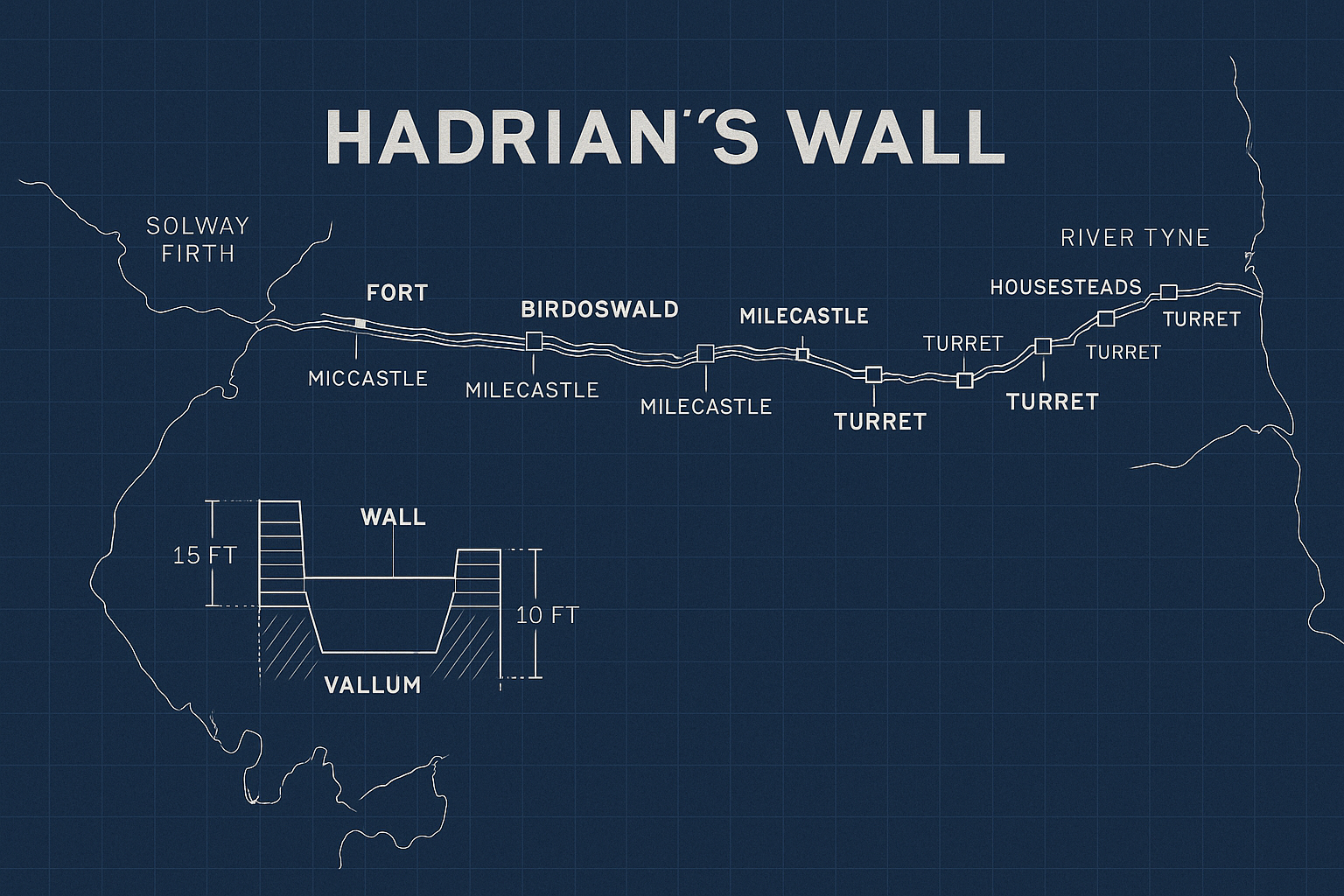
Map of Hadrian’s Wall with forts, milecastles, turrets, and defensive ditch.
Why Hadrian’s Wall was built, how it worked, and what remains of its 73-mile legacy across Britain.
Most of Hadrian’s Wall wasn’t about keeping invaders out. It was about control. Surveillance. And making sure no one forgot who ruled this island.
ROMAN STRATEGY
Why Hadrian Ordered It
Rome had reach, but not without strain. By 122 AD, the empire was deep into Britain — past the tame towns, into wild ground.
North of what’s now England? Rebellious tribes. Unmapped terrain. Unpredictable enemies.
So Hadrian drew a line.
His goal was simple:
● Control movement
● Set the limit
● Tax whoever crossed
● Crush whoever didn’t
RECOMMENDED TOOL
Hadrian’s Wall Map Poster – Annotated Wall & Fort Layout
Shows the full Roman frontier system—wall, forts, milecastles, turrets—across a modern satellite overlay.
🔗 [Check Price on Amazon]
WHAT IT TOOK
What Makes Hadrian’s Wall So Special?
Wall Under Pressure
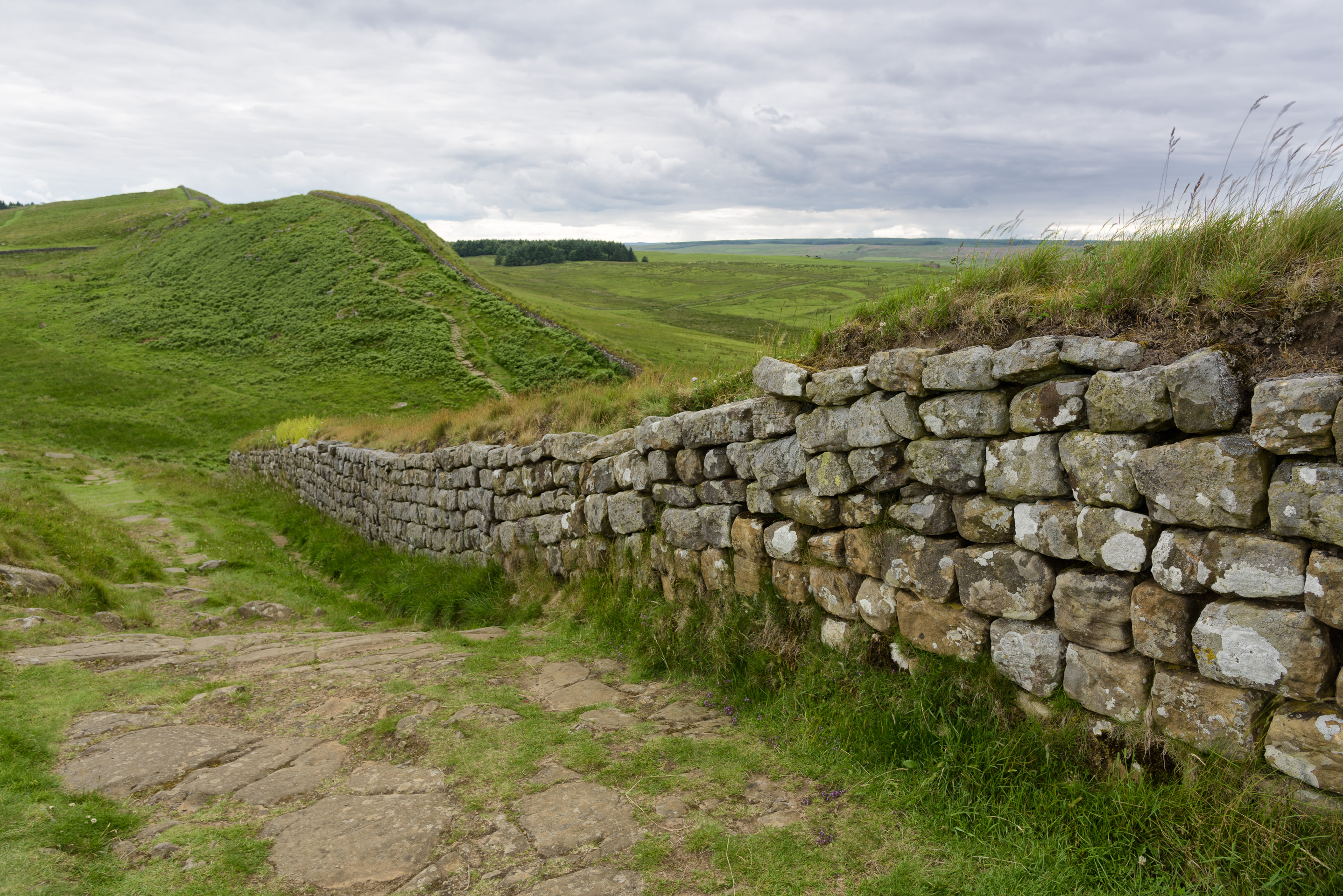
Building the wall wasn’t glorious. It was brutal.
▪ Over 15,000 workers — Roman soldiers, auxiliaries, and conscripted locals
▪ Stone hauled from nearby quarries, mostly by hand
▪ Turf ramparts thrown up fast, just to mark the ground
▪ Deaths everywhere — few recorded, most buried on the spot or not at all
“We die in dust, and the wall holds.”
— Scratched near Milecastle 37, likely by a Roman guard (2nd century)
BUILDING PHASE
Stretch of Stone
Hadrian’s Wall stretched 73 miles — from the River Tyne in the east to the Solway Firth in the west. This wasn’t one wall. It was an entire system built for control.
● Stone Wall – 15 feet tall in most sections
● Vallum Trench – a wide ditch for defense and drainage
● Milecastles – small forts every Roman mile
● Forts – full garrisons at key points (Housesteads, Birdoswald, Chesters)
● Turrets – two between each Milecastle, used for lookout and signaling
They didn’t stack stones and walk away. They carved a military corridor straight across the island.
NOW VS THEN
WHAT CHANGED?
2000 years ago, soldiers patrolled this ridge — watching smoke on the horizon. Today, it’s joggers, sheep, and tourists dodging cow pats to take selfies by half-collapsed stones.
Then:
→ Fire signals lit to call reinforcements
→ Garrisons housed 500+ armed men
→ Orders relayed from Rome to the Wall in under 2 weeks
Now:
→ Kids in hoodies tag it
→ Half of it was dismantled for farm walls
→ You can bike across it in an afternoon
ARCHITECTURAL CORE
Roman Wall Systems
Nothing about this was improvised. Every inch of the wall was engineered with purpose.
● Materials – Limestone, sandstone, and turf in early stretches
● Foundation – Dug 6 to 7 feet deep for stability
● Width – 8 to 10 feet at the base
● Design Changes – Switched from turf to stone mid-project, narrowed in the west, adjusted for slope and terrain
Roman builders didn’t force the landscape to fit the wall. They made the wall fit the land.
DEFENSE TACTICS
Key Defensive Features
This was about control, not just protection. Every piece of the wall worked like a machine.
▪ Parapets and battlements gave archers cover
▪ Arrow slits were cut straight into milecastles
▪ The vallum ditch slowed movement and flooded easily
▪ Lookout turrets were spaced every third of a mile
▪ Military Way — a full patrol road ran behind the wall
MATERIAL SHIFT
From Turf to Stone
The first version of the wall didn’t last. Turf ramparts soaked up rain and crumbled fast.
So the Romans changed course. They rebuilt in stone.
Labor tripled. Construction dragged. But the new wall stayed up — and parts of it still stand.
DECLINE BEGINS
What Went Wrong
By the late 300s, the empire was falling apart.
Troops were recalled. Garrisons emptied.
Some forts turned into farms. Others were sacked.
Farmers pulled stone from the wall to build their homes.
Hadrian’s Wall didn’t fall to war.
It fell to weather, neglect, and scavenging.
THEN VS. NOW, AGAIN!
Comparison Grid
| Feature | Original Wall | Modern Remains |
|---|---|---|
| Wall Height | 15 feet | 3–5 feet (avg.) |
| Forts | Full garrisons every 5 mi | Partial ruins, foundations |
| Turrets | 2 per Roman mile | Few remain |
| Patrol Path (Military Way) | Actively used by soldiers | Hiking trail |
| Materials | Local stone, timber | Reused in other buildings |
COMMON MYTHS
What Hurts Understanding
✕ Thinking it was one long wall — it was a complex system
✕ Believing it marked the end of empire — Rome traded north of it
✕ Assuming it worked flawlessly — raids still happened
✓ It controlled people more than it blocked them
APPLYING THE LESSON
How to Apply This (Checklist)
□ Can your design follow the terrain instead of fighting it?
□ Are your materials local and built to last?
□ Does your defensive layout serve more than one purpose?
□ Can it evolve when needs shift?
□ Will it hold up without constant maintenance?
MODERN THREATS
Preservation Today
Nature’s winning.
Erosion, livestock, farming, and tourism keep eating away at the wall. Over one-third of it is already gone.
Conservation teams are doing what they can — but even that takes money, volunteers, and time.
CRAFTSMAN TOOL PICK
Top Pick: Brutalist Stonework Done Right
Stone Mason’s Chisel Set – 7-Piece Carbon Steel Kit
(Multiple sizes & case included)
Why People Like It:
▪ Works on sandstone and limestone — perfect for restoration
▪ Excellent grip for precision work
▪ Affordable and solid — no gimmicks
Best Features:
▪ Anti-rust, hardened steel
▪ Shock-absorbing build
▪ Trusted by pros restoring Roman-era stone
Why It’s Worth It:
If you’re working with heritage stone or learning the trade, this kit gives you serious tools without the premium price.
🔗 [Check Price on Amazon]
KEEP LEARNING
Still curious? These are the most useful, high-rated resources for going deeper into Roman architecture, frontier defense, and engineering brilliance.
Affiliate Notice:
We earn a small commission from Amazon if you buy using these links. It doesn’t cost you extra, but helps us keep our content sharp and ad-free.
Recommended Reads:
▪ Hadrian’s Wall: Creating Division by Matthew Symonds — A sharp, visual breakdown of how the wall worked — and why.
▪ Brutal North by Simon Phipps — Connects modern Brutalist forms back to Roman values of structure, function, and clarity.
▪ Roman Architecture by Frank Sear — Deep but readable. Covers the full scope of Roman engineering and design logic.