
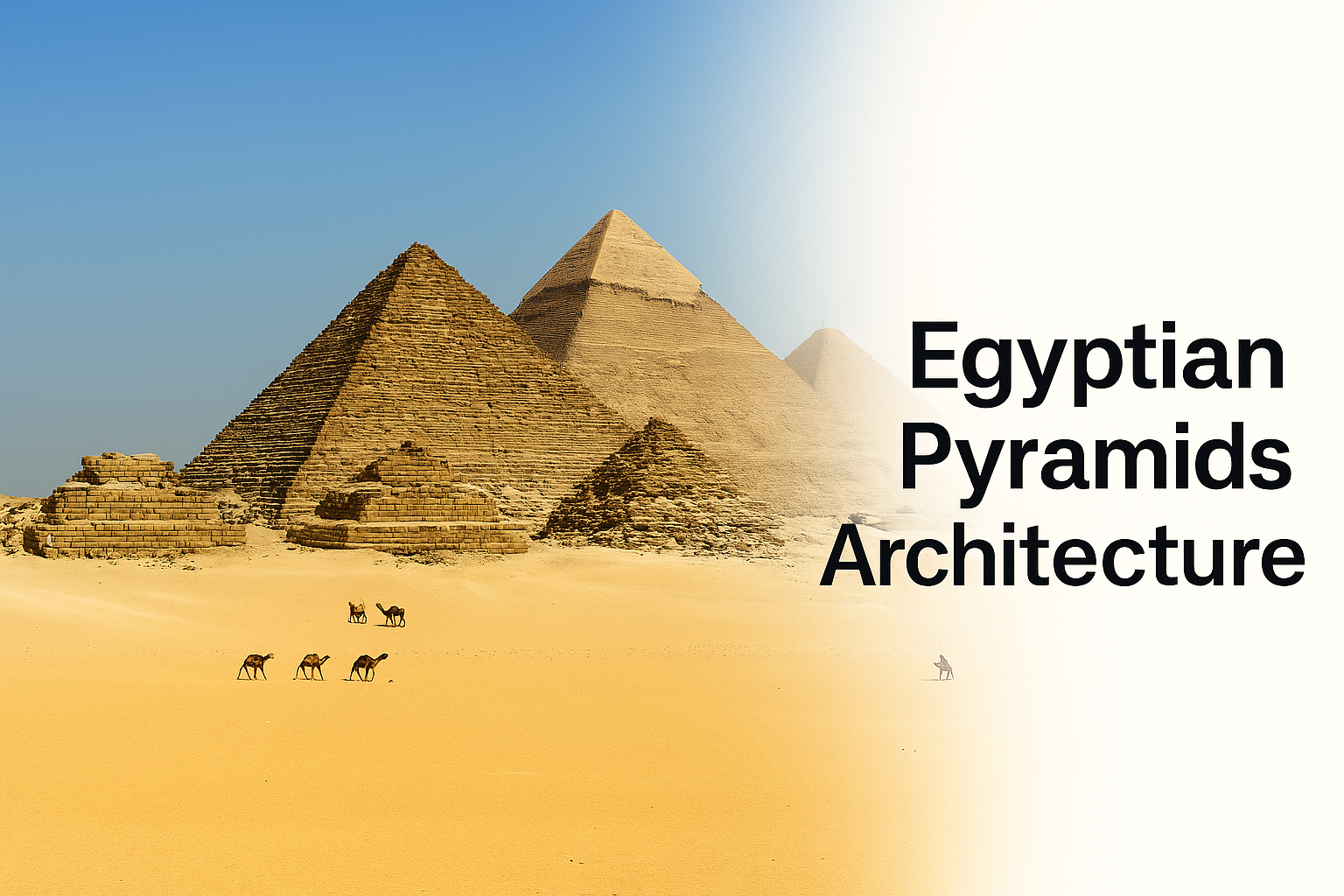
Egyptian Pyramids Architecture: How They Were Really Designed
Inside the Great Pyramids: Ancient Design That Still Stuns
How were they really built? No aliens. No slaves. Just smart design, scale, and planning that still beats most modern buildings.
From limestone blocks to LEGO 21058, this is a blunt breakdown of how the Great Pyramid works — inside and out.
What made it last over 4,000 years? We’ll break down the layout, hidden chambers, alignment tricks, and why this ancient structure still teaches us about architecture that actually holds.
HARD TRUTH
The Pyramids Were Engineering Projects First. Tombs Second.
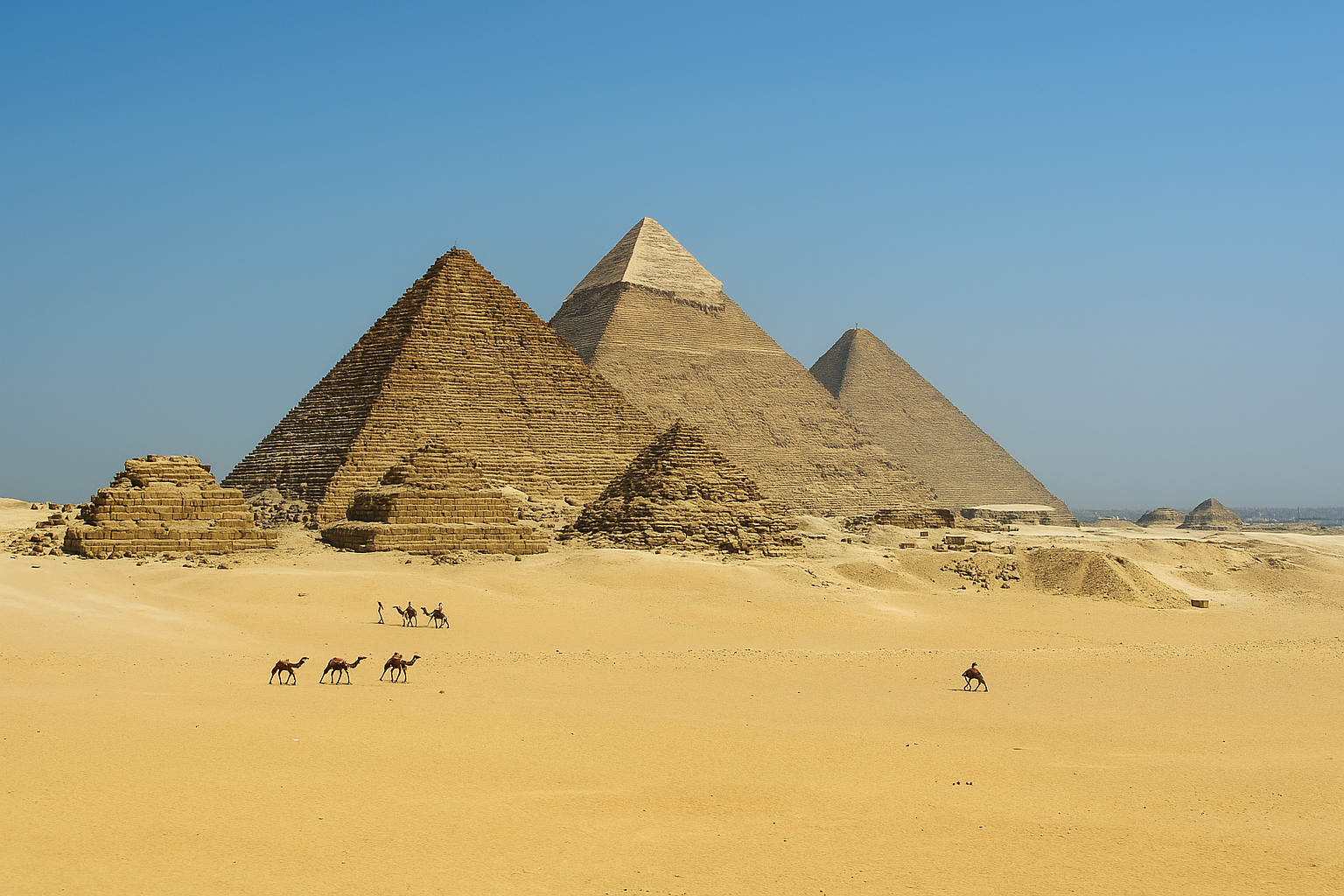
Egyptian pyramids served power and engineering at once. Political tools. Massive architectural gambles.
The most ambitious architectural projects the world had seen.
The Great Pyramid of Giza alone used over 2.3 million stone blocks, some weighing more than 70 tons. And they didn’t have cranes. No concrete. No CAD. Just geometry, labor, and will.
You want to talk about scale? The base of the Great Pyramid covers 13 acres. That’s 7 Costco warehouses.
And somehow — without steel, lasers, or digital models — they got the corners aligned to true north with mind-blowing accuracy. Within 3/60th of a degree.
That’s not luck. That’s design. Brutal, brilliant design.
Why Architects Still Study It
● Alignment with cardinal points — almost perfect
● Foundation on bedrock — no shifting, no settlement
● Tapered massing — distributes weight like a dream
● Internal cooling effect — passive climate control, 2500 BCE
Even Le Corbusier called the Great Pyramid “the first architectural form of man.”
And you know what? It still works.
Micro-Scene That Says It All
An architect I met in Cairo ran his hand across a sun-warmed limestone block and said:
“Every piece was placed for eternity. And we build condos that crack in five years.”
That’s the difference.
What It Solves That We Still Struggle With
✓ Structural logic without steel
✓ Thermal control without machines
✓ Cosmic alignment without GPS
✓ Longevity without coatings or sealants
Modern buildings aren’t even trying to last 100 years. This one’s lasted 4,500.
The “What It Took” Sidebar
This wasn’t pretty. It wasn’t clean. It was brutal:
▪ 20,000 to 30,000 workers — not slaves, but skilled labor
▪ Chisel teams shaped blocks with copper tools
▪ Nile floods timed deliveries
▪ Ramps, sleds, scaffolds — all engineered from scratch
▪ They hauled 800 tons of stone per day at the peak
The Great Pyramid took 20 years to build. That’s faster than most highway repairs.
FIELD PICK: Want a Deep, No-Fluff Guide to Pyramid Construction?
📘 Book: The Complete Pyramids: Solving the Ancient Mysteries by Mark Lehner (Amazon)
Perfect if you want real architectural breakdowns, not YouTube guesses.
IN FOCUS
How Egyptian Pyramids Were Built and Aligned So Precisely
Forget the alien theories — what the Egyptians pulled off was fully human and brutally clever.
● Perfect orientation, no compass
The Great Pyramid is aligned to true north with staggering accuracy — just 0.05° off. They likely used the stars (like Thuban in Draco) and a vertical tool called a merkhet, paired with sighting rods and sun tracking over time. Crude? Maybe. Effective? Absolutely.
● Base so flat, it still stuns engineers
The pyramid’s base varies less than an inch in level across 13 acres. They likely poured water into shallow trenches to find high and low spots, then shaved the bedrock down. No lasers. Just patient, skilled survey.
● Blocks: 2.3 million of them, hauled with coordination
Most stones came from a nearby quarry. They used sleds, lubricated sand, and human or oxen teams. Granite for the King’s Chamber came from Aswan, over 500 miles away — floated down the Nile during the flood season.
● Internal ramps? Possibly genius
Jean-Pierre Houdin’s theory suggests a corkscrew-shaped internal ramp inside the structure itself. No proof yet, but it's one of the few ideas that explains how stones were lifted without external megastructures.
● Weight control was baked into the design
Above the King’s Chamber sit five stacked relieving chambers and a pitched granite roof, designed to spread out the force of millions of tons of stone. They weren’t guessing — they understood load paths before modern equations.
● Visual precision from optical tricks
Each block face was slightly tilted in, helping maintain a straight-looking edge from a distance. These small corrections added up to a seamless visual line — the same way modern façades fake perfection.
● Time and labor were their real tools
Tens of thousands of workers, rotating crews, multi-decade timelines. What they lacked in machines, they made up for in organization, workforce logistics, and generational continuity.
→ The takeaway? You don’t need complex tech to build perfectly. You need planning, patience, and control.
ORIGINS OF THE DESIGN
From Step to Smooth
The Architecture of the Great Pyramid of Giza Explained
The Real Genius Behind Ancient Egyptian Pyramid Design
Before Giza, before the Great Pyramid, before any clean geometry — there was stacked stone. Rough. Experimental.
And led by one man: Imhotep.
He was the first recorded architect in history.
Around 2660 BCE, Imhotep designed the Step Pyramid of Djoser at Saqqara. It started as a basic mastaba — a flat tomb. But instead of one, he stacked six. Straight up. The result? The first Egyptian pyramid.
That changed everything.
Over the next century, pyramid design evolved — fast.
From Step Pyramid to True Geometry
The goal wasn’t just height. It was smooth precision.
● Meidum Pyramid — Sneferu’s first try at a smooth-sided pyramid. It collapsed.
● Bent Pyramid — They overreached the angle. Had to switch halfway. Still standing, but crooked.
● Red Pyramid — Finally, they nailed it. Gentle angle. Smooth sides. First fully successful pyramid by Sneferu.
These weren’t just tombs anymore. They were geometric weapons — tested, corrected, perfected.
Each attempt improved:
-
Load distribution
-
Stone placement
-
Slope ratios
-
Internal pressure control
This was real structural innovation — all before 2500 BCE.
What It Shows About Early Egyptian Pyramids Design
-
These early pyramids weren’t sloppy experiments. They followed logic.
-
Every phase pushed the limits of material, labor, and layout.
-
The focus wasn’t just on the outside — interior design of Egyptian pyramids mattered too (air shafts, burial chamber placement, angle of corridors).
Once they had the math and the slope right — it all led to Khufu’s Great Pyramid at Giza.
RECOMMENDED BOOK
MUST READ
The Complete Pyramids: Solving the Ancient Mysteries by Mark Lehner
What You’ll Learn: Detailed breakdown of each pyramid's evolution, including rare diagrams, build errors, and course corrections.
🔗 [Check Price on Amazon]
PYRAMID MYSTERIES
How the Pyramids Were Built (and What We Still Get Wrong)
What Makes the Great Pyramid Design Still Unmatched Today
We still don’t have a complete blueprint for how the pyramids were built. But we know enough to shut down the nonsense.
Aliens didn’t build it. Slaves didn’t stack it. Machines didn’t lift it.
This was architecture at its most human — and most extreme.
ENGINEERING, NOT MAGIC
What people forget is how methodical it all was:
● Ramps — straight, zig-zag, circular. Hundreds of meters long. Earth and brick, not myth
● Sleds + Water — wetting sand under sled runners reduced friction by 50%. Documented on tomb walls
● Work Crews — split into rotating teams with names like “The Drunkards of Menkaure.” Every team signed their blocks
● Quarry Logic — stone cut on-site for core; fine limestone hauled in from Tura; granite for internal chambers shipped from Aswan, 500 miles away
This was a logistical beast. But it wasn’t chaos. It was systems thinking — 4,500 years ago.
“BUT THE BLOCKS WERE TOO BIG” — NOPE
Most blocks were 2–5 tons. That’s heavy — but not impossible.
● They used levers, not pulleys
● Copper tools (hardened by hammering) sliced soft limestone
● For granite? Dolorite pounding stones — thousands found at Aswan
It was slow. It was brutal. But it worked.
Efficiency wasn’t the goal. Permanence was.
SHOCKING TRUTH MOST GUIDES WON’T SAY
We’ve recycled more pyramid stone than we’ve preserved.
● Cairo’s medieval mosques? Built from Great Pyramid casing stones
● Limestone from Giza used in palaces, bridges, homes
The pyramid didn’t decay. We dismantled it.
Why It Still Matters to Builders
✓ Clear massing = predictable stress behavior
✓ Modular thinking = repeatable design logic
✓ Orientation = spatial awareness before compasses
✓ Passive systems = comfort without carbon
Want sustainable design? Go back to Egypt.
Real Site Insight (Not From a Museum)
Walk the causeway from the Pyramid of Khafre down toward the valley temple.
It’s not symmetrical. The elevation shifts. Stones are sloped.
They adjusted every step to the land.
They didn’t force symmetry — they designed for it to feel right.
That’s not engineering lag.
That’s architectural sensitivity.
FIELD PICK
A Mini Version That Actually Teaches
LEGO 21058 The Great Pyramid of Giza
🔗 [Check Price on Amazon]
Why People Like It:
▪ The backside cutaway shows how internal chambers and ramps worked
▪ It includes historical segments, like the causeway and valley temple
▪ Great intro to Egyptian construction logic — for adults, not just kids
Why It’s Worth It:
This isn’t just a toy. It’s a clean visual study tool. You’ll learn more building it than watching 3 fake documentaries.
REAL CONSTRUCTION LOGIC
How They Actually Pulled It Off
The myth of slave labor is outdated. What the Egyptians had was better — skilled workers, seasonal crews, and tight logistics.
● Workers rotated in during flood season
● Limestone came from nearby
● Granite came from Aswan
● Internal ramps made the slope manageable
● Every block aligned by hand, tool, and repeated check
This was Egyptian pyramid design at peak scale.
Great pyramid design wasn’t brute strength — it was scalable precision.
RECOMMENDED TOOL
Simple Machines Explained: How Levers, Pulleys, and Tools Shape Our World by Dr. Earl
What You’ll Learn: Real-world breakdown of levers, inclined planes, and hauling systems — exactly the kind used in pyramid construction
🔗 [Check Price on Amazon]
GREAT PYRAMID
How the Great Pyramid Was Built
The Giza Blueprint
Khufu didn’t just want to be buried. He wanted to own the horizon.
The Great Pyramid wasn’t the first. But it was the most precise, massive, and mysterious structure ever built in ancient Egypt.
Around 2580 BCE, it began. Over 2.3 million blocks of limestone and granite — each weighing between 2 and 30 tons — were stacked into a structure 481 feet tall. For 3,800 years, it was the tallest building on Earth.
And it’s not crooked. Not sloppy. It’s aligned to true north within 3/60th of a degree. No GPS. No CAD. Just sight lines, stars, and mind-blowing geometry.
The Full Pyramid Layout
Khufu’s plan wasn’t just about a single triangle of stone. It was a complex:
● Main Pyramid — Precision-cut base, nearly perfectly square (within 58mm error).
● Mortuary Temple — Where rituals were performed.
● Causeway — A long stone ramp linking the temple to the valley.
● Valley Temple — Entrance for funeral processions.
● Satellite Pyramids — Smaller ones for queens and unknown royals.
● The Great Sphinx — Likely built by Khafre later, but still part of the complex’s symbolic guardianship.
Everything was laid out with intention — spiritually, geometrically, and politically.
Why the Architecture Still Shocks Engineers
-
Great Pyramid Design = near-perfect symmetry and weight distribution
-
Orientation = aligned with the cardinal directions
-
Interior shafts = aimed at stars like Orion and Sirius
-
Base = level within an inch across 13 acres
It wasn’t just the size. It was the impossible precision of the entire architecture of the Great Pyramid of Giza.
No structure today is built to last that long — or placed with such cosmic accuracy.
FIELD PICK
The Great Pyramid: 2590 BC onwards - An insight into the construction, meaning and exploration of the Great Pyramid of Giza
The Engineering of the Pyramids by G. Goyon
What You’ll Learn: Detailed breakdown of how the Great Pyramid was actually built — tools, workforce, geometry, and why it still stuns engineers.
🔗 [Check Price on Amazon]
STRUCTURAL DESIGN + INTERIOR
Inside the Pyramid
Inside the Great Pyramid of Giza: Design, Purpose, and Power
Egyptian pyramids weren’t solid. Inside, they hid chambers, shafts, and smart weight control systems that modern architects still study.
The interior design of Egyptian pyramids was stripped down, precise, and engineered for permanence — not decoration.
What Was Inside?
● Descending Passage – Drops straight into the bedrock
● Ascending Passage – Angled tunnel leading to the upper zones
● Grand Gallery – A 28-foot-tall corbelled vault, designed to shift massive stone
● Queen’s Chamber – Possibly symbolic; its real purpose is debated
● King’s Chamber – Built with granite; home to the sarcophagus
● Air Shafts – Star-aligned, not for airflow
● Relieving Chambers – Five stacked granite layers to spread vertical weight
The architecture of the Great Pyramid of Giza was all about internal pressure control. The King’s Chamber alone holds millions of tons above it — redirected by slabs and geometry.
What We Still Don’t Know
▪ 2017 muon scans revealed a large hidden void — still unexplored
▪ Some shafts dead-end unexpectedly
▪ There’s no verified full map of all internal tunnels
▪ Symbolic vs. structural roles still debated
Why It Still Matters
None of this was for show. Every internal passage helped the external structure stand. These weren’t tombs with extras — they were machines for staying intact.
FIELD PICK
LEGO Architecture 21058 The Great Pyramid of Giza
🔗 [Check Price on Amazon]
Why People Like It:
▪ Includes an open cutaway showing internal layout
▪ Shows Grand Gallery, chambers, and structural logic
▪ Actually teaches — not just entertains
Why It’s Worth It:
Great for visual learners. This is a cross-section model you build with your hands — and end up seeing like an ancient architect.
THE SPHINX CONNECTION
Symbolism, Alignment, and Scale
-
Architectural link between the pyramids and the Sphinx
-
How Sphinx design mirrors solar, spiritual, and political meanings
✓ Keywords:sphinx egyptian architecture,egyptian pyramids architecture
OLD VS NEW
Egyptian Pyramid Design vs Modern Architecture
Ancient vs Today: How Pyramid Design Still Teaches
-
What’s Still Standing
Modern architects use concrete, glass, and steel. The Egyptians? Limestone, granite, sweat, and time. But even with 4,500 years between them, some design truths still overlap.
Here’s how ancient pyramid design stacks up against what we build today.
What the Pyramids Got Right
● Alignment was exact. The Great Pyramid is aligned to true north within 0.067°. Most modern towers can’t beat that.
● Massing mattered. Huge volumes meant even weight distribution — a primitive but effective stress management strategy.
● No wasted interior. Everything inside served a structural or symbolic purpose. No dead space. No filler.
● Material lifespan > speed. They used what would last for thousands of years, not what was quick to install.
● Passive design came first. Thick stone walls and narrow passages helped regulate internal temperature without tech.
Where Modern Design Breaks Away
● Function dominates. Today’s architecture is all about use, speed, efficiency — not eternal legacy.
● Structure is hidden. Most buildings now rely on internal frames and cladding. Pyramids were their structure.
● Form follows money. Clients and cost shape most buildings now. The Pharaohs didn’t have budgets — they were the budget.
● Style shifts fast. What’s “modern” today will look dated in 20 years. Pyramid Egyptian architecture? Still iconic.
The Real Comparison
| Design Feature | Egyptian Pyramids | Modern Architecture |
|---|---|---|
| Alignment | Star-precise | Often close, not perfect |
| Material | Stone blocks, hand-cut | Concrete, steel, composites |
| Structural Logic | Load-bearing mass | Internal skeleton + cladding |
| Longevity | 4,000+ years and standing | 50–100 year design lifespan |
| Decorative Interiors | Sparse, symbolic | Focused on user comfort & aesthetics |
| Purpose | Immortality, power display | Utility, profit, experience |
Why It Still Matters
Pyramid architecture reminds us that design choices echo across time. Their geometry, orientation, and material logic still teach us how to build for permanence — not trends.
Modern architecture wins on comfort and versatility. But for lasting impact? The Egyptians are still ahead.
PRESERVATION + RECONSTRUCTION
How We’re Trying to Protect What’s Left
-
Erosion, pollution, tourism impact
-
3D scans, virtual reconstruction, and LEGO as a form of digital preservation
LEGO PYRAMID
What LEGO Got Right: Block-by-Block Accuracy of the Great Pyramid
LEGO didn’t just make a toy. They built a model that actually teaches.
LEGO 21058 The Great Pyramid of Giza captures the architecture of the real pyramid better than most school diagrams. It gets the angles, the chambers, even the ancient landscape — and does it all in a split-view format that’s more informative than most museum displays.
Key Details It Nails
● The Slope Is Right — The model captures the 51.5° pyramid angle with surprising precision
● Cutaway Chambers — You can actually see the King's Chamber, Grand Gallery, and hidden corridors
● Valley Temple + Causeway — It shows the full complex, not just the pyramid
● Nile River Scene — Smart nod to real site orientation and function
● Split Design — The back lifts off, exposing the full internal logic
It’s one of the only physical models that shows how Egyptian pyramids design worked in layers — structural, symbolic, and spatial.
Why It’s Actually Useful
▪ For Students — Makes the invisible visible: chambers, layout, scale
▪ For Architects — Great example of section-based thinking and massing
▪ For History Nerds — Includes real-world detail like limestone casing and transport ramps
LEGO Architecture 21058 The Great Pyramid of Giza isn't just about building for fun. It teaches pyramid logic through physical interaction. That’s something lectures can’t replicate.
Why It Matters
LEGO got what most books don’t: the pyramid wasn’t just a shape — it was a system. Every piece had a purpose. Every block was part of a plan. This set makes that clear.
LEGO PYRAMID SET
Top LEGO Sets + Recommended Gear for Pyramid Fans
LEGO the Great Pyramid of Giza: A Design Lover’s Model
This isn’t just a toy. It’s a blueprint in bricks.
LEGO Set 21058: The Great Pyramid of Giza is one of the best visual tools for understanding ancient architecture — especially for students, designers, and visual learners.
What makes it powerful is how it strips the pyramid down to its core ideas: mass, chambers, ramps, orientation. This isn’t “inspired by” the Great Pyramid. It’s a functional cutaway model that gets more right than most textbooks.
Why It’s Actually Useful
● Real slope angle: matches the original 51.5° incline
● Exposes internal layout: Grand Gallery, King's Chamber, shaft systems
● Shows outer vs inner structure: smooth limestone shell vs stone core
● Highlights surrounding landscape: causeway, temple, river transport
● Built-in cutaway logic: see both the solid form and the skeleton
Best Features of LEGO 21058
▪ Fits with the LEGO Architecture series
▪ Works as a teaching model and display piece
▪ Includes symbolic, structural, and spatial layers
▪ Easy enough for beginners, detailed enough for pros
This is the LEGO set to start with if you want to actually learn Egyptian pyramid design by hand.
FIELD PICK
LEGO The Great Pyramid of Giza 21058
🔗 [Check Price on Amazon]
Why People Like It:
▪ Shows the real architectural structure, not just the surface
▪ Includes Nile-side loading dock and transport ramps
▪ Designed with teaching in mind — not just display
Why It’s Worth It:
Best blend of hands-on design, architecture learning, and historical accuracy. Top pick for anyone serious about pyramids.
ADD-ONS + RELATED TOOLS
▪ Display Case with Dust Cover
→ Keeps your model safe without hiding detail
→ 🔗 [Check Price on Amazon]
▪ Architecture LEGO Brick Separator Tool
→ Helps rebuild parts without breaking blocks
→ 🔗 [Check Price on Amazon]
▪ Book: “Building the Pyramids of Egypt” by Dieter Arnold
→ Field archaeologist’s take on the real techniques
→ 🔗 [Check Price on Amazon]
COMMON MYTHS & MISTAKES
What People Get Wrong
● No, the pyramids weren’t built by slaves
This myth has been debunked again and again. Archaeological digs uncovered workers' villages near the site — complete with bakeries, medical care, and housing. These weren’t prisoners. They were skilled craftsmen and rotational laborers, paid and fed well for their work. Think state contractors, not chains and whips.
● No aliens. No concrete.
There’s zero evidence of extraterrestrial help or ancient super-tech. The blocks weren’t poured concrete, either — they were quarried, hauled, and placed using raw tools, muscle, and smart logistics. The obsession with “lost technology” ignores the brilliance of basic tools used well.
● It was complex — and fully human
The layout, orientation, weight management, and symbolic structure took advanced knowledge. Geometry, astronomy, materials, and years of planning were baked into every layer. The real story is even more impressive than the fantasy.
● One of the biggest myths? That it was just a tomb
Sure, it held a sarcophagus. But its placement, angles, shafts, and hidden voids suggest it did more — possibly aligning with spiritual beliefs, celestial events, and rituals of transformation. It was architectural ideology in stone.
HOW TO APPLY THIS TODAY
Modern Design Lessons from Ancient Stone
● Orientation matters
The Great Pyramid is aligned to true north with 0.05° accuracy — without compasses. Today, we still study this for solar orientation, natural light planning, and passive energy use. The takeaway: design your building in sync with its environment from the start.
● Form carries meaning
The pyramid wasn’t just a shape. It symbolized ascension, permanence, and divine order. In modern design, form still tells a story — and clients feel it. Use strong geometry when you want structure to signal importance.
● Passive cooling isn't new
The internal chambers maintain stable temperature, even in desert heat. Thick walls, minimal windows, strategic ventilation — it's all still relevant. Passive thermal control is not a trend. It's a return to something that worked.
● Symbolism can be structural
Every passage and chamber in the pyramid had spatial intent. In your own designs, think about what your layout says. Does the space guide? Does it uplift? Does it isolate or connect?
● Mass and weight create presence
Pyramids are heavy for a reason. Weight = power. In modern architecture, you can still use massing to convey solidity, permanence, and emotional gravity — even with lightweight materials.
KEEP LEARNING
Books, Tools, and LEGO Picks to Go Deeper
● BOOK – The Complete Pyramids by Mark Lehner
→ Ground-level research, diagrams, and expert insight from a leading Egyptologist
🔗 [Check Price on Amazon]
● LEGO SET – LEGO Architecture 21058: The Great Pyramid of Giza
→ One of the smartest cutaway models for visualizing interior design and slope geometry
🔗 [Check Price on Amazon]
● TOOL – Precision Laser Measure (328ft Range)
→ For builders, modelers, and anyone checking slope, scale, or symmetry
🔗 [Check Price on Amazon]
Affiliate Note
Some links above may earn a small commission — at no cost to you. Every pick is vetted and field-relevant.
FAQs
GENERAL QUESTIONS
What are the Pyramids of Giza and who built them?
Built for Pharaoh Khufu around 2560 BCE, the Great Pyramid is the tallest and most famous of the Giza pyramids.
How old is the Great Pyramid?
It dates to around 2560 BCE — over 4,500 years old.
Was it built by slaves?
No. It was built by skilled, paid workers — evidence includes nearby cemeteries and remains of well-fed laborers.
Why did they build pyramids?
To serve as royal tombs, symbols of power, alignment markers for rituals, and possibly “resurrection machines” for pharaohs.
Are the pyramids aligned astronomically?
Yes — cardinal orientation is within 0.05°. Air shafts even align with stars like Orion and Sirius.
CONSTRUCTION METHODS
How many blocks are in the Great Pyramid?
About 2.3 million stones, totaling roughly 6 million tons.
How long did it take to build?
Around 20–23 years; some estimates go up to 30 years.
What tools did they use?
Copper chisels, dolerite pounding stones, levers (not pulleys), and sleds lubricated with water.
What about ramps?
They likely used straight, zig-zag, or circular ramps — possibly even internal spirals.
Is the “water-lift” theory real?
A newer theory suggests hydraulic systems via shafts — but it's still speculative.
Were the stones uniform?
Most blocks were rough-cut local limestone. The outer casing was fine polished Tura limestone.
How was the geometry so precise?
They used “seked” measurements — slope based on palms per cubit. The base is nearly a perfect square.
How heavy were the stones?
Most blocks weigh 2–5 tons. Some granite ones reach up to 80 tons.
INTERIOR & STRUCTURE
What's inside the Great Pyramid?
Subterranean Chamber, Queen’s Chamber, King’s Chamber, Grand Gallery, narrow passages, and relieving chambers.
What are the air shafts?
Narrow ducts in the King’s and Queen’s Chambers — not for ventilation, but aligned with stars.
Are there hidden rooms?
Yes — scans in 2017 revealed unexplored voids still under research.
Who was the architect?
Likely Hemiunu, Khufu’s vizier and a royal engineer. But not confirmed.
How did they handle weight stress?
They used granite slabs and stacked relieving chambers to distribute the massive load.
MISCONCEPTIONS & COOL FACTS
Is it still the tallest pyramid?
It was the tallest structure in the world for 3,800+ years (originally 481 ft). Now it’s around 449 ft.
Does it have 8 sides?
Yes — each face is slightly concave, creating 8 subtle sides visible from above at equinox.
Is it in the middle of the desert?
No — it borders the city of Giza and sits just outside Cairo.
Is it the biggest pyramid by volume?
Not quite. It’s the tallest. But the Great Pyramid of Cholula in Mexico is larger by volume.
Did erosion destroy it?
Not exactly. Much of the smooth casing was removed and reused by medieval builders.
Were there carts or pulleys?
No pulleys found. Just sleds, levers, ropes — and manpower.
Could we replicate it today?
Yes, with modern cranes. But ancient Egyptians pulled it off with basic tools, sharp planning, and grit.