
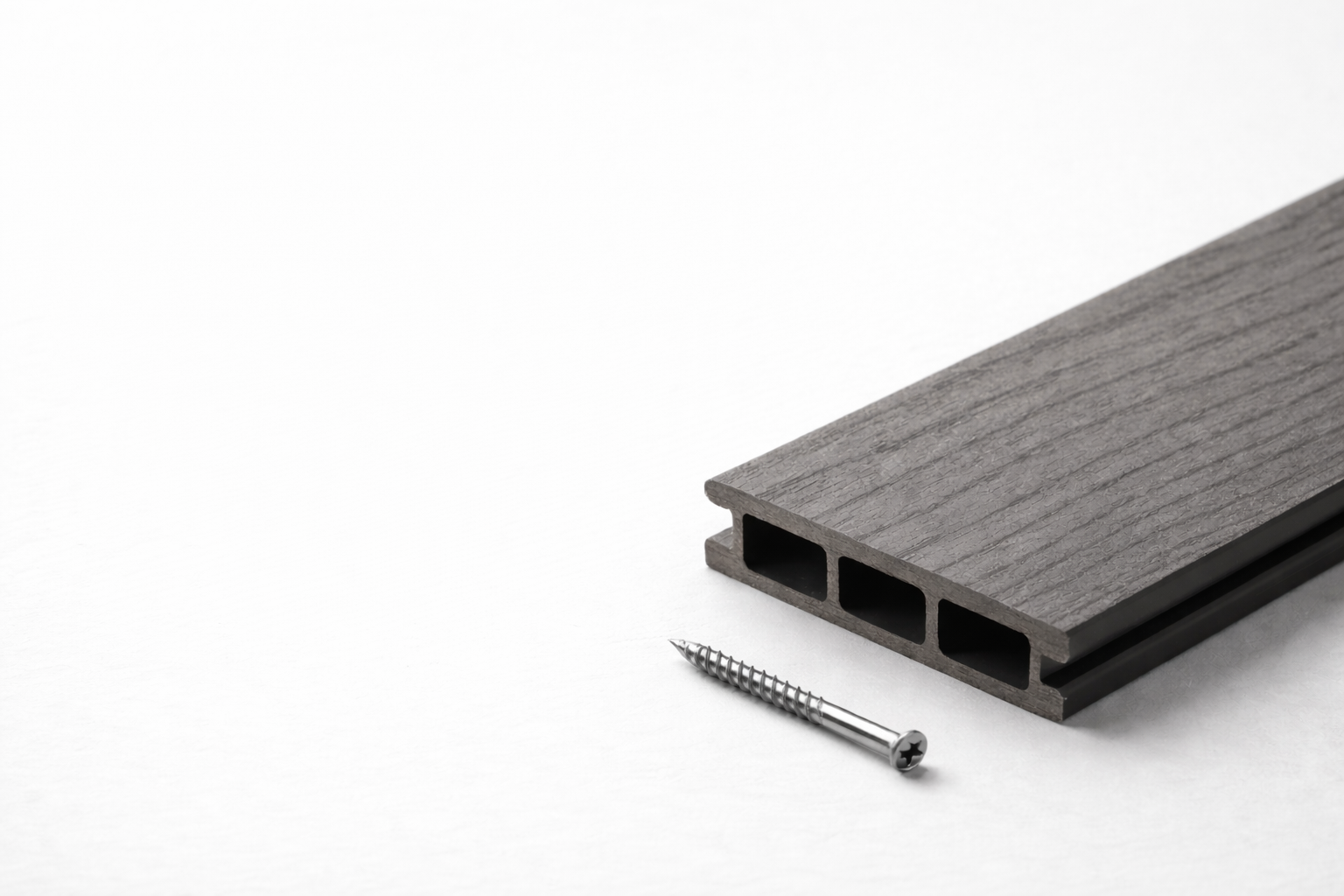
Composite decking is “low maintenance,” not “no maintenance.” Most headaches come from heat, gapping, substructure mistakes, and cleaning the wrong way.
This page is built for fast scanning: real questions people keep asking, grouped by what’s actually breaking projects.
Table Of Contents
- Basics And Expectations
- Brands And Product Choices
- Heat And Sun Issues
- Slip, Mold, And Stains
- Framing And Structure
- Installation Details
- Stairs, Fascia, And Railings
- Cost, Value, And Longevity
Composite Decking Quick Answers (50 Real Questions)
Basics And Expectations
Is Composite Decking Actually Worth It?
If you hate sanding and staining, usually yes. You pay more up front to buy time back every spring.
But you only “win” if the framing is right and you follow the manufacturer spacing rules.
Does Composite Really Last 25–30 Years?
It can, but that assumes: good ventilation, correct joist spacing, correct fasteners, and routine cleaning.
Most early failures are not the boards. It’s the structure, drainage, or trapped moisture.
Does Composite Decking Rot?
The boards don’t rot the way wood does.
But organic gunk sitting in seams can grow mildew, and wood joists under it can still rot if water gets trapped.
Will Composite Look “Fake” Up Close?
Entry-level lines can look plasticky in full sun and hard shadow.
Mid/premium lines look better, especially multi-tone boards, but samples in your lighting matter.
Is Composite “No Maintenance”?
No. It’s lower maintenance.
You still clean it, manage mold/algae, and keep gaps clear so water can drain.
Can I Paint Or Stain Composite Decking?
Most manufacturers say no, and it usually voids warranty.
If color is the driver, choose a board you actually like instead of planning to “fix it later.”
Does Composite Fade Over Time?
Some initial color shift is normal, especially in the first season of UV exposure.
Higher lines control this better. Expect “slight change,” not “stays identical forever.”
Brands And Product Choices
Trex Or TimberTech?
Both can be good. The better comparison is specific product line vs product line, not brand vs brand.
Pick based on: heat performance, texture, warranty coverage, and what your local supplier actually stocks.
Fiberon Vs Trex?
Similar story: compare the line you’re buying, not the logo.
Look at surface texture (slip), color stability, and how the system handles fascia and stairs.
What’s The Difference Between Capped And Uncapped Composite?
Capped boards have a protective shell that improves stain resistance and color stability.
Uncapped boards are cheaper but tend to show wear and staining faster.
Is PVC Better Than Composite?
PVC is very moisture-resistant and can be a strong choice in wet, shady, algae-heavy sites.
Composite often wins on feel and stiffness, but the site conditions should decide.
What’s The Best Composite For Full Sun?
Usually: lighter colors, boards marketed for heat reduction, and a texture that stays comfortable.
Dark boards in full sun are a predictable complaint. Not a mystery.
Do Grooved Boards Perform Worse Than Square-Edge?
Not inherently. Grooved boards just lock you into hidden fasteners and the brand’s system.
If you want flexibility, square-edge gives more fastening options.
Can I Mix Board Brands?
It’s risky. Thickness, expansion behavior, and fastening systems vary.
If you mix, you’re also mixing warranties. That can get messy fast.
Heat And Sun Issues
Does Composite Get Too Hot To Walk On?
In direct sun, it can. Dark colors are the usual culprit.
Shade, rugs, pergolas, and lighter boards solve more “hot deck” complaints than any marketing claim.
Is Wood Cooler Than Composite?
Often, yes in direct sun.
But wood brings its own problems: splinters, staining cycles, and faster surface breakdown.
Do “Cool” Composite Boards Actually Work?
Some do reduce surface temperature in certain conditions, but they’re not magic.
Color, sun angle, wind, and whether the deck is over soil vs over a roof all matter.
Should I Avoid Dark Composite Boards?
In full sun, consider it seriously. Heat complaints are one of the most repeated regrets.
If you love dark, plan shade and ventilation from day one.
Does Composite Expand A Lot In Heat?
It moves. That’s why end gaps and side gaps are not optional.
Skipping gapping is how you get buckling, noisy boards, and weird seams.
Can I Install Composite In Winter?
You can, but you have to follow the cold-weather spacing guidance for that product.
Boards installed tight in the cold can pinch hard in summer.
Does Composite Warp Or Cup In Heat?
It can if the framing is uneven, fasteners are wrong, or the board isn’t allowed to move.
Most “warping” reports trace back to install details, not a mystery defect.
Slip, Mold, And Stains
Why Is Composite Decking Slippery When Wet?
Usually it’s a surface biofilm: algae/mildew, plus pollen and dirt.
Texture matters. So does routine cleaning and keeping shade areas dry.
How Do I Clean Mold Or Mildew Off Composite?
Start with soap/water and a soft brush. Use manufacturer-approved cleaners if needed.
The fix is usually cleaning plus removing the conditions that keep it damp.
Can I Pressure Wash Composite?
Sometimes, but it’s easy to scar the surface or stripe it.
If you do it: low pressure, wide fan tip, keep distance, and follow the manufacturer guidance.
What Stains Composite Decking The Most?
Grease, sunscreen, tannins from leaves, and rust marks from cheap furniture.
“Low stain” doesn’t mean “nothing stains.” Clean spills early. That’s the real rule.
Does Composite Scratch Easily?
It can. Dogs, dragging furniture, and gritty shoes do it.
Textured boards hide it better than smooth ones. Entry-level boards show it faster.
How Do I Remove Rust Stains?
Prevent first: use feet pads and avoid cheap steel planters on the deck.
For removal: spot treat per the manufacturer’s cleaning guide so you don’t bleach or dull the cap.
Can I Use Salt For Ice On Composite?
Often yes in moderation, but check your product guidance.
More important: avoid metal shovels that gouge the surface. Plastic shovel, light touch.
Framing And Structure
Can I Use 16 Inch Joist Spacing?
Often yes for straight runs, but stairs, picture framing, and diagonal patterns can require 12 inches.
The board’s install guide is the deciding document, not a guess.
When Do I Need 12 Inch Joist Spacing?
Diagonal decking, heavy-use areas, and some thinner boards call for it.
If the deck feels bouncy, you’ll hate it forever. Stiffen it now.
Do I Need Extra Blocking With Composite?
Frequently, yes at butt joints, edges, and where fascia needs support.
Loose edges are where squeaks, movement, and ugly seams show up.
Should I Use Pressure-Treated Lumber For Framing?
In most residential builds, yes. It’s the standard substructure material.
But treat it like a system: drainage, flashing, and ventilation matter more than people admit.
Do I Need Joist Tape?
It’s a smart add-on in wet climates or where debris sits on joists.
It protects the tops of joists from trapped moisture at fastener penetrations.
How Do I Stop Deck Squeaks?
Squeaks come from movement: uneven framing, loose fasteners, insufficient blocking.
Fix is structural: straighten, block, fasten correctly, and don’t force boards tight.
Can I Reuse My Old Deck Frame?
Sometimes, but inspect hard: joist spacing, rot, ledger flashing, and level.
Composite is less forgiving visually. A tired frame makes a new surface look cheap.
Installation Details
Do Composite Boards Need Gaps?
Yes. Side gaps and end gaps are not optional.
No gaps is how you get buckling, trapped debris, and moisture sitting where it shouldn’t.
How Big Should The End Gaps Be?
It depends on temperature at install and the specific board.
Use the chart in the install guide. “Eyeballing it” is how seams look awful in July.
Can I Install Composite Over Concrete?
Yes, with a sleeper system and drainage plan.
Direct-to-concrete without airflow is a common mold and movement problem.
Do I Need A Slope For Drainage?
Yes. Even a small slope helps. Standing water is where slip, staining, and bio-growth start.
Also keep debris from packing into seams. That’s half the battle.
Hidden Fasteners Or Face Screws?
Hidden fasteners look clean but can be less forgiving if the frame isn’t perfect.
Face screws can be stronger at edges and stairs. Many builds use both where it makes sense.
Why Do Butt Joints Look Bad?
Movement plus inconsistent gapping. Also a lack of joint blocking.
Plan seams. Stagger them. Support them. Don’t let them float.
What Is Picture Framing And Is It Worth It?
It’s a border around the deck field. It looks finished and hides cut ends.
But it adds framing complexity and often needs tighter joist spacing and blocking.
Stairs, Fascia, And Railings
Do Composite Stair Treads Sag?
They can if stringer spacing is too wide for that tread system.
Stairs are where “almost right” framing becomes a safety and comfort issue.
What Stringer Spacing Should I Use?
It depends on tread type and manufacturer guidance.
Many stair issues come from using wood rules on composite parts without checking the spec sheet.
Why Does Fascia Warp?
Fascia boards move with heat and can oil-can if not fastened correctly.
Use the approved fastener pattern, and don’t pin it so tight it can’t move.
Can I Use Composite For A Bench Or Planter?
Yes, but structure it like furniture: proper framing, drainage, and access to clean out debris.
Planters are moisture traps. Treat them like a wet area detail.
Are Composite Railings Worth It?
They match the deck and resist rot, but cost is real.
Also check code compliance for guard height, baluster spacing, and load requirements.
Do I Need Special Fasteners For Composite?
Often yes. Corrosion-resistant hardware is non-negotiable outdoors.
Wrong screws lead to mushrooming, loose boards, and ugly surface damage.
Can I Wrap Posts With Composite Trim?
You can, but watch moisture trapping and ventilation.
“Wrapped posts” sometimes hide rot until it’s expensive. Leave a path for drying.
Cost, Value, And Longevity
Why Is Composite So Expensive?
You’re buying a manufactured system: capped boards, engineered profiles, and warranty coverage.
Also: the labor isn’t always cheaper. Detailing can be slower than basic wood.
Is Entry-Level Composite A False Economy?
Not always, but it tends to show wear, staining, and “cheap shine” sooner.
If the deck is a main living space, mid-grade often feels like the real value point.
What’s The Real Cost Difference Vs Wood?
Up-front: composite usually higher. Over time: wood costs keep arriving (stain, repair, replacement boards).
The honest comparison is “10-year cost + weekends spent maintaining,” not just material price.
Does Composite Increase Home Value?
Sometimes. It reads as a quality upgrade when it’s detailed well and the railing looks intentional.
A badly framed composite deck can still feel cheap. Execution matters more than the label.
What Voids A Composite Warranty?
Common triggers: wrong fasteners, wrong spacing, improper ventilation, and unsupported installs.
Warranties are paperwork-heavy. Save receipts and follow the install manual like it’s code.
Is DIY Composite A Bad Idea?
DIY is fine if you can frame accurately and follow the install guide.
If your framing is sloppy, composite will broadcast it. Straight lines matter more here.
What Are The Most Common Regrets?
Dark boards in full sun, inadequate joist spacing (bounce), and ignoring gapping rules.
After that: slippery shade zones from algae, and cheap railings that date the whole build.
Quick Checks
- Heat: If the deck is full sun, start with lighter colors and plan shade.
- Stiffness: If you feel bounce during framing, fix it before boards go down.
- Gaps: Use the manufacturer temperature chart. Don’t guess.
- Drainage: Standing water and packed seams create most “slippery” complaints.
- Cleaning: Avoid aggressive pressure washing. Start gentle.
Source Examples (Click To Expand)
These are public discussion threads used to confirm the question patterns and wording people actually use (recent years). This page is written in original language and does not copy phrasing.