
A Smart Guide to What They Are, What They Do, and Why They Matter
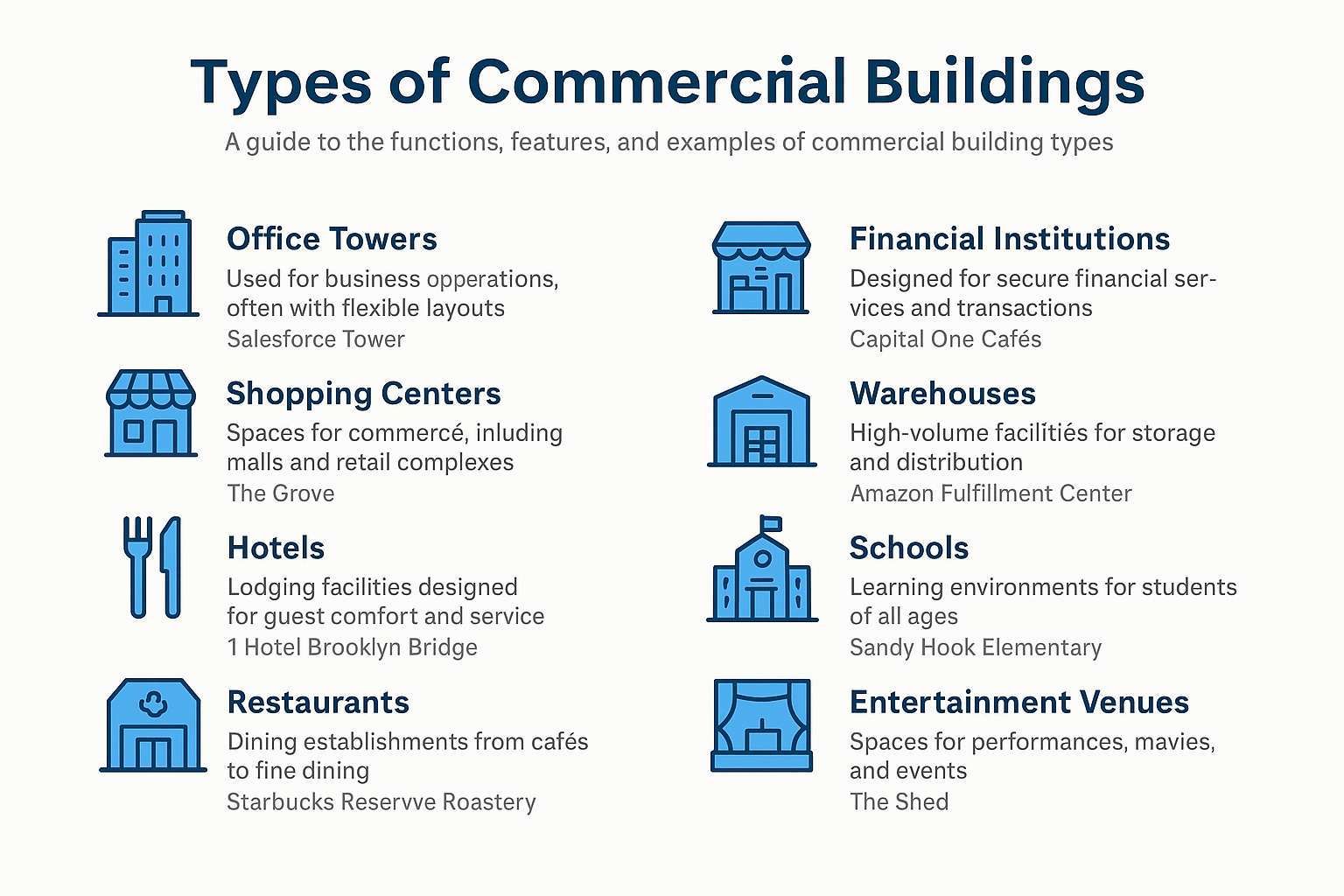
Commercial buildings aren’t just steel and concrete—they shape how cities live, move, and do business. From logistics hubs to luxury hotels, every type serves a specific role in the economic ecosystem—and needs different design strategies, zoning rules, and performance standards.
From Offices to Warehouses: Exploring Commercial Building Types
Here’s a smarter, more useful breakdown of modern commercial building types:
Types of Commercial Properties and How They Differ
1. Office Towers
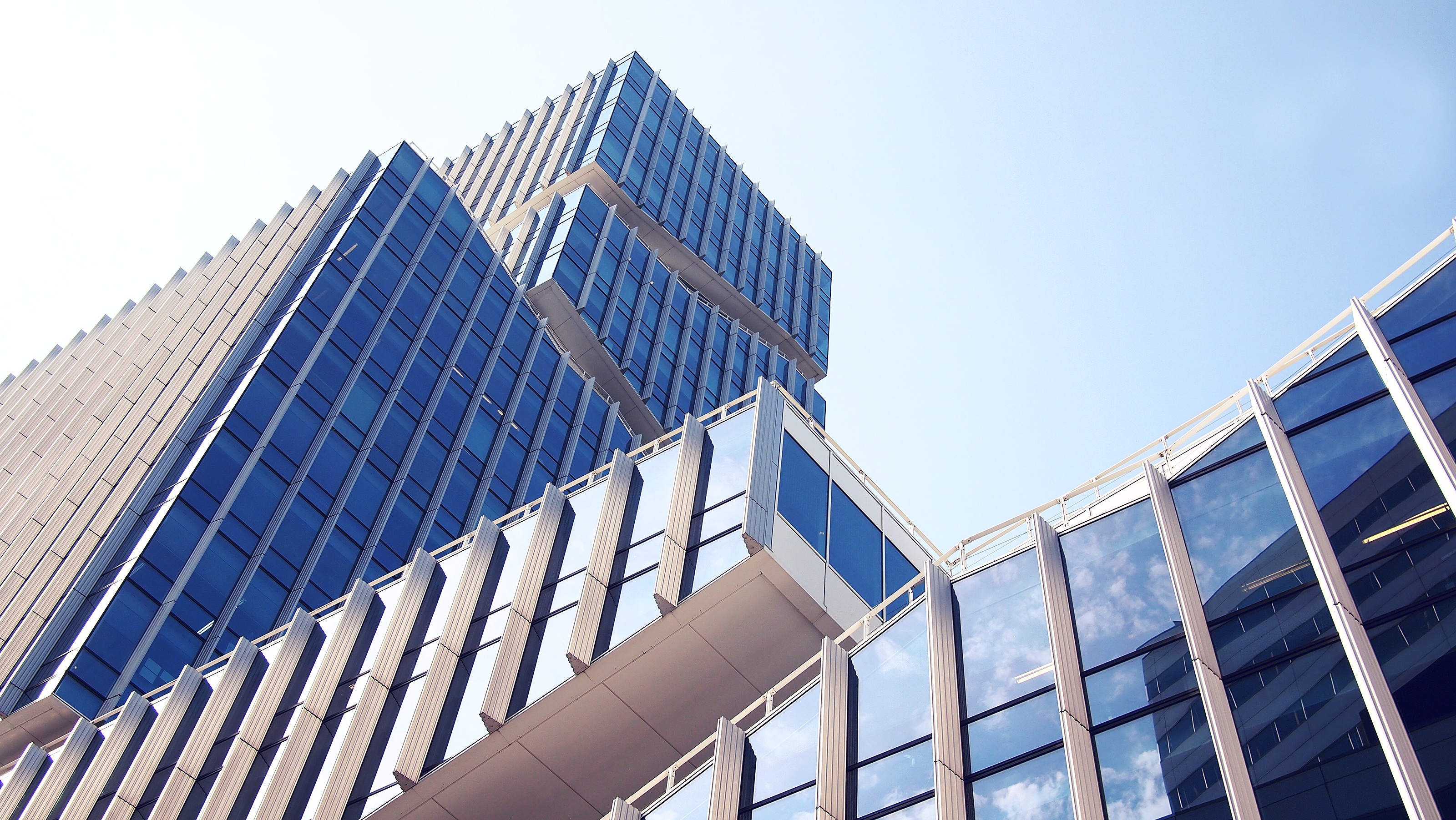
What They Are: Tall buildings designed for daily business operations—tech firms, law offices, co-working spaces.
Key Features: Flexible layouts, core access (elevators, stairs), strong HVAC zoning.
Design Challenge: Balancing open-plan needs with privacy and acoustics.
Example: Salesforce Tower, San Francisco – LEED Platinum and net-zero ready.
2. Shopping Centers & Retail Complexes
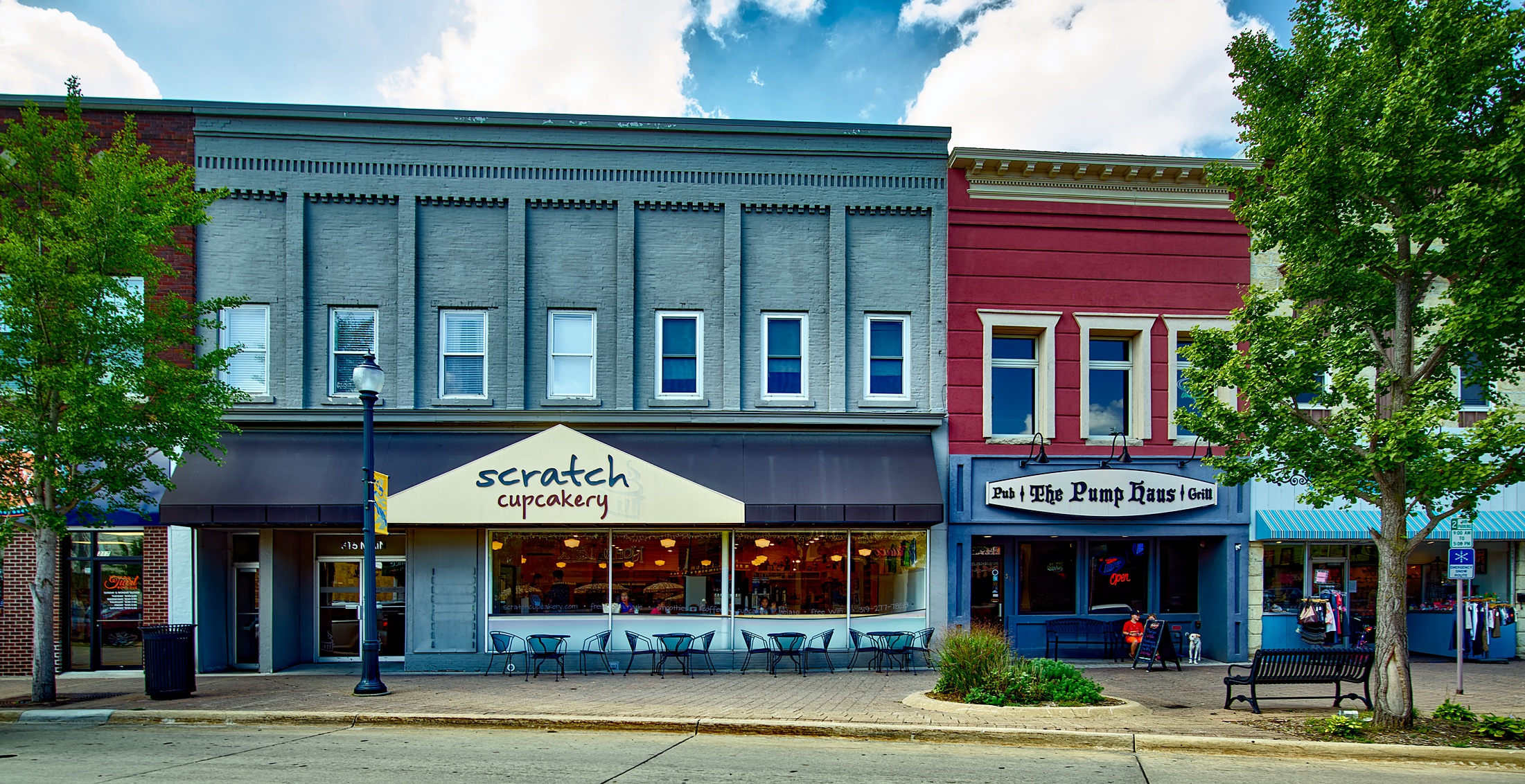
What They Are: Spaces for commerce—malls, strip plazas, flagship stores.
Key Features: Walkable layouts, signage visibility, loading access.
Tip: Parking flow and foot traffic patterns make or break revenue.
Example: The Grove, Los Angeles – combines outdoor space with curated retail and entertainment.
3. Hotels, Motels & Lodging Facilities
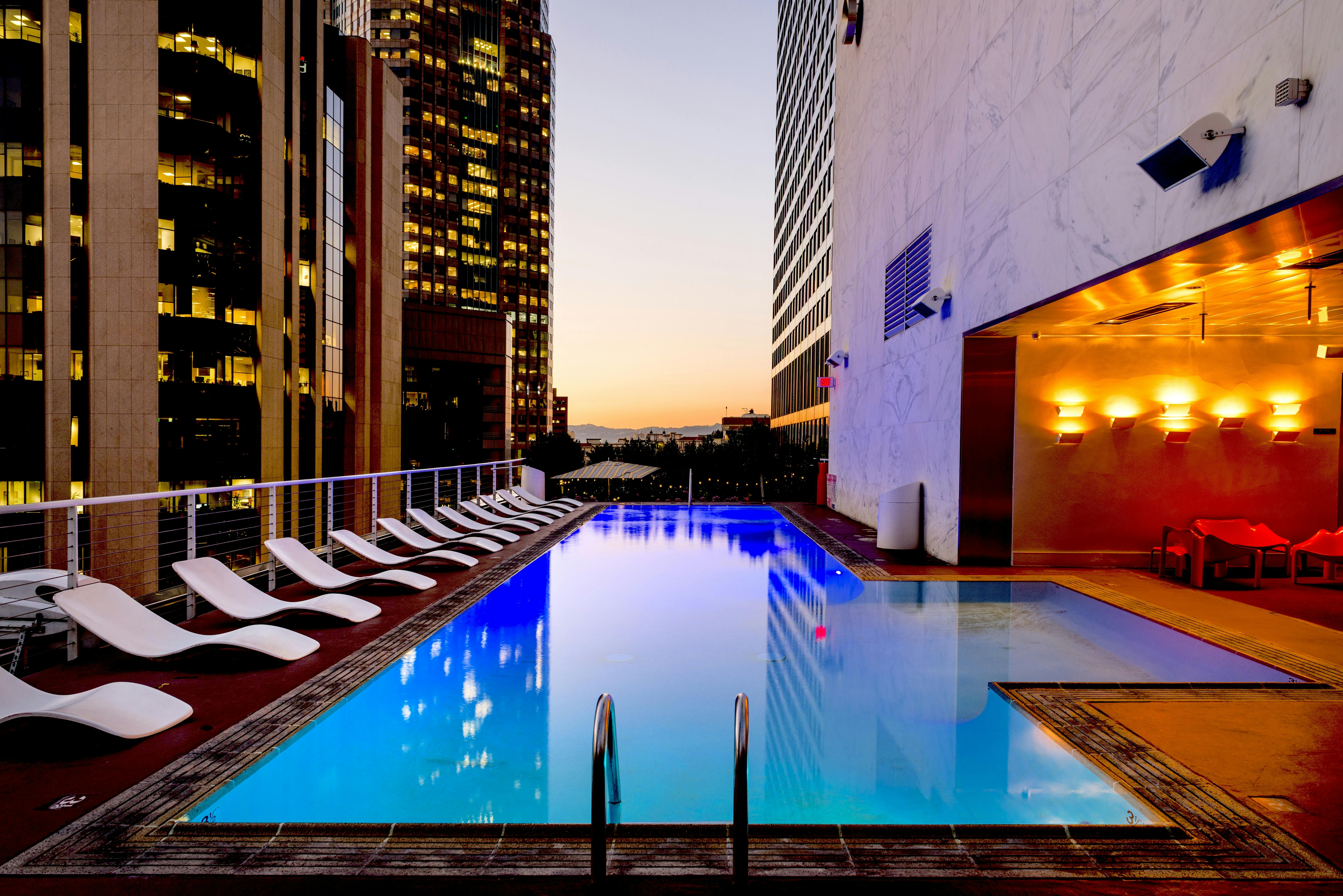
What They Are: Temporary living spaces for travelers, events, and business stays.
Focus Areas: Circulation, acoustic separation, branded aesthetic, room turnover.
Trending Now: Contactless check-in, sustainable linens, rooftop solar.
Example: 1 Hotel Brooklyn Bridge – uses reclaimed materials and water recycling.
4. Restaurants & Cafés
What They Are: Dining environments ranging from fast casual to fine dining.
Design Priorities: Kitchen flow, fire suppression, seating acoustics, ambiance.
Pro Insight: HVAC is complex—heat from cooking must be isolated from dining areas.
Example: Starbucks Reserve Roastery (Chicago) – immersive design, multi-level experience.
5. Financial Institutions (Banks, Credit Unions)
What They Are: Buildings focused on secure financial transactions and advisory services.
Key Features: Vaults, secure zones, transaction counters, ADA compliance.
Design Twist: Many now include coffee bars and flexible work pods.
Example: Capital One Cafés – part-bank, part-lounge, part-co-working.
6. Warehouses & Distribution Centers
What They Are: High-volume buildings used to store, sort, and move goods.
Design Musts: High clear heights, slab strength, dock positions, fire code compliance.
Emerging Trend: Micro-fulfillment centers for e-commerce in urban cores.
Example: Amazon Robotics Fulfillment Center – AI + robotics integration.
7. Schools & Educational Facilities
What They Are: Environments for learning, from early education to universities.
Key Features: Natural light, modular classrooms, safe circulation.
Architectural Insight: Design must support different learning styles and age groups.
Example: Sandy Hook Elementary – rebuilt with trauma-informed design and security features.
8. Hospitals & Healthcare Centers
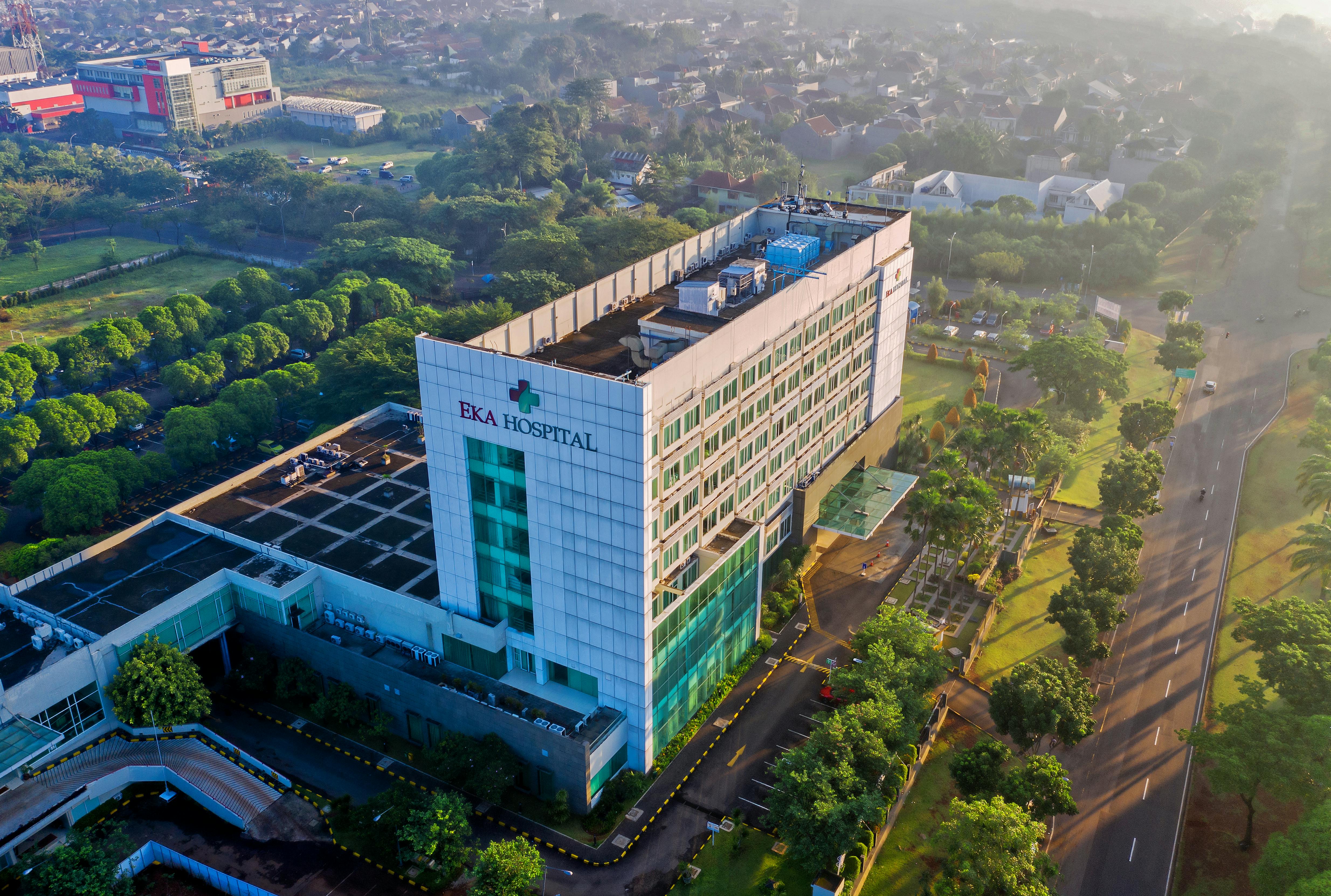
What They Are: Clinical spaces for diagnosis, treatment, and rehabilitation.
Design Complexity: Separate flows for patients, staff, waste, and clean materials.
Focus: Sanitation, backup power, infection control, daylight in patient rooms.
Example: Cleveland Clinic Abu Dhabi – international hub designed for medical tourism.
9. Entertainment Venues (Theaters, Arenas, Cinemas)
What They Are: Public spaces for performance, music, sports, or film.
Design Challenges: Acoustics, stage visibility, crowd flow, backstage logistics.
Tip: Restroom-to-seating ratio can make or break guest reviews.
Example: The Shed, NYC – modular design with retractable walls for varied performances.
10. Gas Stations & Roadside Retail
What They Are: Quick-stop facilities for fuel, food, and essentials.
Modern Add-Ons: EV charging, contactless kiosks, smart lighting.
Example: Buc-ee’s (TX) – combines gas station, retail market, and rest stop in one.
What You Probably Didn’t Know:
-
Commercial zoning varies wildly: What works in Austin won’t pass in Boston.
-
Accessibility, ventilation, and sustainability are now minimum standards, not bonuses.
-
Design drives revenue: Whether it’s a layout that improves table turnover or a warehouse dock that cuts 30 minutes per truck.