
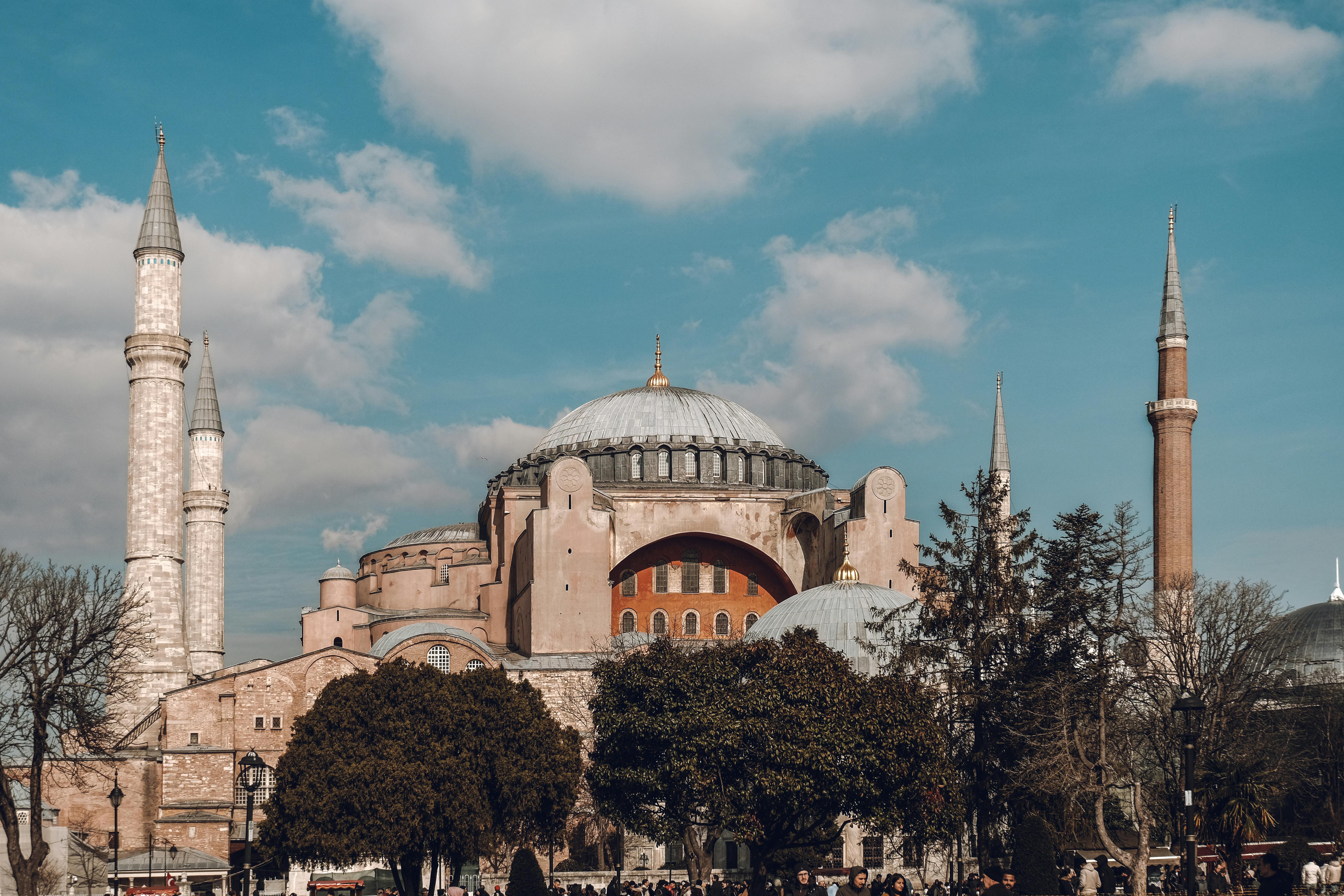
The Architecture Behind Istanbul's Famous Minarets
How Ottoman Pencil Minarets Were Built and Why They Work
This guide breaks down Ottoman pencil minarets by form, function, materials, and architectural purpose.
What Makes Ottoman Minarets Different
Ottoman minarets stand out for one reason: precision. They were vertical statements of control, design, and empire. Tapered like sharpened pencils, they cut through the skyline of every major Ottoman city.
Built from limestone or sandstone, these towers reached up to 90 meters. Thin, elegant, and engineered to last. What looks decorative is structural. What looks ornamental is mathematical.
Where You’ll See Them
● Blue Mosque, Istanbul
● Süleymaniye Mosque, Istanbul
● Selimiye Mosque, Edirne
● Rustem Pasha Mosque, Istanbul
The Structural Breakdown
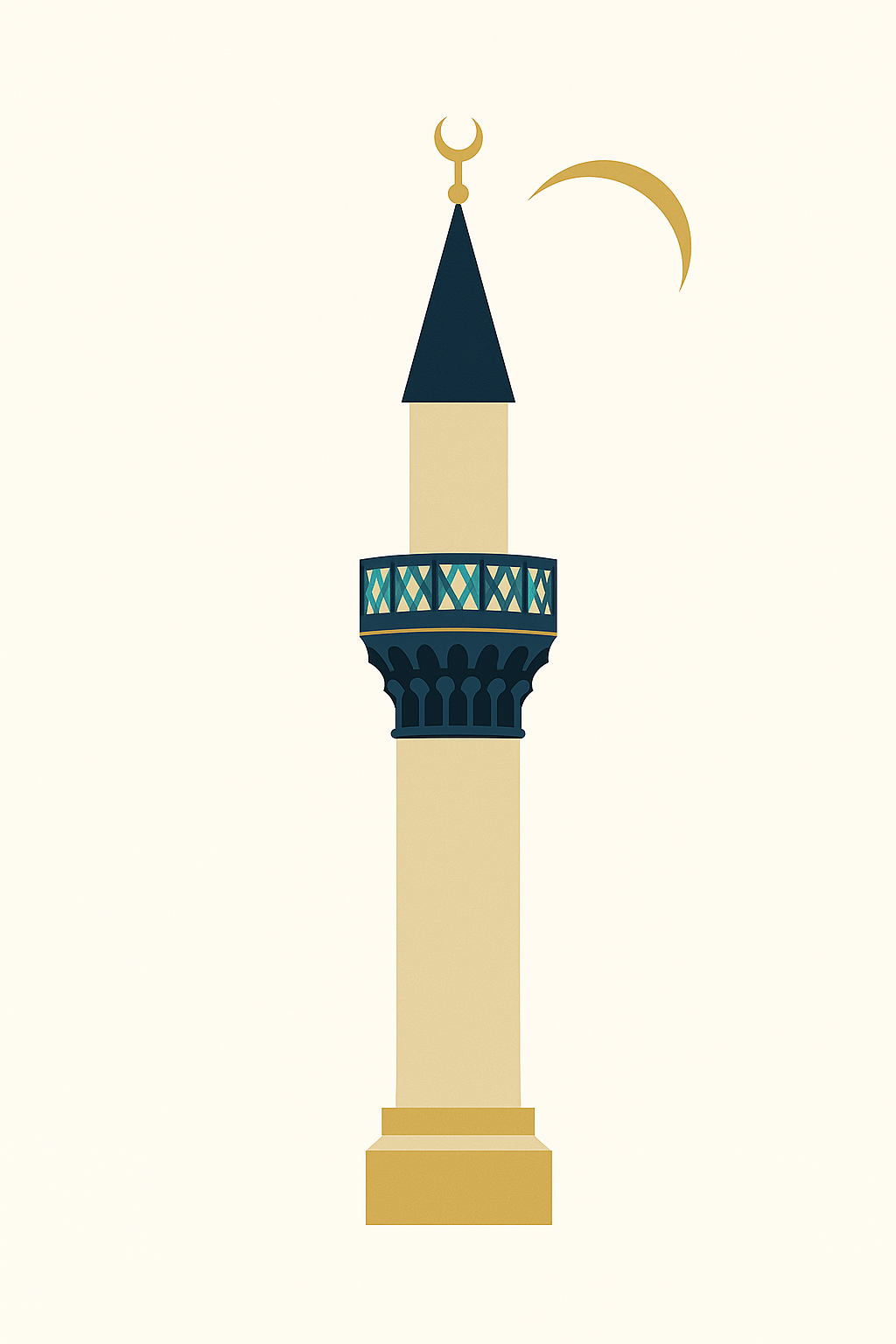
Shaft: The Body of the Minaret
● Shape: Cylindrical, always tapering
● Height: Usually 30 to 70 meters
● Construction: Ashlar stone rings laid concentrically with lime mortar
● Purpose: Elevation for visibility and sound projection
Base and Foundation
● Base: Square or octagonal
● Foundation: Anchored into the mosque or independent pad
● Engineering: Taper reduces wind load, circular plan reduces drag
Balconies (Sherefe)
● Used for the call to prayer
● Always supported by carved muqarnas
● Usually one on smaller mosques, up to four on imperial mosques
● Often include carved balustrades
Crown: The Needle
● Conical cap, sometimes timber framed and lead-covered
● Often includes a copper or gilded finial
● Today, lightning rods are subtly integrated
Why the Form Works
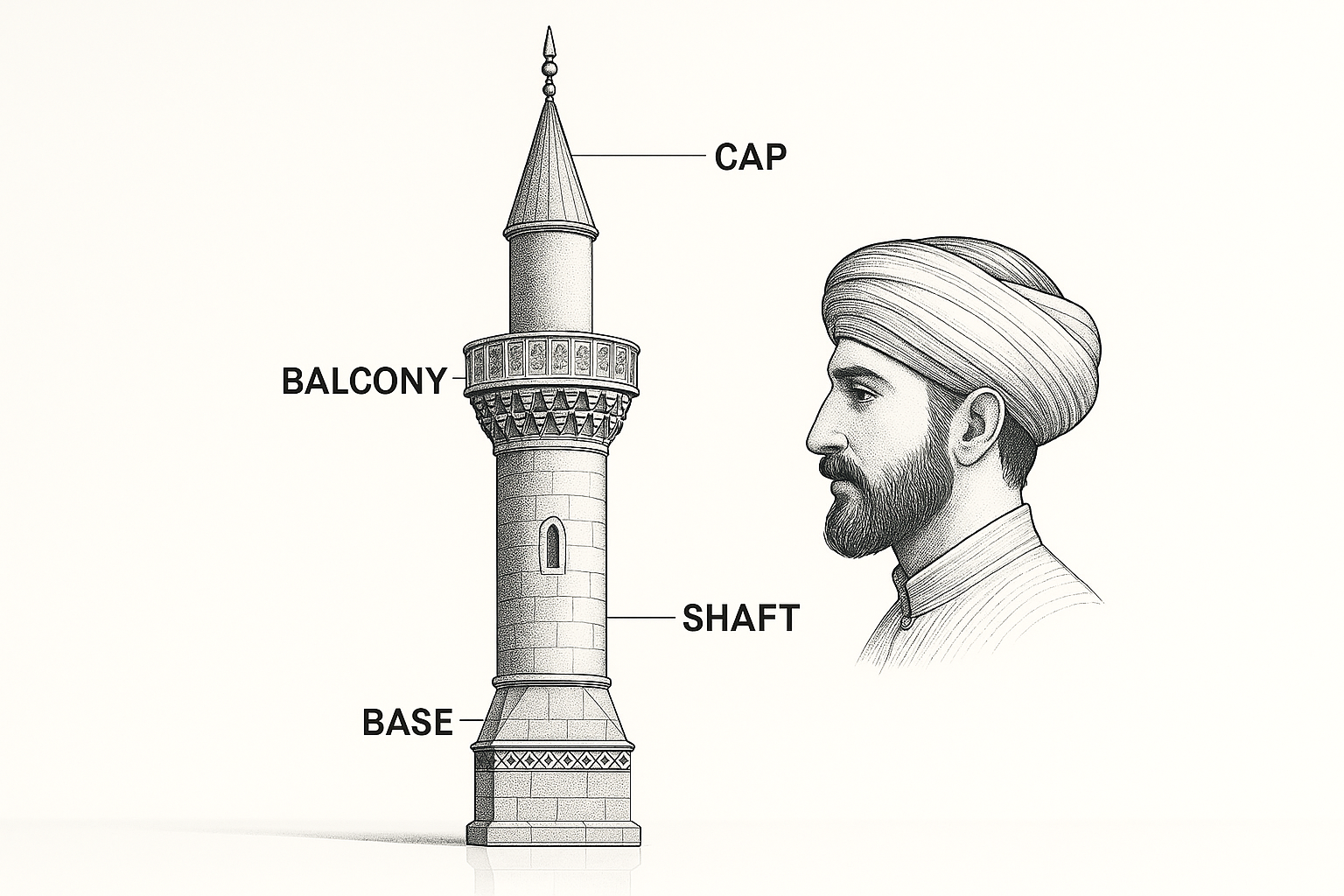
A pencil minaret isn't just tall. It's engineered to stand for centuries.
The tapering conical shaft sheds wind. Less surface area up top means lower wind pressure, which cuts down the overturning forces. That keeps the whole thing more stable, especially in seismic zones or harsh weather.
The narrowing shape also reduces material load. Gravity pulls harder on wider shafts. By tapering the diameter, Ottoman builders minimized the downward force on the base, letting the structure rise higher with less stress at the bottom.
That sharp vertical line? It’s not just for show. The slender form slices into the skyline without cluttering it. It becomes a visual axis. A directional marker. A presence.
Ottoman architects didn’t just stack stone. They built with intention. Every curve had a job. Every detail balanced mass, scale, and symbolism.
The result: a structure that still cuts clean through city skylines centuries later—doing its job without compromise.
Interior: What’s Inside
Ottoman pencil minarets are mostly hollow, but every inch is used with intent.
● A tight spiral staircase wraps the inside wall. Built from stone or brick, it follows the taper precisely, giving the muezzin access to each balcony.
● There are few windows, and the ones that exist are narrow vertical slits. These slits let in light and air but keep the structural walls intact and strong.
● Access usually comes from the mosque’s roof. Not the ground. That means climbing up from inside the mosque itself before entering the minaret tower. It’s meant for use—not sightseeing.
How They Were Built
These weren’t casual projects. Each pencil minaret took serious planning and patience.
● Builders dug the foundation 2–3 meters deep into compacted earth or bedrock, depending on site conditions.
● A central scaffold spiraled upward, allowing workers to build the staircase and outer wall layer by layer.
● The shaft was built ring-by-ring. Each stone course had to align precisely to keep the taper true and balanced.
● Balconies were cantilevered using stone corbels, often carved in complex muqarnas shapes that locked together under load.
● Once the shaft and balconies were in place, the lead-clad timber or stone cap was hoisted into position using block-and-tackle pulley systems.
Real Problems in Modern Restorations
Historic minarets weren’t built for earthquakes, acid rain, or modern pollution.
● Foundations have settled or shifted due to soil movement, especially in urban settings where underground water tables change.
● The junctions where balconies meet the shaft often crack after seismic events. These joints require specialized repair techniques.
● Muqarnas—those stalactite-like carvings—often degrade or go missing. Restorers must carve replacements by hand, matching old techniques.
● Engineers now insert stainless steel rods inside the shaft or wrap it in carbon fiber mesh to stabilize the structure without altering the exterior.
What You Can Learn from It
Ottoman minarets weren’t overdesigned. They were efficient, logical, and timeless.
● Their geometry—slim, tapered, symmetrical—is what makes them strong. Nothing is extra. Nothing is wasted.
● Beauty didn’t compromise function. The form served the adhan and symbolized spiritual ascent while staying structurally sound.
● Materials were basic: local stone, lead, and gravity. But how they were used shows mastery. No rebar. No concrete. Still standing.
Why It Still Works
These minarets weren’t just religious symbols. They were architectural statements.
Their height marked the empire’s presence. Their sound projected over cities. Their form struck awe and carried meaning.
Today, they teach restraint. How to do more with less. How to balance function with clarity. Even if you’re designing a staircase, chimney, or civic tower—there’s a lesson in every carved stone.
These towers didn’t just survive. They endure with purpose.
Why Minarets Matter So Much in the Islamic World
A minaret isn’t just a tower. It’s a sign of presence. It says: worship happens here.
To outsiders, it’s where the call to prayer comes from. But in Islamic culture, it means more. The minaret marks space visually and spiritually.
In many cities, the first thing built was a minaret. Not a palace. Not a fort. Just that one vertical line to show where faith begins. Even small villages had one. It wasn’t about size. It was about direction.
The height isn’t power. It’s orientation. It helps people face the right way. It centers the mosque in daily life.
The inside matters too. Spiral stairs. Hollow core. No loudspeakers back then. The shape projected the muezzin’s voice naturally across the neighborhood. Five times a day. Every day. For generations.
That sound shaped time. People didn’t need clocks. They had minarets. That’s why even today, many Muslims feel their absence.
A minaret points up. Clean. Simple. No decoration needed. It avoids images but still becomes a symbol. A shape that draws the eye and the spirit higher.
FAQ
What’s the point of the pencil shape?
It reduces wind load, looks clean, and focuses the vertical line. It’s both functional and symbolic.
Why do some minarets have more balconies?
Imperial mosques often had up to four to mark status. Smaller mosques had one.
Are these still used for the call to prayer?
They were originally built for a human voice. Now the balconies are symbolic; calls are electronic.
Why build them in stone?
Stone lasts. Its weight stabilizes the shaft. It also supports the carved details like muqarnas.
Are all Ottoman minarets pencil-shaped?
Most built after the 15th century are. Earlier styles vary, but the pencil form became a signature of imperial architecture.
Can this style be used in modern buildings?
Absolutely. The clean lines and proportions can inspire modern towers, spires, or sculptural markers.
What’s the biggest challenge in restoration?
Muqarnas restoration and balcony support cracks. Also, fixing foundation shifts without altering visible form.
What’s the difference between this and Persian cylindrical minarets?
Persian towers are usually wider, don’t taper as sharply, and often have more surface decoration and tile.