
What People Always Get Wrong About House Design
Stop thinking house design is about trendy furniture or Pinterest boards. It’s about what actually works: layout, structure, and real life.
Most blogs? They're written by people who’ve never built anything in their lives. That’s why so many homes look good on Instagram but feel awkward in real life.
Here’s the truth from actual pros.
What a Well-Designed Home Actually Does
-
Feels good to live in (layout flows, lighting works, no wasted space)
-
Is buildable (your ideas can be priced, permitted, and constructed)
-
Solves daily problems (clutter, noise, weird corners, storage issues)
-
Ages well (materials last, spaces adapt, nothing feels disposable)
Common Mistakes You Should Avoid
-
Furniture first, floor plan second
-
Ignoring sun orientation or airflow
-
Picking styles from ten different eras
-
Forgetting about real storage
-
Designing for “wow,” not daily life
Do This Instead
-
Start with function: What do you actually need?
-
Map how people move: Flow matters more than symmetry
-
Keep your palette tight: Fewer colors, more calm
-
Use built-ins smartly: Saves space and cleans up clutter
-
Test ideas with tape on the floor before committing
Real-World Tip
Visit model homes—or better, rental units. Why? They’re optimized for daily use. You’ll spot layouts that feel open, lighting that works, and features worth copying.
📘 MUST READ
The Interior Design Handbook by Frida Ramstedt
Zero fluff. Real techniques for layout, color balance, and proportion. Clear diagrams, short lessons. Written by a design educator, not a blogger.
FIELD PICK
YITAHOME Entryway Storage Bench
Functional and clean-looking. Doubles as seating + storage. Great for tight mudrooms or awkward entryways.
Planning a Home? Here’s What Actually Matters (Not Just Mood Boards)
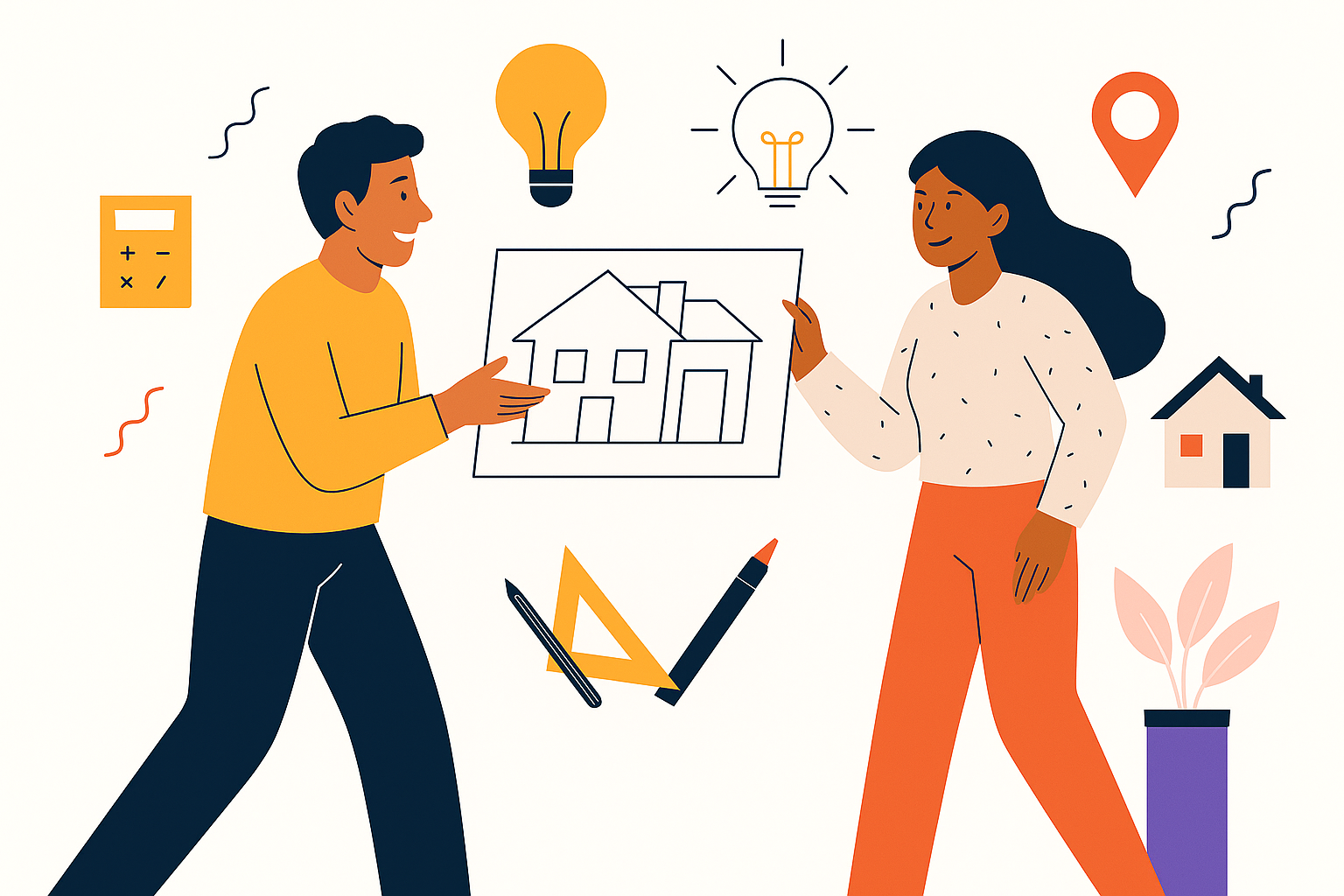
Designing a house starts way before you open SketchUp or pick countertops. It starts with questions—real ones. What do you actually need? What can you afford? Who’s going to help you not screw it up?
This section isn’t about aesthetics. It’s about making sure your plan doesn’t fall apart halfway through.
1. Know What You Want (and What You’ll Regret Skipping)
If you don’t know what you’re building, no one else will.
-
Think function first. Do you cook a lot? Hate stairs? Work from home?
-
Plan for change. Kids, pets, aging parents, new hobbies—they all mess with floor plans.
-
Write your must-haves. Not Pinterest fluff—stuff like natural light, real storage, or quiet bedrooms.
📘 MUST HAVE:
Archidoodle: The Architect's Activity Book works for adults too.
2. Set a Budget That Won’t Blow Up Later
Forget vague “we’ll see” budgets. You need real numbers now.
-
Start with your total cap. What’s the max you can spend—without panic?
-
Break it down. Allocate percentages: structure, finishes, permits, labor, furniture.
-
Add 20% more. Always. There will be surprises. There’s always surprises.
FIELD TOOL:
Try something like PlanSwift Estimator or even Excel to track spending from day one. The better your numbers, the fewer delays later.
3. Don’t Hire the Wrong Person
Your architect or designer is either your project’s best decision—or your worst mistake.
-
Look at real builds. Don’t trust renderings. Ask what got built.
-
Check how they talk. If they don’t ask questions, they’re not the right fit.
-
Make them explain things. If they talk in circles, run.
Tip: Interview like it’s a job. Because it is. This person will control your time, budget, and outcome.
4. Know the Rules (Before You Break Them)
Design whatever you want. But if it doesn’t pass code, it’s just a drawing.
-
Zoning laws? They control what you can even build.
-
Permits? Without them, you’re stalled.
-
Local quirks? Some areas ban flat roofs, others require setbacks or heritage restrictions.
Your designer should know this already. If they don’t bring it up, that’s a red flag.
5. Make a Design Brief (Yes, Even if It’s Just You)
Think of a design brief like your project’s cheat sheet. It keeps everyone focused.
Include:
-
Your vision. Modern? Rustic? Open-plan?
-
Must-have rooms. Not just bedrooms—think mudroom, pantry, laundry space.
-
Style references. Snapshots. Sketches. Floor plans.
-
Budget and timeline. The real ones.
Tip: Even if you’re doing a DIY renovation, write it all down. You’ll be shocked how much it helps when decisions pile up.
So What’s the Takeaway?
Designing your home doesn’t start with tile samples or cabinet colors. It starts with clarity.
-
Figure out what matters.
-
Set a budget that breathes.
-
Work with people who get it.
-
Write your plan.
-
Know your limits.
Everything else builds on that.
The One Rule That Fixes 90% of Bad Home Designs
Design from the inside out—not the outside in.
Most people (even architects) mess this up.
They start with how the house should look from the street. They obsess over curb appeal, symmetry, cladding, windows, roofs. And only after that, they try to make the inside work.
Huge mistake.
Real design starts with how you live.
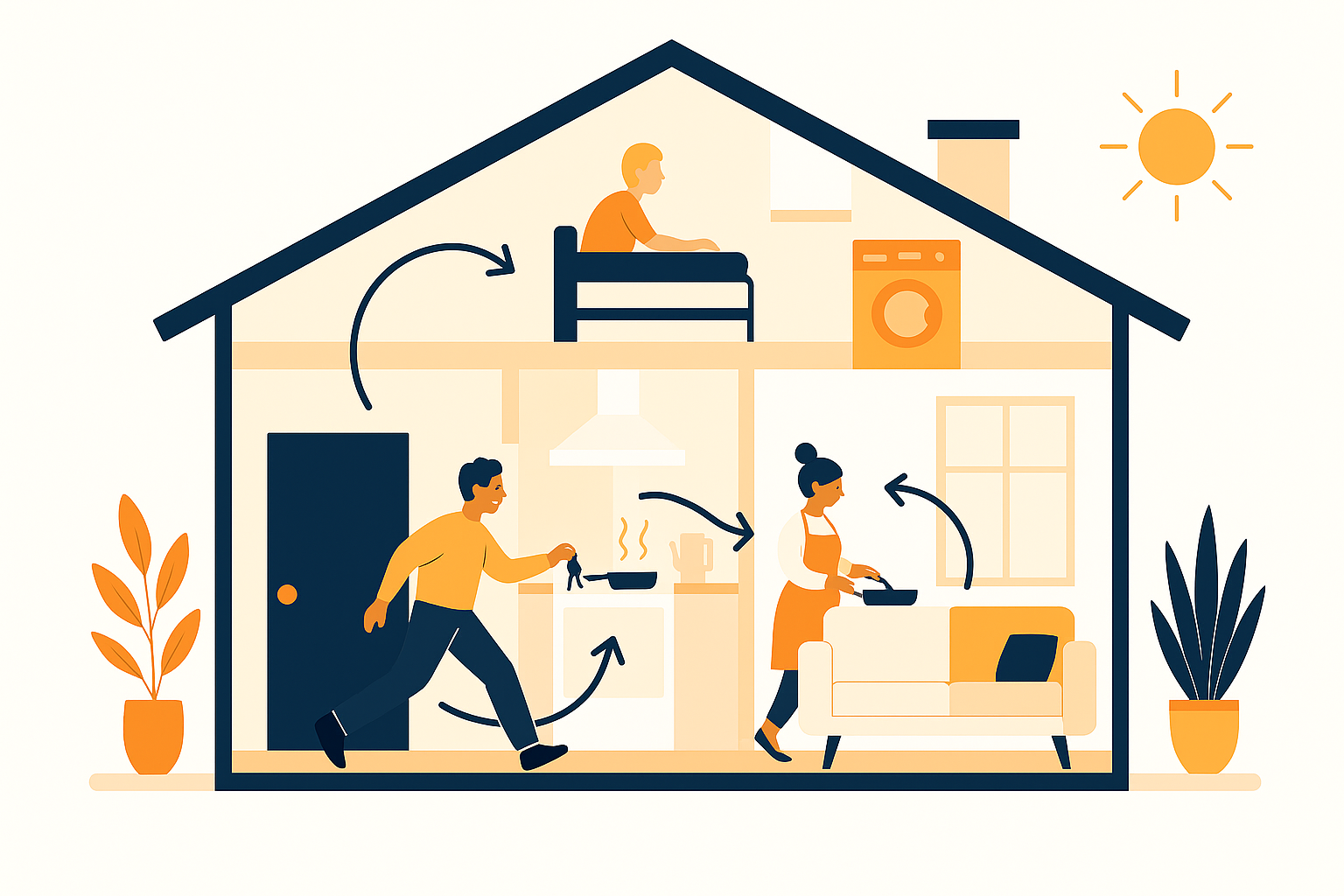
-
Where do you drop your keys when you come in?
-
Do you cook facing guests or a wall?
-
How far is the laundry from the bedrooms?
-
Do your mornings flow—or do you bump into someone every 3 minutes?
If your house doesn’t work from the inside, it doesn’t matter how “beautiful” it looks from the outside. You'll hate living in it.
So here’s what to do:
-
Sketch your daily routine—hour by hour, room by room. Don’t design a floor plan yet. Just trace how you move through space.
-
Write down every frustration you’ve had in your past homes. Too dark? Nowhere to sit in the kitchen? Bathroom next to the dining table?
-
Design the layout first—then wrap the exterior around it. Let the inside logic drive the form.
That's how real architects do it.
📘 MUST READ
Homebody by Joanna Gaines
One of the most recognizable modern design books of the past decade.
● Clear layouts
● Focus on comfort, light, and feeling
● Helps you understand how homes actually get used
Design That Actually Works: 5 Rules Every Architect Swears By
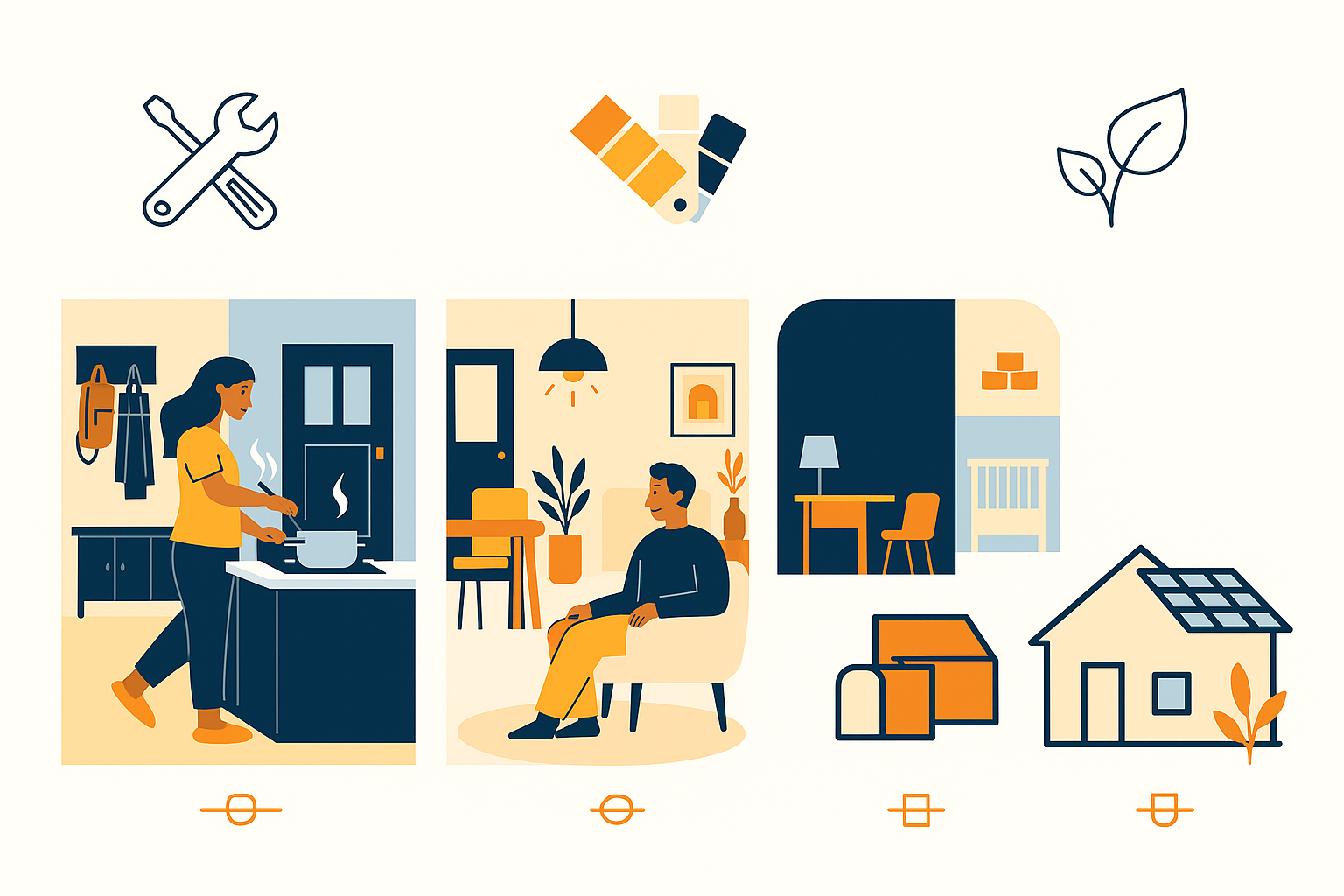
Great design isn’t about trendy finishes or Pinterest vibes. It’s about building something that works—practically, visually, and long-term. These are the five principles pros use when designing homes that make sense.
1. Make It Functional First
Your house should support how you actually live.
-
Cook a lot? Prioritize counter space and smart layout.
-
Kids? Mudroom, storage, durable surfaces.
-
Work from home? Noise control and daylight matter.
If it looks good but feels awkward to use, it’s bad design.
FIELD PICK: Home Designer Suite – A user-friendly planning tool for layout design and furniture flow.
2. Nail the Flow
Flow = how you move through the house. Don’t ignore it.
-
Avoid bottlenecks (narrow halls, pointless dead-ends).
-
Zone by activity—keep bedrooms quiet, kitchen/social spaces grouped.
-
Entry to kitchen flow matters—carrying groceries across 4 rooms is not fun.
Rule of thumb: You should be able to walk the space in your head, and it should make sense.
3. Know Your Style (Then Stick to It)
Don’t try to mix farmhouse with Bauhaus unless you really know what you’re doing.
-
Pick one vibe and commit—modern, mid-century, cozy, brutalist… whatever.
-
Limit your palette—a few strong materials and colors always win.
-
Be consistent—doors, trim, furniture scale, lighting.
Tip: Use one “anchor material” like oak, black steel, or raw concrete to create continuity.
4. Design for the Long Game
Your life’s going to change. Your house should keep up.
-
Multi-use rooms beat one-function spaces.
-
Leave flex space—home office now, nursery later.
-
Modular furniture helps small spaces adapt over time.
Real-life test: Could this room be used 3 different ways in the next 5 years?
5. Build It Green (Smart, Not Expensive)
Sustainability isn’t about being a hero—it’s about spending less over time.
-
Use materials that last.
-
Insulate right. You’ll thank yourself every winter.
-
Solar, low-VOC paint, low-flow fixtures—easy wins.
Bonus: Energy-efficient design also boosts resale value.
📘 MUST READ: Sustainable Home: Practical Projects for a Greener Life – A simple, non-preachy book on building smart.
Summary: What It All Comes Down To
Good home design means:
-
It works for how you live.
-
It flows like a real space, not a floor plan sketch.
-
It looks like you—on purpose.
-
It holds up over time.
-
It costs less to run, fix, and live in.
That’s it. These five rules are your cheat sheet. Stick to them, and you won’t build something you regret in 3 years.
Room-by-Room Design That Actually Works
You don’t need 100 design ideas. You need one that makes sense—for each room, each day, for how you really live.
This section breaks it down room by room. What to focus on. What to skip. How to balance style with real-world function. No fake Pinterest hacks. Just field-tested tips that actually work.
Living Room: Where Design Meets Daily Life
What to focus on:
-
Natural light: Big windows. Mirrors. Sheer curtains.
-
Layout: Seating that flows. Room to move. Clear pathways.
-
Storage: Hidden storage = clean look. Use ottomans, built-ins.
-
Color scheme: Keep it calm. Start neutral, then layer bold accents.
-
Focal point: Art. Fireplace. Statement chair. Pick one, center around it.
Amazon Pick: Yaheetech Storage Ottoman Bench – doubles as seating, storage, and style.
Kitchen: Form Follows Function
Get this right:
-
Work triangle: Sink, stove, fridge = fast movement.
-
Materials: Quartz, tile, stainless steel. Easy to clean, lasts forever.
-
Storage: Pull-outs, vertical racks, lazy Susans.
-
Appliances: Energy Star or forget it.
-
Lighting + Ventilation: Layered light. Strong range hood.
Amazon Pick: Broan-NuTone Under-Cabinet Range Hood – powerful, affordable, quiet.
Bedrooms: Comfort Rules
-
Color: Stick to soft tones—blue, green, beige.
-
Lighting: Dimmable lamps, blackout curtains, bedside task lights.
-
Furniture: Bed first. Then storage. Then decor.
-
Privacy: Soundproofing. Window covers. Thick rugs help too.
-
Style: Personalize—art, pillows, rugs. But keep it clutter-free.
Tip: A bedroom should make you exhale. If it feels busy, it’s wrong.
Bathrooms: Dry, Durable, Easy to Clean
-
Small space? Use glass showers, floating vanities, big mirrors.
-
Fixtures: Pick one finish and match it. Don’t mix metal styles.
-
Ventilation: If the fan sucks (or doesn’t), fix it fast.
-
Luxury upgrades: Heated floors, rain shower, built-in niche.
-
Accessibility: Curbless showers, wide doorways, non-slip floors.
Avoid trendy tile that stains or cracks. Go for classic + sealed.
Home Office: Built to Focus
-
Location: Quiet corner or spare room. Avoid foot traffic.
-
Ergonomics: Good chair. Adjustable monitor. Real desk.
-
Lighting: Natural light + task light combo = no eye strain.
-
Storage: Shelves, drawers, cable control.
-
Distraction control: Noise canceling, clean desk, tight schedule.
Tip: Don’t over-design. Keep it practical. Your back will thank you.
Outdoor Spaces: Not an Afterthought
-
Zones: Lounge, dine, garden—separate them clearly.
-
Materials: Wood rots. Plastic warps. Get something that lasts.
-
Furniture: Buy weatherproof. Don’t cheap out.
-
Lighting: String lights + path lights = cozy + safe.
-
Plants: Go native or drought-proof. You’re not watering every day.
Amazon Pick: Best Choice Products 7-Piece Patio Set – metal frame, weatherproof cushions, solid reviews.
Interior Design Elements That Actually Matter
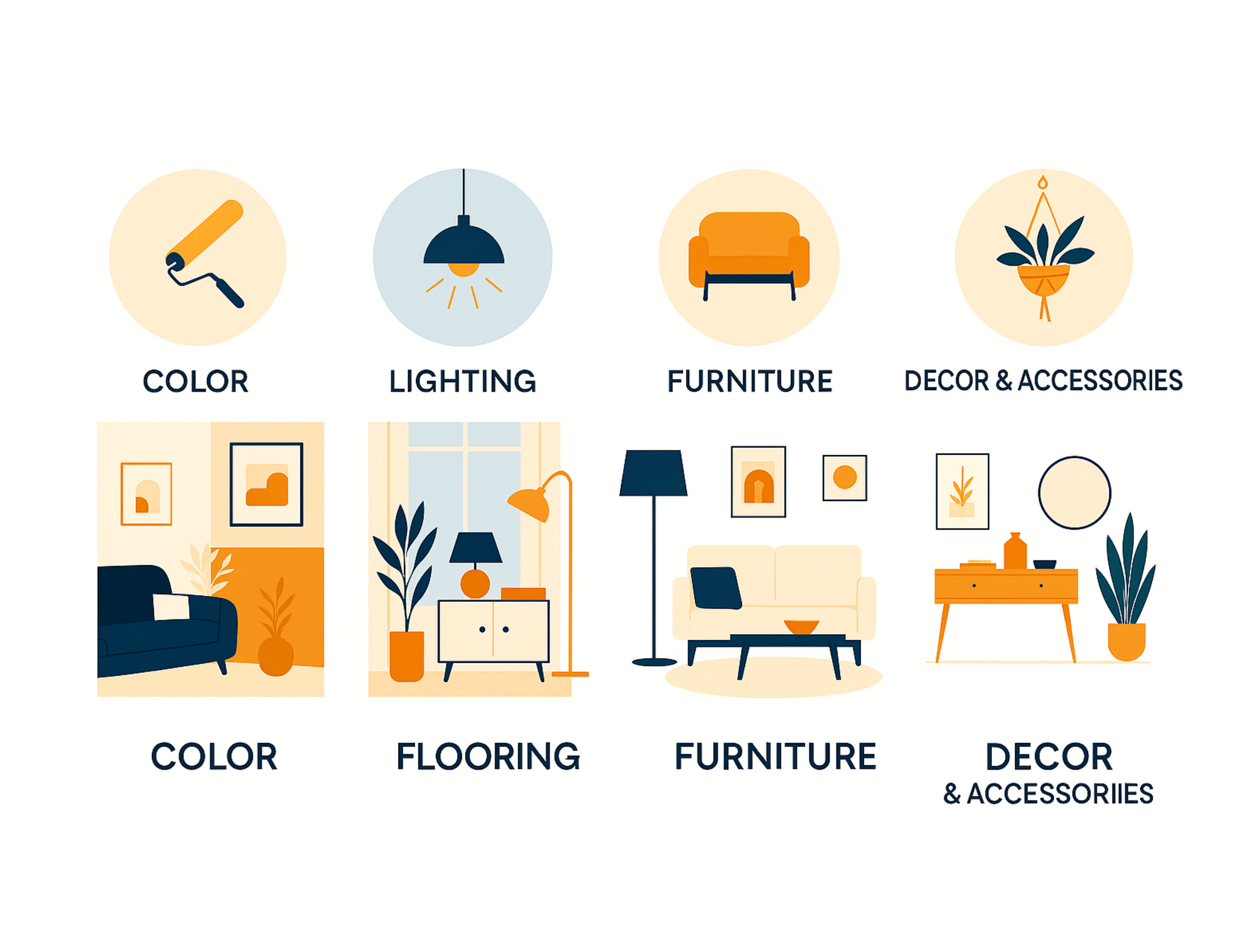
This is where homes stop feeling generic—and start feeling like yours.
Forget just “looking nice.” The right interior elements make a space feel right. The flow, the vibe, the comfort—all of it comes from how you use color, light, furniture, floors, and decor. This section breaks down each one, with real tips that work in real homes.
Color: It’s Not Just Paint
Color controls mood and space. Use it right, and your room feels larger, calmer, warmer, or cooler. Use it wrong, and everything feels off.
● Start with mood:
-
Blue = calm
-
Yellow = energy
-
Gray = neutral
-
Earth tones = cozy
-
Red = intense (use carefully)
● Keep ceilings light. Dark ceilings shrink space.
● Use contrast: Light walls, dark trim—or the reverse—adds structure.
Amazon Must-Have: Samplize Peel-and-Stick Paint Samples – no messy paint cans, just stick on and test.
Lighting: Layer It or Regret It
Every room needs more than one light. One ceiling light = shadows + eye strain.
● Ambient: The main room light (usually overhead)
● Task: Reading lamps, under-cabinet lights, desk lights
● Accent: Spotlights for art, floor lamps for vibe
Pro tip: Use dimmers. One room = multiple moods.
Amazon Pick: Philips Hue Smart Bulbs – set color, brightness, and schedules from your phone.
Flooring: You Walk On It Every Day
Bad flooring ruins the feel of a room. Good flooring holds up, looks good, and feels right under your feet.
● Hardwood: Timeless, durable, pricey
● Laminate: Cheaper, scratch-resistant, looks like wood
● Tile: Best for kitchens and baths, cold underfoot
● Carpet: Cozy, but stains and traps allergens
● Vinyl plank: Easy to install, waterproof, budget-friendly
Tip: Don’t mix too many types of flooring in one house. Transitions matter.
Furniture: Size First, Style Second
Big mistake: Buying what looks good online without measuring.
● Measure your space. Leave enough room to walk and breathe.
● Create zones. Separate lounge, dining, or workspace visually with rugs or layout—not walls.
● Balance shapes. Too many boxy pieces = boring. Mix in curves.
Tip: Pick one large statement piece. Don’t clutter with 10 small ones.
Decor & Accessories: Small Things, Big Impact
This is the part people either overdo—or forget entirely. The right details pull a room together.
● Art: One big piece > 10 small ones. Center it at eye level.
● Textiles: Throw pillows, rugs, and curtains set tone and texture.
● Plants: Instant life and color. Even a single potted snake plant works.
● Mirrors: Bounce light. Make small rooms feel bigger.
Amazon Pick: Mkono Macrame Plant Hanger Set – stylish, small-space-friendly greenery boost.
Sustainable and Smart Home Design
Smart homes aren’t just cool—they make daily life easier, cheaper, and better for the planet. Here’s how to design one that’s both sustainable and future-ready.
Sustainability: Design That Doesn’t Waste
● Why it matters: Lower bills, healthier indoor air, smaller environmental impact.
● Use renewable energy: Solar panels are the most accessible option. For larger properties, small wind turbines or geothermal heat pumps may be viable too.
● Conserve water smartly:
- Rainwater collection barrels
- Drip irrigation
- Low-flow showerheads and dual-flush toilets
● Choose eco-friendly materials:
- Bamboo floors
- Recycled steel framing
- Low-VOC paint
- Insulated concrete forms (ICFs) for better thermal performance
FIELD PICK: EcoHouse Manual by Nigel Griffiths – Real building strategies for sustainable homes.
Smart Home Tech That’s Worth It
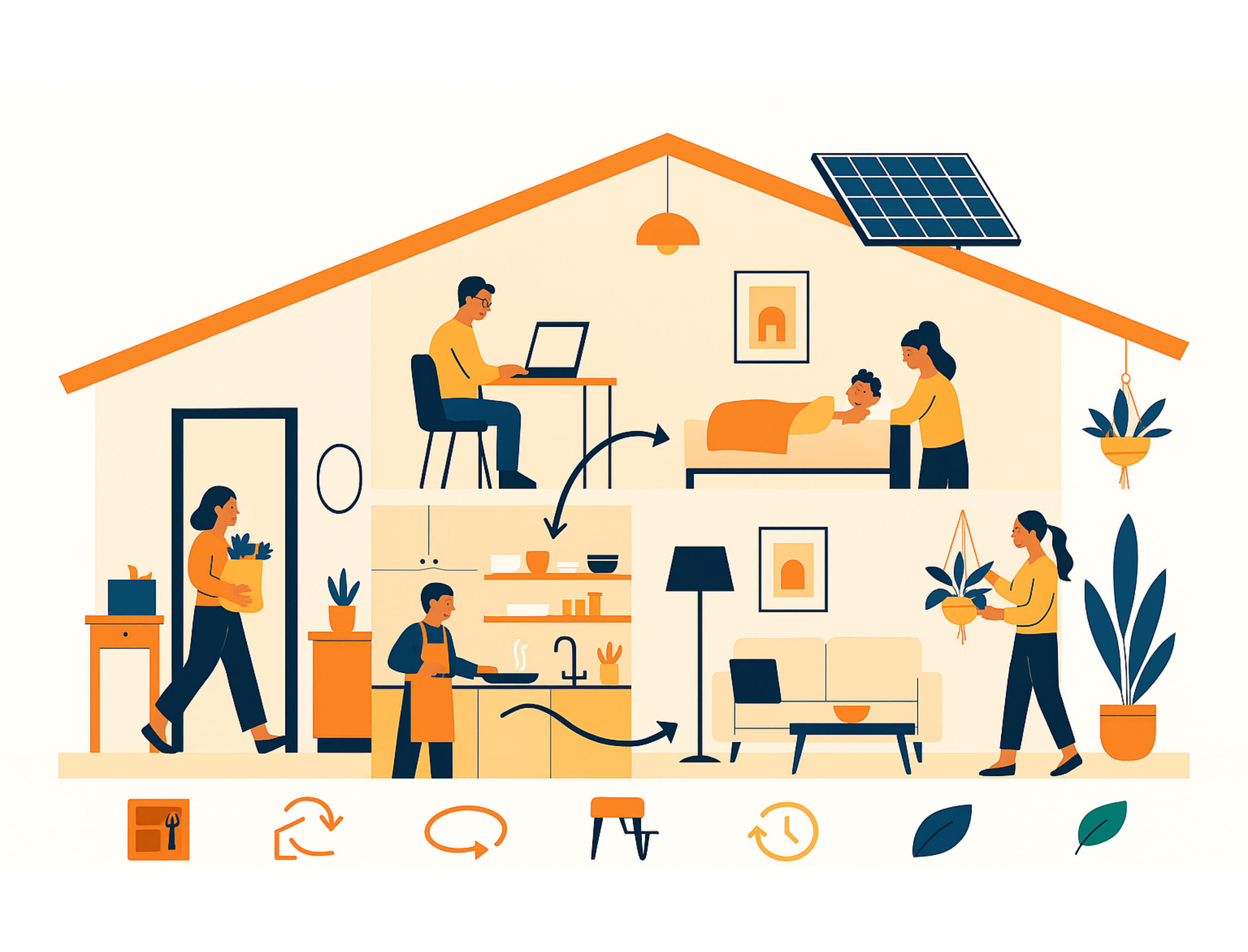
Skip the gimmicks. These are the smart systems that actually improve function:
● Smart Lighting: Automated schedules, dimmers, and motion-sensing lights save energy and add convenience.
● HVAC + Thermostat: Smart thermostats (like Nest or Ecobee) cut down utility bills and adjust to your habits.
● Home Security: Cameras, smart locks, and app alerts—especially useful for remote monitoring.
● Smart Plugs and Switches: Control anything from your phone. Timers for outdoor lights or appliances make life easier.
● Voice Control: Hands-free access via Alexa or Google Home works best when it’s integrated with your other systems.
Pro Tip: Set up two-factor authentication on your smart home hub. Don’t leave your lights or locks open to the internet.
AMAZON PICK: Ecobee Smart Thermostat Premium – Best mix of style, accuracy, and control.
Case Studies & Field-Tested Advice
What Works: Real Homes, Real Lessons
● Chicago Townhouse (2021): Glass + steel canopy, passive solar, radiant floor heating—modern, sleek, and energy-smart.
● Japanese Tiny Home (2022): 450 sq ft, zero wasted space. Custom storage, convertible furniture, and solar shingles. Simplicity done right.
● Texas Ranch Redesign (2020): Took a poorly insulated 1980s ranch house and transformed it using spray foam, wide eaves, and rainwater tanks.
Lesson: Start with envelope (roof, walls, insulation) before tech. Fancy gadgets can’t fix bad construction.
What Architects Say
● “Design starts with behavior. Not just buildings.” – Jeanne Gang
● “The best homes don’t just look good—they feel easy to live in.” – Glenn Murcutt
Tips from the field:
- Put money in structure first. Gadgets are easy to upgrade. Poor insulation isn’t.
- Think daylight and airflow before adding lights or fans.
- Don’t chase trends. The best design is the one that stays useful in 20 years.
Advice From Homeowners Who Did It
● “I wish we planned for more outlets. And better closet lighting.” ● “We saved 20% on power bills after adding solar and updating our windows.” ● “If I could go back—I’d hire a lighting designer early. Makes all the difference.”
📘 MUST READ: The Architecture of Happiness – A deep but practical look at how space affects how we live.
Books & Resources
● PlanGrid – Great for managing blueprints and field changes on site. ● SketchUp Free – 3D modeling for beginners and teens ● ArchDaily + Dezeen – Design news and global trends
📘 MUST READ: Designing Your Life by Bill Burnett & Dave Evans
Want to get better at this? Read more, sketch more, visit real buildings—and talk to the people who built them. Nothing beats field learning.
FAQs
House Design That Works
1. What’s the biggest mistake people make when designing a house?
Overlooking how the space will actually be used. Form should follow function. Always design with daily routines in mind.
2. How do I make a small house feel bigger?
Focus on light, layout, and vertical space. Use large windows, open floor plans, and multipurpose furniture.
3. How do I choose a floor plan that fits my lifestyle?
Write down your day-to-day activities. Then look for plans that reduce unnecessary movement and support your habits.
4. Should I hire an architect or just use a builder's plan?
If your budget allows, an architect will customize every detail. But for simpler needs, a well-reviewed pre-designed plan can work just fine.
5. What are the most overlooked features during design?
● Storage
● Natural light
● Mudrooms or drop zones
● Power outlets (location and quantity)
6. How do I avoid trends that will look dated?
Stick to timeless principles: symmetry, natural materials, neutral palettes. Use trends in small details, not the bones of your house.
7. What should I splurge on vs. save?
● Splurge: windows, insulation, kitchen layout
● Save: finishes you can upgrade later like cabinet handles or faucets
8. How do I design a house on a budget?
Simplify shapes. Avoid unnecessary corners. Limit expensive materials to high-impact areas only.
9. Can I design a house myself without formal training?
Yes, but study hard. Use tools like SketchUp, read guides, and consult with professionals before finalizing anything.
10. What makes a house “feel good”?
Proportions, natural light, thoughtful circulation, and materials that age well. A house that breathes with you.