

Granite in Building Construction: Blocks, Dust, Cladding & More
Granite Building Stone: Types, Costs, Uses, and Mistakes to Avoid
Granite’s not just decorative. Builders use it for load-bearing walls, road edging, cladding, and even dust under driveways. Here's what each product does—and how granite fits into real construction.
Granite Building Stone: Types, Costs, Uses, and Mistakes to Avoid
A complete guide to granite in construction: blocks, dust, cladding, kerbs, facades, reclaimed stone, and modern architectural uses.
Granitic Geology and Origins
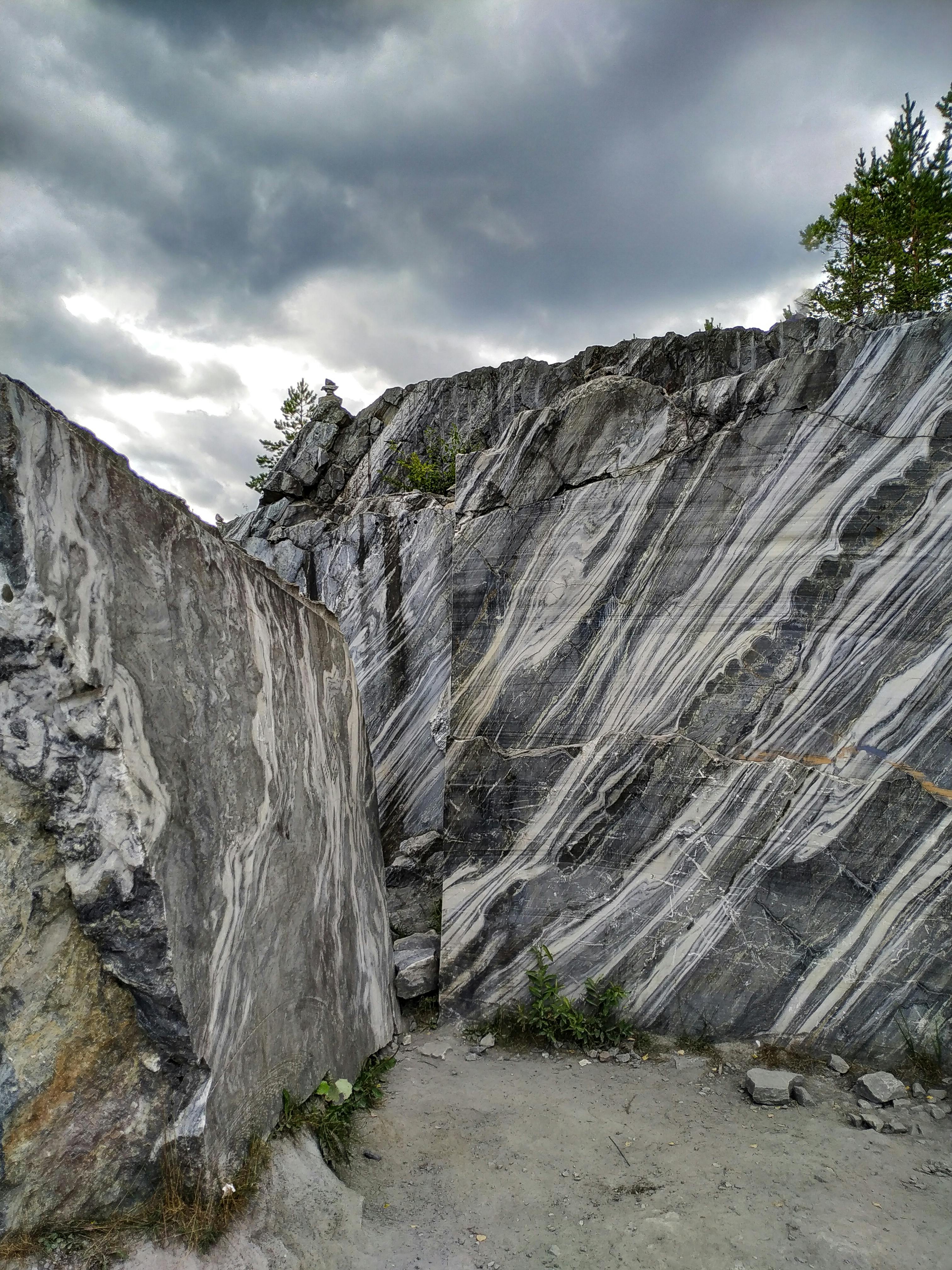
▪ Granite Is a Plutonic Igneous Rock – It forms deep underground as molten granitic magma cools slowly, allowing large crystals of quartz, feldspar, and mica to grow.
▪ Composed of Crystalline Minerals – Mostly quartz (light grey), feldspar (white or pink), and biotite or hornblende (black flecks). This gives granite its speckled look.
▪ Rated 6–7 on the Mohs Hardness Scale – Tough enough to resist scratches, weathering, and crushing—ideal for load-bearing use.
▪ Formed Over Millions of Years – Found in continental crust, especially old mountain belts and tectonic zones.
▪ Color Depends on Mineral Mix – Pink granite has more potassium feldspar, black granite has more hornblende or biotite, and red granite includes hematite.
Characteristics of Granite
What makes it one of the most trusted building stones
▪ Composition:
Granite is a coarse-grained igneous rock formed from the slow crystallization of magma deep underground.
It’s primarily made of:
-
Quartz – adds hardness and shine
-
Feldspar – gives color and strength
-
Mica (biotite or muscovite) – adds sparkle and layered texture
This unique mix gives granite its toughness and speckled appearance.
▪ Hardness:
Granite scores 6 to 7 on the Mohs scale, meaning it can resist scratches from most tools and metals.
It won’t wear down easily from knives, furniture legs, or foot traffic — one reason it’s often used in kitchens, hallways, and public plazas.
▪ Durability:
It’s extremely durable against heat, moisture, cold, UV exposure, and physical impact.
Ideal for both indoor and outdoor use — it won’t warp, fade, or crack under pressure when properly installed.
▪ Appearance:
Natural granite offers visual depth and variation no engineered product can fully replicate.
You’ll find:
-
Speckled varieties – with grains of different sizes/colors
-
Veined types – similar to marble but more durable
-
Color range – from jet black to pure white, with blues, pinks, reds, browns, and greens in between
No two slabs are ever identical — a big draw for designers.
▪ Texture (Finish Options):
Granite can be shaped and finished in different ways depending on use:
-
Polished – glossy, mirror-like, great for interiors
-
Honed – smooth and matte, ideal for bathrooms or modern kitchens
-
Flamed – rough, slip-resistant surface for outdoors
-
Leathered – soft sheen with texture; hides fingerprints and smudges
▪ Maintenance:
Surprisingly low-maintenance if sealed properly once every 1–2 years.
-
Resists stains, bacteria, and water penetration
-
Easy to clean with mild soap and water
-
Avoids etching (unlike marble)
▪ Weight:
Granite is very heavy — typically around 18–20 lbs per square foot at 3cm thickness.
It needs solid framing and support during installation, especially for vertical applications like cladding or large kitchen islands.
Granite in Construction: What Makes It So Useful?

Granite is a dense, durable, and weather-resistant natural stone. It’s used anywhere strength and permanence are required—house walls, road kerbs, retaining structures, and modern facades.
Why it works:
▪ Strength: Granite holds weight and resists cracking under pressure. It’s ideal for structural blocks.
▪ Durability: It withstands weather, freeze-thaw cycles, and even salt from roads.
▪ Aesthetics: When polished, it becomes a high-end finish. When rough-faced, it looks timeless and solid.
▪ Versatility: Available in everything from raw blocks to fine 6mm dust for base fill.
Real Example: Many rural homes and public buildings in the UK still use mourne granite for wall stone and reclaimed kerbstones for their edgework. It lasts for decades and blends with heritage settings.
From Granite Dust to Facade Panels: Complete Builder’s Guide
Granite Building Products Explained: Walls, Edging, Cladding & Fill
Types of Granite Building Products
Granite is used in construction in many different forms, depending on how it’s cut, finished, or installed.
Each product serves a specific purpose—structural, decorative, or functional—and comes with its own strengths and limitations. Here’s what to know:
▪ Granite Building Stone
Rough-cut or sawn pieces used for exterior facades, retaining walls, columns, fireplace surrounds, and garden walls. Common in traditional homes, public buildings, and heritage projects. Often sourced locally for authenticity and cost control. Focus on: stone size, texture (rough or smooth), and regional compatibility.
Avoid when: fast construction or lightweight materials are required—stone takes time and skilled labor.
Example: In Scotland and parts of Ireland, building stone is still quarried locally and used in civic buildings and stone cottages for its lasting strength and heritage look.
▪ Granite Building Blocks
These are large, squared units—typically used in foundations, retaining walls, sea walls, bridge abutments, or monument bases. Strong and weight-bearing. Focus on: compressive strength, block dimension, and handling equipment.
Avoid when: cost, transport, or modern insulation requirements are critical.
Example: Granite blocks are used in New England coastal towns for seawalls, where their weight resists erosion and tidal impact.
▪ Granite Dust (25kg Bags or 6mm Bulk Bags)
A fine, compactable product ideal for sub-base under patios, driveways, paving stones, or artificial turf. Also used in some concrete mixes.
Focus on: grading (fines vs. sand content), moisture absorption, and compaction rate.
Avoid when: high drainage is needed—dust holds moisture and tightens.
Example: In the UK, 6mm granite dust is popular under resin-bound driveways and block paving because it locks tightly and resists weeds.
▪ Granite Facade Cladding
Thin panels attached to exterior walls—used in modern and high-end buildings for appearance and longevity. Available in honed, flamed, or polished finishes.
Focus on: thickness, attachment system (mechanical or adhesive), and weather exposure.
Avoid when: thermal performance or rapid install is the main concern.
Example: Office towers in Dubai and Hong Kong often use polished granite facades for weather resistance and prestige.
▪ Granite Tiles & Interior Slabs
Used for flooring, bathroom walls, stair treads, countertops, and elevator lobbies. Polished for visual impact and easy cleaning.
Focus on: surface finish, slip resistance, and edge treatments.
Avoid when: radiant floor heating is used—granite retains cold.
Example: Many five-star hotel lobbies and airports use dark granite tiles for their upscale look and wear resistance.
▪ Granite Cobbles / Setts
Small rectangular or square pieces used for historic streets, garden paths, driveways, and courtyards. Extremely hardwearing.
Focus on: joint spacing, base prep, and traffic volume.
Avoid when: accessibility (e.g., wheelchairs or high heels) is a concern.
Example: European old towns like Prague or Bruges still use granite cobbles from centuries ago—durable and repairable.
▪ Granite Kerbs & Edging Stones
Thick granite strips used along roads, walkways, gardens, and parking lots. Often installed upright or laid flat. Reclaimed kerbs have character and patina.
Focus on: depth for stability, alignment, and drainage slope.
Avoid when: curved installations or tight budgets are involved.
Example: London’s historic districts reuse old kerbs from demolished roads to preserve the area’s visual identity.
▪ Granite Aggregate / Fill
Crushed larger pieces used for road bases, under slabs, or around foundations for drainage. Also used in precast concrete.
Focus on: particle size distribution, compaction specs, and load-bearing role.
Avoid when: lightweight fill or rapid drainage is required.
Example: In large commercial sites, granite fill forms the base layer under asphalt or concrete parking lots.
▪ Granite Veneer Panels
Very thin (10–30mm) panels cut from granite slabs and bonded to walls or surfaces. Offers real stone look at reduced weight. Often used in high-rise interiors.
Focus on: adhesion method, support framing, and movement joints.
Avoid when: exposure to water or freeze-thaw without a proper barrier.
Example: Interior columns and feature walls in hotels often use granite veneer to mimic full-depth stone.
▪ Reclaimed Granite Products
Sourced from old buildings, roads, or quarries. Includes kerbs, pavers, and structural blocks. Chosen for texture, weathered finish, and sustainability.
Focus on: condition, uniformity, and compatibility with new materials.
Avoid when: consistent sizing or code-compliant dimensions are critical.
Example: Architects in the UK use reclaimed granite in modern eco-homes to reduce environmental impact and add rustic appeal.
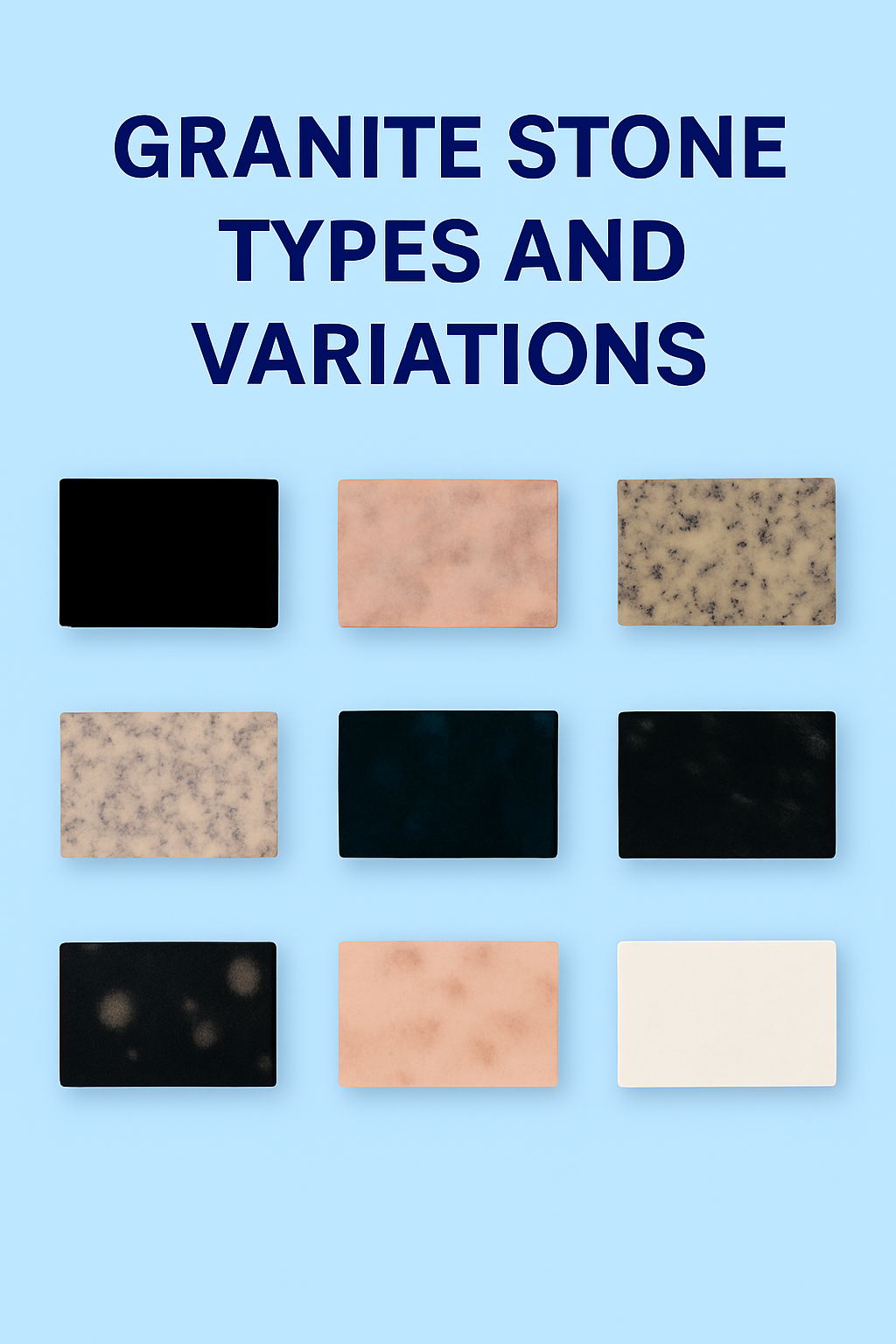
Granite Stone Types and Variations
This section breaks down the visual, mineral, and regional differences between granite types—why they matter in real building projects, how they're chosen, and where they show up.
▪ Black Granite – Dense, uniform, and naturally dark due to high amphibole or biotite content. Commonly used in sleek interiors, high-end cladding, and gravestones. Builders like it for contrast and formal visual tone. Example: Widely used in modern civic buildings or public plazas for its clean look.
▪ Red Granite / Rose Granite / Pink Granite – Colored by feldspar and iron minerals. Popular in historical monuments, traditional government buildings, and vintage plazas. Warm tones make it ideal for visual softness in harsh environments. Example: Many 19th-century town halls and war memorials in Europe use rose granite.
▪ Natural Granite – Quarry-cut stone with minimal branding. Often locally sourced, reducing transport cost. Comes in whatever colors are typical of the region’s geology. Often chosen for rural builds or traditional stone houses.
▪ Grey & Salt-and-Pepper Granite – A balance of light quartz and dark biotite. Neutral, classic look. Used heavily in bridges, footpaths, and structural civic buildings. This is the 'standard issue' granite in many infrastructure builds.
▪ Lemurian Blue – Flashy, iridescent granite with labradorite. Primarily used indoors or in artistic facades due to its cost and visual richness. Example: Found in hotel lobbies or feature walls where you want to catch attention.
▪ Belvedere Quartzite – Not true granite but close in hardness and visual structure. Chosen for dramatic black-and-white veining and extreme durability. Common in luxury interiors, kitchen counters, or premium cladding. Very resistant to heat and wear.
▪ Orbicular Granite – Contains orb-shaped clusters of feldspar and other minerals, formed from rare magma cooling processes. Extremely rare and mostly decorative. Used in tabletops, feature tiles, or artistic slabs.
▪ Granitic Magma Origin – All granite comes from magma that cools slowly underground. This gives it large, interlocking crystals, which are the source of its hardness (6–7 on Mohs scale) and visual grain. Understanding this helps identify structural strength.
▪ Branded Variants (Skara Brae Quartz, Ironsbridge Cambria, etc.) – Engineered quartz products inspired by granite’s look. Not true granite but used in the same design context, mostly indoors. Selected for color control, consistency, and sometimes lower weight.
▪ Il Granito – A marketing term typically applied to polished Italian granite products. Suggests luxury or elite-grade selection. Often used in high-end residential and hotel architecture.
▪ Mourne Granite – Sourced from Northern Ireland. Pale to dark grey stone with high mica content. Found in UK curbstones, old churches, steps, and retaining walls. Known for toughness and traditional texture.
Quick Tip:
- Use exotic types (like Lemurian Blue or Orbicular) for finishes, accents, or interiors where detail matters.
- Use common types (like Grey or Natural) for structure, paths, or where cost and scale are key.
- When to avoid: In lightweight framing or budget builds—granite is heavy, costly to cut, and overkill for some settings.
How Granite Powers Modern Construction
Granite Blocks and Kerbs: Why Builders Still Choose Stone
Where Granite Actually Gets Used in Construction
Granite isn’t just for kitchen counters.
On real building sites, it’s used where you need strength, resistance to weather, and a clean, high-end look.
Here’s where it actually works—and when it doesn’t.
▪ Applications:
Granite works in both residential and commercial settings, indoors and out:
-
Countertops – kitchens, bathrooms, bars
-
Flooring – lobbies, foyers, patios
-
Wall cladding – facades, accent walls
-
Monuments – gravestones, memorials
-
Pavers – driveways, walkways, pool surrounds
-
Stair treads, fireplace surrounds, fountains, and more
Its blend of beauty and performance makes it a top material for builders, architects, and homeowners.
▪ Stone Veneer for House Exteriors
When to Use It: For homes that need curb appeal and long-term weather protection.
Why It Works: Granite veneer resists freeze-thaw cycles, water, and scratches. It lasts for decades with almost no maintenance.
Famous Use: Look at upscale modern homes across Scandinavia or custom houses in the U.S. Northeast—many use light granite veneer panels to blend strength with simplicity.
What to Focus On:
-
Backing and drainage layers
-
Proper stone cutting (tight seams prevent moisture issues)
When to Avoid: For small budgets or areas with unstable framing—it’s heavy and costs more than most siding.
▪ Structural Blocks for Load-Bearing Walls
When to Use It: In stone houses, retaining walls, or traditional rural buildings.
Why It Works: Granite blocks are dense, fireproof, and can carry serious weight. They also act as natural insulation.
Famous Use: Many New England farmhouses and European hill towns use granite walls that have stood for centuries.
What to Focus On:
-
Mortar mix compatibility
-
Wall footing depth (granite is heavy—don’t skip this)
When to Avoid: Don’t use granite blocks where lightweight framing is preferred (like second stories or prefab projects).
▪ Reclaimed Granite Kerbs & Landscape Edging
When to Use It: In landscape design, especially when you want character and durability.
Why It Works: Salvaged kerbstones add visual texture, history, and last forever. They resist frost, erosion, and impact.
Famous Use: Paris sidewalks, Boston brownstone edges, and historic UK pathways use reclaimed kerbs daily.
What to Focus On:
-
Level setting
-
Sub-base prep (so they don’t wobble over time)
When to Avoid: On curved paths—old kerbs are rigid and hard to bend without cuts.
▪ Granite Fill Beneath Patios or Paving
When to Use It: As a base layer under patios, walkways, or driveways.
Why It Works: Crushed granite drains well, compacts tight, and resists movement. It gives your paving a long life.
Famous Use: Used in desert modern landscaping in Arizona and flagstone walkways in the UK countryside.
What to Focus On:
-
Particle size (fines vs. chips)
-
Compaction (use a plate compactor, not just foot pressure)
When to Avoid: For turf or soft paths—it’s too sharp for foot comfort.
▪ Polished Granite Cladding for Commercial Buildings
When to Use It: In office buildings, museums, or public institutions needing a long-lasting facade.
Why It Works: It reflects light, resists pollution and graffiti, and barely changes over time.
Famous Use: Vietnam Veterans Memorial (D.C.) and many mid-century bank buildings used polished black or gray granite for permanence and dignity.
What to Focus On:
-
Anchoring systems
-
Expansion joints (stone expands and contracts)
When to Avoid: On low-rise homes or remodels—cost and weight don’t justify it.
Why Granite Still Matters
Granite holds up. When you use it where it belongs, it adds value, strength, and longevity—without chasing trends. Just make sure you understand the jobsite limits, prep it right, and don’t use it where other materials do the job better.
Raw and Reclaimed: Sourcing Granite Materials
▪ Raw Granite Blocks for Sale – For heavy construction or carved features.
▪ Reclaimed Granite Kerbs – From streets or old quarries; good for heritage feel.
▪ Granite Building Stone / Blocks for Sale – Found in masonry yards or direct from quarries.
▪ Granite Building Supply – Specialized vendors for blocks, cladding, kerbs, and dust.
How to Choose the Right Granite Product
✓ Use granite blocks for load-bearing strength
✓ Use granite dust under driveways or pavers
✓ Use natural stone veneer for cladding
✓ Choose orbicular or rose granite for decorative features
Mistake to Avoid: Don’t confuse granite with cheaper sandstone or manufactured veneer. Granite is heavier, stronger, and far more durable.
Marble vs. Granite: What’s the Difference?

Are Marble and Granite the Same?
No — marble and granite are not the same. Here’s a blunt breakdown of what makes them different:
🔹 Granite

What it is:
-
An igneous rock, formed from cooled magma
-
Extremely hard and dense
Main features:
-
Speckled look with visible crystals (quartz, feldspar, mica)
-
Very durable, scratch-resistant, and heat-resistant
-
Popular for kitchen countertops, pavers, exterior walls
Color:
-
Comes in natural tones: grays, blacks, whites, blues, pinks
-
More “grainy” or speckled
🔸 Marble
What it is:
-
A metamorphic rock, formed when limestone is subjected to heat and pressure
-
Softer than granite
Main features:
-
Smooth, veined appearance
-
Can scratch and stain more easily
-
Often used in interiors: flooring, bathroom walls, sculptures
Color:
-
Whites, creams, greens, greys
-
More flowing, wavy patterns (not speckled)
Key Differences
| Feature | Granite | Marble |
|---|---|---|
| Type | Igneous rock | Metamorphic rock |
| Durability | Very high | Softer, more porous |
| Scratch/Stain | Resists scratches & stains | Can scratch & stain easily |
| Appearance | Speckled & grainy | Veined & smooth |
| Best Use | Kitchens, outdoor, heavy use | Bathrooms, floors, decor |
| Cost (usually) | Moderate to high | High (depends on type) |
So Are They Interchangeable?
No.
You can’t use them the same way across all projects.
-
Use granite where strength matters.
-
Use marble where aesthetics and softness matter.
FAQ
Q: What’s the difference between granite and granite stone building blocks?
A: “Granite” is the material; “granite stone building blocks” are one of the products made from it.
Q: What does ‘granite is’ mean in construction specs?
A: It usually starts a technical statement—e.g., “Granite is a high-compressive-strength stone ideal for exterior use.”
Q: What’s orbicular granite used for?
A: Mostly decorative. Its unique patterns make it a feature stone.
Best Books on Building with Granite
- Stone Houses: Traditional Homes of R. Brognard Okie by James B. Garrison, Geoffrey Gross
- Stone Architecture: Ancient and Modern by Beatriz Maturana
- Stonework: Techniques and Projects by Charles McRaven
- Building with Stone by Charles McRaven