
How Designers Use AI in Interior and Furniture Work
Field notes from an architect who designs rooms and builds chairs with code, models, and real wood dust on the floor.
How my studio changed
I used to run on graphite and coffee. Trace paper, late nights, the slow grind of options. Then I let AI into the room and the pace flipped. The work didn’t get easier. It got clearer. Repetition fell away. I had more time to think with my hands again.
Today my process starts in two places at once. A short written brief to the machine. A quick foam or cardboard mockup on the table. The model gives me a sweep of possibilities. The mockup reminds me that weight, wobble, and reach still rule. Good design sits between those two.
Furniture Design Meets AI: What’s Changing in the Studio
From layout automation to material simulation, AI is becoming a quiet but useful hand in interior and furniture design.
My first real test
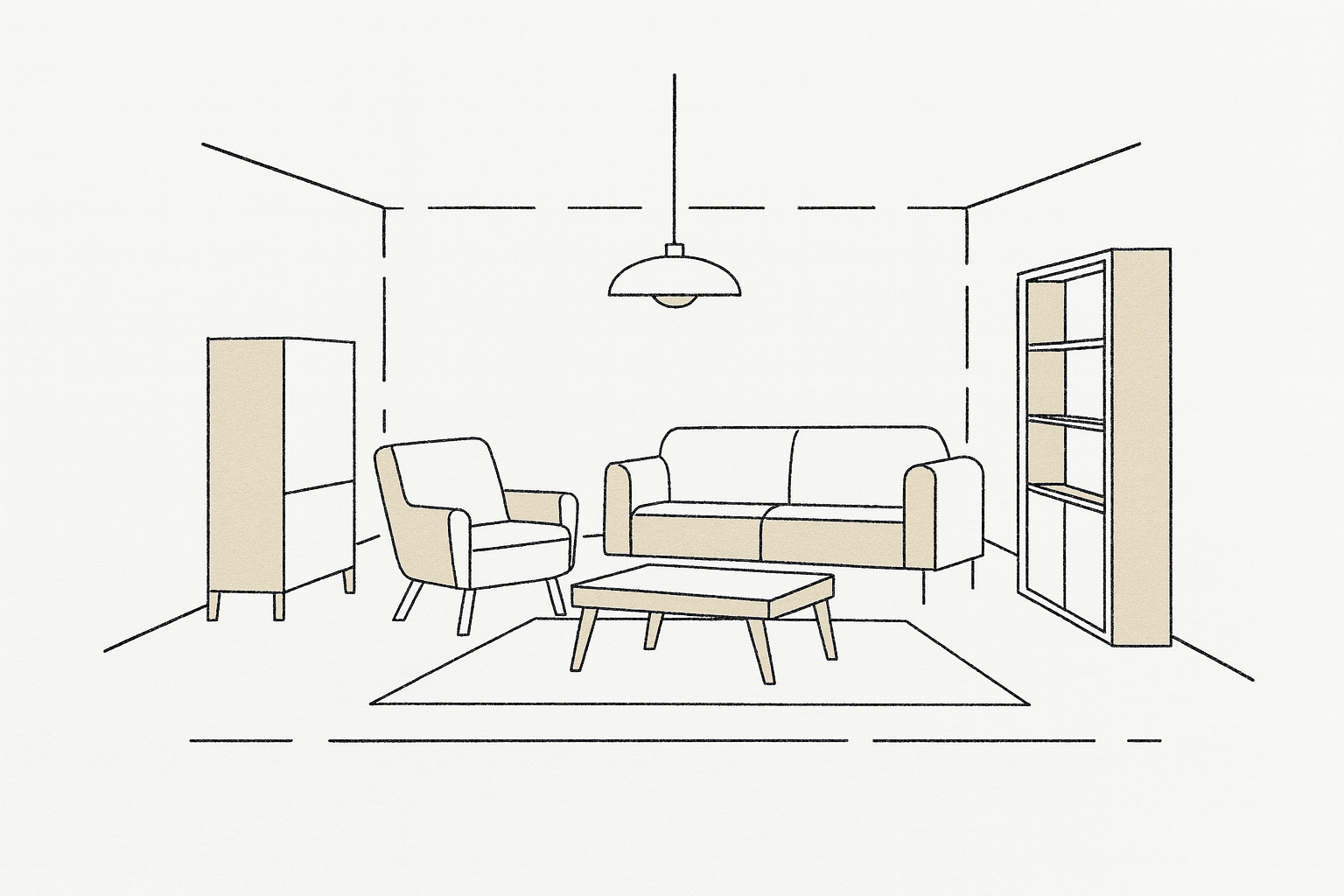
The turning point was a 420-square-foot apartment for a violinist who hosted quartets on weekends. She needed a living room that became a rehearsal space fast, and a desk that could vanish. AI gave me twenty layouts in minutes. Most were wrong in little ways. One was almost right. I used that as a scaffold and rebuilt the plan around how a quartet actually breathes in a room. Chairs needed a clean arc. The coffee table had to roll out quietly. The desk became a folding console that nested into the wall and cleared the sound path.
The lesson was simple. AI is a fast guesser. The designer is the editor with a spine. I stopped asking the tool for “the answer” and started feeding it better questions.
The three layer brief
My prompts now follow a habit I call the three layer brief:
- Facts The room. Dimensions. Light. Doors. Budget. Who lives there and how they move.
- Rules What cannot change. Clear path to balcony. No blocking baseboards. Seat height target. Materials that are allowed.
- Tone Four or five adjectives that describe feel. Calm. Warm. Clean. No trend-speak.
When I keep that structure tight, the options I get back need less surgery. If I get lazy, the output drifts into pretty nonsense.
If you want a primer on where furniture meets body and room, read this first and keep it open while you work: a friendly start to furniture design. It grounds the tech in human scale.
AI Tools That Are Reshaping Interior and Furniture Design
A practical look at how architects and designers use AI to speed up visualization, refine proportion, and rethink how spaces come together.
Furniture as a lab

Chairs tell the truth. A chair that looks clever in a render will still fail your back in five minutes if the angle is off. I use AI to test frames and joints before I cut anything. It helps me trim fat from a design. I can shave a cross-brace to find a clean profile while keeping strength where it matters. I still break prototypes. That’s part of the point.
I keep a “style bank” of materials and profiles I’ve built and used. Roundover sizes that feel right under a palm. Edge reveals that catch light softly. When I ask the model to try variations, it stays inside my language. That’s how you avoid generic output. Feed it your taste, your history, your wins and mistakes. The machine is faster when it is learning your constraints.
When the light decides the plan
I ran a coworking lounge with no windows on the long wall and one harsh west window at the end. AI kept giving me clean symmetry. It looked good in the plan but the glare would have cooked half the seats by late afternoon. I pushed the tool to weigh sunlight and task comfort at 5pm. It shifted the main work tables away from the hot zone, and we carved a soft reading corner near the window with layered shades. The plan lost its mirror trick and gained a daylong rhythm.
Renders lie when they ignore time. Ask your tool to optimize for a specific hour. Then build the space around how it feels at that hour.
Fast loops that save weeks
Old way. Sketch three options. Draft one. Wait a day. Show the client. Repeat. New way. Generate twelve fast options. Kill nine. Mock up the winner in tape and cheap board the same afternoon. Walk the client through it before anyone falls in love with a render. The loop tightens. Everyone sleeps better.
When you need a deeper dive into parametric moves that carry over to interiors, this helps: a clean intro to parametric thinking. It will change how you block a room and how you detail a leg.
Small shop. Real tools.
I am not a factory. I keep a compact tool chain that fits a city studio and still lets me build serious pieces:
- Phone LiDAR or a quick photo scan for a room shell. Good enough for early layouts.
- Rhino with a simple parametric rig for furniture families. I don’t use every node. I use the ones that let me change size without breaking proportion.
- One CAM pipeline for sheet goods and one for solid wood. I label every face and joint in the model so I never flip a part the wrong way on the CNC.
- Plain language checklists for finishes. Two samples per finish. Real light test before sign-off.
You can go far with that. If you want a focused list of furniture selection moves that play well with custom work, keep this handy while you specify: practical furniture selection.
Chasing weight and comfort
I built a light chair for a client with a narrow stair. Everything had to carry with one hand. AI helped me trim the frame until it looked like it would snap. The trick was fiber direction and joint order. The model gave me a frame that used less wood. The prototype creaked. I shifted the back leg angle by two degrees, thickened the rail by three millimeters at the bolt, and changed the glue schedule. The second build felt like a different chair. You only learn that by sitting and listening.
AI is great at showing you where mass hides. It is not great at telling you how a seat pan digs into a thigh over an hour. That’s the designer’s job.
From Sketch to Room: How AI Assists Interior Designers
Materials with a memory
I treat finish schedules like recipes. AI helps me compare durability against touch. For kid-heavy rooms I push toward hardwax oil on oak because repair is easier than with a thick film. For a wet entry bench I seal the end grain like I mean it. For kitchen stools I accept patina and keep a sanding block ready.
When the conversation moves to what wood actually does over time, this guide is a quick refresher you can share with clients in plain words: wood properties explained.
Layout that moves
A good plan respects the first three steps into a room. I ask the tool to simulate a person carrying a tray, a sleeping baby, a bike. Routes open up. Edges soften. Coffee tables shrink. The best layouts remove friction. Clients feel it before they see it.
Acoustics you can live with
Renders are silent. Rooms are not. AI helped me fix a small café that rang like a bell. We modeled absorption behind a perforated banquette, added a soft ceiling baffle pattern that looked like a light feature, and broke up standing waves with the back of a bookshelf. It was not expensive. It was deliberate. The space went from loud to lively.
When not to use AI
I never ask the tool to pick art. I do not let it label a style for a person. I do not let it decide a client’s taste by reading their feed. Taste is a conversation. Not a dataset. I also avoid asking for “perfect” anything. Perfect chairs are mean. They glare at every scratch. I prefer durable with grace.
Bias and blind spots
AI will trend toward whatever the majority has published. If you feed it vague prompts, it will hand you the same glossy look you have seen ten times this month. To break that loop I bring reference from outside the design internet. Old boats. Tailoring. Tools. A clay pot with a thumb dent. Then I ask for outcomes that match those logics. A chair leg shaped like a plane rib. A cabinet pull that feels like selvedge. This is not about style. It is about structure and touch.
Clients who love choice
More options can paralyze. AI makes it easy to drown a client in near-matches. I cap it at three honest options plus one wild card. I print small. I make them pick with their hands, not in a scrolling window. The room and the chair get decided faster when the body is involved.
From screen to shop
The biggest gap is scale. A 3D model will trick you into thinking a leg is solid enough. It is not. I print parts at 1:2, glue foam to reach thickness, and sit on it. My team jokes that our trash tells the story. It does. Every good piece throws off a pile of failed parts. The tool helped us fail cheaper and earlier.
Cost and schedule without guesswork
AI is strong at boring math. I feed it my cut-list, it returns cost and waste for three materials and two sheet sizes. It sorts lead times and warns me if a hinge or a fabric will miss the install date. This is not glamorous. It is how you stay in business.
Repair first
I design for fixable. Loose seat covers. Knock-down joints you can re-tighten. Replaceable feet. I ask the model to prefer standard hardware sizes. When a client calls two years later, I want to drive over with a small bag and a smile, not a truck. AI helps me test disassembly steps and makes sure the order makes sense.
Storage that understands people
Closets that work are about shoulder width, not just shelf count. AI likes symmetry. People do not hang identical jackets. I bias left for long coats if the client is right-handed. I drop a low shelf for shoes you grab daily. I put lights where they make sense for eyes, not the camera. These are tiny moves. They make a room feel like it knows you.
A chair for a back that hurts
One client had an old injury. No off-the-shelf chair felt right. I built a seat with a mild waterfall front, a back that supports between the shoulder blades rather than at the lumbar only, and arms that let the elbows rest without pushing the shoulders up. AI let me sweep through micro changes fast. We settled on a profile you would never spot as special. That is the goal. Comfort that hides.
Looking ahead without hype
Smart furniture will happen. Some of it already does. Adjustable desks that remember stand and sit cycles. Lights that learn your reading corner. I am careful here. The best rooms calm down when the screens are off. Tech should fade into the background. If it calls attention to itself after week two, it failed.
What I learned the hard way
- Never trust a render for finish. Always build a finish board and move it through the room at the right time of day.
- Keep two thicknesses of edge profile for tables. One for photos. One for elbows.
- Do not let a model break safety clearances to “look better.” The beauty you want comes from honesty, not from cheating space.
- Put glides on everything. Floors change. Tenants change. Glides keep the peace.
- Label every part in the cut file. You will forget which way the grain was supposed to run the minute the saw dust starts.
Your first week with AI
If you’re starting now, keep it simple:
- Scan one room. Rough is fine.
- Write one three layer brief.
- Generate ten layouts. Kill seven on sight. Mock up the best three in tape.
- Pick one layout and design one furniture piece for it. Keep it basic. A bench. A shelf. A small table.
- Cut a quick prototype from cheap board. Sit with it. Change one thing. Cut again.
If you want to tie the object back to the room and see how architects flip between scales, this read is useful while you do it: when architects design furniture.
Parametric furniture that stays human
I keep parametric families tight. Height, width, depth, and two or three profile controls. That’s it. Too many sliders make weak decisions. I build guardrails. Seat height cannot drop below 16 inches. Table span cannot exceed what a hand-tool joint can handle. The model respects that and I stop breaking real wood later.
If you want to see how parametric ideas become real pieces without losing soul, skim this and then come back to your bench: parametric furniture basics.
Photos that tell the truth
AI makes pretty pictures. I use them to explain intent early. Then I shoot the built work with real light. I leave in the scuff on the stair and the crack in the old plaster. Clients trust what looks lived in. Students learn more from a clean mistake than from a flawless render.
Teaching the tool your taste
I maintain a small private catalog of my own details. Leg tapers that work. Handle spacing that fits a hand. I feed this into the model as a library. Over time the tool stops offering me shiny strangers and starts returning my language. That is when AI becomes a partner.
Working with suppliers
AI helps me match finishes across vendors. I shoot a color chart next to a sample, feed the values, and get the nearest stock options in human words. It catches lead time traps. It flags hardware that looks right but ships in six weeks. It is a quiet assistant with a good memory.
Sustainability with a backbone
Green talk is cheap. I let the tool count carbon on material choices and transport. I prefer local when the numbers back it up. I also design so parts can be reused if a client moves. Simple fasteners. Standard sheet sizes. Honest wood that ages well. For a clearer view on material choices and why they matter at room scale, this piece is straight and useful: sustainable wood in practice.
What I avoid
- Overly smooth everything. A room without texture feels like an app. People get tired.
- Replica culture. The tool can mimic any famous chair. Don’t ask it to. Make your own language.
- Trend palettes. If the color shows up in ten renders this month, I park it for a year.
Hand and machine together
The best days are the mixed ones. The morning is models and numbers. The afternoon is sawdust and oil. I still end a project by signing the underside of a shelf or the back of a drawer. Not for ego. For accountability. The machine helped me get here. The hand makes it mine.
FAQ
How do you keep AI from making the work look generic
Feed it your own library. Limit variables. Give it rules that come from your hand and your shop, not from mood boards. Kill options that look trendy even if they win likes.
What do you use first on a new room
A fast scan and a three layer brief. Then tape on the floor. I do not open the render engine until I have walked the plan with a client.
How many options do you show a client
Three strong and one wild card. Printed small. Taped mockups whenever possible. No scrolling carousels.
How do you handle finishes with AI in the loop
The model suggests candidates. I build samples. I test them in the real light of the room at the right hour. The sample wins. The render follows the sample, not the other way around.
Can AI pick furniture for me
It can suggest. It cannot know how you sit after a long day or how your kid climbs onto a sofa. Use it to narrow the field. Decide with your body.
What is the biggest mistake people make with AI layouts
Treating symmetry like comfort. Real life needs paths, reachable switches, safe corners, and room for a bag by the door. Ask the tool to optimize for use, not just for looks.
How do you build custom pieces quickly without a big shop
Keep a small set of parametric families you trust. Standardize hardware. Cut one prototype from cheap board. Fix the shape. Then cut the real one. Simple tools. Clear labels.
How do you make a small room feel larger
Lower visual weight. Tighten the palette. Use built-ins that swallow clutter. Lift one element off the floor to let the eye pass under. AI can test the ratios fast. You pick the one that breathes.
What about acoustics at home
Books and fabric help, but placement matters more. Break parallel faces with a shelf. Add a soft panel where voices bounce. Ask the model to suggest where and then test with your ears.
Where should a beginner start
One room. One piece of furniture. One three layer brief. Scan. Layout. Prototype. Sit. Fix. Repeat. If you want a quick structured overview while you move, start here and use it as a map: a compact furniture guide.
Is AI worth it for a small studio
Yes, if you use it to remove drudge work and deepen craft. No, if you use it to churn out more of the same. The win is time you can pour back into touch and detail.
How do you keep projects on budget with custom furniture
Let the tool price materials and flag lead times early. Design for standard sheet sizes. Use joints you can cut cleanly with the tools you own. Plan for repair, not replacement.
How do you choose wood
Match species to abuse. Oak for floors and benches that take hits. Maple for tops that need a fine hard surface. Ash for light frames with lively grain. Always seal end grain like it’s the weak link, because it is.
Does AI help with sustainability
It helps you see numbers you might skip. Carbon counts on finishes and transport. Waste from a bad sheet layout. The ethics are still yours.
Keep exploring
If you want to push form without losing the human side, keep this at your elbow as you work through iterations: fresh parametric furniture ideas. And if you need to sanity-check a living room set before you order, this quick read will help you choose smart without noise: a simple selection guide.
That is what AI has done for me in interiors and furniture. It made the work faster, but more than that, it gave me back the time to care. The rooms feel calmer. The chairs get used. The tools are just tools. The hand still decides.