
MDF: Uses, Pros, and Cons
MDF gets used everywhere because it solves a real problem. It gives you a smooth, uniform panel that cuts cleanly, paints well, and usually costs less than solid wood. That is why it keeps showing up in cabinet doors, trim details, wall paneling, furniture parts, and built-ins.
It also gets used where it should not. People treat it like plywood. They use it near water and act surprised when the edges swell. They build long shelves with it and wonder why they sag. They drive screws into weak edges and blame the board later.
If you know where MDF works, it can save money and give a cleaner painted finish than many other sheet goods. If you use it like a do-everything board, it causes problems fast. For the broader material picture, start with Wood Materials in Construction and Design. If you want the bigger panel-and-sheet-goods context, go next to Engineered Wood.
What MDF Is
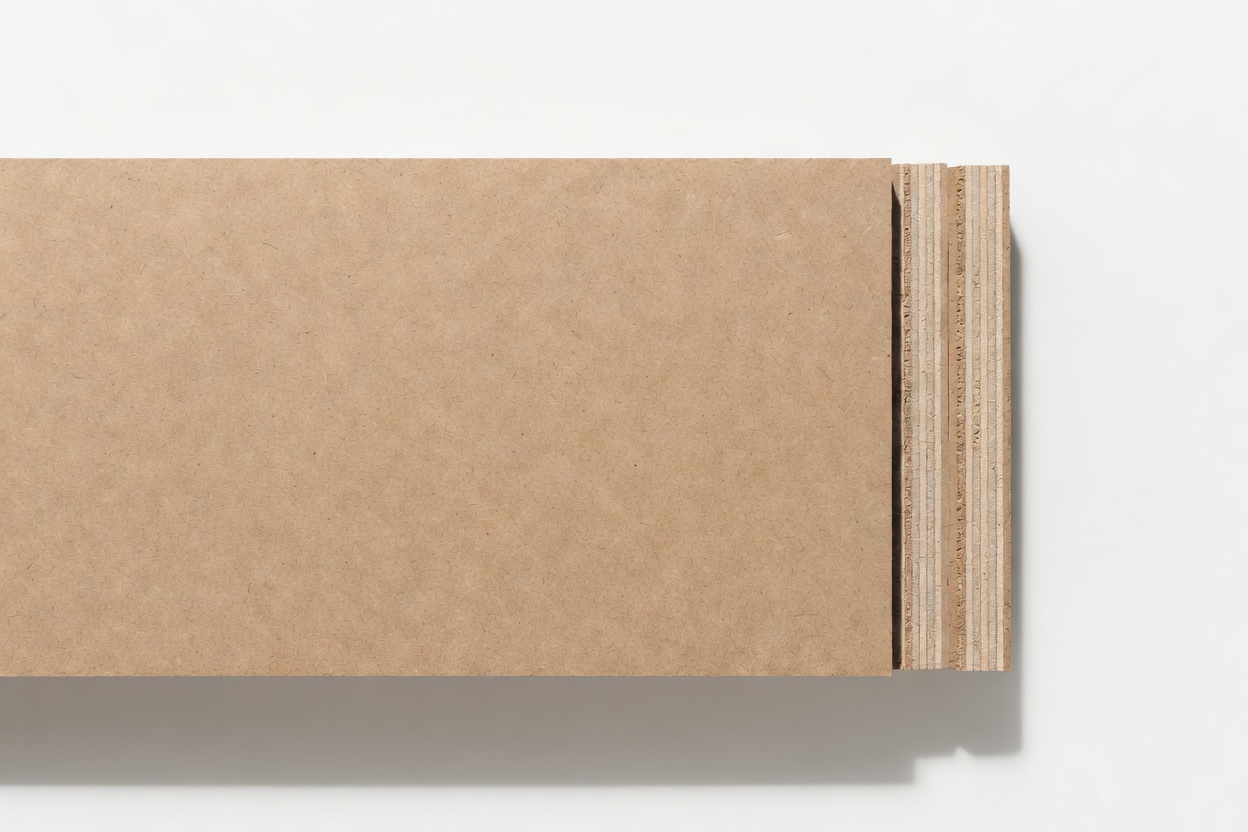
MDF stands for medium density fibreboard. It is an engineered wood panel made from fine wood fibers mixed with resin and wax, then pressed into dense sheets under heat and pressure.
The main difference from solid wood is simple. MDF has no visible grain, no knots, and no natural direction on the face. That gives it a very even surface. For painted work, that matters a lot. You do not get grain lines fighting the finish. You do not get random knots showing through paint. You do not get the face variation you see in lower-grade plywood.
That smoothness is the reason MDF keeps getting chosen. It is also the reason people expect too much from it. A smooth board is not the same thing as a strong, moisture-tolerant, or impact-resistant board.
Where MDF Earns Its Place
Painted Cabinet Doors
This is one of MDF’s best uses. A painted cabinet door wants a stable face and a surface that does not fight the finish. MDF gives you that. It also routes cleanly, which is why it shows up so often in shaker-style fronts, slab doors, and simple profiled doors.
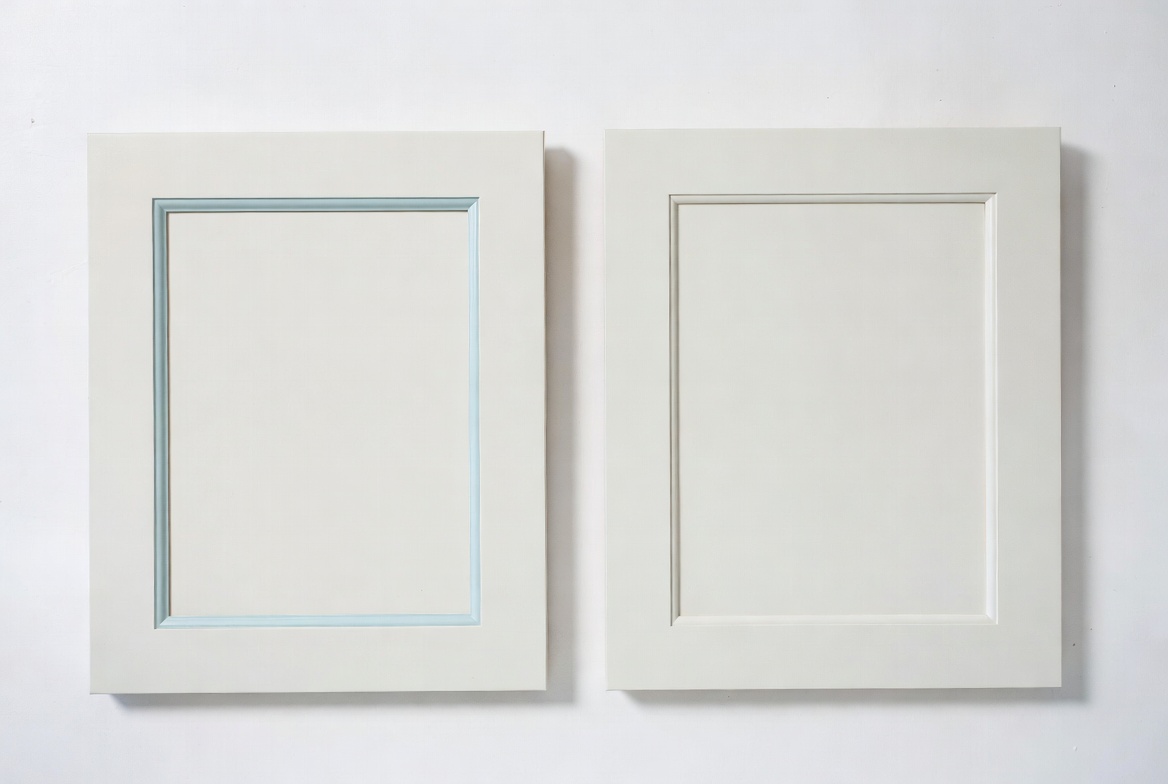
Image by ArchitectureCourses.org.
MDF makes more sense on the visible face than on every part of the cabinet. That split matters. Doors and decorative fronts are one problem. Sink bases, cabinet boxes, and long loaded shelves are another.
Painted Trim and Wall Paneling
MDF is strong in painted trim details, wainscoting, interior feature walls, and decorative panel systems. It cuts predictably, takes paint well, and avoids some of the grain-show-through problems that come with paint-grade natural wood.
If the goal is a smooth painted surface with sharp lines, MDF has a real advantage. If the goal is stained trim, visible grain, or durability under repeated bumps, it loses ground fast.
Built-Ins and Furniture Parts
MDF works in built-ins, media walls, desk panels, furniture sides, and painted storage where a flat finish matters more than exposed edge strength. It can also work below laminate or veneer when the design wants a stable, uniform core.
But not every built-in part should automatically be MDF. Vertical side panels are one thing. A long bookshelf loaded with hardcovers is another.
Routed Profiles
MDF is also useful when the design depends on shaped edges, grooves, or machine-cut detail. It stays more predictable than many natural woods under the cutter. That is one reason it shows up in decorative moldings, simple interior door skins, and custom paint-grade millwork.
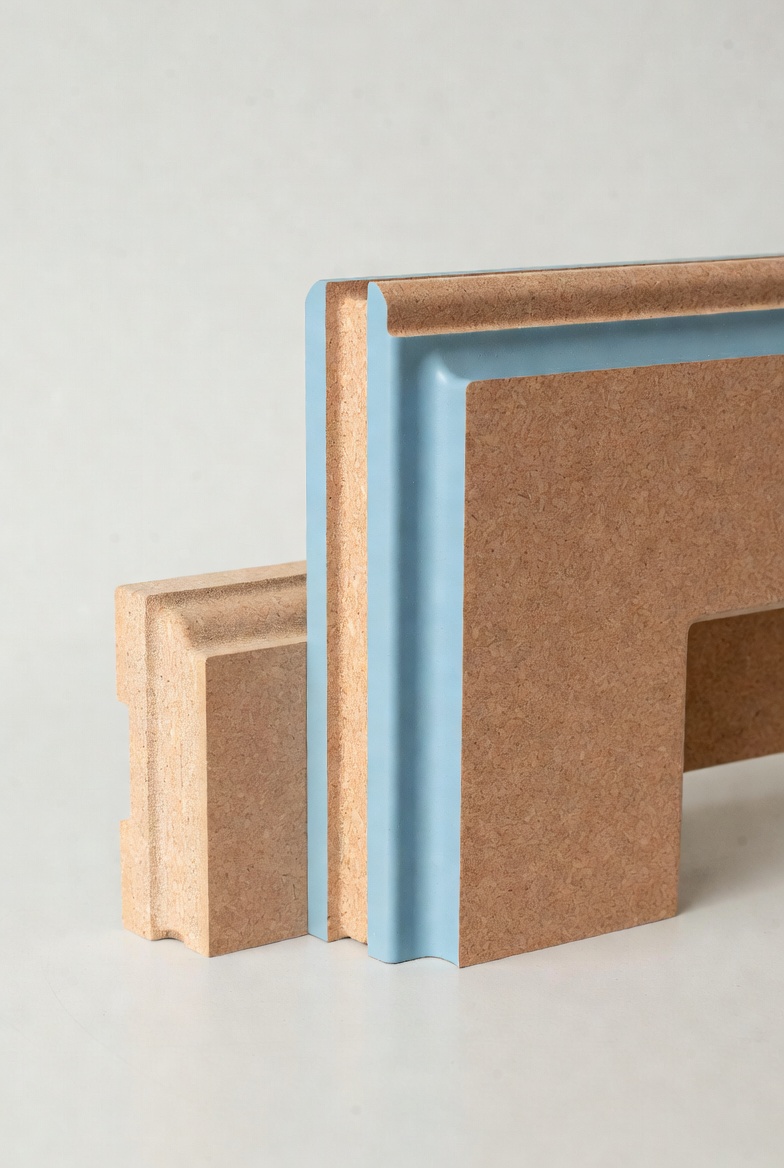
Image by ArchitectureCourses.org.
Where MDF Starts Causing Trouble
Wet Areas
Standard MDF and water do not get along. Once moisture gets into the board, especially through cut edges, it swells, softens, and loses shape. That damage is hard to hide and harder to reverse.
Moisture-resistant MDF is better in kitchens, laundry rooms, and some bathroom conditions, but better is not the same as waterproof. It still needs sealed edges, cleaner detailing, and more caution than people usually give it. For the bigger moisture and material side of the issue, Wood Properties and Uses is the better next read.
Long Shelves
This is one of the classic MDF mistakes. The board looks flat and dense on the floor, so people assume it will stay that way once loaded. Then the books go on. Or dishes. Or storage bins. Then the sag shows up.
If the shelf is long, only supported at the ends, or expected to carry real weight, MDF is usually the wrong default unless you thicken it, reinforce it, or stiffen the front edge properly.
Exposed Corners and Hard Use
MDF does not love abuse. It can dent, chip, and crush more easily than many people expect, especially at corners and on raw edges. It is fine for a quiet painted panel in a controlled room. It is less convincing where chairs, shoes, vacuums, toys, or moving boxes keep hitting it.
Fastener-Heavy Edges
The face is one thing. The edges are another. MDF edges are weaker and more porous. Screws can strip, bulge, or split the edge if the detail is careless. Pre-drilling helps. Better joint design helps more.
If the whole success of the piece depends on strong edge screw holding, stop and rethink the detail. MDF is happier when glue area, dados, rabbets, cleats, or better geometry are doing more of the work.
MDF vs Plywood vs Particleboard
This is where a lot of bad choices happen. People see three sheet goods and treat them like close substitutes. They are not.
| Material | Best For | Where It Wins | Where It Loses |
|---|---|---|---|
| MDF | Painted cabinet doors, trim details, wall paneling, furniture parts | Smooth face, clean paint finish, easy routing, lower cost | Heavy, weak edges, poor water resistance, shelves can sag |
| Plywood | Cabinet boxes, shelving, built-ins, subfloors, general panel work | Stronger, lighter, better screw holding, handles moisture better | Face quality varies, edges need treatment, paint finish is less perfect |
| Particleboard | Low-cost furniture parts, laminate-faced panels, hidden dry interior uses | Cheap, flat, widely available | Weak edges, poor moisture resistance, lower durability |
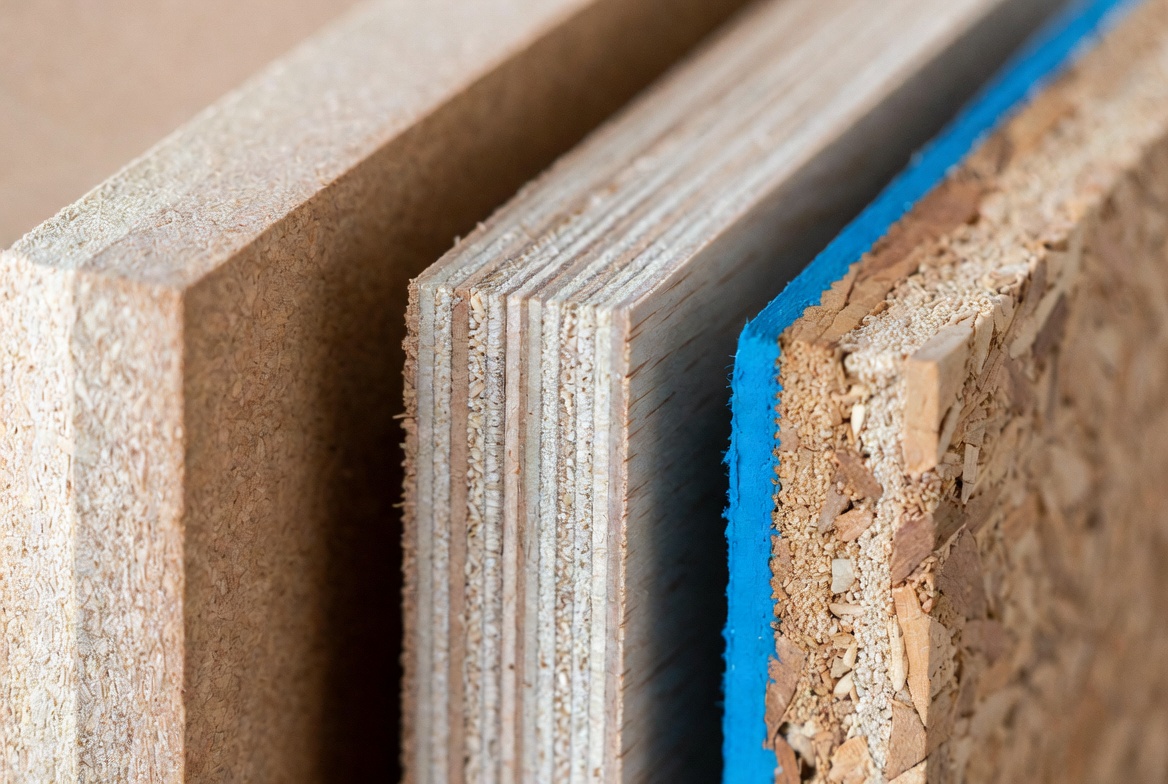
Illustration by ArchitectureCourses.org.
If the surface will be painted and seen up close, MDF often gives the cleanest face. If the part has to carry weight, hold fasteners well, or survive some moisture, plywood usually makes more sense. If the only real goal is very low cost in a dry interior and the edges are not being asked to do much, particleboard can still show up, though it is usually the weakest of the three.
Worth knowing: if you are comparing fiberboard products more broadly, go next to High Density Fiberboard (HDF) and Low Density Fiberboard (LDF).
The Main Types of MDF
Standard MDF
This is the usual interior board. It works for dry-condition cabinetry, painted furniture parts, trim details, paneling, and general decorative interior work.
Moisture-Resistant MDF
This version is made for rooms where humidity or occasional moisture is more likely. It is the better pick for some kitchens, laundry rooms, and bathroom-adjacent work. It still needs good sealing and better use than standard MDF.
Fire-Retardant MDF
This board is more common in commercial interiors and specified work where code, occupancy, or fire-rating requirements matter. It is not a casual upgrade for normal residential trim. It is a job-specific product.
Cutting MDF Without Making a Mess
MDF cuts best with sharp blades. Dull blades leave rougher edges, make more dust, and leave a worse finish. Carbide-tipped blades are the better call because MDF is hard on cutting edges.
The dust is part of the job too. MDF dust is very fine, messy, and unpleasant to breathe. Treat that seriously. Use extraction if you can. Wear a decent mask or respirator. Do not handle it like ordinary sawdust.
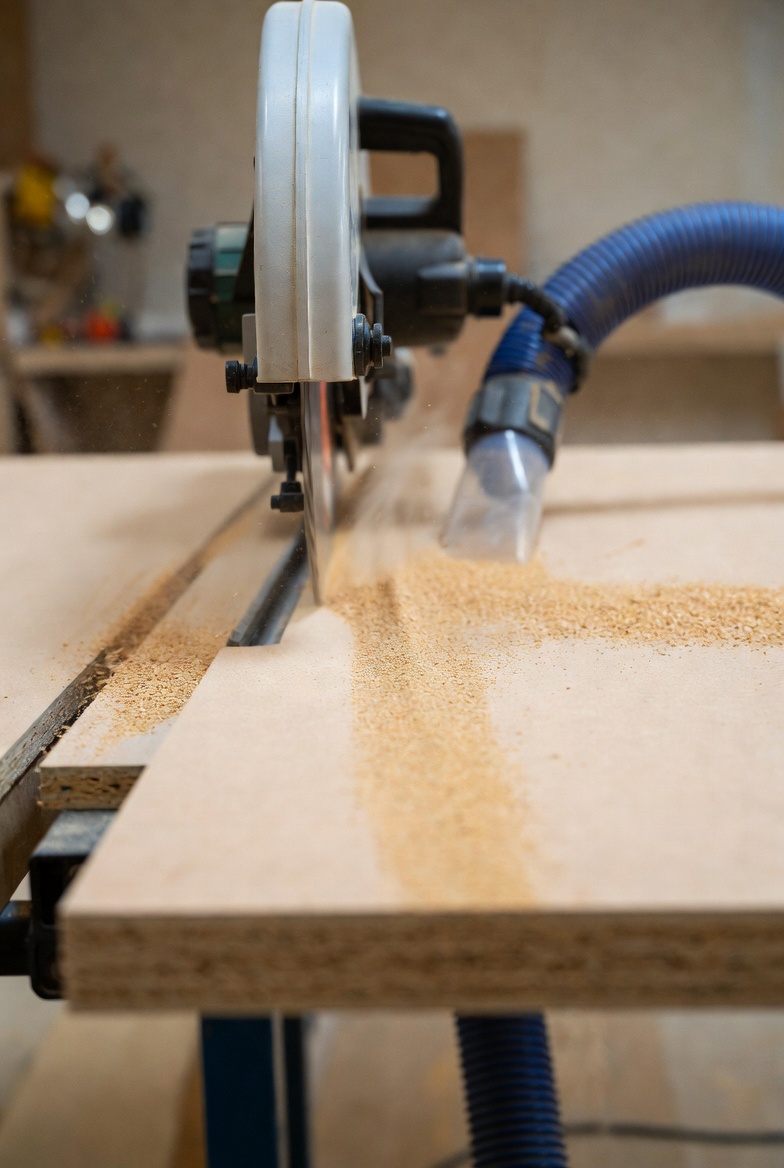
Image by ArchitectureCourses.org.
If you cut MDF often, dust control stops being a nice extra and starts becoming part of the setup.
Fasteners, Edges, and Paint
Screws and Joinery
Pre-drill when screws matter. Use glue where glue makes sense. MDF can go together well, but it does not reward rough fastening. Screws forced into edges without prep are asking for trouble.
Good MDF work often depends less on brute force and more on smart joint design. Dados, rabbets, glue surfaces, backing strips, and proper support usually matter more than just driving bigger screws into the board.
Painting MDF
This is where MDF earns its keep. The face takes paint very well. The edges do not. Raw edges soak up finish, go fuzzy, and look cheap if you skip prep.
Sand them. Seal them. Prime them. Then paint. That extra work is not optional if you want a sharp result.
Use MDF Here. Avoid It Here.
| Use MDF Here | Avoid MDF Here | Why |
|---|---|---|
| Painted cabinet doors | Sink-base bottoms and wet cabinet interiors | MDF paints well but water exposure punishes it fast |
| Interior wall paneling and trim details | Exterior trim or poorly protected window areas | It works indoors but hates repeated moisture |
| Short, well-supported painted shelves | Long shelves with heavy book loads | Span and weight expose MDF weakness quickly |
| Decorative routed parts | Impact-prone corners and rough-use surfaces | It machines well but does not take abuse well |
| Furniture sides and painted panels | Fastener-heavy edge connections under stress | The face is fine; the edges are the weak point |
Do This Instead of This
| Do This | Instead of This | Why |
|---|---|---|
| Use MDF for painted doors and panel faces | Use it for every cabinet part automatically | Its best use is smooth painted surfaces, not every structural box part |
| Use plywood for long shelves and heavy cabinet boxes | Use MDF and hope thickness alone saves it | Plywood is lighter, stronger, and less prone to sagging |
| Seal cut edges before painting | Paint raw edges like they behave like the face | Raw MDF edges drink finish and turn rough |
| Choose moisture-resistant MDF where humidity is real | Use standard MDF near water or damp air | Standard MDF swells fast once moisture gets in |
| Pre-drill and use glue intelligently | Drive screws into edges without prep | MDF edges fail faster than many people expect |
Cheap Sheet or Expensive Mistake?
MDF often looks good on price at the sheet level. That is part of why it gets overused. But sheet cost is not the whole decision. You also have to think about weight, finish prep, edge treatment, service life, and whether the board is being asked to do the wrong job.
Sometimes MDF is the smart budget move. Sometimes it is false economy. A cheap board that swells near a sink, sags under books, or chips on exposed corners is not the cheaper choice in the end.
If the main question is sizes, thicknesses, and typical price ranges, go next to MDF Board Sizes and Prices.
Dust, Adhesives, and Indoor Use
The biggest day-to-day issue with MDF is dust. Cutting, routing, and sanding it creates very fine dust that you do not want in your lungs. Use extraction if possible. Wear a proper mask or respirator. Clean the space instead of grinding the dust deeper into the room.
The other issue is adhesives. MDF is an engineered wood product, so binders are part of the panel. If low-emission material matters on an interior project, check the product spec instead of assuming every MDF sheet is the same.
Sustainability
MDF can make use of wood fibers and residual material that might otherwise be wasted, and that is part of its appeal. But sustainability does not end there. The resin system, the manufacturing process, the transport distance, and the service life of the finished product all matter too.
If environmental performance matters on the project, compare MDF against other sheet goods based on the full job, not just the label on the bundle. Also useful: Sustainable Wood.
What People Get Wrong
- They use MDF because it is flat, not because it is right for the job.
- They forget the edges are the weak part.
- They skip sealing before paint.
- They treat moisture-resistant MDF like waterproof board.
- They use it for long shelves without reinforcement.
- They compare it to solid wood on looks instead of comparing it on function.
MDF works well when the job is honest about what MDF is. That is the part that keeps getting missed.
FAQ
Is MDF better than plywood?
Not in general. MDF is usually better for smooth painted surfaces and shaped interior details. Plywood is usually better for cabinet boxes, long shelves, screw holding, and parts that may see some moisture.
Can MDF get wet?
Standard MDF should not be treated like a wet-area material. Moisture-resistant MDF is better in humid rooms, but it still needs proper sealing and better detailing than people usually give it.
Is MDF good for cabinets?
It is good for some cabinet parts, especially painted doors and decorative panels. It is less convincing for every cabinet component if weight, sink moisture, or screw-holding strength matter.
Why does MDF paint so well?
Because the face is smooth and uniform. There is no open grain fighting the finish. The catch is that the edges still need sealing and prep.
Does MDF sag?
Yes, it can. Long spans and heavy loads are where MDF gets exposed. Thickness, support, and reinforcement matter.
Is MDF safe to work with?
It is workable, but the dust is the main problem. Cut and sand it with proper extraction and wear breathing protection.