
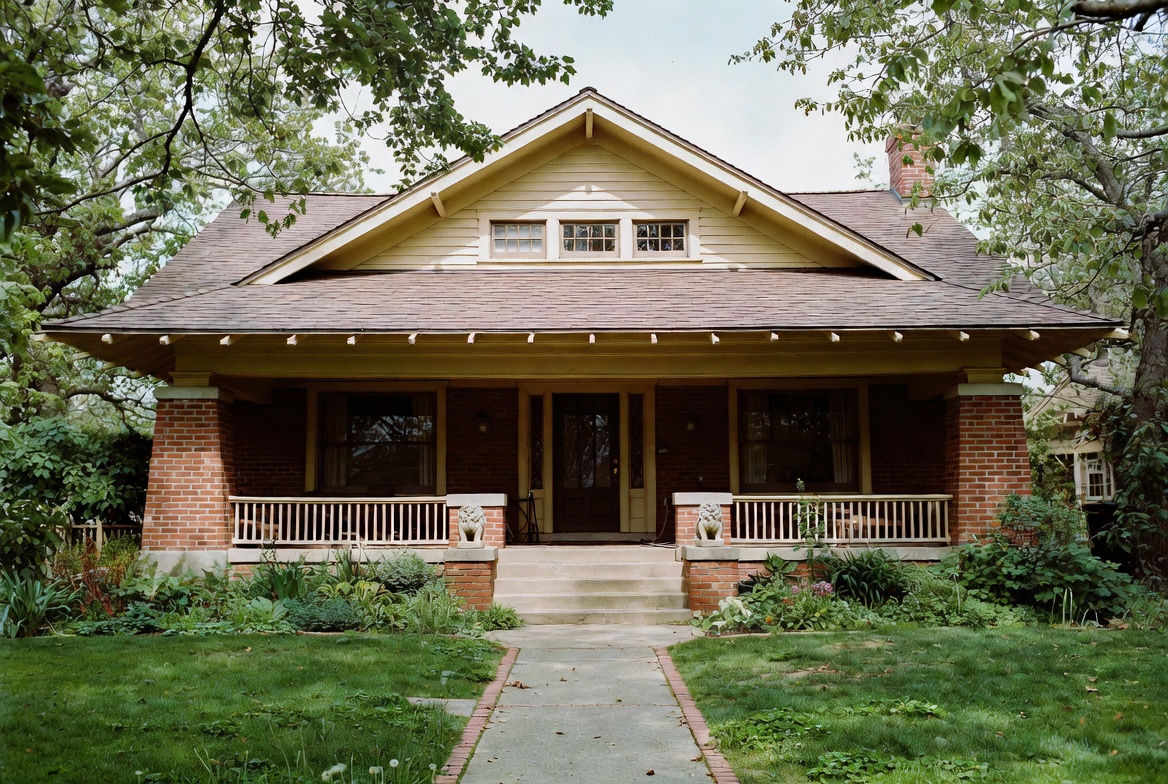
A good 1920s Craftsman house does not need to shout. The proportions do the work. The porch feels like it belongs there. The roof has weight. The windows sit where they should. Inside, the rooms usually feel grounded instead of vague. Even when the house is modest, it often feels more considered than something twice the size built later.
That is also why bad remodels show so quickly. Craftsman houses are forgiving in some ways, but not in the ways people think. You can update wiring, improve insulation, rework a kitchen, and make the house live better. But once you flatten the trim, wreck the porch, replace the windows badly, or turn every room into one blank box, the house starts losing the thing that made it worth saving in the first place.
The useful question is not whether a house has a few Craftsman details. It is what kind of house it really is, which features are carrying the style, and how to update it without making it feel generic.
Worth Knowing: if you want the broader era context first, start with 1920s House Styles and Types of Houses and Home Styles.
What a 1920s Craftsman House Usually Is
Craftsman is part of the American Arts and Crafts tradition, but in everyday housing it usually shows up as a house that values clear structure, natural materials, visible craftsmanship, and a more relaxed, livable plan than the fussier styles that came before it. In the 1920s, that often meant bungalows, one-and-a-half-story houses, or broader two-story houses with deep porches, wide eaves, tapered porch supports, grouped windows, and interiors built around woodwork and built-ins.
This is the first thing people get wrong: Craftsman is not exactly the same thing as bungalow.
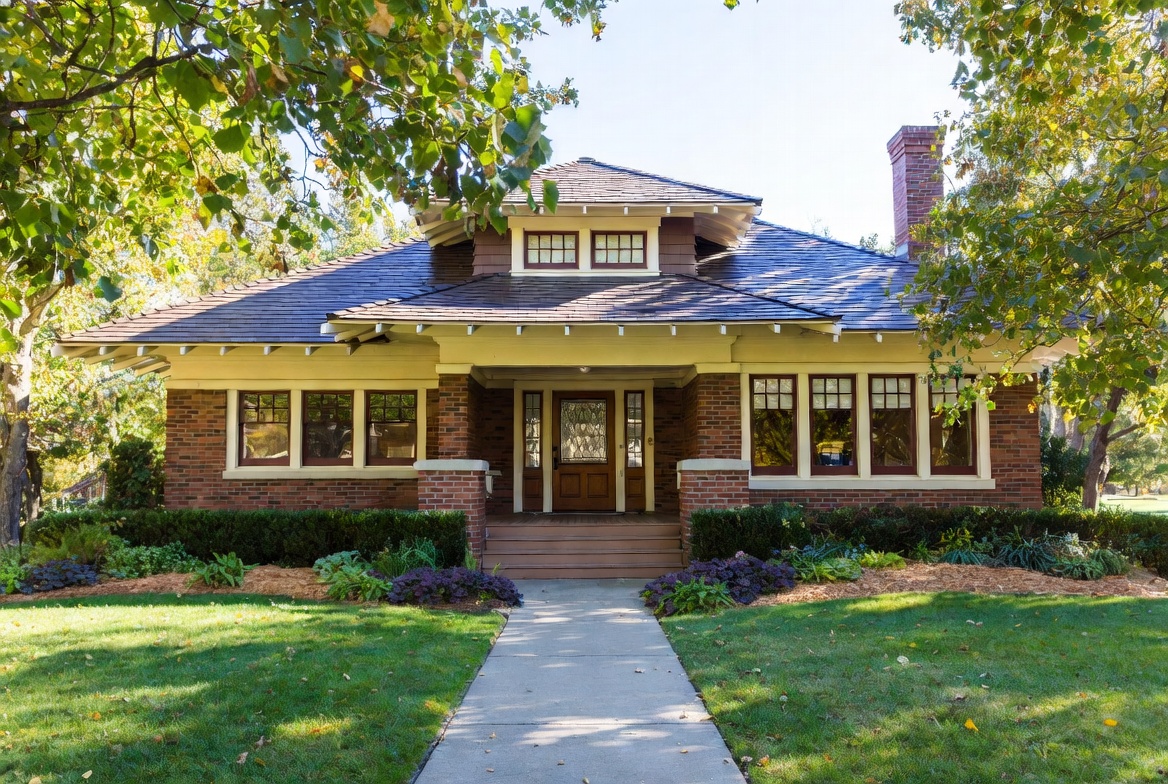
Image by ArchitectureCourses.org. A Craftsman bungalow with a deep front porch, exposed rafter tails, and brick porch piers.
A bungalow is a house form. Craftsman is a style language. Many 1920s Craftsman houses are bungalows. Not all Craftsman houses are bungalows, and not every bungalow is Craftsman. That distinction matters because it changes how you read the house and what you should protect first.
| Term | What It Means | What People Usually Confuse |
|---|---|---|
| Craftsman | A style language tied to Arts and Crafts values: visible structure, restraint, natural materials, built-in utility | People use it for almost any house with brackets and tapered columns |
| Bungalow | A low, compact house form, usually one or one-and-a-half stories, often with a broad porch | People assume every bungalow is Craftsman |
| 1920s Craftsman house | A Craftsman-style house built in the decade when the style was widely adapted into everyday housing | People mix it up with Tudor, Colonial Revival, Prairie, or later “Craftsman-inspired” new builds |
If the house has a low or moderately pitched roof, broad eaves, exposed structure, strong porch supports, grouped windows, and an interior built around woodwork and useful built-ins, you are probably in Craftsman territory. If the front is very symmetrical, the trim is formal and classical, and the style reads more upright than relaxed, you may be looking at Colonial Revival instead. If the roof gets steep, the masonry gets heavier, and the windows get narrower and more vertical, Tudor Revival may be the better label.
How To Identify a 1920s Craftsman House Fast
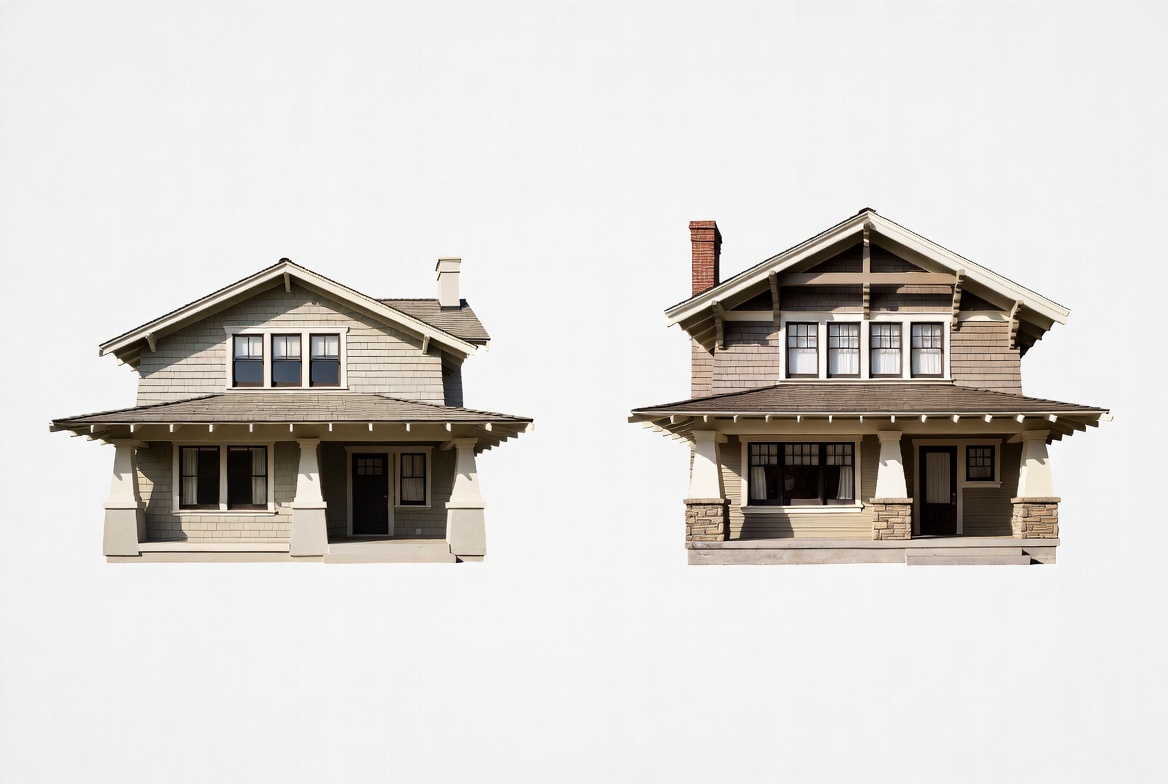
Illustration by ArchitectureCourses.org. Bungalow refers to the house type, while Craftsman shows up in the detailing, structure, and material language.
You do not need a style dictionary to get the first read right. Start with the big shapes.
- Roof: usually low-pitched or moderate, with broad overhangs. Exposed rafters, brackets, or knee braces are common.
- Porch: almost always important. It may be full-width or partial-width, but it usually feels like part of the house, not an applied afterthought.
- Porch supports: tapered wood columns on masonry or heavy wood piers are one of the clearest signals.
- Windows: often grouped. Upper sash may be divided while the lower sash is a single pane. Proportions matter more than ornament.
- Materials: wood siding, shingles, stone, brick, stucco, or combinations that feel earthy and weighty rather than slick.
- Front elevation: more informal than Colonial Revival. More grounded than Tudor. Usually more horizontal than vertical.
The easiest way to identify a weak fake is this: if the only Craftsman move is a decorative bracket and a “Craftsman” front door from a catalog, the house is probably not really carrying the style. The style has to show up in the form, the porch, the roof, the windows, and the trim scale together.
| Strong Craftsman Signal | Weak Cosmetic Signal | Why the Difference Matters |
|---|---|---|
| Deep eaves with exposed rafters | Decorative brackets screwed onto a generic roofline | The first changes the whole massing; the second is surface dressing |
| Tapered columns on real piers | Thin stock posts dressed up with trim wraps | Craftsman depends on weight and structure showing honestly |
| Grouped windows with good proportions | Random replacement windows with mismatched grille patterns | Window rhythm carries a lot of the façade |
| Built-ins and fireplace-centered rooms | Open-plan blank rooms with “Craftsman” light fixtures | The house has to work like a Craftsman house, not just look themed |
Why the Style Still Works
Craftsman keeps working because it still solves ordinary domestic problems well.
It gives the house a center. In a lot of 1920s Craftsman houses, the living room is clearly anchored by a fireplace, built-ins, a broad opening to the dining room, or a strong bank of windows. The room is telling you where the furniture should go. That sounds simple, but it is one reason the spaces feel comfortable without a lot of fuss.
It makes utility part of the design. Built-in sideboards, benches, bookcases, inglenook-like seating, divided openings, and practical millwork were not random extras. They were there because the house was trying to make everyday life work better without wasting space.
It uses warmth instead of display. A good Craftsman house does not need a grand stair hall or a dramatic double-height living room. It gets a lot of its effect from wood tone, proportion, filtered light, and the way one room gives way to the next.
It rewards restraint. A lot of 1920s Craftsman houses are modest. They are not trying to pretend to be manor houses. That honesty is part of why they age well.
Also Useful: if you want to extend this into finishes and furniture rather than just architecture, 1920s Decor Style Ideas is the better follow-up.
The Exterior Parts Doing Most of the Work
If you only protect a few exterior features on a 1920s Craftsman house, protect the ones below. These are usually doing more to hold the style together than the decorative layer people obsess over later.
Roof Shape and Eaves
The roof is not background. In a Craftsman house it is one of the main style-carrying elements. Low or moderate pitch, broad overhangs, exposed rafters, visible purlins, brackets, knee braces, and gable forms all help establish the house’s weight and stance. Get the roof wrong and the rest of the house has to fight uphill.
Porch Scale
The porch is often the front room of the house, not a decorative shelf stuck on later. It should feel deep enough to sit on, solid enough to belong, and connected to the main volume of the house. Tapered porch columns on brick or stone piers are common because they make the whole front feel grounded.
Windows and Trim
Good Craftsman windows tend to have calm, readable proportions. Often the upper sash is divided into smaller lights while the lower sash is left simpler. The groupings matter too. One window by itself rarely does the full job. Pairs, triples, and porch-adjacent windows help reinforce the horizontal rhythm.
Materials With Weight
Wood siding, shingles, brick, clinker brick in some regions, river stone, stucco, and heavier trim all help the style read correctly. Once those materials get replaced with flat synthetic panels or trim that is too thin, the house starts to lose depth fast.
Chimney and Hearth Logic
Even before you walk inside, a visible chimney usually signals how the house is organized. In a lot of 1920s Craftsman houses, the fireplace is not just decoration. It is the center of the house. That exterior chimney mass helps make the whole composition feel anchored.
What the Interior Usually Gets Right
Craftsman interiors are one of the clearest examples of older houses feeling better because the rooms still have edges. They do not depend on emptiness to feel livable.
Living Rooms With a Center
A lot of 1920s Craftsman living rooms are organized around the hearth wall. The fireplace, bookcases, mantel, and wall proportions set the room up before the furniture arrives. That matters. A good room should tell you how to use it without needing endless styling to explain itself.
Dining Rooms That Still Feel Useful
The dining room in a Craftsman house is often partly open but still defined. Maybe by cased openings. Maybe by columns and a beam. Maybe by a wide trimmed opening. The point is that it is connected without disappearing. That middle ground is one reason these houses still feel good to live in.
Built-Ins That Earn Their Space
This is where Craftsman houses keep beating a lot of later houses. A sideboard recessed into a dining-room wall, a bench beside the stair, bookcases around the fireplace, a window seat tucked into a recess, drawers in odd leftover pockets: these things make the house feel intentional. They are not just charming. They are useful.
Trim That Controls Scale
Baseboards, door casings, plate rails, colonnades, beams, boxed openings, stair details, and window trim all do quiet structural work. They slow your eye down. They make walls feel finished. They also explain why a lot of badly remodeled Craftsman interiors feel wrong even when the furniture is expensive: the trim scale was lost.
Related Reading: for the room-by-room interior layer, see 1920s Interior Design Style.
What People Get Wrong About Craftsman Houses
There are a few mistakes that keep repeating.
They Treat It Like a Decorative Theme
Craftsman is not shaker pegs, amber glass, and mission-style lamps sprinkled onto a generic house. Those things can support the style, but they cannot build it by themselves. The structure, porch, roofline, trim scale, and room logic come first.
They Think Old Means Precious
Not everything old is worth saving. Original windows may be worth repair. Original trim often is. Knob-and-tube wiring is not. Failing galvanized plumbing is not. Bad later patchwork pretending to be original is not. The job is not to worship age. The job is to protect what gives the house lasting value.
They Open Too Much
This is one of the fastest ways to kill the feel of a Craftsman house. Some walls can come out. Some should. But if you erase every room boundary, remove every cased opening, and flatten the whole ground floor into one giant room with a kitchen island in the middle, the house stops behaving like a Craftsman house.
They Replace Windows Without Respecting the Elevation
Window replacement is not just a mechanical upgrade. It changes the face of the house. Wrong muntin pattern. Wrong sash proportions. Wrong trim depth. Wrong grouping. Those mistakes are visible from the curb and hard to unsee later.
They Underestimate the Porch
On a real 1920s Craftsman house, the porch is not negotiable background. Skinny new posts, enclosure done badly, awkward railings, or a porch that gets visually erased can take the whole house down with it.
What To Keep, What To Change Carefully, and What To Stop Doing
| Keep | Change Carefully | Usually a Mistake |
|---|---|---|
| Original wood trim, built-ins, fireplace surround, porch proportions | Kitchen layout, bath layout, concealed systems, rear additions | Replacing all trim with thin stock profiles |
| Window grouping and exterior rhythm | Selective window repair or matching replacements | Mixing random replacement window types across the façade |
| Roof form and exposed structural character | Roofing material upgrades that do not alter the silhouette | Changing pitch, boxing in rafters, or adding fake brackets everywhere |
| Room hierarchy and wide trimmed openings | Strategic opening between kitchen and dining | Total great-room demolition |
| Masonry piers, columns, and chimney mass | Repair with matching materials and believable profiles | Skinny porch replacements or decorative stone veneer overlays |
The key is not purity. It is judgment. A house that works better after renovation but still feels like itself is the win. A house that looks more expensive but less convincing is not.
How To Modernize One Without Flattening It
The safest updates in a 1920s Craftsman house are usually the ones that improve performance while leaving the visual logic intact.
- Fix water first. Roof, flashing, drainage, porch details, foundation moisture, and site grading matter more than finish choices.
- Improve systems quietly. Better HVAC, insulation, air sealing, and rewiring are all worth doing when handled without turning the house into a visible tech showcase.
- Open the plan selectively. Kitchen-to-dining adjustments are often useful. Living-room-to-everything demolition usually is not.
- Match trim scale. New baseboards, casings, beams, and built-ins should carry the same visual weight as the old house.
- Keep the front calmer than the back. Most houses can take freer changes at the rear than on the public face.
This is why so many successful updates feel modest. They are not trying to “improve” the house by making it trendier. They are trying to let the house stay legible while removing the parts of daily life that no longer work well.
The Detail People Usually Miss
It is not the light fixtures. Not the stain color. Not the cabinet hardware.
The thing people miss is scale. The weight of the porch piers relative to the roof. The width of the trim relative to the wall. The size of the window relative to the room. The depth of an opening between living and dining. The thickness of a mantel shelf. The size of the knee brace compared to the eave it supports.
That is why some “Craftsman-inspired” houses feel flimsy even when they copy the right details. The details are not anchored to the right proportions. A real 1920s Craftsman house usually feels sturdy because the decorative layer is sitting on top of a coherent structural logic, not substituting for it.
Should You Build New in This Style?
Yes, but only if you are willing to get the massing and details right. Craftsman is one of the easiest historic styles to fake badly because people assume warm wood and a couple of brackets are enough.
A new Craftsman-inspired house can work if it gets the fundamentals right:
- a believable roof with real overhang depth,
- a porch that feels structural and usable,
- window groupings with good proportions,
- trim and casing depth that do not feel value-engineered,
- interiors with some room definition and built-in logic instead of total blankness.
It usually fails when it turns into a catalog of style fragments applied to a generic developer box. If the house form is wrong, the surface styling will not rescue it.
Quick Checklist
- Does the porch feel like part of the house, not an add-on?
- Do the roof and eaves carry real visual weight?
- Are the windows grouped and proportioned in a way that supports the façade?
- Does the living room still have a center?
- Are the built-ins and trim helping the house, not just decorating it?
- Are updates solving real functional problems without erasing room hierarchy?
- Does the house still read as one language, not a mix of Craftsman, farmhouse, and condo?
FAQ
What defines a 1920s Craftsman house?
A 1920s Craftsman house is usually defined by broad eaves, visible structural details, a strong porch, grouped windows, natural materials, useful built-ins, and interiors organized around fireplaces or other clear room anchors. The style tends to feel more grounded and informal than Colonial Revival and less theatrical than Tudor Revival.
Is a Craftsman house the same as a bungalow?
No. A bungalow is a house form, usually low and compact. Craftsman is a style language. Many 1920s Craftsman houses are bungalows, but not all Craftsman houses are bungalows, and not every bungalow is Craftsman.
What is the biggest mistake in remodeling a Craftsman house?
The fastest mistake is flattening it: removing too many walls, replacing windows badly, losing the porch proportions, or swapping thick trim and built-ins for generic finishes. The house starts looking less coherent very quickly when that happens.
Are original windows worth keeping in a 1920s Craftsman house?
Often, yes. Original windows usually matter more to the house than people expect because they help control both interior light and exterior rhythm. Whether they should be repaired or replaced depends on condition, but the proportions and pattern should be respected either way.
Can you modernize a Craftsman kitchen without ruining the house?
Yes. Kitchens are one of the areas where smart modernization usually makes sense. The trick is to improve storage, workflow, and systems without making the room look like it belongs to a completely different house.
Why do Craftsman houses still feel good today?
Because the good ones still solve real domestic problems well. The rooms are readable. The materials feel substantial. Built-ins make sense. The house has a center. A lot of newer houses lost those things while getting larger.