
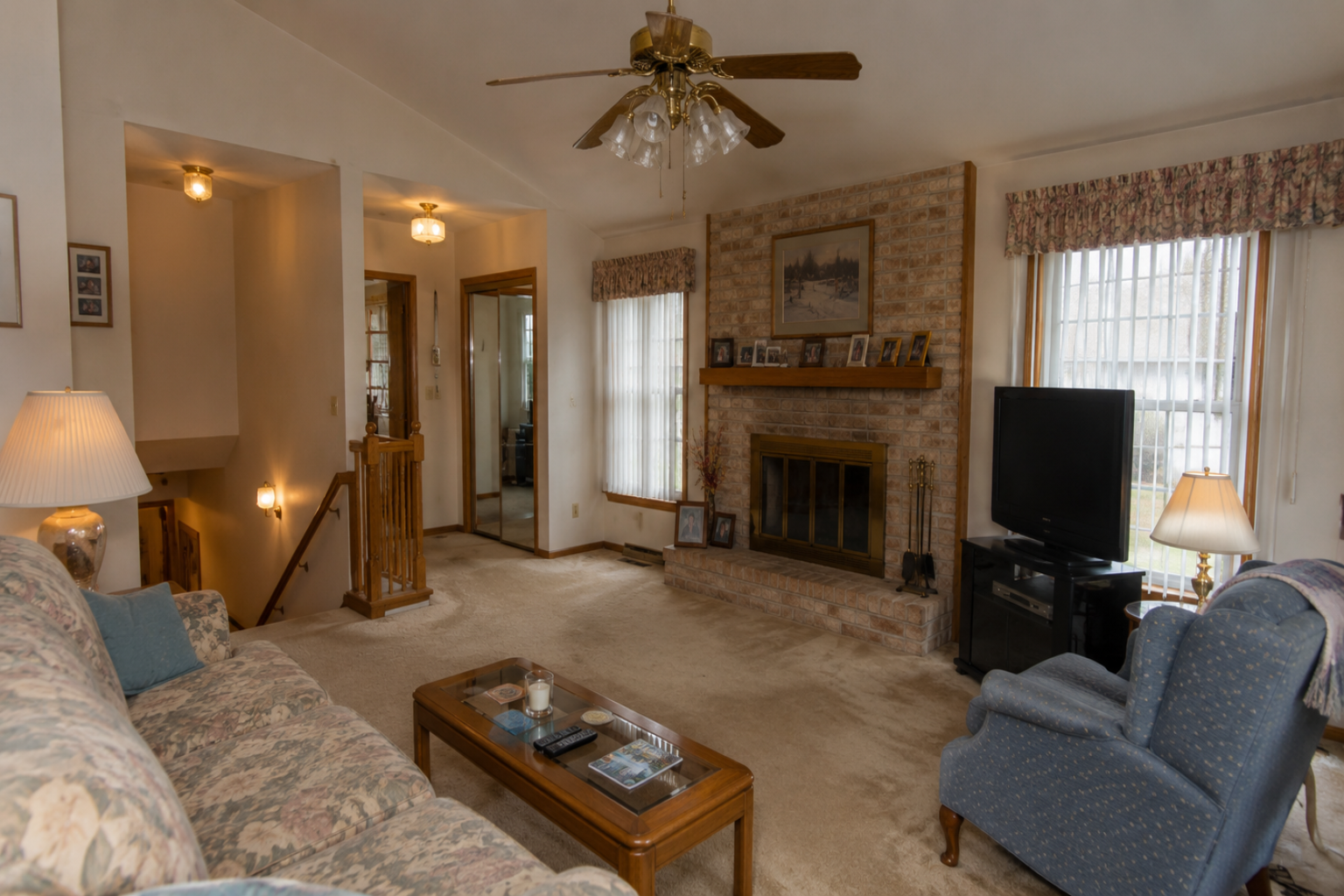
A 1980s interior usually does not look dated because of one bad choice.
It looks dated because the same choices keep showing up.
Oak casing around every door. Oak stair rails. Oak kitchen cabinets. Brass knobs. Brass hinges. Beige carpet. Mirrored closet doors. Vertical blinds. A brick fireplace with shiny doors. A ceiling fan with tulip glass. Almond switches. Textured ceilings. Maybe a vaulted family room that should feel open, but still feels heavy.
The house may have good rooms.
The finish package is doing too much talking.
That is why updating a 1980s house interior should start with the repeated base layers: flooring, trim, doors, lighting, hardware, switches, mirrors, ceiling repairs, and the few original features worth keeping. Decor comes later.
For the whole-house order, start with renovating a 1980s house without making it worse.
What makes a 1980s interior feel dated
The first mistake is blaming one thing.
Oak is easy to blame. Brass is easy to blame. Beige carpet is easy to blame. But most 1980s interiors feel dated because those materials repeat through the whole house without relief.
- Oak repeats on trim, doors, cabinets, rails, fireplace mantels, and built-ins.
- Brass repeats on knobs, hinges, light fixtures, fans, bath fixtures, and fireplace doors.
- Beige repeats on carpet, tile, walls, blinds, outlets, counters, and switches.
- Reflective surfaces repeat through mirrors, glass block, glossy tile, shiny brass, and polished fireplace doors.
One dated item can be fixed.
A whole repeated system has to be sorted.
Sort the interior before you buy anything
Walk the house before choosing paint.
Look for the parts that show up in three or more rooms. Flooring. Trim. Doors. Hardware. Switch plates. Light fixtures. Ceiling texture. Stair rails. Window coverings. Fireplace material. Built-ins.
Then sort each item into four groups.
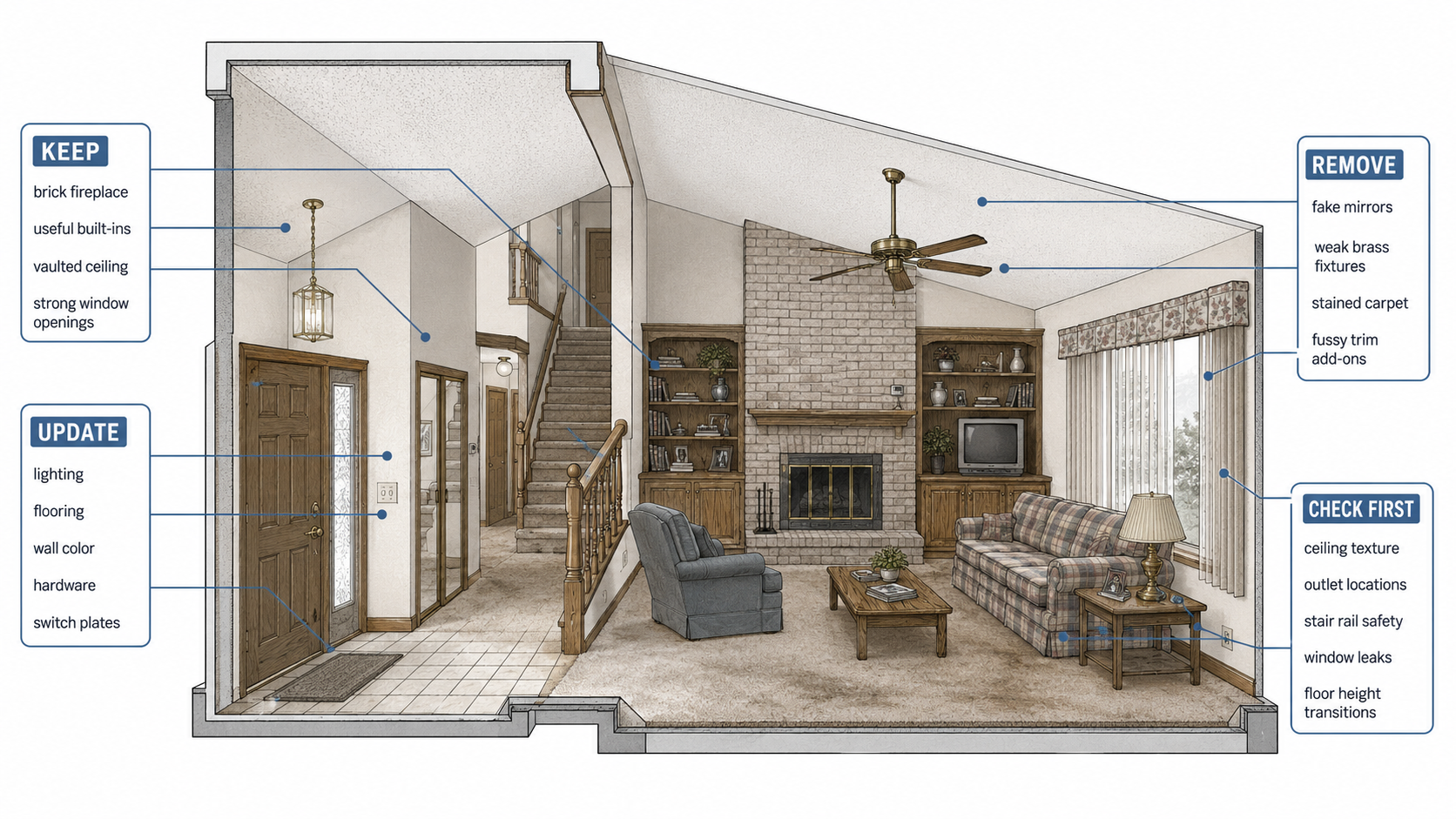
| Keep | Update | Remove | Check first |
|---|---|---|---|
| Brick fireplace, useful built-ins, vaulted ceiling, good window openings | Lighting, flooring, wall color, hardware, switches, stair rail finish | Bad mirrors, stained carpet, fake trim add-ons, weak brass fixtures | Ceiling texture, outlets, window leaks, floor height changes, loose railings |
This keeps the work from looking random.
If you replace door knobs but leave brass hinges, brass bath lights, brass fireplace doors, and brass ceiling fans, the house still reads brass. If you paint the walls but keep yellowed switch plates and vertical blinds, the new color has to fight the old details. If you install flooring before deciding whether walls, cabinets, or built-ins move, you may create bad transitions.
The house needs a base plan before it needs decor.
What still works in many 1980s interiors
A 1980s interior is not all junk.
Many of these houses have useful room sizes, open family rooms, practical kitchens, bigger closets, attached garages, good daylight, and better casual living space than many older houses. Some have vaulted ceilings, brick fireplaces, real wood trim, and built-ins that can be saved.
Do not erase the useful parts because the finishes are loud.
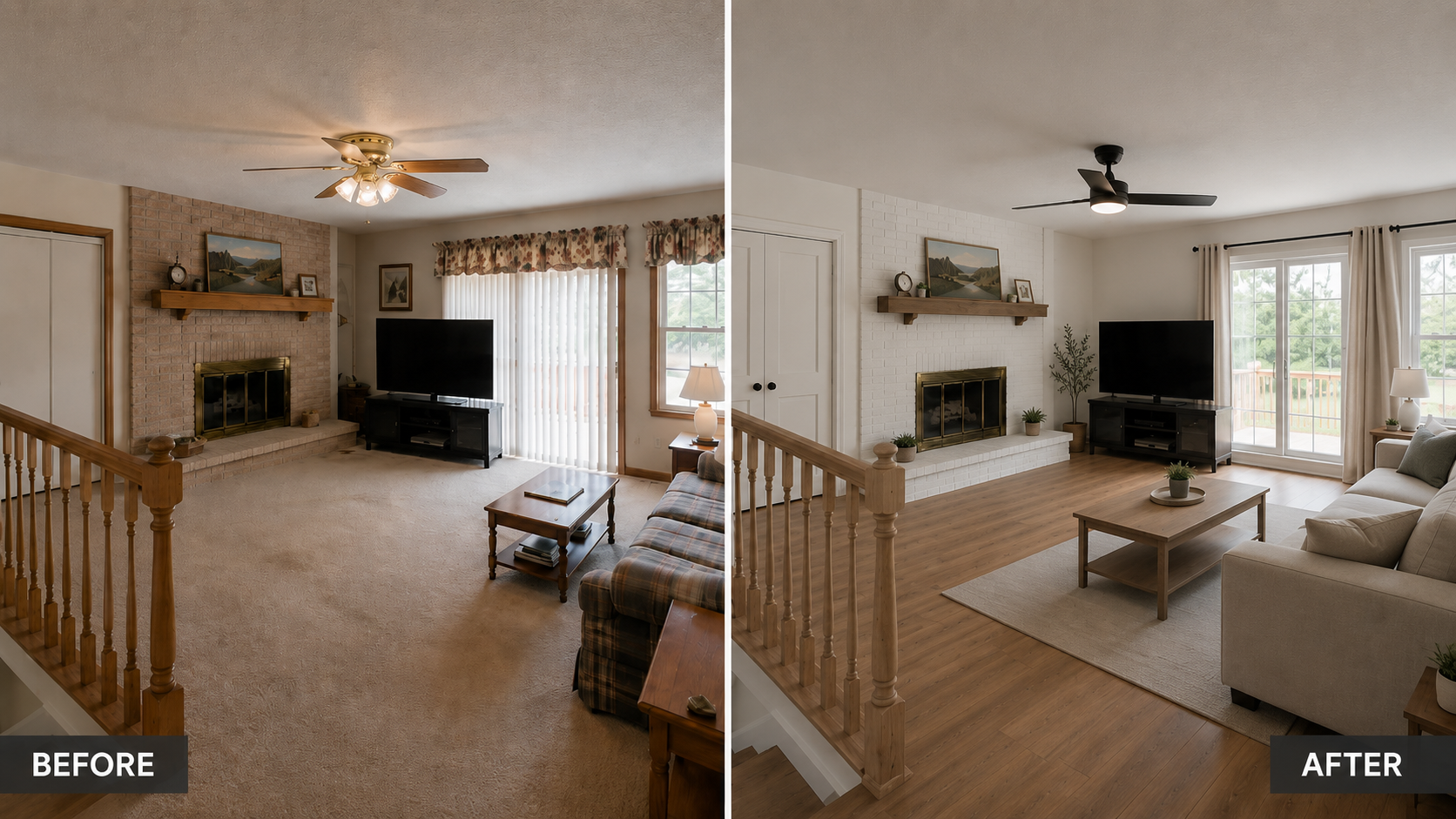
Look for the pieces that give the house structure:
- A fireplace that anchors the family room.
- A vaulted ceiling that brings light and volume.
- A stair or entry that can be simplified instead of rebuilt.
- Window openings that already fit the room well.
- Built-ins with useful storage and decent proportions.
Keep the parts that give the house shape. Calm down the parts that make it feel stuck.
The oak is not always the enemy
Oak gets blamed for most 1980s interiors.
Sometimes it deserves it.
Orange oak trim, hollow-core oak doors, oak cabinets, oak stair rails, oak built-ins, and oak fireplace mantels can make the house feel one-note. But oak is still wood. If it is solid, well installed, and not damaged, it may be worth working with instead of tearing out.
Start by checking the condition.
- Are the baseboards beat up or clean?
- Are the doors hollow-core or solid enough to keep?
- Is the stair rail loose, safe, and worth refinishing?
- Does the oak connect visually to cabinets that may be painted or replaced later?
Paint makes sense when the trim is sound and the house needs a calmer base. Replacement makes sense when the trim is thin, damaged, badly installed, or not worth the prep time. Stain can work too, but mixed oak tones and sun-faded sections can make stain unpredictable.
Test one area before deciding the whole house.
Carpet usually sets the whole mood
Old beige carpet can make a 1980s interior feel stale before you notice anything else.
It holds traffic patterns. It traps odor. It dulls daylight. It makes oak look more orange and wall color more yellow. In raised ranches and split-levels, carpeted stairs can make the entry feel worn before anyone reaches the living room.
Flooring is one of the strongest updates, but it needs to be planned with transitions.
Check where the new floor will meet:
- Kitchen tile, vinyl, or cabinet toe kicks.
- Bathroom thresholds.
- Stair nosings and landings.
- Exterior doors and sliding doors.
- Fireplace hearths and built-ins.
A floor can look good in the family room and still fail at the hall, stair, kitchen, or bath edge.
If cabinets, walls, or built-ins may change later, wait before installing final flooring in those areas. Flooring locks in the next set of decisions.
Brass fixtures are easy to replace, but do it in groups
Brass is one of the fastest 1980s tells.
Door knobs. Cabinet pulls. Hinges. Bath lights. Ceiling fans. Fireplace doors. Entry lights. Chandelier chains. Towel bars.
The mistake is changing one or two pieces and leaving the rest.
Do the house in logical groups:
- Door knobs and hinges.
- Light fixtures and ceiling fans.
- Bath hardware and vanity lights.
- Cabinet hardware after the cabinet decision.
- Fireplace doors after the fireplace plan.
Mixed finishes can work when they are planned. Accidental mixing looks like leftovers.
Lighting usually matters more than wall color
Many 1980s interiors are underlit in the wrong places and overlit by the wrong fixtures.
Big ceiling fans with light kits, fluorescent kitchen boxes, dated chandeliers, small hallway flush mounts, bath light bars, and brass sconces can make the house feel older even after paint.
Start with the job of each room.
- Family room: general light, lamps, fireplace lighting, and a fan that fits the ceiling height.
- Kitchen: ceiling light, under-cabinet light, sink light, and task lighting at counters.
- Hallways: simple low-profile fixtures and switch locations that make sense.
- Bathrooms: face-level light, fan function, and moisture control.
Lighting should happen before final paint when wiring or ceiling repair is involved. New fixtures can mean drywall cuts, ceiling patches, texture repair, and touch-up paint.
If the ceiling texture is being repaired or removed, coordinate lighting at the same time.
Mirrors can make the house feel bigger or cheaper
Large mirrors were common in 1980s interiors.
Some were useful. Many were used to make entries, dining rooms, closets, and bathrooms feel larger. After decades, they often make the house feel dated, flat, and too reflective.
Do not remove every mirror automatically.
A well-placed mirror can still help a dark entry or narrow hall. The problem is usually full mirrored closet doors, wall-to-wall dining mirrors, mirrored fireplace sides, and bathroom mirrors that run too far without lighting or framing.
Remove the mirrors that create glare, duplicate clutter, or make the room feel like a model home from 1987.
Plan the wall repair before removal. Mirror adhesive can tear drywall paper, expose paint shadows, and leave texture damage.
The brick fireplace may be worth keeping
A brick fireplace can be the best part of a 1980s family room.
It can also be the heaviest part.
Before painting, covering, or removing it, look at its role in the room. Does it anchor the seating area? Does it reach the ceiling? Is the brick color fighting the floor and trim? Is the mantel too fussy? Are the brass doors the real problem?
Often the better fix is smaller than people expect.
- Remove shiny brass fireplace doors.
- Simplify or replace the mantel.
- Change the wall color around the brick.
- Improve lighting so the fireplace feels intentional.
Painting brick can work, but it turns the brick into a maintenance surface. Cleaning, limewash, stain, paint, or a new surround all have different consequences. Test before committing.
Vaulted rooms need better light, not more decoration
Many 1980s houses have vaulted family rooms, tall entries, or open living spaces.
That is one of the better parts of the era.
The problem is that the volume was often paired with beige carpet, small lights, heavy fans, vertical blinds, and undersized art. The room feels large but unfinished.
Do not fill the height with random decor.
Fix the base first: lighting, window coverings, flooring, fireplace, trim, and fan scale. A vaulted room can carry a quieter finish plan because the volume already gives it interest.
If the ceiling has stains, cracks, texture issues, or old skylight damage, fix those before paint. Tall repairs are expensive to revisit.
Stairs and railings can date the whole entry
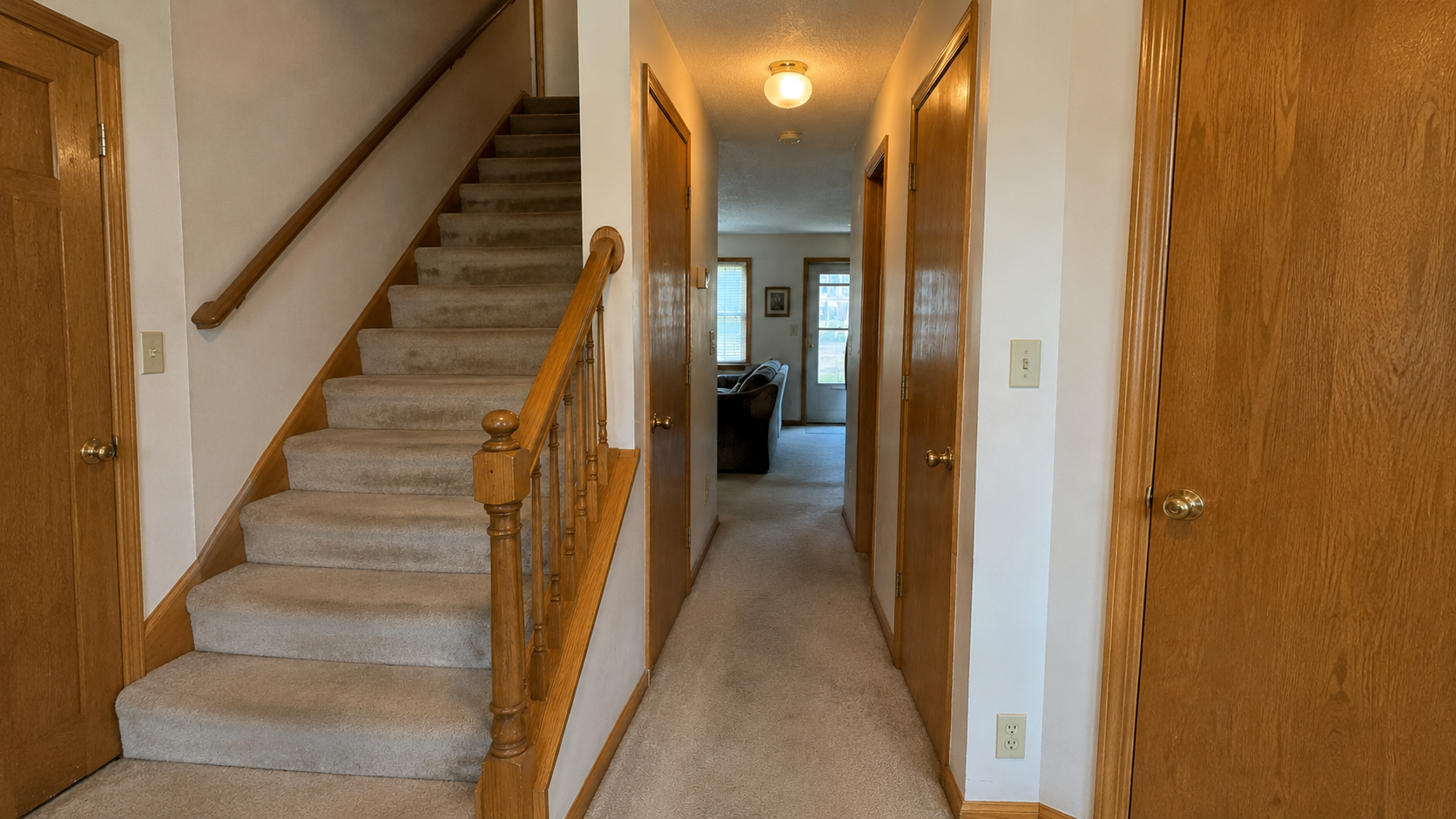
In a split-level, raised ranch, or two-story 1980s house, the stair rail may be the first interior detail people see.
Oak rails, turned spindles, brass caps, beige carpet, and half walls can make the entry feel old even if the living room has been updated.
Check safety first.
A loose rail, wide spacing, weak posts, or worn stair carpet is not just ugly. It can become a fall hazard. Code and inspector expectations vary by jurisdiction, especially when the work becomes more than cosmetic.
After safety, decide whether the rail should be painted, stained, simplified, or replaced. Do not change the rail without thinking about flooring, baseboards, stair nosings, and the wall repair around it.
Doors, hinges, and switch plates add up
Small parts carry a lot of the 1980s look.
Hollow-core doors. Brass knobs. Polished brass hinges. Almond switches. Yellowed outlets. Old thermostat plates. Door stops. Vent covers. Return grilles.
None of these are dramatic alone.
Together, they tell the age of the house.
Change them in the right order. If doors are staying, hardware can be changed early. If doors may be replaced, wait on hinges and knobs. If walls will be painted, replace switches and plates after electrical decisions but before final touch-up. If floors are changing, baseboards and door casing may need to be removed, repaired, or repainted.
Small parts are cheap only when they are not done twice.
Ceiling texture should not be an afterthought
Textured ceilings are common in 1980s houses.
Sometimes the texture is clean and can stay. Sometimes it is stained, cracked, patched, or impossible to blend after lighting work. Removing or skim-coating texture can make the whole house feel cleaner, but it creates dust, cost, and repair work.
Do not scrape or sand unknown ceiling material casually.
If the material may contain asbestos, or if older patching compounds are involved, testing should happen before disturbance. You cannot identify asbestos by sight alone.
Also decide lighting before ceiling work. A smooth ceiling with old fixture scars, bad patching, and new holes cut later is money wasted.
Paint comes later than people think
Paint feels like the obvious first step.
In a 1980s interior, it is usually not.
Paint should follow the decisions that damage walls: electrical changes, mirror removal, trim repair, ceiling repair, flooring work, cabinet changes, and door replacement. Painting too early makes the house feel better for a week and then creates a long list of touch-ups.
Use paint to calm the house after the base layers are decided.
Warm whites, soft taupes, muted greens, clay colors, and quiet grays can all work. The right color depends on floor color, trim choice, brick color, cabinet finish, window light, and roof overhangs. A dark room with small windows needs a different paint strategy than a vaulted family room with strong daylight.
Room-by-room interior order
You do not have to renovate every room at once.
But the order still needs to make sense.
| Room or area | Start with | Wait on |
|---|---|---|
| Entry and stairs | Rail safety, lighting, flooring, door hardware | Final paint until rail and floor work are done |
| Family room | Fireplace, lighting, flooring, fan, window coverings | Furniture and decor until the base is calm |
| Hallways | Trim, doors, switches, flooring transitions | Wall color until trim decisions are made |
| Dining room | Mirror removal, light fixture, flooring connection | New furniture before wall repair |
| Bedrooms | Carpet, doors, closet tracks, lighting, outlets | Decor until flooring and trim are settled |
The one-room trap
The first finished room can make the rest of the house look worse.
You paint the living room. Then the hallway oak looks louder. You replace the carpet downstairs. Then the stair carpet looks dirty. You change the family-room fan. Then every brass knob in the house stands out. You remove the dining room mirror. Then the wall texture has to be repaired.
This is why 1980s interiors need a house-wide base plan.
You do not need to finish every room at once. You do need to know the finish language before starting the first room. Decide on flooring direction, trim color, hardware finish, switch color, door plan, ceiling strategy, and lighting style early.
Otherwise each room becomes its own small remodel, and the house never feels settled.
What to keep, update, remove, and check first
| Interior feature | Best decision | Why it matters |
|---|---|---|
| Brick fireplace | Usually keep, then simplify | It anchors the room, but brass doors or a heavy mantel may date it |
| Oak trim | Paint, refinish, or replace after checking condition | It repeats through the whole house and controls the base look |
| Beige carpet | Replace when worn, stained, or trapping odor | It affects smell, light, color, and floor transitions |
| Mirrored doors | Remove or replace where they dominate | They reflect clutter and make rooms feel dated |
| Brass hardware | Update in groups | One-off hardware changes look accidental |
| Ceiling texture | Check before cutting, scraping, or patching | Repairs can be hard to blend and some materials may need testing before disturbance |
FAQ
How do I update a 1980s house interior?
Start with the repeated base layers: flooring, trim, doors, lighting, hardware, switches, mirrors, and ceiling repairs. Decor comes after the house has a calmer base.
Should I paint 1980s oak trim?
Paint can work if the trim is solid and worth saving. Replace trim that is damaged, too thin, poorly installed, or not worth the prep. Test stained or painted finishes before doing the whole house.
What makes a 1980s interior look dated?
The repeated mix of oak, brass, beige carpet, mirrored doors, vertical blinds, textured ceilings, glass block, old light fixtures, and almond switches usually dates the house.
Should I remove mirrored closet doors?
Often, yes. Mirrored doors can make bedrooms and entries feel dated and reflective. If they are removed, plan for wall, track, floor, and trim repair.
Is a brick fireplace worth keeping?
Usually, yes, if it anchors the room and is in good condition. Try simpler changes first: remove brass doors, change the mantel, improve lighting, and calm the surrounding finishes.
What flooring works best in a 1980s interior?
The right floor depends on the house, budget, stairs, kitchen connection, and room transitions. Durable wood, engineered wood, tile, or quality vinyl plank can work, but transitions need to be planned first.
Should I replace all brass fixtures at once?
Replace them in groups. Door hardware, lights, bath fixtures, and cabinet hardware should each follow a plan so the house does not end up with five random finishes.
Should I paint before replacing flooring?
Usually no. Flooring, baseboards, trim repair, mirror removal, and electrical changes can damage walls. Paint should come after the messy work where possible.
How do I make a 1980s interior modern without making it generic?
Keep useful original features like a brick fireplace, vaulted ceiling, strong windows, or built-ins. Then calm the repeated dated layers instead of forcing a completely different style.
What should I check before removing ceiling texture?
Check whether the texture or patching material needs testing before disturbance. Also plan lighting, drywall repair, and paint together so the ceiling is not repaired twice.