
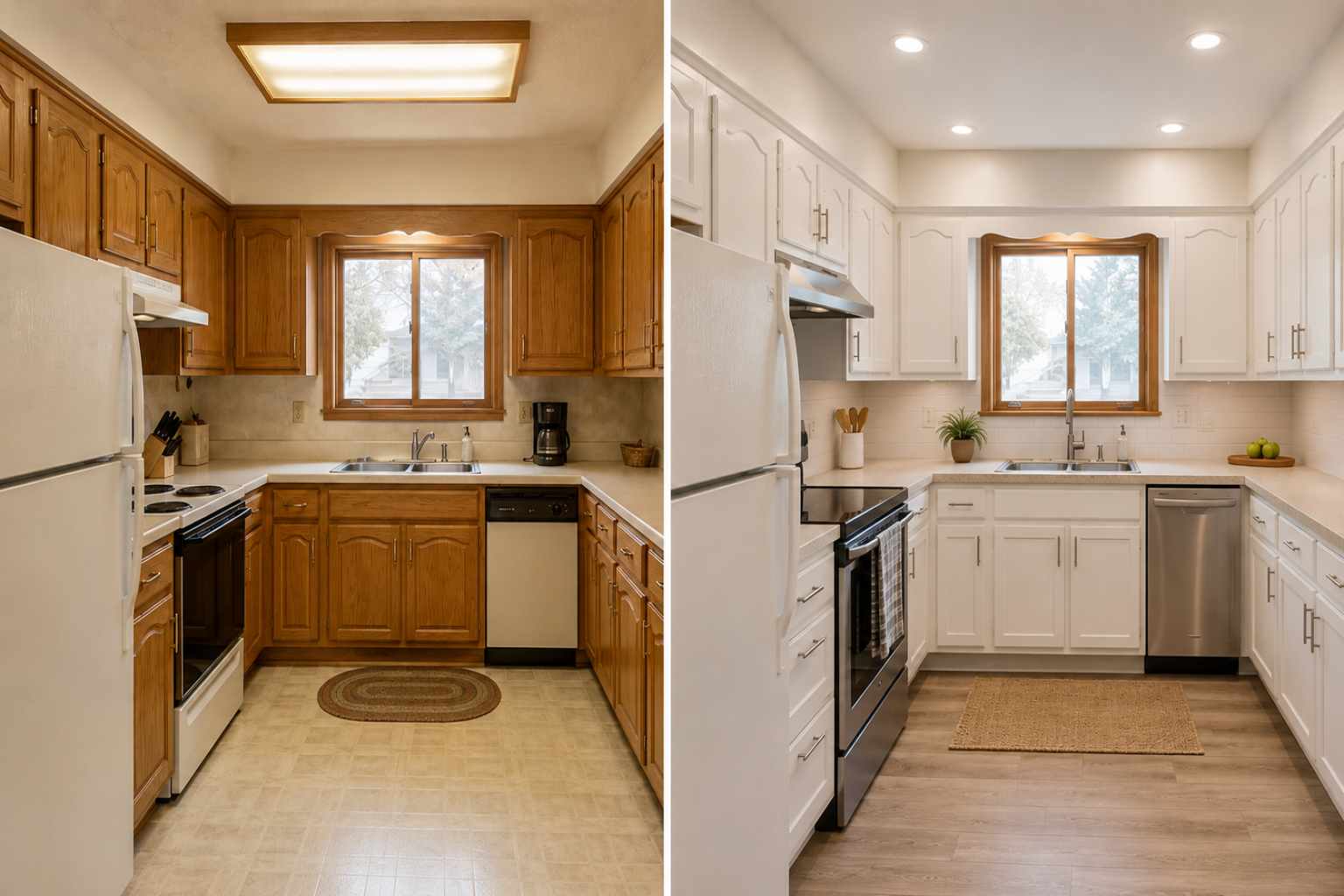


Nobody agrees on kitchen cabinets. Paint them or replace them, keep the oak or ditch it, pull the soffit or leave it — the argument runs the same in every house, and it usually starts before anyone has looked closely at what they actually have. This page is about making that look first, then deciding. For the full room sequence, start with 1980s kitchen remodel. For the before-and-after photo breakdown, use 1980s kitchen before and after. For the whole-house order, see renovating a 1980s house without making it worse.
The Cabinet Decision Comes Before the Countertop
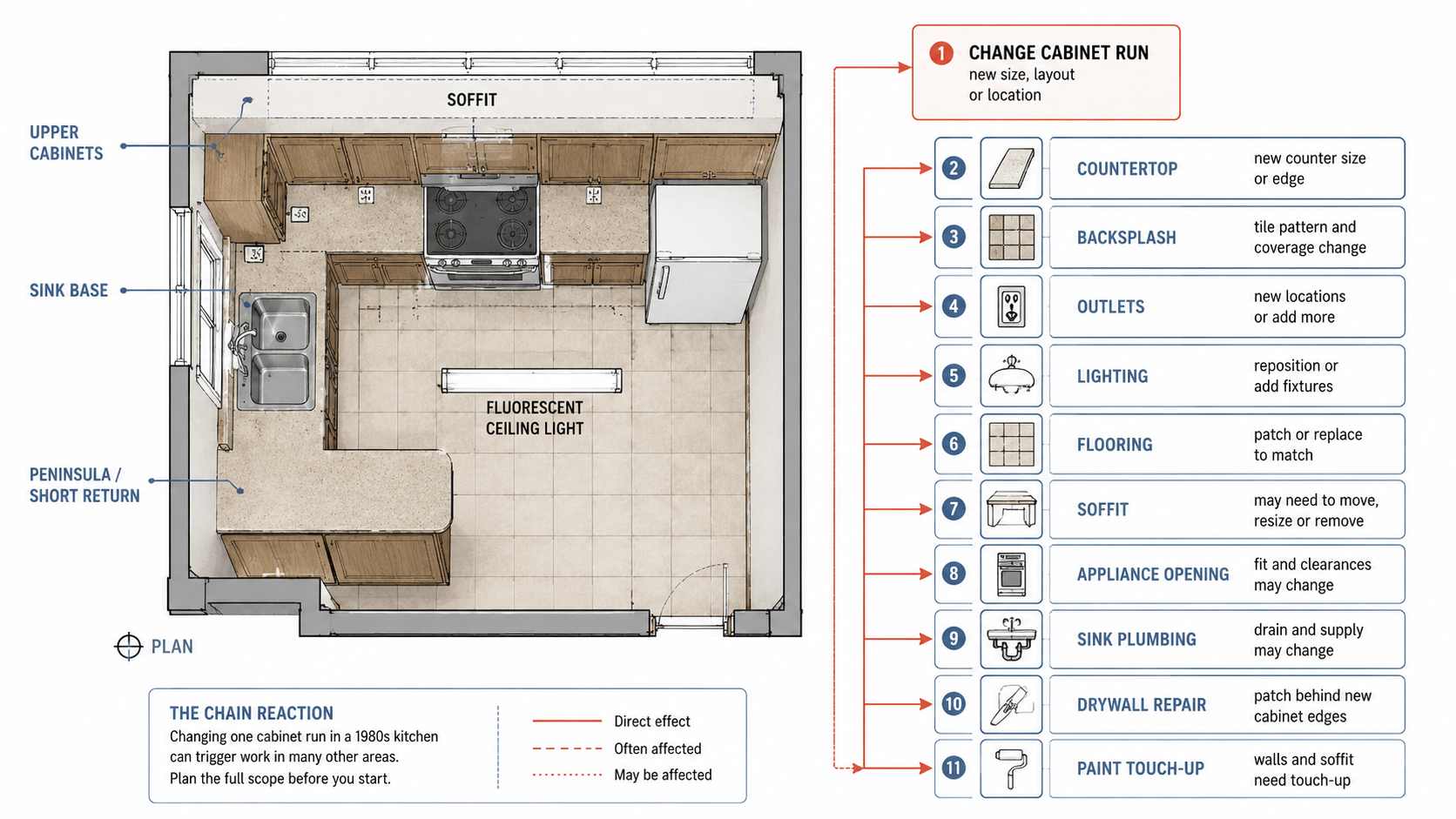
Countertops make old cabinet decisions permanent. Set new counters on weak boxes, a swollen sink base, a poor layout, or doors you already dislike, and you have trapped yourself: pulling those cabinets later can wreck the counters or force a full redo of work you just paid for. So before you price quartz, butcher block, laminate, tile, or backsplash, the cabinets have to answer a few plain questions — whether the boxes are solid, whether the layout works, whether the sink base is dry and square, whether the doors are worth saving, whether the soffit is staying, and whether the appliance openings are the right size. If those answers are not clear yet, the countertop conversation is early.
When 1980s Oak Cabinets Are Worth Keeping
Not every 1980s oak kitchen needs new cabinets. A lot of builder-grade oak was plain but serviceable, and the parts that matter often survive: the boxes may still be square, the drawer slides usable, the layout fine, and the doors dated rather than damaged.
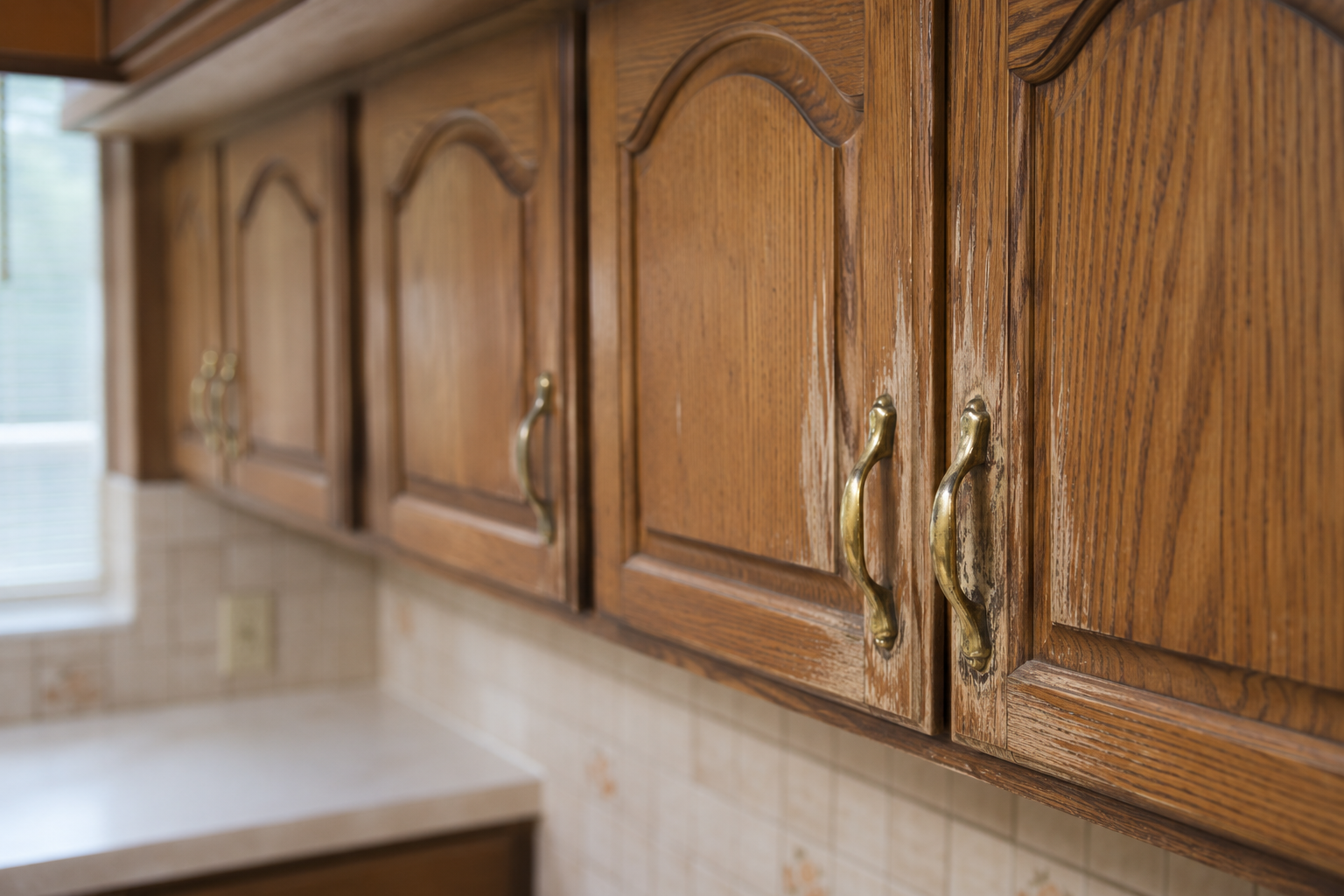
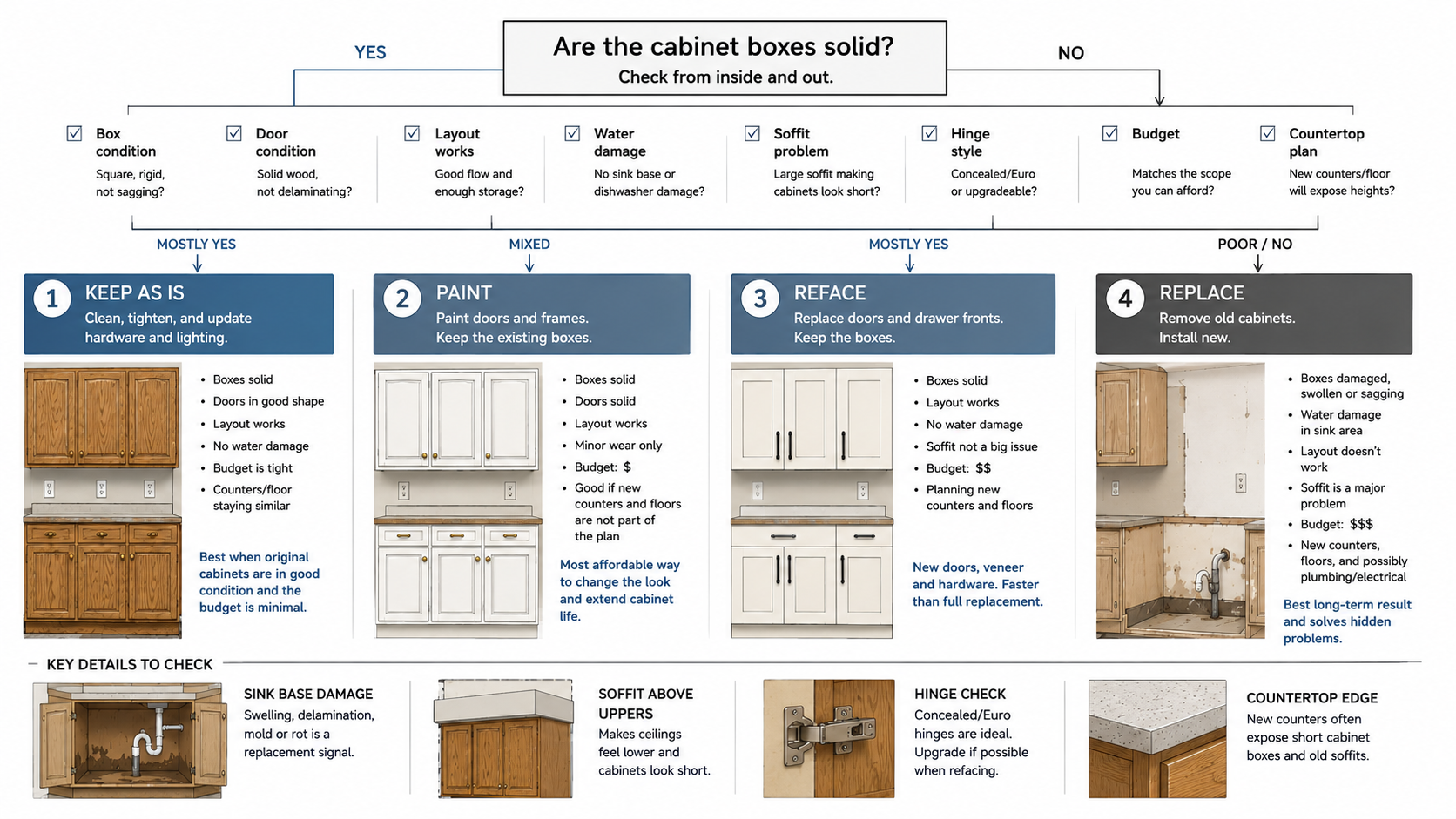
Keeping the cabinets starts to make sense when the boxes are solid plywood or well-built particleboard with no swelling, the sink base is dry rather than crumbling, the drawers still run without falling apart, the layout gives enough prep space, storage, and appliance clearance, and the soffit does not need to come out for the kitchen to work. Put simply, cabinets are worth keeping when the problem is mostly finish. They are not worth saving just because replacement costs more — that is a different decision, and it deserves to be made on its own terms.
When Paint Makes Sense
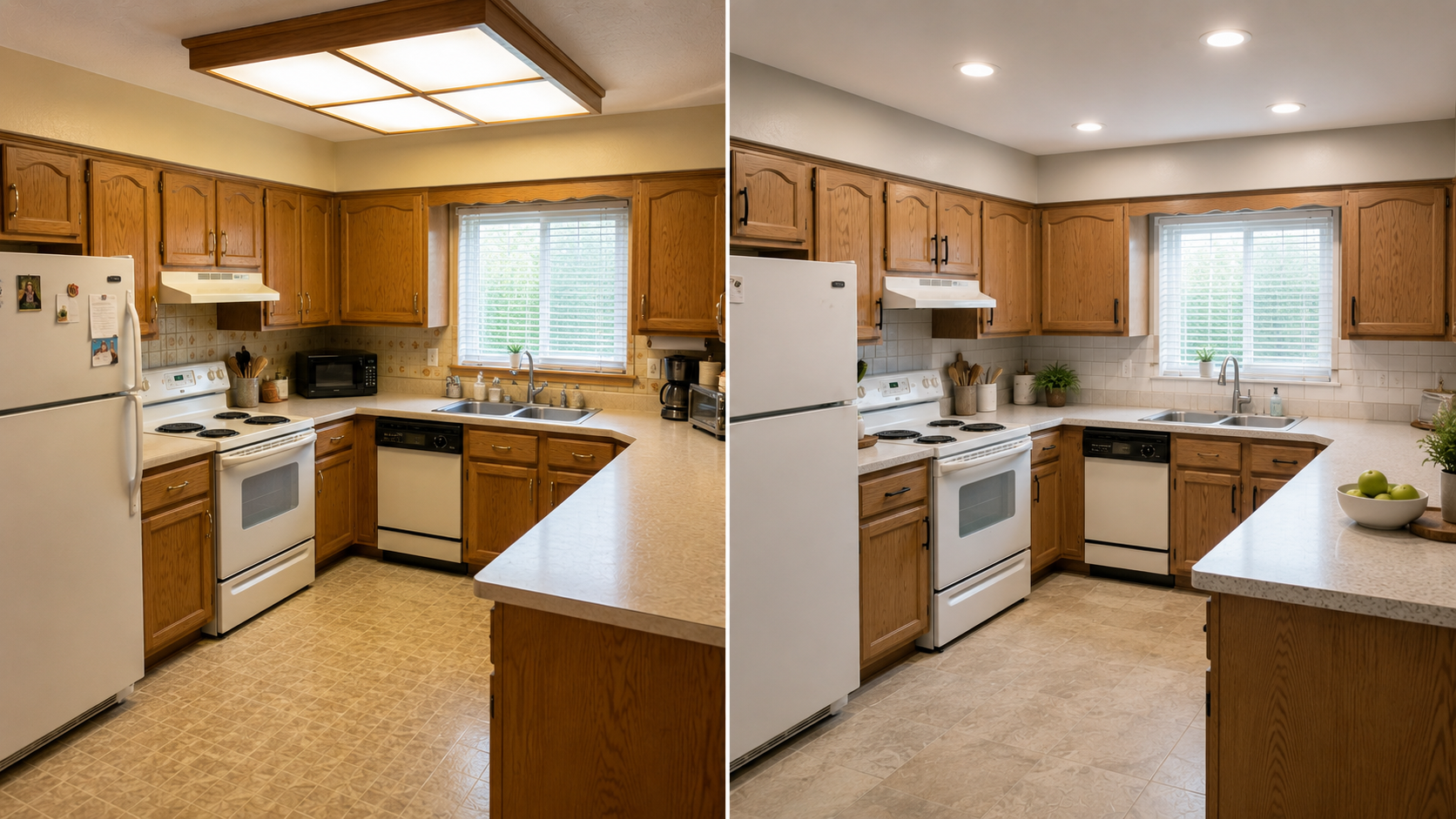
Paint works when the boxes are good and the door style is not fighting the room too hard. A painted oak kitchen can look genuinely clean, especially when the flooring, lighting, wall color, hardware, and backsplash are handled together, and paint also rescues oak that has gone orange, uneven, or repeated through too many rooms. It is strongest when you can keep the layout and fix the rest of the kitchen around it.
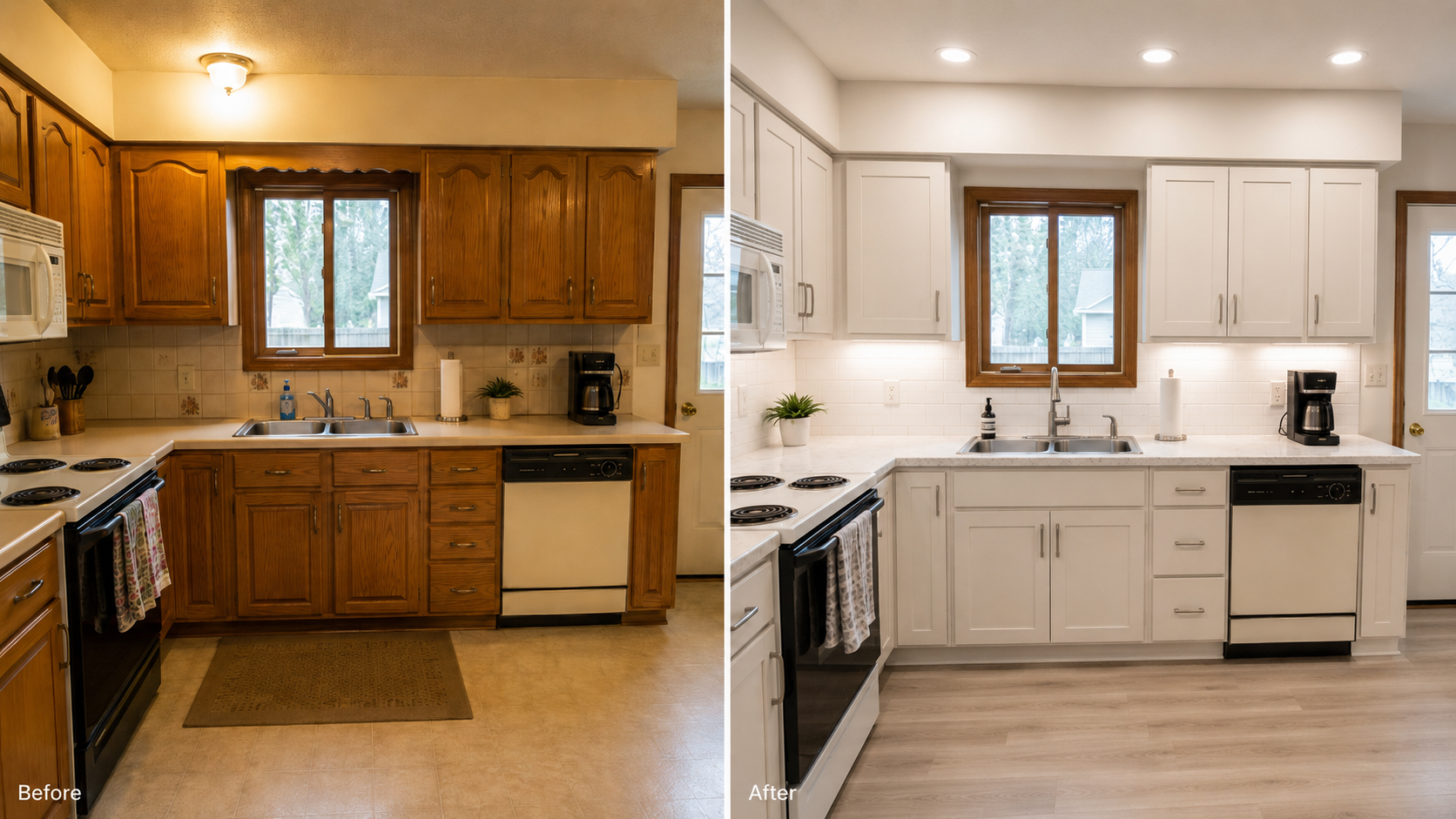
The good candidates share a short list of traits: solid boxes, doors that close properly, little or no water damage, no major layout problem, and faces that can actually be cleaned, sanded, primed, and painted. Notice that none of those is the color. The prep is what decides whether the job lasts, because oak grain, grease, old polish, worn varnish, and ordinary kitchen moisture will all wreck a rushed finish — skip the cleaning, sanding, priming, and curing and the paint chips around the handles within months.
When Paint Is a Waste of Money
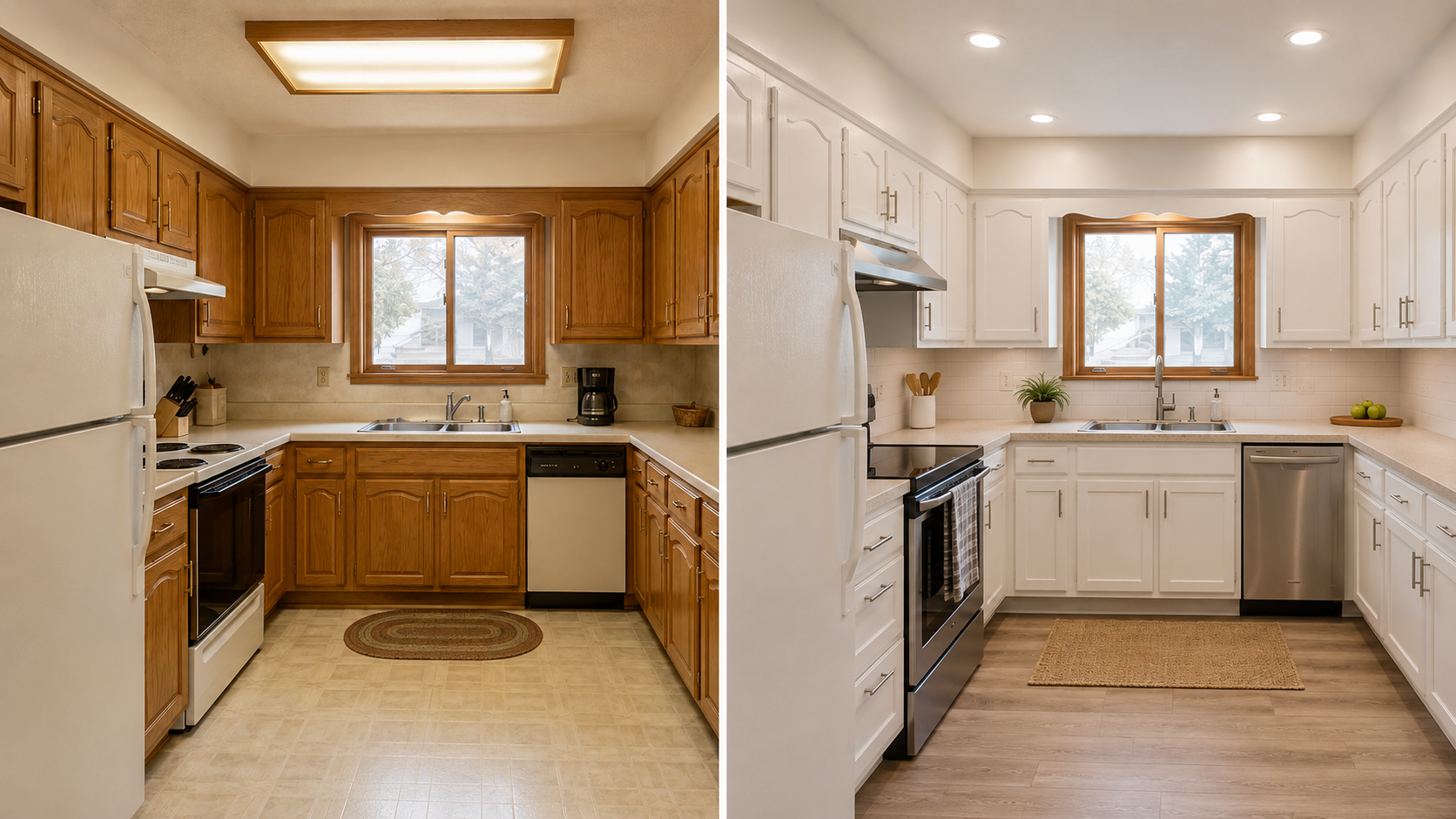
Paint cannot fix a bad cabinet, and it cannot fix a bad kitchen plan. Spending it on swollen boxes, warped doors, a cramped layout, failing drawers, a soft sink base, or wrong appliance openings just puts a fresh coat over the real problem. It also loses to door shape: I have seen a careful paint job go down over arched raised-panel doors and still read 1980s the day it dried, because the profile was the thing dating the room, not the color. As a rule, paint is the wrong call when the sink cabinet has water damage, the boxes are out of square, the layout blocks appliance doors or work zones, a soffit removal is going to change the cabinet height anyway, or the doors and drawer fronts are too far gone to prep cleanly. Once the list runs to repair plus new doors, new hinges, new drawers, new paint, and new counters, refacing or replacement is usually the cleaner path.
Refacing Works Only When the Boxes Are Good
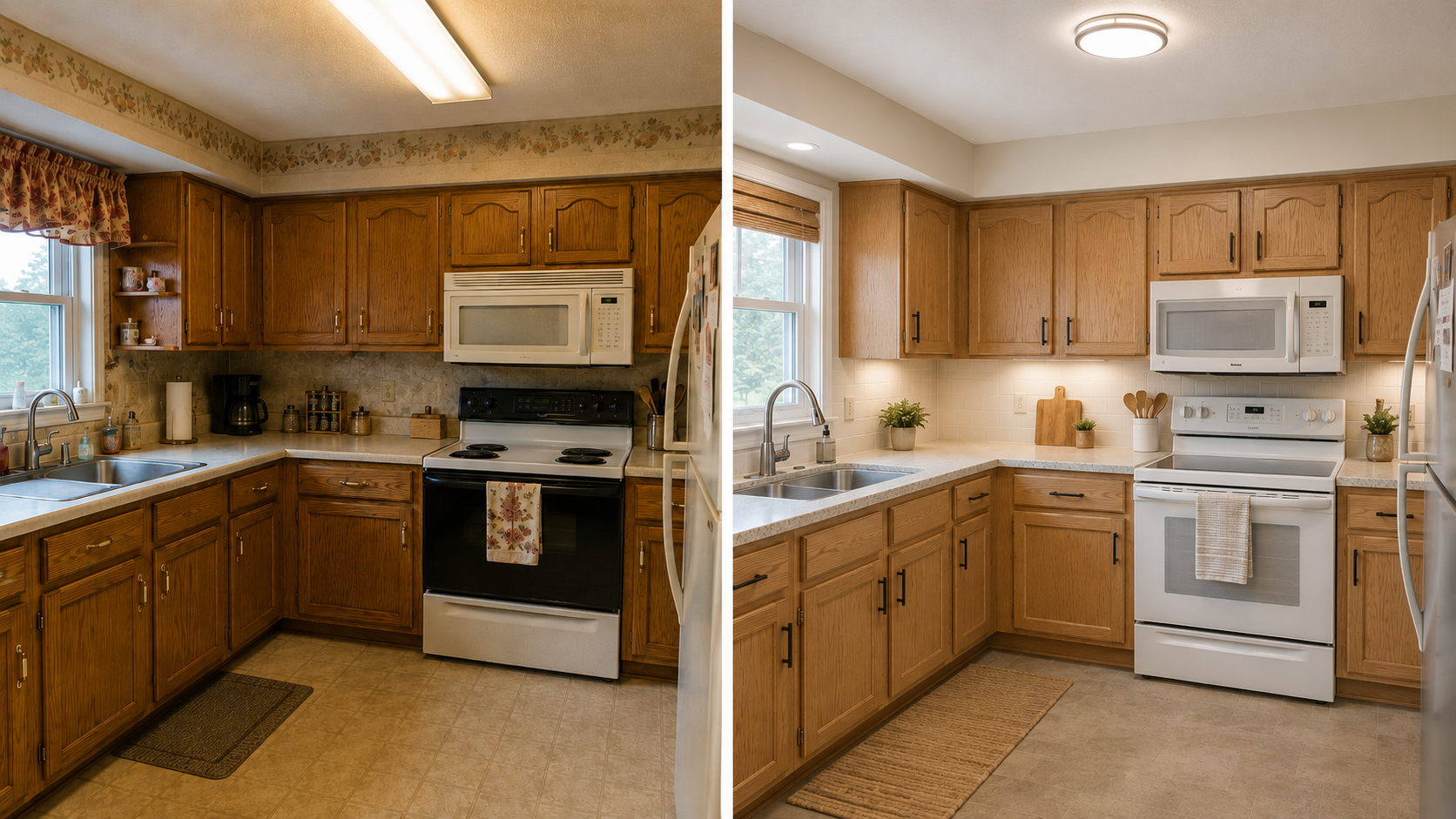
Refacing is a real middle option: it keeps the boxes and changes everything you see — doors, drawer fronts, end panels, veneers, and hardware — so a kitchen can look much newer without tearing every cabinet out. But it is not magic, because the boxes still decide the job. It makes sense when the layout works, the boxes are strong, the run is worth keeping, and you want a new door style short of a full rebuild. It does not make sense when the cabinets are poorly arranged, water-damaged, too shallow for modern storage, or tied to a soffit that has to come out. And it carries one trap worth naming: new doors can make everything they sit next to look worse. I have watched a fresh reface go in and turn the almond outlets, the old counters, and the fluorescent box into the most tired things in the room.
When Replacement Is the Better Call
Replacement is right when the problem is structural, functional, or layout-based — not because the kitchen has to become luxury, but because the old cabinets are no longer a sound base for the next ten to twenty years. That is the case when the boxes are swollen, sagging, or badly patched, when the layout wastes space or blocks appliances, when the sink base has taken repeated water damage, when pulling the soffit changes cabinet height and layout, or when the kitchen needs new electrical, lighting, plumbing, flooring, and counters anyway. It costs more up front, but it is often the move that keeps you from paying twice for counters, backsplash, flooring, and labor. For a room-level look at what those cabinet decisions change visually, see 1980s kitchen before and after.
The Cost Trap: Paying Twice (and Why Order Is the Real Decision)
Here is the part the paint-versus-replace roundups skip, and it is the spine of this whole page: the cheapest cabinet option turns expensive when it is done in the wrong order. Paint first, then decide the doors are wrong. New counters first, then find the boxes are weak. New flooring first, then pull cabinets and expose an unfinished gap. New backsplash first, then realize you needed another outlet behind it. New hardware first, then replace the doors it was screwed to. Each of those is a small, sensible-looking step that quietly commits you to the steps around it, and that is how a modest update becomes a callback list.
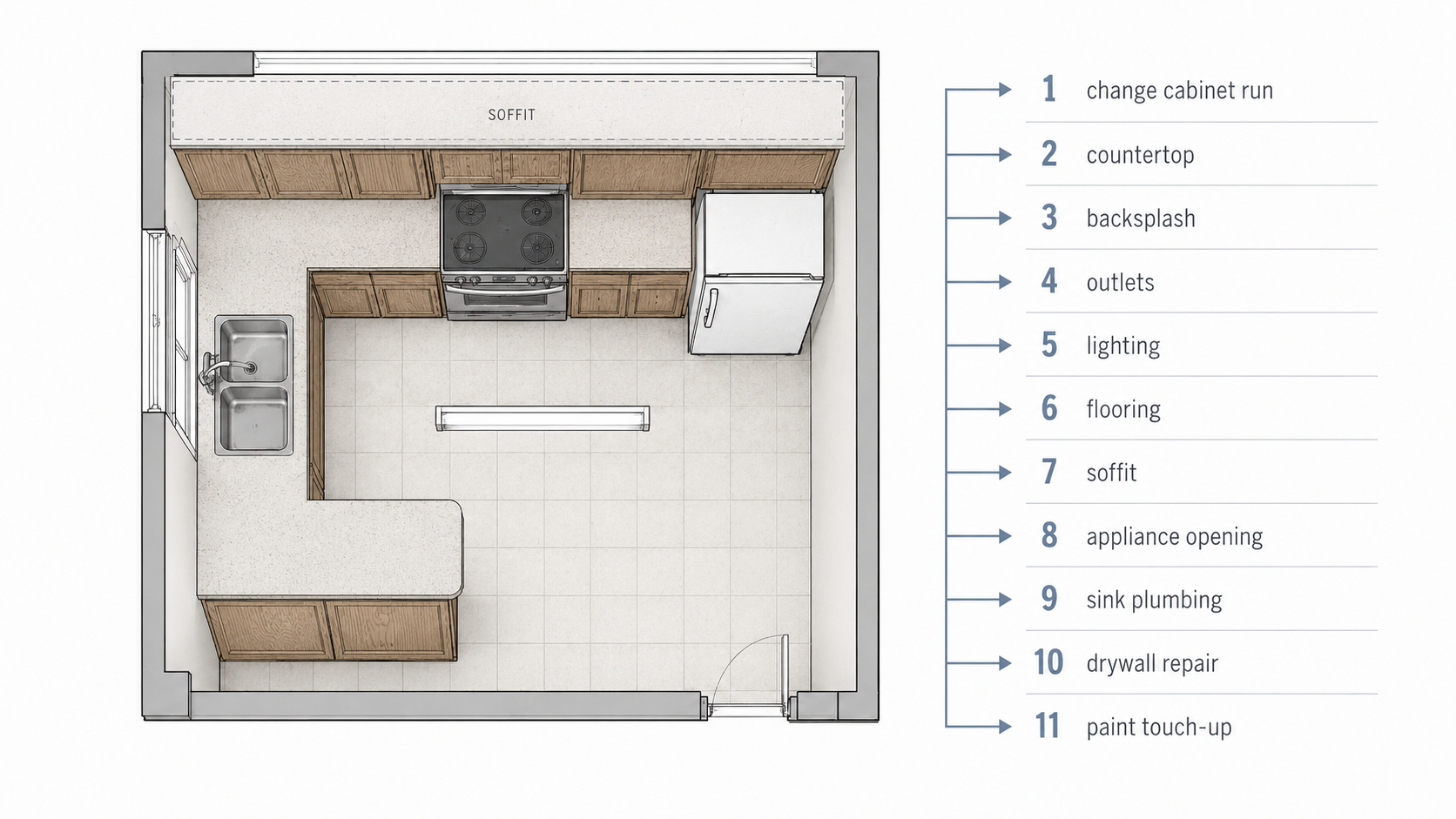
I have pried a two-year-old countertop off a sink base that had already gone soft underneath, and the top did not survive the trip — that is the bill nobody budgets for, the one that exists only because the order was backwards. So the cabinet decision has to land before the countertop template, the backsplash, the final flooring, the electrical finish work, and the paint touch-ups. The honest catch is that you cannot fully know what you are dealing with from a walk-through: you can pull a door, probe the sink base, and check the boxes for square, and some of the condition still will not show until the counter is off and the wall is open. That uncertainty is exactly the argument for sequence — make the expensive, permanent decisions first, while the cheap, reversible ones can still bend around what you find.
The Soffit Can Change the Whole Cabinet Plan
Many 1980s kitchens have a soffit above the upper cabinets, and you cannot assume it comes out. Some are empty, some only close the gap above short uppers, and some hide ductwork, wiring, pipes, or framing that turns a quick removal into a real job. Before you settle on cabinet height, the soffit has to be checked — often by opening a small section — because what is inside it drives the upper cabinet height, the trim, the ceiling repair, the lighting, and the cabinet cost. If it stays, make it look intentional rather than ignored; if it comes out, plan the ceiling, lighting, cabinets, and wall repair as one job. The fuller treatment of removing versus quieting a soffit lives on the before-and-after page.
Hardware, Hinges, and Door Style Matter More Than Color
Color gets too much attention. Door shape, hardware, hinge style, and cabinet proportions usually decide more than the paint does: an arched raised-panel oak door can still read 1980s after paint, exposed brass hinges fight new pulls, small knobs look weak on heavy doors, and oversized modern pulls look forced on narrow stiles. The fastest way I have killed a bad choice is to finish one real door and stand it next to the actual floor, counter, backsplash, and wall color — it tells the truth a screen never will. Before committing the whole kitchen, test one complete cabinet area:
- Clean and prep a sample door.
- Test the paint or stain direction on it.
- Hold up the hardware you actually plan to use.
- Look at all of it together, against the floor, counter, backsplash, and wall.
Counters and Backsplash Can Make Old Cabinets Look Worse
New surfaces expose old ones. A crisp countertop next to tired oak reads more orange, a bright backsplash makes worn varnish and old hinges jump out, and a thick or waterfall edge looks strange on thin 1980s boxes. Old cabinets can absolutely live with new counters, but the material has to respect the base — simple counters tend to beat loud ones here, quiet tile beats busy patterns, and a modest cabinet update usually wants calmer surfaces rather than another strong finish competing for the eye. If the cabinets are staying, choose counters and backsplash that support them. If the counters and backsplash are meant to be the showpiece, that is usually a sign the cabinets need more than paint.
Lighting Changes the Oak More Than People Expect
Oak shifts color under different light — warm bulbs push honey oak toward orange, a fluorescent box flattens the whole room, and weak under-cabinet light leaves counters dark even after new paint and hardware — so the lighting belongs in the cabinet decision, not after it. If the uppers are staying, under-cabinet lighting does a lot of quiet work; if they are being replaced, wire the lighting before the cabinets and backsplash go in rather than cutting into finished surfaces later. The fuller lighting walkthrough, including the fluorescent-box removal, is on the before-and-after page.
Before You Sand, Scrape, or Demolish
Cabinet work makes dust before anyone calls it demolition. Sanding old finish, cutting through wall patches, pulling a soffit, lifting flooring at the cabinet edge, or tearing out a backsplash all disturb the material around the cabinets. A 1980s house sits past the main pre-1978 lead-paint cutoff, so lead is less of a concern than in older homes, but the real hazard here is underfoot: some resilient flooring and mastic from this era can contain asbestos, and the old, unknown floor layers under 1980s cabinets are exactly what gets torn into during a cabinet job. Do not sand, grind, scrape, or rip out unknown material casually — if a suspect material is going to be disturbed, test it first or have a qualified contractor handle it.
Best Update Order for 1980s Kitchen Cabinets
| Step | Decision | Why it matters |
|---|---|---|
| 1 | Inspect boxes, doors, drawers, sink base, and soffit | Finds water damage, weak boxes, and hidden scope before finishes |
| 2 | Decide keep, paint, reface, or replace | Locks in the cabinet path before counters and flooring |
| 3 | Plan lighting, outlets, and appliance openings | Prevents cutting into finished backsplash, drywall, or cabinets later |
| 4 | Choose counter and backsplash | Matches the surface choices to the cabinet decision |
| 5 | Handle flooring and transitions | Avoids gaps, height problems, and trapped appliances |
| 6 | Finish hardware, paint, and touch-ups | Keeps final details from being damaged by rough work |
The order is slower at the start and far cleaner at the end, which is the whole point.
Keep, Paint, Reface, or Replace?
| Option | Best when | Watch out for |
|---|---|---|
| Keep | The cabinets are solid, the layout works, and the oak can be balanced with lighting and surfaces | The kitchen may still feel dated if hardware, floor, and backsplash stay old |
| Paint | The boxes are good, doors are usable, and the main problem is finish color | Poor prep, oak grain, grease, and chipping near handles |
| Reface | The boxes and layout are good, but the doors are too dated | Refaced cabinets can expose old counters, floors, and lighting |
| Replace | The layout, boxes, sink base, soffit, or appliance openings are wrong | Higher cost, longer schedule, and more trades involved |
FAQ
Should I paint my 1980s oak kitchen cabinets?
Paint makes sense if the boxes are solid, the layout works, and the doors are worth keeping. It is a poor choice if the boxes are swollen, the doors are damaged, or the layout already needs major changes.
Are 1980s oak cabinets worth keeping?
They can be. Keep them when the boxes are solid, the sink base is dry, the drawers work, and the layout still functions. Replace or reface them when the structure, layout, or door style is the main problem.
Is it better to paint or reface old kitchen cabinets?
Paint changes the color; refacing changes the visible door and drawer style. Paint is better when the doors are acceptable, refacing when the boxes are good but the door style is too dated.
When should I replace 1980s kitchen cabinets?
When the boxes are damaged, the sink base is soft, the layout wastes space, appliance openings are wrong, or the soffit and cabinet height need a full redesign.
Can I update 1980s cabinets without replacing them?
Yes. Sound cabinets can be improved with paint or refinishing, new pulls, better hinges, lighting, calmer wall color, simpler backsplash, and better flooring — as long as the layout works.
Should I remove the soffit above 1980s kitchen cabinets?
Only after checking what is inside. Some are empty; others hide ductwork, wiring, pipes, or framing, and removal can pull in ceiling, cabinet, and lighting work.
What cabinet hardware works with 1980s oak cabinets?
Simple pulls or knobs usually beat oversized trendy hardware. Test it on one door and look at it with the cabinet color, hinge finish, counter, backsplash, and floor.
Should I do counters before painting cabinets?
No. Decide the cabinet path first. New counters can trap you into keeping weak boxes or make a later replacement more expensive.
Why do painted oak cabinets chip?
Usually poor cleaning, weak sanding, the wrong primer, grease residue, heavy use near handles, or not letting the finish cure properly.
Can old cabinets make new flooring harder?
Yes. Cabinets can trap old flooring, create height changes, or leave gaps if they come out later, so settle the cabinet plan before the final floor goes in.