

Bad roof decisions usually start with the picture, not the house. The roof looks good in isolation, but once it lands on the wrong plan, the wrong climate, or the wrong budget, it starts causing problems fast.
A home roof design has to do more than look interesting. It has to shed water, deal with wind, fit the wall heights below it, work with the structure, and still make sense years later when it needs repair.
This page cuts through the noise. It focuses on the roof designs that matter most for homes, what each one does well, where each one starts to fail, and how to choose a form that fits the building instead of fighting it. If you want a broader roof-family breakdown first, see Types of Roof Lines: Which One Fits Your Home?.
Common Home Roof Designs at a Glance
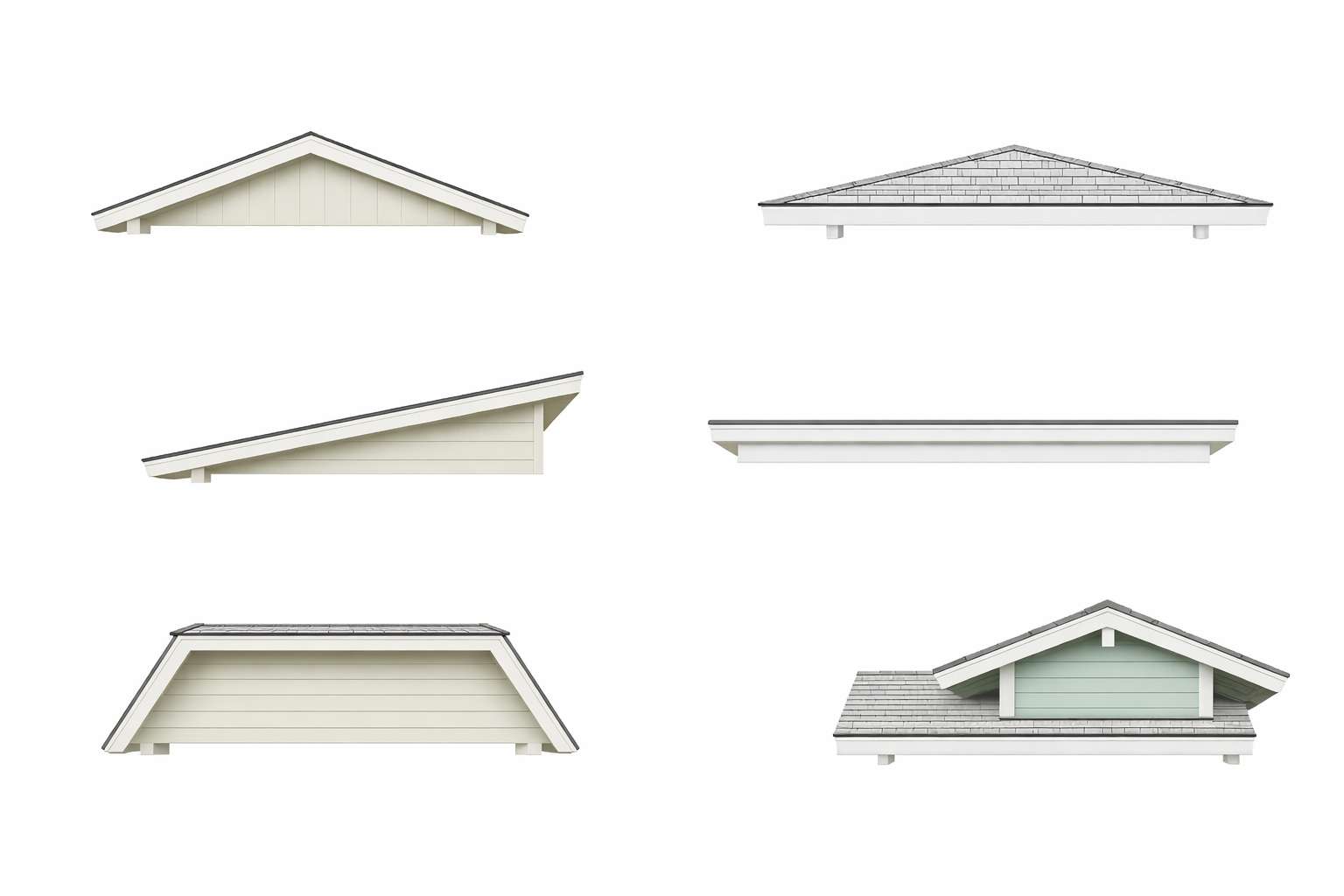
Illustration by ArchitectureCourses.org. Comparison of common roof line types showing gable, hip, shed, flat, mansard, and Dutch gable forms.
| Roof design | Best when | Watch for |
|---|---|---|
| Gable | You want a simple, proven roof that handles rain and snow well. | Wind exposure at gable ends if detailing and bracing are weak. |
| Hip | You want a calmer roof mass and better wind behavior. | More cuts, more labor, and more complexity than a gable. |
| Flat or low-pitched | You want a modern profile and have the drainage details to support it. | Ponding, waterproofing failures, and bad edge detailing. |
| Shed or skillion | You are designing a small house, a clean addition, or a modern narrow volume. | Awkward proportions on larger houses if the massing is weak. |
| Mansard or gambrel | You want more upper-floor volume and a stronger profile. | More framing transitions and more expensive envelope work. |
| Butterfly or mixed roofs | You are solving a real design problem, not just chasing a look. | Valleys, drainage risk, and unnecessary complexity. |
The simplest way to think about roof design is this: start with the house mass, then the climate, then the budget, then the style. Not the other way around.
The Roof Designs That Make the Biggest Difference on a House
Gable roof

Gable roof with two sloping sides meeting at a ridge, still one of the cleanest and most useful roof forms for houses.
A gable roof is still the default answer for a reason. It is easy to read, easy to build, and easy to make work on traditional houses, small houses, and a lot of new construction.
It drains well. It gives you attic volume. It can support vaulted interiors without making the whole house feel overworked. If the plan is simple, a gable roof usually keeps the building clear and disciplined.
- Best for: rain, snow, straightforward framing, and houses that do not need a complicated roof story
- Less ideal for: very high-wind exposure without careful bracing and connection detailing
- Good fit: Colonial, Craftsman, Cape Cod, farmhouse, and many smaller modern houses
If you are designing on a tighter budget, or the house is small enough that roof complexity will overwhelm it, a gable is often the right answer. The same logic applies on pages like Simple Roof Design for a Small House.
Hip roof

Illustration by ArchitectureCourses.org. Comparison of common hip roof forms: intersecting hip, pyramid hip, and standard hip.
A hip roof slopes on all sides, which usually gives the house a calmer silhouette than a gable. It also tends to behave better in wind because there is less broad vertical end surface catching pressure.
The trade-off is complexity. A hip roof needs more cuts, more layout, and more attention at the ridges, corners, and drainage lines. It is a stronger design move when the house mass is stable and balanced, not when the plan is already awkward.
- Best for: windy sites, lower visual bulk, and houses that need a more settled roof profile
- Less ideal for: tight budgets and irregular plans where the roof could turn into a puzzle
- Good fit: ranch houses, Mediterranean-influenced homes, and many suburban houses with broad footprints
If the house starts mixing hips and gables, the roof can still work well, but only when the hierarchy stays clear. See Hip and Gable Roof Combinations for that condition.
Flat and low-pitched roofs
Flat roofs read as simple, but they are not forgiving. They depend on proper slope, proper drainage, proper membrane detailing, and proper edge control. When those things are done well, the result can be clean and sharp. When they are done casually, problems show up fast.
That is why a modern flat roof works best when the design and build team are treating it like a technical roof system, not just a style choice. If you are comparing this category seriously, start with low-pitched roofs and flat roofing materials.
- Best for: modern houses, urban infill, clean horizontal compositions, rooftop use in the right climate
- Less ideal for: snow-heavy climates, low-maintenance owners, and projects with weak waterproofing discipline
- Good fit: modern urban houses, mid-century-inspired work, and tightly controlled contemporary projects
Shed and skillion roofs
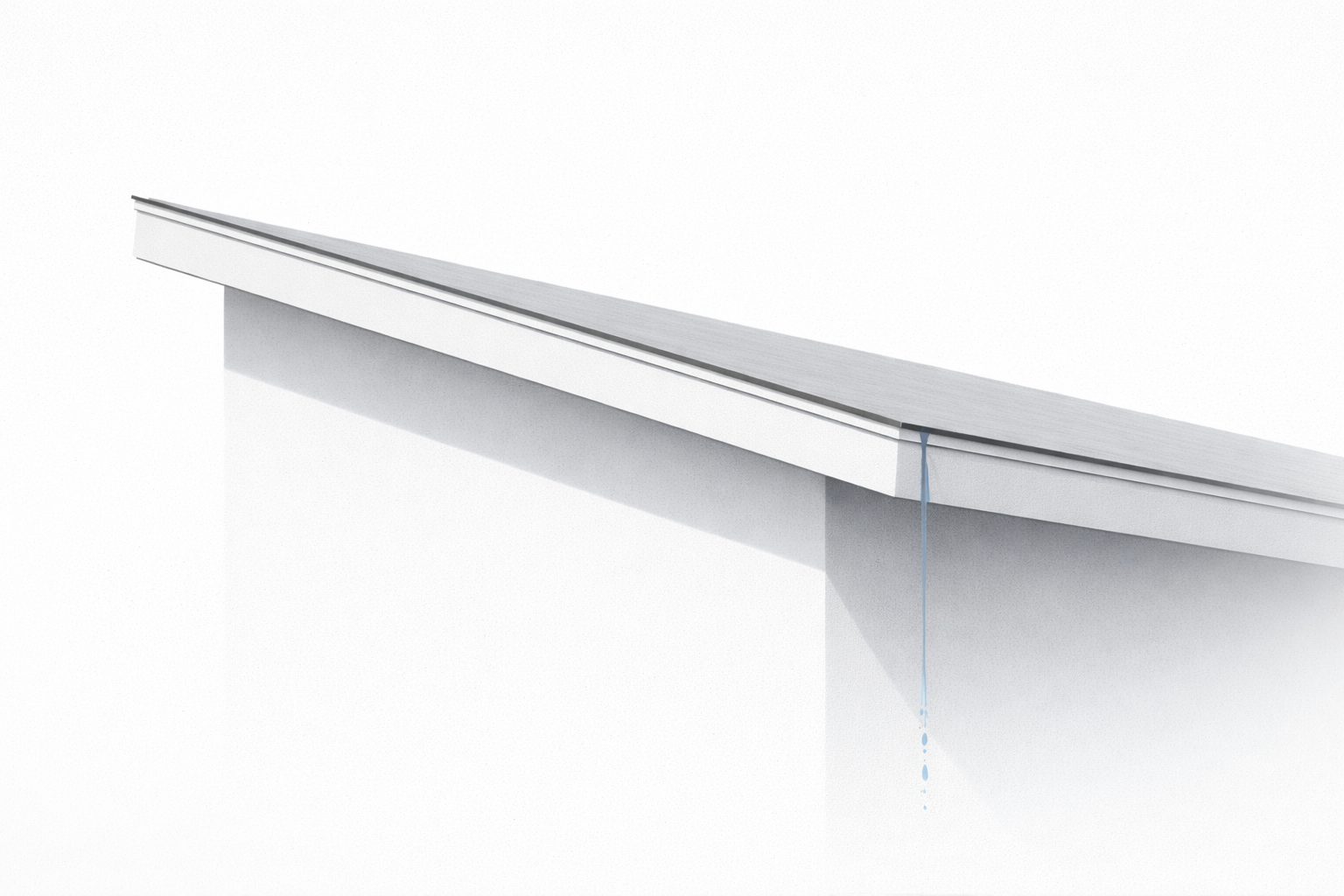
Minimal shed roof eave detail showing runoff at the drip edge. Image by ArchitectureCourses.org.
A shed roof uses one strong slope. That sounds basic, but it can be one of the most useful roof moves on a house. It works especially well on additions, narrow plans, small houses, and clean modern volumes that do not need a central ridge.
The advantage is clarity. One slope means less clutter, easier solar orientation, and strong daylight opportunities if you use the tall wall side well. The risk is proportion. On the wrong house, a shed roof can feel too thin, too abrupt, or like an afterthought.
- Best for: additions, compact homes, cabins, modern side volumes, and houses with a clear directionality
- Less ideal for: broad traditional houses where one slope makes the roof feel visually weak
- Good fit: small modern homes, rear extensions, and site-specific designs that want one clean move instead of many
Mansard and gambrel roofs
Mansard and gambrel roofs both use broken slopes, but they do different jobs and give off very different signals.
A mansard roof usually belongs on a house that wants upper-floor volume and a more formal or historic feel. A gambrel roof is often a better fit where you want loft space, barn logic, or a farmhouse profile without making the roof as elaborate as a mansard.
These roofs can add real usable space, but they also introduce more edges, more transitions, and more places where cheap execution will show. They make the most sense when the house actually benefits from that upper volume.
- Best for: attic conversion potential, upper-floor volume, and houses with a stronger traditional or rustic identity
- Less ideal for: minimalist houses or projects trying to stay cheap and simple
- Good fit: French-inspired houses, townhouses, farmhouses, and some colonial or barn-derived forms
If you are comparing asymmetrical traditional forms too, Saltbox Roof Construction and Framing is a useful related read.
Butterfly roofs, dormers, and mixed roofs
This is where a lot of articles go off the rails. Not every roof label belongs in the same bucket.
A butterfly roof is a main roof form. A dormer is a roof feature. A “combination roof” is not a clean type at all unless you say what is being combined.
That matters because homeowners often get pulled toward these moves for style reasons, even when the house below them does not need them. A butterfly roof can be striking, but it puts a lot of pressure on the central drainage design. Dormers can add light and usable headroom, but they also add intersections and flashing risk. Mixed roofs can solve difficult plans, but they can also turn a decent house into a roof tangle.
- Best for: houses with a real design reason for them, not just a photo reference
- Less ideal for: budget builds, low-maintenance owners, and plans that are already busy
- Good fit: selective modern projects, additions with clear hierarchy, and houses where light or upper-floor use justifies the extra work
Match the Roof to the House, Not Just the Mood Board
| If the house needs | Start with | Be careful with |
|---|---|---|
| A simple, reliable roof that handles rain and snow well | Gable roof | Flat roofs and valley-heavy mixed roofs |
| Better wind behavior and a calmer profile | Hip roof | Tall exposed gables on open sites |
| A clean addition roof | Shed roof | Trying to make the addition roof louder than the original house |
| A modern low-profile look | Low-pitched or flat roof | Treating drainage and waterproofing like an afterthought |
| More attic or loft space | Gambrel or mansard | Adding broken slopes just for style with no space benefit |
| A tight budget | Simple gable or simple shed | Curved roofs, butterfly roofs, and overly mixed forms |
The best home roof design usually looks obvious once it is right. That is a good sign. Roofs start looking forced when they are trying too hard to carry the whole design by themselves.
Roof Design Mistakes That Cost Money Later
Too many valleys. Valleys are not automatically bad, but every extra one adds drainage concentration, flashing work, and future maintenance risk.
Decorative dormers with no real job. If a dormer is not improving light, headroom, or facade balance, it may just be adding leak points.
Flat roofs in the wrong climate with weak detailing. The flatter the roof, the less tolerance it has for careless execution.
Mismatched additions. A good addition roof usually supports the main house. It does not try to outshout it.
Picking materials too late. Roof form and roofing material are tied together. Start that decision earlier by reviewing roofing materials while the roof shape is still being developed.
FAQ
What roof design works best in rainy climates?
Gable and hip roofs are the safest starting points because they move water off the roof quickly and cleanly.
Is a flat roof a bad idea on a house?
No, but it is a bad idea when the drainage, membrane, insulation, and edge detailing are weak. Flat roofs need more technical discipline than many people assume.
Is a hip roof better than a gable roof?
Not across the board. A hip roof usually behaves better in wind. A gable roof is usually simpler, cheaper, and better for attic space.
What is the cheapest roof shape to build?
A simple gable roof is usually the most cost-effective starting point for a house. A simple shed roof can also be economical on smaller or more modern projects.
What roof design gives the most usable attic space?
Gambrel and mansard roofs usually create more upper-level usable volume than basic gable or hip roofs.
Are butterfly roofs practical?
They can be, but only when the central valley and drainage plan are handled very carefully. They are not the right roof to improvise.
Can I mix roof types on one house?
Yes, but only when the hierarchy stays clear. One main roof family should lead, and the secondary roof moves should support the plan instead of turning into clutter.
What roof should I use on a small house or simple addition?
Usually a simple gable or a simple shed roof. Those forms stay clear, cost less, and do not overload a small building.
What to Keep in Mind
The best home roof design is usually not the loudest one. It is the one that fits the house mass, drains properly, works in the local climate, and still looks right when the novelty wears off.
Start with the house. Then let the roof finish the design instead of trying to rescue it.
Related
Roof Types and Roof Form Comparisons
- Types of Roof Lines: Which One Fits Your Home?
- Gabled Roofs
- Hip Roof Line: Advantages, Disadvantages, and Applications
- Why Choose a Low-Pitched Roof? Pros, Cons, and Design Insights
- Hip and Gable Roof Combinations
- Saltbox Roof Construction and Framing
Roof Materials and Smaller-Scale Follow-Ups