
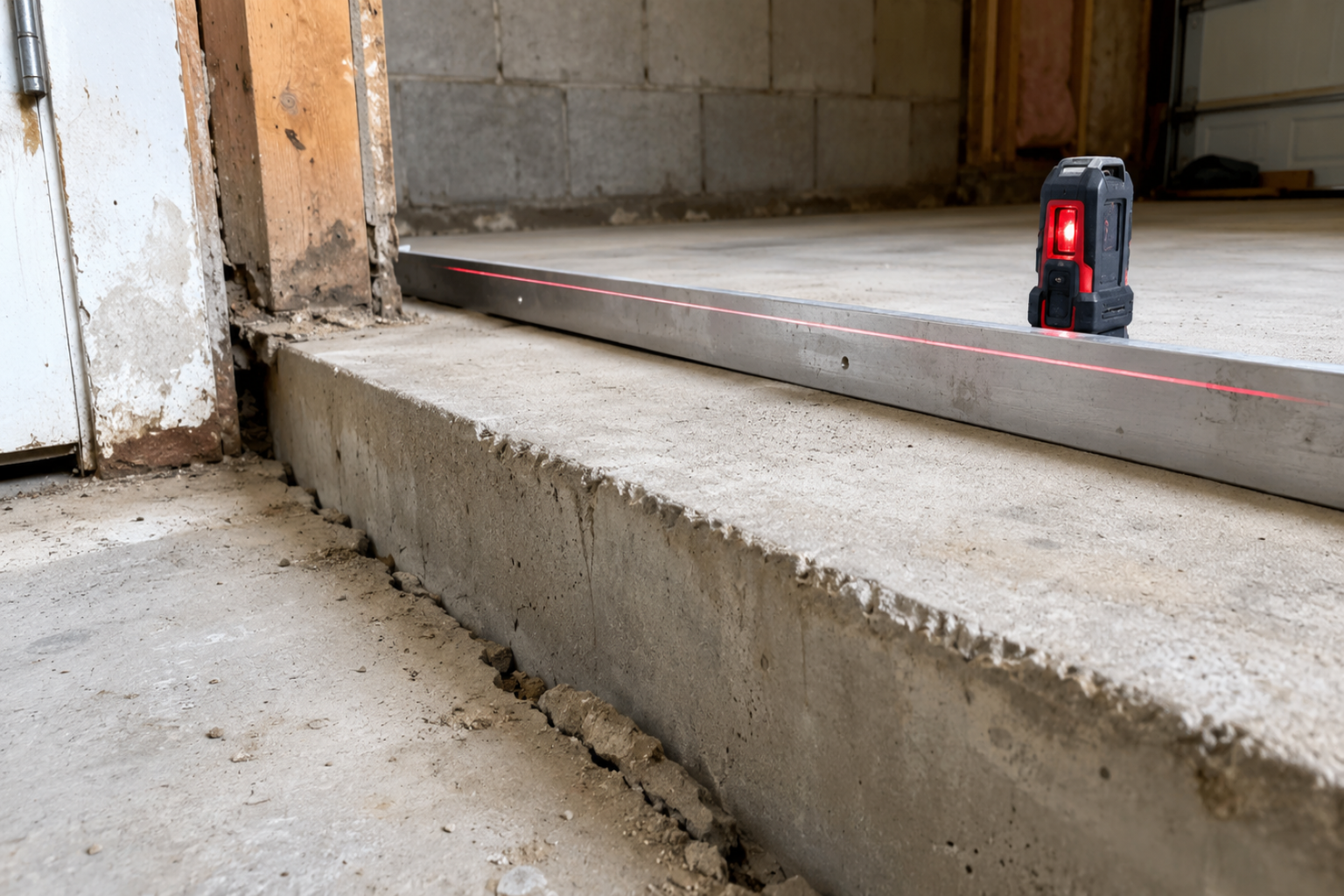
Concrete does not go out of level for no reason.
A sidewalk, patio, driveway, garage floor, or basement slab may be a lifting job. A settled foundation is different. So is a sagging crawl-space floor.
Those problems can mean water, bad soil, weak footings, failed piers, or load moving through the house the wrong way.
Find out what moved before you price the fix. Leveling will not last if the cause is still there.
Start with what moved
The first question is not which leveling method to use. The first question is what actually moved.
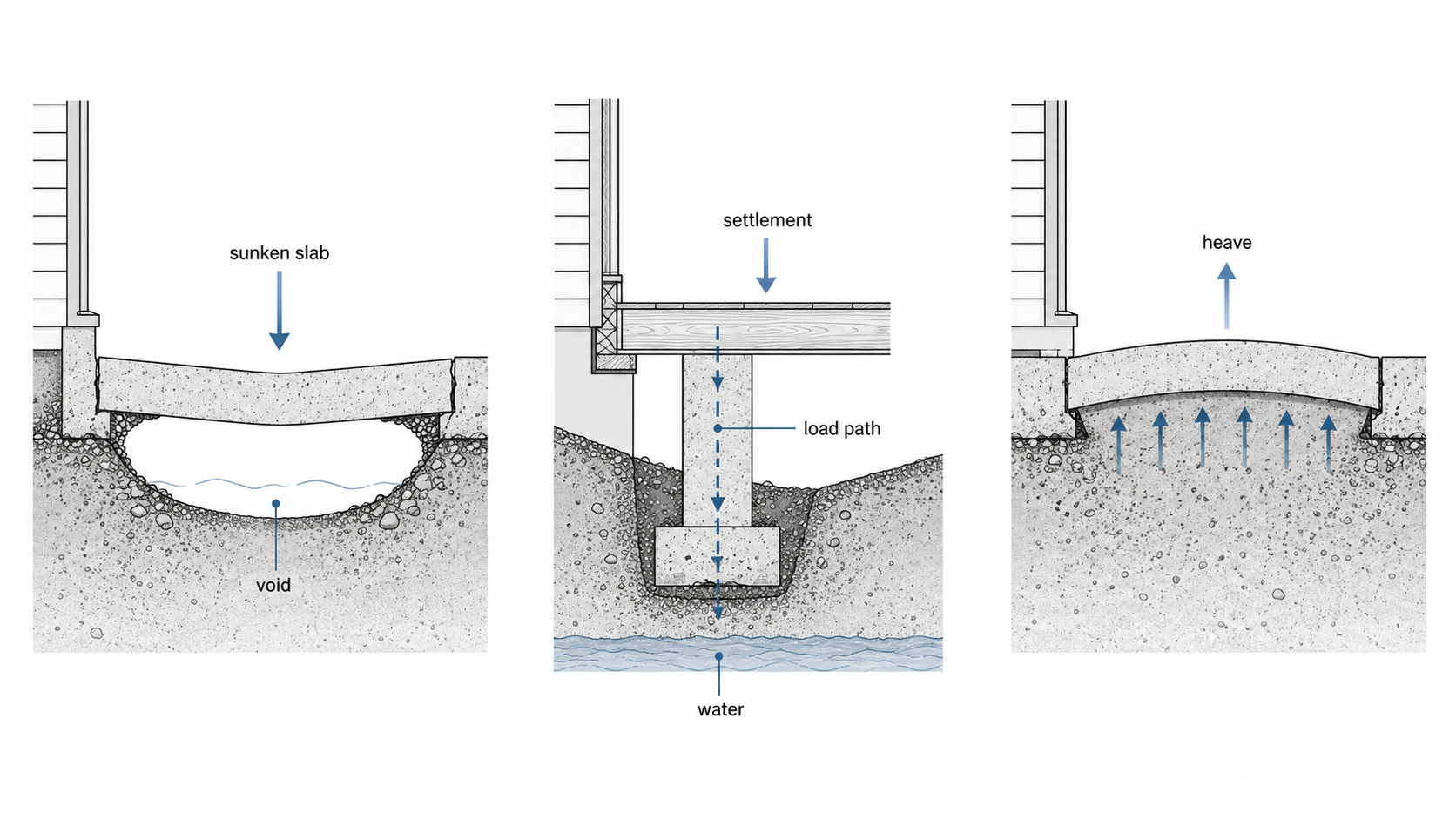
A patio or sidewalk slab may settle because soil washed out underneath it. A garage slab may dip near the door because the base was poorly compacted. A basement floor may slope because the slab was poured unevenly, because the soil moved, or because water undermined part of the slab. A house floor may feel uneven because the foundation moved, the crawl-space supports failed, or the framing above the foundation sagged.
Those are different repairs.
| What looks uneven | Possible cause | Why the repair changes |
|---|---|---|
| Driveway, sidewalk, or patio slab | Voids, erosion, poor base, tree roots, water | Often a concrete lifting or slab replacement decision |
| Garage slab | Poor compaction, settlement near door, drainage, slab cracking | May need lifting, grinding, drainage correction, or replacement |
| Basement floor | Low slab areas, moisture, heave, settlement, poor pour | Overlay may hide the issue if the slab is still moving |
| Slab-on-grade house floor | Foundation settlement, soil movement, plumbing leak, heave | May require structural diagnosis before leveling |
| Crawl-space floor above foundation | Sagging beams, weak piers, moisture, poor posts, settlement | Usually not a concrete leveling job |
Concrete leveling is not always foundation leveling
Concrete leveling usually means lifting, grinding, filling, or resurfacing a concrete surface so it sits closer to its intended plane. Foundation leveling means correcting movement in the structure that supports the house.
The difference matters. A contractor may be able to lift a sunken sidewalk in a few hours. Leveling a house foundation can involve piers, underpinning, crawl-space support work, slab repair, drainage correction, engineering, permits, and interior finish damage.
If the concrete is part of the house structure, slow down before choosing a repair. A slab that supports walls, a foundation edge that has dropped, or a floor that slopes across several rooms should not be treated like a tilted patio.
Signs the problem may be structural

Uneven concrete becomes more serious when the movement shows up beyond the slab surface.
Look for these warning signs:
- doors or windows sticking in the same area as the low floor
- new drywall cracks near openings
- gaps between baseboards, floors, cabinets, or trim
- cracks running through a foundation wall or slab edge
- sloping floors above a crawl space
- water stains near the low area
- repeated settling after earlier leveling work
- one corner of the house dropping instead of one isolated slab panel
The guide to settlement cracks is useful when you need to separate ordinary cosmetic cracks from movement that may be tied to foundation behavior.
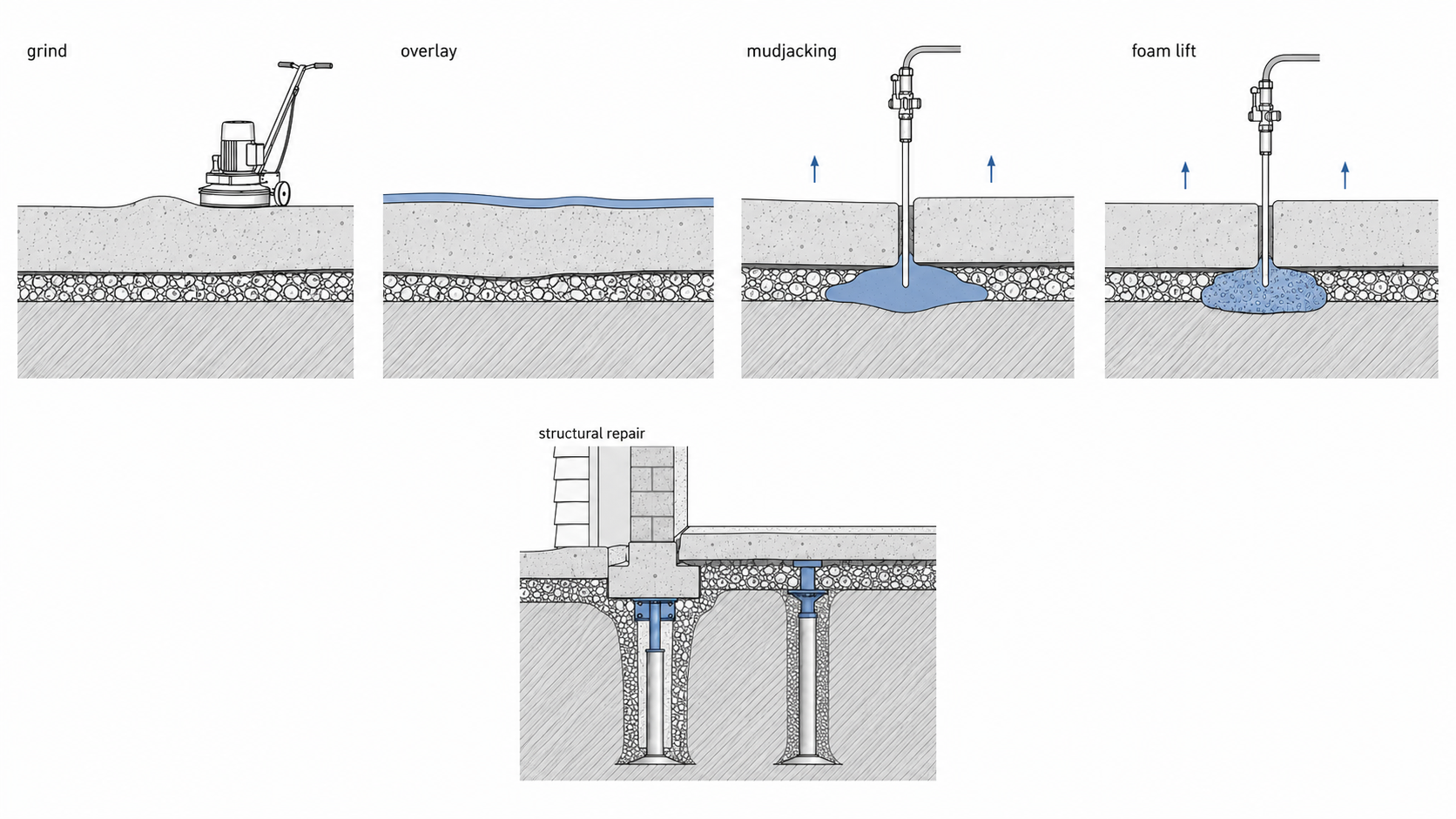
Common concrete leveling methods
The right repair depends on the slab, the cause, the access, and whether the concrete is structural or only a surface slab.
Useful tool: Before calling contractors, a laser level or long level can help you document where the slab is low, where the slope starts, and whether the problem is isolated or spread across the room.
Grinding high spots
Grinding removes a high edge instead of lifting a low one. It is usually used where two slab sections meet unevenly and one edge creates a trip hazard.
Grinding can be useful for sidewalks, small transitions, or minor surface corrections. It does not fill a void, lift a settled slab, or repair foundation movement.
Self-leveling compound
Self-leveling compound is usually an interior finish preparation material, not a foundation repair method. It can smooth a floor before tile, vinyl, carpet, or other finishes. It should not be used to hide a moving slab, a wet basement floor, or a structural settlement problem.
If the slab is still moving, the new surface can crack, debond, or telegraph the same problem back through the finish.
Finish-prep note: For a dry, stable interior slab, self-leveling floor compound and primer can be part of floor preparation. Do not use it to cover active movement, moisture, heave, or foundation settlement.
Mudjacking or slabjacking
Mudjacking, also called slabjacking, lifts concrete by pumping a slurry below the slab. The material fills voids and raises the concrete toward its intended elevation.
It can work well for some driveways, patios, sidewalks, and non-structural slabs. The concern is weight. A heavy slurry placed over weak or wet soil can sometimes contribute to future settlement if the base problem is not corrected.
Polyurethane foam lifting
Polyurethane foam lifting, often called polyjacking or foam jacking, uses expanding foam below the slab. The foam is lighter than traditional slurry and can be useful where added weight is a concern.
Foam lifting is still not magic. If water keeps washing soil away, if the slab is cracked beyond repair, or if the house foundation is moving, lifting the concrete surface may not solve the real problem.
Void filling and stabilization
Sometimes the main repair is not lifting a slab very far. The real job is filling a void so the concrete has support again.
This matters near garage slabs, patios, porches, stoops, and foundation edges where water has removed soil from below the concrete. A lifted slab without drainage correction can settle again.
Tracking tool: If a crack or slab edge may still be moving, a crack monitor gauge can help record whether the gap changes over time. It is not a repair, but it can make the contractor conversation more concrete.
Structural leveling
Structural leveling is different from surface concrete leveling. It may involve piers, underpinning, crawl-space supports, beam repair, slab stabilization, or house lifting.
When the work reaches that level, the project is closer to foundation repair than surface concrete leveling. Foundation underpinning and house lifting and foundation raising explain the heavier structural side of that decision.
When water is the reason the slab dropped
Water is one of the main reasons concrete loses support. Roof runoff, poor grading, broken downspouts, leaking plumbing, bad backfill, and drainage toward the foundation can wash soil from below a slab.
This is why concrete leveling often fails when drainage is ignored. The slab gets lifted, the surface looks better, and then the same water path keeps removing support below it.
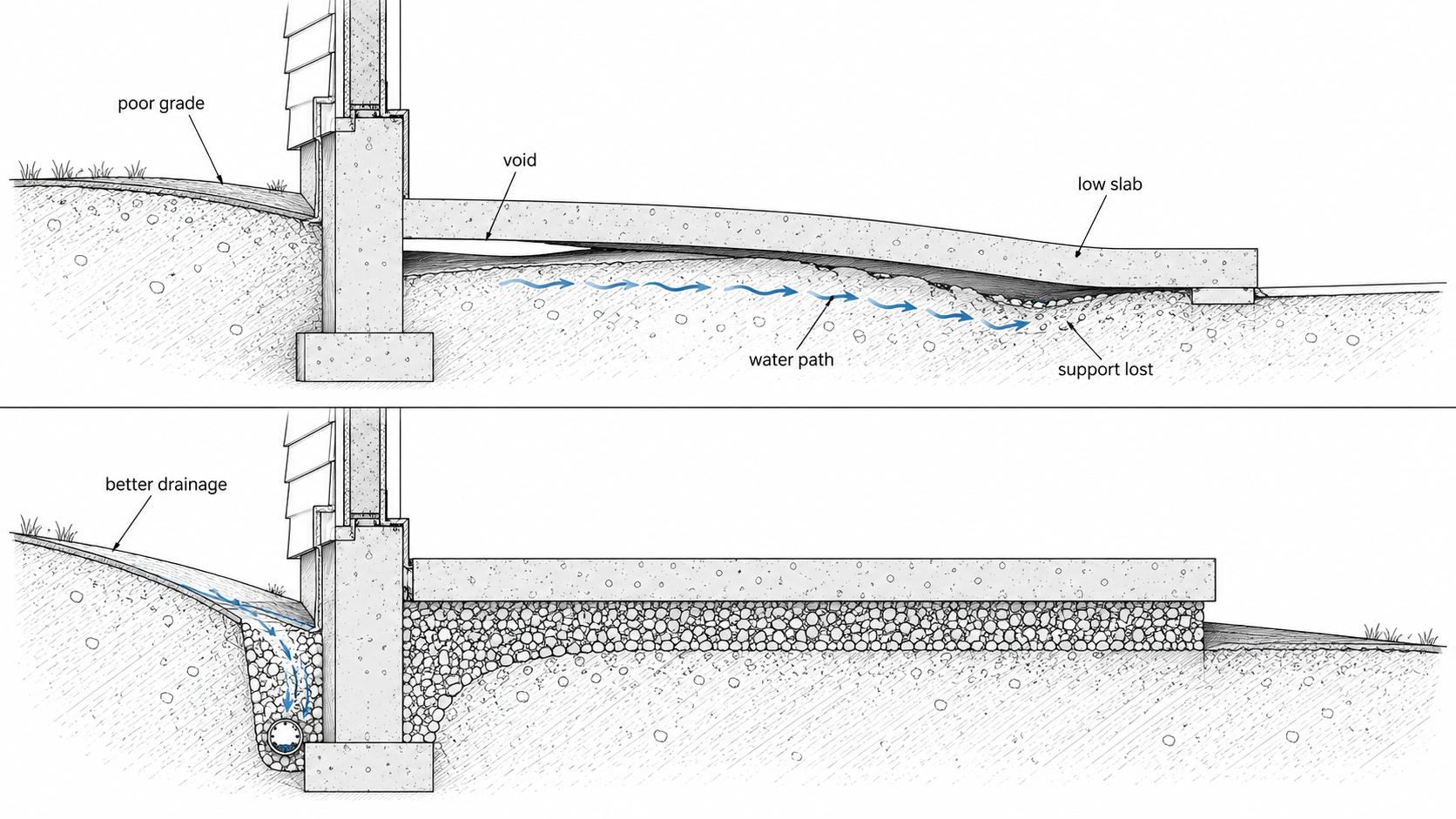
Before lifting concrete near a foundation, check the grade, gutters, downspout discharge, splashback from hard surfaces, soil settlement beside the wall, and any low areas where water collects after rain. If water is entering the foundation wall or basement at the same location, the leveling job may need to connect to exterior foundation waterproofing or drainage repair.
Concrete foundation leveling cost depends on the cause
Concrete foundation leveling cost is not just a square-foot number. Square footage matters, but cause matters more.
A small interior floor correction is not the same as lifting a settled garage slab, stabilizing a void near a foundation wall, leveling a slab-on-grade house, or correcting crawl-space support failure. The quote should describe the problem before it prices the method.
Use the table below as planning categories, not quotes. Actual pricing depends on the cause of movement, slab condition, access, lift method, drainage work, finish repair, local labor, engineering, permits, and whether structural support is involved.
| Condition | Usually lower cost | Usually higher cost |
|---|---|---|
| Minor surface unevenness | Grinding or localized surface correction | More if the slab is cracked, wet, or still moving |
| Interior floor low spots | Self-leveling compound before finishes | More if moisture, movement, or slab cracking must be corrected first |
| Sunken driveway, patio, or sidewalk | Mudjacking or foam lifting where access is easy | More if slabs are badly broken or drainage work is needed |
| Garage slab settlement | Lift or stabilize slab if the base is sound | More if water, poor base, or foundation-edge movement is involved |
| Slab-on-grade house movement | Small localized stabilization if the structure is not moving | More if foundation settlement, plumbing leaks, or structural repair is involved |
| Crawl-space floor leveling | Localized pier/post adjustment | More if beams, joists, moisture, or multiple supports need repair |
Be careful with quotes that price only the visible surface. A cheap leveling bid can become expensive if it ignores drainage, voids, structural movement, access, finish repair, permits, or engineering.
If the work is closer to foundation lifting than surface concrete leveling, the existing page on foundation lifting costs may be the better cost comparison.
Mudjacking vs polyjacking
Mudjacking and polyjacking both lift concrete by adding material below the slab. The difference is the material, weight, expansion behavior, access, and price.
| Method | Better fit | Main concern |
|---|---|---|
| Mudjacking | Some larger non-structural slabs where cost matters | Heavier material can be a problem over weak or wet soil |
| Polyjacking | Smaller or more precise lifts where lighter material helps | Higher cost and still dependent on drainage and soil conditions |
| Self-leveling overlay | Interior surface prep where movement is not active | Does not lift a slab or fix support loss |
| Structural repair | House movement, foundation settlement, crawl-space support failure | Requires diagnosis beyond concrete surface leveling |
The best method is not always the newest or most expensive one. The best method is the one that matches the cause.
Crawl-space floor leveling is a different job
Crawl-space floor leveling is often grouped with foundation leveling, but it is not usually a concrete slab problem. The floor may slope because beams are sagging, piers are sinking, posts were installed badly, moisture damaged wood, or the soil under supports is weak.
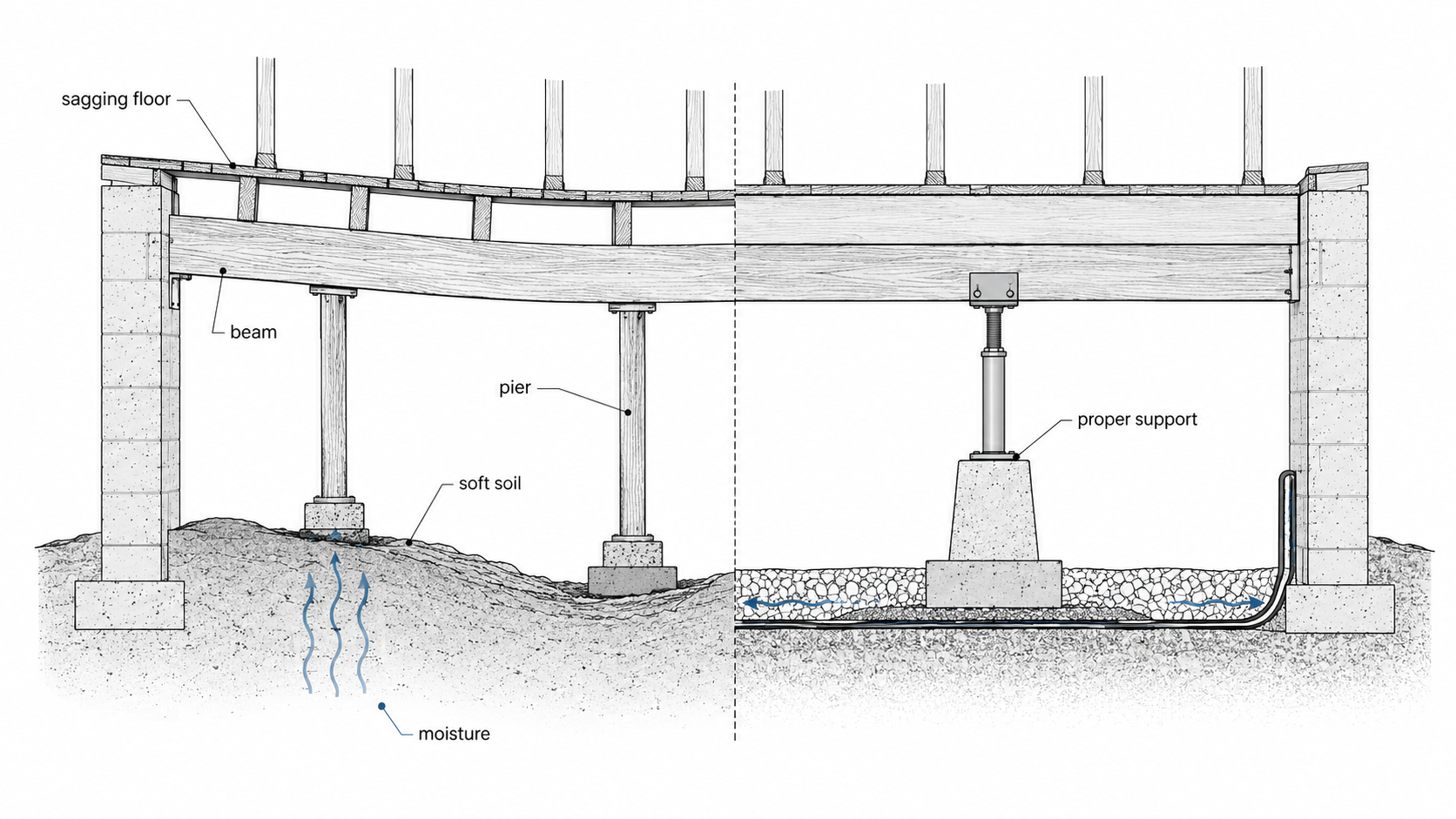
In that case, pouring floor leveler upstairs or adjusting one post below may hide the symptom without fixing the structure. The crawl space should be inspected for damp soil, wood rot, temporary jack posts, cracked piers, undersized beams, and poor bearing.
If the house has a crawl space, start with the structure below the floor. The page on crawl space foundation repair is the stronger reference when the problem involves piers, beams, moisture, or sagging floors.
Slab foundation leveling needs careful diagnosis
Slab foundation leveling can mean several different things. Sometimes the slab has dropped because soil support was lost. Sometimes part of the slab has heaved upward because expansive soil, moisture, or pressure pushed from below. Sometimes the slab is cracked because one area moved while another stayed in place.
Lifting the wrong area can make damage worse. A slab that is heaving upward does not need to be lifted. A slab with plumbing leaks below it may need leak investigation before leveling. A slab with wall cracks and door problems may need foundation repair, not just concrete raising.
This is why slab-on-grade movement should be diagnosed before a contractor sells a lift method.
Bad concrete leveling repairs
Bad concrete leveling repairs usually fail for one of three reasons: the wrong problem was diagnosed, water was ignored, or the repair method was chosen before the cause was understood.
- Using self-leveling compound over a slab that is still moving.
- Lifting a slab without filling the real void below it.
- Mudjacking over wet or weak soil without drainage correction.
- Foam lifting a slab beside a foundation where water keeps washing soil away.
- Grinding a trip edge when the slab panel is still dropping.
- Calling crawl-space support failure “floor leveling” without checking piers and beams.
- Accepting a quote that does not explain why the concrete moved.
The cleanest-looking repair is not always the best repair. Level concrete can still be unstable if the support below it is gone.
What a concrete leveling quote should include
A good quote should tell you more than the method name. “Concrete leveling” is too vague by itself.
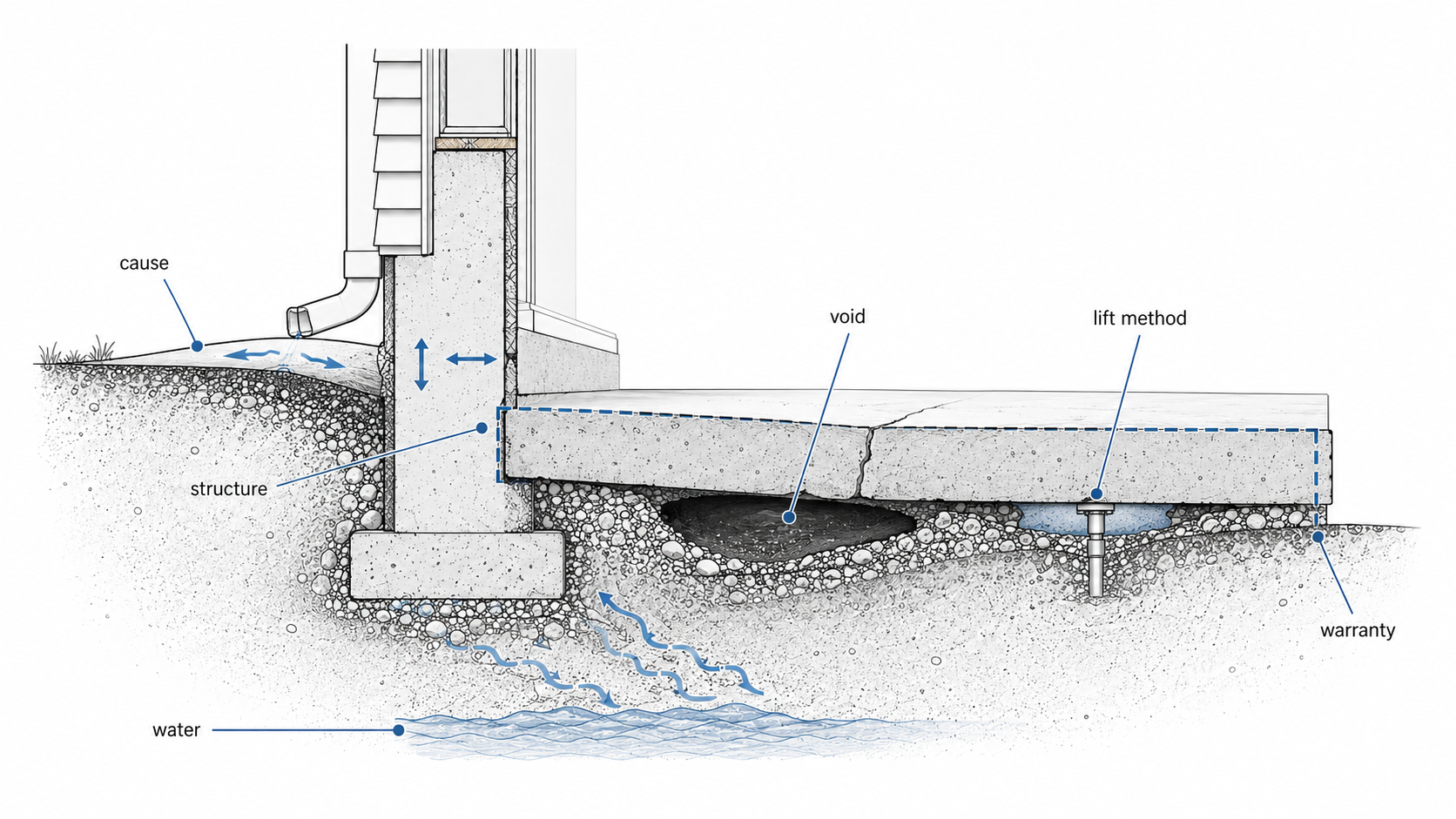
Look for these details:
- which slab or floor areas are included
- measured low spots or elevation differences
- whether the problem is surface settlement, voids, heave, or structural movement
- method used: grinding, overlay, mudjacking, foam lifting, stabilization, or structural repair
- drainage or water issues that must be fixed first
- cracks that will remain after lifting
- access holes, patching, cleanup, and finish repair
- warranty terms and what voids the warranty
- whether engineering or permits are needed
If the quote does not explain the cause, it is not a full diagnosis. It is only a price for moving concrete.
When to call an engineer
Call an engineer or qualified foundation professional when the uneven concrete is connected to house movement, foundation cracks, sloping floors, sticking doors, wall cracks, repeated settlement, suspected heave, or a slab that supports load-bearing walls.
Do not treat slab heave, repeated settlement, load-bearing slab movement, or crawl-space sagging as casual concrete leveling. Those conditions can involve soil pressure, plumbing leaks, foundation movement, failed supports, or structural load transfer. Lifting or coating the surface can hide the warning signs while the real problem continues.
You do not need an engineer for every sidewalk lift. You may need one when the repair affects the structure, resale, insurance, permits, or a major foundation decision.
Concrete leveling and resale
Buyers and inspectors do not only look for a level surface. They look for signs that the cause was handled.
A garage floor that was lifted but still drains toward the house may raise questions. A basement floor overlay with moisture below it may create suspicion. A slab-on-grade house with leveling work but no documentation may make buyers worry about hidden movement.
Keep photos, measurements, repair notes, contractor proposals, drainage work records, and warranty paperwork. If the repair was structural, documentation matters.
What to fix first
Fix the cause before paying to level the surface.
If water removed soil, fix the water path. If the slab has a void, understand why the void formed. If the house structure moved, diagnose the foundation before lifting concrete. If a crawl-space floor is sagging, inspect the piers, beams, posts, and moisture conditions below it.
Concrete leveling works best when it restores support. It fails when it only makes the surface look flat for a while.
References and Resources
For moisture sources, drainage, and basement water-control logic, see University of Minnesota Extension on moisture in basements: causes and solutions.
For concrete deterioration and repair background, see the U.S. Bureau of Reclamation Guide to Concrete Repair.
For foundation design, drainage, dampproofing, waterproofing, and local-code context, see ICC Chapter 4: Foundations. Local adoption and permit requirements still vary by jurisdiction.
FAQ
Is concrete leveling the same as foundation leveling?
No. Concrete leveling usually corrects a concrete surface. Foundation leveling corrects movement in the system supporting the house. Some projects overlap, but the diagnosis is different.
Can mudjacking fix a foundation?
Mudjacking can lift some settled concrete slabs, but it does not fix every foundation problem. If the house structure is moving, the repair may require piers, underpinning, crawl-space support work, or other structural repairs.
Is polyjacking better than mudjacking?
Not always. Polyjacking uses lighter foam and can be useful for precise slab lifting. Mudjacking may be suitable for some larger non-structural slabs. The better method depends on soil, water, slab condition, access, and cost.
Can self-leveling concrete fix a sinking slab?
Self-leveling compound can smooth an interior surface, but it does not lift a sinking slab or replace lost soil support. If the slab is still moving, the new surface can crack or fail.
Why did my concrete sink again after leveling?
The cause may not have been fixed. Common reasons include poor drainage, soil washout, weak fill, tree roots, broken pipes, or an active foundation movement problem.
What is crawl space floor leveling?
Crawl space floor leveling usually means correcting sagging or uneven floors by addressing beams, joists, posts, piers, or supports below the house. It is different from lifting a concrete slab.
When is concrete leveling not enough?
Concrete leveling is not enough when the house structure is moving, the slab is heaving upward, water is still washing soil away, or the foundation needs structural support.
What should I ask before hiring a concrete leveling contractor?
Ask what caused the movement, what method will be used, whether drainage must be corrected, what cracks will remain, what is excluded, and what the warranty actually covers.