
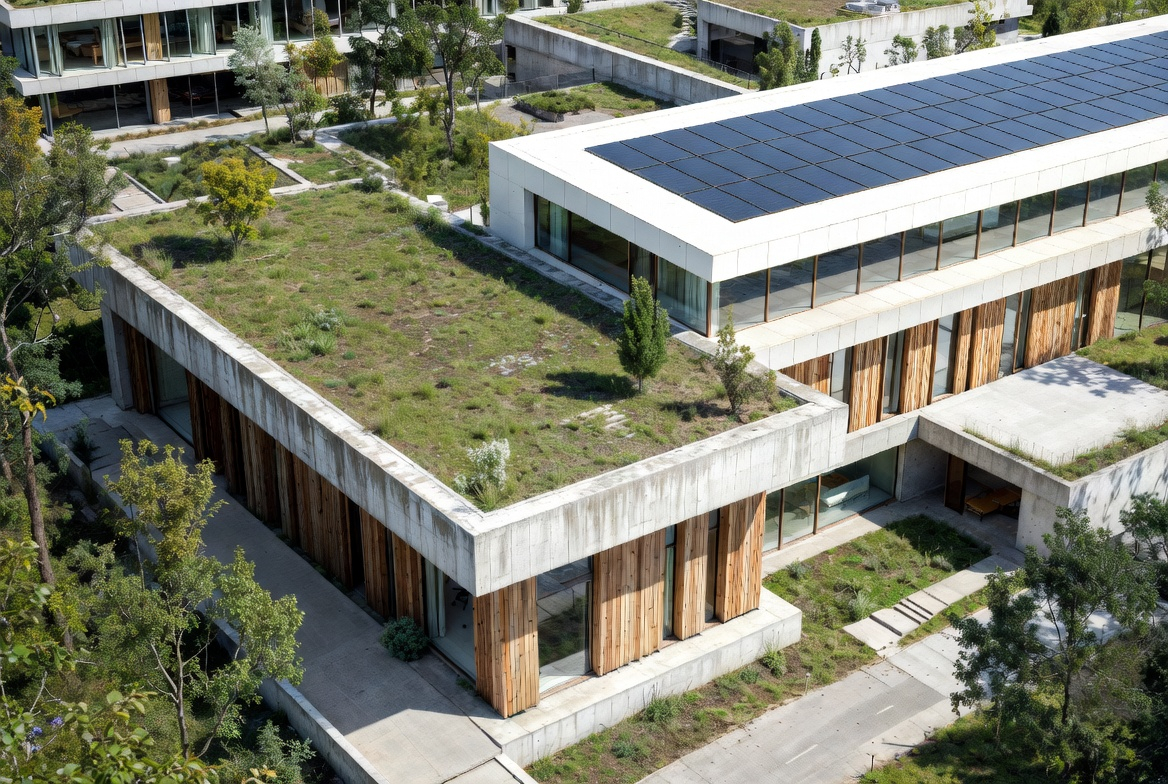
A lot of sustainable building content still reads like a brochure. Solar panels. green roofs. recycled materials. nice renderings. None of that is the hard part.
The hard part is getting the order right.
Most weak projects do sustainability backward. They talk about visible upgrades first because those photograph well, sound modern, and give everybody something easy to point at in a meeting. Meanwhile the real performance work is sitting somewhere else: site orientation, window size, overhang depth, insulation continuity, air sealing, drainage, mechanical sizing, and material choices that match the climate instead of the mood board.
That is where buildings quietly succeed or fail. Not in the press release. In the wall, the roof, the glare, the bill, the callbacks.
This page is about that part. Not the glossy version. The real one. What sustainable building design actually means, what usually pays off, where teams waste money, and which lessons are still worth paying attention to. If you want the broad foundation first, start with sustainable architecture basics or this wider look at sustainable design and architecture.
Most projects get the sequence wrong
Sustainable building design is not a product category. It is not a certification logo. It is not a promise that a building is automatically responsible because somebody added timber slats and a green roof to the rendering.
It is a sequence problem.
First reduce demand. Then make the enclosure hold up. Then size systems around that smaller load. Then decide where renewable energy, water reuse, lower-carbon materials, and monitoring actually make sense.
Skip that order and the project starts compensating for itself. Too much glass, so the cooling load jumps. Weak air sealing, so the equipment gets bigger. Fancy controls, because nobody solved the basic envelope problems. Solar added late, because the building still uses too much energy. You see this pattern over and over.
The best sustainable buildings usually do not look the most complicated. They just make fewer bad decisions early. Less recovery work later. Fewer things to apologize for.
Start with the boring parts. They do most of the work.
Site and orientation
A good building starts before the wall section. Where the sun hits. how wind moves. where water wants to go. how much west-facing glass the program can really tolerate. Those decisions are cheap to fix on paper and expensive to fix once the facade is locked.
Form and glazing
This is where a lot of projects talk themselves into trouble. Teams want daylight and views, which is fair. Then the glass percentage keeps creeping up, shading gets weaker, and suddenly the mechanical engineer is being asked to rescue an architectural decision with bigger equipment. That is not sustainable design. That is load shifting.
The enclosure
This is the real backbone. Roof, wall, slab, windows, insulation, air barrier, vapor control, and thermal bridge detailing will usually do more for long-term performance than any flashy add-on. A leaky building with premium technology is still a leaky building.
That is why insulation and continuity matter so much. Not just thickness. Continuity. A decent assembly installed well usually beats an impressive assembly installed badly. If you want to dig into that side of it, sustainable insulation that saves energy and cuts costs is worth reading, and so is this practical guide to sustainable design strategies.
MUST READ
Cradle to Cradle: Remaking the Way We Make Things is still one of the better books for understanding why sustainable design is a systems problem, not a shopping list.
Where the money usually goes, and where it gets wasted
Good sustainable design is not free. It just moves money around.
You usually spend more upfront on envelope quality, better windows, air barrier detailing, energy modeling, consultant coordination, and systems that were sized carefully instead of guessed. That part is real. So is the pushback when somebody wants the number lower fast.
But the waste tends to come from somewhere else:
- large glass areas that look clean in elevations but drive up cooling and glare control
- renewable systems added before the base load was reduced
- specialty materials that are hard to source, hard to detail, or hard to repair locally
- smart controls layered onto buildings that still have basic comfort problems
- systems nobody on the operations side really wants to maintain
That last one matters more than people admit. A clever system with weak service support is not a sustainability win. It is just delayed frustration. Six years later nobody wants to own it, nobody stocks the parts, and the building manager is stuck.
For homeowners, this is often where the real question lands: not “is green building good?” but “what actually changes the bill, and what just changes the pitch?” That is why building a sustainable house: is it worth it? tends to be a much more useful question than abstract sustainability talk.
Materials are not simple. They never were.
Material choices get flattened online into easy labels. Natural good. industrial bad. recycled good. concrete bad. It does not work like that.
Materials have to be judged in context. Climate. lifespan. moisture risk. structure. transport distance. replacement cycle. local labor. detailing tolerance. A lower-impact material that fails early or gets installed badly is not helping much.
Concrete is the obvious example. It carries a big carbon cost, yes. But foundations, slabs, durability, soil conditions, water exposure, and regional practice still matter. Sometimes the smart move is not “ban the material.” It is “use less of it, specify a better mix, and avoid wasting it where another assembly would work.” That is why pages like sustainable concrete alternatives and alternative foundation materials matter more than generic material lists.
The same goes for timber, insulation, finishes, and natural materials. A renewable material is not automatically the right material. It still has to perform. Sustainable wood and these sustainable material examples are useful once you start judging materials by actual use conditions instead of vibe.
FIELD PICK
EcoHouse Manual is a good one when you want design decisions, assemblies, and trade-offs instead of vague green language.
The part people skip: climate changes the answer
This is where a lot of sustainability articles fall apart. They talk like one strategy works everywhere.
It doesn't.
A lot of glass behaves differently in a cold bright climate than it does in a hot humid one. Dry-climate night flushing is not the same conversation as a humid climate ventilation strategy. Heavy thermal mass can help in one place and underperform badly in another if the building is not operated the way the design assumed. Rainwater harvesting sounds smart almost everywhere, but the payback, storage logic, and maintenance burden change a lot by region.
Even insulation strategy can shift depending on condensation risk, seasonal swing, and how forgiving the assembly is when the trades are less than perfect. This is one reason strong sustainable work feels quiet and specific. It is shaped by local weather and local building reality, not by whatever looked convincing on a precedent board.
That is also why broad pages like green building practices are helpful as a starting point, but not enough by themselves. The real answer is usually regional and assembly-specific. Sometimes painfully so.
What actually tends to pay off
Not every sustainable move pays back at the same speed. Not every client has the same goal either. Some want lower bills. Some want lower carbon. Some want healthier indoor air. Some mainly want a durable building that does not turn into a maintenance problem in ten years.
Still, a few things show up again and again as solid decisions:
- a tighter, better-insulated enclosure
- thoughtful shading and controlled glazing ratios
- simple mechanical systems sized to real loads
- durable materials in high-wear or moisture-prone areas
- daylight used carefully, not theatrically
- water management treated as a design issue, not an afterthought
Those are not trendy answers. That is exactly why they keep working. They are the moves that still matter after the sales language burns off.
Indoor environmental quality belongs here too. Daylight, ventilation, humidity control, acoustic comfort, and low-emission materials are not luxury extras. They are part of whether the building is actually good to occupy. A project that cuts energy use but leaves people with glare, stale air, or moisture trouble has not really solved the problem.
The examples worth studying are usually less glamorous than people expect
The ordinary building that got the envelope right
This is the one people skip because it is not photogenic enough. A school, clinic, office, or housing block with disciplined glazing, decent shading, good air sealing, and fewer thermal bridges will usually teach you more than a flashy project loaded with expensive green features. Why? Because the performance is coming from repeatable decisions, not one-off hero moves.
The retrofit that cut demand before buying hardware
There is a useful lesson in buildings that first fix air leakage, insulation gaps, bad controls, and oversized equipment before they start adding renewables. Those projects tend to look less exciting in a presentation, but they often make more sense in real life. Lower loads. smaller systems. fewer surprises. That order matters.
The project that said no to too much glass
This sounds small. It is not. Some of the smartest sustainable decisions are basically acts of restraint. Less west glass. deeper shading. fewer dramatic atrium moves that cook the interior and force the mechanical system to fight back all summer. Good projects are often the ones that stop before the rendering gets too impressed with itself.
The building operations team did not hate
This one is huge and almost never gets enough attention. A building can look smart on paper and still be miserable to run. The examples worth stealing from are the ones where facilities staff can actually understand the system, get parts, maintain the equipment, and keep the building comfortable without workarounds. If operations has to invent a second building inside the first one just to keep it usable, something went wrong.
That is why case studies are still useful, but mostly for the lesson behind them. Not the image. Not the branding. For more case-based reading, these sustainable building examples, the Bullitt Center case study, and this look at sustainable office buildings are worth keeping in the cluster if you read them for the underlying decisions.
RECOMMENDED TOOL
Sustainability Principles and Practice is a strong reference when you want the bigger framework behind energy, cities, equity, and systems thinking.
A simple check before you call a project sustainable
- Did the team reduce demand before adding generation?
- Is the enclosure doing real work, or is the equipment covering for it?
- Does the glazing strategy fit the climate?
- Are the materials durable enough for the actual exposure and use?
- Can local trades build the assembly well?
- Can local service teams maintain the systems later?
- Is the water strategy realistic for the site and region?
- Will the building still make sense when the marketing language is gone?
FAQ
Is this just a more expensive way to say “build properly”?
Sometimes, yes. That is part of the point. A lot of what gets called sustainable design is really just disciplined design and construction. Better enclosure work. better moisture control. better sizing. better restraint. The cost question is real, but so is the cost of getting those basics wrong.
Why not just add solar later and call it a day?
Because solar does not fix a hungry building. If the loads are still too high because of bad glazing, bad air sealing, weak insulation, or poor controls, you are just layering generation on top of waste.
So are you basically saying architects should stop using glass?
No. The point is not “glass bad.” The point is that glass has consequences. The amount, orientation, shading, and specification all matter. A lot of projects act like glass is free until the engineer has to size the system around it.
What if the contractor or local trades do not know the assembly?
Then that risk belongs in the decision. A high-performance detail that looks great in a PDF but gets butchered in the field is not a smart spec. Sometimes the better move is a simpler assembly that local crews can build correctly every time.
Do clients actually notice any of this, or only the green features they can see?
They notice comfort. bills. glare. noise. humidity. maintenance headaches. They may not compliment the air barrier at the ribbon cutting, but they will absolutely notice when the building is easy or hard to live with.
Is certification worth chasing?
It can be. But it is not the same as judgment. A project can score well and still have dumb decisions inside it. It happens. Certification is a tool, not a substitute for getting the building right.
Final Notes
Sustainable building design is not a style, and frankly it is not mainly a materials mood either. It is disciplined decision-making under real pressure: climate, cost, labor, maintenance, code, and time. The projects that hold up usually got the quiet parts right early. Better siting. better enclosure work. better drainage. better restraint. Then the visible green features have something solid to sit on instead of something weak to compensate for.