
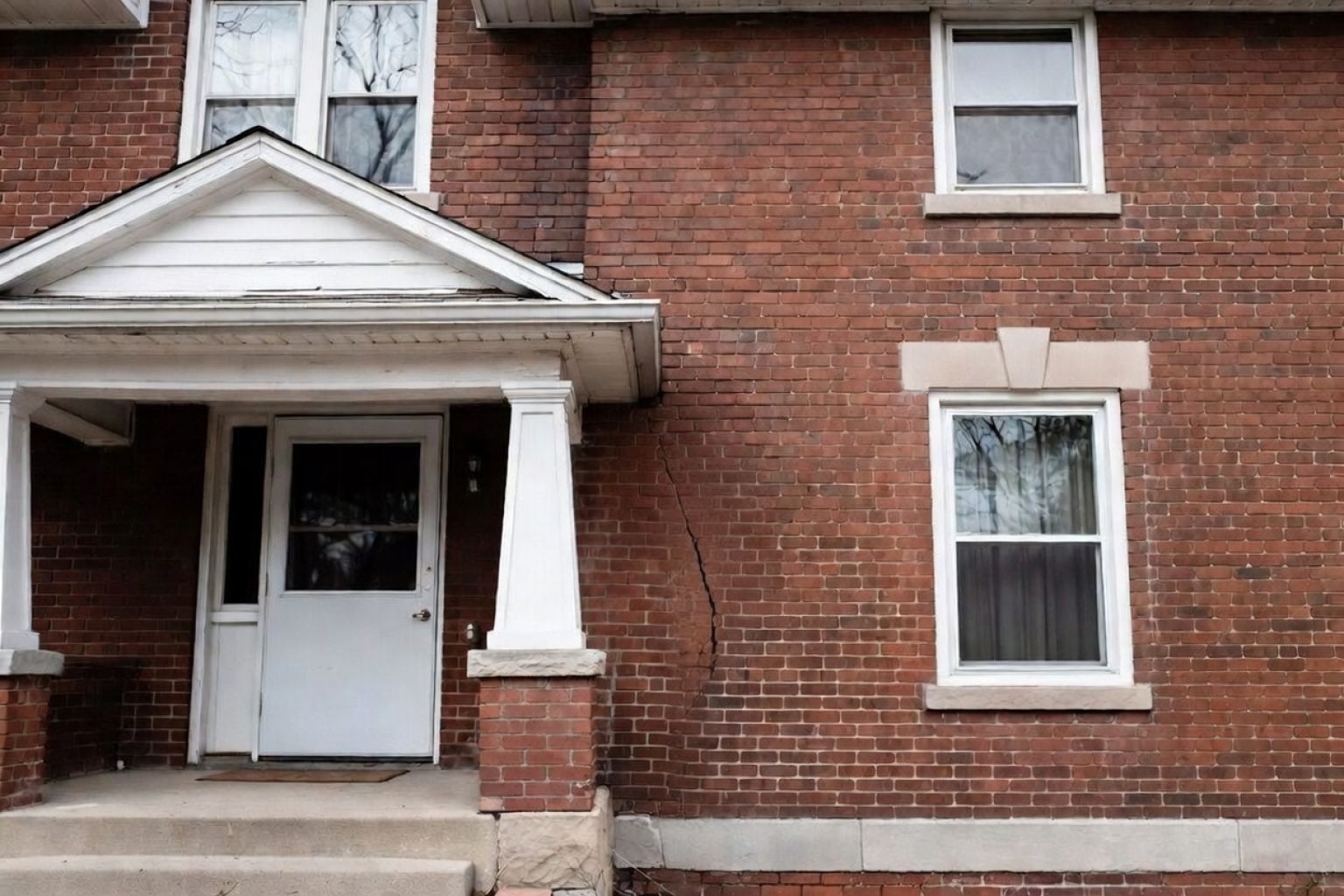


Settlement cracks are common. The hard part is knowing which ones are harmless and which ones are not.
That is where most crack advice falls apart. It treats every crack like a disaster or a non-issue. Real buildings are not that clean.
Some cracks come from drying, minor settlement, seasonal movement, or old finishes letting go. Others point to active movement, drainage trouble, foundation stress, or support changing under the building.
Start there: which cracks are usually minor, which ones deserve closer attention, what the shape can tell you, what to check before patching, and when a repair is only hiding a bigger problem.
First, Figure Out if the Crack Is Still Moving

Surface crack patterns and what they can suggest about settlement and movement.
Before repair, before filler, before paint, answer one question:
is the crack old and stable, or is it still moving?
That changes the whole job. A thin, quiet crack in plaster is one thing. A widening stair-step crack with stuck doors and sloped floors is another.
| What You Are Seeing | What It Often Means | What To Do First |
|---|---|---|
| Hairline crack that stays the same | Normal settling or surface shrinkage | Watch it, then patch if it stays quiet |
| Diagonal crack over a door or window | Movement at an opening, sometimes minor settlement | Check nearby doors and windows for sticking |
| Stair-step crack in brick or block | Foundation movement or uneven settlement | Watch for growth and check drainage fast |
| Horizontal crack in a foundation wall | Lateral pressure or wall stress | Take it more seriously than a finish crack |
| Crack that widens, offsets, or comes with floor slope | Ongoing movement | Stop treating it like a cosmetic issue |
That table is the quick version. The rest of the page is the slower read.
What Settlement Cracks Usually Are
Settlement cracks show up when one part of a building moves a little differently from another part.
That movement can come from soil shrink and swell, weak drainage, bad fill, seasonal moisture changes, curing, freeze-thaw movement, or plain age. New houses crack. Old houses crack too. They just do it for different reasons.
Some of that movement is minor and expected. Some of it keeps going because the cause never got fixed.
That is why the same crack shape can mean different things depending on location, width, material, and whether the crack has changed.
Worth knowing. If the bigger question is foundation cracks specifically, go to Foundation Cracks in Houses: When to Worry and When to Repair.
Cracks That Are Usually Normal
Not every crack means structural trouble.
A lot of small cracks in drywall, plaster, stucco, and trim are just part of a building settling in or getting older. They often show up at corners, above openings, at taped joints, or where two materials move a little differently.
Hairline drywall and plaster cracks
These are often cosmetic. You see them at ceiling joints, in old plaster, near corners, and where framing dried out or shifted slightly over time.
Small cracks in newer construction
New buildings go through a settling period. A few thin finish cracks during that time are not unusual.
Surface cracks that come and go with the season
Some cracks open a little in winter and quiet down later. That is still movement, but not always serious structural movement. Sometimes it is just seasonal moisture swing.
Normal does not mean ignore forever. It just means do not panic too early.
Cracks That Need More Respect
This is where people waste time and money. They patch the clue and leave the cause.
Wide cracks
Once a crack stops looking like a line and starts looking like a gap, treat it differently. Wider cracks deserve more attention, especially in masonry, concrete, and foundations.
Cracks that are still growing
A crack that is still moving matters more than a crack that already happened and stopped. Mark it. Measure it. Photograph it. If it changes, that matters more than how ugly it looks today.
Stair-step cracks
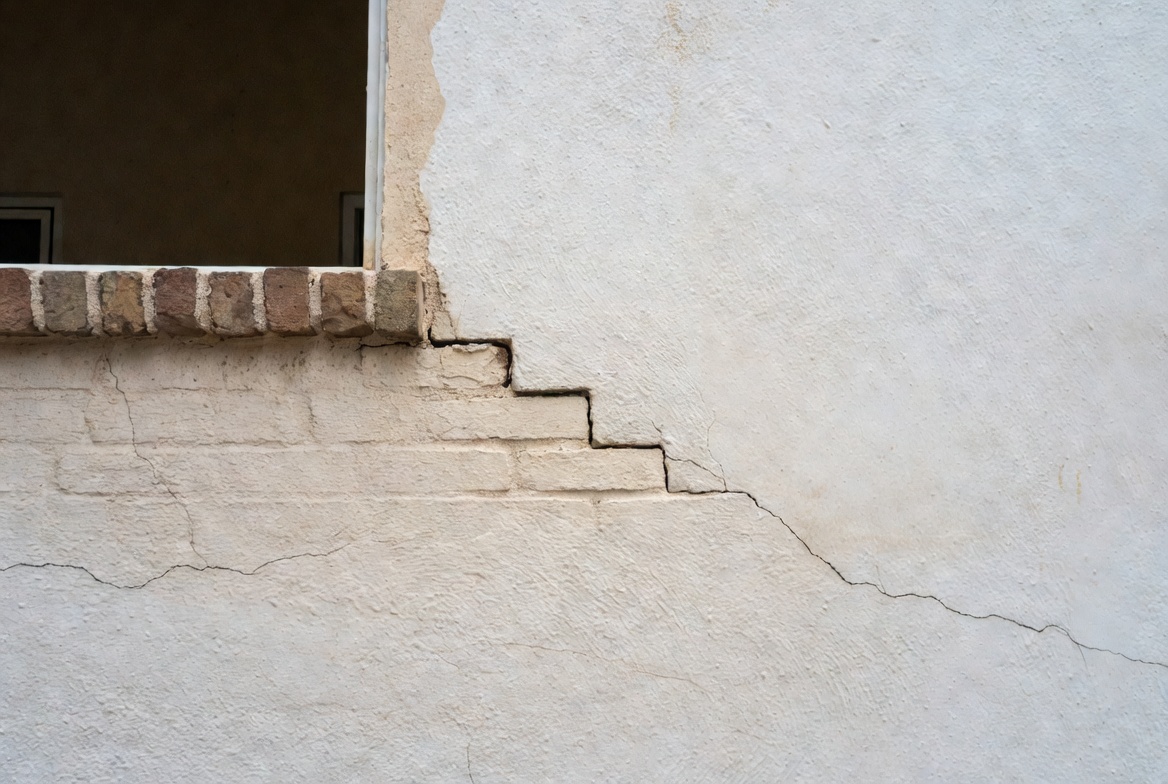
Image by ArchitectureCourses.org. A stair-step crack near a window opening, a common pattern when movement follows weak points in masonry or stucco-backed wall assemblies.
In brick, block, and masonry veneer, stair-step cracks often point to differential movement. They do not automatically mean failure. They do mean the structure moved enough to show up through the joint pattern.
Horizontal foundation cracks
These deserve more caution. Horizontal cracks in foundation walls can point to lateral soil pressure, moisture loading, or wall stress. That is a different problem from a small vertical shrinkage crack.
Offset cracks
If one side of the crack is no longer flush with the other, the building did more than split a finish. It moved.
Cracks with other symptoms
Add stuck doors, windows out of square, bowed walls, sloped floors, or fresh water entry and the crack stops being just a crack.
Also useful. If you want the simpler side-by-side decision page, read Normal Settling Cracks or Structural Issues? How to Tell the Difference.
What the Shape Usually Tells You
| Crack Shape | Where It Shows Up | What It Can Suggest |
|---|---|---|
| Vertical | Concrete walls, plaster, drywall | Simple settlement, shrinkage, or minor movement |
| Diagonal | Above openings, wall corners | Movement around windows, doors, or uneven settling |
| Stair-step | Brick, block, mortar joints | Settlement or movement in the supporting structure |
| Horizontal | Foundation walls, basement walls | Pressure from soil or water, wall stress |
| Surface map cracking | Stucco, plaster, skim coats | Finish shrinkage or surface aging more than structural trouble |
Shape is a clue. It is not the whole diagnosis. Width, location, offset, timing, and nearby symptoms still matter.
Where the Movement Usually Starts
Most settlement crack problems start in boring places.
- poor drainage near the foundation
- expansive clay soils that swell wet and shrink dry
- badly compacted fill under slabs or footings
- freeze-thaw movement in cold climates
- tree roots pulling moisture from soil near the house
- foundation design that did not match the site
- new additions settling differently from the older building
That is the part people miss. The crack is often the visible part of a water, soil, or support problem.
Before you move on. If water is part of the story, read Exterior Foundation Waterproofing. A lot of crack problems get worse because drainage was weak long before the crack showed up.
Do This Instead of This
| Do This | Instead of This | Why |
|---|---|---|
| Monitor a suspicious crack over time | Patch it the day you notice it | You need to know if it is still moving |
| Check grading, gutters, and downspouts | Assume the problem is only inside | Water outside often drives movement inside |
| Treat horizontal foundation cracks seriously | Lump them in with hairline drywall cracks | They are usually not the same level of concern |
| Match the repair to the cause | Caulk everything and hope | Wrong repairs fail fast and hide the real issue |
| Call for help when cracks come with slope, sticking doors, or wall movement | Wait another season and see | Ongoing movement usually gets more expensive, not less |
Watch It Before You Patch It
You do not need a lab to do a first check.
- Look at the location. Finish crack or structural element?
- Look at the width. Hairline or open gap?
- Check if the two sides are still flush.
- Check nearby windows, doors, floors, and trim.
- Take a clear photo.
- Mark the ends and note the date.
- Watch it for change before you rush to patch it.
A stable crack is one repair decision. An active crack is another.
What Repair Matches the Crack
Repair depends on the crack, the material, and the cause. That is why one repair recipe for every crack is useless.
Drywall and plaster cracks
If the crack is small and stable, mesh tape and compound or the right plaster repair method can be enough. The patch fails when the movement is still active or the wrong filler gets used.
Stucco and masonry surface cracks
Small stable surface cracks can often be sealed or repointed. The goal is to keep water out and keep the damage from spreading.
Small concrete or foundation cracks
Some vertical or non-structural cracks can be repaired with epoxy or polyurethane injection, depending on whether you are trying to bond the crack, stop water, or both.
Settlement-related foundation movement
Once the crack is part of a bigger movement problem, patching is not the repair. Stabilization is. That can mean piers, underpinning, slab lifting, wall reinforcement, drainage correction, or some mix of those.
That is the hard truth in simple words: patching hides the crack; stabilization deals with movement.
Where People Waste Money
- painting over a crack without checking if it is active
- ignoring drainage and blaming only the wall
- treating all cracks like drywall cracks
- panicking over harmless hairlines while missing the bigger structural clues
- letting a sales pitch turn a small issue into a giant repair package without a clear diagnosis
- waiting too long on cracks that are clearly growing
That last one costs the most. Small movement can stay manageable. Ongoing movement rarely gets cheaper by itself.
What Usually Costs More Than People Expect
The expensive part is rarely the crack filler.
It is the work behind it.
| Repair Type | Rough Cost Range | What You Are Really Paying For |
|---|---|---|
| Patch and repaint | Low | Finish repair only |
| Seal or inject a small crack | Low to medium | Moisture control or localized crack repair |
| Repoint masonry or repair stucco | Medium | Exterior durability and appearance |
| Foam jacking or slab leveling | Medium to high | Settlement correction under slabs |
| Piers, underpinning, or major wall stabilization | High | Structural correction, not patching |
Spend money on the cause before you spend too much money making the symptom look prettier.
DIY or Call Someone?
Small, stable finish cracks are fair DIY work.
Cracks in foundations, brick, block, slabs, or anything tied to visible movement deserve more caution. Once the crack comes with slope, sticking doors, water entry, masonry movement, or widening over time, stop treating it like a weekend patch job.
DIY is usually reasonable when
- the crack is hairline and stable
- it is clearly in drywall, plaster, or finish material
- there are no other movement symptoms
- you are repairing appearance, not structure
Call for help when
- the crack is wide, growing, or offset
- it is in a foundation wall or masonry wall
- doors or windows no longer fit right
- floors are sloping or walls are bowing
- water is coming through or the crack returns after repair
A quick inspection costs less than guessing wrong on a structural problem.
How to Reduce Future Movement
You cannot stop every crack. You can reduce the ones that start with water and soil trouble.
- keep gutters working
- send downspouts away from the house
- keep grade sloping away from the foundation
- watch for repeated wet spots near the base of the building
- be careful with large trees too close to the house
- do not ignore early movement signs
Buildings hate water in the wrong place and soil movement they were never designed to absorb. Most settlement trouble starts there.
FAQ
Are settlement cracks normal?
Many are. Small stable cracks in finishes are common. Growing, wide, offset, or structural cracks are a different story.
What is the difference between settlement and subsidence?
Settlement is the broad idea of a building or part of it moving into place or moving unevenly over time. Subsidence is a more serious ground-support problem where the supporting soil loses stability or volume in a bigger way.
Should I buy a house with settlement cracks?
Sometimes yes. Not every crack is a deal-breaker. The important part is knowing whether the movement is old and stable or ongoing and expensive.
How do I know if a crack is active?
Photograph it, mark it, measure it, and watch it. If it widens, offsets more, or returns quickly after patching, treat it as active until proven otherwise.
Are horizontal cracks worse than vertical ones?
In foundation walls, often yes. Horizontal cracks deserve more caution because they can point to lateral pressure or wall stress.
Can I just fill a foundation crack and move on?
Only if the crack is small, stable, and not part of a bigger movement problem. Sealing a crack does not fix the cause if the building is still moving.