
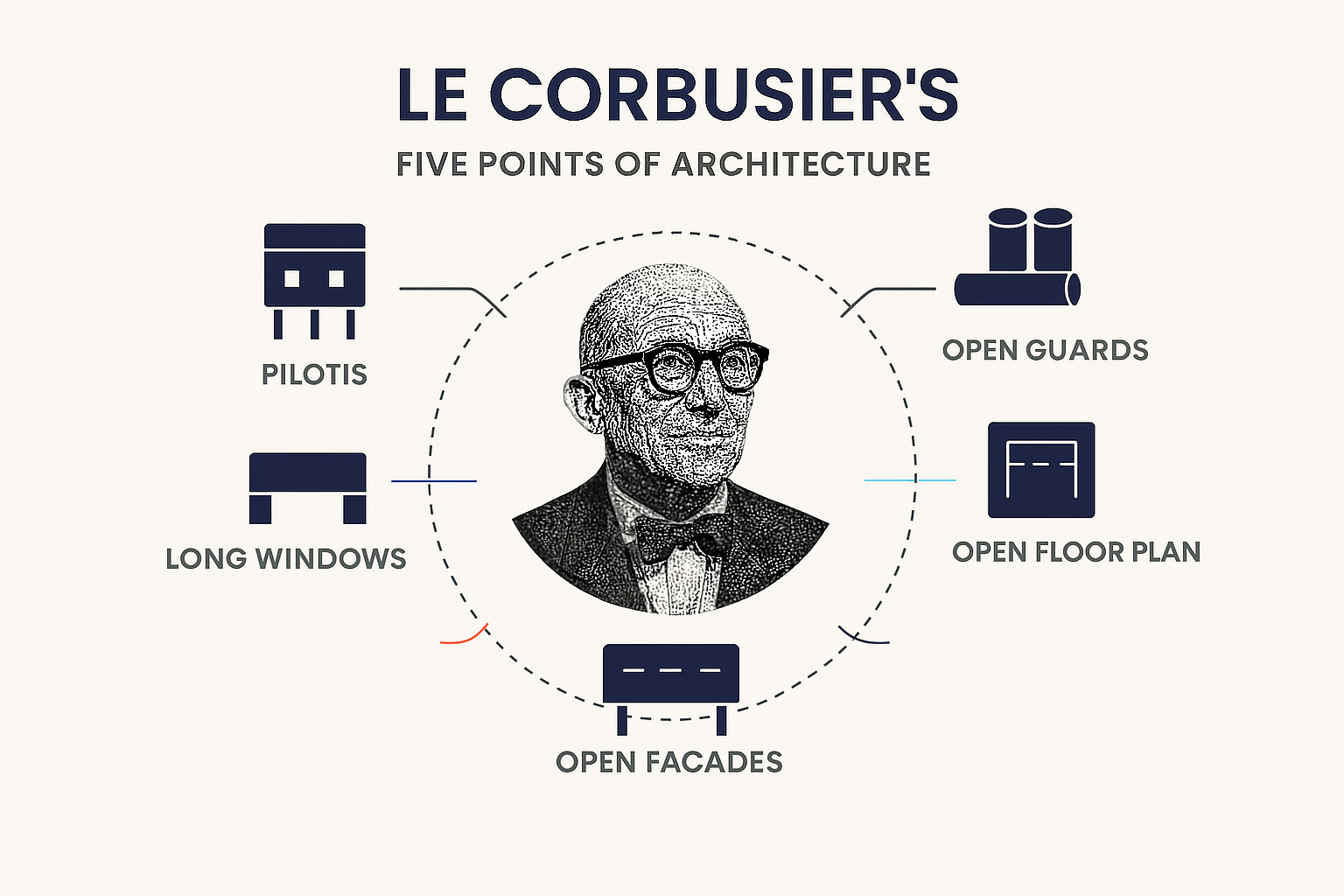
Why the 5 Points of Architecture Still Feel Cold
The Forgotten Truth Behind Le Corbusier’s Five Points
Le Corbusier’s Five Points changed design forever — but forgot one thing: human comfort. This is the truth modern architects still ignore.
Everyone loves to talk about Le Corbusier’s Five Points.
But almost no one talks about how they feel.
Because here’s the truth: they work on paper — and fail in real life.
Why? Because the Five Points weren’t built for people.
They were built for the idea of people — perfect, silent, efficient.
But real people don’t live like diagrams.
Design Isn’t Enough: What the Five Points Left Out
Le Corbusier Didn’t Forget Comfort — He Misunderstood It
Summary: Le Corbusier’s 5 Points of Architecture
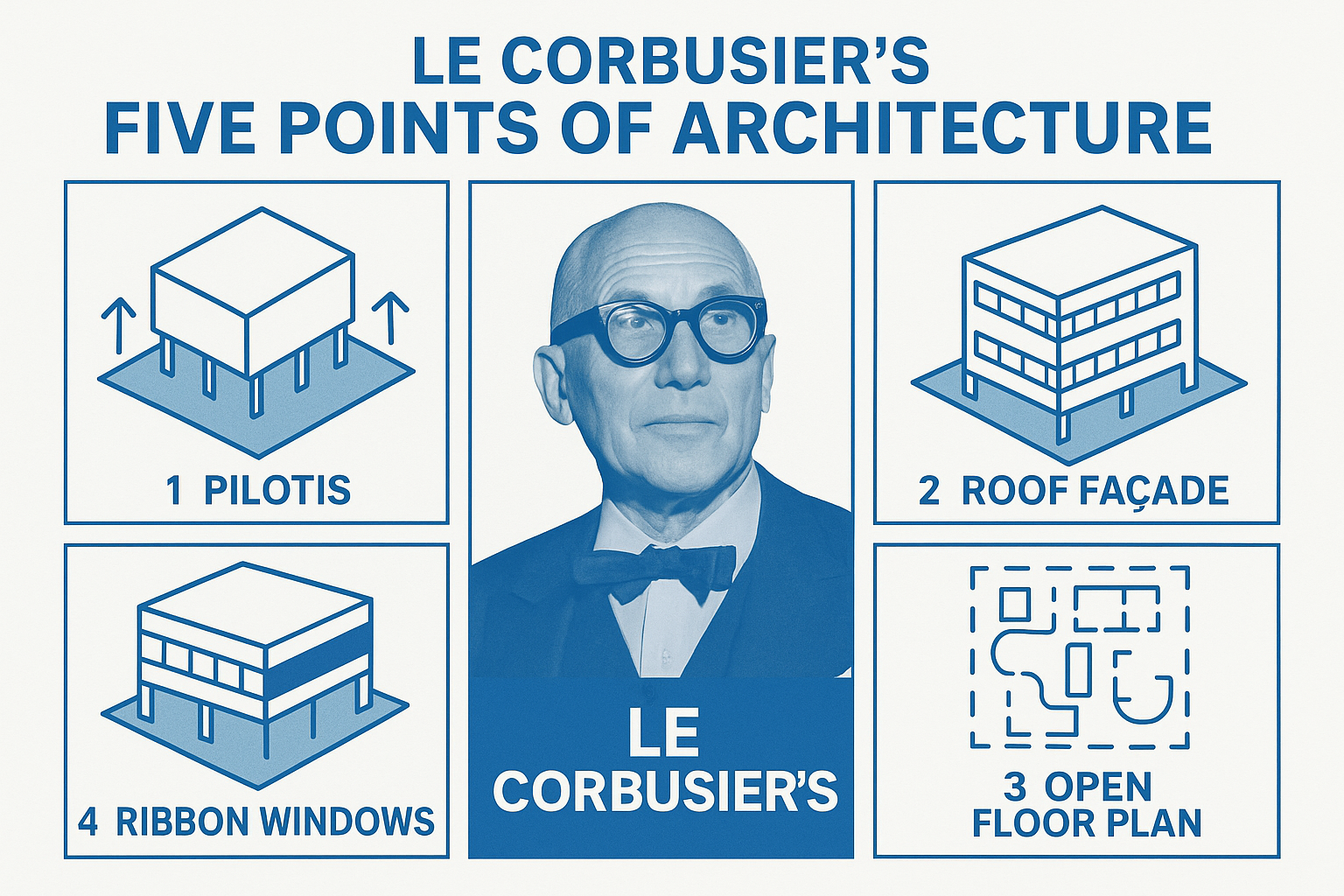
| Point | What It Was Meant to Do | What It Often Missed |
|---|---|---|
| Pilotis | Raise the building with columns | Created cold, wind-tunnel spaces |
| Free Plan | Flexible interiors | Often lacked privacy or warmth |
| Ribbon Windows | Long bands of glass for light | No shade, no coziness |
| Roof Garden | Return green space to the roof | Often exposed and unused |
| Free Facade | Detach structure from design freedom | Ignored context and texture |
They weren’t bad ideas.
They just forgot the most important thing: what it feels like to live inside.
Le Corbusier Didn't Forget Comfort — He Just Misunderstood It
Everyone’s talking about the missing sixth point.
Human comfort. Warmth. Soul.
But maybe the real issue isn’t what Le Corbusier left out —
It’s what he assumed about humans in the first place.
The Real Problem?
He treated humans like machines.
“A house is a machine for living in.”
Okay, fine. But people aren’t machines.
They get cold. They need softness, messiness, silence, escape.
You can’t reduce humanity to circulation paths and strip windows.
His Five Points Gave Us:
● Freedom of plan — but no privacy
● Free façade — but no texture
● Ribbon windows — but no shade
● Pilotis — but no warmth
● Roof gardens — but no walls to feel safe inside
He stripped it all down… and stripped out feeling with it.
The Missing Concept Isn’t Just Comfort — It’s Care
Architecture without care becomes sterile.
It becomes concrete blocks and echo chambers.
You can’t fix that with another “point.”
You fix it by putting people first — not after the form, not after the sketch.
A Better Foundation Looks Like:
● Light that doesn’t glare
● Air that doesn’t blast
● Materials that invite touch
● Rooms that hold stories, not just objects
Design is for humans. Not photos. Not manifestos.
People live here.
What It Took Me Years to Learn:
✓ People will always retrofit your “perfect” building
✓ Comfort isn’t soft — it’s survival
✓ Design without care gets abandoned
✓ The best architecture feels like someone thought about you
So Forget Point 6.
You don’t need another rule.
You need a mindset.
Design for the body. Design for the gut.
Design for how it feels to walk in — tired, hungry, distracted — and want to stay.
The Missing Sixth Point in Modern Architecture
Buildings Aren’t Machines. We Live in Them.
What the Five Points Gave Us — and What They Took Away
● Free plan → but no corners to hide in
● Free façade → but no texture to touch
● Ribbon windows → but no shade when it’s 3PM and 30°C
● Pilotis → but no warmth underfoot
● Roof gardens → but no sense of shelter or safety
They stripped away history, clutter, and excess —
But also stripped away the things that make us feel okay.
IN FOCUS
The Real Missing Element Isn’t Comfort — It’s Care
Architecture without care becomes:
-
Lifeless
-
Loud
-
Abandoned
-
Retrofitted with curtains, rugs, and anything that makes it human again
You can’t fix that with a “Point 6.”
You fix it by designing like you give a damn.
A Better Foundation Looks Like:
● Light that doesn't glare
● Air that doesn’t blast like an airport vent
● Materials that age with you
● Rooms that hold stories, not just furniture
What It Took Me Years to Learn:
✓ People will always modify your perfect layout
✓ Comfort isn’t decoration — it’s basic survival
✓ Design without care gets ignored, then replaced
✓ The best spaces feel like someone thought about you
Forget Point 6.
You don’t need another rule.
You need a mindset.
Design for the body. Design for the gut.
Design for what it feels like to walk in tired, hungry, distracted — and want to stay.
FAQ
What the Five Points Missed
🔹 Did Le Corbusier actually forget about human comfort?
Not exactly. He thought clean air, light, and openness were comfort.
He misunderstood that people also need coziness, quiet, and texture.
🔹 What’s wrong with the Five Points?
Nothing — in theory.
But when copied without care, they produce buildings that look sharp but feel hollow.
🔹 Can you still use the Five Points today?
Yes — but never blindly.
They only work when you balance them with warmth, context, and emotional design.
🔹 What should “Point 6” actually be?
Not a rule.
A shift in thinking: Design for the person inside the building — not the one sketching it.
🔹 What’s a real-world example where this went wrong?
Many early modernist housing projects followed the Five Points…
and were demolished, abandoned, or hated — not because of structure,
but because they ignored how people wanted to live.
Final Word
Le Corbusier changed the world — but he didn’t complete the puzzle.
He taught us how to build with freedom and form.
Now it’s our job to design with care and feeling.
Because the best buildings aren’t machines.
They’re homes.
They’re places you want to stay in — even on your worst day.