

Canadian Architecture Explained: Styles, History, and Regional Influences
Canadian architecture is as diverse as its climate and culture — from icy cabins and Indigenous forms to sleek urban towers.
This guide covers the full picture: historical roots, famous architects, key buildings, and how foreign-trained professionals can work in Canada.
Canadian Architectural Styles: From Past to Present
Traditional Styles: ● Log cabins, wood-frame vernacular
● Georgian, Victorian, and Gothic Revival homes
Modern Styles: ● Canadian Modernism (1967–today)
● Brutalist institutions (1960s–70s)
● West Coast Modernism
● Indigenous-influenced civic architecture
A Brief Timeline of Canadian Architecture

IMAGE: Aerial view of BC Place Stadium in Vancouver, showcasing its iconic retractable roof and central location within the city’s urban landscape.
From log cabins to glass towers — the evolution at a glance.
● Pre-1600s – Indigenous architecture
→ Longhouses (Haudenosaunee), Pit Houses (Interior BC), Igloos (Inuit)
→ Designed for climate, migration, and communal life
● 1600s–1800s – Colonial + European influence
→ French stone farmhouses, British Georgian homes, Gothic Revival churches
→ Focused on survival and adaptation to harsh climate
● 1867 (Confederation) – The push for identity
→ Government buildings, Parliament in Ottawa (Gothic Revival)
→ Railroads = expansion = regional variation
● 1900–1945 – Beaux-Arts and early Modernism
→ Civic pride meets classical symmetry
→ Expo-style public buildings in big cities
● 1945–1967 – Canadian Modernism
→ Rise of architects like Arthur Erickson, John C. Parkin
→ Concrete, steel, minimalism — often framed by the landscape
● 1967–1990s – Identity through innovation
→ Habitat 67, Centennial projects, Indigenous cultural centers
→ Erickson leads the charge with bold, regional modernism
● 2000s–Today – Sustainability + Urban Density
→ Timber towers, passive house, Vancouverism
→ A new Canadian design voice emerges
🇨🇦 vs 🇺🇸 — Canadian Architecture and Its American Influence
Two massive countries. Shared border. Shared language. Very different design cultures.
But yes — Canada’s architecture has always been in conversation with the U.S.
Here’s how:
🔹 American Influence on Canadian Architecture: Real or Overstated?
Yes — the influence is real:
● 20th-century Canadian firms often trained in the U.S.
● Arthur Erickson visited Frank Lloyd Wright's Taliesin West in 1946
● American modernism (think Mies van der Rohe in Chicago) shaped Toronto’s glass-and-steel boom
But Canada took those influences and did something different with them:
▪ More climate-conscious
▪ More restrained
▪ More nature-integrated
Less about “iconic power” → more about context, modesty, and place.
🔹 Shared Styles, Different Goals
| Style | American Approach | Canadian Approach |
|---|---|---|
| Modernism | Bold, corporate, vertical | Grounded, site-sensitive, humble |
| Suburban homes | Mass-built, car-centric | Smaller, colder-climate designs |
| Public buildings | Monumental (Capitols, libraries) | Civic but reserved (CBC buildings, courts) |
| Green design | Slow uptake (until recently) | Early leaders in passive house & timber |
🔹 Arthur Erickson’s Bridge Between the Two
Arthur Erickson is often seen as Canada’s answer to Frank Lloyd Wright, but his roots are different:
▪ He was deeply influenced by Asian philosophy, not just modernism
▪ He visited Taliesin West, but rejected Wright’s flamboyance
▪ His buildings like Simon Fraser University and the Museum of Anthropology at UBC are about horizontality, landscape, and light
His work proves it: Canada didn’t copy America.
It listened, then carved its own path.
Canadian architecture might live in America’s shadow geographically — but not creatively.
Where U.S. design often screams, Canadian buildings whisper.
Where U.S. towers dominate, Canadian forms adapt.
The relationship exists — but it’s no imitation.
It’s a conversation. And Canada’s voice is getting louder.
The Sudden Shift: Contemporary Architecture Boom in Canada

A New Wave of Curved Towers, Statement Buildings, and Design Confidence
Canada used to play it safe with architecture — glass boxes, brick towers, polite streetscapes. But in the past two decades, something flipped. Major cities like Toronto, Calgary, Montreal, and Vancouver are now filled with bold, sculptural, futuristic forms that would’ve seemed out of place 20 years ago.
● Curves replaced corners
● Towers twist and dance
● Developers chase icon status
● International firms are winning major commissions
This isn’t slow evolution. It’s a sudden stylistic leap — and it’s reshaping Canadian identity.
🔹 What Triggered the Shift?

▪ Real estate explosion = more budget, more ambition
▪ Global architects (BIG, MAD, OMA) landing commissions here
▪ Cities competing visually — especially Toronto and Mississauga
▪ Public interest in buildings as identity and brand
▪ Developers want towers that sell fast and get media attention
Landmark Projects That Signaled the Shift
TELUS Sky – Calgary

IMAGE: Telus Sky in Calgary, a striking mixed-use skyscraper known for its twisting silhouette and integration of office, residential, and public space in Alberta’s urban core.
-
Pixelated tapering tower by Bjarke Ingels Group
-
Mixes office and residential with glowing LED public art
-
Aggressive geometry for a city known for oil towers
Absolute Towers – Mississauga
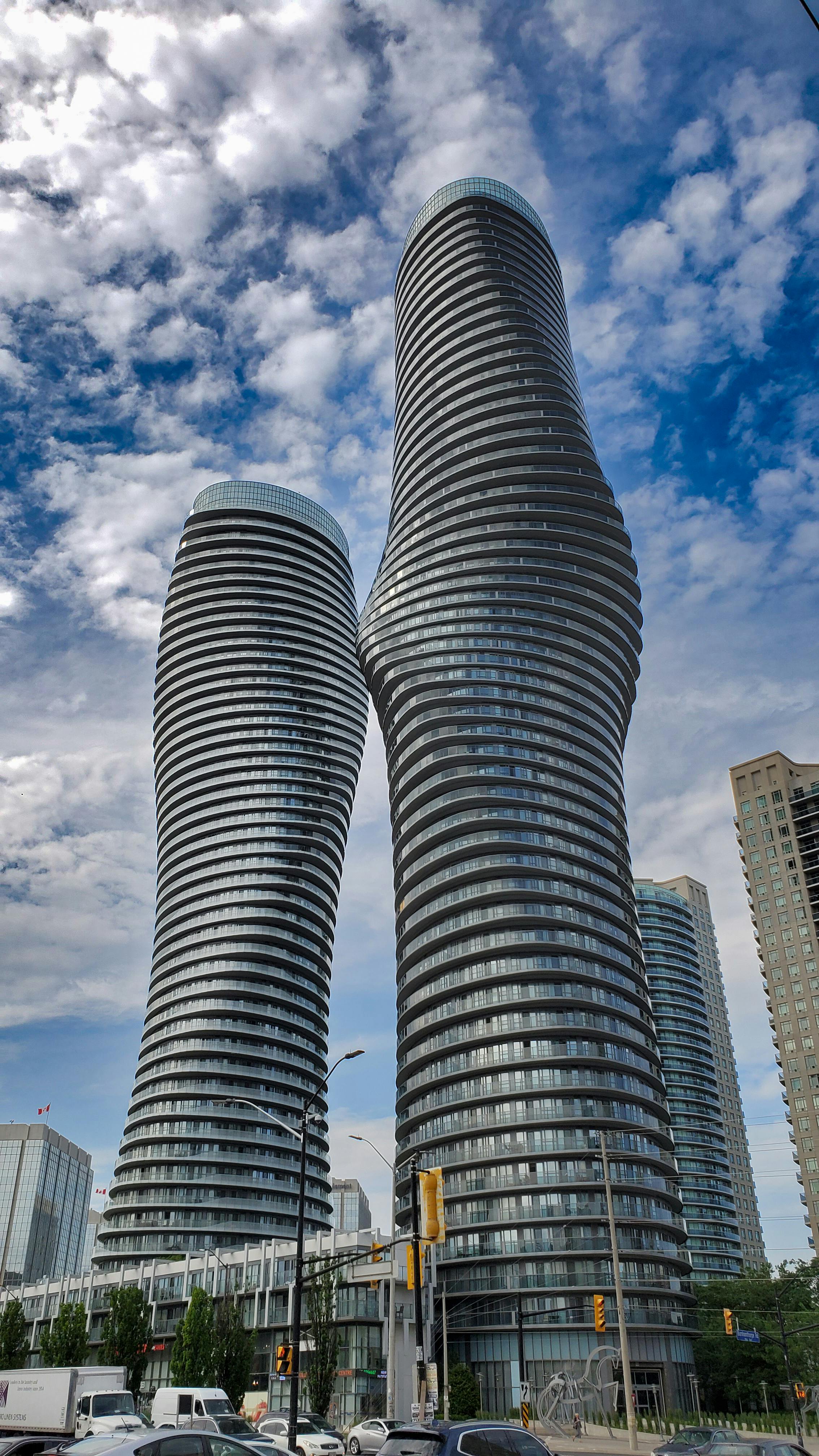
IMAGE: Absolute Towers in Mississauga, famously nicknamed “Marilyn Monroe,” designed by MAD Architects—bold, curving skyscrapers that redefined suburban architecture in Canada.
-
The “Marilyn Monroe” twins by MAD Architects
-
Fully twisting towers — something no other suburb had seen
-
Marked the point Mississauga stopped copying Toronto
King Toronto – Toronto
-
A mountain of stacked terraces with plants and green roofs
-
Also by BIG, but far more urban and messy
-
Shows how developers now bet on weird to win headlines
The Stack – Vancouver
-
Offset volumes stacked high — Canada’s tallest office tower
-
Shows that commercial projects are also going sculptural
What This Means for Canadian Cities
✓ Cities now have architectural personality
✓ More international talent is coming in
✓ Local firms are pushed to compete
✓ Public awareness of architecture is rising — people care what gets built
What to Watch For
✕ Style over substance — some towers are all look, little livability
✕ Gentrification — bold towers often come with high prices
✕ Copycat wave — not every city needs a twisty tower
Bottom Line: Canada isn’t behind anymore.
It’s not quiet.
It’s not beige.
From downtown Toronto to suburban Mississauga to Calgary’s changing skyline, this sudden wave of contemporary architecture shows the country is ready to take risks — and shape a bold new visual future.
MUST READ: Canadian Architecture: Evolving a Cultural Identity
See also: Inside the Ottawa Courthouse: Architecture, Culture, and Design
Is It All Hype — Or Is Vancouver Becoming a Global Architecture Capital?
Vancouver is suddenly everywhere in design circles. Magazine spreads. YouTube breakdowns. Instagram towers. TED Talks. Developers and architecture fans are throwing around claims like:
“Vancouver is the next big thing.”
“North America’s most livable city is now its most beautiful too.”
“The new global capital of sustainable urban design.”
But let’s ask the real question — is Vancouver truly on its way to becoming a world-class architecture hub?
Or is this just smart marketing mixed with some flashy new towers?
🔹 The Case For Vancouver’s Rise
● Urban Density with Nature
Vancouver's planning model — tall, slim towers + public green space — became famous globally as “Vancouverism.” It’s now taught in urban planning schools.
● Sustainability First
Few cities prioritize green roofs, passive heating, and carbon neutrality like Vancouver does. Architecture firms here lead with climate logic, not just style.
● World-Class Firms
Local studios like Patkau Architects, Henriquez Partners, and Bing Thom Architects have built major works across Asia and North America. These are not just regional players anymore.
● Design Culture
Public consultations, design panels, citizen awareness — Vancouverites actually care what gets built. That civic culture fuels better buildings.
● Global Attention
International architects — BIG, Perkins&Will, Kengo Kuma — are now lining up for projects in Vancouver. That didn’t happen 20 years ago.
The Case Against the Hype
● Too Cautious for Icons
Vancouver has few truly bold, risky buildings compared to places like Tokyo, Dubai, or Beijing. Planning here is tight — sometimes too tight.
● Repetitive Glass Towers
Critics say many new condos look the same. Glassy, slim, safe. Not much variation. Just “Vancouverism on loop.”
● Price Over People
As prices skyrocket, the risk is that design gets hijacked by investors. The focus shifts from good living to fast flipping.
● Still Lacking Cultural Flagships
Where’s Vancouver’s version of the Sydney Opera House? Or Guggenheim Bilbao? The kind of singular work that cements a global reputation.
What It’ll Take to Truly Compete Globally
If Vancouver wants to go from “livable city” to architectural capital, it needs:
▪ One or two era-defining buildings
▪ A willingness to say yes to experimental form
▪ Real housing innovation — not just towers for the wealthy
▪ Ongoing public demand for excellence, not just profit
▪ Support for young and bold local architects, not just global names
Close, But Not There Yet
Vancouver isn’t hype.
It’s not fake.
But it’s not the global capital of architecture — yet.
What it is though, is one of the most promising and principled cities in the world when it comes to urban design, green building, and smart density.
If it takes the next steps — and dares to lead with bolder form, deeper affordability, and cultural vision — Vancouver could absolutely rise into the top tier.
But the time to do that is now.
Why Vancouver Is Taking the Lead — Not Toronto
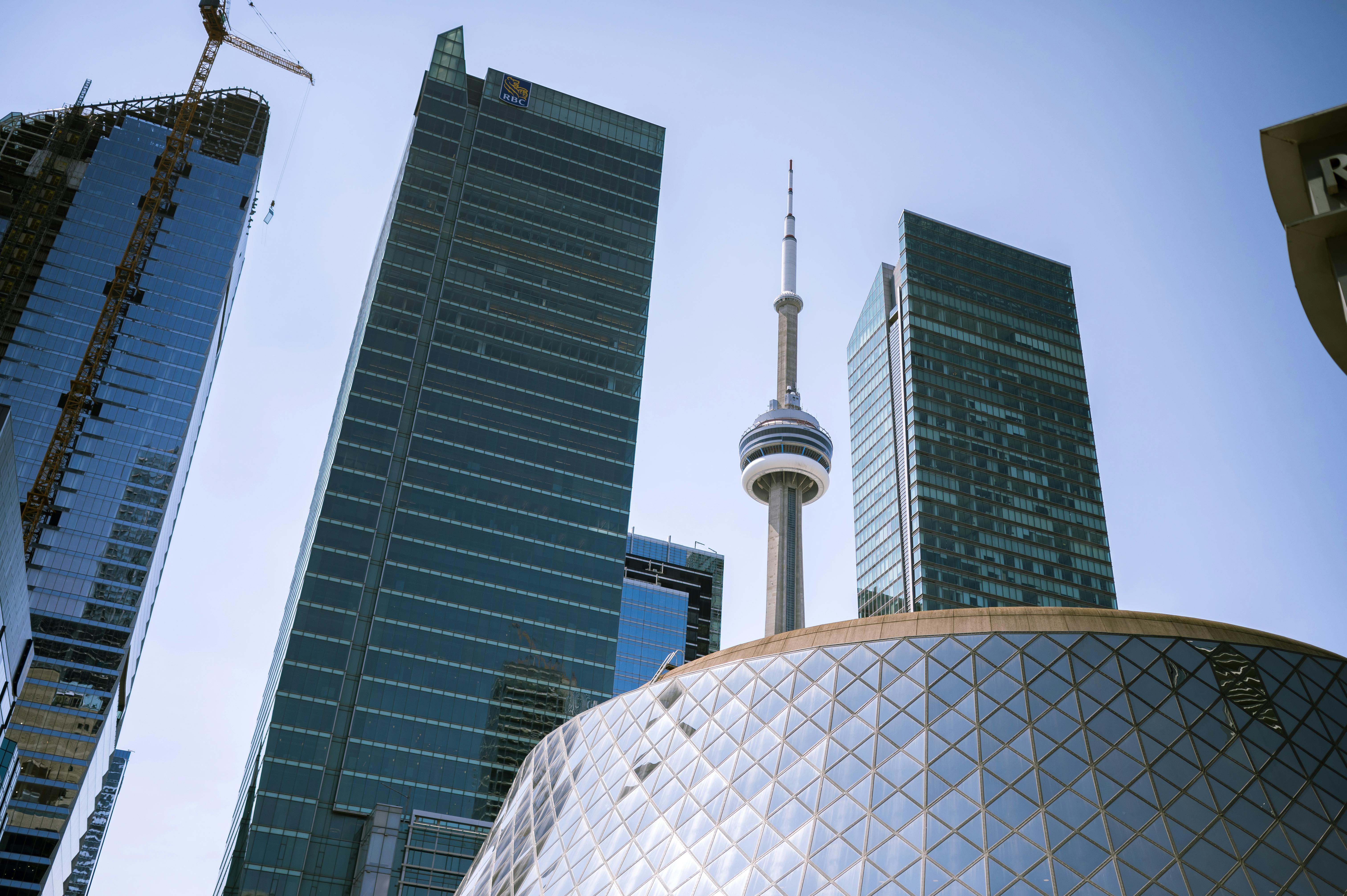
IMAGE: Toronto’s skyline showing the CN Tower rising above a cluster of glass high-rises and cranes—capturing the city’s ongoing architecture and construction boom.
Toronto’s bigger. Toronto’s richer.
So why is Vancouver the one making waves in architecture?
Let’s break it down.
🔹 1. Vancouver Builds With Nature — Not Over It
● Vancouver integrates forests, mountains, and water into almost every design.
● You’ll find towers with green roofs, mass timber hybrids, and skyline views that don’t block the mountains.
Toronto? Mostly sprawl, glass slabs, and parking-first development.
🔹 2. Density Done Right
Vancouver invented “Vancouverism” — skinny high-rises on low podiums, with shared green space in between.
● Better airflow
● Sunlight at street level
● Safer, walkable neighborhoods
Toronto went the mega-condo route — giant glass blocks, little space in between, zero street charm.
🔹 3. Public Consultation Is Real
Vancouver’s design review process is no joke.
They actually say no to ugly proposals.
And citizens get a real say.
Toronto?
Developers run the show. And it shows.
🔹 4. Quality Over Quantity
Vancouver doesn’t build fast — but what it builds often wins awards.
Examples:
▪ The Polygon Gallery
▪ UBC’s Tallwood House (mass timber)
▪ Vancouver House by BIG
▪ Joyce-Collingwood Station upgrade
Toronto builds more. But much of it? Forgettable.
🔹 5. Climate Urgency Drives Design
● Vancouver has been carbon-zero focused for over a decade.
● Passive design, mass timber, and green roofs are the norm.
● Buildings are part of the climate response.
Toronto is still catching up. Policy is there, but design culture lags.
Toronto may be Canada’s economic engine, but Vancouver is its design conscience.
It’s smaller, stricter, greener — and right now, it’s leading the conversation on what cities should look like in the 21st century.
Toronto has the talent. But Vancouver has the vision.
Key Cultural Institutions: The Canadian Centre for Architecture (CCA)
Located in Montreal, the CCA is a powerhouse of architectural knowledge and culture. It serves as:
● A museum and archive of drawings, models, and publications
● A space for public exhibitions and research fellowships
● A magnet for architecture scholars and critics worldwide
Common Search Terms: CCA Montreal, Canadian Center for Architecture, Architecture CCA Canada
Major Canadian Buildings You Should Know
● Canadian Museum for Human Rights (Winnipeg) — Antoine Predock
● National Gallery of Canada (Ottawa) — Moshe Safdie
● Canadian Museum of History (Gatineau) — Douglas Cardinal
● Canadian Museum of Nature (Ottawa) — Renovation by KPMB
● Canada Pavilion at Expo 67 — National design milestone
Great Canadian Architects: Designers Who Shaped a Nation
Canadian architecture is about bold minds who pushed form, culture, and climate into every design. These architects didn’t just build — they reshaped the landscape of Canadian identity through space, material, and vision.
● Arthur Erickson
The Philosopher of West Coast Modernism
Arguably Canada’s greatest architect, Erickson championed modernism rooted in landscape, light, and spiritual depth. His buildings feel carved from the terrain — always respecting context and climate.
Key Works:
-
Simon Fraser University (with Geoffrey Massey) – Burnaby, BC
-
Museum of Anthropology – UBC, Vancouver
-
Robson Square + Law Courts – Downtown Vancouver
-
Canadian Embassy – Washington, DC
What Set Him Apart:
-
Deep use of concrete softened with water, gardens, and horizontality
-
Believed in “buildings as part of the land” — not imposed upon it
-
Blended Indigenous influence, Japanese simplicity, and brutalist honesty
Erickson's influence runs through Canada’s public institutions, education spaces, and coastal aesthetic. Every student of Canadian architecture studies him.
● Douglas Cardinal
The Force Behind Canada's Indigenous Modernism
Born in Alberta, Cardinal brought curves, organic form, and Indigenous worldview to Canadian civic architecture. His buildings reflect the land — flowing, inclusive, and human.
Key Works:
-
Canadian Museum of History (Gatineau)
-
First Nations University (Regina)
-
St. Mary’s Church (Red Deer)
Why He Matters:
-
First major Indigenous architect in Canada
-
Fought institutional racism and red tape to realize his vision
-
Paved the way for today’s Indigenous architects
● Antoine Predock
Borrowed brilliance for a national symbol
While American, Predock’s work in Canada left a mark with his dramatic design for the Canadian Museum for Human Rights in Winnipeg — inspired by hope, ascent, and healing.
His use of stone, light, and internal progression makes it one of Canada’s most emotionally powerful buildings.
● Adele Weder
Canada’s sharpest design critic
A practicing architect turned journalist and critic, Weder’s writing has shaped how Canadians understand design.
-
Co-editor of “Canadian Modern Architecture: 1967 to the Present”
-
Writes for Canadian Architect, Azure, and international publications
-
Advocate for equity, regional voices, and critical reflection in Canadian design
● Ian Chodikoff
Editor, architect, urban thinker
Former editor of Canadian Architect, Chodikoff bridged practice and media. He helped document and debate Canadian urbanism, heritage, and modernism from within the profession.
Bonus Names to Know:
● Phyllis Lambert — Founder of the Canadian Centre for Architecture (CCA)
● Bing Thom — Master of community-centered urban design (Vancouver)
● Patkau Architects — Influential duo blending craft and experimentation
Top Architecture Firms in Canada
● KPMB Architects (Toronto)
● Diamond Schmitt (Toronto)
● Moriyama & Teshima (Toronto)
● Patkau Architects (Vancouver)
● Bing Thom Architects (Vancouver)
● Lemay (Montreal)
Use these firms to: ● Explore internship opportunities
● See top public architecture
● Understand regional design values
What Makes Canadian House Architecture Different?
● Built for snow, wind, and changing seasons
● Emphasis on insulation, energy efficiency, and natural materials
● Prairie houses, West Coast glass homes, Maritime saltbox styles
● Indigenous architectural principles in some public housing
Architecture Education in Canada: What to Know
Major Universities:
● University of Toronto – John H. Daniels Faculty
● McGill University – School of Architecture
● University of British Columbia (UBC SALA)
● Carleton University – Azrieli School of Architecture
Accreditation:
● Overseen by the Canadian Architectural Certification Board (CACB)
● Needed for licensing via provincial associations
● Most programs are 5-7 years, followed by internship and licensing exam (ExAC)
Foreign Architects: How to Practice in Canada
Steps:
- Apply for CACB Assessment – Validate your education
- Use BEFA – A program for Broadly Experienced Foreign Architects
- Pass the ExAC – Required exam for licensure
- Check Local Boards – Like OAA (Ontario), AIBC (BC), OAQ (Quebec)
Bonus: ● RAIC (Royal Architectural Institute of Canada) offers mentorship + CPD
● BEFA is often faster than full re-education — but not easier
Best Books on Canadian Architecture
● Canadian Modern Architecture, 1967 to the Present – Core survey of national design
● Architecture and National Identity – Focused on Expo 67
● Canadian Architect and Builder – Historical journal archive
● Writings by Adele Weder and Ian Chodikoff – Sharp critiques and profiles
FAQ
Q: What’s the most iconic Canadian building?
A: Likely Habitat 67 or the Museum for Human Rights.
Q: Can foreign architects work in Canada?
A: Yes, via CACB accreditation and the BEFA program.
Q: What’s Canada’s best architecture firm?
A: Depends on the type — but KPMB and Diamond Schmitt are top-tier.
Q: Which schools are best for architecture?
A: University of Toronto, McGill, UBC, and Carleton.
Q: What is the CCA?
A: The Canadian Centre for Architecture in Montreal — museum, research, archive.
Q: Are Indigenous architects active in Canada?
A: Yes — and increasingly central to public architecture.
Final Word
Canadian architecture is a layered story of place, climate, innovation, and cultural mix.
From snowproof houses to modernist museums and Indigenous-led design, the country’s built environment continues to evolve with clarity, boldness, and identity.