

Eiffel Tower’s Architectural Mastery: History, Design, and Unique Insights
Eiffel Tower Architecture and Design: It’s hard to imagine Paris without the Eiffel Tower, but back in the 1880s, it was just a controversial design on paper. The Eiffel Tower is truly one of a kind. More than just a stunning piece of architecture, it stands as a symbol of Paris and a remarkable story of innovation.
In this guide, we’ll cover important details that you won’t find in other guides, providing insights from my experience as an architect who has visited the tower.
In addition to focusing on the architecture and design of the Eiffel Tower, we will also discuss how to visit it like an architect. You’ll learn how to truly appreciate the tower by viewing it through the lens of the engineer who built it—insights you won’t find in any standard visitor guide.
When you visit the Eiffel Tower, there are specific ways to explore it that will enhance your experience. I’ll share tips on how to enjoy the tower from key vantage points and highlight the features that make this structure truly special.
The Main Reason Behind the Eiffel Tower’s Construction

The Eiffel Tower’s design, architectural history, and facts about Gustave Eiffel, the architect who made Paris’s icon possible.
Originally, when the Eiffel Tower was proposed in the 1880s, it faced a lot of criticism and skepticism. Many people viewed it as an eyesore, but today, this iron structure is recognized worldwide as an icon of innovation. Gustave Eiffel, the man behind the tower, wasn’t just building a structure—he was changing how people thought about architecture and engineering.
The main reason for constructing the Eiffel Tower was to showcase French innovation. It symbolized progress, creativity, and industrial strength, representing a new era for a country that was celebrating its revolutionary spirit. What started as a temporary exhibit for the 1889 World’s Fair has become a permanent emblem of French culture and ingenuity.
So, as you look up at this beloved landmark, remember that the Eiffel Tower has a rich story to tell, filled with fascinating details that go beyond its impressive height. Let’s explore what makes this iconic structure so remarkable.
Why the Eiffel Tower Was Almost Torn Down

Most people don’t realize that the Eiffel Tower wasn’t always loved. In fact, it almost didn’t survive the 20-year mark. When it was built, critics called it an eyesore, even petitioning to have it removed.
Only after it became useful for radio communications did the public start to see it as more than just a towering “metal monstrosity.” By the time Eiffel’s lease expired, the tower had gained a new status, securing its place in Paris forever.
Eiffel Tower Architecture, Design & Construction

Eiffel Tower Architecture and Design Summary
Design and Construction Process
Building the Eiffel Tower was no easy feat. It involved more than 18,000 iron parts and over 2.5 million rivets. Eiffel's team prefabricated parts in a workshop and transported them to the site. They were then assembled with precise engineering techniques.
- Interesting Fact: The assembly process was so precise that workers could fit parts together without the need for modifications, highlighting the accuracy of prefabrication.
Construction Phases
- Foundations: Strong foundations were critical. The tower’s four legs were anchored on solid concrete bases.
- Prefabrication: Components were prefabricated off-site and then assembled on location, allowing for faster assembly and higher precision.
- Final Assembly: Each piece was positioned with meticulous attention to detail, emphasizing the importance of planning and coordination.
Interesting Fact: Extensive soil testing confirmed that the ground could support the tower's immense weight, a standard procedure in large construction projects today.
Architectural Drawings and Innovations
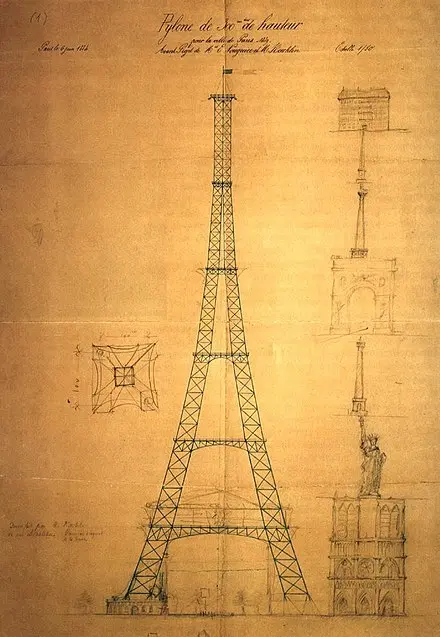
Gustave Eiffel’s architectural drawings highlighted a groundbreaking lattice structure that made the tower both lightweight and strong. Unlike traditional buildings that depend on mass to support their height, the Eiffel Tower's innovative lattice design allowed it to soar without the need for solid walls, embracing the principles of modern engineering.
Interesting Fact: The lattice structure not only reduced wind resistance but also contributed to the tower’s unique aesthetic, which has become its defining characteristic.
Eiffel Tower Architectural Drawings: A Look Inside
Eiffel’s architectural drawings are impressive works in their own right, showcasing the precision and complexity of the tower. They detail the structural calculations that went into designing each component, serving as both a blueprint for construction and significant artifacts of architectural history.
Noteworthy Aspects:
- Detailed Calculations: Each drawing includes specifications to ensure that every part could withstand the tower’s immense weight.
- Engineering Precision: These drawings were essential for helping engineers understand how to build upwards without compromising stability, a revolutionary concept at the time.
Construction Phases
Foundations: Strong foundations were critical, particularly because the tower's height demanded stability against strong winds. The four legs were anchored on concrete bases, which ensured the overall stability of the structure.
Prefabrication: Components were prefabricated off-site and then assembled at the location. This method was innovative for its time, allowing for faster assembly and higher precision.
Final Assembly: Each piece was positioned with meticulous attention to detail, emphasizing the importance of planning and coordination in architectural projects.
Interesting Fact: The foundation work involved extensive soil testing to confirm that the ground could support the immense weight of the tower. This practice has since become a standard procedure in large construction projects, underscoring the importance of proper groundwork in engineering.
Building the Eiffel Tower: From Vision to Reality
The Eiffel Tower is not just a marvel of engineering; it represents innovative design, rigorous planning, and the relentless work of talented architects, engineers, and laborers. Its construction marked a significant moment in architectural history, as its unique structure set the stage for modern engineering achievements.
This section explores the process that turned Gustave Eiffel’s towering vision into reality, the structural challenges the team faced, and the essential roles played by each contributor.
The Conception: An Idea Takes Shape
The story of the Eiffel Tower began in 1884 with Maurice Koechlin and Émile Nouguier, two engineers working for Eiffel’s company. They sketched out the idea of a towering iron structure to serve as a centerpiece for the upcoming 1889 Exposition Universelle, a world fair celebrating the 100th anniversary of the French Revolution.
Their concept was both simple and daring: a 300-meter iron tower that would be the tallest structure in the world. This groundbreaking idea came at a time when stone and brick dominated large constructions, and the notion of an open-lattice iron tower was met with skepticism by many.
Interesting Fact: The design was so revolutionary that it inspired similar structures worldwide, influencing the architectural styles of skyscrapers for decades to come.
Architectural Enhancements by Stephen Sauvestre
To make the tower more visually appealing, architect Stephen Sauvestre joined the project and refined the design. He added decorative arches at the base, a glass pavilion on the first level, and embellishments at the top, which helped to give the structure a more refined look.
Sauvestre’s contributions not only softened the tower’s industrial appearance but also helped sway public opinion and gain official support. His involvement underscored the importance of blending architectural elegance with engineering precision.
Interesting Fact: Sauvestre's glass pavilion was intended as an observation area, showcasing how the design considered both functionality and aesthetics.
Gustave Eiffel’s Role: The Visionary Leader
Gustave Eiffel’s involvement was crucial to the project’s success. Recognizing the potential impact of this tower, he secured the design rights from Koechlin, Nouguier, and Sauvestre.
Eiffel was not merely an engineer; he was a visionary who took risks on innovative projects. He envisioned the tower as a monument to French industrial capabilities and a symbol of modern engineering. His leadership and determination turned a skeptical vision into a reality that would define the Paris skyline for generations.
Interesting Fact: Eiffel was deeply involved in promoting the tower, often giving speeches and presentations to garner support from both the public and government officials.
Designing the Structure: Addressing the Tower’s Challenges
Designing the Eiffel Tower wasn’t just about creating a tall structure; it was about engineering a design that could withstand powerful winds and support its immense weight while ensuring the safety of visitors. Eiffel’s team encountered several structural challenges that required both theoretical knowledge and practical innovations.
Open-Lattice Framework
The design featured an open-lattice structure, which was a bold departure from conventional solid walls. This framework was essential for reducing wind resistance, a critical factor for a structure of this height.
The lattice allowed wind to flow through rather than pushing against solid surfaces, which could have made the tower vulnerable to collapse. Eiffel’s engineers calculated the exact curvature of the legs to distribute weight and balance forces, ensuring that the tower remained stable even in harsh weather conditions.
Interesting Fact: The lattice design was so effective that it allowed the tower to sway slightly in high winds without compromising safety, a feature that has since become a standard consideration in tall building designs.
Four-Base Foundation
Eiffel’s design began with four massive iron legs, each set on concrete foundations at the corners. These foundations needed to support the entire weight of the tower while anchoring it against wind forces.
The base was built with angled supports that converge as the structure rises, directing pressure evenly toward the ground. This unique design was crucial for achieving the desired height while maintaining structural integrity.
Interesting Fact: The design of the foundations was so well-engineered that they remain stable to this day, demonstrating the lasting impact of Eiffel’s work.
The Role of Rivets and Prefabrication
With over 18,000 iron parts and more than 2.5 million rivets, the tower was assembled like an enormous metal puzzle. Eiffel’s team pioneered prefabrication techniques, producing each part off-site to precise measurements and then assembling them on-site.
This approach not only streamlined construction but also minimized errors, as each part was fitted to exact specifications. Riveting the pieces together presented another challenge, as every joint had to withstand the tower’s overall weight and potential wind load.
Interesting Fact: The riveting process was so crucial that each rivet was tested for strength before installation, ensuring the tower's integrity.
Construction Process: From the Ground Up
Construction officially began in January 1887, and the timeline for completion was just over two years. The process was highly organized, with workers assembling the prefabricated parts at a pace that astounded onlookers.
To lift and position heavy iron pieces, Eiffel’s team used specially designed cranes and lifts. As the tower rose, temporary wooden scaffolding supported the iron framework, and workers braved extreme heights with basic safety gear.
Worker Safety and Innovation
Remarkably, only one fatality occurred during the entire construction process—a rare achievement in the late 19th century when worker safety was often overlooked. Eiffel introduced measures such as guardrails, harnesses, and a rotation system for workers at high altitudes to reduce the risk of accidents.
These precautions reflected Eiffel’s commitment to his team and his drive to complete the project with minimal setbacks.
Public Reaction: From Skepticism to Awe
When the Eiffel Tower was first proposed, public opinion was sharply divided. Artists, writers, and critics described it as a “monstrosity” and an “industrial skeleton” that would ruin the beauty of Paris. Some prominent figures even launched petitions to halt its construction.
Despite this backlash, Eiffel pressed on, confident that his tower would eventually be appreciated. Upon completion, the public was quickly captivated by its sheer size and unique structure. The tower became a popular attraction, with visitors eagerly paying to climb to the top and enjoy panoramic views of Paris.
The excitement surrounding this new symbol of modernity soon drowned out the criticism, and the Eiffel Tower found its place as a beloved landmark in the city.
The Structural Challenges That Shaped the Tower
The construction of the Eiffel Tower was not without obstacles. The engineering team faced significant issues regarding wind stability, weight distribution, and overall structural integrity—all unprecedented challenges for a structure of this height.
Wind Resistance and Height Calculations
One of the biggest concerns during the design phase was wind resistance. Eiffel’s team carefully studied how wind would impact the structure, discovering that its height made it particularly susceptible to strong gusts. To address this issue, they calculated the angles and dimensions of each section to create a tapered effect.
This gradual narrowing gave the tower a “wind-shedding” design, allowing it to sway slightly without compromising its stability.
Interesting Fact: The tower can sway up to 6-7 cm (about 2-3 inches) in high winds, which is a testament to its engineering.
Innovative Use of Iron
The Eiffel Tower was one of the first large-scale structures to be constructed entirely of iron, a material that was both lightweight and strong enough to support great heights. Iron also provided flexibility under stress, contributing to the tower’s longevity and stability.
Eiffel’s focus on structural innovation allowed the tower to stand the test of time and paved the way for the widespread use of metal in modern skyscrapers.
Precision in Assembly
Due to its prefabricated design, each part had to fit precisely with the others, demanding high accuracy in production and assembly. The team maintained rigorous standards for every piece, resulting in very few errors.
This level of precision was groundbreaking for the time and was crucial to ensuring the stability and success of the completed tower.
The Collaborative Effort Behind the Eiffel Tower
The Eiffel Tower was not a solo project; it was the result of collaboration among skilled professionals who brought different strengths to the table:
- Gustave Eiffel: The driving force behind the project, Eiffel oversaw every aspect, from design to construction, ensuring that his vision was realized down to the last detail.
- Maurice Koechlin and Émile Nouguier: As the primary engineers, Koechlin and Nouguier developed the initial design concept and addressed the engineering challenges, from the lattice framework to the calculations necessary for the tower’s height.
- Stephen Sauvestre: The architect who refined the tower’s appearance by adding decorative elements that softened its industrial look. His enhancements helped make the structure more appealing to the public and contributed significantly to its iconic style.
The Eiffel Tower’s construction story is one of ingenuity, perseverance, and collaboration. From the initial controversial design to its transformation into a beloved Parisian landmark, the tower represents a remarkable achievement in architectural history. Each phase of its construction reveals the innovative spirit of the late 19th century and the determination of those who brought Gustave Eiffel’s vision to life.
Today, the Eiffel Tower is much more than just a remarkable feat of engineering. It serves as a powerful symbol of innovation and resilience, reflecting the spirit of creativity that defines Paris.
Every visitor who gazes upon its towering structure is reminded of the bold vision and hard work that went into its creation. The stories of Gustave Eiffel and his team inspire us to believe in the possibilities of design and engineering, showing that with determination and imagination, even the most ambitious dreams can take shape and become lasting icons.
More In-Depth Details on the Eiffel Tower: Historical Background and Construction Phases
In 1889, Paris was buzzing with excitement as it prepared to host the Exposition Universelle, a grand world fair celebrating the 100th anniversary of the French Revolution. This event was a chance for France to showcase its achievements in industry and culture on a global scale.
The Vision for the Tower
To make a big statement, the French government wanted a monumental structure that would serve as the centerpiece of the exhibition. It needed to symbolize the nation’s industrial strength and creativity.
- Gustave Eiffel's Proposal: Eiffel proposed an ambitious design for a 300-meter iron tower, which was chosen for its potential to represent a new era of French innovation.
- Competition Among Nations: At that time, countries were competing to show off their technological advancements, and Eiffel’s tower promised to be a stunning achievement that would draw international attention.
Facing Criticism
From the start, the project faced serious criticism. Many artists and intellectuals saw the design as an eyesore that didn’t fit with the traditional beauty of Paris. Debates heated up in public forums, with famous figures expressing their disdain for the tower.
- Notable Critics: People like writer Guy de Maupassant and playwright Alexandre Dumas openly criticized the tower, calling it a “monstrous skeleton” that would ruin the Paris skyline.
- Eiffel’s Determination: Despite this negative feedback, Eiffel was determined. He believed that once the tower was finished, its benefits would shine through, and people would come to appreciate it.
Key Dates in the Construction Timeline
1887: Laying the Foundations

Construction kicked off on January 28, 1887, starting with the foundations. The process was complex, especially for the west and north legs, which were closer to the Seine River.
- Foundation Details:
- The east and south legs were straightforward, resting on four concrete slabs.
- The west and north legs required deep piles, driven to a depth of 22 meters for stability.
- Interesting Fact: The foundations were built to withstand the immense weight of the tower, with slabs 6 meters thick.
1887: Engineering and Preparatory Work
As construction progressed, Eiffel's team worked hard behind the scenes. They created thousands of detailed drawings to ensure every part was precisely designed.
- Drawing Precision:
- Over 1,700 general drawings and 3,629 detailed drawings were made.
- The position of rivet holes was specified to within 1 millimeter.
- Interesting Fact: If a part didn’t fit perfectly during assembly, it was sent back to the factory for adjustments. No on-site modifications were allowed!
1888: Assembling the Iron Structure

The iron structure assembly began on July 18, 1887. This phase involved piecing together 18,038 parts, which required careful planning and execution.
- Using Scaffolding:
- Temporary scaffolding supported the tower as it rose.
- A “creeper” crane was installed to help move materials up as construction progressed.
- Interesting Fact: The scaffolding system allowed for a smoother assembly process and demonstrated innovative building techniques for the time.
1888: Completing the First Level

By March 1888, the legs were joined at the first level. This was a critical stage in the construction.
- Hydraulic Jacks:
- Hydraulic jacks were used to make precise adjustments, ensuring everything lined up perfectly.
- The legs were intentionally built at a slightly steeper angle, allowing for minor corrections.
- Interesting Fact: This innovative use of hydraulic jacks could exert up to 800 tonnes of force, showcasing advanced engineering practices.
1888: Building the Second Level
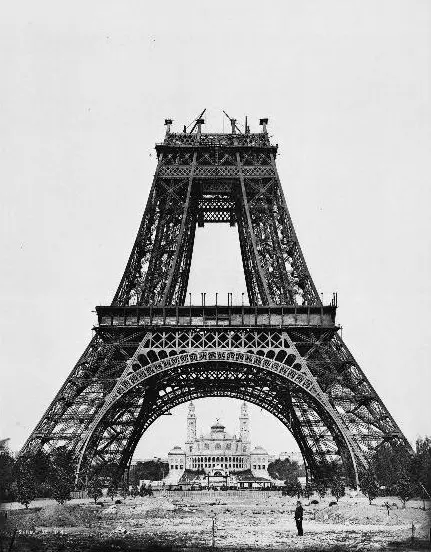
The construction of the second level started in May 1888. This phase was all about continuing the impressive rise of the tower.
- Construction Techniques:
- Workers used wooden scaffolding and small steam cranes for assembly.
- This method allowed workers to reach great heights safely.
- Interesting Fact: The scaffolding provided such a stable platform that it facilitated efficient assembly of the structure.
March 1889: Reaching the Top
By the end of March 1889, most of the structural work was completed. Eiffel celebrated this achievement by inviting officials and press representatives to the top of the tower.
- First Ascent:
- The climb to the top took over an hour on foot, and Eiffel used this opportunity to explain various features of the tower.
- Interesting Fact: Eiffel proudly raised the French flag at the top, marking a significant milestone in the tower's history.
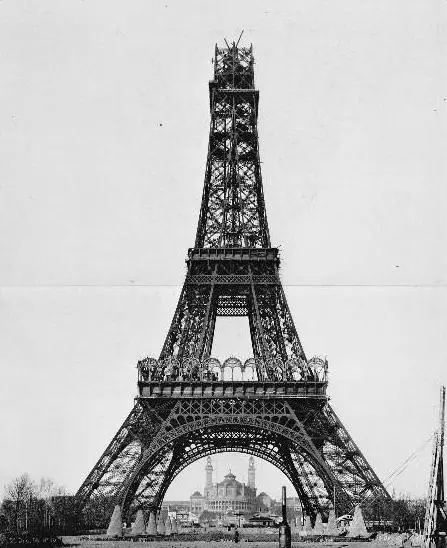
May 1889: Public Opening
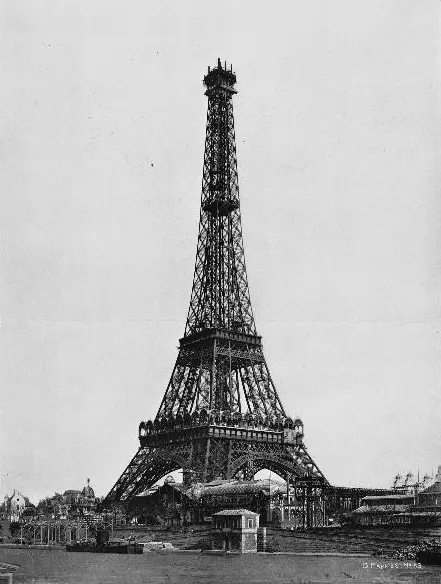
Although the tower was finished in time for the Exposition Universelle, it officially opened to the public on May 6, 1889.
- Climbing the Tower:
- Initially, visitors had to climb 1,710 steps to reach the top before the elevators were operational.
- Nearly 30,000 visitors made the climb within weeks of opening.
- Interesting Fact: The excitement around the tower was palpable, and it quickly became a major attraction, showcasing the public’s eagerness to experience this new landmark.
May 1889: Illumination and Daily Operations
After dark, the tower was lit with hundreds of gas lamps, creating a stunning visual display.
- Special Features:
- A beacon sent out beams of light, and searchlights illuminated the exposition buildings.
- The daily operations included opening and closing announcements made by a cannon at the top.
- Interesting Fact: The tower's lighting made it a popular nighttime attraction, drawing visitors who wanted to see the illuminated structure.
Notable Visitors and Events
Throughout its history, the Eiffel Tower has welcomed many famous visitors, including royalty, artists, and inventors.
- Famous Guests:
- The Prince of Wales, Sarah Bernhardt, and Thomas Edison were among those who visited.
- Eiffel invited Edison to his private apartment at the top, where they discussed innovations.
- Interesting Fact: Edison signed the guestbook with a message praising Eiffel’s engineering prowess, solidifying the tower’s status as a modern marvel.
The Eiffel Tower’s construction is an inspiring story of vision, innovation, and resilience. Each phase of its development reflects Gustave Eiffel's commitment to creating an enduring symbol of French ingenuity.
Today, the Eiffel Tower stands not only as an architectural marvel but also as a powerful reminder of creativity and determination in shaping the skyline of Paris.
Eiffel Tower Structural Design
In Focus: Strength in Design – Exploring the Eiffel Tower’s Structural Brilliance
Structural Analysis
The Eiffel Tower’s lattice structure is a prime example of innovative engineering that goes beyond mere aesthetics; it serves a crucial functional purpose.
This open-lattice design allows the tower to withstand strong winds—up to 130 km/h (81 mph)—making it incredibly stable in various weather conditions.
The Truss Design
One of the standout features of the Eiffel Tower is its truss design. Trusses are triangular frameworks that distribute loads effectively, providing strength without adding excessive weight. The lattice consists of crisscrossed iron beams that form a series of triangles. This configuration not only looks striking but also maximizes the tower's ability to resist wind pressure and other forces acting upon it.
Eiffel's engineers understood that a tall structure needed to be both light and strong. The use of iron allowed for this balance, enabling the tower to reach unprecedented heights while maintaining stability. This was particularly important given the height of the tower; as it rises, the forces acting on it become more complex.
Curvature and Stability
Gustave Eiffel specifically designed the curvature of the tower’s legs to enhance stability. The legs are wider at the base and taper as they ascend, creating a silhouette that is both elegant and structurally sound.
This tapered design helps to disperse the weight of the tower evenly and directs forces down through the legs into the foundations. It also minimizes the impact of wind, allowing the tower to sway slightly without risk of collapsing.
Mathematical models played a significant role in determining the angles and lengths of each leg and beam. Eiffel’s team conducted extensive calculations to ensure that every element of the structure could handle the stresses caused by both its height and the weight of the materials used in its construction. By doing this, they created a design that was not only functional but also pioneering for its time.
Wind Resistance
The lattice design is particularly effective in reducing wind resistance. Instead of pushing against solid surfaces, wind flows through the gaps in the lattice structure, significantly lowering the amount of pressure exerted on the tower. This design choice was revolutionary and allowed the Eiffel Tower to stand tall where many other structures might falter.
Interestingly, the tower can sway about 6-7 cm (approximately 2-3 inches) in high winds. This slight movement is a testament to the effectiveness of Eiffel’s engineering. The ability of the structure to flex under pressure is a critical factor in its durability. It means that rather than being rigid and potentially breaking under stress, the tower can adapt to changing conditions, ensuring its longevity.
Overall, the Eiffel Tower’s lattice structure exemplifies how thoughtful engineering can create a design that is both beautiful and resilient. Gustave Eiffel and his team did not just build a tall structure; they crafted a marvel that showcases the possibilities of iron and steel in architecture.
The design has inspired countless structures worldwide, proving that innovation in engineering can result in landmarks that stand the test of time and weather. This combination of form and function is what makes the Eiffel Tower a true architectural masterpiece.
Architectural Style and Unique Features
While most people refer to the Eiffel Tower as an architectural landmark, it’s important to note that it is primarily a feat of structural engineering, with architecture serving as a secondary function.
Gustave Eiffel’s design broke away from traditional architectural conventions, showcasing a bold, open-lattice iron structure that was revolutionary for its time. This innovative approach challenged the prevailing belief that buildings had to be massive and dense to be stable and impressive.
Unique Features:
- Iron Lattice Structure: The most striking feature of the Eiffel Tower is its open-lattice frame made of wrought iron. This design allows wind to pass through rather than pushing against solid surfaces, which significantly reduces pressure on the structure. The lattice not only contributes to the tower's lightweight appearance but also enhances its overall stability. This was a groundbreaking concept in engineering that has influenced the design of many modern skyscrapers and bridges.
- Height: When completed in 1889, the Eiffel Tower stood at a staggering height of 300 meters (984 feet), making it the tallest man-made structure in the world at the time. It held this record until the Chrysler Building in New York City was completed in 1930. The Eiffel Tower’s height was not just a display of ambition; it symbolized France's industrial prowess and ability to innovate in the realm of engineering. Even today, it remains one of the tallest structures in Paris, offering breathtaking views of the city from its various observation levels.
- Elevators: The Eiffel Tower also features innovative hydraulic elevators that were a marvel of engineering in the 19th century. These lifts allowed visitors to ascend to the top of the tower with relative ease, providing an experience that was virtually unheard of at the time. The elevators are designed to accommodate large numbers of visitors and offer stunning views during the ascent. This feature helped make the tower not just an architectural wonder but also a popular attraction, allowing millions to enjoy the panoramic views of Paris from its summit.
So, when you think about the Eiffel Tower, remember that its architectural style and unique features are more than just impressive details—they're a testament to what innovative engineering can achieve. This iconic structure blends practicality with beauty, and it’s no wonder that it continues to inspire architects and engineers around the world. Whether you're an aspiring designer or just someone who appreciates good craftsmanship, the Eiffel Tower is a reminder that creativity and determination can lead to something truly extraordinary.
The Visionary Architect: Gustave Eiffel
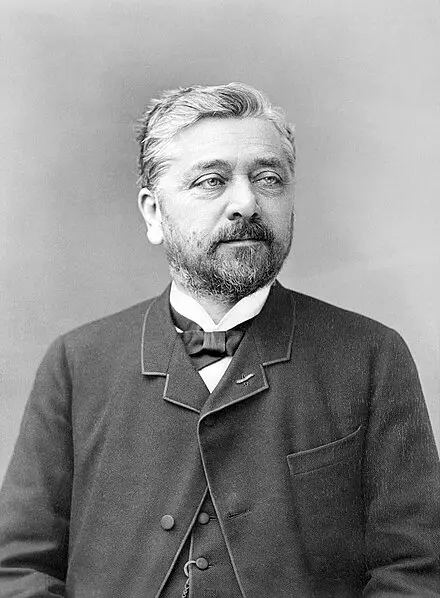
Gustave Eiffel wasn’t an architect by training; he was a civil engineer with a strong background in metallurgy and bridge construction. His company earned a reputation for tackling ambitious projects, including the metal framework for the Statue of Liberty. However, the Eiffel Tower stands as his masterpiece, showcasing his expertise in iron construction on an unprecedented scale.
Interesting Facts About Gustave Eiffel:
- Early Career: Eiffel started his career working on railway bridges, which were essential to the rapid expansion of train travel in the 19th century. His first significant project was the Bordeaux Bridge, completed in 1860.
- Innovative Techniques: He was known for his innovative use of iron and prefabrication techniques, which allowed for precise assembly and efficient construction. This approach would later be crucial in the construction of the Eiffel Tower.
- The Eiffel Tower’s Impact: When completed in 1889, the Eiffel Tower was the tallest man-made structure in the world, a title it held for 41 years until the completion of the Chrysler Building in New York City.
- Scientific Contributions: Beyond engineering, Eiffel was passionate about science. He conducted experiments in aerodynamics and meteorology, using the Eiffel Tower as a laboratory to study wind patterns and atmospheric conditions.
- Personal Life: Eiffel faced personal challenges, including the loss of his wife, Marie, in 1877. He raised their five children while navigating the pressures of his career. His family life often intertwined with his professional commitments.
For a complete story of Gustave Eiffel, his personal life, and the fascinating history of the Eiffel Tower, visit our detailed article: Gustave Eiffel and the Story of the Eiffel Tower: Architecture and History. This article will provide you with a deeper understanding of the man behind the tower and the incredible legacy he left behind.
A Few Lesser-Known Facts About the Eiffel Tower
Fascinating Facts About the Eiffel Tower
- Temperature Effects: The Eiffel Tower actually “grows” and “shrinks” with the seasons. Due to the expansion and contraction of its metal structure, it changes height by about 6 inches (15 cm) depending on the weather.
- Number of Visitors: With millions of people visiting every year, the Eiffel Tower ranks as one of the world’s most-visited paid monuments, drawing tourists from across the globe.
- Broadcasting Hub: Its impressive height made it an ideal site for broadcasting. Starting with radio in the early 1900s and later for television signals, this feature actually helped prevent it from being demolished when its original permit was set to expire.
- Color Changes Over Time: The Eiffel Tower doesn’t stay the same color. It’s repainted every seven years, with shades ranging from reddish-brown to yellow over the years. Today, it stands in a unique bronze shade officially called “Eiffel Tower Brown.”
- Secret Apartment: Gustave Eiffel included a small private apartment at the top of the tower. It wasn’t for living but for hosting famous guests, including inventors like Thomas Edison, giving them an unparalleled view of Paris.
- Lights Out Policy: While the Eiffel Tower glows beautifully at night, the lights are turned off at 1 a.m. Also, due to copyright regulations, publishing nighttime photos of the tower requires permission, as the lighting design is protected.
These details show how the Eiffel Tower, beyond its architectural prowess, has adapted and changed over the years, holding secrets and surprises that continue to fascinate people around the world.
The Eiffel Tower’s Lasting Impact and Legacy
Initially constructed as a temporary structure for the 1889 Exposition Universelle, the Eiffel Tower was nearly dismantled after the fair. However, Gustave Eiffel's foresight in repurposing it for scientific endeavors, such as meteorological studies and radio transmission, ensured its survival and cemented its status as a symbol of innovation.
Today, the Eiffel Tower stands as one of the most visited monuments in the world, embodying the spirit of Paris and France. Its creation exemplifies the power of engineering, teamwork, and the willingness to push boundaries. From meticulous calculations of wind resistance to the innovative use of prefabricated parts, every detail of the tower’s construction represented a leap into uncharted territory.
The tower's enduring presence serves as a reminder that great achievements require bold ideas, resilience, and collaboration. Its story is not just one of architectural brilliance but of overcoming obstacles and proving that innovation can create something timeless.
Experiencing the Eiffel Tower Through an Architect's Lens
Visiting the Eiffel Tower offers a unique opportunity to appreciate its architectural and engineering marvels from a professional perspective. Here’s how to approach your visit to make the most of this iconic landmark:
Begin at the Base
Start by observing the four massive iron legs, each anchored on concrete foundations. Take note of the precise curvature and tapering as they rise. This design isn’t just for looks; it’s engineered to distribute weight and resist wind forces effectively. Look closely at how the structure shifts from solid bases to delicate arches, showcasing both strength and grace. This transition is crucial in allowing the tower to withstand the elements while maintaining its elegant silhouette.
Examine the Lattice Structure
The open-lattice iron design is visually striking and serves as a testament to innovative engineering. This framework allows wind to pass through rather than against it, reducing pressure and enhancing stability. As you stand beneath the tower, look up and admire the intricate patterns formed by the lattice. Notice how the sunlight filters through the gaps, creating unique shadows that dance on the ground. This design choice not only demonstrates the structural efficiency of the tower but also adds an artistic dimension that engages visitors.
Study the Prefabrication Process
Recognize the significance of the tower's prefabricated components, produced off-site and assembled on location. This innovative approach allowed for quicker assembly and greater precision. Consider the logistics involved in transporting these massive iron pieces and fitting them together seamlessly at such heights. Think about how this method reflects modern construction practices and efficiency in design. If you’re curious about construction techniques, observe how the joints and connections are designed to ensure stability under stress.
Observe the Elevators
The original hydraulic lifts, installed in 1889, were groundbreaking for their time. As you ride one of the modernized elevators, reflect on the engineering feats that allow millions of visitors to ascend with ease. Take a moment to appreciate the view from the lift as it rises, giving you a taste of what early visitors experienced. Notice how the elevators are integrated into the structure, not just as functional elements but as part of the overall design.
Reflect on the Aesthetic Details
Pay attention to the decorative arches at the base and the glass pavilion on the first level. These enhancements were added to soften the tower's industrial look and create a more welcoming environment. As you explore the first level, appreciate how these details make the space feel more inviting and how they contribute to the tower’s overall aesthetic appeal. Look at how the arches support not only the structure but also the narrative of the Eiffel Tower as a cultural icon.
So, as you explore the Eiffel Tower, keep an eye on these key features. They’ll not only enhance your visit but also give you a newfound appreciation for the tower’s architectural brilliance and the clever engineering that brought it to life.
You'll see that there's so much more to this iconic structure than meets the eye, and each detail tells a part of its incredible story. Enjoy the experience like an architect, and let the tower inspire you!
The Hidden Side Beneath the Tower: Street Vendors and Litter
The Eiffel Tower, an enduring symbol of Paris and a testament to architectural brilliance, has recently faced challenges that detract from its grandeur. Visitors have reported issues such as littering and the presence of unlicensed street vendors around the tower. For instance, during a garbage collectors' strike in March 2023, uncollected trash accumulated near the Eiffel Tower, affecting the area's aesthetics. El País English
Additionally, unauthorized vendors often sell counterfeit souvenirs and food items stored under unsanitary conditions, including in sewers.
These activities not only compromise the visitor experience but also pose health risks and undermine the tower's reputation.
Efforts are ongoing to address these issues. Parisian authorities have conducted operations to dismantle networks of illegal vendors, seizing large quantities of counterfeit souvenirs. BBC
However, the persistence of these problems highlights the need for continued vigilance and community involvement to preserve the dignity of this iconic landmark.
Maintaining the Eiffel Tower's surroundings is crucial to honoring its historical and cultural significance. By addressing these challenges, we can ensure that the tower remains a proud symbol of Parisian heritage and architectural excellence.
The Man Who Sold the Eiffel Tower: Twice
In the annals of audacious scams, Victor Lustig's tale stands out. In 1925, this con artist convinced a group of scrap metal dealers that the Eiffel Tower was to be dismantled and sold for parts. Posing as a government official, Lustig arranged a secretive bidding process, ultimately swindling a dealer out of a substantial sum. Remarkably, he repeated the scam with another dealer before fleeing to the United States.
Lustig's elaborate ruse involved forged documents and persuasive storytelling, exploiting the monument's maintenance costs and public debates about its future. His ability to sell the Eiffel Tower not once, but twice, showcases his cunning and the gullibility of his victims, cementing his legacy as one of history's most notorious con men.
Why the Eiffel Tower is Unique in Architectural History
Unlike traditional buildings, which were primarily stone or brick, the Eiffel Tower was made entirely of wrought iron. This departure from typical construction materials allowed Eiffel to create a structure that was both lightweight and exceptionally tall, setting new standards in architectural history.
How It Influenced Modern Architecture
The Eiffel Tower inspired a new age of architecture, showing the possibilities of iron and steel in creating taller, lighter buildings. It paved the way for the construction of skyscrapers and steel-frame structures worldwide.
The Story of the Eiffel Tower: Answering Common FAQs
Facts, Surprises, and Why It Almost Didn’t Survive
The Eiffel Tower may be Paris’s pride now, but when it was first built, let’s just say, it wasn’t winning any popularity contests. Here’s a deep dive into the fascinating (and occasionally ridiculous) facts, the wild criticism, and the engineering marvels behind the tower that almost didn’t make it past its 20th birthday.
The Original Idea Behind the Eiffel Tower
The Eiffel Tower wasn’t dreamed up as a monument to love or as an artistic vision of Paris’s future. Its purpose was purely practical: to showcase France’s engineering prowess at the 1889 World’s Fair, marking the 100th anniversary of the French Revolution. The idea? Build something big, bold, and structurally groundbreaking to show off France’s industrial might. Gustave Eiffel, with his background in metallurgy and large-scale constructions, pitched the idea of a 300-meter iron tower—a height unheard of at the time.
How Tall is the Eiffel Tower, Really?
The Eiffel Tower stands at 324 meters (1,063 feet) today, with its height slightly fluctuating depending on temperature. When it was completed, it was the tallest man-made structure in the world, surpassing the Washington Monument by a significant margin. In fact, it held the record until the Chrysler Building in New York took over in 1930. That’s over 40 years of architectural bragging rights.
The Reaction: From Eyesore to Icon
When Eiffel’s iron giant rose above the Paris skyline, not everyone was thrilled. Artists and intellectuals alike signed petitions, describing the tower as a “monstrous skeleton” and a “truly tragic streetlamp.” Guy de Maupassant, a famous French writer, even said he hated the tower so much that he would eat lunch inside it—because it was the only place in Paris where he didn’t have to look at it! Despite this early hate, the tower soon became a beloved icon, especially after it started being used for radio broadcasts.
Was Everyone Happy with the Construction?
Not even close. Many Parisians thought the tower was ugly, and some wealthy residents went so far as to suggest tearing it down before the World’s Fair even ended. Even after construction, the tower was only supposed to stand for 20 years. After that, the plan was to dismantle it, but Eiffel cleverly adapted it to serve as a giant radio antenna. This use for communications helped cement its place as a permanent fixture in Paris.
Why Was the Eiffel Tower So Difficult to Build?
Constructing a 300-meter-tall iron structure was no small feat in the 1880s. First off, iron isn’t exactly lightweight. Eiffel’s team used over 2.5 million rivets to put the structure together, with every piece prefabricated and then assembled like an enormous metal jigsaw puzzle. And this was in an era without heavy machinery or advanced cranes! Plus, workers had to brave the heights with basic safety gear, which included leather harnesses and, well, courage.
What’s Unusual About the Eiffel Tower’s Shape?
The tower’s shape isn’t just for looks; it’s all about science. Eiffel designed it to handle the pressure of wind, which is why it has a broad base and narrows as it rises. The open lattice structure lets wind pass through, making it incredibly stable. Eiffel and his engineers even calculated the precise curvature of the legs to ensure the tower could withstand strong gusts, which is why it sways only a few centimeters in high winds.
Some Fun Facts About Gustave Eiffel
Gustave Eiffel was more than an architect; he was a master of engineering and physics. Beyond his tower, he contributed to the Statue of Liberty’s metal framework and conducted experiments in aerodynamics. After his engineering career, he even dabbled in meteorology and aerodynamics, using the Eiffel Tower as a lab for experiments. Talk about a second act!
Why Did Some People Dislike the Tower at First?
The Eiffel Tower’s design was revolutionary, and sometimes revolutionary isn’t welcomed with open arms. Many people in the late 1800s associated iron with industrial ugliness. They were used to seeing grand stone buildings like Notre-Dame, not exposed iron skeletons. Some even worried that it would collapse under its own weight or ruin the “romantic” atmosphere of Paris. As it turned out, Eiffel’s calculations were spot-on, and the tower stood tall, despite the doubters.
How Was the Eiffel Tower Built So Quickly?
The construction took just over two years—remarkably fast for its time, especially for a structure so novel. Eiffel’s method was key here: prefabrication. All the iron parts were made in a factory and then shipped to the site, where they were pieced together. This modular approach sped up the process and allowed for incredible precision. By the end of 1888, the tower’s frame was complete, and it was ready for the 1889 World’s Fair debut.
What Does the Eiffel Tower Symbolize Today?
Originally meant to symbolize France’s industrial and engineering prowess, the Eiffel Tower has come to mean so much more. Today, it represents art, culture, and even romance—an ironic twist, given its early reputation. It’s now one of the most recognizable structures in the world and a universal symbol of Paris.
Why Is the Eiffel Tower Shaped That Way?
Eiffel’s unique lattice design wasn’t just a whim. The shape minimizes wind resistance, a critical factor for a structure that tall. Eiffel used mathematical formulas to figure out the exact curvature of the tower’s legs to balance the forces acting on it, proving he was more than just an architect—he was a scientist at heart.
Final Thoughts
More than a structure, the Eiffel Tower is a statement—a testament to human ambition and creativity. Gustave Eiffel’s architectural achievement has not only changed Paris but has also left an indelible mark on the world of engineering and design. From critics to global admirers, the Eiffel Tower continues to inspire, proving that even the boldest ideas can become timeless.