
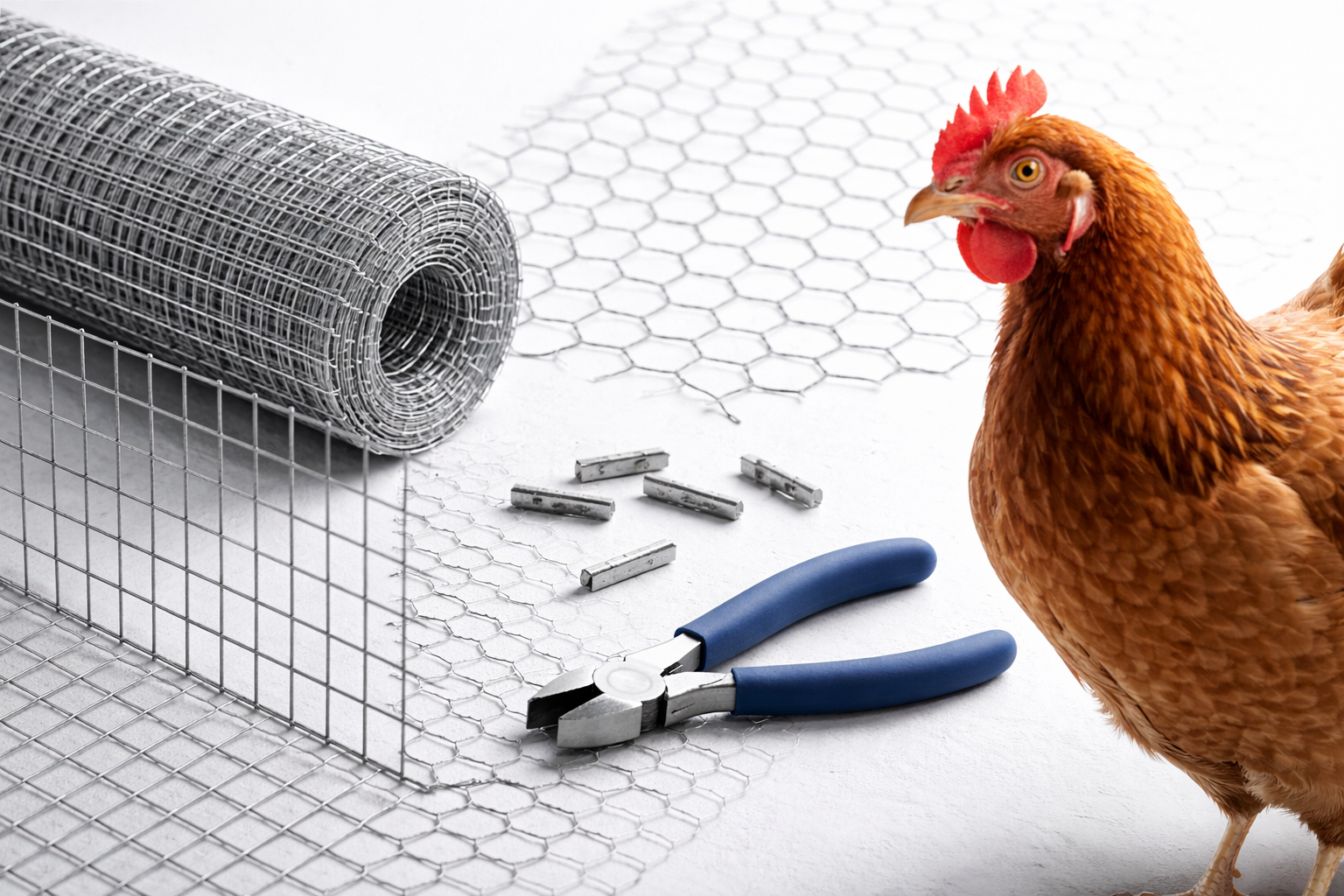
Chicken Coop Ideas for Any Backyard
Most “chicken coop ideas” online fall into two buckets: pretty but annoying to live with, or “cheap” but built like a predator training course. The good coops are boring in the right ways: dry, easy to clean, hard to break into, and designed around how you actually use them every day.
What this covers
- Simple → medium → hard builds (DIY, non-DIY, and “enthusiast / builder brain”)
- Small yard → big flock → portable / chicken tractor → walk-in systems
- Ugly-but-practical → good-looking → clean modern designs
- Run ideas that don’t turn into a mud pit
- Interior ideas (roosts, nest boxes, clean-out, egg access, wiring zones)
If you want to go straight to budget builds that still hold up, start with cheap chicken coop ideas that actually last.
The 4 non-negotiables
(ignore these and every “idea” fails)

1) Predator reality (build for raccoons, not cartoons)
Predators don’t “test” coops. They commit. Raccoons can manipulate simple latches, and flimsy wire becomes an opening. If you remember one rule: chicken wire is for containing chickens, not stopping predators. Use welded hardware cloth where claws and teeth matter.
2) Ventilation without drafts (dry air beats “warm” air)
Coops get wet from bird respiration and manure moisture. In cold weather especially, you’re managing humidity more than temperature. You want high ventilation exits (moist air rises) while keeping roost level out of direct drafts.
3) Daily-use access
- Egg access without crawling
- Clean-out access big enough for a shovel/bin
- Feed/water access that doesn’t require entering the “poop zone”
4) Water management (roof overhang + raised threshold + dry run)
A coop can be “strong” and still rot because water runs off the roof into the run, the run becomes mud, and the coop stays damp. Roof overhang + drainage + a run you can keep dry matters more than fancy siding.
Want the complete checklist and decision path? Read Chicken Coop Guide: Build vs Buy vs Upgrade.
Pick your base coop archetype

(fast decision table)
| Archetype | Best for | Difficulty | Why it works | Where it fails |
|---|---|---|---|---|
| Micro-coop + strong run | Small yards, 2–6 layers | Easy–Medium | Small dry box, big usable run | Tiny access doors, bad ventilation |
| Raised coop (under-run) | Layers, limited space | Medium | Dry floor + shaded run below | Cleaning under it, drafts if exposed |
| Walk-in shed coop | 8–30 birds, serious use | Medium–Hard | You can actually work inside | Overbuilt, poorly vented, expensive mistakes |
| Portable / tractor | Rotational grazing, small flocks | Medium | Moves manure, protects grass | Too heavy to move, heat stress, weak predator protection |
Category A — Cheap chicken coop ideas
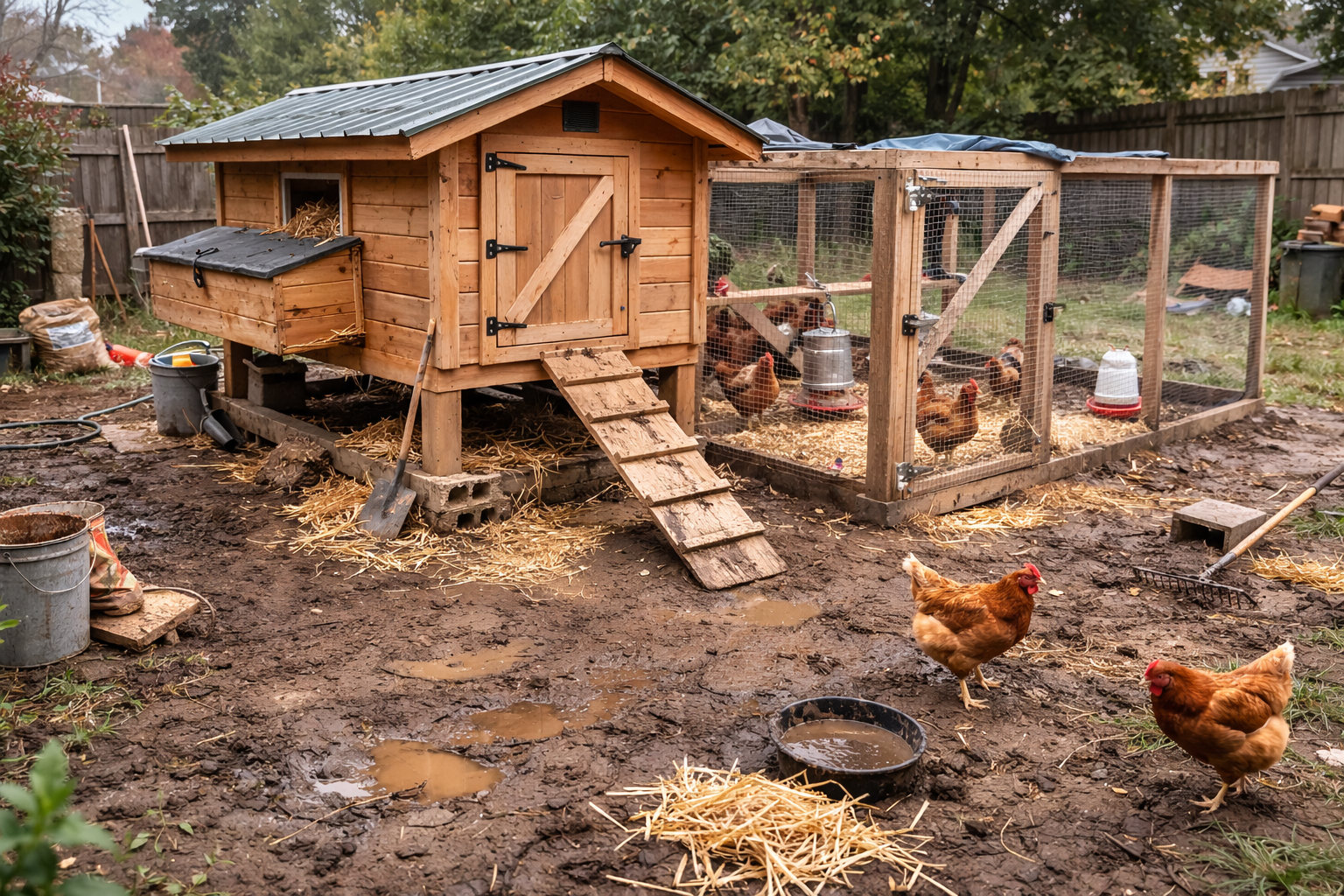
(ugly, fast, but actually usable)
Goal here: spend little, but don’t build a death box. You can be cheap on cosmetics. Don’t be cheap on latches, wire, and roof.
1) Pallet “skin” coop on a real frame
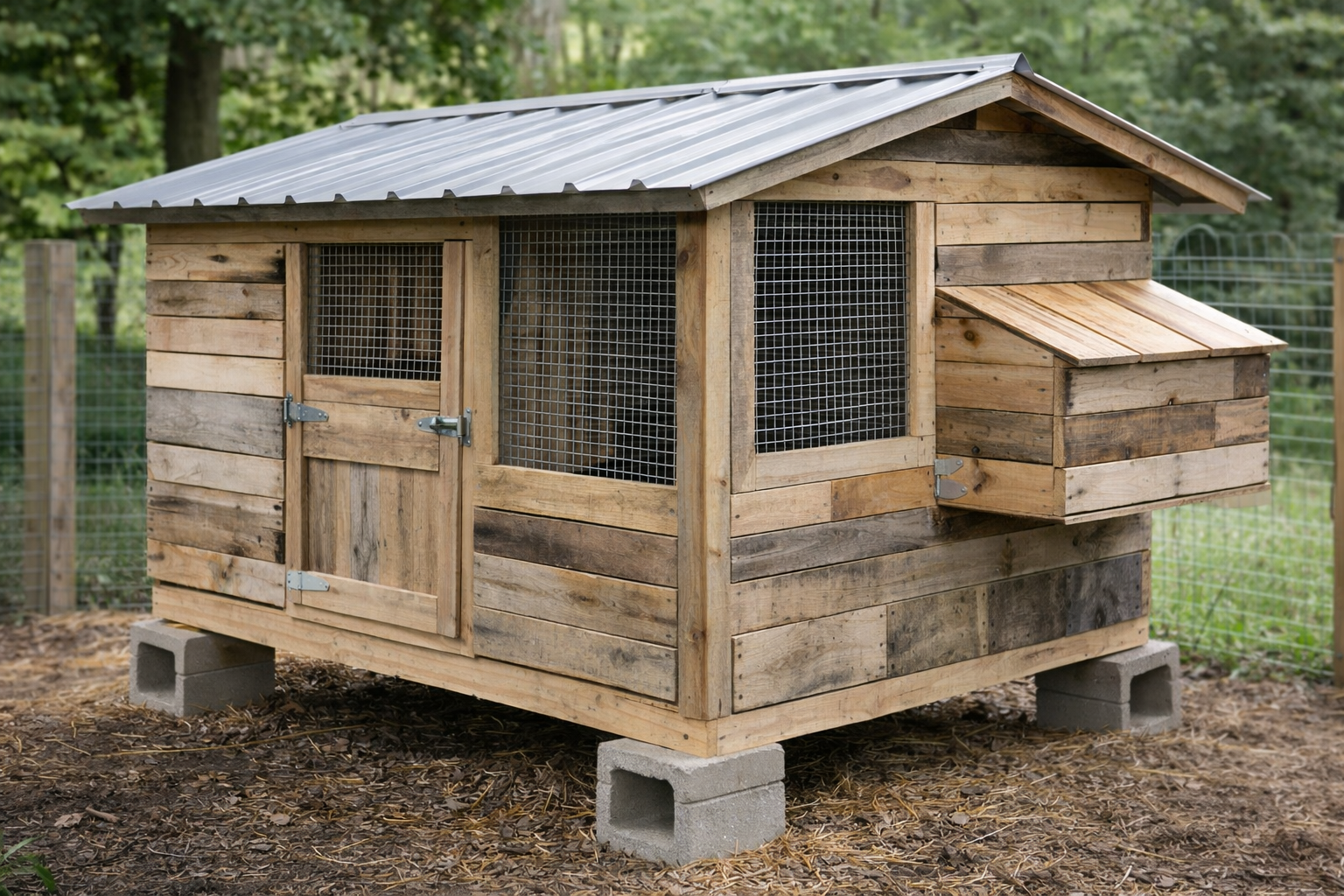
- Best for: 3–8 birds, backyard
- Cost: $ (if pallets are free) + you still buy roofing + hardware cloth
- Doable build: 2x4 base frame, pallet boards as cladding, sloped metal/poly roof
- Don’t do: pallet structural posts touching ground (rot city). Put it on skids or blocks.
2) Dog kennel run + small coop box
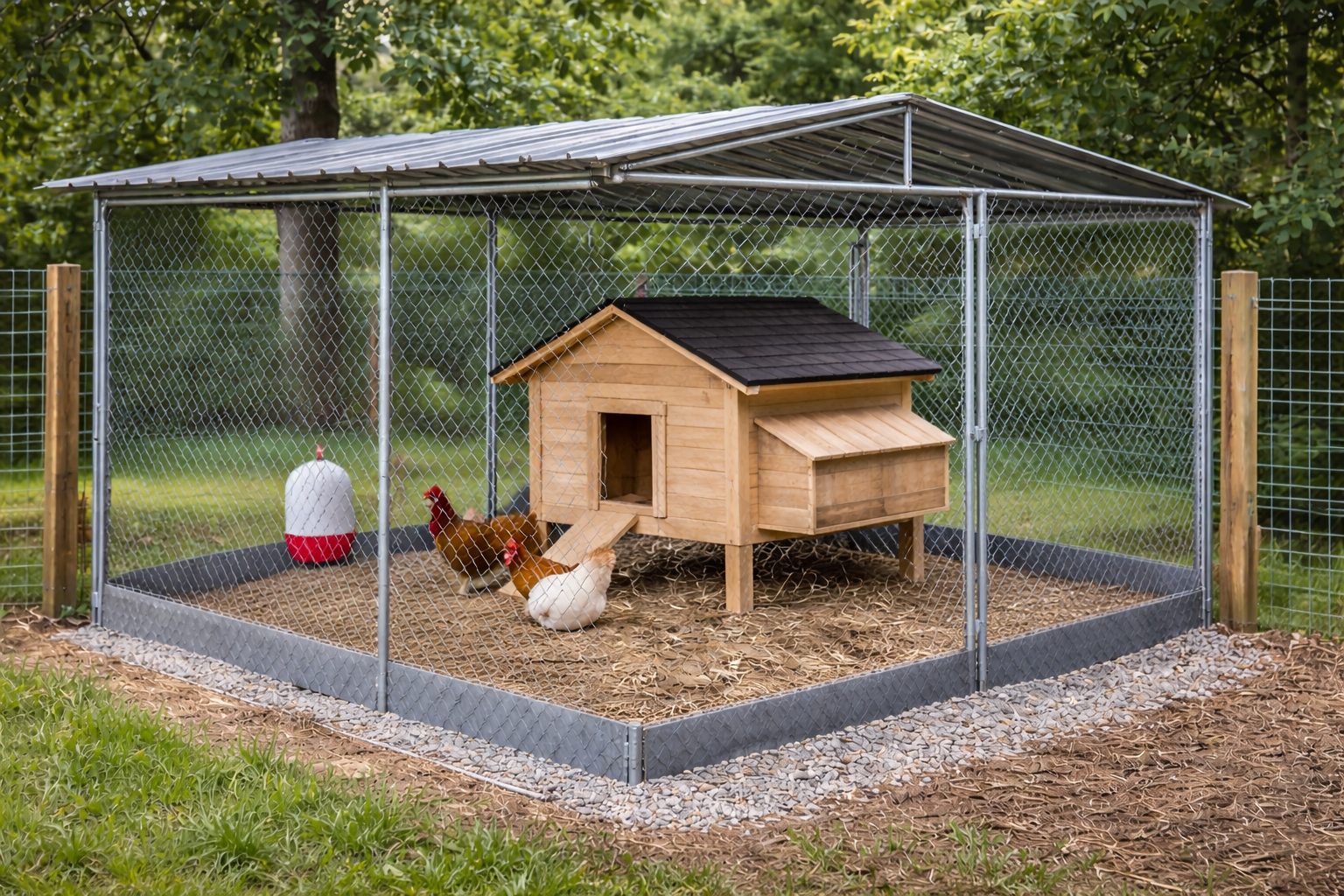
- Best for: predator pressure areas (with upgrades)
- Build: buy/used chain-link kennel as the run, then add a tight coop box and roof cover
- Critical upgrade: line lower sections with hardware cloth and add a dig-proof apron.
3) “Cabinet nest box” + simple lean-to coop
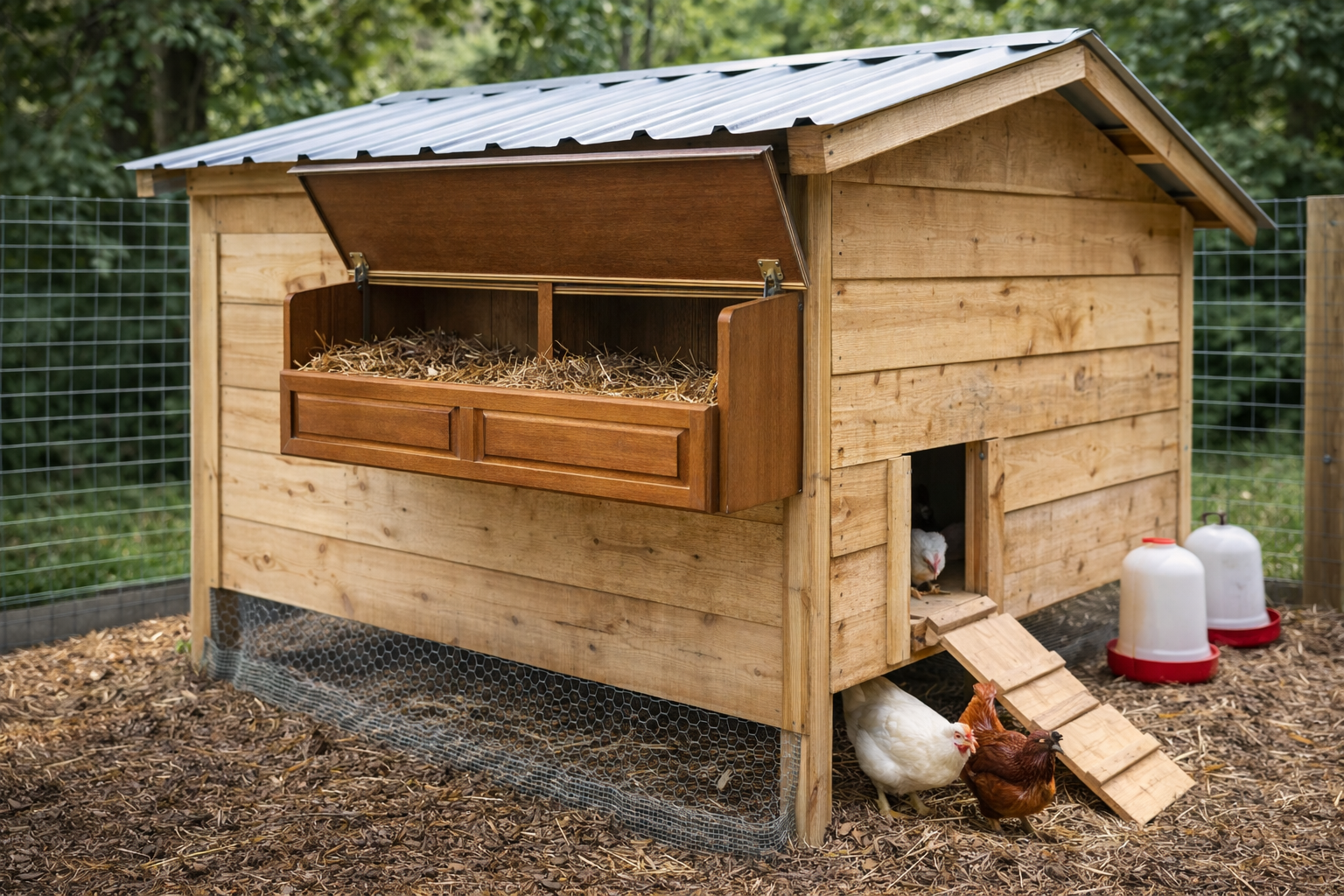
- Best for: tight budgets, quick nesting solution
- Build: reuse a wall cabinet as exterior nest access (hinged lid) mounted to a basic coop wall
- Watch: weather sealing (drip edge + lid overlap)
4) Upcycled playhouse → coop conversion (kid grew out of it)
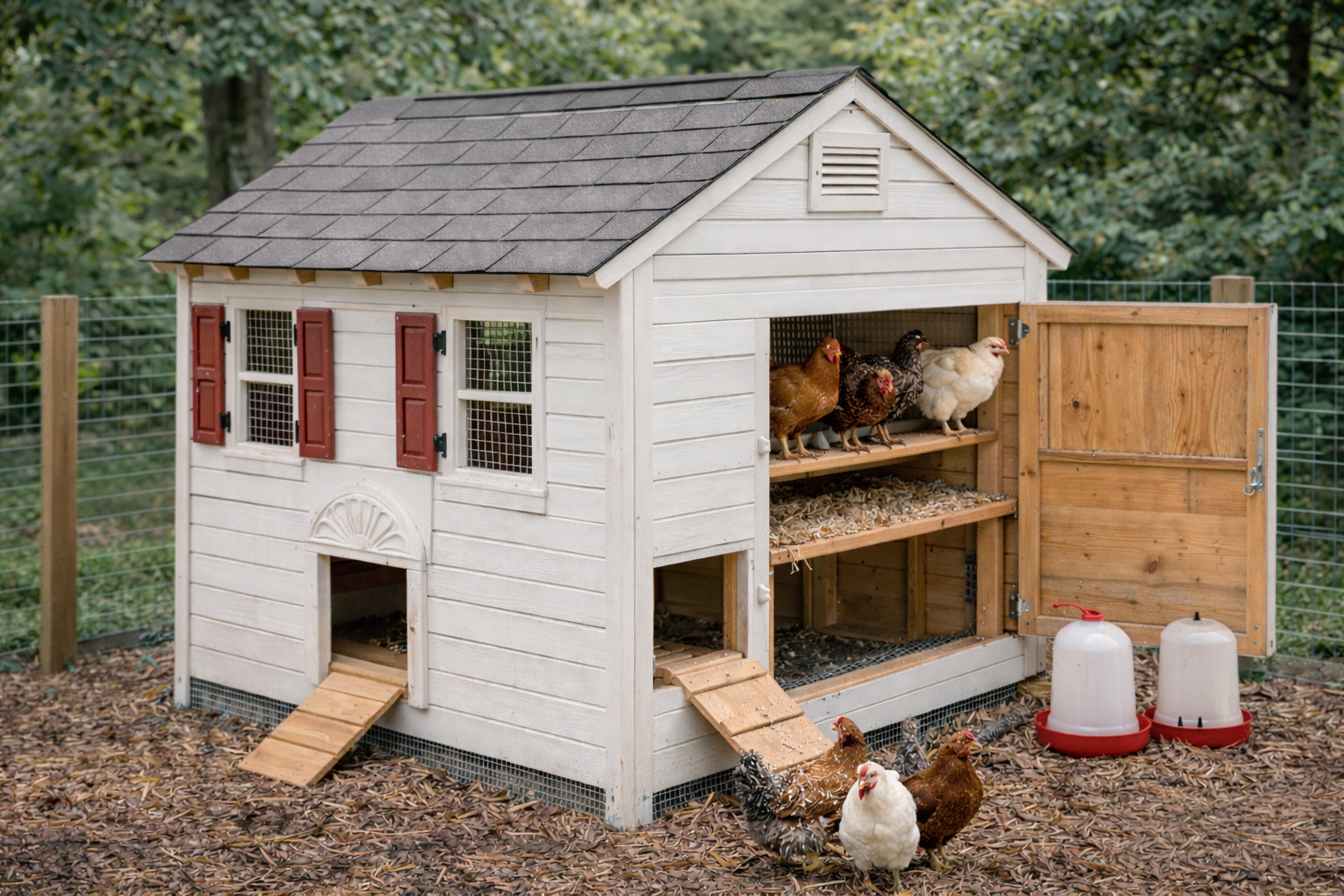
- Best for: “already have a structure” people
- Build: add vents high, hardware cloth windows, pop door, roosts, droppings board
- Fail mode: no clean-out door. Add one big side access panel.
5) Minimal A-frame coop (not a tractor) with fixed run
- Best for: 3–6 birds, small yard, simple roof
- Build: A-frame roof on skids, attach to a fixed run panel system
- Note: A-frames look “simple” but need bracing or they rack.
6) “Storage tote” feed station + zero-waste grit area
- Best for: keeping feed dry + reducing rodent mess
- Build: sealed tote with gravity feeder opening + covered grit/shell tray
If you want more options in this exact bucket (cheap, fast, but not dumb), this is the full list: Cheap Chicken Coop Ideas That Actually Last.
Category B — Simple chicken coop ideas
(beginner DIY that won’t bite you later)
7) 4x8 “half-sheet” coop (classic beginner win)
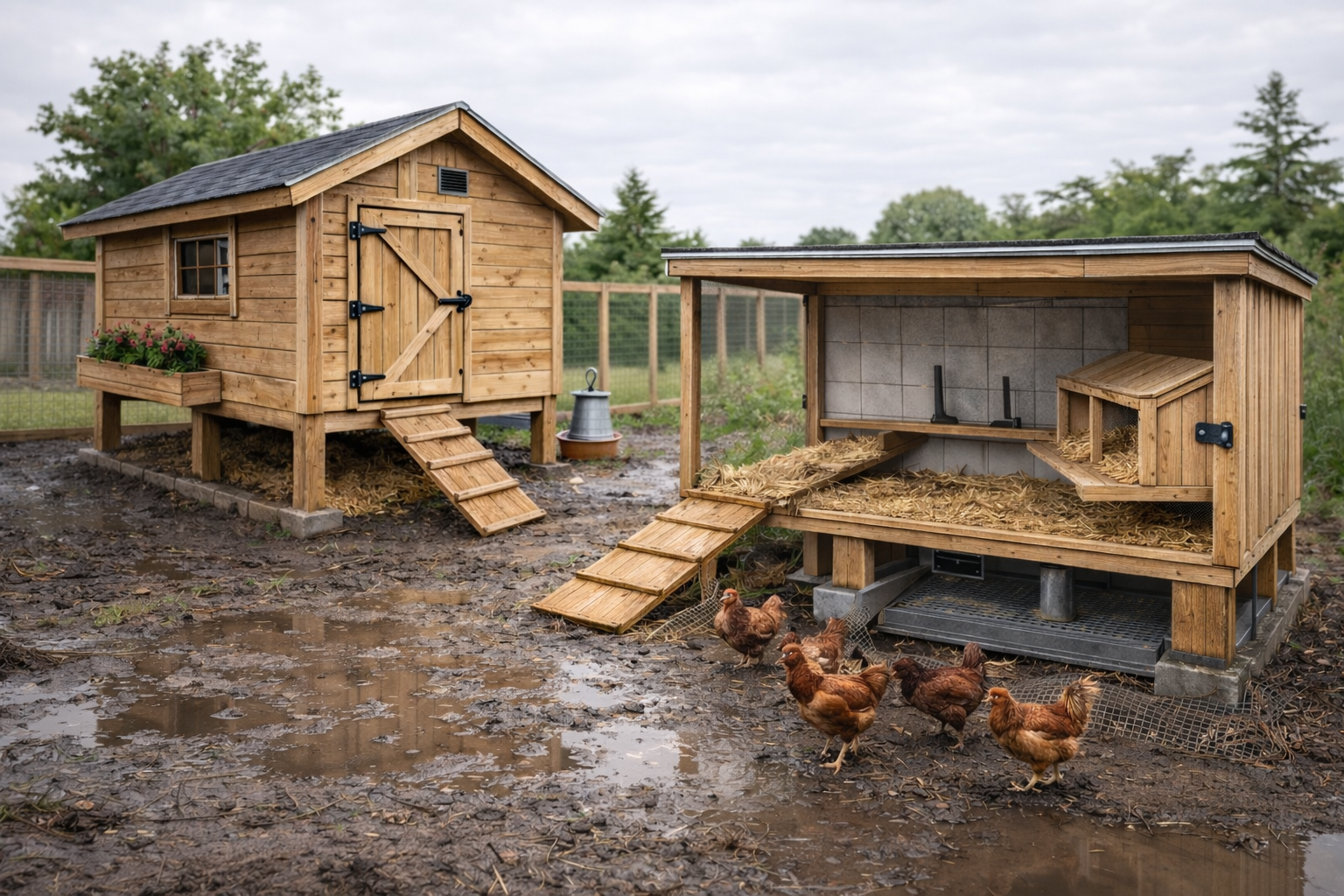
- Best for: 4–10 birds (depending on run size)
- Build: 4x8 floor footprint, gable or single-slope roof, one big clean-out door
- Make it last: roof overhang + raised floor + easy droppings board
8) Raised coop with under-run (dry feet setup)
- Best for: wet climates, small yards
- Build: coop elevated 18–36", run underneath + additional side run
- Watch: winter drafts under floor—close skirting where needed, keep vents high.
9) Lean-to coop against a shed/garage wall (space saver)
- Best for: narrow side yards
- Build: single-slope roof draining away from the building, exterior nest access
- Watch: don’t trap moisture against your house wall (leave a drain/air gap and flash properly).
10) “Coop + covered run” as one roof
- Best for: mud control, winter use
- Build: extend the roof over the run (even a cheap corrugated panel roof)
- Payoff: this is the difference between “easy chickens” and “daily swamp management.”
11) PVC-frame run with hardware cloth skin (lightweight, modular)
- Best for: people who want reconfigurable run shapes
- Build: PVC frame + tight mesh, anchored well
- Reality: PVC is not predator-proof by itself—treat it as a frame, not armor.
Category C — Backyard chicken coop ideas
(medium builds that feel “done”)
12) Shed chicken coop ideas: convert a garden shed properly
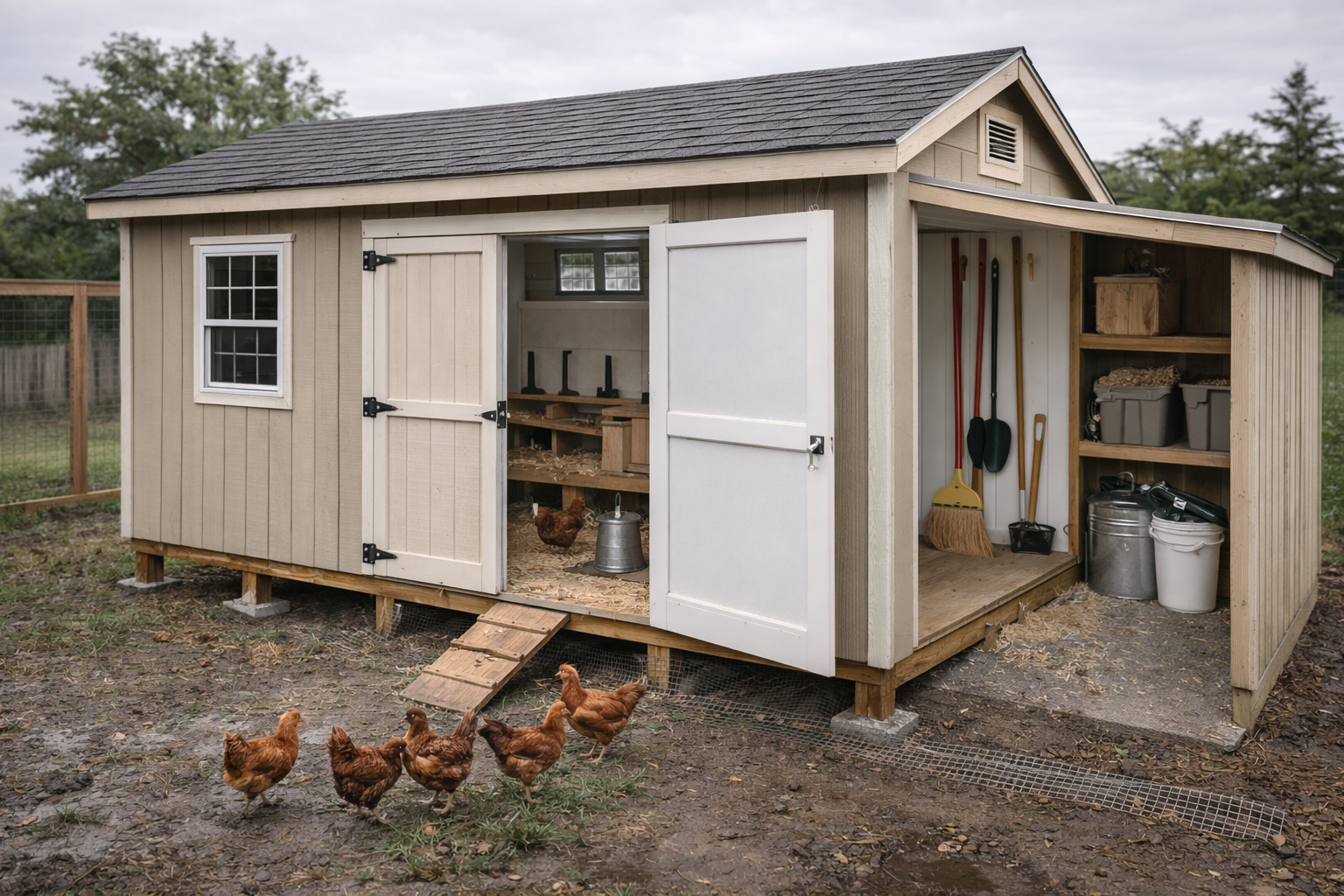
- Best for: 8–25 birds, people who want storage too
- Build moves: add vents high, sealed rodent-proof feed storage, cleanable interior wall finish
- Failure pattern: tiny vents → wet ammonia coop.
13) Walk-in coop with “storm porch” entry
- Best for: winter climates, reducing escapes
- Build: small vestibule so you can enter/exit without birds rushing out
14) Exterior nest box bank (clean egg collection)
- Best for: daily convenience
- Build: nest boxes bump out with a hinged, weather-lipped lid
- Tip: slope lid + drip edge so it doesn’t become a rot shelf.
15) Droppings board + removable roost ladder (cleaning hack)
- Best for: anyone who hates scraping floors
- Build: roosts above a board lined with removable tray material
16) “Inside service wall” for power + water + mounting
- Best for: lights, auto doors, cameras, protected wiring
- Build: one framed interior chase so wiring isn’t exposed to pecking or moisture
If you want the “big build” version (walk-in, serviceable, clean sequencing), this is the longer build guide: How to Build the Ultimate Chicken Coop.
Category D — Portable chicken coop ideas
(tractors, skids, and “actually movable” builds)
Portable is great—until it’s too heavy, too hot, or too easy to breach. Design for move frequency first.
17) Skid-base coop (the “realistic portable”)
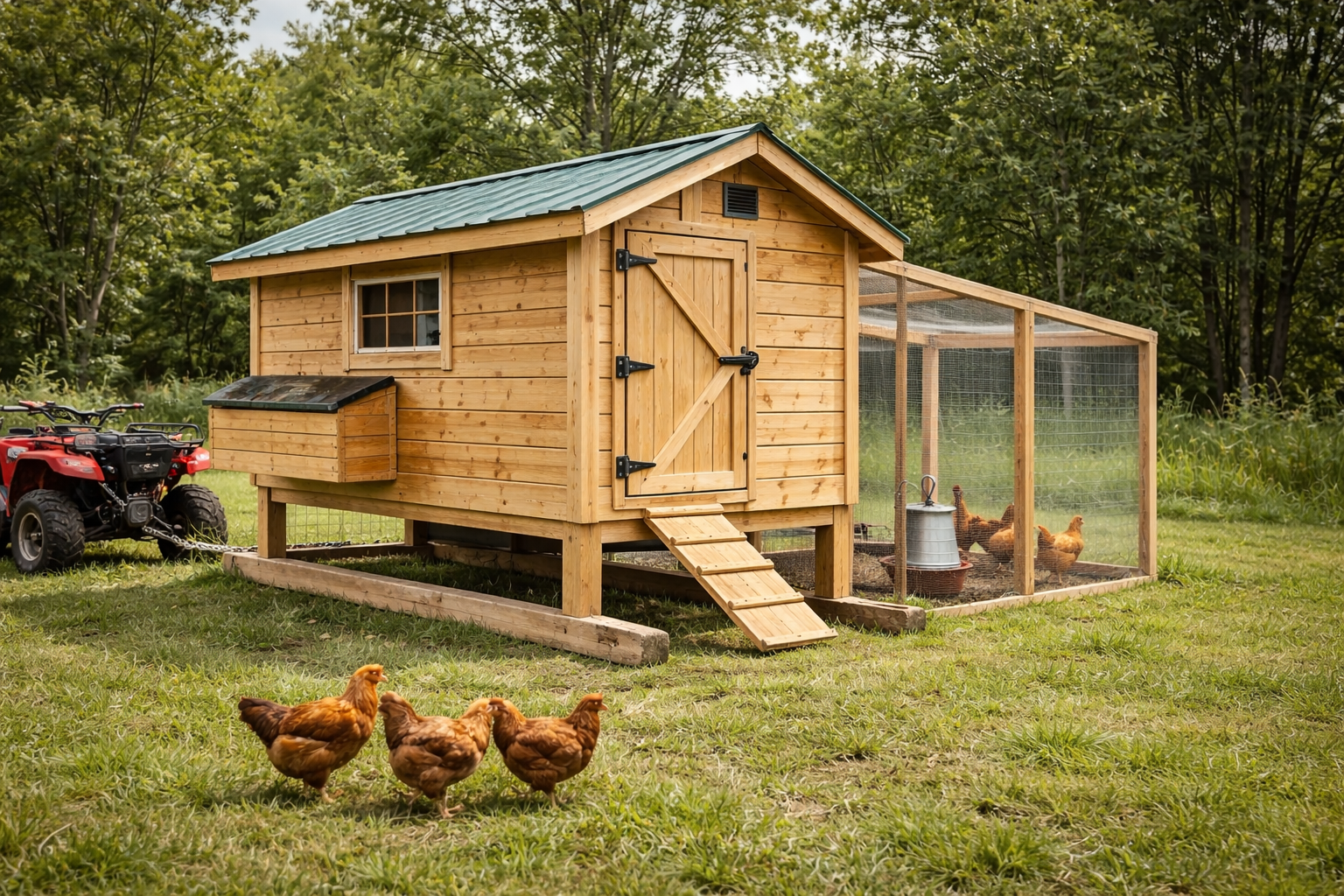
- Best for: moving weekly/seasonally
- Build: coop on 4x4 skids, tow/drag short distances
- Why it works: simpler than wheels, less breakage.
18) Wheelbarrow-style balance point tractor
- Best for: 3–6 birds, daily moves
- Build: axle near center of mass, one-person lift handles
- Failure: wheels too small for grass/uneven ground.
19) Hoop coop tractor (fast build, big shade roof)
- Best for: quick coverage, larger footprint
- Build: cattle panel hoop + tarp/roof + rigid end frames
- Predator note: edges and base need attention—predators work perimeter seams.
20) Trailer-mounted coop (enthusiast move)
- Best for: large rotations, property moves
- Build: coop on a utility trailer with integrated run panels
- Reality: more cost, but it’s genuinely “mobile infrastructure.”
Category E — Small chicken coop ideas
(tiny yards, tight footprints, still humane)
21) Micro-coop + tall, narrow run (side-yard lane)
- Best for: urban lots, 2–5 hens
- Build: small sleeping box + run that’s long not wide
- Make it livable: add perches, dust bath box, and rain cover so the run stays usable.
22) Vertical “stacked functions” coop
- Best for: people who can’t spare footprint
- Build: nest boxes on one side, roost zone above droppings board, storage below
- Watch: ventilation—vertical coops trap warm moist air without high exits.
23) Minimal coop + “day yard” panels (movable perimeter)
- Best for: flexible backyard use
- Build: fixed secure coop, then temporary day panels
If your constraint is footprint (not budget), grab these layouts: Small Chicken Coop Ideas.
Category F — Modern chicken coop designs
(good-looking without getting dumb)
24) Clean shed-roof modern box (the no-nonsense modern)
- Best for: design-minded backyard owners
- Build: simple rectangle, single-slope roof, hidden exterior nest access, tidy trim
- Don’t ruin it: keep details simple, spend money on roof + vents + latches.
25) “Courtyard run” with slatted shade wall
- Best for: hot climates and nice yards
- Build: run as a small courtyard with shade screens + covered dry area
26) Greenhouse chicken coop ideas (winter light + dry run)
- Best for: cold climates, shoulder seasons
- Build: coop adjacent to/inside a greenhouse zone, with strong ventilation control
- Watch: humidity swings—build for venting, not “sealed warm air.”
If you want more “finished” designs (pretty but still functional), this is the gallery-style roundup: Best Chicken Coop Designs for Any Backyard.
Category G — “Builder / enthusiast” chicken coop ideas
(harder, but ridiculously functional)
27) Walk-in coop with feed room + service corridor
- Best for: 15–50 birds
- Build: birds in one zone, human service corridor for feed/water/egg collection
- Payoff: you stop wading through birds to do chores.
28) Multi-pen coop (quarantine / broody / separation)
- Best for: anyone who’s ever had bullying or sickness spread
- Build: 2–4 pens sharing one roof with separate access
29) Rotational grazing system (fixed coop + rotating runs)
- Best for: lawn/garden integration
- Build: coop stays, runs rotate to rest ground
- Why it works: you avoid the permanent mud crater.
30) Automatic door + “fail safe” manual override
- Best for: people who get home late, predator pressure
- Build: auto door in a protected housing, plus a manual lock position
- Note: automation is nice, but it’s not predator-proofing.
Chicken run ideas
(this is where most setups collapse)
31) Roof the run (even partially)
- Dry litter stays dry. Dust baths stay usable. Winter isn’t misery.
32) Dig-proof perimeter: apron method
Instead of burying fencing straight down (hard in rocky soil), many successful builds use an outward apron to stop digging at the edge. Predators typically start at the perimeter.
33) “Sacrificial mud zone” + high-dry zone
- Build: one area designed to get dirty (mulch/chips you replace), one area kept dry under roof
34) Modular panels (expand as your flock grows)
- Build: identical 2x4 framed panels, hardware cloth, bolt-together corners
- Payoff: you can reconfigure layouts instead of rebuilding.
Interior chicken coop ideas
(the daily-use details that make it painless)
35) Roost layout that prevents “poop on heads”
- Keep roosts higher than nest boxes (so they don’t sleep in boxes).
- Add a droppings board under roosts for fast cleaning.
36) Nest boxes that don’t turn into a shared bathroom
- Dark-ish, private, easy to access from outside.
- Lip on the front to keep bedding in.
If you want the cleanest “no mess eggs” setup, roll-away boxes are the move: The Best Design for a DIY Roll Away Chicken Nest Box: Simple & Proven. If you’re building for a bigger flock, use the multi-box build: How to Build a 3-Compartment Roll-Away Chicken Nest Box.
37) Big clean-out door (seriously, oversized)
- If your shovel can’t fit, you won’t clean it properly. Then it gets wet and gross.
38) Venting: high exits + protected inlets
Aim to exhaust moist air high while avoiding a direct line of air blasting the birds at roost height—especially in cold seasons.
Predator-proofing upgrades
(spend money here, not on decor)
- Use predator-resistant wire: hardware cloth in vulnerable areas (openings, lower walls, runs).
- Upgrade latches: raccoon-resistant closures (two-step / carabiner style).
- Close gaps: predators work corners, seams, and roof edges first.
“No-BS” build ladder
(if you want to scale from cheap → excellent)
- Roof + overhang (keep the system dry)
- Hardware cloth + real latches (stop losses)
- Big access doors (make cleaning possible)
- Run coverage (stop mud + keep birds usable year-round)
- Automation (only after basics are solid)
FAQ
What’s the simplest coop idea that still works?
A small, dry coop box (easy clean-out + high vents) paired with a covered, predator-resistant run. Most “simple” failures come from skipping predator protection and ventilation.
Are chicken tractors actually a good idea?
They can be—if they’re truly movable, provide shade/airflow, and are built for your predators and climate. Portable is great, but “light” can become “weak” fast if you build it like patio furniture.
What’s the best “cheap but safe” predator upgrade?
Hardware cloth on openings/lower run walls plus raccoon-resistant latches. That’s where most night losses come from.
How do I stop the run from becoming mud?
Roof coverage (even partial), drainage, and a defined dry zone. If the run stays wet, the coop stays wet, and everything gets harder.
What’s next
- If you’re starting from scratch and want the “one build that covers everything” path, go here: How to Build the Ultimate Chicken Coop.
- If you’re stuck on a specific detail (spacing, roost/nest ratios, ventilation, run size, materials), use the reference hub: Chicken Coop Construction and Design FAQs.